Politics
Whittome calls for ‘safe and legal’ asylum routes for Sudan and Eritrea

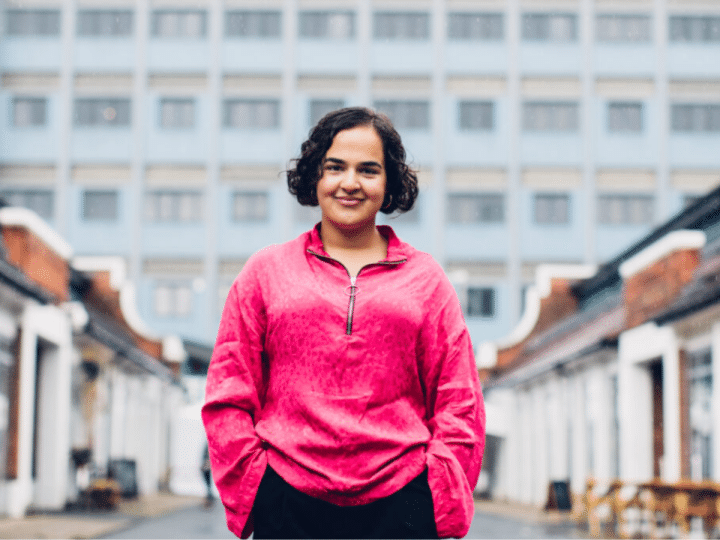

On 15 July, Labour MP Nadia Whittome posted an impassioned plea to social media, urging the UK government to establish safe, legal routes for Eritrean and Sudanese asylum seekers to come to the UK. Currently, and in contrast to similarly war-torn Ukraine, no specific refugee initiatives target those fleeing the two countries.
Whittome accompanied the post with a video of herself speaking during the second reading of Labour’s Immigration and Asylum Bill. Voting against the racist policy, she argued that the bill would “punish those seeking sanctuary” and “weaken vital protections” for people fleeing persecution.
‘Safe and legal routes’?
On 15 July, Whittome posted to social media:
When 94% of Eritrean and 99% of Sudanese asylum seekers are ultimately granted refugee status, the government should establish safe and legal routes for these countries, or at the very least, fast-track their asylum applications.
These high rates of asylum acceptance are unsurprising, given the turmoil that grips the two African states.
Sudan is currently locked in a viscous civil war with a genocidal UAE-backed Sudanese militia, the Rapid Support Forces (RSF). The Northeast African country recently convicted the head of the RSF, Mohamed Hamdan Dagalo (aka Hemedti) guilty of war crimes, crimes against humanity and genocide.
Meanwhile, Eritrea teeters on the brink of war with neighbouring Ethiopia. The UK’s Foreign Office currently advises against all travel to Eritrea, or even within 25km of its land borders.
Whittome continued on to state that:
Student refugee visas and community-support/business-support schemes cannot be the only safe routes for refugees. We should not be offering asylum protection based on qualifications, but on the level of need for sanctuary. A person fleeing war is not more deserving of safety because they can “contribute” more.
Asylum-seeking and small boats
Of course, the generic global resettlement scheme and the (recently diminished) family reunion route are also available to all refugees. In fact, the government acknowledges Sudan as one of the primary beneficiaries of the former, along with Eritrea for the latter.
However, the resettlement scheme involves long periods of dangerous waiting in one’s own country or nearby. Likewise, whilst asylum seekers with family in the UK can seek reunion, this doesn’t solve the problem of getting to the UK in the first place.
As such, asylum seekers frequently have to brave the deadly crossing to the UK via small boat. These small boats have dominated recent debate on immigration — being mentioned no less than 36 times in the 13 July Immigration Bill reading alone.
Ukraine and Sudan — contrasting reactions
Speaking during that debate, Labour’s Catherine West mentioned the Homes for Ukraine scheme, which home secretary Shabana Mahmood seized on as an example of a ‘safe and legal’ route for asylum seekers. However, as Whittome pointed out:
The reason we do not see Ukrainians crossing the channel on small boats is because, rightly, we have a safe and legal route. Why not expand those safe and legal routes to places like Sudan and Eritrea, because obviously if an asylum claim comes from those countries, at the very least they should be fast-tracked? That would help to clear up the backlog, so would she support that?
Today, 16 July, happens to mark Keir Starmer’s final visit to Ukraine as the departing PM. Back in 2022, then-PM Boris Johnson announced the creation of a Ukraine-specific refugee scheme within one month of the outbreak of Russia’s war on the Eastern European country.
Whilst this reaction from the UK is right in itself, it’s hard not to notice the difference in the treatment of Ukraine and Sudan. Likewise, we can’t ignore the fact that Sudan’s population is made up predominantly of Black Muslims, rather than the white-European Christians of Ukraine.
The war in Sudan broke out in 2023. In February 2026, the UN declared that the RSF’s actions bore the “hallmarks of genocide”. However, to date, the UK has created no scheme targeting asylum seekers from Sudan.
‘Needlessly cruel’
Ultimately, Whittome voted against Labour’s Immigration and Asylum Bill. She explained that it was:
needlessly cruel and will divert resources into an unfair, unsafe and unworkable system. Not only will the government’s proposals punish people for seeking sanctuary and lock out many refugees from obtaining settled status by charging them for the support they receive, but they will also weaken vital protections for those who have fled war, torture and persecution. We need an immigration and asylum system rooted in compassion and human rights.
Increasingly, Labour’s immigration policies have resembled a watered-down version of far-right Reform UK. Whittome has long been a voice of reason and fairness within her party — but, gradually, she’s looking more and more lonely in that regard.
Featured image via the Canary
By Grace
You must be logged in to post a comment Login