Politics
Why Is Netflix's Monster So Controversial? 11 Times The Show Faced Backlash


Since it premiered with its first season about Jeffrey Dahmer, Netflix’s anthology series Monster has become one of the most talked-about shows of the 2020s – but it’s often not for the reasons any creator would hope for.
The premise of the show is that each iteration focusses on a different dramatised true-crime case, with Evan Peters’ outing as Dahmer followed by seasons about Lyle and Erik Menendez, Ed Gein and, most recently, Lizzie Borden.
While they may have all pulled in hoards of viewers, each season has generated differing levels of debate and backlash, which has all contributed to the Ryan Murphy co-creation becoming one of the most controversial TV series in recent memory.
Here are 11 past instances when Monster has landed in hot water…
The families of Jeffrey Dahmer’s victims spoke out against the show following season 1’s debut

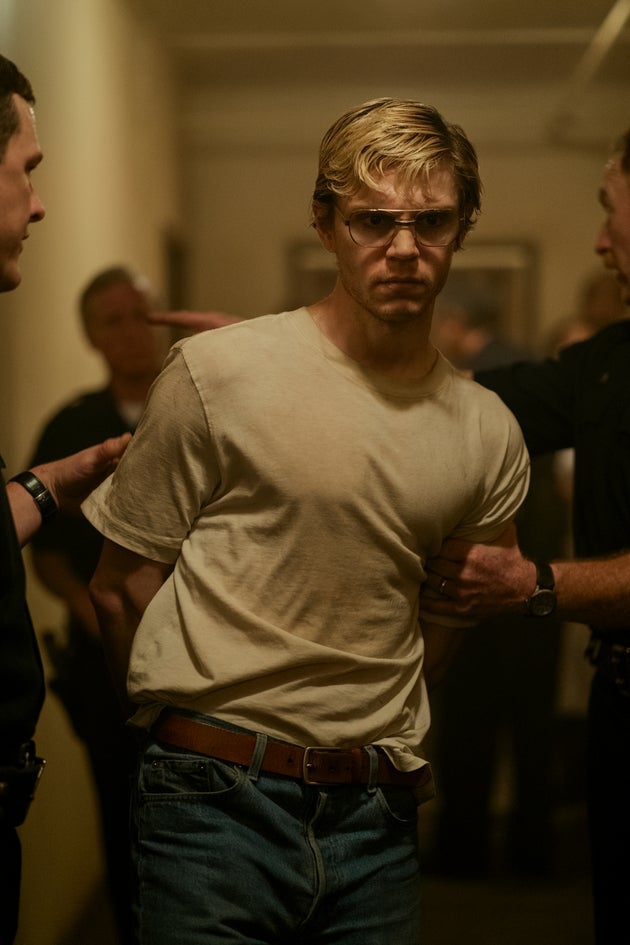
The first season of Monster, titled The Jeffrey Dahmer Story, was made without consent or involvement of the titular serial killers’ families, and when it premiered, many of them were quick to speak out against the show.
In a piece published in Business Insider, Rita Isbell, the sister of Errol Lindsey, who was murdered by Jeffrey Dahmer at the age of 19, said: “I feel like Netflix should’ve asked if we mind or how we felt about making it. They didn’t ask me anything. They just did it.
“I could even understand it if they gave some of the money to the victims’ children … The victims have children and grandchildren. If the show benefited them in some way, it wouldn’t feel so harsh and careless. It’s sad that they’re just making money off of this tragedy. That’s just greed.”
Errol Lindsey’s dad also told the LA Times: “I want people to understand this is not just a story or historical fact, these are real people’s lives. He was someone’s son, someone’s brother, someone’s father, someone’s friend that was ripped from [our] lives.”
“We’re all one traumatic event away from the worst day of your life being reduced to your neighbour’s favourite binge show,” he claimed.
“And most importantly, if you’re going to create something that uses real-world people and experiences, you should at minimum contact those people out of respect.”
“If you’re actually curious about the victims, my family (the Isbells) are pissed about this show,” another family member wrote on X. “It’s retraumatising over and over again, and for what? How many movies/shows/documentaries do we need?”
In a 2023 statement, Thomas M. Jacobson – a retired attorney who represented the families of eight of Dahmer’s victims – said the show’s success contributed to “glamourising or desensitising violence and crime in society”.
He added that the “continued pomp and circumstance surrounding the Dahmer series glorify and romanticise the monster’s actions and motivations resulting in further trauma for the victims’ families”.
Co-creator Ryan Murphy later claimed that he’d made an attempt to reach out to victims’ families but did not receive a response.
The focus being so much on Jeffrey Dahmer’s back story, rather than those of his victims, was also a controversial choice

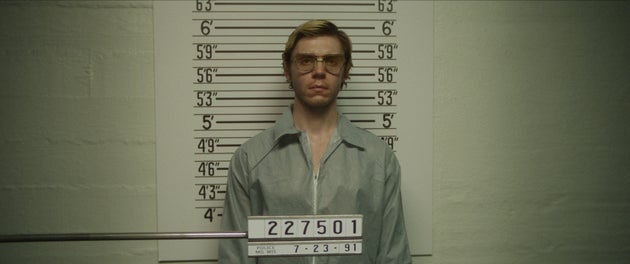
A 2022 piece in BBC Culture summed up this argument by questioning whether shows like Monster risk “mythologising and glorification” of serial killers by giving their stories so much attention.
The piece particularly pointed to the objectification of lead actor Evan Peters and the “romantic” TikTok fan-cams that became prevalent after season one’s premiere.
Co-creator Ian Brennan was later asked for his take on the debate over whether the show was too “sympathetic” in its portrayal of Jeffrey Dahmer, to which he insisted toPage Six he didn’t agree with the criticism “at all”.
“We show a human being,” he maintained. “He’s monstrously human and he’s monstrously monstrous and that’s what we wanted to sort of unpack. We tried to show an objective portrait as possible. We did our homework.”
An official synopsis for Monster’s Jeffrey Dahmer season described it as a “series that exposes these unconscionable crimes, centred around the underserved victims and their communities impacted by the systemic racism and institutional failures of the police that allowed one of America’s most notorious serial killers to continue his murderous spree in plain sight for over a decade”.
Netflix faced backlash for including Monster season 1 in its LGBTQ programming subsection
Fuelling controversy even more was the fact that when Dahmer began streaming on Netflix, users clocked that it had an “LGBTQ” tag attached to it, listing it alongside content including Heartstopper and Sex Education.
After a wave of backlash on social media, Netflix quietly dropped this tag, instead leaning more into the show’s true crime aspects with its labelling.
Ryan Murphy later told the New York Times: “[Not all] gay stories have to be happy stories. There was a moment on Netflix where they removed the LGBTQ tag from Dahmer and I didn’t like it, and I asked why they did that and they said because people were upset because it was an upsetting story.
“I was, like, ‘Well, yeah’. But it was a story of a gay man and more importantly, his gay victims.”
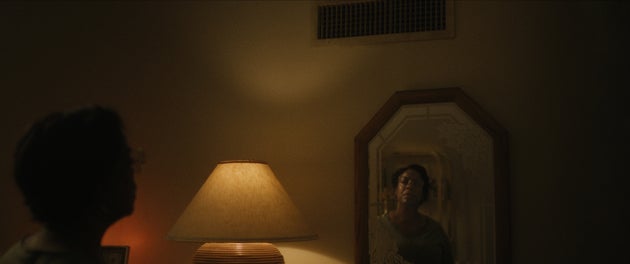
A production assistant also called out the way she was treated behind the scenes of Monster season 1
Production assistant Kim Alsup alleged that she was treated “horribly” on set.
She told the LA Times: “I was always being called someone else’s name, the only other Black girl who looked nothing like me, and I learned the names for 300 background extras.”
Alsup described the experience as “exhausting” and “one of the worst shows that I’ve ever worked on”. She also alleged that the set had no mental health coordinators available.
Netflix declined to comment at the time, but a rep did tell the LA Times that all crew members had been provided access to free health and wellness resources, including a licensed therapist.
Scenes depicting incest between the Menendez Brothers dominated the conversation after the release of season 2

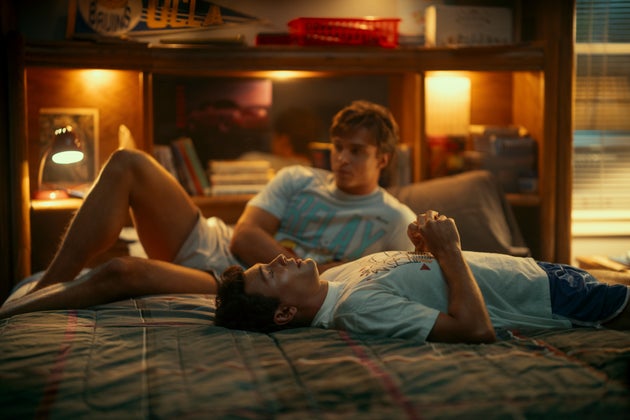
The second season of Monster employed a unique storytelling method, in which numerous theories surrounding the deaths of Kitty and José Menendez were acted out, with the intent that viewers should make up their own minds.
One of these drew particular criticism, as it involved a theory suggesting that Erik and Lyle Menendez – portrayed in the show by Cooper Koch and Nicholas Alexander Chavez – could have been involved in an incestuous sexual relationship at some stage.
“I do not think that’s true. And I don’t think it was intended by the show to make or break that truth,” Cooper insisted. “I think that was just a theory that one person had and that got put into the show because that person was a character in the show.”
Ryan Murphy also defended the show, maintaining: “What the show is doing is presenting the points of view and theories from so many people who were involved in the case.
“[Reporter] Dominick Dunne wrote several articles talking about that theory. We are presenting his point of view just as we did [defence attorney] Leslie Abramson’s point of view. We had an obligation to show all of that. And we did.”
Erik Menendez was among those slamming season 2 of Monster
Monster’s second season is, so far, the only incarnation of the anthology series whose central figures are still alive.
Issuing a statement from prison, Erik Menendez accused the Netflix show of perpetuating “horrible and blatant lies” about himself and his brother.
He wrote: “I believed we had moved beyond the lies and ruinous character portrayals of Lyle, creating a caricature of Lyle rooted in horrible and blatant lies rampant in the show. I can only believe they were done so on purpose. It is with a heavy heart that I say, I believe Ryan Murphy cannot be this naive and inaccurate about the facts of our lives so as to do this without bad intent.”
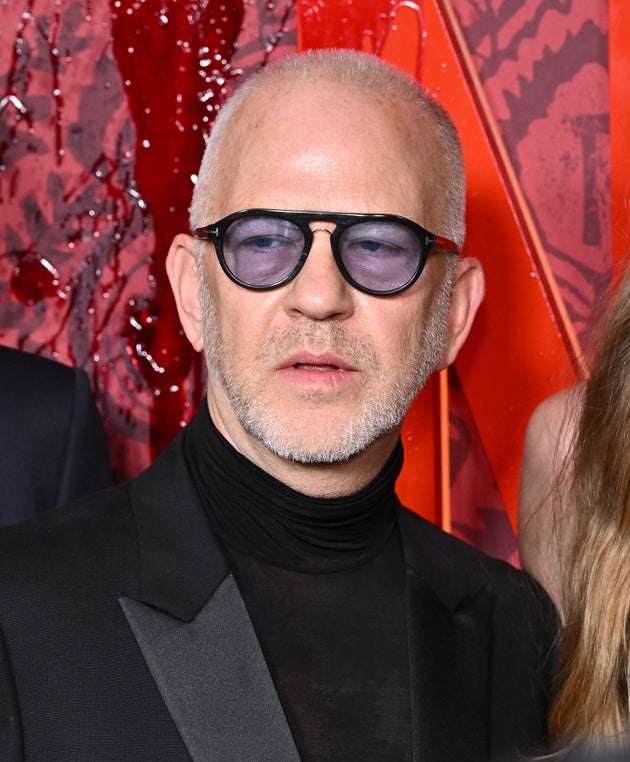
“I have many things to say about that, how long do you have?” Ryan joked when asked about the statement from Erik Menendez during a red carpet interview.
The Emmy winner added: “I think it’s interesting that he’s issued a statement without having seen the show. I know he hasn’t seen the show in prison, [but] I hope he does see the show.”
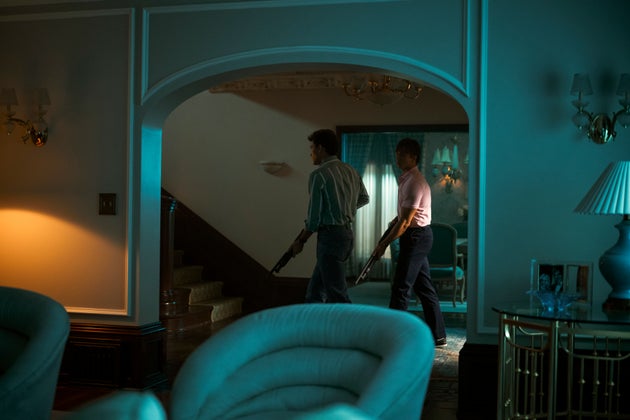
Ryan Murphy later raised eyebrows with his own comments about the Menendez brothers
“The [Menendez] family’s response is predictable at best,” the show’s co-creator toldVariety. “I find it interesting because I would like specifics about what they think is shocking or not shocking. It’s not like we’re making any of this stuff up. It’s all been presented before.”
He went on to call Monster the “best thing that has happened to the Menéndez brothers in 30 years” as it led to “millions of people all over the world” becoming more aware of their case.
While Cooper Koch met the brothers in prison as part of his research, Ryan Murphy said that was where he personally drew a line.
“I have no interest in talking to them,” he said. “It’s very good that Cooper has a relationship with them, and I’m very close, obviously, with Kim Kardashian, who has spoken to them.”
He added that he doesn’t “know what I would say to them” as he already knows “what their perspective is”.
Although Ryan Murphy had previously spoken out in defence of the brothers, these subsequent comments were slammed on social media, with many accusing him of “ignorance”, “disrespect” and “making money” off the “suffering” of others.

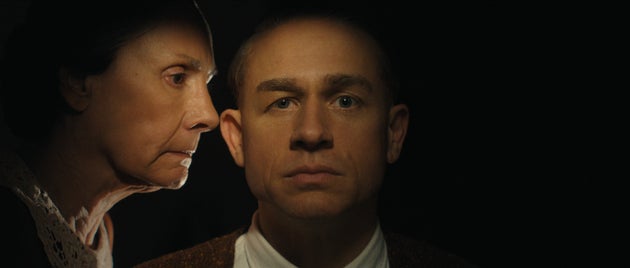
Monster season 3 featured the show’s most gruesome and graphic violent scenes yet – which some felt ‘sensationalised’ Ed Gein’s horrific crimes
“If people are compelled to talk about it and think about it, hopefully they’ll actually be compelled to watch the show,” Charlie Hunnam, who portrayed Ed Gein, said in response to this debate.
“What I would hope and feel really confident in is that it was a very sincere exploration of the human condition and why this boy did what he did.”
Charlie then insisted: “I never felt like we were sensationalising it. I never felt on set that we did anything gratuitous or for shock impact. It was all in order to try to tell this story as honestly as we could.”

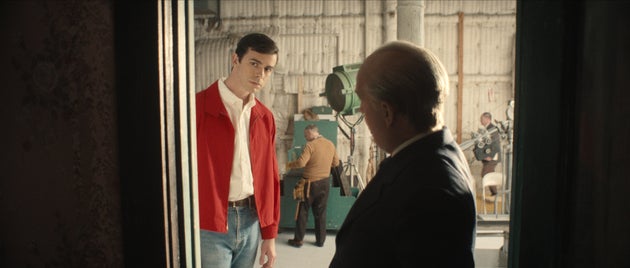
Monster’s depiction of Anthony Perkins in season 3 was another point of contention
In one memorable scene in Monster’s third season, Joey Pollari appeared as Anthony Perkins, the actor best known for portraying played Norman Bates in Psycho, a character reportedly inspired by Ed Gein’s crimes.
Many viewers spoke out against Monster’s “tasteless” choice to draw a connection between the secretive Ed Gein and Anthony Perkins because of the latter’s decision to keep his sexuality private in his lifetime.
One scene, for example, depicted Anthony Perkins undergoing so-called “conversion therapy” while Tom Hollander’s Alfred Hitchcock was heard musing about “urges”, “secrets” and a “sickness”, telling the closeted performer: “I had to cast you, Anthony. You’re like him.”
The late actor’s son Osgood Perkins – director of horror flicks like Longlegs and The Monkey – later insisted that he “wouldn’t watch” the series “with a 10-foot pole”.
More broadly, he slammed streaming platforms for “glamourising” real-life atrocities in the true crime genre, which he said is “increasingly devoid of context”, while lamenting that “the Netflix-isation of real pain” is “playing for the wrong team”.
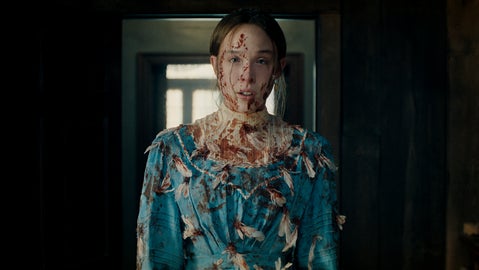
Monster season 4 became the first to feature a woman at its centre – although not everyone is convinced as to how successfully the predominantly-male creative team achieved this
Like its predecessors, Monster’s fourth outing was also slammed by critics.
In a scathing two-star take in The Guardian, a review called into question how equipped to handle Lizzie Borden’s story the predominantly-male creative team was.
“The latest Monster has nothing to say about Borden, the times that shaped her or the prejudices most think helped secure a not guilty verdict in the end – all of which remain interesting and pertinent to the modern era,” The Guardian’s critic lamented, branding the show “a bunch of boys on a dare who should have been called back after class and made to get down to some real work”.

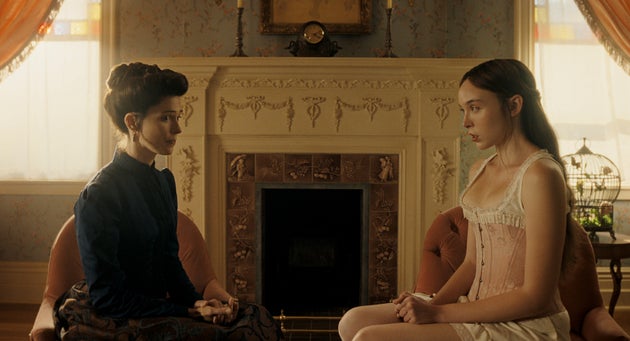
“The Lizzie Borden Story can’t muster much to say beyond observing civilization’s centuries-old systemic oppression of women while acknowledging the fury it evokes,” IndieWire agreed, pointing out that “what little Monster has to say about Lizzie Borden is largely superficial”.
Meanwhile, a piece in Time claimed the show failed to grasp its themes of “female rage”, noting: “The well of misogyny isn’t in danger of running dry anytime soon. But if we must keep diving into it, each descent should at least leave us with some new insight or nuance. Lizzie Borden, now streaming, fails to clear even that bar.”
This recent promo video ad didn’t go down so well, either
Get ready to meet the next monster… pic.twitter.com/yZS4GBAYCF
— Netflix (@netflix) September 15, 2026
Netflix’s “get ready to meet your next monster” promo was branded insensitive by many critics on social media when it premiered ahead of season four’s release.
Indeed, as one X user put it: “Why does Netflix have a serial killer cinematic universe?”
All four seasons of Monster are now streaming on Netflix.
READ MORE:



You must be logged in to post a comment Login