
Politics
Why Is Trump Attacking Iran? He’s Still Figuring It Out.

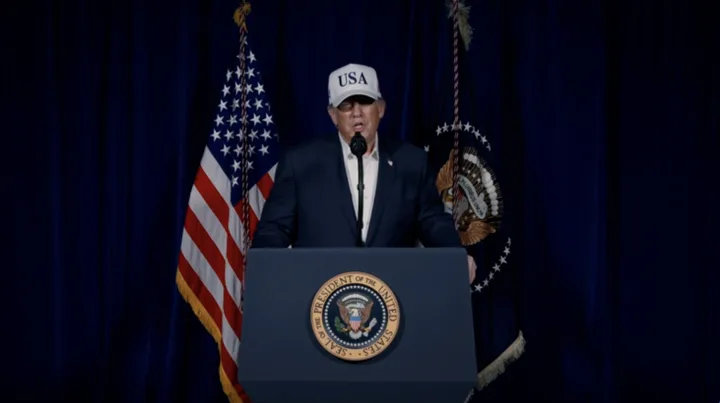
The United States began a war with Iran to re-obliterate Iran’s nuclear weapons programme, which purportedly was originally obliterated just eight months ago.
Or maybe it’s because Iran refused to make a “deal.” Or perhaps to replace the hard-line Islamic regime with democracy and freedom. Or replace the current ruler of the hard-line Islamic regime with a different hard-line Islamic ruler.
According to President Donald Trump, it is all of these reasons. Or some mix of them. Or something completely different.
As the biggest US military build-up in two decades and its resultant massive air attack on Iran winds up its third day, the rationale for it still appears to be a work in progress. Trump, after a brief video early on Saturday morning announcing that the attack had started, still has not given Congress or the American people a detailed explanation of why he is doing so.
“The decision to put American service members in harm’s way demands clarity, consistency, and honesty with Congress and the public,” said Virginia Senator Mark Warner, the top Democrat on the Senate Intelligence Committee. “So far, we’ve got none of those things.”
In remarks before a White House ceremony for Congressional Medal of Honour recipients, Trump claimed on Monday the attack was to stop Iran’s nuclear weapons programme — a programme he repeatedly insisted he had “obliterated” last June.
“We warned Iran not to make any attempt to rebuild at a different location because they were unable to use the ones we so powerfully blew up,” he said. “But they ignored those warnings and refused to cease their pursuit of nuclear weapons.”

President Trump Via Truth Social/Anadolu via Getty Images
Prior to those brief comments, Trump had spent two and a half days floating a variety of different explanations with a number of short interviews with nearly a dozen different print and television outlets.
To The Washington Post, just three hours after the attack began in the pre-dawn hours Saturday, Trump said he did it for the Iranians themselves: “All I want is freedom for the people.”
He told The New York Times the following day that he hoped Iran’s military and security forces would simply give up and give their weapons to protesters. “They would really surrender to the people, if you think about it,” he said.
Yet he told both the Times and Fox News that the attack on Venezuela’s capital in January and arrest of its dictator could serve as a “template” for Iran, in which Trump could install a new leader who was more accommodating to his demands without altering the nature of the regime.
But he told ABC News that he couldn’t do that because the air strikes killed too many of Iran’s top officials, including those he might have installed in power. “The attack was so successful it knocked out most of the candidates,” Trump told ABC. “It’s not going to be anybody that we were thinking of because they are all dead. Second or third place is dead.”
And to The Atlantic, Trump blamed Iran for not agreeing to one of his favourite words, a “deal.”
“They could have made a deal. They should’ve done it sooner. They played too cute,” he said before bragging that presidents for half a century had wanted to do what he just did, but that only he had the guts to do so. “People have wanted to do it for 47 years.”
Trump expanded on that in an interview with CNN on Monday morning: “We don’t know who the leadership is. We don’t know who they’ll pick. Maybe they’ll get lucky and get someone who knows what they’re doing … we don’t know who’s leading the country now. They don’t know who’s leading. It’s a little like the unemployment line.”
Trump’s lack of a focused message on why he has put service members in harm’s way ― four have been killed to date, with four more seriously wounded ― has also left Americans confused. According to a new CNN poll, 60% of respondents said Trump lacked a plan for his attacks, including 70% of self-described independents.
The conflicting explanations were not restricted to Trump personally. On Saturday, a group of hand-picked reporters received a “background” briefing from Trump administration officials who said the attack happened because of intelligence reports that Iran was about to attack US air bases in the region. That, though, was contradicted the following day when congressional staffers were told there was no intelligence that Iranian strikes were imminent.
“His team has suggested in the media that this action was necessary because of a planned preemptive attack by Iran – a fiction totally unsupported by any intelligence that I’ve seen or been presented as a member of the ‘Gang of Eight,’” Senator Mark Warner said.

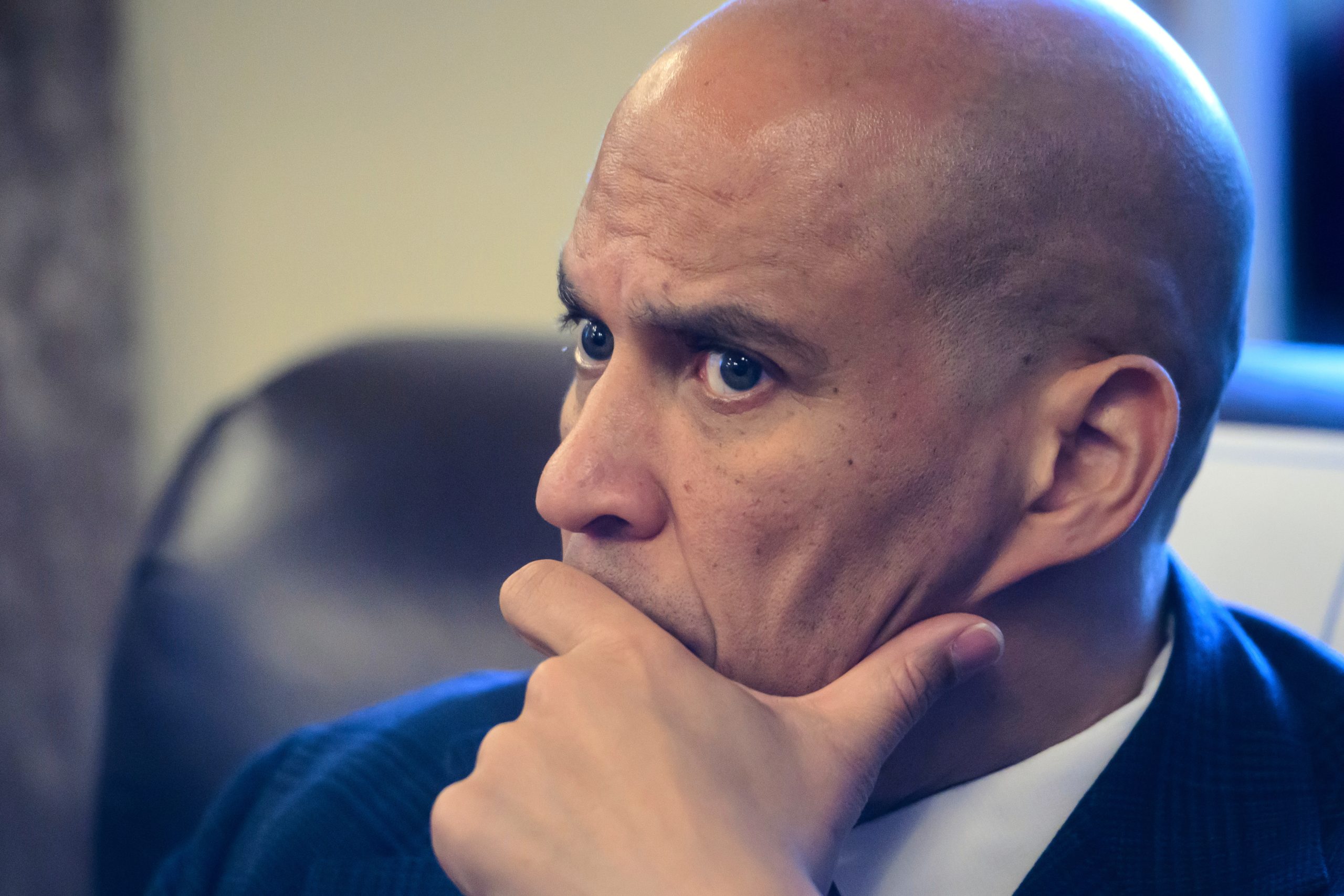
Democrats eyeing White House runs in 2028 are preemptively breaking up with AIPAC.
Sen. Cory Booker, who received donations bundled by the American Israel Public Affairs Committee as late as December, told POLITICO that he’s sworn off the group’s funds (and other PAC money). California Gov. Gavin Newsom said he never has and “never will” take donations from the group. Sen. Ruben Gallego (D-Ariz.) vowed last week that he “wouldn’t take AIPAC money” anymore. A spokesperson for Pennsylvania Gov. Josh Shapiro said he has “never taken money or solicited support from AIPAC,” while a spokesperson for Kentucky Gov. Andy Beshear said “AIPAC has never contributed to Gov. Beshear and they’re never going to. Ever.”
Their retreat underscores how rapidly AIPAC has become a bogeyman for Democrats seeking to criticize the Israeli government, particularly with the Netanyahu administration’s involvement with President Donald Trump’s operation in Iran. Many former AIPAC-friendly Democrats see the historically bipartisan group as becoming more and more aligned with Netanyahu’s right-wing government in recent years. Its emergence as an early touchstone in the shadow 2028 presidential primary reflects a calculation among leading Democrats that liberal voters’ hard shift away from the longtime U.S. ally will stick.
“This is going to be a huge flashpoint in the primary throughout 2027 and into 2028,” said veteran Democratic strategist Mark Longabaugh, who advised Sen. Bernie Sanders’ 2016 presidential bid. “The constitution of the party just in the makeup of the voters has changed dramatically. The politics of Israel has changed dramatically.”
Recent AIPAC critics also include some Jewish Democrats who had previously supported the organization or received its backing.
After AIPAC poured $22 million into Illinois primaries last week to mixed results, Gov. JB Pritzker, a billionaire who does not accept outside funds, accused the group of becoming pro-Trump and said he wants no part of the group he once donated to. A spokesperson for Sen. Elissa Slotkin (D-Mich.) pointed to a podcast in which she said she swore off AIPAC’s support in 2022.
Former Chicago Mayor Rahm Emanuel — a supporter of Israel whose father is Israeli and who previously held dual citizenship with the country, but who has also been a longtime critic of Israeli Prime Minister Benjamin Netanyahu — told POLITICO he “need not worry about AIPAC’s support. It will not be forthcoming.”
Democrats cited a variety of reasons for rejecting AIPAC’s cash. Booker said it was part of a broader pledge he made at the start of the year to swear off all PAC money going forward. “I don’t believe we should be accepting any PAC money at all from anybody,” he told POLITICO on Friday.
Gallego likened taking the group’s backing to “endorsing what’s happening right now” in Iran and Gaza while appearing on POLITICO’s “The Conversation.”
And progressives like Reps. Ro Khanna (D-Calif.) and Alexandria Ocasio-Cortez (D-N.Y.), who have been highly critical of the Israeli government and have repeatedly sparred with AIPAC, have accused the group of targeting their campaigns and long rejected its financial aid. Sen. Chris Murphy (D-Conn.) bluntly told POLITICO: “I don’t take their money, they’re running ads against me.”
Other potential White House aspirants attempted to dodge the question. Sen. Raphael Warnock (D-Ga.), for instance, said he has “individuals who support me” when asked if he would reject AIPAC’s backing. Several more did not respond when reached through spokespeople, including former Vice President Kamala Harris, former Transportation Secretary Pete Buttigieg, Sens. Mark Kelly (D-Ariz.) and Jon Ossoff (D-Ga.), and Govs. Wes Moore of Maryland and Gretchen Whitmer of Michigan.
That so many Democrats declined to comment on the organization suggests that AIPAC still has some influence in Democratic politics. And the big-spending group can still help its preferred candidates to victory even as its name has become mud in Democratic primaries, as evidenced by its wins last week in two of the four Illinois House races where it spent big. But it’s also telling that no potential 2028 candidate openly embraced the group.
AIPAC and its allies hit back, accusing Democrats who are giving the group the cold shoulder of trying to silence pro-Israel voices within the party. They vowed to continue intervening in Democratic primaries to promote their interests. Deryn Sousa, a spokesperson for AIPAC, said “efforts to push pro-Israel Democrats out of the political process are alarming and fundamentally undemocratic.”
Patrick Dorton, a spokesperson for AIPAC’s super PAC, United Democracy Project, acknowledged the “difficult environment” the lobby is navigating after Gaza and with the war in Iran. But, he said, “we aren’t going to be deterred in ensuring that pro-Israel voices are heard in federal elections.”
“We are going to work with mainstream Democrats across the party to strengthen the U.S.-Israel relationship, and that includes presidential contenders,” Dorton said. “We’re going to remind everybody about the millions of pro-Israel Democratic voters who are part of the political process in federal elections.”
Top Democrats’ rush to rebuff AIPAC comes amid a party-wide grappling over how to handle Israel, after the Biden administration’s approach to the war in Gaza was found to have cost Harris votes in 2024 and as polls show Democratic voters continuing to sour on Israel as it aids the U.S. intervention in Iran. An NBC News poll this month showed 57 percent of Democrats view Israel negatively, a dramatic shift from when just 35 percent held a negative view of the country after Hamas attacked it on Oct. 7, 2023. A Quinnipiac University survey earlier this month showed 62 percent of Democrats felt America is too supportive of Israel.
Democrats eyeing 2028 have been publicly repositioning on Israel for months as Gaza reemerges as a flashpoint in midterm primaries. And their criticisms of Israel and its allies in the U.S. are growing sharper as the war in Iran escalates with no clear off-ramp from Trump.
Newsom earlier this month likened Israel to an “apartheid state” and said the U.S. should reconsider military support for Israel. Pritzker has long been a supporter of Israel and has advocated for a two-state solution, but recently told the New York Times that he’s “challenged” by current geopolitics because the U.S. is supporting Israeli policies “that I don’t think the majority of Americans believe in and I don’t think a majority even of Israelis believe in.”
Shapiro, who’s similarly been a longtime supporter of Israel and a two-state solution, has also criticized Netanyahu and Trump’s enabling of his agenda in recent podcast appearances. But he cautioned that denying Israel’s right to exist could lead to “permanent war.” A spokesperson for Shapiro said the Pennsylvania governor “has been clear that Donald Trump is failing to hold Netanyahu accountable” while also positing that “Israel has a right to exist in security as a Jewish state, and we must find a path to peace in the Middle East that includes a safe homeland for the Palestinian people.”
Leading progressives, including Ocasio-Cortez and Khanna, have gone further — accusing the Netanyahu administration of perpetuating genocide in Gaza and pushing to stop U.S. arms sales to the country.
But Democrats on both ends of the ideological spectrum have argued there are bigger issues around Israel than AIPAC. Shapiro, on a podcast last year, said putting Democrats on record over AIPAC was a “shortcut” for asking their views on Israel and a two-state solution. “Demanding answers on those questions is more important than ‘hey, what about this lobbying group or that lobbying group,’” he said.
Khanna, in a message to POLITICO on Monday, said, “What matters more is the clarity of calling what happened a genocide and stopping military sales to Israel used to kill civilians in Gaza and Lebanon.”
Still, progressive groups such as MoveOn and Justice Democrats are plotting how to make taking AIPAC money a red line for those vying to be the party’s next standard bearer.
“We’re going to be demanding that anyone who deserves to get the Democratic nomination not only doesn’t take AIPAC support or donations, but actively speaks out against this lobby,” said Justice Democrats spokesperson Usamah Andrabi.
In a sign of the volatile and complex politics surrounding Israel, some Democrats who are shutting the door to AIPAC donations are declining to call on their would-be rivals to do the same.
Pritzker, asked by POLITICO last week whether Democratic presidential candidates should accept AIPAC funding, criticized the flood of special-interest money in campaigns in general but cast taking PAC cash as “a matter of values” for each candidate. Murphy said “everybody will make their own decision about it.”
And Booker went so far as to call the AIPAC pile-on “problematic.”
“There are Iranian Americans that bundle money. There are Turkish Americans that bundle money. There are a lot of ethnic groups that bundle money, and often for things that I don’t agree with. But somehow AIPAC seems to be drawing a lot of attention, and that’s problematic to me,” Booker said. “[AIPAC] is not the problem in America. The problem in America is money in politics.”
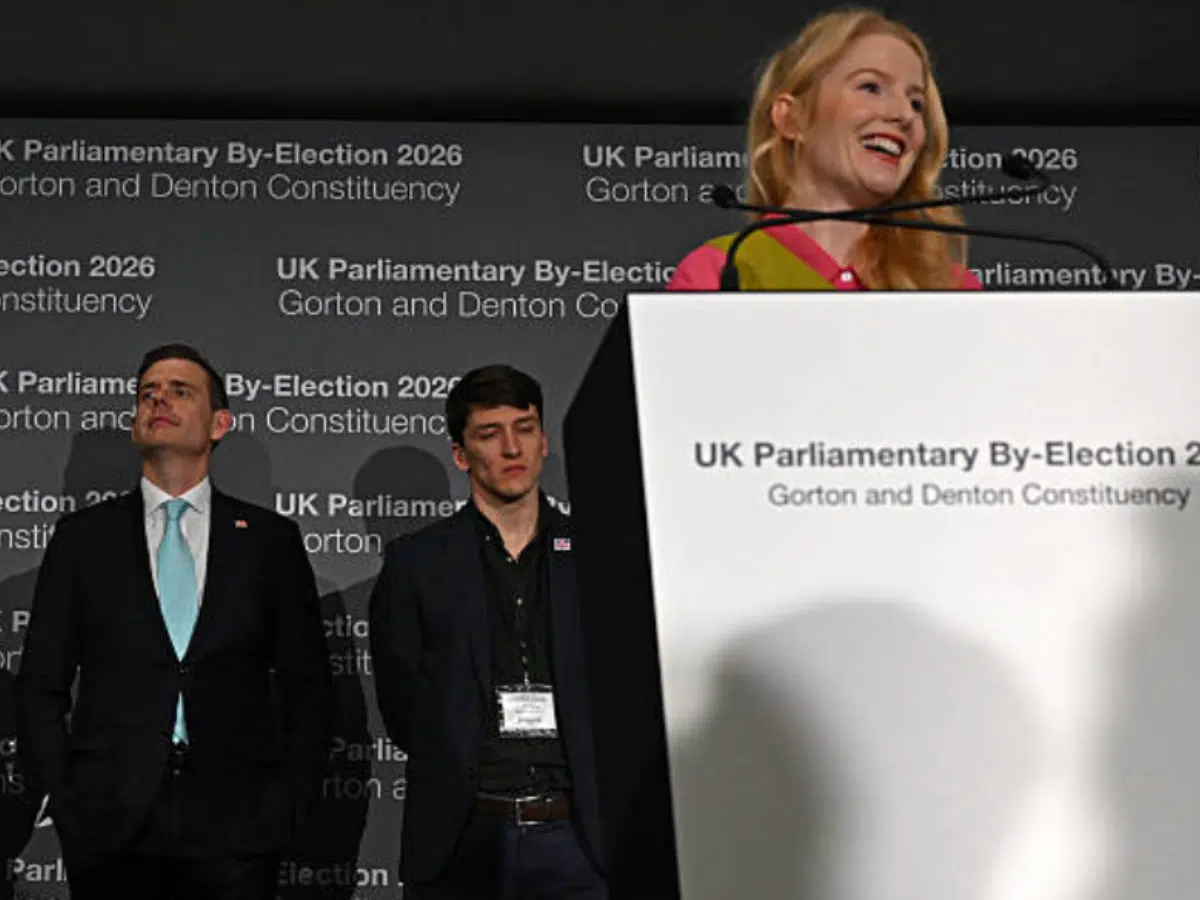
Matt Goodwin hasn’t had a great past month. In February 2026, Goodwin was trounced in the Gorton and Denton by-election by the Greens’ Hannah Spencer. Less than four weeks later, he’s now trying to defend ‘his’ awful, Islamophobic new book after parts – perhaps much – of it were found to be derived from AI chatbots.
Not only that, but his editing was so sloppy that he even left tell-tale ChatGPT indicators in links he puts in the book. What’s more, he can’t blame anyone else for the sloppiness – because he’d already boasted about having “no major publisher”, supposedly because “they would have censored me”.
Goodwin exposed
The exposure of Goodwin’s AI-dodge came in a thread from observant writer and X user Andy Twelves. Twelves found a host of false claims that he described as “AI hallucinations”. Below are a few extracts from the thread:
Claim 1: “In one year 1 classroom in Bradford, only four of twenty eight pupils spoke English as their first language. Teachers report spending large amounts of time simply mediating between dozens of languages, making normal teaching almost impossible and slowing down the rate…
— andy twelves (@andytwelves) March 22, 2026
Some of the errors were schoolboy stuff – if an AI chatbot were a schoolboy. Like a made-up claim about languages spoken in a school – that attributes the claim to a non-existent BBC service:
Claim 2.1: “Teachers often feel they are no longer running a school but a translation service. One inspection report put it bluntly: ‘Many pupils join the school with extremely limited English. This significantly slows the pace of learning.’ This is not multicultural harmony or…
— andy twelves (@andytwelves) March 22, 2026
Goodwin wouldn’t be Goodwin if he didn’t throw in a bit of gratuitous reference to classics and academics. In this case, gratuitous also means non-existent:
Claim 8: “The academic James Burnham put it bluntly many years ago: ‘Power is exercised through organisations those who control the organisations control the instruments of power’”
Reality: Burnham said things vaguely like this, but I cannot find this quote. I believe this is…
— andy twelves (@andytwelves) March 22, 2026
And – of course – some trans-bashing, apparently based on equally made-up sources:
Claim 10: “‘The most dangerous experiments’ warned the economist and philosopher Friedrich Hayek, ‘are those conducted on entire societies.’”⁰⁰Reality: I cannot verify this quote, or anything similar to it from Hayek or any other philosopher or economist. I believe this is…
— andy twelves (@andytwelves) March 22, 2026
And some equally ill-founded migrant-bashing:
Claim 13: “‘The essence of a nation’, wrote the academic Walker Connor, ‘is not the territory occupied but the people who occupy it. To replace the people is to replace the nation.’”⁰⁰Reality: I cannot verify this quote, or anything similar to it from Walker Connor or anyone…
— andy twelves (@andytwelves) March 22, 2026
And, of course, we shouldn’t omit the AI-slop indicators:
(h/t @johnpmerrick) bossman @GoodwinMJ left the ChatGPT in the url in his references hahaha pic.twitter.com/QnL2Cgujfz
— andy twelves (@andytwelves) March 22, 2026
Even more embarrassing for Goodwin, Twelves said he had only done the first five chapters so far:
.@GoodwinMJ can you please outline the above, this is only in the first 5 chapters of the book – I’ve got the Carabao Cup to go to this afternoon, so await your response before reading on.
— andy twelves (@andytwelves) March 22, 2026
FAFO
In a long X rant about horrid left-wingers, Goodwin wrote that he sees “no issue obtaining datasets via AI so long as they are cross-checked with the original source.” Well, maybe – but it seems they weren’t ‘cross-checked’, were they?
This is not Goodwin’s first brush with, well, making stuff up. He was clinically dismantled by journalist Mehdi Hasan in 2024 for making completely false claims that more than tripled the number of immigrants in London housing and could only lamely respond that he’d need to look it up. Hasan saved him the trouble. The clip is well worth a watch:
Featured image via the Canary
UK Parliament (Alamy)

3 min read
Each evening in the pandemic, millions watched the Downing Street briefings where ministers and scientists took questions, explained data and made the case for difficult decisions.
When the public needed it most, the government was visible and accountable. In return, the public was largely sympathetic and compliant.
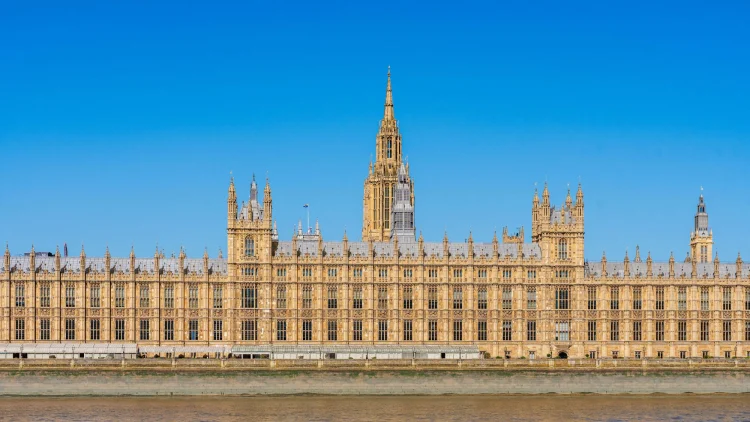
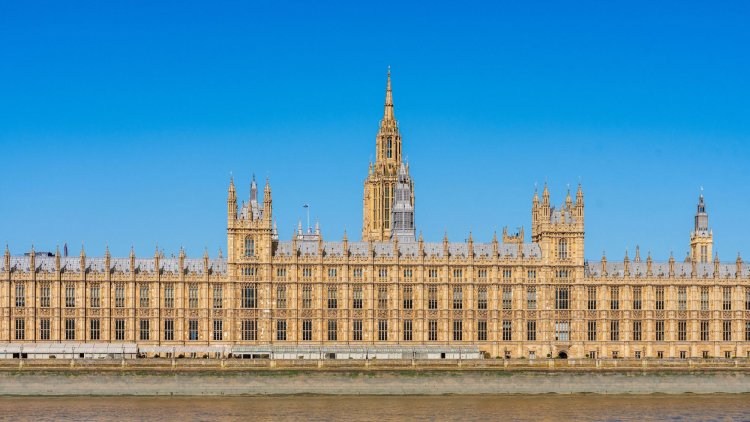
We would later discover that key decisions were being made not in Cabinet or formal, minuted, meetings but in private chats that would be deleted in apparent defiance of preservation requests. When the Covid Inquiry pulled at those threads, a picture unravelled of a government that had mastered the performance of transparency while insulating actual decision-making from meaningful scrutiny.
Information – or lack of it – plays a significant role in shaping public trust. People want to know why decisions are being made. Too often we face an iceberg with some information voluntarily offered to the surface with the substance remaining hidden. Indeed, Westminster offers few statutory transparency requirements: the flawed 2014 Lobbying Act has damningly co-existed with some of the most significant lobbying scandals in a generation.
Labour came to power promising to clean up politics. There have been small positive steps, including creating the Ethics and Integrity Commission – albeit on a non-statutory basis – but most campaigners are underwhelmed by the gap between pre-election promises, including a long-overdue overhaul of our weak lobbying laws, and delivery.
So, it was somewhat surprising that the Committee on Standards recently published proposals that, in the words of the parliamentary commissioner for Standards, could serve to “reduce transparency and accountability”.
The committee’s report on the Register of Interests of Members’ Staff proposes to redact parliamentary staff names from the public register, removing around 2,000 individuals, including those seconded from outside organisations or employed by MPs’ families. A 2021 HuffPost analysis found nearly 90 MPs were employing family members at the time.
The committee argues that measures are needed to guarantee individuals’ safety, and nobody disputes this matters, but the register also exists for good reason. The identification of individuals alongside the Members they serve and interests they hold allows civil society, journalists and the public to scrutinise potential conflicts of interest.
Patterns of employment, repeated hospitality and broader networks of influence which have historically shaped political decision making away from public view can be traced. Removing the names removes this thread. There are sometimes concerns, legitimate and misplaced, that corporate interests, lobbying firms and think tanks attempt to exert influence by placing staff within MPs’ offices. These proposals will fan those flames by making identifying such arrangements virtually impossible. Instead, ironically, they may add further contempt towards parliamentarians.
There is also irony that the committee appeared to reach these conclusions based partly on written submissions that are not publicly available, undeclared meetings and no public consultation. A proposal reducing transparency was developed with a notable absence of it.
These proposals would also worsen our reputation internationally. Comparable legislatures all maintain registers that identify individual staff members routinely. The Chartered Institute of Public Relations’ No Rules Britannia? report demonstrates how the UK already scores poorly in international assessments of lobbying regulation.
The answer is not to remove names from view, but to find a proportionate solution addressing safety without sacrificing accountability. These proposals provide no accountability to those in office and entrench an exploitable gap in our ineffective lobbying framework. We risk going two steps back before making one stride forward.
If Parliament wants to increase public confidence, it must demonstrate the highest ethical standards. It cannot draw the curtain on those with whom it is seeking to build trust.
Alastair McCapra is CEO of the CIPR

Former Hannah Montana star Emily Osment has set the record straight about why she didn’t join her co-stars for the Disney show’s recent anniversary special.
To commemorate 20 years since Miley Cyrus first donned that iconic blonde wig to play Hannah Montana, the Grammy winner recently took part in a special to celebrate the show that launched her to global fame.
As well as surprise guests and musical performances, the Wrecking Ball singer was joined by her former castmates to discuss all things Hannah Montana – but there was one notable absentee.
Emily Osment played Miley Stewart’s BFF Lilly Truscott in all four seasons of Hannah Montana, and its spin-off film, but was not able to attend the reunion because of filming commitments.
Late on Monday night, Emily posted a video of herself on the set of the sitcom Georgie & Mandy’s First Marriage, explaining that her work on the new show meant she was “not able to be a part” of the Hannah Montana special.

“But I wanted to say hello and thank you to everybody that has stuck by us all these years,” she added. “I’m so grateful that you guys all still love this show, and so proud to be a part of it.”
Emily also wrote in the caption: “Hannah Montana changed my life, it gave me a lifelong respect for this medium of comedy, it taught me discipline, patience, timing and respect working in an adult space so young.
“I’ve met thousands of [Hannah Montana] fans over the years, fans that now have children watching this show and fans that literally work beside me every day, like Montana [Jordan, her Georgie & Mandy co-star]. He’s seen every episode, don’t be fooled.
“I can’t tell you what your sweet messages mean to me and how lucky I feel to have been a part of this once in a generation Goliath of a television show. Thank you for letting me into your living rooms and I hope to still be there many years from now.”
The Hannah Montana 20th Anniversary Special is now streaming on Disney+.
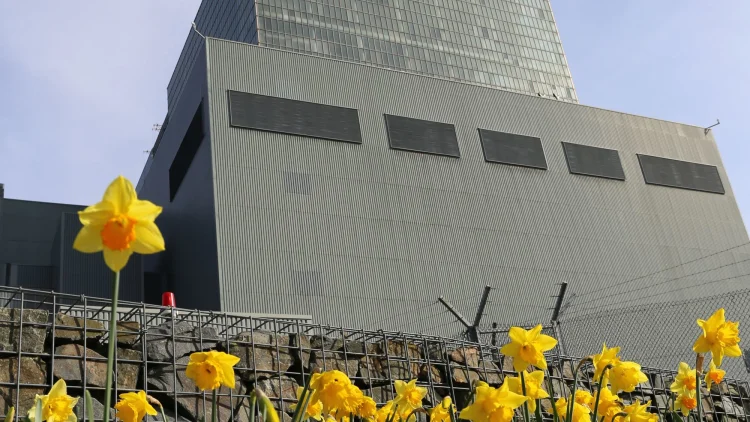

The UK Government’s Nuclear Decommissioning Authority (NDA) is set for the biggest transformation in its 21-year history next month, as a major Scottish nuclear site is transferred to its ownership for decommissioning.
It follows a 2021 agreement that the UK’s fleet of advanced gas-cooled reactors would join the NDA group’s subsidiary Nuclear Restoration Services (NRS), following completion of electricity generation and final defueling by EDF.
Hunterston B in Ayrshire generated almost 300 terawatt hours of electricity from 1976 until 2022, enough to power all of Scotland’s homes for more than 30 years. Now the focus is turning to safely, securely and sustainably reducing hazards and restoring the site for future generations.
NDA Chief Executive Officer David Peattie said: “This is a landmark moment, for the site and the NDA group, and a clear vote of confidence in our skills, capability and expertise as we expand our nationally important decommissioning mission.
“It demonstrates the strength of collaboration, with the NDA group, EDF, Government, Nuclear Liabilities Fund and regulators working together to deliver the transfer successfully, setting out a strong blueprint for the remaining AGR stations.
“Above all, this milestone delivers lasting benefits for our current and future workforce, and the community, securing jobs, supporting the local economy and creating an enduring positive legacy.”
The move sees 246 people secure an ongoing role with NRS as part of a growing decommissioning sector. The NDA group now employs around 19,000 people with roles ranging from safety specialists to project managers, radiological monitors and technical experts.
David Mitchell, Safety Engineer at Hunterston B, will transfer from EDF to NRS: “Having already dedicated 25 years to the site, I always felt that I would stay for deconstruction. Decommissioning is a new experience for me. It has allowed me to pursue a new direction of travel in terms of career path. Learning new processes, working with new people and being able to have the opportunity to have a positive impact on our journey.”
Direct employment will be supported by substantial supply chain investment, with contracts worth millions of pounds expected to be awarded throughout the multi-year decommissioning process. In 2024/25, NRS spent more than £350 million with the supply chain, including more than £11 million at the neighbouring Hunterston A site, which is already being decommissioned by NRS.
Hunterston B is the first of seven AGR sites to be transferred to the government owned decommissioning body over the next decade, with Hinkley Point B in Somerset following in the autumn. Decommissioning will be carried out using funds from the Nuclear Liabilities Fund, a ring-fenced £20.7 billion fund set up in 1996 specifically to pay for the decommissioning of the current nuclear fleet.
For NRS, the transfer represents a growing focus on operations in Scotland. NRS Chief Executive Officer Rob Fletcher said: “Hunterston B joining NRS is the successful culmination of years of preparation from a dedicated team within NRS and EDF, giving regulators and government the confidence to support this move. I’m particularly proud that NRS will now employ more than 2,500 people in Scotland, providing high quality, highly skilled jobs delivering vital work to reduce hazards and restore sites on behalf of the nation. Growing our mission enables us to continue our support for the local community and economy, building on the substantial socio-economic contribution that we already make in the region.”
Hunterston B joins Hunterston A and Chapelcross in Dumfriesshire in being decommissioned by NRS, alongside Scotland’s largest and most complex decommissioning project at Dounreay in Caithness. Torness power station is also expected to transfer to the company once final defueling is completed in the 2030s.
EDF’s Decommissioning Director, Paul Morton, added: “This first-of-a-kind project is a massive undertaking involving not just the transfer of a huge number of documents and permits but also of 246 brilliant people and the knowledge and skills they hold.”
“Transfer is on track to be delivered on schedule. This has only been possible due to the strong relationship developed between EDF and NRS which has given the ONR the confidence to make this change to the site licence and enable continued decommissioning.”
 lead image
A new musical based on the film Trainspotting is to premiere on London’s West End in the summer.
This new take on the movie, itself based on Irvine Welsh’s 1993 novel of the same name, will open at the Theatre Royal Haymarket from Wednesday 15 July.
In addition to new songs penned by Irvine Welsh and techno musician Stephen McGuinness, the theatre show will also incorporate iconic tracks from the original film.
While the original novel and movie centre around a group of drug-addicted young people, Welsh told The Telegraph that the musical “broadens out” themes of addiction to touch on issues relating to the modern world, including social media and the threat of artificial intelligence.
“The problems of addiction are now pharmaceutical drugs or food, the air we breathe, [and] above all, the internet and mobile phones – these things we’re stuck to all the time, where we go through our dopamine hits,” he said.
“So we’re moving into alluding to all that kind of stuff as well, so it’s become a much bigger piece in a lot of ways.”
He added: “The message broadens out to the bigger aspects of the world that we have, we’re just basically set up for addiction and distraction.”
Scottish actor Robbie Scott will make his West End debut in Trainspotting as Renton, the character made famous by Ewan McGregor in the film and its 2017 sequel T2 Trainspotting.
Tickets for Trainspotting The Musical are on sale now from the production’s official website.
In an official press release, Irvine Welsh said: “This musical has a bigger, loudly beating human heart than either the book or the film.
“The various stage adaptations of Trainspotting have become acclaimed and moving theatrical experiences and the soundtrack to the movie is obviously iconic. So it made sense to put the music and words together to create an explosive, provocative and entertaining show.
“People need to think about the world we’re living in, and we offer that inspection, but they also really need to sing their hearts out and laugh their heads off – it’s what being human is all about – and they’ll be well served with this too.”
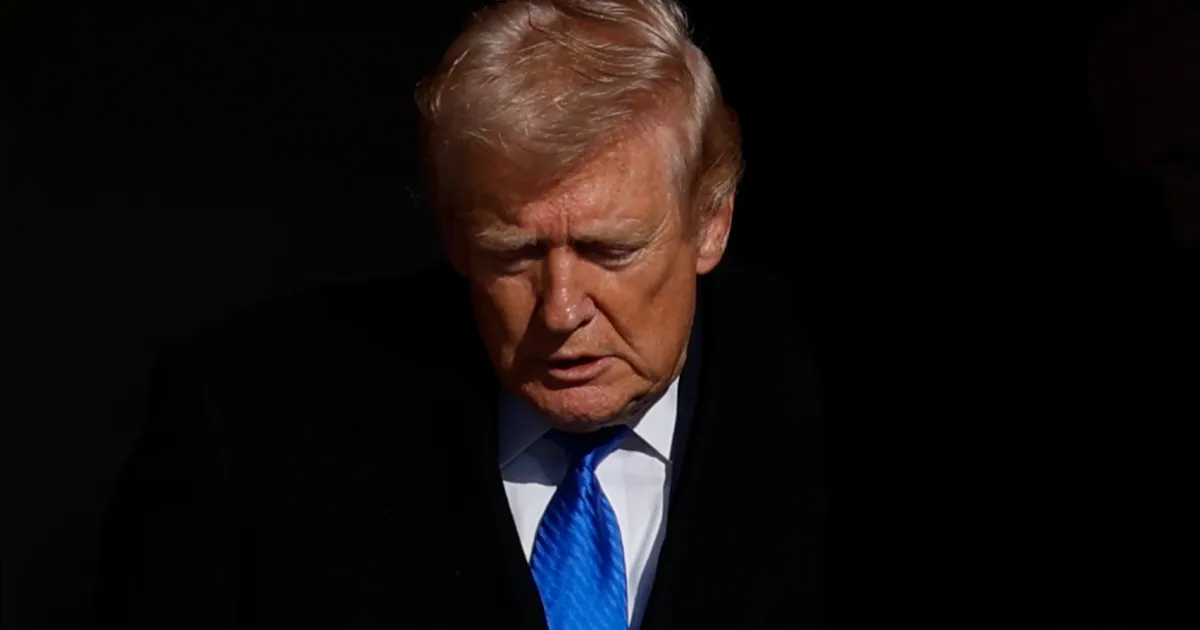
A senior BBC journalist has slapped down Donald Trump’s “utterly fanciful” claim that peace talks are happening to end the Iran war.
Lyse Ducet, the corporation’s highly-respected senior international correspondent, said suggestions that vice-president JD Vance could have face-to-face negotiations with senior Iranian officials were “just not going to happen”.
Trump claimed on Monday that talks to end the war were underway as he backed down on his threat to “obliterate” Iran’s power plants if the Strait of Hormuz remained closed.
However, that has been denied by the Tehran regime.
Speaking on Radio 4′s Today programme on Tuesday, Doucet said: “The only de-escalation, if we can call it that, is that when Donald Trump came back from the dangerous, dangerous brink that he had brought Iran and indeed the world to.
“He de-escalated the situation in the sense that oil prices came down, at least temporarily, stock prices went up, and there’s many accusations now – yet to be proven – of insider trading.
“President Trump came out with these declarations that there were very strong talks taking place. He spoke of a complete and total resolution of hostilities in the Middle East.
“It seems from what we can see, from what we hear, what is happening is far less serious and far less significant.”
Doucet also dismissed suggestions that Vance – a known sceptic about the war – could meet with Mohammad-Bagher Ghalibaf, the speaker of the Iranian parliament, to thrash out a deal.
“The idea that he would be about to go to Pakistan this weekend and meet face to face with JD Vance is utterly fanciful … that’s just not going to happen,” she said.

We hope you love the products we recommend! All of them were independently selected by our editors. Just so you know, HuffPost UK may collect a share of sales or other compensation from the links on this page if you decide to shop from them. Oh, and FYI – prices are accurate and items in stock as of time of publication.
I’ve already waxed lyrical about how bright pops of colour are a particularly hot trend in the fashion world right now.
Cool girl celebs from Zoë Kravitz to Dakota Johnson have been seen sporting bold-coloured accessories that add an eye-catching, not to mention chic, touch to their off-duty outfits.
But the colour I’m seeing the most, and the colour I’ve found myself craving, is big, bold, vibrant red.
It’s the perfect antithesis to the clean-girl beige that’s been everywhere for years, and I can’t get enough.
If you feel the same, do me a favour and have a gander through my spring shopping wish list. If I’m lucky, dear readers, you’ll buy up everything on it before I lose the will to resist…
Politics
Lord Ashcroft: My latest focus groups -“This is the only time I’ve agreed with Keir Starmer in a while”

Lord Ashcroft KCMG PC is an international businessman, philanthropist, author and pollster. For more information on his work, visit lordashcroft.com
My latest focus groups took place in the North-East, where we heard from regular Labour voters in Newcastle East and Wallsend who might be tempted elsewhere, and from people in Bishop Auckland who switched from the Conservatives to Labour at the last election.
Most participants felt that recent political news had been dominated by the Iran conflict, the causes of which remained opaque to many.
Explanations included a Trumpian need to project power, a desire to control oil supplies, a response to the murder of protesters by the Iranian regime, and an attempt to stop Iran building nuclear weapons – the last of which some accepted as the right and reasonable explanation, though a few said they were reminded of claims about Iraqi weapons of mass destruction.
“This is the only time I’ve agreed with him in a while”
Whatever the reasons for the military action, most were glad that Britain was not taking a leading role in it. They tended to back Keir Starmer’s cautious approach and his willingness to defy President Trump, often saying it was the first time for ages that they could remember approving of anything he had done: “I don’t like Keir Starmer, even though I voted for him. But I don’t mind that he didn’t dive straight in on this one. This is the only time I think I’ve agreed with him in a while. He had a bit of balls about him just to hang back and upset them;” “It feels like we’re being cautious as a country, Keir Starmer is being cautious. I think he’s learning from past mistakes with Iraq. I think he’s doing as much as he needs to without getting us heavily involved and bearing arms as a country ourselves, and seeing how it unfolds over the coming weeks.”
Even so, some worried about Starmer’s apparent prevarications and the potential repercussions on our relationship with the US: “They wanted to use the airfields in Chagos, wasn’t it, and it took two days to respond. So I appreciate the fact that he hasn’t got into the war, but they’re still a key ally of the UK and if anything happens going forward, it could be concerning;” “Sometimes he comes across as scared to make a decision and say ‘right, this is what’s happening’;” “I think we should be more involved because America is our ally. And without America… well, we haven’t got the war machines we need to actually go to war. We should have stood by America. If Russia ever attack us, who’s going to help us?”
At the same time, some worried that Britain’s position had been dictated by our diminished military capability as anything else: “I don’t think our military are capable. We haven’t put the money into the military as much as we should have;” “It’s embarrassing. We’ve got one boat and it’s taken a week and a half to decide whether to send it;” “They attacked Cyprus, the British base, and the Americans had to go and protect us. We didn’t protect our own.”
None of our participants had registered any opposition politicians’ stance on the conflict – usually assuming they had sensibly kept their heads down: “I think it’s very muted, what the other parties’ views are. I don’t think anybody’s been very noisy about it, probably because they don’t want to take that responsibility;” “I imagine Farage would probably be more likely to help, just because him and Trump are quite friendly, from what you hear on the news. But I haven’t actually heard anything.”
“It will come out of our pockets no matter what, won’t it?”
The groups had noticed petrol prices creeping up as a result of the conflict. Some thought the government should step in and help consumers if domestic gas and electricity bills rose significantly, but some were doubtful: “It will come out of our pockets no matter what, won’t it? They’ll help, but they’ll claw it back in another way.”
Several also argued that the conflict highlighted showed the need to prioritise energy costs and security of supply over net zero targets: “If the energy price is going to keep going up, big companies aren’t going to invest in growth in the UK because they’ve got to keep the lights on, keep the heating on. Haven’t we already got the highest prices for energy in Europe?” “We should be looking at what we’ve got in this country, what we can use. If stuff is happening in Iran, do we have oil and gas coming in – rather than talking about green renewables, where apparently everything’s made in China anyway, so the net zero green project is contradicting itself.” A few argued that the conflict showed the need to be less dependent on oil and gas in the first place.
“Everybody knows somebody that’s fiddling the system”
There was a guarded welcome for the government’s latest plans on welfare reform, including a new apprenticeship scheme, incentives for firms to take on younger people and requirements for some disability benefit claimants to look for work. However, there were doubts that the scheme would come to fruition (“they tried it before and it got rejected by their own backbenchers”). They also doubted that this government in particular was willing or able to tackle what they regarded as a huge and deep-rooted problem: “I think any working-class person would know five or ten people who are fiddling the system. They know what to do, what to say, what ailment to go for to obtain these things;” “Where I work there are kids who get PIP, and some of them literally brag about how much money they get;” “We work full time and more. I have to do two jobs and my little boy’s dad works two jobs, just to live nowadays. Parents who don’t work get £15 per child a week for food, but working parents have to have two jobs;” “I don’t know you change it, it’s so deep. It’s like an epidemic.”
“I don’t know how accurate this was, but I read on social media something about asylum seekers being given £40,000 to go. We’d pay them to leave!”
Participants in several groups spontaneously mentioned government plans to offer failed asylum seekers £40,000 as an incentive to leave the UK. Most thought it must have been fake news, or that they had misread the story – they couldn’t believe it was actually true: “I don’t know how accurate this was, but I read on social media something about asylum seekers being given £40,000 to go. We’d pay them to leave. Is that right?” “If that was accurate and true I’d be absolutely outraged. They took money off pensioners and are giving it to people who literally broke into the country;” “It will be ‘let’s pop over there for six months, get the money and get the boat back.”
As with the proposed welfare changes, there was qualified support for Shabana Mahmood’s move to make refugee status temporary, to be reviewed every 30 months, with individuals expected to return to their country of origin when it is deemed safe: “It’s a start. I don’t believe it will happen, but it’s not the worst idea I’ve ever heard.” A few disagreed, saying children and families should not be removed if they are settled and contributing.
“Why are we protecting one religion only?”
Some were also concerned about the government’s recently announced plans on community cohesion and tacking anti-Muslim hostility. Most felt that community relations in and around Newcastle were very good – better than in other parts of England, they believed – but there were questions as to why efforts should be focused on one part of society: “It’s not just Muslims that get hate. Why is it just their culture? Why not Jews, why not Christians? Why not Hindus and Sikhs? Why are we protecting one religion only? Shouldn’t everybody be protected?”
Though generally critical of Starmer and the government, the groups (especially longstanding Labour voters) praised policies including energy price caps, scrapping the two-child benefit limit, breakfast clubs, expanded childcare, and the higher minimum wage. Several of these were prepared to give Labour the benefit of the doubt for now: “I think they’ve sort of stopped the rot with inflation. It’s not necessarily getting much better, but it hasn’t got worse;” “There’s been Brexit and covid and two wars. You can’t magic money out of thin air. They’ve been dealt a bad hand, I think;” “I’d like to see what they can do over the next year. It’s a bit like a football club. If you chop and change your manager all the time, you get nowhere.”
“They keep saying ‘the previous government’. Get over it. You’ve been in nearly two years.”
Those who voted Labour having backed the Tories in 2019 tended to find fewer redeeming features. Higher taxes, U-turns and a habit of blaming the previous government after nearly two years in office were recurring themes: “They’ve given me a couple of pay rises that I suppose weren’t coming before that. But they gave them with one hand and took it with the other hand;” “You don’t have any faith in what they’re going to do next, because you don’t know how well thought-out it’s been;” “They promised not to raise taxes, and effectively they have;” “Rachel Reeves. I can’t stand that false smile. She’s like an assassin;” “They keep saying ‘the previous government’. Get over it. You’ve been in nearly two years. You’ve had time to change. You quickly took the money off the pensioners, that didn’t take two years. They don’t take accountability or responsibility for anything;” “If they get in again it could end up being that 12-year span of badness that the Tories ended up having. I feel like it’s best to get them out now before they can do any more damage.”
“I do think she talks a lot more sense. But when they were in, they didn’t change it.”
These groups were still some way from returning to the Conservatives, even though there were some positive words for Kemi Badenoch: “They could promise ten things which I would like, but I wouldn’t vote for them after what happened the last 14 years;” “She’s trying hard but she’s treading water from what I can see. The party doesn’t seem to be behind her. She always seems to be out on her own;” “I do think she talks a lot more sense. But when they were in, they didn’t change it.”
Instead, a number were considering Reform UK.
As well as tougher action on migration, the main appeal was the prospect (or at least the chance) of change: “It’s time to give somebody else a go because the other two have done a horrendous job my whole life;” “I’m not sure they’ll be the answer to everything. But they’re the best of a bad bunch, I think.” There were reservations, however, including rumours of planned NHS privatisation, Nigel Farage himself (“he seems more fame hungry than anything else”), his relationship with Donald Trump, unrealistically easy solutions (“his manifesto was a bit like a fantasy, I think;” “I don’t know how they think they can come in and fix immigration overnight when the other parties have lost government because of it”), and large numbers of Tory defectors (“that’s a red flag for me”).
“I just feel like it’s a good idea to go for someone whose purpose is to just try and make everything better.”
There was also some interest in the Green Party and what they had heard of their policies. More important, however, were the general air of “hope” that some detected, as well as Zack Polanski: “I like how hopeful all of their ideals sound, with the state of the world as it is. I just feel like it’s a good idea to go for someone whose purpose is to just try and make everything better;” “They seem quite hopeful, but they need to build up their political presence because they’re sort of like a backseat party. But if they do, then it could be on the cards for me;” “When he talks about Israel and Iran or Palestine, anything like that, he can’t be labelled as an anti-Semite because he’s Jewish. He’s very well spoken. Whatever is thrown at him, he can either brush it aside without any effort or face it head on with a cool and collected, informed argument.”
Some had their doubts as to how realistic their solutions were – and about Polanski himself: “Anything green – it’s great, but it just costs far too much money;” “More for a younger person, students and stuff;” “As nice as everything he puts out sounds, it’s a little bit fantastical. But I feel like the only reason why it doesn’t sound realistic is because they haven’t had a chance to be in power and start putting things into place;” “Was it him that told women that if you get hypnotised, your boobs will get bigger? Does he know it’s a lie? I can’t have him on my telly. He’s crazy. And he tells you that men are really women.”
“I don’t think he’d invite anybody because he doesn’t want to upset people who don’t have that religion”
Finally, with Easter on the way, if Labour were to get together for Sunday lunch, what would it be like? “It would just be for the people off the boats because they get everything. He’s not going to invite anyone like us;” “The conversation would be very dull and self-promoting. ‘Look at us, what an amazing dinner we put on’;” “Five peas, two bits of broccoli, one Yorkshire pudding;” “I don’t think he’d invite anybody because he doesn’t want to upset people who don’t have that religion. He’d keep the door shut and wouldn’t dare invite people round.”
What about the Reform Sunday lunch? “It would be more of a fun gathering. Their own branded Easter eggs. Farage dressed as an Easter bunny;” “It would be in a pub with a big loudspeaker outside in the car park. A double-decker bus with his face on it;” “Beer on tap in the corner;” “Expensive cognacs, lots of bragging. Someone else is cooking, obviously. Female maids running around.”
The Conservatives? “It would be raucous, but behind closed doors;” “They’d go fox hunting;” “Four people in the corner and a dog;” “They’ll be sitting round the table with £100 bottles of wine saying ‘Keir Starmer’s done this and he hasn’t done that’. But they wouldn’t put a pound on because they’ve got chefs cooking for them and it’s lobster and caviar.”
And the Green Sunday lunch? “It would be a different kind of Sunday joint. They’d be passing it round. Big bags of Monster Munch.”

Denmark goes to the polls in a snap election after Trump’s Greenland bid | World News

Zevero raises $7m to expand AI carbon data platform across Europe and Asia

Bitcoin Price Prediction: War De-escalates, But Still Underperforming


-
 Crypto World3 days ago
NIO (NIO) Stock Plunges 6.5% as Shelf Registration Sparks Dilution Worries
-

 Fashion4 days ago
Weekend Open Thread: Adidas – Corporette.com
-

 Politics4 days ago
Jenni Murray, Long-Serving Woman’s Hour Presenter, Dies Aged 75
-
 Tech7 days ago
Are Split Spacebars the Next Big Gaming Keyboard Trend?
-

 Crypto World2 days ago
Best Crypto to Buy Now: Strategy Just Spent $1.57 Billion on Bitcoin During Fear While Early Investors Quietly Enter Pepeto for 150x Potential
-

 News Videos6 days ago
RBA board divided on rate cut, unusually buoyant share market | Finance Report | ABC NEWS
-

 Crypto World2 days ago
Bitcoin Price News: Bhutan Sells $72 Million in BTC Under Fiscal Pressure, but the Smart Money Entering Pepeto Sees What the Market Does Not
-

 Politics6 days ago
The House | The new register to protect children from their abusers shows Parliament at its best
-

 Tech4 days ago
inKONBINI Lets You Spend Summer Days Behind the Register
-
 Politics7 days ago
Real-time pollution monitoring calls after boy nearly dies
-

 Crypto World6 days ago
Canada’s FINTRAC revokes registrations of 23 crypto MSBs in AML crackdown
-

 Sports22 hours ago
Remo Stars and Kano Pillars Strengthen Survival Hopes in NPFL
-
 NewsBeat6 days ago
Residents in North Lanarkshire reminded to register to vote in Scottish Parliament Election
-

 News Videos6 days ago
PARLIAMENT OF MALAWI – PAC MEETING WITH REGISTRAR OF FINANCIAL ON AMARYLLIS HOTEL – INQUIRY LIVE
-

 Politics5 days ago
Gender equality discussions at UN face pushbacks and US resistance
-

 Business2 days ago
No Winner in March 21 Drawing as Prize Rolls to $133 Million for Next
-

 Business6 days ago
Who Was Alex Pretti? 5 Key Facts About the ICU Nurse Killed by Federal Agents in Minneapolis
-

 Sports21 hours ago
Gary Kirsten Accuses Pakistan Cricket Board Of ‘Interference’, Mohsin Naqvi Responds
-

 Tech2 days ago
Give Your Phone a Huge (and Free) Upgrade by Switching to Another Keyboard
-

 Sports4 days ago
2026 Kentucky Derby horses, odds, futures, preview, date: Expert who nailed 12 Derby-Oaks Doubles enters picks
You must be logged in to post a comment Login