

Politics
Why Wasn’t Wendi McLendon-Covey Part Of The Oscars Bridesmaids Reunion?


This year’s Oscars ceremony featured a hilarious Bridesmaids reunion to commemorate the film’s 15th anniversary.
However, as fans of the hit comedy will no doubt have quickly noticed, the group was actually a bridesmaid down when they took to the stage during the awards show on Sunday evening.
During the broadcast, Kristen Wiig and Maya Rudolph were joined by former co-stars Melissa McCarthy, Ellie Kemper and Rose Byrne, the latter of whom was nominated for her first Academy Award at the event, for her performance in the dark comedy If I Had Legs I’d Kick You.
However, noticeably absent was Wendi McLendon-Covey, who went on to appear in The Goldbergs and St. Denis Medical in the years since her break-out performance as Rita.

Suzanne Hanover/Universal/Kobal/Shutterstock
Explaining Wendi’s no-show, Bridesmaids director Paul Feig told Entertainment Tonight on the Oscars red carpet: “I just heard that she was not available. She might even be traveling, I’m not sure.”
He quickly added: “But we will miss her terribly, because I love Wendi.”
Watch the Bridesmaids gang’s reunion skit for yourself below:
Upon its release in 2011, Bridesmaids was nominated for two Oscars, with Melissa McCarthy receiving an acting nod and screenwriters Kristen Wiig and Annie Mumolo also getting recognition for the script.
Melissa received a second Academy Award nomination in 2020 following her leading performance in Can You Ever Forgive Me?.
With six wins in total, the big winner at the 2026 Oscars was One Battle After Another, written and directed by Maya Rudolph’s long-term partner Paul Thomas Anderson.
After setting a new record for the most nominations in Oscars history, Sinners won four awards on the night, with Frankenstein and KPop Demon Hunters also coming away with multiple wins each.
Check out our full round-up of all the winners from this year’s Academy Awards here.

Politics
Politics Home | Britain’s economy cannot afford a false choice between creativity and innovation



Neil Ross, Director of Technology, Media and Telecoms
| Public First
Britain’s debate over AI and text and data mining has been framed as a choice between protecting creativity and enabling innovation. In reality, the UK’s economic future depends on building a framework that allows both to thrive, argues Neil Ross from Public First
Britain has a bad habit of turning policy debates into battles – one side pitched against the other. The discussion around text and data mining (TDM), the process by which AI uses data, has become the latest example, creating a false choice between innovation and creativity.
That framing is wrong. Britain’s creative industries are one of the country’s great success stories. So too is British tech and innovation – an area where we shine on the world stage. Policymakers should not force a choice between them, but create the conditions for both to grow together.
This matters because TDM is no longer a niche technical issue, nor is it confined to major technology firms. It is now widely used across the economy and sits at the heart of how modern businesses use AI, analyse information, develop new products and raise productivity – from Britain’s car industry to new medicines for the NHS.
Public First research shows that one in five UK businesses already use TDM tools. In sectors central to the UK’s industrial strategy – life sciences and financial services – that figure rises to a third. If we want the UK to lead in AI adoption, scientific discovery, advanced services and digital innovation, we cannot ignore that access to AI tools will determine whether British firms can compete.
More than half of British businesses want to move from basic to advanced integration of AI and cloud technologies within two to three years. Yet many told us that legal risk is holding them back. Seventy‑four per cent of businesses performing TDM said access to external data is essential to their operations.
That should concern ministers. Britain’s growth outlook is far from rosy. Productivity remains weak, fiscal headroom is tight, and every serious economic strategy relies on far faster diffusion of AI and digital technologies. In these circumstances, we cannot afford to close off potential growth by making it harder for UK businesses to compete in a global economy that is only becoming more cut‑throat.
The decisions the government takes now have major consequences. If Britain creates an environment where companies have clear permission to embrace new technology, our modelling suggests AI‑powered businesses could contribute as much as £510 billion to UK GDP by 2035. But under a highly restrictive path, that falls to £290 billion – a £220 billion gap, roughly equivalent to Scotland’s GDP (including oil and gas).
None of this is to dismiss the legitimate concerns of rights holders. Creators should be confident their work is respected and rewarded. But we should not respond by building a regime so restrictive that businesses from biotech to education hesitate to use AI.
Licensing is one obvious part of the solution. Voluntary commercial agreements are beginning to emerge and can offer value for rights holders while giving technology firms access to high‑quality, curated data. Both tech companies and rights holders are already investing in licensing tools. Developing workable models is far preferable to a prolonged policy battle.
Yet licensing alone will not be enough. If companies lack confidence that they can use AI for commercial advantage, the framework becomes too cumbersome and too uncertain. That would throw grit into the gears of UK innovation at exactly the moment growth is needed most – leaving the country poorer, less productive and less competitive.
Creative industries would feel those consequences too. Many of the UK’s most dynamic creative sectors – from video games to visual effects – have themselves argued for commercial TDM exemptions. Britain does not need to choose. It can build a framework that gives both sectors the confidence to invest, experiment and work together.
Other countries have already made that choice, from the EU to Singapore and Japan. Yet a polarised domestic debate risks leaving Britain behind. The Government should aim for a settlement that supports both creativity and innovation – and look at how widely this kind of AI innovation is already being used across the economy to give them the confidence to act.
Neil Ross is Director at Public First and leads its Technology, Media and Telecoms practice.

4 min read
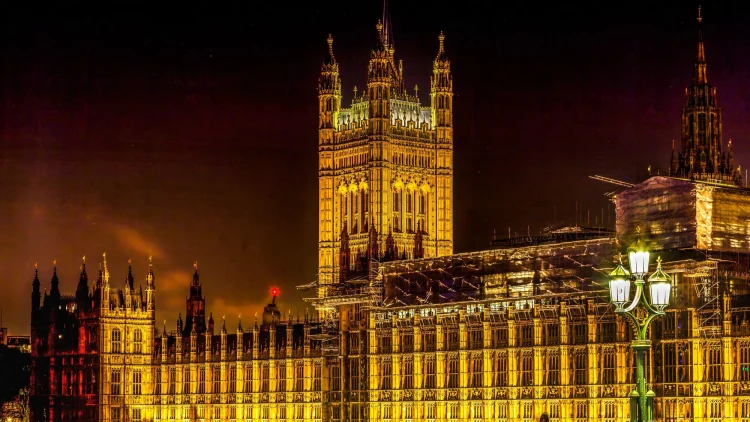
Restoring the home of Parliament is about safeguarding the heart of our democracy for future generations.
The proposals now before Parliament are the result of years of detailed analysis, technical studies, and independent expert assurance. It is right that work of this scale has prompted wide debate, particularly given the very significant costs involved.
There is, however, a broad consensus on one central point: the Victorian building requires major work to address fundamental issues such as fire safety, ageing infrastructure, asbestos, and deteriorating stonework. Without decisive action, these challenges will continue to grow.
Most of the proposed investment—around 85 per cent of construction costs for the Palace of Westminster—is focused on priority works. This includes replacing mechanical, power, water, sewage and heating systems; improving fire safety; managing asbestos safely; and repairing extensive stone damage. These are not optional enhancements but core requirements to keep a complex, heavily occupied historic building functioning safely and effectively.
One of the biggest costs is linked to the extensive network of increasingly outdated services embedded throughout the Palace. The steam heating system for example was installed in the 1950s and has become increasingly unreliable. Recent years have seen up to 80 leaks annually and just a few weeks ago it took several days to fix a major failure.
Ensuring that heating, power and water systems can operate dependably across a 150-year-old building with more than 1,100 rooms is a basic necessity. Improved energy efficiency would be a welcome and sensible byproduct of modernising these systems.
Fire safety is another critical area. Proper fire zoning in a building used daily by thousands of people is essential. In fact, these measures will build on the original fire safety principles in Sir Charles Barry’s design, which have been compromised over time by successive alterations. Restoring that integrity and improving fire protection is both achievable and vital.
Alongside these priority works, the proposals also deliver important benefits for everyone who uses the building. Improving step-free access to around 60 per cent would make Parliament more usable for those who work here and for visitors. In many cases, accessibility improvements are a welcome benefit of safety upgrades—for example, the installation of fire evacuation lifts gives an in-built accessibility improvement.
The plans also include a permanent education centre for the tens of thousands of children on school visits every year as well as an improved visitor entrance and visitor routes. These changes are designed to enhance security and safety for visitors and those who work in Parliament. Basement visitor routes and education centre would make use of existing, underused spaces that would be repurposed with sympathetic restoration that respects the Palace’s historic fabric.
Importantly, these education and visitor improvements represent a modest proportion of the budget— between 0.8 and 2.7 per cent of Palace construction costs—yet they deliver significant benefits for security, safety, and public access.
No one underestimates the scale or cost of a programme of this complexity and duration. That is why extensive parliamentary scrutiny has already been applied and will continue throughout the project. Robust accountability for public spending is essential.
What is equally clear is that delaying decisions comes at a price. Putting off a decision will add many hundreds of millions to the costs of doing the work due to the impact of inflation. As the report warns, continuing with this approach will lead to managed decline of one of the most recognised buildings in the world as it becomes increasingly unfit for the country it serves. It will mean higher maintenance costs, and increasing safety and operational risks for those who visit and work in the building.
After more than a decade of studies, committees and analysis, it is evident that there is no perfect or low cost option. The recommended way forward is a pragmatic one: approval for seven years of work to begin now, with costs capped at £3 billion, averaging £429 million a year (both figures exclude inflation). This approach allows work to proceed while continuing to bear down on costs while testing and assuring designs with MPs and Peers before decisions on the longer term work need to be taken.
Investment in the Palace will also support thousands of jobs and apprenticeships from modern construction and engineering to traditional crafts. The restoration will need the skills of businesses and people in nations and regions across the UK in this national endeavour to preserve one of the world’s most recognised and cherished buildings.
As custodians of this national symbol, we have a responsibility to act. Continuing to defer decisions only increases risk and cost. The sensible way forward is to begin the work now, safeguard the future of the Palace of Westminster, and ensure it remains a safe, functioning home for UK democracy. It is time to get on with the job.

Many associate ageing with different kinds of decline. There’s sarcopenia, or the loss of muscle, frailty, cognitive decline, and bone loss, to name a few.
Often, that link can feel inevitable and linear. But new research published in the journal Geriatrics has suggested that’s not always true.
Speaking to Yale, the study’s lead author, Dr Becca R. Levy, said: “Many people equate ageing with an inevitable and continuous loss of physical and cognitive abilities.
“What we found is that improvement in later life is not rare, it’s common, and it should be included in our understanding of the ageing process.”
What did the paper find?
The researchers followed over 11,000 participants aged 65 and over, involved in the Health & Retirement Study, for 12 years.
They used two metrics to track their physical and mental wellness over time. These were a walking speed test – often used as an indicator of people’s overall physical ageing – and a global cognitive test.
In the 12 years of follow-up, researchers found that 45% of people improved in at least one of the two factors.
Roughly 32% improved cognitively, and 28% improved physically. And when you add people whose cognitive ability stayed the same, “more than half defied the stereotype of inevitable deterioration in cognition,” Yale said.
Positive views about ageing seemed to be linked to these results
OK, if so many of these participants seemed to get better, rather than the expected worse, over time, what did they do differently?
Well, the researchers thought it might have something to do with their attitude towards ageing. And after looking at the data provided, they found that in general, people who had internalised more positive beliefs about ageing were more likely to show improvement in both physical and cognitive capacities after 65.
“Our findings suggest there is often a reserve capacity for improvement in later life,” Dr Levy said.
“And because age beliefs are modifiable, this opens the door to interventions at both the individual and societal level.”


President Donald Trump is bringing back 2020. Many Republicans wish he wouldn’t.
Conversations with nearly a dozen GOP state and county chairs and strategists reveal a party largely eager to move on from relitigating Trump’s election grievances, which they’re worried may detract from an economic message that actually motivates voters. But the president won’t let it go, subpoenaing 2020 election records and putting pressure on lawmakers to pass legislation to overhaul voter registration laws.
As Republicans stare down a treacherous midterm landscape, there’s a growing view inside the party that focusing on “stolen election” claims and voter fraud will kneecap them in the general election: That messaging might play well with the MAGA base in the primary, but it could alienate moderates tired of rehashing an election from nearly six years ago.
“I’m always one to believe you should look forward, not backward,” said Charlie Gerow, a Pennsylvania-based GOP strategist and Trump convention delegate who hosted a meeting of fake electors in 2020 at his Harrisburg-based public affairs firm. “It would be better if the midterms focused on the recovery of the economy and all the good things the Republican administration and Congress are doing to move the economy forward.”
In recent weeks, Trump has turned his sights on Maricopa County — Arizona’s largest county — subpoenaing records just weeks after the FBI raided an elections office outside Atlanta. He has revisited grievances that the 2020 election was “rigged,” suggested Republicans should nationalize elections and is demanding that lawmakers make passing the SAVE America Act, which would put in place stricter voting requirements, their “No. 1 priority.”
“Part of me understands it, and part of me just wants to move forward,” said Todd Gillman, chair of the Monroe County Republican Party in Michigan.
“Focus on the things that matter to everybody throughout the whole country,” he said, “or we’re going to have a problem in a few months.”
Trump does have backing from a number of Republicans, including some battleground-state GOP chairs who are not only embracing the president’s election probe, but openly encouraging his administration to audit their states’ records as they continue to push allegations of fraud from 2020.
Bruce Parks, the chair of the Washoe County, Nevada, GOP, said he would “absolutely” welcome a probe into his county and Clark County, the two largest in the state. And Jim Runestad, the chair of the Michigan Republican Party, suggested a review of records in Detroit, long a focal point of Trump’s 2020 election conspiracies.
“There’s no problem at taking a look at this and making sure everybody’s comfortable,” Runestad said.
Still, others say the risk is that voters simply don’t care — or have moved on. Republicans, including Trump’s own advisers, increasingly want him to focus on the economy ahead of the midterms.
That comes as polling repeatedly shows that economic issues — not election issues — top voters’ list of concerns. In a February POLITICO Poll, more than half of all Americans — 52 percent — said the cost of living was a top issue facing the U.S. By comparison, less than a quarter — 23 percent — said a top issue was the U.S.’ democracy being under threat, a view held predominately by Democrats.
Those cost of living worries are now being exacerbated by Trump’s war in Iran, which is driving up gas prices and wreaking global economic havoc as it enters its third week.
The White House said Trump’s efforts are aimed at restoring confidence in elections and reiterated the importance of passing the SAVE Act.
“[Trump] is committed to ensuring that Americans have full confidence in the administration of elections, and that includes totally accurate and up-to-date voter rolls free of errors and unlawfully registered non-citizen voters,” spokesperson Abigail Jackson said in a statement.
Buzz Brockway, a GOP strategist and former state representative in Georgia, called election issues a “huge distraction,” adding: “Nobody outside of a small dedicated group are talking about this, they’re talking about the economy, they’re talking about, now, the price of oil.”
In Georgia, long an epicenter of Trump’s repeated efforts to litigate the 2020 election, some Republicans say voters are now largely “immune” to the issue that’s been rehashed endlessly for the past five years.
Some state-level GOP officials are hoping Congress passes the SAVE Act — despite the reluctance of many Republican lawmakers — so it will give them enough cover with MAGA voters but allow them to avoid talking about election issues themselves.
While Trump’s “stolen election” claims may still be a driving force for some primary voters, the general electorate is focused elsewhere. And if Republicans make those grievances central to their midterm message, they risk falling into a similar trap Democrats confronted during the 2024 presidential election — when former Vice President Kamala Harris’ warnings about democracy won over already loyal Democrats but failed to sway enough of the swing voters she needed to clinch the presidency.
“You’ve got to at least touch that base,” said one Georgia-based GOP strategist, granted anonymity to speak candidly. But “once you’ve got the nomination, then I think it really collapses down into economic issues.”
That dynamic can create a political conundrum for Republican candidates.
“A savvy Democrat will put a candidate on the spot and say, ‘You agree with [Trump], don’t you?’ and make a mess,” Brockway said. Republicans have “got to figure out a way to deflect that question somehow, in a plausible way that doesn’t alienate this loud minority.”

!function(n){if(!window.cnx){window.cnx={},window.cnx.cmd=[];var t=n.createElement(‘iframe’);t.display=’none’,t.onload=function(){var n=t.contentWindow.document,c=n.createElement(‘script’);c.src=”//cd.connatix.com/connatix.player.js”,c.setAttribute(‘async’,’1′),c.setAttribute(‘type’,’text/javascript’),n.body.appendChild(c)},n.head.appendChild(t)}}(document);(new Image()).src=”https://capi.connatix.com/tr/si?token=19654b65-409c-4b38-90db-80cbdea02cf4″;cnx.cmd.push(function(){cnx({“playerId”:”19654b65-409c-4b38-90db-80cbdea02cf4″,”mediaId”:”f2a11517-5599-4b7f-9d6f-36b253293a95″}).render(“69b7ca6ce4b0e8cdfdd2fe02”);});
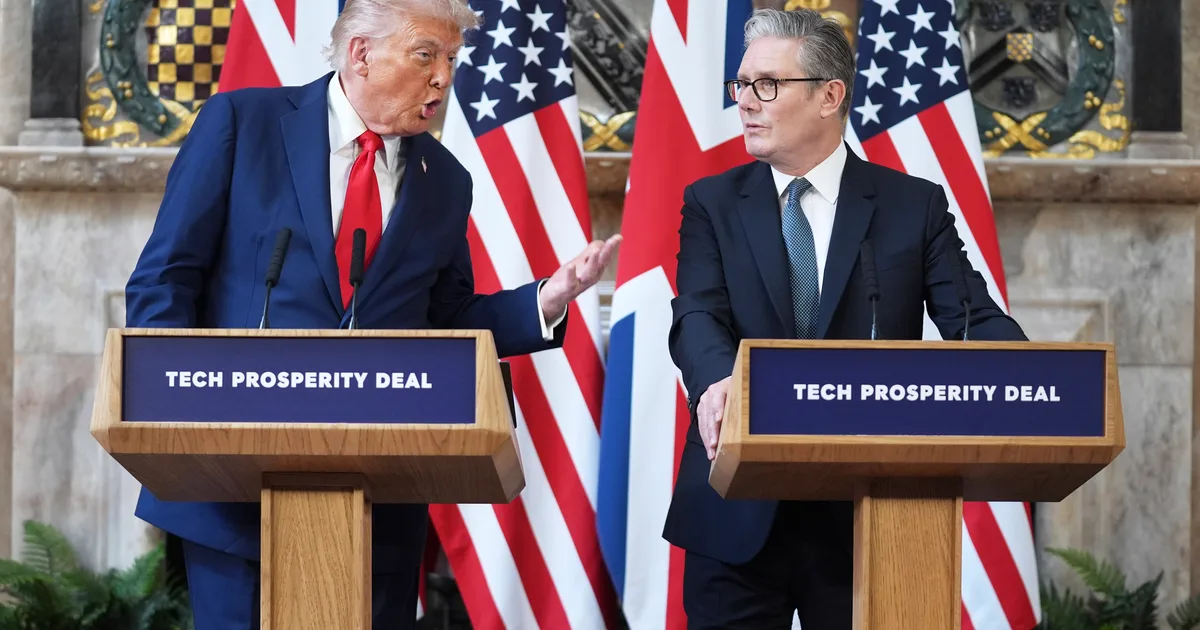
Donald Trump has delivered a chilling warning to Keir Starmer over the prime minister’s initial refusal to let America use British air bases to bomb Iran.
The US president told the PM “we will remember” that decision as the war he launched alongside Israel continues.
Starmer turned down Trump’s request to use UK bases before the conflict began more than two weeks ago.
The prime minister relented 24 hours into the conflict after Iran launched retaliatory strikes on neighbouring countries in the Gulf.
However, US jets are only allowed to fly “defensive” operations from RAF sites as part of the agreement.
Speaking on board Air Force One on Sunday, Trump told reporters: “I don’t want them after we win the war, I want them before we start the war.
“I can say this, and I said it to them: we will remember.”
Nevertheless, Trump has asked the UK and other countries to send warships to protect the Strait of Hormuz, where oil tankers are being attacked by the Iranians.
However, it is understood that the PM is reluctant to do so.
Trump and Starmer spoke on the phone on Sunday night.
A Downing Street spokesman said: “The leaders discussed the ongoing situation in the Middle East and the importance of reopening the Strait of Hormuz to end the disruption to global shipping, which is driving up costs worldwide.
“The prime minister also expressed his condolences for the American service personnel who have lost their lives during the conflict. They agreed to keep in touch.”


Illustration by Tracy Worrall

9 min read
Short-term holiday lets are a major part of Britain’s tourism industry – but many Labour MPs want tighter controls on their number. Will the government listen? Noah Vickers reports
Across the world, politicians are getting tough on short-term holiday lets. Barcelona plans to ban all self-catering rentals from 2028, while in New York it is already illegal to list your property online unless you are staying with your guest throughout their visit.
Concerns about holiday lets have grown as their popularity – and importance to tourism economies – has soared. Platforms like Airbnb, Vrbo and Booking.com have been variously blamed for hoovering up housing supply, hollowing out communities and driving up prices among the few homes that remain. Neighbours, meanwhile, complain about holiday lets being used as party houses, pop-up brothels or drug dens.
While still in opposition, Labour promised to establish a “licensing system” for holiday lets, though details of how it would work were never fleshed out.
In a 2022 speech, then-shadow housing secretary Lisa Nandy said this system would “protect the spirit” of rural and coastal areas, ensuring people were not “priced out of their own neighbourhoods just for homes to stand empty for months”, and ending “the scourge of communities becoming ghost towns when holidays end”.
Yet Labour’s election manifesto did not mention holiday lets once. After taking office, the party confirmed it would proceed with plans started by the Tories for a national mandatory register of holiday lets across England. References to a “licensing system” have been dropped by ministers, however, and they refuse to provide any firm detail as to whether councils will be empowered to control or cap holiday let numbers.
While the register is due to launch this year, several Labour MPs tell The House they are sceptical about whether it will make any substantial difference, particularly as it is set to be a “light-touch” scheme, with holiday let owners not required to upload any documentation proving the safety of their properties.
Under the registration scheme, it is thought that, after paying a small fee, each holiday let will be given a unique ID number, with the owner identified and the data made available to local authorities.
It is hoped that for the first time this will provide a comprehensive picture of just how many holiday lets there are in different parts of the country, and will help councils understand how their housing stock is being used.
But in some of England’s coastal towns, national parks and cathedral cities that attract high numbers of tourists, Labour MPs are starting to call more loudly for tougher action.
Lizzi Collinge, who represents Morecambe and Lunesdale, says hotels and B&Bs in her constituency have complained that they must jump through many more regulatory hoops than their self-catering competitors.
“They don’t have the same safety regulations, they don’t have the same taxation levels, and they don’t always have the same protections for consumers as well,” she says.
“Registration’s a really good start, and it will help us gather data on what the problem is. What it doesn’t necessarily do is give us all the solutions.”
Markus Campbell-Savours, the Penrith and Solway MP who has just had the Labour whip returned to him after it was suspended for rebelling over inheritance tax for farmers, puts it more starkly.
“The scheme does nothing in areas like mine in the Lake District, other than allow us to count how many [holiday lets] there are, and we already have proxies for doing that through things like the business rates system, where we can see how many have registered for self-catering accommodation.
“For me, unless it’s beefed up and turned into a licensing scheme, it’s of little value.”
Nor has the government apparently succeeded in keeping the holiday let industry entirely on side.
Andy Fenner, CEO of the Short Term Accommodation Association (STAA), says holiday lets are “an easy football” for politicians searching for things to blame for the housing crisis.
If you kill the holiday let sector… you kill the tourism industry
STAA, a trade body that counts Airbnb and Vrbo among its members, has been calling for a registration scheme for almost a decade. They believe it will contribute to the sector’s professionalisation and help deter “bad actors”. It will also mean councils are not overestimating the number of holiday lets in their areas, as any given property will often be listed on multiple websites.
“We know that in most cases the problem is massively overblown,” says Fenner. While he acknowledges that an excess of holiday lets can cause issues in some places, he is concerned that the government is failing to properly recognise tourism’s economic contribution to communities across the country.
“It employs people in our towns, rural communities, in beach resorts, where no other business is ever going to be,” he says.
“We need the government to support that, and when it puts legislation through like this registration scheme, work with us to ensure that the word ‘balance’ is the most important one – that, yes, we’re looking at what tourism does to housing, but we’re also looking at what tourism does to jobs, to local economies.
“If you kill the holiday let sector, which is the demand sector of tourism, you kill the tourism industry. We can’t afford to do that.”
STAA has been in weekly talks with officials at the Department for Culture, Media and Sport (DCMS) about the register’s development. But Fenner is frustrated by the fact that he and his association have not been able to secure a single meeting with tourism minister Stephanie Peacock.
“We’ve asked on numerous occasions to meet her and talk to her. We feel this is one of the biggest issues in tourism at the moment, but we’ve never met her.”
Peacock’s predecessor, Chris Bryant, said last year that the registration scheme would go live in April 2026. Yet despite the scheme having undergone testing for several months, Fenner’s understanding is that the launch has been delayed and could be as late as October 2026. Peacock says the register will launch “later in 2026”, without naming a month or season.
It also appears the scheme will not require holiday lets to upload any documentation – such as gas, fire or electrical safety certificates – as a condition of registration.
“What we’ve campaigned for, and to be fair this government has agreed with us on, is for no document uploads – and we can’t complain about that,” says Fenner. “They’ve told us that isn’t going to be part of the scheme.”
He adds that while holiday lets should “of course” have that documentation, the problem with requiring them to upload it is that it would place a responsibility on whichever body is running the scheme to validate it as genuine.
Instead, Fenner understands the scheme will simply ask those registering to confirm that they have those documents, in the knowledge that they could be asked to produce them if any issues arose in future.
The lack of any document upload requirement would tally with Peacock’s own description of the scheme in answer to a December written question, when she said the register would take a “light-touch” approach.
For MPs most concerned about holiday lets squeezing the supply of homes and displacing local populations, this does not inspire confidence.
“It’s pretty meaningless then, isn’t it? It’s a toothless tiger,” says Neil Duncan-Jordan, Labour MP for Poole.
“Let’s be clear about this. When the government’s been trying to get tough on disabled people on benefits, on pensioners with their winter fuel allowance, on farmers and their inheritance tax and employers when it comes to national insurance rates and so forth – and yet we’re not being tough on this sector?
“Why is that? Why are we being so light-touch on this, but so heavy-handed on all the other things?”
Without a “more robust approach” to control holiday let numbers, Duncan-Jordan fears the registration scheme may simply be “window dressing”.
The government really needs to engage with all of those MPs who have long been calling for a proper licensing scheme
Rachael Maskell, Labour (Co-op) MP for York Central, is similarly unimpressed, saying that registration alone is “just not going to cut the mustard”.
“The government really needs to engage with all of those MPs who have long been calling for a proper licensing scheme to get this right,” she says.
“If you live among short-term holiday lets, or have a prevalence in your constituency, you really understand the impact it has… There hasn’t been a reach-out from government to MPs, and it’s about time they did.”
Nor should the government allow holiday lets to operate without uploading proof of their safety credentials, she argues.
“We cannot have a two-tier system where hotels, guesthouses, B&Bs are held to a higher standard than short-term holiday lets. We need to ensure that level playing field.”
Will the register pave the way for tougher action in years to come? Scotland has already instituted a licensing system, with councils able to establish short-term let control zones in their areas. Wales, meanwhile, has more than doubled the number of nights that holiday lets must be rented out for before they can qualify for business rates rather than having to pay council tax.
In England, Keir Starmer told the BBC last year that his government is “going stage-by-stage, so this [registration scheme] is basically stage one. We’ll then carefully review what stage two should look like.”
While in opposition, the now-housing minister Matthew Pennycook made clear his support for changes to the planning and licensing systems.
He told a Westminster Hall debate in 2023 that Rishi Sunak’s government should “legislate for the introduction of a new planning use class for short-term lets without delay”, and give “serious consideration to other measures, whether on taxation or licensing, that will almost certainly still be required”. That, he added, “is what a Labour government would do”.
Pennycook is said to have privately indicated over recent days that he remains personally supportive of giving councils more control over holiday lets, and he would like to dedicate time to the issue in the next parliamentary session.
Approached for comment, Pennycook’s Ministry of Housing, Communities and Local Government (MHCLG) did not deny this.
A MHCLG spokesperson said: “We know that too many second homes and holiday lets can be harmful for communities, so we’ve given councils powers to introduce a council tax premium for second homes, abolished the furnished holiday lets tax regime and removed incentives for landlords to prioritise short-term holiday lets.
“We recognise that further action may be necessary and are actively considering what additional powers could be granted to local authorities.”
DCMS refused to confirm whether the registration scheme has been delayed or will require holiday let owners to upload any documents.
The department referred The House to a recent Commons statement from Peacock, in which she said: “The new national short-term lets registration scheme entered user testing at the end of October to ensure that it is robust and easy to use and meets the needs of the scheme ahead of its planned launch later in 2026.
“Secondary legislation will be required to enact the scheme and we intend to bring that forward when parliamentary time allows.”

The former head of the British Army has hit back at Donald Trump after he warned the future of Nato is at risk unless other countries help America in Iran.
The US president has called for international support to help keep the Strait of Hormuz open so oil tankers can pass through it unharmed.
Around one-fifth of the world oil passes through the narrow waterway, but ships have come under attack from Iran in retaliation for the US-Israeli bombardment of the country.
In an interview with the Financial Times, Trump said: “It’s only appropriate that people who are the beneficiaries of the Strait will help to make sure that nothing bad happens there.
“We have a thing called Nato. We’ve been very sweet. We didn’t have to help them with Ukraine … but we helped them. Now we’ll see if they help us because I’ve long said that we’ll be there for them but they won’t be there for us. I’m not sure that they’d be there.
“If there’s no response or if it’s a negative response, I think it will be very bad for the future of Nato.”
But speaking to Radio 4′s Today programme, General Sir Nick Carter said that was a complete misunderstanding of Nato’s role.
The former Chief of the Defence Staff said: “Nato was created as a defensive alliance and all of its articles are essentially oriented towards defence.
“It was not an alliance that was designed for one of the allies to go on a war of choice and then oblige everyone else to follow. It was not designed for that at all. I’m not sure that’s the sort of Nato that any of us wanted to belong to.”
He was backed by work and pensions secretary Pat McFadden, who told the same programme: “It’s not a Nato war, this. It’s a US-Israeli action, and Nick Carter’s right.
“The articles of association of Nato are a defensive alliance, which is that we come to one another’s aid when those articles have been breached.”
He added: “We’re deeply committed to Nato, but I think Nick Carter is right that it doesn’t operate in the kind of situation that we’re seeing in the Middle East right now.”
Meanwhile, Sir Nick also dismissed Trump’s repeated claim that Iran’s navy has been destroyed.
He said: “The [Islamic Revolutionary Guard Corps] navy is still very much alive and well and they’re got multiple options for creating mischief in the Strait of Hormuz, everything from shore-based missiles and drones to armed speed boats, to unmanned surface vessels and drones, and of course mines.”

The Conservative Party should abolish National Insurance Contributions, shift candidate selection away from “gold star councillors” toward “intellectual seriousness”, and be honest with voters that without growth the triple lock risks unsustainability.
Those are among the more eyebrow-raising recommendations in a new report from Next Gen Tories – a group launched in 2023 to highlight how millennials have been hardest hit by today’s challenges – exclusively seen by ConservativeHome ahead of its official launch this week.
Titled Conservative Revival: A New Radicalism, the paper is one of the more ambitious, and potentially internally combustible, pieces of Conservative thinking to emerge since the 2024 defeat.
As James Cowling, founder and managing director of Next Gen Tories – and author of the report, alongside director of policy Josh Smith – tells me: “The risk of inaction and not showing change is greater than the risk of staying still.
“Kemi is doing well, they’re almost there, it’s just turning the dial up. The party needs to set the vision and up the boldness.”
The paper has attracted backing from both ends of the party’s generations. Established shadow cabinet ministers Andrew Griffith and Claire Coutinho have provided supportive quotes, as have three MPs of the new intake recently tipped for promotion: Katie Lam, Blake Stephenson and Jack Rankin.
It was Rankin who perhaps captured the paper’s spirit most directly: “From a single planning code across the UK, to an acknowledgment that the triple lock will be unsustainable without policies that achieve growth.
“This paper signals a clear break from the Conservative Party of the past. This is a blueprint for a party which confronts this country’s issues from core principles first.”
It is hard to cover each recommendation of the 32 page report but the core principles, intended as the golden thread running through Conservative policymaking and communications, are framed through three pillars: wealth creation, aspiration and community.
On economics, the diagnosis is stark. They note that real GDP per capita was barely higher in 2023 than in 2007, with Britain caught in a self-reinforcing loop of high spending, rising taxes and anaemic growth.
“For too long, debates about public spending have been conducted in isolation from economic reality,” the report reads. “Policies such as the triple lock can illustrate the point. While politically sensitive and unlikely to be scrapped, it should be stated plainly that without stronger economic growth, long-term guarantees of this kind become increasingly difficult to sustain.”
The remedy involves tackling three structural constraints: the failure to build housing and infrastructure at scale; public spending weighted toward consumption over investment; and an uncompetitive tax system. France’s nuclear build-out and New Zealand’s planning liberalisation are cited as models of what political courage can achieve. Hinkley Point C – “the most expensive nuclear project in the world” – is the counterexample.
On aspiration, the paper identifies the nearly nine million voters expected to be paying higher or additional rate income tax by the next election as natural, underexploited Conservative territory. “Aspiration,” Cowling tells me, “is open goal territory for the Party”. The ‘HENRY’ voter – High Earner, Not Rich Yet – is heavily taxed, priced out of housing and, the paper argues, ripe for conversion. Hence the pitch to abolish NICs and roll them into income tax to “reinforce the stance of supporting work”.
The community chapter calls for a “civic nationalism rooted in shared values, equal citizenship and common responsibility,” with enforceable language requirements and welfare access linked to integration milestones – an answer, the authors argue, to the fact that “high levels of immigration have been met with almost no policies to promote integration.”
“Framed positively,” the report says, the approach is not about exclusion but “fairness, cohesion and equal citizenship”.
It also makes a more pastoral argument: that pubs, sports clubs and community centres are “civic infrastructure” whose decline has “hastened the atomisation of our society,” drawing a direct line between pro-growth economics and keeping the local high street alive.
One of the paper’s most striking contributions is its diagnosis of “the seven deadly sins” of modern politics – failings attributed not just to the Conservatives, but to British political culture more broadly.
The first and most fundamental is a failure of political courage: the tendency to downplay the scale of national problems during a campaign, only to discover in government that you lack the mandate to fix them. Labour’s ‘Ming Vase’ strategy in 2024 is the cautionary tale – by declining to level with voters about the structural challenges, the paper argues, the government entered office without the authority to act.
The message to Conservatives is clear: don’t make the same mistake in reverse. The paper recommends spending 2026 and 2027 making a frank public case for the scale of change required, without needing to announce bold policies immediately.
The remaining sins – short-termism, institutional sclerosis, stakeholderism, hyperlocalism, demographic targeting and over-reliance on polling – are each dissected in turn. The critique of demographic targeting may act as a wake-up call. The 2024 election saw the party pander so visibly to older voters that it alienated younger ones it needed to win.
Citing Nuffield College research, the report notes that voters in their fifties and sixties actually turned away from the Conservatives partly out of concern that their children are worse off – a cohort potentially representing 17 per cent of the electorate. “Baby boomers,” the paper drily notes, do not in fact have “saturnine desires to eat the young”.
Hyperlocalism is a clear target for Next Gen Tories: the drift toward MPs as “gold star councillors” rather than legislators. They want to see candidate selection, training and parliamentary management refocused – prioritising “intellectual seriousness and communicative strength” over local activism alone.
They propose a Future Leaders Scheme for the best candidates with a proven record of party involvement as part of the selection process, designed to identify stronger prospects without repeating the mistakes of the old A-list. Local constituencies could be offered benefits for picking one of these candidates, like earlier selection and additional resources, to maintain choice but incentivising “better choices”.
The paper also recommends moving the current fresh talent in the parliamentary party up the ranks into shadow ministerial and cabinet level as a way to “demonstrate that the party has changed” and prove there is “a bedrock of talent that Reform simply doesn’t have”. (A subject I have written on before.)
A “Bond with Britain” announcement this summer should be used as a first public statement of renewed purpose, and the 2028 London Mayoral election could road test the new approach among HENRY voters and affluent suburbanites the party needs to recover.
The dividing line the authors want drawn is “serious change with Conservatives versus chaotic change with Reform UK”. Whether the party has the collective discipline to hold that line – rather than retreating, as its own seven deadly sins suggest it historically does, into short-termism and timidity – is the question Conservative Revival asks, but can’t yet answer.

Donald Trump deployed his usual tactic on Sunday of attacking the questioner — rather than responding to the question — during a press huddle on board Air Force One.
The president yet again took umbrage with a female reporter when she dared to ask whether he believed it was “appropriate” for his political action committee to send a fundraising email that included an official photo of him at the dignified transfer ceremony of six service members killed in his Iran war.
“I do,” Trump first replied.
When the reporter noted accusations that Trump was fundraising off the fallen troops, Trump then claimed he “didn’t see” the email.
“I mean, somebody puts it out,” he continued. “We have a lot of people working for us. But there’s nobody that’s better to the military than me. And all you have to do is look at the election. Look at the election results. Look at the kind of votes that we get. Look at the poll numbers. There’s nobody that’s ever been higher as a president than me with the military.”
Trump then pivoted to his usual attack tactic, asking the reporter who she worked for. When she replied ABC News, Trump lashed out, calling the network “one of the worst, most fake, most corrupt.”
The reporter then asked Trump: “Will you comment on the dead soldiers?”
He ignored the question and instead attacked ABC again.
“You know what, ABC News, I think it’s maybe the most corrupt news organisations on the planet. I think they’re terrible.”
The reporter asked again: “Can you give a comment on the soldiers?”
Trump replied: “OK, I don’t want any more from ABC News.”
Watch from the 9-minute point here:

Regis Prograis explains why he will be the second man to beat Conor Benn: “Don’t be surprised”

Risk Assets: Dispersion Trumps Directionality

Bitcoin Battles Macro Nerves and $75K Sellers This Week

Smart energy pays enters the US market, targeting scalable financial infrastructure

Why Israel is blocking foreign journalists from entering

Bitcoin: We’re Entering The Most Dangerous Phase

HE JUST NUKED XRP. (OFFICIALLY CONFIRMED BY RIPPLE CTO)

Ajjappamada Video Song | Kadakan | Hakim Shajahan | Gopi Sundar |Sajil Mampad |Kadathanadan Cinemas

Young Investors: Smart risks for financial security? | DW Business
-
 Tech5 days ago
A 1,300-Pound NASA Spacecraft To Re-Enter Earth’s Atmosphere
-
 Crypto World2 days ago
HYPE Token Enters Net Deflation as HyperCore Buybacks Outpace Staking Rewards
-

 News Videos7 days ago
10th Algebra | Financial Planning | Question Bank Solution | Board Exam 2026
-

 Business6 days ago
ExxonMobil seeks to move corporate registration from New Jersey to Texas
-

 Crypto World7 days ago
Paradigm, a16z, Winklevoss Capital, Balaji Srinivasan among investors in ZODL
-

 Fashion3 days ago
Weekend Open Thread: Addict Lip Glow
-

 Tech6 days ago
ChatGPT will now generate interactive visuals to help you with math and science concepts
-
Sports2 days ago
Why Duke and Michigan Are Dead Even Entering Selection Sunday
-

 NewsBeat5 days ago
Residents reaction as Shildon murder probe enters second day
-

 Business5 days ago
Search Enters Sixth Week With New Leads in Tucson Abduction Case
-
 NewsBeat6 days ago
Pagazzi Lighting enters administration as 70 jobs lost and 11 stores close across Scotland
-

 Business15 hours ago
Search for Savannah Guthrie’s Mother Enters Seventh Week with No Arrests
-

 Tech7 days ago
Despite challenges, Ireland sixth in EU for board gender diversity
-

 Business2 days ago
US Airports Launch Donation Drives for Unpaid TSA Workers as Partial Government Shutdown Enters Fifth Week
-
Crypto World2 days ago
Coinbase and Bybit in Investment Talks: Could Bybit Finally Enter the US Crypto Market?
-

 NewsBeat5 days ago
I Entered The Manosphere. Nothing Could Prepare Me For What I Found.
-

 Business7 days ago
Search Enters 39th Day with FBI Tip Line Developments and No Major Breakthroughs
-

 Business2 days ago
Country star Brantley Gilbert enters growing non-alcoholic beer market
-

 Crypto World6 days ago
Will Chainlink price reclaim $10 amid volatility squeeze?
-

 Sports5 days ago
PWHL, Senators discussing plan to keep Charge in Ottawa

