
Politics
Why Wonder Man’s ‘Box Breathing’ Works For Anxiety

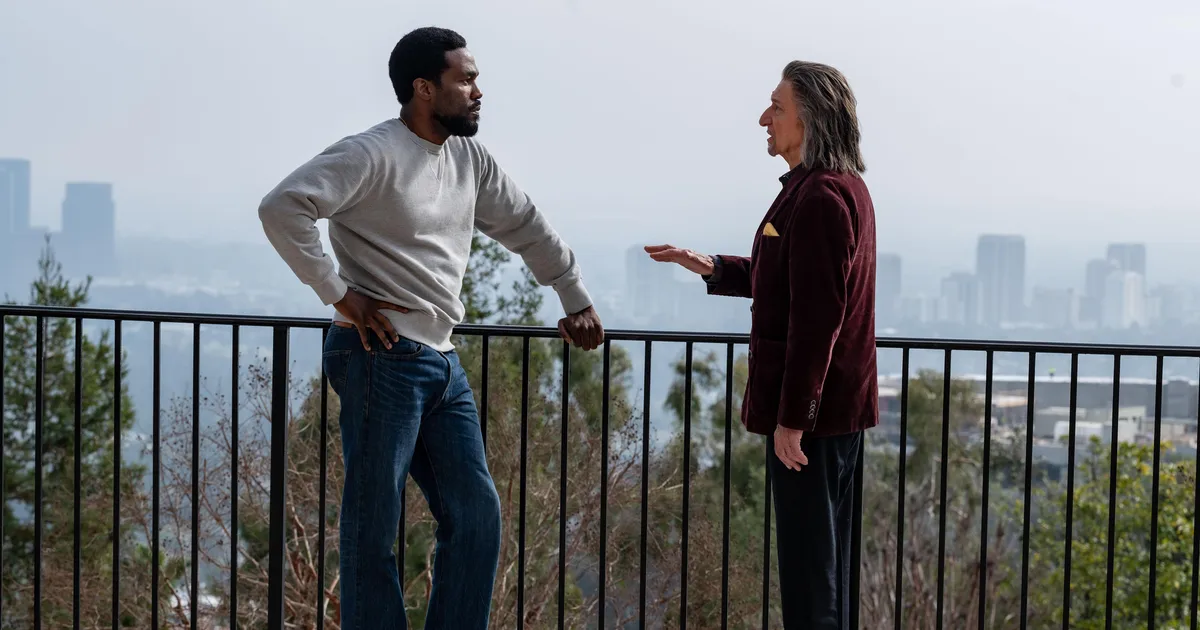
Marvel’s latest hit TV show follows the story of Simon Williams (Yahya Abdul-Mateen II), an aspiring actor struggling in the entertainment industry who’s desperate to star in a major remake of his favourite childhood superhero film, Wonder Man.
Simon meets fellow actor Trevor Slattery (Sir Ben Kingsley), and the pair strike up a friendship as they attempt to bag themselves life-changing roles in the new film.
The pair get into a few scrapes throughout the series, and we see Simon struggling with anxiety, his racing thoughts and emotions getting the better of him.
In one scene, Trevor teaches Simon about the art of “box breathing” to regulate himself, which the actor then continues to utilise throughout the series.
While it’s not a new technique, viewers who weren’t previously familiar with this breathing exercise have now adopted it in their own lives, with positive results – especially when they’re feeling anxious.
What is box breathing?
As the exercise involves holding your breath, Medical News Today notes that people with high blood pressure or who are pregnant should consult a doctor before trying it.
To give it a go, draw a box in your mind – or in the air in front of you with your finger:
- Breathe in for four seconds, while drawing along one side.
- Hold your breath for four seconds, while drawing along the next.
- Breathe out for four seconds, while drawing along the third side.
- Leave your lungs empty while you draw along the fourth side.
Mental health pros are big fans of this breathing technique.
Counselling Directory member Donna Morgan tells HuffPost UK: “Box breathing is one of the simplest and most effective tools I use in my work as an anxiety therapist.
“I smile when clients mention they first saw it on Wonder Man, because popular culture sometimes introduces people to techniques that are genuinely powerful.”
Breathing properly (that is, utilising your lung’s full capacity) has many benefits –it can reduce stress and anxiety levels, slow heart rate, lower blood pressure, and sharpen focus.
Morgan explains that box breathing is effective because it creates balance and predictability, “which is incredibly reassuring for an anxious nervous system”.
“What makes it so effective is not just that it distracts the mind, but that it directly influences physiology. Slow, controlled breathing stimulates the vagus nerve and supports the parasympathetic nervous system, which is responsible for rest and repair,” she shares.
Counselling Directory member Sabah Moran agrees it’s an effective strategy to help regulate stress hormones and activate the parasympathetic nervous system, taking our body back to its ‘rest’ state.
When we are anxious, our fight or flight response is activated leaving us with those classic symptoms: raised heart rate, shallow breathing, sweaty palms and that nauseating feeling in the pit of your stomach.
“The controlling of the breath both in and out, allows the levels of oxygen and carbon dioxide to be back in balance. Adrenaline and cortisol can leave the system,” Moran adds.
Donna Morgan noted that when we consciously slow the breath and create even counts, “we send a clear message to the brain that we are safe”.
“We have the power to do this. Over time, clients learn that they can influence their own state rather than feeling hijacked by it,” she added.
Love box breathing? Try the ‘5,4,3,2,1 method’
In addition to box breathing, both therapists love grounding techniques such as the 5,4,3,2,1 method, which is designed to bring someone out of anxious thinking and back into the present moment by using the senses.
5. Name five things you can see.
4. Notice four things you can feel or touch.
3. Identify three things you can hear.
2. Notice two things you can smell.
1. Name one thing you can taste or one thing you appreciate.
Explaining why it works, Morgan says: “When someone is anxious, the amygdala is activated and the brain is scanning for threat.”
This method redirects attention to neutral sensory data, however. “That shift reduces cognitive spiralling and signals safety to the nervous system. It also engages the prefrontal cortex which supports rational thinking and emotional regulation,” she adds.
“Like box breathing it is simple. We may not be superheroes on screen, but we all have the capacity to influence our own mind and calm our nervous system when we understand how it works.”
Clearly, Trevor is onto something…
All eight episodes of Wonder Man are available to watch on Disney+ now.


On Friday 10 April at 12:00 pm, students and activists will mobilise outside Bush House at King’s College London (KCL) to protest against the London Defence Conference and to condemn the genocidal companies and speakers invited to the on-campus event.
London Defence Conference
First launched in 2023, the London Defence Conference is held annually and often hosts political leaders, military officials, and the defence industry to advance military strategy, spending, and lobbying. Not only were genocide-enablers such as Keir Starmer, David Lammy and many more invited to speak at the London Defence Conference in previous years, but murderous companies such as Palantir, BAE Systems, and more also sponsor or support the conference. These conferences create an atmosphere in which people in power can discuss, justify, and promote an increase in military spending.
Despite criticisms of being discriminatory by the UN, European countries and rights groups, ‘Israel’ has recently legalised the death penalty for Palestinian resistance fighters whilst continuously bombing Gaza, Iran, Lebanon, and brutally murdering thousands of innocent people in pursuit of their colonial expansionist plan.
Meanwhile, Keir Starmer’s United Kingdom continues to license over £500 million worth of military exports to ‘Israel’ and provide approximately 15% of the components in the F-35 fighter jets, which are used in airstrikes across the occupied Palestinian territory.
Our government is complicit in genocide.
As students, we refuse to let warmongers conduct their blood business on our campus, making deals where every handshake results in the dropping of bombs on houses, hospitals and schools.
Corporate complicity in genocide
However, it is not just our government that is guilty.
London Defence Conference’s sponsors and partnership companies are the epitome of brutality, violence and war. For example, Palantir has been a supporter and sponsor of the conference, with its executive vice chair and head, Louis Mosley, invited on stage each year. Palantir is one of ICE’s top corporate collaborators. ICE paid Palantir $30 million to build tools which allow them to identify and find people they want to deport.
In 2024, Palantir renewed its contract with the IDF and continued to provide them with AI systems designed to support precise military targeting, which their CEO, Alex Karp, would call “digital kill chains”, boasting of their effectiveness.
Another key supporter of the London Defence Conference is The Pinsker Centre. It was founded using AIPAC money, and originally named The Pinsker Centre for Zionist Education. It was explicitly created to counter pro-Palestinian activism on UK campuses. AIPAC channels money through the Centre to reshape campus debate. After 7 October, they co-authored a letter explicitly acknowledging that “innocent Palestinians will die” yet called on the UK government to support ‘Israel’ regardless.
‘We will not be bystanders’
A spokesperson for students at KCL said:
We are not naive about what this conference represents. The cycle is not complicated: arms companies fund conferences, conferences legitimise arms companies, governments sign contracts, and bombs fall on Gaza, on Lebanon, on Iran. What happens in occupied Palestine does not begin at the border. It begins here, at the centre of the empire, in the lecture halls and conference rooms of our own universities. King’s College London is not neutral ground. Every sponsorship deal struck within Bush House, every handshake between a defence executive and a politician, is a link in a chain that ends in rubble and mass graves.
Students at KCL refuse to be bystanders to this. We refuse to let the London Defence Conference proceed as business as usual while the institutions and companies it platforms continue to arm and enable genocide. The struggle for Palestinian liberation and all peoples suffering under the violence that conferences like this one bankroll, that struggle is our struggle too. It does not stay overseas. It starts right here.
KCL Stands For Justice (S4J) have organised a peaceful student-led protest outside Bush House at 12:00pm on Friday 10t April 2026, the first day of the London Defence Conference. This is in collaboration with over 80 other groups including Palestinian Youth Movement, Campaign Against Arms Trade, Defend Our Juries, and many more.
Featured image via the Canary
Politics
‘Totally Unhinged’: Trump’s Communications Chief Loses It After TV Host Tears Into President
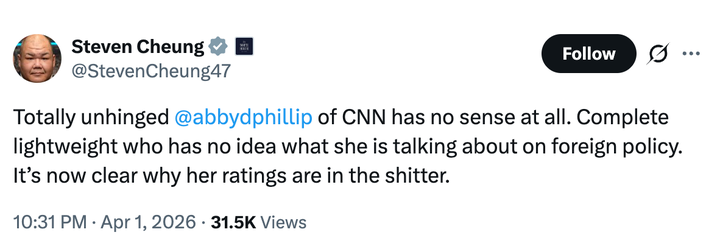
White House Communications Director Steven Cheung whined on social media after CNN host Abby Phillip called out President Donald Trump over the Iran war and his head-spinning foreign policy since he returned to office.
“Totally unhinged @abbydphillip of CNN has no sense at all,” Cheung wrote Wednesday on X.
His comments came minutes after the “CNN Newsnight” host responded to Republican ex-Representative Peter Meijer’s suggestion that the jump in oil prices in recent weeks is “so much less dramatic” than the administration’s expectations, and that Trump’s low polling numbers would still be similar even if Iran capitulated on Day 1.
“But don’t you think Americans are rational about paying a dollar more per gallon at the gas [pump]?” Phillip asked.
She went on: “I think they’re saying very clearly they do not think that this step needed to be taken.”
Phillip’s show aired not long after Trump wrapped up his prime-time address on the war, and she noted that the president’s speech lacked “new insights” on his administration’s objectives.
“The president basically repeated a lot of the things that he’s been saying in Truth Social posts, except he said it out loud,” the host said.
She later teed up a discussion on Trump’s insistence that America’s allies in Europe clean up his mess in the Strait of Hormuz, despite the president not consulting Nato before diving headfirst into the conflict in late February.
She proceeded to argue that Trump threw Nato’s future into question by not asking Denmark to expand US access to military bases in Greenland before threatening to annex the semi-autonomous Arctic territory, escalating an international crisis late last year.
That’s around the time when Cheung made his post on X.
“Complete lightweight who has no idea what she is talking about on foreign policy,” he continued. “It’s now clear why her ratings are in the shitter.” (“CNN NewsNight” was the network’s top show in the adult 25-54 demographic in February, per Nielsen data reported by Adweek.)

Cheung’s latest meltdown on X joins several more of his gripes and grievances over the past year.

We’ve all seen it: the person at the airport gate loudly telling their boss their Wi-Fi isn’t strong enough for video calls, clearly pretending to be stuck at home. Or that friend who, between bottomless mimosas at brunch, is furiously tapping out Slack messages.
Welcome to the modern vacation: gate-checked by remote work.
Thanks to flexible schedules and “work-from-anywhere” policies, we technically can work from anywhere — even while on vacation. And yet that freedom has become a trap. Why bother using PTO when you can save it and fire off emails from a New York hotel room or an Airbnb on a bachelorette weekend?
The result: We’re traveling more than ever, but actually vacationing less than before.

AleksandarNakic via Getty Images
Between lagging Wi-Fi, comped breakfast buffets with unanswered Slack threads, and the ever-present fear of looking unproductive, we’re realizing that something has to change. Welcome to 2026, the year we all start “deadzoning.”
What is ‘deadzoning’?
Despite catching flights, not feelings, we’re all exhausted, because we’re blending business and pleasure a little too seamlessly. We’re permanently switched on: curating the perfect Instagram carousel, tracking breaking news alerts, fielding a relentless stream of group chat messages. “Deadzoning” is the antidote, the art of switching off and traveling in intentional silence.
“Deadzoning reflects a broader cultural shift away from constant connectivity and burnout,” Christina Bennett, a consumer travel trends expert at Priceline, told HuffPost. “After years of being ‘always on,’ travellers are actively seeking vacations that allow them to fully disconnect — mentally and digitally.”
“It’s especially resonating with Gen Z and millennials, who are increasingly prioritising mental health and presence over productivity,” she continues. “In fact, more than a third say they wish devices could be banned entirely while on vacation. At its core, deadzoning is about reclaiming time, focus, and real rest by choosing trips to destinations that force you to unplug and reset.”
How can we start ‘deadzoning’?
As always, it’s easier said than done. We all want to put our phones away… and yet somehow end up clocking 14 hours of screen time a day. Are we even awake for that long in a day?
My first real experience of “deadzoning” came post-breakup, as most breakthroughs do. I got dumped over text by someone who had recently told me he loved me (bold), and I felt the familiar urge to download every dating app going just to reaffirm my value. Instead, I booked a tiny cabin, borrowed my sister’s dog and disappeared off-grid.
I didn’t switch my phone off entirely — I was a single woman traveling alone, and my family was already convinced I was spiralling — but I did turn off the internet. The only thing I allowed myself was one daily text to my sister, confirming that her dog and I were very much alive. It was glorious. Within hours, the phantom urge to check my phone evaporated. No refreshing inboxes. No stalking his Instagram followers. Just trees, silence and a dog who couldn’t care less about my attachment issues.
“Travelers can set better work-life boundaries by being intentional before the trip starts,” Bennett said. “That includes setting a clear out-of-office message, delegating responsibilities in advance, and being upfront about limited availability. Destination choice matters, too — places like mountain towns, national park gateways, and quiet coastal escapes make it easier to step away from screens.”
Which trips are best for ‘deadzoning’?
Now, you don’t have to disappear to a tiny cabin with only a dog for company — though I highly recommend it. Entire businesses have been built around the art of switching off. One such brand is Unplugged, which specialises in off-grid cabin stays designed specifically for digital detoxing.
“Unplugged cabins are entirely off-grid and have no phones, Wi-Fi, or technology, and they provide all the offline essentials such as a phone lockbox, books, a physical map and an instant camera,” Unplugged co-founder Hector Hughes told HuffPost. “It’s much easier to be without your phone and laptop when the space is intentionally built for that purpose.”
In other words: If temptation isn’t there, you can’t give in to it.
“Booking a remote location in nature where the signal is naturally low is also a great choice,” Hughes continues. “There is no Wi-Fi or 5G in the mountains, so you are physically unable to check your phone.”
And it’s not just about going off-grid, it’s about choosing the right kind of environment. Alex Oldfield, co-founder of Curated Spaces — the world’s first booking platform powered by tastemakers — also shared a few guiding principles for planning the ultimate “deadzoning” escape:
- Places with permission to slow down.
Rural farm stays, remote cottages, coastal hideaways, cabins in the woods. Anywhere the pace of life is naturally gentle. - Design-led spaces that encourage presence.
Homes with big windows, long communal tables, outdoor baths, and crackling fireplaces. When a space feels good to inhabit, you stop reaching for distraction. - Experiential rather than itinerary-heavy trips.
The best “deadzoning” trips revolve around simple, tactile pleasures: swimming in the sea before breakfast, foraging walks, garden grazing, star-filled evenings, meals that stretch lazily into the afternoon. - Somewhere slightly out of reach.
A winding country road, a ferry crossing, a slow train journey — just enough distance to create a psychological gap between everyday life and vacation time.
Because ultimately, deadzoning isn’t about punishment or proving you can survive without your phone. It’s about engineering a break that feels genuinely different from your normal life, one where the silence isn’t awkward, it’s restorative.
What are some tips for ‘deadzoning’ on your next trip?
My personal recommendation? Get dumped over text by a man who once said he loved you and borrow — or gently steal — someone’s dog for a few nights. Highly effective. Questionable scalability.
For those seeking something slightly less niche, here are expert-backed ways to engineer the perfect “deadzoning” vacation:
Lock away your phone
“If you can, lock your phone away so distraction is not an option,” recommends Hector Hughes.
You can even take a more inexpensive, less-addictive “replacement dumb-phone out with you” for emergencies, he suggested.
Airplane mode is your friend
Many of us can’t go fully off-grid. Safety, family, work — life still exists.
Hughes acknowledged this: “If you can’t lock your phone away, turn off all email and social media notifications or put your phone on Do Not Disturb or airplane mode. Put it in your bag (not your pocket) so you don’t feel the urge to pick it up out of habit.”
Go in with a plan
“Leave a rock-solid handover so nothing’s hanging over you, and tell people you’ll be offline (bonus points if your destination truly has no signal),” Oldfield said. “Don’t do the ‘feel free to ping me if anything comes up’ line — we’ve all said it, and we all regret it. Boundaries are completely fine, as long as you’re clear upfront and leave no room for confusion.”
Think of it like telling your partner you’re going to that 6 a.m. spin class. The second someone knows about it, you’re suddenly far more committed to following through.
Pick the right setting
“Switching off is way easier when the place itself helps you shake off your usual rhythm,” Oldfield said. “Maybe it’s a cabin surrounded by fields with no signal, a coastal cottage where you can live the fisherman aesthetic IRL, or a hotel where you can disappear into the spa and order room service after. It starts with choosing somewhere that makes slowing down feel natural.”
Environment is everything: You are far less likely to check Slack while staring at sheep.
Go analog
“Bring that book you’ve been meaning to read,” Oldfield suggested. “Cook something from an old recipe book, go for a long hike, play cards by the fire. Go for a mooch in the local town, get a little lost and ask for directions, shriek your way into a cold wild swim, write a letter. If you feel like you’re in a Jane Austen novel, you’re doing it right.”
Because at its core, deadzoning isn’t about rejecting modern life. It’s about remembering that we’re allowed to step away from it, even briefly, without the world collapsing in our absence.

Labour is heading for “a total bloodbath” in the elections on May 7, according to a polling expert.
Voters will go to the polls in England, Scotland and Wales for the biggest test of public opinion since Keir Starmer won a landslide general election victory less than two years ago.
Since then, however, Labour and the prime minister’s popularity has plummeted following a series of gaffes, ministerial resignations, controversies and scandals.
Ben Walker, co-founder of polling analysts Britain Elects and a Labour councillor, said May 7 is shaping up to be disastrous for his party as well as the Conservatives.
In a post on X, he said: “Putting together the English local election forecast. Scotland and Wales done.
“I have to say, and not to give a sneak peak, but to affirm what’s been written elsewhere: this May is going to be absolutely terrible for the Tories. But a total bloodbath for Labour.”
Labour is facing defeat once again to the SNP in the Scottish Parliament elections, and could even come third behind Reform UK.
The party is also set to lose power in the Welsh Senedd for the first time since it was set up in 1999, with Plaid Cymru on course to form the next government.
Around 5,000 council seats are up for election on the same day, with analysis by the Financial Times last month suggesting Labour could lose nearly 2,000 as Reform and the Greens make major gains.
A by-election held on Thursday for a seat on Rossendale Borough Council provided a foretaste of what Labour can expect on May 7.
The party’s vote share plunged by nearly 28% as they lost the seat to the Greens.
Meanwhile, Reform polled 34.5% from a standing start, 15 points more than Labour.
Subscribe to Commons People, the podcast that makes politics easy. Every week, Kevin Schofield and Kate Nicholson unpack the week’s biggest stories to keep you informed. Join us for straightforward analysis of what’s going on at Westminster.
The more I learn about the health benefits of walking, the more I understand why the NHS calls the exercise “overlooked”.
Walking as few as 2,337 steps a day can reduce your risk of heart attack and stroke, while a 1.6km stroll is linked to denser bones.
It can help your sleep, joints, and immune system, and may even lower your cravings for sweet foods. Walking for half an hour daily may add 1.4 years to women’s lives, and 2.5 to men’s.
But if you want to make a great thing even better for you, it turns out there are some simple changes – like bringing a friend on your walk, or taking a hilly route – that could be worth your while.
How can I make my walk healthier?
1) Walk briskly
All walking is good for us. But in one study, brisk walking was linked to a 20% reduction in premature death compared to just 4% for slower walkers.
The NHS said that we should aim for a 4.8km/hour pace. Speaking to HuffPost UK previously, Dr Hussain Ahmad said brisk walking “means you’re walking fast enough to feel warmer and breathe a bit harder, but [are] still able to hold a conversation”.
2) Take a hilly route if you can
“Incline walking,” or walking on a slope, seems to engage more muscles and raise heart rates higher than walking on a flat surface.
Speaking to HuffPost UK previously, GP Dr Suzanne Wylie said: “For many people, especially those who are new to exercise, carrying excess weight, managing joint pain or recovering from injury, incline walking can provide meaningful cardiovascular benefit and muscle engagement.”
Even downhill walking may benefit us, especially as we age.
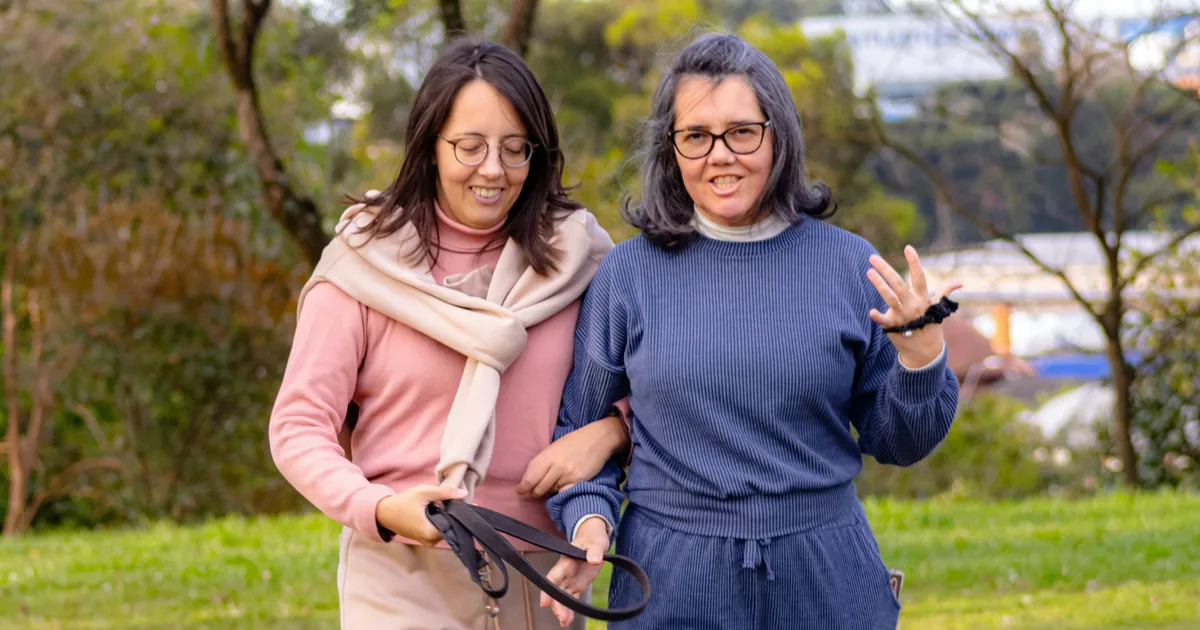
3) Bring a friend
Speaking to the University of Oxford, Dr Arran Davis said that fatigue is much more determined by how we feel than by the actual condition of our muscles.
Social support helps to reduce and delay that perceived fatigue, helping us to push ourselves for longer. The effect is so strong that even seeing a photo of a supportive friend makes us feel less tired.
4) Try ‘Japanese walking’
10,000 steps a day is a marketing tool – scientists have since found that around 7,000 paces daily is enough to lower your risk of all-cause mortality by 47%.
But “Japanese walking,” a type of interval walking that involves walking for three minutes at a fast pace and then slowly for another three minutes until you reach a half-hour walking, may be one of the most beneficial ways to reach that goal.
A 2007 paper found that among middle-aged participants, people who followed that pattern enjoyed lower blood pressure, stronger thigh muscles, and better aerobic ability than those who walked 8,000 steps a day at a steady pace.
5) Walk for at least half an hour a day if you can (but remember that something is better than nothing if you can’t)
The NHS recommends getting 20-30 minutes of moderate-intensity activity, like walking, a day.
A 2023 review found that “Meeting current physical activity guidelines by walking briskly for 30 min per day for 5 days can reduce the risk of several age-associated diseases”; in post-menopausal women, for instance, half an hour’s walk a day was linked to a 40% lower risk of hip fracture.
Of course, until about 9,800 steps a day – when health benefits max out – more walking is generally better. But the NHS points out that “a brisk 10-minute daily walk has lots of health benefits,” and a recent study found that 4.5 minutes extra movement a day can reduce your heart attack risk.


Maryland Gov. Wes Moore said it was “nonsense” for President Donald Trump to say that the United States should not have to pay for Medicare or day care because the nation was busy fighting wars.
“That’s nonsense,” Moore said in an interview that aired Sunday on CBS’ “Face the Nation.” “And that’s not what any of us want. We don’t want to be fighting foreign wars while you’re taking away our health care.”
Moore was responding to a question by Ed O’Keefe about a statement the president made Wednesday at an Easter luncheon at the White House. “It’s not possible for us to take care of day care, Medicaid, Medicare, all these individual things,” Trump told that gathering. “They can do it on a state basis. You can’t do it on a federal. We have to take care of one thing: military protection. We have to guard the country.”
Video of the president’s remarks was posted on the White House online, but subsequently deleted.
In addressing those remarks, Moore said no state had the capability of replacing the federal government as a provider for everything.
“So many of the decisions that this White House is making, they are making with a clear understanding that no state has a budget to say, ‘OK, well, we’ll just take on health care,’ or ‘We’ll just take on food insecurity,’” he said.
Moore, who served in the 82nd Airborne Division in Afghanistan, also challenged how Trump has handled the Iran war — and all the side effects the war has caused.
“I think the president still does not have a full articulation as to why gas prices are going up in the first place, or what’s going to be necessary or required to be able to bring them down,” he said.
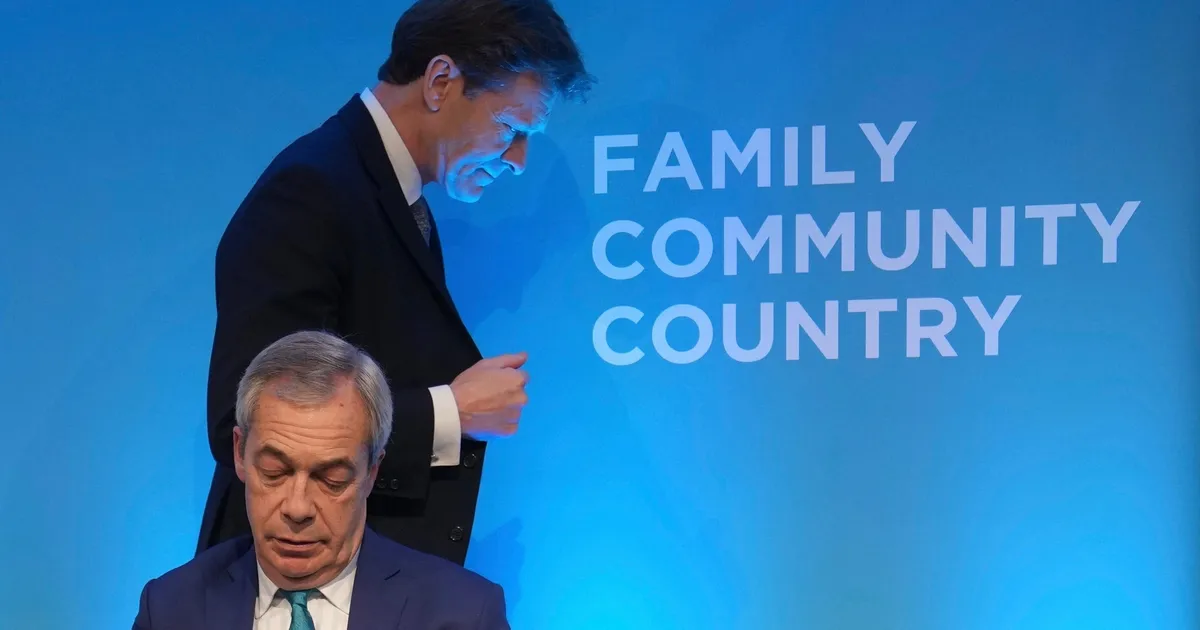
Nigel Farage has wrongly claimed that a senior Reform UK official sacked for offensive comments about the Grenfell tragedy was only in his post for two weeks.
Simon Dudley was dumped by Farage as the party’s housing spokesman following a furious backlash to his remarks.
A major overhaul of building regulations took place after 72 people were killed in Grenfell Tower in west London in 2017.
But in an interview with trade publication Inside Housing, Dudley said the pendulum had “swung too far the wrong way”.
He said the Grenfell fire was a “tragedy” but added: “Sadly, you know, everyone dies in the end. It’s just how you go, right?”
Farage announced his sacking during a press conference on Thursday.
He said: “He’s no longer a spokesman for the party. That has been dealt with.”
In a bad-tempered interview afterwards with Sky News, Farage said: “He was appointed two weeks ago, he’s made these comments, he’s no longer there.”
But Reform actually announced Dudley had been handed the role on March 10.
In a press release, deputy leader Richard Tice said: “He understands planning, finance and regeneration. He knows how to get projects moving. That is exactly what we need. ”
Elsewhere in his Sky News interview, Farage tried to shift the blame for the row onto Tice.
He said: “I met [Dudley] once for two minutes, I don’t know the guy. Richard’s in charge of development, housing, economics. He thought he was the right person to put in place because of his considerable expertise in the area. That’s undoubted.
“But whether you’ve got expertise and media skills, where you’re not going to say something that trips yourself up, they’re different.”
Nearly 24 hours on from Farage announcing Dudley’s sacking, Tice has yet to publicly comment.
Subscribe to Commons People, the podcast that makes politics easy. Every week, Kevin Schofield and Kate Nicholson unpack the week’s biggest stories to keep you informed. Join us for straightforward analysis of what’s going on at Westminster.

It’s amazing how much of everyday life I didn’t question for years – like what “wi-fi” really means, where we get paprika from, and what ASDA actually stands for.
And opening my fridge this afternoon, another banal mystery confronted me. What’s that squidgy black mat at the bottom of raspberry trays for, and why isn’t it in the bottom of my strawberry tray?
It seems I’m not alone. Posting to r/NoStupidQuestions, Redditor u/GrumpyOldSophon asked about the addition, wondering why you “never find this in packages of blueberries or strawberries”.
The sheet is absorbent, but it may have other qualities
It probably won’t shock you to learn that the sheet is there to absorb some moisture. Packaging specialists Packaging World described these sheets as “dual ply absorbent” material, “applied to a totally absorbent, yet sealed, topcoat”.
They’re designed for softer fruits, like raspberries and blueberries, as these aren’t as hardy as, e.g., strawberries or grapes. Speaking to Eating Well, Robert Schueller, a produce expert at Melissa’s Produce, said: “A raspberry is one of the most delicate fruits out there, so they have to be packaged very carefully”.
They provide some cushioning for the delicate fruits as they’re transported, too. And because they wick away moisture, they can help to prevent mould.
It makes sense for it to be black or red as it’s designed to catch berry juices, which would otherwise stain it.
Though there may be another, unexpected benefit here: pitching their black cartonboard packaging for strawberries, MM Karton said: “The contrast of black cartonboard and red strawberries is a real eye-catcher at the point of sale”.
Perhaps the red berry/black sheet colour combo makes our raspberries look more inviting, too.
That’s also why raspberries are packed into smaller containers
I have enjoyed many a mega-size box of strawberries this year.
But it turns out retailers aren’t being stingy for limiting their raspberry carton sizes; the berries are too delicate to be stacked on top of each other, unlike strawberries and even blueberries.
And, Schueller added, “you need to allow space for air in each package, too”.

A senior United Nations officials has warned Donald Trump that targeting key civilian infrastructure in Iran would be “war crimes”.
The US president said bridges and power plants could be destroyed unless the regime in Tehran agrees a peace deal to end the conflict.
His comments, in a post on Truth Social, came nearly five weeks after the war began with a wave of Israeli and US strikes.
Trump said: “Our Military, the greatest and most powerful (by far!) anywhere in the World, hasn’t even started destroying what’s left in Iran. Bridges next, then Electric Power Plants! New Regime leadership knows what has to be done, and has to be done, FAST!”
But speaking on Radio 4′s Today programme, Tom Fletcher, the UN’s under-secretary general for humanitarian affairs, said that would be a clear violation of international law.
He said: “This is infuriating. We’re dealing with the intended and unintended consequences of this reckless conflict, and I think what everyone is observing now is that war is not a television game show.
“Peacemaking is not a real estate deal and the world is not a casino and these actions have real consequences.”
Fletcher added: “This has been a gradual and then very sudden deterioration in the way that we talk about protection of civilians, the way that we talk about international humanitarian law.
“This stuff isn’t negotiable. You don’t hit civilian infrastructure.
“You don’t hit schools, you don’t hit energy sources, you don’t hit bridges. Those are war crimes. That is absolutely clear in international law.
“But somewhere along the way we seem to have thrown that all aside and we’ve chosen impunity, indifference, game show gambling over solidarity and humanity.”
Subscribe to Commons People, the podcast that makes politics easy. Every week, Kevin Schofield and Kate Nicholson unpack the week’s biggest stories to keep you informed. Join us for straightforward analysis of what’s going on at Westminster.

Some experts advise against cutting hedges between March and September, as that’s when birds are busy building their nests and raising their chicks.
But Andy Simms from MyBuilder.com, which is running a Help the Hedgehogs campaign, pointed out that we need to look out for other little critters too.
“The winter season is well and truly over, so, understandably, millions of Brits will be starting to think of garden tasks they can complete now ahead of summer. But it’s not just us that might be outside, hedgehogs may be, too, and they’re not always easy to spot,” he said.
How can I tell if I have hedgehogs in my garden?
“There are signs to watch out for, such as small, black droppings, tiny hand-like footprints in mud, and loud grunting noises, particularly at night. If you notice any of these, you may have one of these small creatures in your garden,” Simms shared.
Hedgehog poop is typically 1-1.5cm long and often has shiny insect remains in it.
Hedgehog Street has a postcode tool that can tell you if people have reported hedgehogs near you, too (hedgehogs can travel further than you think at night).
You should always check these signs before beginning any gardening task, be it mowing, pruning, or planting, Simms added.
And don’t forget to look in any garden drains from time to time, as hedgehogs can fall in these and get stuck.
Hedgehogs are seriously struggling in the UK
Sadly, these measures are necessary as hedgehog numbers have fallen by 30% in urban areas and 50% in rural ones since 2000.
“If you would like to help protect hedgehogs, there are jobs you can do, such as leaving some areas in your garden wild… or even building a hedgehog home,” Simms said.
Collecting nesting materials like logs and leaves, providing clean drinking water, and avoiding the use of slug pellets can all help, DEFRA shared on the government’s site.
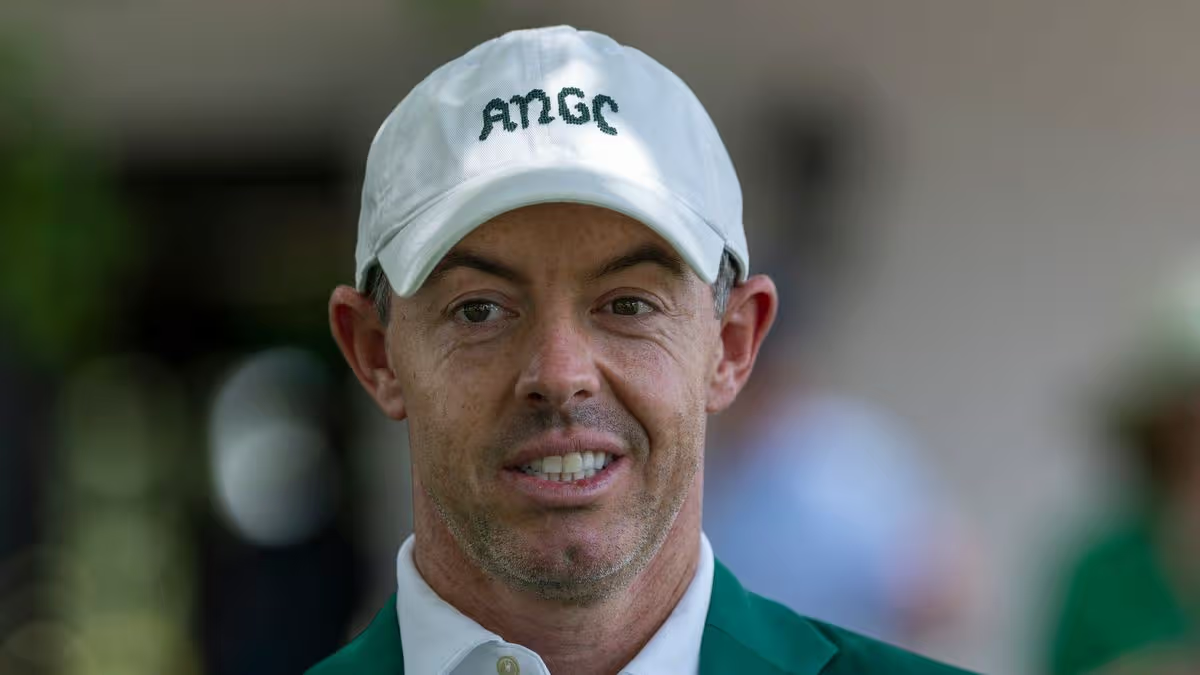
Rory McIlroy’s Masters call works out as emotional Tiger Woods statement released

Zelenskiy in Syria to discuss security cooperation with Sharaa

Trader says new BTC lows are imminent as price sits near $67K


-

 NewsBeat3 days ago
Steven Gerrard disagrees with Gary Neville over ‘shock’ Chelsea and Arsenal claim | Football
-

 Business3 days ago
No Jackpot Winner and $194 Million Prize Rolls Over
-

 Fashion2 days ago
Weekend Open Thread: Spanx – Corporette.com
-
Entertainment6 days ago
Fans slam 'heartbreaking' Barbie Dream Fest convention debacle with 'cardboard cutout' experience
-

 Crypto World4 days ago
Gold Price Prediction: Worst Month in 17 Years fo Save Haven Rock
-

 Tech7 days ago
The Pixel 10a doesn’t have a camera bump, and it’s great
-
Crypto World5 days ago
Dems press CFTC, ethics board on prediction-market insider trades
-

 Tech7 days ago
Avatar Legends: The Fighting Game comes out in July and it looks pretty slick
-

 Sports20 hours ago
India men’s 4x400m and mixed 4x100m relay teams register big progress | Other Sports News
-

 Business4 days ago
Login and Checkout Issues Spark Merchant Frustration
-

 Tech6 days ago
Apple will hide your email address from apps and websites, but not cops
-

 Tech5 days ago
EE TV is using AI to help you find something to watch
-

 Sports5 days ago
Tallest college basketball player ever, standing at 7-foot-9, entering transfer portal
-

 Politics6 days ago
Should Trump Be Scared Strait?
-

 Tech6 days ago
Flipsnack and the shift toward motion-first business content with living visuals
-

 Fashion6 days ago
The Best Spring Trends of 2026
-

 Sports6 days ago
Women’s hockey camp eyes fitness boost, tactics ahead of WC 2026 campaign | Other Sports News
-

 Tech5 days ago
How to back up your iPhone & iPad to your Mac before something goes wrong
-
 Crypto World7 days ago
Bitcoin’s Six-Month Losing Streak: What On-Chain Data Says About the Market’s Next Move
-

 Politics6 days ago
BBC slammed for ignoring author of The Fraud
You must be logged in to post a comment Login