
Politics
Wings Over Scotland | Like Responsible Citizens Do

Given the refusal of Police Scotland to meaningfully answer our questions, we’ve been left with no alternative but to report Nicola Sturgeon for the crime of reset.

We’re sure the matter will be handled with the exact same professional diligence and complete and fearless impartiality that it would be for any other accused person.
The full text of the report was as follows:
The common-law crime of reset is clearly established in Scots law. It is addressed in section 51 of the Criminal Law (Consolidation) (Scotland) Act 1995, which states:
“Criminal resetting of property shall not be limited to the receiving of property taken by theft or robbery, but shall extend to the receiving of property appropriated by breach of trust and embezzlement and by falsehood, fraud and wilful imposition.”
Section 7 of the Marriage and Civil Partnership (Scotland) Act 2014 notes:
“Any rule of law under which a wife who receives or conceals goods stolen by her husband does not commit the offence of reset ceases to apply.”
Nicola Sturgeon, the former First Minister, has for some years been in the possession of numerous high-value items paid for by her husband Peter Murrell with money embezzled from the Scottish National Party.
Ms Sturgeon has publicly stated her refusal to surrender these unlawfully-obtained items, in an interview broadcast on BBC1 on 31 May 2026.
“There will now be, I would imagine, a legal process to recover the money from Peter that he embezzled from the SNP […] I am not guilty of that embezzlement, so nothing that belongs to me should be part of that.”
I have for the past three months sought clarity from Police Scotland on whether the law of reset applies to Nicola Sturgeon. No response has yet been received, and absent one I must assume that it does.
Ms Sturgeon is therefore committing, and by her own admission, intends to continue to commit, the offence of reset, which under s.3 of the Criminal Procedure (Scotland) Act 1995 carries a maximum penalty of five years imprisonment if imposed by a sheriff court, or an unlimited term in the High Court.
That is a very serious matter and cannot properly be ignored by the police on the grounds of Ms Sturgeon’s status. The crime has undoubtedly, on the facts, been committed and ought to be pursued.
Because, readers, you simply can’t have a country where the rich and famous are allowed not only to break the law, but to flagrantly ANNOUNCE on national television that they’ve done it and are going to keep doing it, and where if you ask the police about it they say “What? Nicola who? Sorry, what even IS crime?”
Not only is that country not fit for independence, is isn’t fit for anything.



British sprinter Amy Hunt has added her voice to the ongoing debate surrounding Sydney Sweeney’s controversial new ad campaign.
On Sunday, the four-time European champion and Olympic silver medallist took part in the Ultimate Championship in Budapest, where she finished in fourth place.
“Sydney Sweeney, this is what women in sport look like,” she told the BBC after completing the race, referring to competitor Melissa Jefferson-Wooden’s winning time.
Amy added: “Muscles, hard work, blood, sweat, tears. This is a beautiful evening.”
Euphoria star Sydney first sparked backlash last week when she unveiled a new ad for the sports betting brand Novig.

Posing nude in various sporting settings, save for various items like American footballs, basketballs and protective equipment, the Emmy nominee remarked: “Novig is just sports. So, they wanted to show… just sports.”
Sydney has since faced a wave of criticism, including from numerous female athletes who have accused her of “sexualising” women’s sports.
In response to the ad, swimmer and Olympic gold medallist Ariarne Titmus wrote on Instagram: “How do we live in a world where monetising a woman’s body and sexualising women’s sport is still a thing?”
Meanwhile, world champion boxer Skye Nicolson said “these companies need to do better” and “stop sexualising women in sport”.
While Sydney has not yet commented publicly on the backlash, she did appear to be referencing it in a series of Instagram story posts on Sunday night,.
The US actor posted a string of nude photo-shoots which leading sports figures, including Serena Williams, Caroline Wozniacki, Megan Rapinoe, Rob Gronkowski, Karl-Anthony Towns and Jason Kelce, had taken part in over the years.
HuffPost UK has contacted Sydney Sweeney and Novig for comment.
This isn’t the first time Sydney has landed herself in hot water over an advert.
Last year, she faced widespread criticism over a very different ad campaign, when it was suggested that a promo video for American Eagle she’d appeared in had mirrored the language of white supremacists and eugenicists.
Sydney later said she had been left “surprised by the reaction” to the advert, after spending months mostly swerving questions about the media storm, while the fashion brand insisted their ad had been “about the jeans” and nothing more.
“We’ll continue to celebrate how everyone wears their American Eagle jeans with confidence, their way,” they said in a statement. “Great jeans look good on everyone.”

It’s becoming increasingly common for people to use ChatGPT and other AI chatbots like Gemini, Copilot and Claude in their everyday lives. A recent survey from Elon University’s Imagining the Digital Future Center found that half of Americans now utilise these technologies.
“By any measure, the adoption and use of LLMs [large language models] is astounding,” Lee Rainie, director of Elon’s Imagining the Digital Future Center, said in a university news release. “I am especially struck by the ways these tools are being woven into people’s social lives.”
And while these tools can be useful when it comes to, say, helping you write an email or brainstorming questions for a doctor’s appointment, it’s wise to be cautious about how much information you share with them.
A recent study from the Stanford Institute for Human-Centered AI helps explain why. Researchers analysed the privacy policies of six of the top U.S. AI chat system developers (OpenAI’s ChatGPT, Google’s Gemini, Anthropic’s Claude, Amazon’s Nova, Meta’s MetaAI and Microsoft’s Copilot) and found that all of them appear to use customer conversations to “train and improve their models by default” and “some retain this data indefinitely”.
People underestimate how much of what they share with an AI chatbot can be “stored, analysed, and potentially reused,” cybersecurity expert George Kamide, co-host of the technology podcast Bare Knuckles and Brass Tacks, told HuffPost.
“Many LLMs are trained or fine-tuned using user inputs, which means conversations can contribute – directly or indirectly – to the model’s future behaviour,” he continued.
“If those interactions contain personal identifiers, sensitive data, or confidential information, they could become part of a dataset that’s beyond the user’s control. Ultimately, data is the greatest value that AI companies can extract from us.”
Below, experts explain the types of information you should think twice about sharing with an AI chatbot:
1. Any personally identifiable information
Personally identifiable information, known as PII, is any type of data that can be used to identify an individual, including your full name, home address, phone number, and government ID numbers like social security, passport or driver license.
Sharing these details with a chatbot “introduces the risk that this data could be logged or processed in ways that expose you to identity theft, phishing or data brokerage activities,” explained information security expert George Al-Koura, who co-hosts Bare Knuckles and Brass Tacks. So it’s best avoided.
Know that any files you upload along with your prompts could also be used for training the model. So if you’re using ChatGPT to help fine-tune your resume, for example, you should remove any of this identifying information from the document beforehand to be safe.
2. Intimate details about your personal life
People often feel more comfortable divulging intimate information in a ChatGPT conversation than they would with, say, a Google search because the AI chatbot allows for a back-and-forth dialogue that feels more human in nature.
“This can give a false sense of security leading to a greater willingness to provide personal information via a chatbot than to a static search engine,” Ashley Casovan, the managing director of the International Association of Privacy Professionals (IAPP) AI Governance Center, told HuffPost.
Sensitive details you share about your thoughts, behaviours, mental state or relationships in these conversations are not legally protected and could potentially be used as evidence in court.
“The number of people who are using LLM-based chatbots as therapists, life coaches, and even as some form of an intimate ‘partner’ is already alarming,” Kamide said.
3. Your medical information
A 2024 poll found that one in six adults turn to AI chatbots at least once a month for health information and advice, according to health policy organisation KFF.
Doing so can be helpful in navigating health issues, but there are privacy risks involved (not to mention concerns about accuracy, too). Unlike doctors, most of the mainstream chatbots are not bound by Health Insurance Portability and Accountability Act, or HIPAA, Dr. Ravi Parikh, director of the Human-Algorithm Collaboration Lab at Emory University, told The New York Times.
Avoid sharing any personal medical details – including your health care records – with an AI chatbot. If you’re going to enter health-related data in the conversation, be sure to remove identifying information from your prompts.
4. Confidential or proprietary work information
If you’re thinking about using an AI chatbot to get a leg up at work, tread lightly. Don’t input internal business data or reports, client data, source code or anything protected by a non-disclosure agreement, Al-Koura advised.
“Many AI chat platforms operate on shared infrastructure, and despite strong security postures, your input may still be logged for ‘model improvement,’” he said. “A single prompt containing sensitive data could constitute a regulatory or contractual breach.”
5. Your financial information
Your paystubs, banking and investment account information, and credit card details should not be shared with an AI chatbot, the University of Kentucky Information Technology Services advises.
“While AI can offer general financial advice, it’s safer to consult a financial advisor for personal matters to avoid the risk of hacking or data misuse,” a post on the university’s website reads.
Same goes for your tax returns and other income-related documents.
“If these documents are exposed, they can be used for blackmail, fraud or tailored social engineering attacks against you or your family,” financial writer Adam Hayes warned in an Investopedia article.

What if you already shared this info with an AI chatbot? And how do you protect your privacy moving forward?
It may not be possible to put the toothpaste back in the tube, so to speak. But you can still try to mitigate some of the potential harm.
According to Kamide: Once your data is fed into the chatbot’s training data, “you can’t really get it back”. Still, he suggested deleting the chat history “to stop exfiltration of data, should anyone compromise your account.”
Then take some time to think about what information you are (and are not) comfortable sharing with an AI chatbot going forward. Start treating AI conversations as “semi-public spaces rather than private diaries,” Al-Koura recommended.
“Be deliberate and minimalist in what you share. Before sending a message, ask yourself, ‘Would I be comfortable seeing this on a shared family group chat or company Slack channel?’” Al-Koura said.
You can also adjust the privacy settings of any AI chatbots you interact with to reduce (but not eliminate) some of the privacy risks – things like disabling your chat history or opting out of having your conversations used for model training.
“Different tools will allow for different configurations of what data it will ‘remember,’” Casovan said. “Based on your individual comfort and use, exploring these different options will allow you to calibrate based on your comfort level or organisational direction.”
“However, having a good understanding of how these systems work, how the data is stored, who has access, how it is transferred and under what circumstances, will allow you to make more informed decisions on how you can leverage these tools for your benefit, while still being comfortable with the information that you are sharing,” she continued.
When writing your prompts, Al-Koura recommended using pseudonyms and more general language to avoid disclosing too much personal or confidential information. For example, you might use “a client in health care” rather than “a patient at St. Mary’s Hospital” to “preserve context while protecting identity,” he suggested.
But the onus shouldn’t just be on the users of course. AI developers and policymakers should improve protections for personal data via “comprehensive federal privacy regulation, affirmative opt-in for model training, and filtering personal information from chat inputs by default,” researchers from The Stanford Institute for Human-Centered AI said.
Kamide called this a “defining moment for digital ethics.”
“The more these systems can mimic human communication styles, the easier it is to forget they are still just data processors, not confidants or friends,” he said.
“If we can cultivate a culture where people stay curious, cautious and privacy-aware – while technologists build responsibly and transparently – we can unlock AI’s full potential without sacrificing trust. In short, we need guardrails in order to innovate responsibly.
The original version of this story was published on HuffPost at an earlier date.
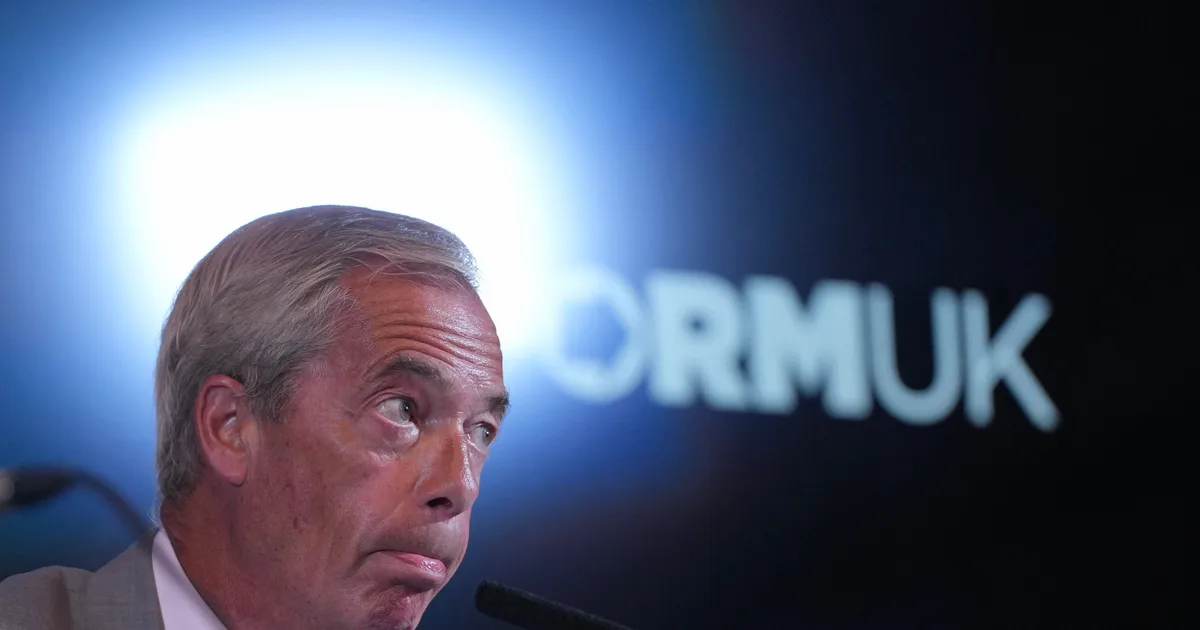
Nigel Farage is more unpopular with voters than ever, according to a new poll.
The YouGov survey found that 69% of British adults now have an unfavourable view of the Reform UK leader.
It is the highest level recorded by the pollster in the 10 years it has been tracking Farage’s popularity.
Barely a quarter of voters (24%) have a favourable view of the Reform chief, giving him a net favourability rating of minus 45.
By contrast, 46% of people have a favourable view of prime minister Andy Burnham.
With 39% having an unfavourable view of him, that gives the PM a net rating of plus 7 – some 52 points better than Farage.
The Reform leader’s grim numbers come amid the ongoing controversy about financial donations to both him and his party.
Parliament’s standards commissioner is investigating his decision not to declare a personal £5 million “gift” he received from crypto billionaire Christopher Harborne shortly before becoming an MP in 2024.
The Metropolitan Police has also launched a criminal investigation after a Channel 4 documentary appeared to show two senior Reform officials trying to solicit money from a foreign donor, against UK electoral law.
A separate YouGov poll last week showed that 73% of voters believe Farage is “sleazy”, with more than half thinking he is “very sleazy”.
Listen to Commons People, the podcast that makes politics easy. Every week, Kevin Schofield and Kate Nicholson unpack the week’s biggest stories to keep you informed. Join us for straightforward analysis of what’s going on at Westminster.
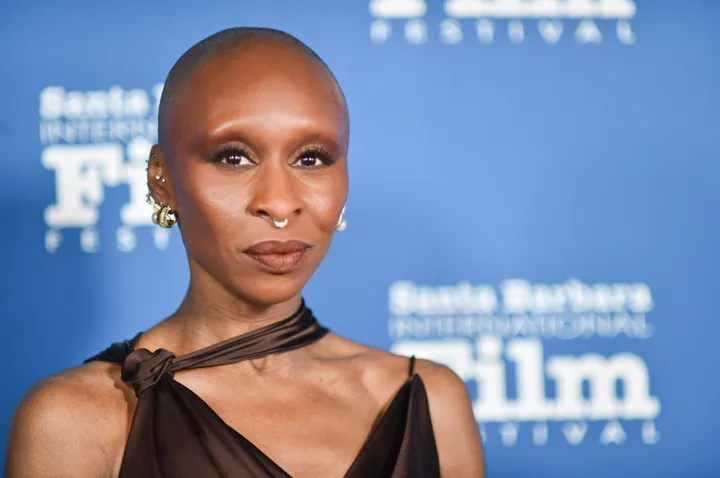
Wicked star Cynthia Erivo is set to return to our screens later this year in her new movie Prima Facie.
Based on the one-woman play of the same name, Cynthia takes the lead as a barrister, Tessa, a character originally played by Jodie Comer on both the West End and Broadway, who represents herself in a troubling sexual assault case.
Following its debut at the Toronto International Film Festival (TIFF) on Sunday night, the movie sparked a range of different opinions – but the British actor’s leading performance has been repeatedly singled out for praise.
Deadline’s review said that Prima Facie once again shows Cynthia as a “fine dramatic actor” who “does what she can with the ambiguity of a role where the legal chairs are suddenly shuffled”, but lamented that “in this more literal film version something may have gotten lost in translation” compared to the critically-lauded source material.
The Hollywood Reporter agreed that the adaptation was a “misfire” and “a near-total muddle”, even if Cynthia “eloquently displays” her character’s complicated feelings at different points in the story.
Meanwhile, The Guardian’s two-star review claimed the “pointless” film adaptation had “flattened” the script of the play. The Oscar nominee was said to have approached “the role with a focused rigour”, even if she “oddly doesn’t have all that much to play”.
A review in The Playlist was similarly critical of the film, hailing Cynthia’s “captivating” and “very, very good” work as Tessa, but concluded that “when even the talents of Erivo can’t overcome” its shortcomings, “the verdict is grim”.
Critic Rendy Jones even went as far as claiming that the Wicked star “carries” her new film, writing: “Cynthia Erivo gives a fantastic performance in Susanna White’s film adaptation, but its focus on the wrong thing saps the potential of what could have been a damning critique of the protection of assault and predators within the court of law.”
More positive was TheWrap’s take, singling out Cynthia’s “layered” and “admirable” performance in the “complex” and “fascinating” film (even if it ultimately conceded that it “doesn’t have the same impact as the play”).

Speaking to The Hollywood Reporter, Cynthia recently opened up about throwing herself into her latest role, admitting there were times she’d feel “sick”, “angry” or “betrayed”.
“It was hard to come away from that sometimes,” she shared.
A cinema release date for Prima Facie is yet to be announced.

Sydney Sweeney has once again found herself at the centre of controversy over an ad campaign.
This time around, the backlash relates to her new advert for the sports betting app Novig, in which she appears in different scenes completely nude, save for various items like American footballs, basketballs and protective equipment.
“Novig is just sports,” she explained. “So, they wanted to show… just sports.”
Following its debut last week, Sydney’s latest video has sparked criticism from many women in the sports world, including some Olympians, who accused the Euphoria star of “sexualising” women’s sports.
Swimmer and gold medallist Ariarne Titmus wrote on Instagram: “I can’t describe how infuriated I feel when I watch this.
“Not only is it a kick in the face to every woman who has dedicated her life to perfecting her craft, but every woman who enjoys sports for what it really is – teamwork, friendship, dedication, excellence, unity … the list goes on.
“How do we live in a world where monetising a woman’s body and sexualising women’s sport is still a thing?”
“To take the mickey like this. I thought we were genuinely moving past this bullshit,” she wrote, per Australia’s News.

Diver Kassidy Cook also showed her support for Ariarne’s comments on Instagram, while fellow silver medallist Tilly Kearns, an Australian Olympic water polo player, agreed that she “absolutely fucking hates” the ad.
World champion boxer Skye Nicolson also had her say, stating that “these companies need to do better” and “stop sexualising women in sport”.
Per The Guardian, she told her Instagram followers that the advert served as a “mockery” of women in sports, claiming: “There’s a big difference between looking ‘sexy’ because you do sport compared to [using] sex to sell ‘sport’. There is nothing wrong with looking good and doing sport and there’s nothing wrong with embracing your femininity while also being a badass athlete.”
HuffPost UK has contacted reps for Novig and Sydney Sweeney for comment.
While Sydney has not addressed the backlash directly, she did appear to allude to it on Sunday evening, when she posted a string of nude photo-shoots which leading sports figures had taken part in, including Serena Williams, Caroline Wozniacki, Megan Rapinoe, Rob Gronkowski, Karl-Anthony Towns and Jason Kelce, to her Instagram story.
Last year, Sydney landed in hot water over a very different ad campaign, when it was suggested her promo video for American Eagle had mirrored the language of white supremacists and eugenicists.
The Emmy nominee later said she had been left “surprised by the reaction” to the advert, after spending months mostly swerving questions about the media storm.
American Eagle, meanwhile, said their ad “is and always was about the jeans”.
“Her jeans. Her story,” a spokesperson said. “We’ll continue to celebrate how everyone wears their American Eagle jeans with confidence, their way. Great jeans look good on everyone.”

The Big Brother house has reopened its doors to a brand new bunch of wacky and wonderful new housemates.
On Sunday night, 16 new contestants took up residence in reality TV’s most famous house, representing an eclectic mix of different ages, backgrounds and walks of life.
In a series that’s promised a new shake-up every week, Big Brother has already got things off to a chaotic start, warning the housemates that one of them is actually a “mole” who has been deliberately chosen to ruffle feathers and cause havoc from the inside.
Here’s your quick guide to this year’s Big Brother housemates ahead of what promises to be a series packed with twists…
Yasmin

She says: “I have a very bubbly personality. I’m very straightforward – what you see is what you get with me.
“You’ll never be left wondering what you think about me. You will always know exactly where you stand with me.”
Harry

Occupation: Personal trainer
He says: “I’m so used to living on my own and doing my own thing; I like my own space. But then when it’s my time I will come out.
“I wouldn’t say I dictate the mood, but when I want to be alone, I will be alone. And when I want to see people, I will.”
Chelsey

Occupation: Social worker
She says: “I feel like when people meet me they think ‘oh, look at her she’s come from a big house with all this money.’ But I haven’t. I fled to live in a women’s refuge and grew up in there for a few years with my sister and my mum. It’s been quite difficult, but it’s made me the person I am today.
“I had a social worker myself when I was younger which inspired me to become a social worker.”
Philip

Occupation: Content creator
He says: “There will never be a dull moment when I’m there. I’ll always put a smile on everyone’s faces. If I see anyone unhappy, no matter what, I’ll be there for them – whether I like them or not.
“You’re better being a friend to me than an enemy. I’m a very good friend, but I’m a very bad enemy.”
Lynx

Occupation: Property developer
He says: “I’m looking forward to not having my phone – it will be really cool to have a full detox. And to get to know different people of different ages, from different walks of life.”
Charlotte

She says: “As a quadruple amputee, people are surprised at anything I do, even normal things like cooking, doing my makeup, getting dressed, stuff like that. And obviously they’re going to be watching me 24 hours a day so they’re going to see me do all those things.
“They’re probably going to be surprised at the most normal things for me, those are going to be the most shocking for everybody watching.”
Pauline

She says: “The last three years of my life I’ve spent caring for my mother. And I also lost my father in March. So, I thought, ‘let me try and do something, that if the world was ending tomorrow, what would you do?’.
“I like to take on new opportunities because life is short.”

Occupation: Content creator
He says: “I’m very confident I can keep a secret, and I think I’ll play the role well. I’m confident I can throw them off my track.”
Rochelle

She says: “I met [my husband] when I was 18 and married at 22. And I have never, ever done anything for myself. As in, I never bought a property. I left home and was married, and this is the first time ever that I’m actually going to be not having him there or anyone with me. And I’m quite looking forward to it.”
Millie

She says: “I think I’ll bring the house character. I feel like people would probably come to me for things because I’m very loyal. But at the same time, I’m very… you’d know if I was in a room.”
Frankie

Occupation: Marketing manager
He says: “I’m looking forward to spending time in the hot tub. And to be fair, for all the single mums that end up fancying me when I come out.”
Samuel

Occupation: Administrative assistant
He says: “[I’m looking forward to] getting my thoughts out there and also building bonds with real genuine people.
“My fellow housemates are probably people I would never normally meet or even see in the real world – so talking to people and making friends.”
Rob

Occupation: Radio presenter
He says: “One evening the casting advert came up on my Facebook and I just clicked ‘apply’ on a whim – and here we are; it’s crazy. I’m looking forward to doing all the tasks and challenges – it just looks really fun.”
Rhianna

Occupation: ‘Stay-at-home daughter’
She says: “I think I could surprise some people – I’ve always grown up with a stereotype. People think I’m a certain way before they get to know me. I am such an open book. I’m a really big softie inside and that’s the type of energy I’ll bring.”
Omar

Occupation: Jewellery seller
He says: “I don’t fit the prejudice that people have in their minds when they first see me. I’m not what I look like.”
Johanne

From: Salford (via Los Angeles)
She says: “I love meeting new people. I love talking with people. But I think that I do a good job operating as a mirror for people and saying the things that people are afraid to say.
“I consider myself to be a really good judge of character and to be very direct with people. And I think that people will see that in my personality. I’m not afraid of confrontation. I go into every situation hoping for the best, but I don’t shy away from confrontation.”
Big Brother airs nightly on ITV2 and ITVX.
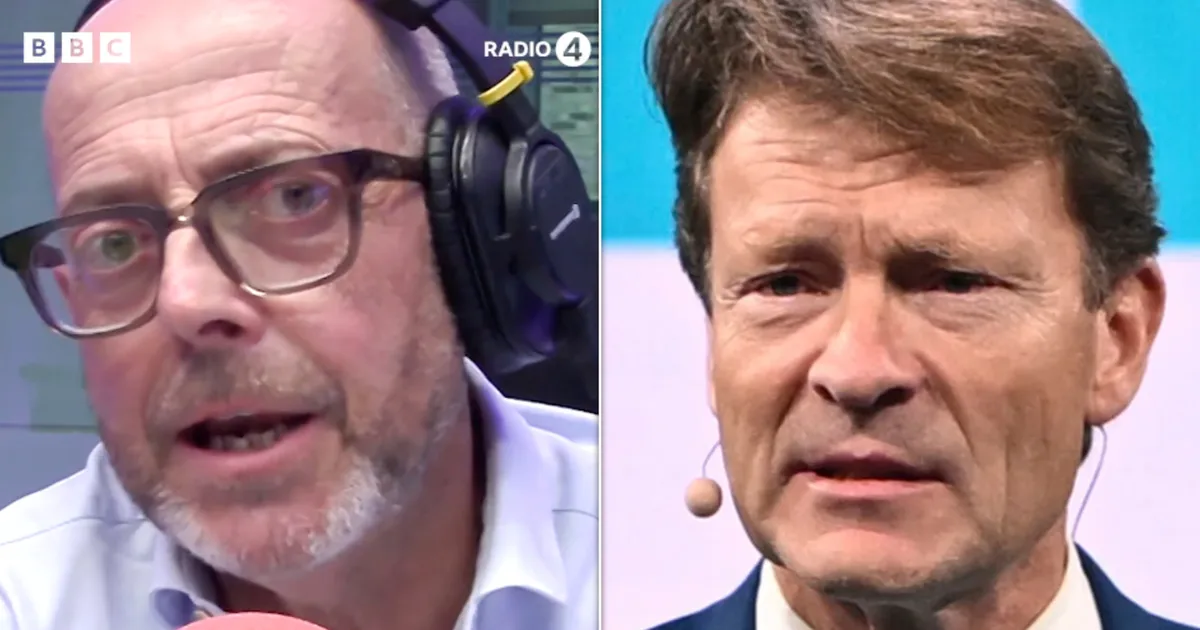
The pair clashed amid claims Reform may have to hand the money back because Ben Delo and Christopher Harborne have not been living in the UK long enough.
Delo has moved back to the UK from Hong Kong, while Harborne is now registered to vote in Hampshire, although it is unclear whether he still lives in Thailand.
Donations from people based overseas are impermissible under UK law.
Nigel Farage said he was “humbled and honoured” when each man donated £36m to his party in the space of 24 hours at the weekend.
Reform have insisted that neither man has asked for anything in return for the cash.
But on Radio 4’s Today programme this morning, presenter Robinson asked Tice: “What do you think first attracted two cryptocurrency billionaires to give tens of millions of pounds to a party promising to cut their taxes, to limit regulation of their business and limit competition for them as well?”
Tice replied: “Their patriotic love for a fantastic country that is being ruined under a bunch of socialists.”
Later in the interview, Robinson told Tice that Delo and Harborne have “already got everything they want” from Reform.
He said: “These men who are giving £72m have already got Reform UK agreeing to lobby the Bank of England to change its policy – threatening to sack the governor because of his attitude to this – threatening to cut taxes on cryptocurrency and change the regulatory approach.
“So far from getting nothing, they’ve already got a lot from you, haven’t they?”
Tice replied: “If you look at the timelines, you’ll realise your analysis is completely wrong because we met the governor of the Bank of England exactly a year ago. These donations have been made very recently.”
Housing secretary Angela Rayner yesterday suggested Reform may have to give at least some of the money back because Christopher Harborne has not been based in the UK long enough to be a permissible donor.
But a Reform source told HuffPost UK: “We wouldn’t be putting out extremely confident statements if we didn’t know their personal circumstances.”
A party spokesman said: “We are 100% confident both [donations] are legal and won’t ever have to be handed back.”
Listen to Commons People, the podcast that makes politics easy. Every week, Kevin Schofield and Kate Nicholson unpack the week’s biggest stories to keep you informed. Join us for straightforward analysis of what’s going on at Westminster.

Rich’s Monday Morning View

For so many children, going into hospital carries connotations of fear and a lack of autonomy, and even trauma that can carry through to adulthood. It can mean unfamiliar rooms, scary equipment, painful procedures, and adults using words that they neither understand nor are explained to them. With the right support, we can help make this experience less frightening, and play is one of the most effective and efficient ways to make that happen.
The argument for health play is increasingly being won. Across the NHS, more clinicians and leaders recognise that play is not an optional extra, but a vital part of good practice in children’s healthcare. The challenge now is making sure every child benefits from it, and that this happens consistently.
In 2025, Starlight, the UK’s leading charity transforming children’s healthcare through play, and NHS England jointly produced the Play Well Toolkit. Since the launch of this guide for healthcare professionals on how to design, plan, and deliver high-quality health play services, the government has committed to the adoption and implementation of the Toolkit across ICBs and NHS trusts by 2027. This is a hugely significant step in the right direction, and we now need this progress to continue.
We now need to see delivery. Starlight’s recent freedom of information research found that 80% of Integrated care boards (ICBs) are not yet committed to adopting the Toolkit, none has a dedicated health play budget, and only 5% include health play in their children and young people’s strategies. We can surely do better than this.

MDU warns Chancellor clinical negligence system ‘not fit for purpose’

Northern Ireland RE curriculum is ‘indoctrination’ – Supreme Court
It should be impossible to ignore the benefits. At University College London Hospitals, an MRI programme supported by a health play specialist enabled 38 out of 42 children aged four to eight to complete scans while awake, reducing waiting times for MRI scans under general anaesthetic by 24%. Elsewhere across the country, 3D scanner models, preparation sessions and distraction techniques have helped children cope with procedures that might otherwise have required clinical restraint, sedation or avoidable distress.
Few interventions can reduce trauma for children, improve outcomes, and save the NHS money, yet health play delivers on all three. That’s why last week in Westminster, I hosted a drop-in event alongside Starlight which brought together MPs, Peers, NHS leaders, clinicians, health play specialists, advocates, young people, and families to discuss how to make the government’s commitment a reality.
At the drop-in, Nailah (a member of Starlight’s youth panel) spoke powerfully about her experience of therapeutic play in healthcare. She said, “I grew up in hospital, I have had so many surgeries, and the play specialist really got me through it and supported me through all these difficult times”.
Powerful comments like these reiterated that no child should have to experience unnecessary fear or trauma as part of their healthcare. Every child should have access to care that recognises their right to play, their need to understand, and their ability to cope when they are properly supported.
None of us could fail to be moved by such testimony, and no policy-maker should fail to be moved by the evidence. Consistent access to play provision on the NHS can reduce trauma, improve outcomes, and ease pressures. There’s not a moment to lose in ensuring 2027 is the year we make this vision a reality.
Prime minister Andy Burnham has called Brexit one of the “wrong turns” taken in recent decades. His government will seek closer links between Britain and the European Union – rescheduling this November’s summit. New research from British Future finds public support for that direction of travel, but uncertainty about quite how far that should go. It also shows how re-opening Britain’s debate on Europe will require both sides to overturn their assumptions and take a fresh approach if they wish to prevail.
Burnham’s own post-Brexit journey reflects the cross-pressures of the British debate. A decade ago, he worried that calls for a second referendum before leaving the EU would only deepen public disdain for an out-of-touch political class. As mayor of Greater Manchester, he wanted the government to be more open about the damage – and aspired to see the UK rejoin again in his lifetime. He put that on the back burner when running to return for parliament in Leave-voting Makerfield. Now, as prime minister, Burnham must determine what direction to take and negotiate with his EU counterparts.
A new youth mobility deal should be achievable and has public support. But the new research finds Burnham could also go further too – though it does not find a consensus on where people would like to end up.
Two fifths of the public are at the poles of this debate: an “all in” group of 22% who would like a referendum as soon as possible to overturn the 2016 result, and another fifth who are against closer links. But most lie in between or are undecided: a quarter of the public are contingent pro-Europeans, who would like to join the single market at least, but retain doubts about free movement. A similar-sized group of pragmatic sceptics favour practical cooperation on many issues, without rejoining the single market or the EU itself. There is also a large group, often younger, who are disengaged from the whole debate.
MDU warns Chancellor clinical negligence system ‘not fit for purpose’
Northern Ireland RE curriculum is ‘indoctrination’ – Supreme Court
As Burnham arrived in Downing Street through an internal party coronation, his government is constrained, at least for this parliament, by the ‘Red lines’ of the 2024 Labour manifesto: no bid to rejoin, and no membership of the single market, customs union or freedom of movement. Yet the new research shows that most of the public do now support a closer relationship than these ‘red lines’ would allow.
For the government, getting practical may be part of the solution. Increasing pragmatic cooperation with the EU in this parliament, especially on youth mobility, defence and asylum, will be popular with voters. Beyond November’s summit, Burnham will need a strategy to dissolve or redraw his red lines, while being clear that the Brexit decision itself could not be undone without a future referendum.
Yet for a decade, Britain’s two Brexit tribes have mostly been refighting the last referendum. They often sound happiest to carry on doing so. Dominic Cummings, the strategist behind the Leave victory, believes “tell them again” would be the winning slogan in a new vote. Those who lost in 2016 believe the tide has turned in their favour. The research shows that both tribes may need to look beyond the 2016 referendum trenches to persuade the public about the choices in the decade to come.
Generational change is a challenge for both sides. Leave won most strongly among over-65s, and its voters were significantly older than those for Remain. Demographic change has removed the Leave majority of 2016, even if nobody had changed their minds. By the time of the next general election, one in five of the public – everybody under 30 – will have been too young to vote in that referendum. Few believe there have been benefits from Brexit, but nor can pro-Europeans take their support for granted. We found the under-30s least aware of the issues or invested in the arguments. Complaints about how the public were misled a decade ago will leave cold those who may have been in primary school at the time.
So those pushing to go further and closer should not be complacent that young people’s dissatisfaction with Brexit, and demographic changes as older Leave voters pass away, will give them a winning hand.
Supporters of Brexit need a forward vision too, of how the UK charts a course through global uncertainty and an unreliable ally in the US. And with most of the public supporting pragmatic alignment with Europe on trade, defence and other issues, blanket opposition will win few friends beyond a shrinking core.
The popularity of Boris Johnson’s “Get Brexit Done” reflected a public exhaustion with the divisions of this subject. So there are mixed views about future referendums. But we are going to have to talk about Europe again – and both sides of the debate may need to move on if they hope to connect with voters in 2026 and beyond.

Amy Hunt’s Comment For Sydney Sweeney Over Controversial Advert
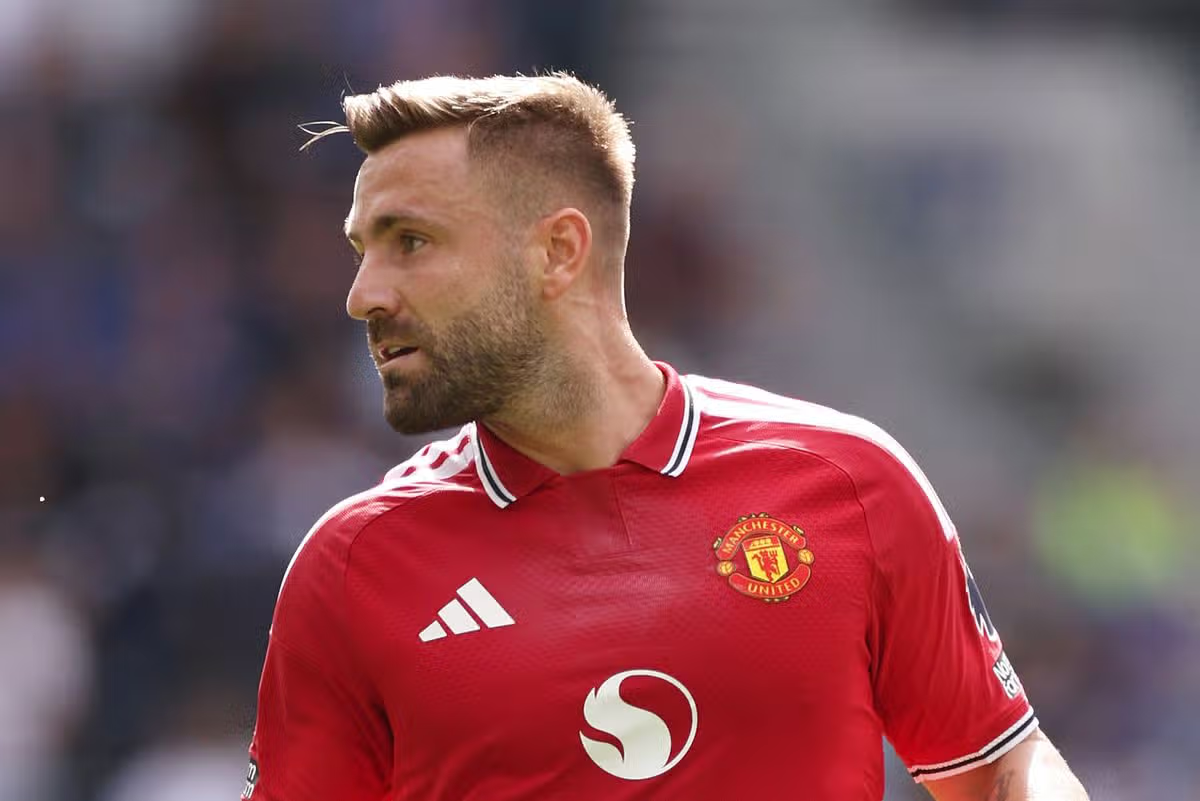
Luke Shaw, Carlos Baleba, Amad – Manchester United injury news and latest return dates

Car Rebates Actually Started In The ’70s With A Chrysler Super Bowl Ad


-
 Tech6 days ago
Memory prices are slowing because buyers ran out of money
-

 Tech23 hours ago
The Latest Weird Thing to Play Doom Is the Mapped-Out Brain of a Fruit Fly
-

 Business4 days ago
Micron Stock Climbs Above $1,031 as AI Memory Crunch and a $50 Billion Outlook Fuel the Rally
-

 Business4 days ago
AMD Stock Climbs After Management Lifts 2027 Data Center Outlook Toward $70 Billion in AI Sales
-

 Crypto World5 days ago
Bitcoin price risks $76K drop as $78K support weakens
-

 Fashion3 days ago
Weekend Open Thread – Corporette.com
-

 Crypto World6 days ago
Robinhood Stock: How To Take Advantage With Reduced Risk
-

 Crypto World3 days ago
XAG/USD: Silver’s Short-Term Rally Meets Its Moment of Truth
-

 Crypto World4 days ago
2 Chip Stocks Broke Out This Week. Neither Was Nvidia
-

 Crypto World5 days ago
Ethereum price stalls below $2,500 as ADX drops to 11
-

 NewsBeat6 days ago
England up in reading, maths and science rankings as Scotland and Wales dip
-

 Business3 days ago
10 Most-Streamed Songs On Spotify In 2026 So Far, Led By Ella Langley’s Dominant Run On The Charts This Year
-

 Crypto World4 days ago
OKX launches 10x OpenAI, Anthropic X-Perps in Europe
-

 Tech4 days ago
Battery life is the only iPhone 18 Pro and iPhone Duo upgrade I care about. Apple didn’t disappoint
-

 Crypto World3 days ago
Diesel Tops $6 a Gallon for the First Time as 28 States Set Records
-

 Crypto World6 days ago
Intel Stock Jumps 9% on Chip Price Hike Report, US Stake Gains $36 Billion
-

 NewsBeat5 days ago
What went right this week: an ‘historic’ fall in violent crime, plus more
-
 Tech5 days ago
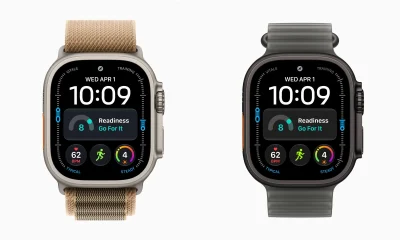
Apple Watch Ultra 4 vs Watch Ultra 3: Should you really spend another $799?
-

 Crypto World5 days ago
Bitcoin price risks $70K if $78K neckline breaks
-

 Crypto World6 days ago
Pump Fun and Kraken delete Hunter Biden $LAPTOP promotion
You must be logged in to post a comment Login