Politics
Wings Over Scotland | Strike A Pose, There’s Nothing To It

We’ve already discussed the contents of the videos released last week by the BBC containing interviews with Deputy Chief Constable Stuart Houston of Police Scotland and Crown Agent John Logue of the Crown Office and Procurator Fiscal Service.
But videos (especially lengthy ones) are always a bit of a pain to reference, and these are incredibly significant documents, so we thought it’d be useful to post the full transcripts too, with tidied-up text (removing all the “um”s and “eh”s and so on) for ease of reading.
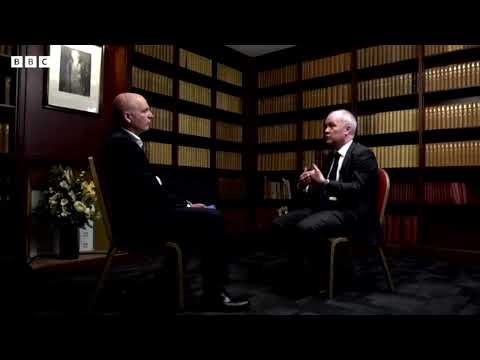
Here’s the interview with John Logue:

And below is what’s said in it. We’ve added a comment here and there, in red.
JOHN LOGUE: My name is John Logue. I’m the Crown Agent and Chief Executive. I’m the head of the Crown Office and Procurator Fiscal Service, which is the public prosecution service in Scotland.
GLENN CAMPBELL: And this is a pretty unusual case, John. Has that been your experience over the last few years?
JOHN LOGUE: In some ways, this has been a case like any other. We have lots of experience of dealing with financial crime and embezzlement. And so, in some ways, this case was like many others that we deal with, but in some ways, it was very different.
We knew from the beginning because of the political elements that would attach to the case that this case would attract a lot of political and public attention. And so that made it unusual.
But we knew from the beginning the response from us had to be one of following our normal processes and dealing with the case as normal in order to make sure that we could give people confidence at the end of the day that we had dealt with this case appropriately.
GLENN CAMPBELL: You didn’t have to tiptoe a bit because of the political sensitivities?
JOHN LOGUE: There were no restraints on us because of the political sensitivities. None at all. And we wouldn’t allow that. That’s not how we do our job. Our priority in every case is to be seen to be independent, to be fair to everyone involved, to follow the evidence, to uphold the law, to protect the rule of law. These are considerations we apply in every case.
Now, depending on the nature of the case, some of those issues don’t arise quite as sharply as they did in this case. We knew from the beginning this was going to be a case that would attract a lot of public attention. And it would be important for us to demonstrate to the public that we dealt with this case appropriately.
And part of that was protecting our reputation of dealing independently and fairly with every case. So, no, the politics that surrounded the case didn’t inhibit us in any way whatsoever.
GLENN CAMPBELL: But does that public media glare not put you under a bit more pressure? Do you not feel that extra pressure?
JOHN LOGUE: You’re aware of the interest. It doesn’t create any pressure on the organization. It doesn’t create any pressure on the individuals who are dealing with the case because they are part of a team.
This wasn’t a case where we give the case to one person and leave one person to look at it and take all the decisions. This was a case because of the scale and the nature of it. We had to build a team around the case. And so they have support from each other. We provide senior support. Senior prosecutors are available to give advice.
And so I don’t think that the wider political interest creates any pressure in the way that you’re describing. What it does do is give the people working on it a really strong sense that they know that their work is going to be of interest to the public in this particular case in a way that it might not be in some of the more routine cases that we deal with.
GLENN CAMPBELL: Can you put the case into context given as you’ve mentioned you deal with lots of financial crime including embezzlement?
JOHN LOGUE: I think the best way I can describe it is in some ways this case was no different from embezzlement that people might recognize in their daily lives. If people are a member of a church or a bowling club or a golf club, if someone in that organization has access to money on behalf of the society or the club and takes it and spends it in the local shops, that’s embezzlement.
And in some ways this case was as simple as that because what we were able to prove after the police investigation and after our investigation was that that was what Peter Murrell had done here. He had access to and control of party funds and he used it for his own purposes and that’s the crime of embezzlement. So in that sense it was very similar to lots of other financial crime cases that we deal with.
But it was different in some ways. So the scale of it, the period of time that the offending took place over many years, the nature of the offending, he wasn’t just buying things in the local shop in the way that someone might if they were embezzling from the golf club. He was doing a lot of online shopping. Some of that was retailers who were international.
So that immediately means that the evidence you’re going to be looking at is digital. It’s going to be coming from different countries. That introduces complexity and process.
And so in some ways the essentials of the case are like any other embezzlement, but the particular circumstances of this case were quite different. It was of a larger scale. It was over a longer period of time, and it involved evidence that we knew was going to take a lot of time to work through.
And then you’ve got the extra element that we’ve already talked about about that heightened political and public interest in what was happening with the case. It was obvious to us from the beginning that this was an investigation that was going to take place in the public gaze and therefore people would see things happening that they might not be aware of in any other case.
GLENN CAMPBELL: More than five years from complaint to conclusion. Why did it take so long?
JOHN LOGUE: It took that period of time because of the nature of the case. And in my experience, that’s not unusual for cases of this nature to take that long.
The reason why I think it looked and felt strange to people was because, as I’ve said, the investigation took place in public and so people were aware of it from the very beginning. They wouldn’t necessarily be aware of any other financial crime investigation starting and the different stages being gone through by the police and by prosecutors. And so there was that sense of the time passing while this investigation took place.
But if you understand the nature of the case as I’ve described it and the type of evidence that was in the case, then from my point of view, it’s perfectly understandable why it would take time. The police interviewed, I think, more than 500 witnesses. There were lots of transactions that had to be investigated.
You’ll have seen the detail that we presented to the court. Every single one of those transactions required us to go through evidence from the SNP, evidence from the retailers.
We had to be able to show that SNP money was used in every single one of those transactions. We had to be able to show that Peter Murrell was responsible for the transaction. We had to be able to show what had been bought, prove that that had been delivered in circumstances that could link it to Peter Murrell. All of that for every single one of those transactions takes time.
[WINGS COMMENT: All of that is true for Peter Murrell’s embezzlement crime, which wasn’t even discovered until two years into the investigation. None of it is true for the original crime which was reported to the police, and which could have been materially cleared up in two weeks at the very most.]
So from my point of view I didn’t have any concerns that there was something wrong here. I was aware in my role with my responsibilities that there was a really careful thorough police investigation underway and that when it came time for us to take the work that the police had done and play our part in the process we would be set up and ready to carry out a similar detailed and thorough investigation.
We do that because if you don’t take the time at that stage to be really careful and prepare the case thoroughly, then you will run into problems when you bring the case to the court.
And so what we’re trying to do is make sure that when we’re ready to bring the case to court, it starts at the point where we’re ready to go to court and any trial proceedings that happen after that happen without any real issues, that nothing goes wrong in the work that we have done to bring the case to court.
GLENN CAMPBELL: In that five-year period, there was a fairly lengthy period between the police sending in their reports and the Crown taking a decision that’s been criticized by people like Jo Cherry, herself a KC. Is that a long time? And why did it take that period of time?
JOHN LOGUE: I don’t accept that it was a period of time that was longer than it should have been for any reason. I’ve described to you what we were doing. We were carefully checking all of the evidence that the police had found. We were looking for other avenues to strengthen the case. And that’s our role in Scotland.
GLENN CAMPBELL: And it did develop in that period, the Murrell case, from a prosecution of offenses over a particular period of time to offenses that spanned a longer period of time. Just explain how that developed.
JOHN LOGUE: Well, I think the starting point there is to understand that the system of investigating and prosecuting crime in Scotland is different from other parts of the United Kingdom in particular. And so the Lord Advocate in Scotland is the head of the system of prosecution in Scotland and has responsibility for the investigation of crime.
And so when the police carry out a complex investigation like this in Scotland, they have the expertise and the resources to investigate complex financial crime. But we work with them from the very beginning. It’s not a case of the police do their part of the process in isolation and then hand something to us.
So we work with them from the very beginning and we were aware of the investigation they were carrying out, and at the point where they then provide their report to us, they reported Peter Murrell to us because they had come to the conclusion that they thought there was enough evidence to justify a trial. Our part of that process then is to investigate as prosecutors and prepare the case for court.
And that’s the difference between Scotland and elsewhere in the United Kingdom. Prosecutors elsewhere in the United Kingdom don’t have that investigative role. And so prosecutors elsewhere in the United Kingdom are used to simply taking the evidence that the police give them and preparing the case for court, but they don’t carry out any further investigation of their own. And they don’t direct the police to carry out investigations.
Because that system’s different when we got the case against Mr. Murrell, we looked at it and we started to work out how would we build this case into something that we could prosecute in court. And as part of that, we could see other avenues to strengthen the case.
And as you’ve said, primarily that resulted in us being able to expand the period of time over which we could show that Mr. Murrell had been embezzling funds from the SNP. When he was reported to us by the police, they reported it as an offense between 2016 and 2023.
Through our investigation over the period of time that you’re talking about, we were able to push that back further and could show going back as far as 2010 that the offending behavior had been happening at an earlier stage.
So that’s a way of illustrating what we do as prosecutors. We don’t just take the case and take it to court, which in the public eye might look like something you can do quite quickly. What we do is take the police case and we build on it and we prepare it for court and we investigate it.
And that’s why there was a period of time between the report coming to us in 2024 and us bringing Mr. Murrell to court for the first time in 2025.
GLENN CAMPBELL: So you’re turning up new evidence.
JOHN LOGUE: We were essentially a combination of working with the evidence the police had given us, but looking for further evidence and that’s what we were able to do in this case.
GLENN CAMPBELL: And whilst you’re obviously focused on the evidence you have, is there any reason for us to believe that there was no offending in the period before 2010 when Peter Murrell was in charge of this political party?
JOHN LOGUE: So we framed the charge as being from 2010 to 2023 because on the evidence we had that’s what we could show before the court and we took the decision that that was unlikely to change through further investigation. And so we took the decision that we were then ready to go to court for that period of time.
It would not in our view have been in the public interest to carry on with an investigation without the prospect of getting further evidence. So you reach a point in any case where you think what we have is the case and there’s no point in spending any other time trying to develop it further.
GLENN CAMPBELL: Because digital evidence doesn’t go back before that point because there wasn’t a company credit card, an SNP credit card before that point?
JOHN LOGUE: In this case, a lot of the evidence came from records from the SNP, from financial records from banks, and from records from retailers. And what we were doing as part of our investigation was working with the police and gathering as much of that information as we could. Some of that can be quite time-consuming and quite tricky.
You have to quite often go to court in Scotland to get the authority to get financial records from a bank in England. That is quite a complicated process and adds time into it. So, once you’ve gathered all that information from three different sources, then what you have to do is put it together and decide, what does this show? What does the evidence that we’ve gathered show? And what can we prove in court?
And you reach a point where you think given the limits on records that companies hold, given the limits on people’s recollections, a variety of different things, what we now have is the case that we think we can prosecute to the best of our ability.
GLENN CAMPBELL: But that’s not to say, just to be clear, that’s not to say he didn’t offend before 2010. It’s just to say you don’t have evidence of any offending before that time.
JOHN LOGUE: We looked at the case of embezzlement and from the evidence available, what we could show was embezzlement between 2010 and 2023. We can’t see anything else about any time period before that. All we could show from the evidence that was available to us was that 13-year period.
GLENN CAMPBELL: Another criticism that’s been made of the management of this process is the gap between the preliminary hearing and the case returning to court and the plea of guilty from Peter Murrell. Did that take an excessively long period of time? Some people certainly think that it did.
JOHN LOGUE: The truth of the matter is that we started this case in court 6 months before the time limit that applies in law in Scotland. We could have waited until July of 2026 to indict this case and still been within the legal time limits that are allowed to us as prosecutors.
But our view was that the minute we were ready to bring this case before the court, the proper thing for us to do was to put it into court and have the public see that this case was being prosecuted. We were ready to indict this case in January of this year. So we went ahead and did it in January of this year. And therefore that resulted in the first calling of the case in court and Peter Murrell appearing in court in February.
What happened in February was something that normally happens in a lot of cases in the High Court at the first calling. We were told by Peter Murrell’s lawyers that they were not ready to go to trial at that point and they wanted more time to prepare. That happens in a lot of cases. So they approached us. They said, “We need more time.”
And our view as prosecutors is it’s not in the public interest for the system as a whole to be trying to oppose that sort of request and make a trial happen before someone is ready to go to trial. And our experience as prosecutors is the court will inevitably allow the accused more time to prepare, particularly in a case like this with lots of financial records and information.
So from our perspective, there wasn’t a lengthy period of time. There was nothing wrong or different from this case. The case started as soon as we were able to get it into court. Peter Murrell’s lawyers asked for an adjournment to prepare.
We took the view that we were not going to argue against that because it was going to happen anyway and it’s in the public interest that he should be fully prepared and the judge then agreed that there should be an adjournment. And the judge then allocated the date.
As prosecutors, we play no part in that process. That’s for the court to decide when a case is going to call again.
GLENN CAMPBELL: But it so happened that adjournment took the case from before the Scottish election until after the Scottish election. Can you understand why people look at that and think “that’s a fix”?
JOHN LOGUE: I can understand why people are interested in that and think was there something there that we didn’t see. But what I’m telling you is exactly how it happened.
GLENN CAMPBELL: But didn’t that three-month adjournment give the SNP, who are the subject of this case, a political advantage at a time when they were seeking and secured re-election?
JOHN LOGUE: Our only consideration, our only consideration in this case, like with any other case is what is our duty to the court and to the fairness of the proceedings. And in that case, with those considerations, the only appropriate option for the court was to agree that the accused should have more time to prepare.
That’s what happened. Nothing else. No other considerations taken into account. We were not taking our steps with one eye on any political timetable. We were following the evidence, following our normal processes and as soon as we were ready to indict it and bring it to court, we brought it to court in January.
We could have waited until July to indict the case and start the process. That would have been wrong when we were ready to go in January. So, we did what we always do. As soon as we’re ready to go to court, we start the case.
The truth of the matter is because of the way we prepared this case, that happened sooner than in many other cases. There are many cases that we’re indicting at the moment where because of the volume of work in the system, we’re having to indict them sometimes on the last day. That’s not unknown at the moment because of the pressures in the court system.
We were able to get this case ready well ahead of that deadline and so we did the right thing in bringing it to court in January when we were ready. That just so happened to be before the election but that was nothing to do with us.
GLENN CAMPBELL: Would the Crown have anything to fear from an outside investigation be that by Parliament or anyone else?
JOHN LOGUE: This was a successful prosecution of a financial crime, but a financial crime committed in a political environment. And what we have demonstrated through a careful and thorough police investigation.
And our work as independent prosecutors is that it doesn’t matter who you are in Scotland, if you commit this crime, you will be held to account. We have demonstrated that the accused has pleaded guilty rather than go to trial and has now been sentenced.
That is a successful outcome to a very sensitive high public interest complex case and that I think the public should have confidence that there is a legal system in Scotland that will deliver those outcomes regardless of who you are. It’s important that that is seen and understood.
GLENN CAMPBELL: Anything to fear from an independent inquiry?
JOHN LOGUE: There is a system in Scotland that brings people to justice regardless of who you are independently, fairly, and in this case, despite what some people think, it was done quickly. It was done more quickly than many-
GLENN CAMPBELL: What’s the answer to the question, though, about an independent inquiry?
JOHN LOGUE: I’m explaining to you from our work that I see nothing in what was done in this case that would raise any concerns on the part of anyone about the way in which this case was investigated and prosecuted.
GLENN CAMPBELL: What can you say about the way in which Peter Murrell went about his criminal activity?
JOHN LOGUE: Peter Murrell worked in, despite it being a political party it was a relatively small organization. If you think of it like a golf club or a bowling club or a church committee, it was a relatively small organization in terms of the number of employees it had and the financial systems that it had.
So it was no different in some ways from a small local club or a small family-run business where you might have a few people who have access to and control the company.
So in that way it was very similar to that and what you have are individuals who then have quite a lot of control over what happens to the money and what we could see from the evidence was that he had that control over the funds.
GLENN CAMPBELL: He had total control?
JOHN LOGUE: I think very difficult for us to say total control but it was clear from the pattern of offending over a long period of time that he was carrying out this embezzlement without any obvious sign of challenge throughout that period.
And his position in the way that we could show from the evidence that he was operating the systems, the financial systems within the SNP allowed us to if we had to put that picture to the jury of someone in a relatively small organization being able to exercise control of the systems and the way money was spent in order to be able to embezzle it and then also to be able to try and cover up his tracks.
GLENN CAMPBELL: Why no prosecution of Nicola Sturgeon?
JOHN LOGUE: There was no prosecution because the police came to the conclusion that while they had reported Peter Murrell to us for consideration of prosecution, the police came to the conclusion that before they would submit any report, they would check with us as prosecutors, which is a normal thing that happens in any other case, whether they had enough evidence to prosecute.
And it was clear, I think, to the police that if they had had enough evidence in their eyes to prosecute, then they would have reported Nicola Sturgeon. There would have been no reason not to, having reported Peter Murrell.
But their investigation in relation to Nicola Sturgeon reached a point where they felt the right thing to do was to check with us as the prosecutors whether there was enough. And we looked at it and we agreed with their assessment that there was not enough evidence to report Nicola Sturgeon to us for prosecution. And so that police assessment was entirely correct.
[WINGS COMMENT: As we’ve noted, the police have consistently denied making any assessment that there was not enough evidence against Nicola Sturgeon. They’ve repeatedly said that they only asked the Crown Office for advice, and that the Crown Office alone made the decision.]
GLENN CAMPBELL: As you mention, you have a power of direction, did you ask them to go and do more work on her?
JOHN LOGUE: So, in looking at that evidence that they had investigated, our conclusion was we couldn’t see any further reasonable lines of inquiry that would allow you to develop and build the case. So, that was an obvious point that we considered, but our conclusion was there didn’t appear to be anything else that could be done. And therefore the police assessment that they did not have enough to report Nicola Sturgeon to the prosecutor was an appropriate decision.
GLENN CAMPBELL: So that’s not to say there was no evidence, but insufficient evidence to develop into a prosecution?
JOHN LOGUE: Well, we have to be very careful what we’re talking about when we talk about evidence because when you talk about evidence that doesn’t necessarily mean evidence of someone’s wrongdoing. It can be evidence particularly in a case like this of the surrounding circumstances of what were the arrangements for the management of the funds within the SNP.
Did Nicola Sturgeon have knowledge of how those funds were being used? Did Nicola Sturgeon know that things that were being purchased were being purchased with SNP funds?
So you look at the evidence in the totality and we’re very careful when we say there was insufficient evidence. That doesn’t mean there is always evidence that you’re looking at because you’re looking at these financial circumstances within an organization.
But I want to be very clear that people shouldn’t read into that that there’s any sense of a quantity of incriminating evidence, but it just wasn’t enough. That’s not the way we look at it. We look at the evidence in the round and some evidence can be incriminating, some evidence can be exculpatory.
And our job as prosecutors is to look at it in its totality and reach a conclusion about could we persuade a jury to convict someone according to the normal procedures and laws in Scotland.
GLENN CAMPBELL: So in that particular case, you didn’t think she knew what was going on?
JOHN LOGUE: We thought the police were correct in their assessment that there was not sufficient evidence to report it to the prosecutor for the question of prosecution.
The reason I’m being quite careful about that is there are important legal differences. So this was not a case where the prosecutor decided not to prosecute having had a report from the police. That’s a very different type of decision and has different legal consequences.
So that’s why I think it’s important given the public interest in the issue to be as clear as possible that this was a case where no report was sent to the prosecutor and our view having looked at what the police had done was that that was the correct thing for the police to do.
GLENN CAMPBELL: Why did it take seven months to reach that decision?
JOHN LOGUE: Because of what I’ve explained about the need to look through the type of evidence that I’ve talked about. You’re talking about really complex financial records. Some pieces of evidence had tens of thousands of pages of files with many many lines of transactions. The documents didn’t all easily match up.
GLENN CAMPBELL: But not in her case, right?
JOHN LOGUE: No, but the evidence was looked at together. We were looking at the question of the evidence against Peter Murrell, and at the same time we were considering whether the police had reached the right conclusion in relation to Nicola Sturgeon.
And the other reason I think you’ve got to remember why this took time was the documents didn’t all easily match up. This wasn’t a financial case where you could easily get one set of records, get a second set of records and fit them together and they were a complete match because of what we could show Peter Murrell had done to change and alter the way in which the transactions were being recorded in the SNP. Nothing matched.
And so it takes time then you’ve got to really unpick all the records that are there which have for example reasons against them which aren’t – turn out not to be true. And so you can’t just easily find a corresponding entry in each system.
GLENN CAMPBELL: So is it reasonable for Nicola Sturgeon to say that she was cleared as a result of all this investigatory work that she was exonerated? Is that reasonable for her to say?
JOHN LOGUE: All I can say is that Nicola Sturgeon was not reported to the prosecutor in Scotland by the police for consideration of prosecution. How anyone else chooses to characterize that, I have to leave it to them.
But my view of it is she was not reported to the prosecutor in Scotland for consideration of prosecution because the police took a view on the evidence that had come from their investigation and our view was that that was correct.
GLENN CAMPBELL: Did Nicola Sturgeon fully cooperate with the police and the Crown in their inquiries?
JOHN LOGUE: Nicola Sturgeon was interviewed by the police and after the interview provided information through her solicitor.
GLENN CAMPBELL: Was that sufficient, that statement that she gave after her no-comment interview?
JOHN LOGUE: The statement was an explanation of her position and we were able to take that account into our assessment of the evidence and it didn’t materially change in one way or another the conclusion that we reached.
[WINGS COMMENT: That’s not an answer to the question asked.]
GLENN CAMPBELL: Did Peter Murrell fully cooperate with the inquiries?
JOHN LOGUE: Peter Murrell was engaged from the point at which we decided to bring a criminal case against Peter Murrell. Peter Murrell was then engaged in a legal process in court where he has the advice of a lawyer and there’s a particular process that follows and we would not expect Peter Murrell to be offering any information to the prosecution from that stage on once we’re ready for court and we start preparing the case for trial.
Then Peter Murrell and his lawyer have to take their own decisions about how they respond to what we as the prosecution are bringing before the court.
GLENN CAMPBELL: Did the SNP fully cooperate with police and Crown inquiries?
JOHN LOGUE: So the SNP in this case was an organization that had suffered the loss of money and therefore they had their own interests as an organization.
GLENN CAMPBELL: Did they report themselves as a victim of crime during this process?
JOHN LOGUE: That’s not how this case started. This case started because members of the public, members or people who had donated money to the SNP who may well have been party members made a complaint to the police.
And the police looked into that particular complaint. They couldn’t find evidence to support that particular allegation, but in looking at it, they began to see other things that were suspicious.
[WINGS COMMENT: What evidence couldn’t they find to support the allegation? There were only two facts to be established: was the money raised for purpose X, and was it spent on purpose Y? Both of those things are demonstrably true – indeed, neither is in any dispute. The First Minister admits that the SNP spent the money. The allegation is proven correct. So why has nobody faced prosecution for it?]
And that’s what led them to look at what Peter Murrell had been purchasing. And that then led them to have a conversation with us about they thought they could see evidence of embezzlement taking place. We agreed with them and it was agreed that they would carry out an investigation. So that’s how it came about.
GLENN CAMPBELL: Would it have made the investigation easier if the SNP had submitted a complaint themselves as potential victims of a crime?
JOHN LOGUE: I don’t think that would have made any difference. What we had was an investigation that was already underway because of what the police had found when they started looking into the complaint from the public.
The police had no difficulty obtaining the information they needed from the SNP, but it was as a result of the police obtaining that information, looking at it that led the police to suspect that Peter Murrell had been committing embezzlement.
GLENN CAMPBELL: Just to touch on one of the points you’ve just raised, because people from the outside look in and go, given that this started with complaints about SNP funds raised through an appeal for independence campaigning, why was their no fraud case as a result of that particular complaint?
JOHN LOGUE: Simply because the police looked at that. They looked at it very carefully. The police investigation throughout was a very careful, thorough one. And they were not able to establish according to the law that the crime of fraud had been committed.
[WINGS COMMENT: Why not? See above.]
But in looking at that they became suspicious about other transactions and that’s what then led them to have a conversation with us.
We then considered the question of fraud when we looked at Peter Murrell. And we agreed that there was no evidence that would allow us to prove a crime of fraud, but we agreed with the police that there was evidence that would prove a crime of embezzlement.
GLENN CAMPBELL: Back to the Murrell case. Why when it seems you had such a strong case to take to court, why did you accept a plea deal?
JOHN LOGUE: We don’t talk about these things as plea deals. What happens in the normal court process and it applies in the Peter Murrell case like it does in any other case is that we bring the case before the court as prosecutors and it’s then up to the accused person, in this case Peter Murrell, to decide how they want to respond to that.
And we’re ready to go to trial, we will prove our case that we’ve set out. But if the accused wants to plead guilty to part of what we are offering to prove, then it would be wrong for us as prosecutors to ignore that and say, “No, we’re just going to go to trial.”
So we will always be willing to have a discussion with an accused’s lawyer, usually, if the accused comes forward and says, “I’m interested in whether you would accept a plea of guilty to something less than what you’re alleging in the court case.”
And that’s what happened in this case. Peter Murrell’s lawyers contacted our prosecutor and indicated that Peter Murrell might be interested in exploring whether or not he could plead guilty to something that was less than the total case that we were offering to prove to the court.
GLENN CAMPBELL: But why would you be interested, why indeed did you accept, that sort of arrangement to reduce the amount of embezzlement in the original charge?
JOHN LOGUE: It’s a very common part of the criminal process in Scotland. Prosecutors –
GLENN CAMPBELL: But why would you do it?
JOHN LOGUE: You do it because it allows you to put before the court without the need for a trial and everything that that involves, including time. It allows you to have a much quicker resolution to the case.
But the job of the prosecutor is to make sure that if you’re going to do this, that the plea that is being tendered by the accused is one that shows enough of the offending for you to be satisfied as the public prosecutor that it’s going to give the court a full and proper picture of what has happened in a case like this.
And it’s in the public interest then for that to be resolved as quickly as possible by an accused accepting their responsibility rather than going into a process that may take many many months to get to trial and may not ultimately result in a conviction.
It’s better to secure the accused’s guilt in that way more quickly, even if it’s not to everything that you as the prosecutor think you can prove. If you can do that at the beginning of the case, that’s a much better outcome.
GLENN CAMPBELL: Who gets to decide what is thrown out of the charge? Because some people look at it and go, there’s a lot of female items in there, was this to save Nicola Sturgeon’s blushes?
JOHN LOGUE: So, we don’t throw anything out of any case. But that process that I’ve described of an accused saying that they want to plead guilty and the prosecutor having that conversation with the accused’s lawyer, it’s the prosecutor’s decision about whether or not to accept what the accused is offering.
The prosecutor can say, “No, I’m not willing to accept that. I’m confident in everything I can prove and we’re going to go to trial.” So, it’s ultimately a decision that the prosecutor has to take and that happens in every case. There was nothing unusual in the Peter Murrell case about that process. It happens in every court in Scotland every day of the week.
GLENN CAMPBELL: Some people say, well, actually in this case it would have been better if there was a trial, because of the high levels of public interest, because of the people involved, because there are people who question every aspect of how this was handled.
JOHN LOGUE: I quite understand that level of public interest and people having that view but you’ve got to balance it against what we now have is a conviction now in June of 2026 and Peter Murrell being sentenced in June of 2026.
We’re not going to be waiting until well into 2027 for a trial. We’ve secured the conviction. The court has been told what the offense involved. And so it’s public now for the first time about the nature of the offending, the scale of the offending and how he did this, how he was able to overcome the arrangements within the SNP to spend this money and for no one to notice it.
That is a better outcome in June of 2026, giving the court that full account of the nature of the offending over the period of time between 2010 and 2023, rather than waiting for a trial which might deliver a completely different outcome next year.
GLENN CAMPBELL: I wonder if I can ask a little bit about the role of the Lord Advocate which has of course been questioned as a result of all of this. She and indeed the Solicitor General were not able to take part directly in the decision-making in this case. Isn’t it daft that we have a system where our top two prosecutors have to be excluded because they have other jobs in government?
JOHN LOGUE: What we have is a system that works. And what we have are law officers who are heads of the system of prosecution and oversee the work of many prosecutors in Scotland.
[WINGS COMMENT: Whether it “works” or not is a matter of great dispute, including by former UK government ministers and a former SNP Justice Secretary.]
GLENN CAMPBELL: But shouldn’t they be able to oversee a case as high-profile and sensitive as this?
JOHN LOGUE: What they are concerned about, and what we’re concerned about, is ensuring that the public have confidence in the independence of the decision-making. That is one of the most important things for us.
Now given the system that we have in Scotland we have a long-established process of ensuring that law officers are not personally involved in the decision-making of anyone in a political position.
GLENN CAMPBELL: But isn’t it daft that we have a system that excludes the No.1 and No.2 prosecutors in the country because of their dual role?
JOHN LOGUE: This is the system we’ve had since before devolution. This was not a creation of devolution. This was the same when the Lord Advocate and the Solicitor General were law officers in the UK government before 1997.
We have well-established procedures to make sure that the public have confidence that no political considerations are taken into account in any decision-making that we make as prosecutors.
GLENN CAMPBELL: So what role did they have in this case?
JOHN LOGUE: They were simply informed after the event as a matter of fact of key milestones in the case. There was no consultation with them. There was no involvement with them in the decisions. They were just not involved in the decisions. The decisions were all taken by a prosecutor, a senior prosecutor who took those decisions without referring to the law officers. And that’s a well-established procedure.
Because we recognized that this case was unusual in the amount of interest that it was going to attract, we decided to put in place an additional step to build in extra reassurance that the decision-making was correct.
So we engaged senior counsel from the bar who had extensive experience themselves of being a prosecutor but was not at that time a prosecutor. So they they had lots of experience of being a prosecutor and taking these decisions.
So we engaged a second counsel, a KC, who then reviewed the decision-making that was made by the the prosecutor in the Crown Office to go ahead with the prosecution and that counsel was satisfied that the decision-making was correct.
So that was a step that we put in place particularly for this case because we recognized there would be lots of questions about the because of the political interest in it about the the integrity of our decision-making and we wanted to be able to demonstrate to everyone that it was robust, thorough and a decision that upheld our traditions of taking independent decisions that the public can have confidence in and are not affected by any other considerations.
GLENN CAMPBELL: But given those steps that you had to take, given the length of the explanation you’ve had to give me to offer that reassurance, wouldn’t it just be better if the top two prosecutors in the country were fully independent and could take the decisions themselves?
JOHN LOGUE: So, prosecutors around the world are part of the executive. In every democracy, there are lots of different models for how prosecutors work. We have a model in Scotland that is very similar to other models.
GLENN CAMPBELL: It’s not similar to England, for instance.
JOHN LOGUE: Well, actually, it is. You’ll have seen in the news yourself in the last week that the attorney general has referred cases to the appeal court for sentencing. The attorney general, who is openly political and appointed and sits in the cabinet, is taking prosecution decisions.
So, a lot of the comment about the loss of positions in Scotland is often underpinned by a lack of understanding of actually the protections we have in Scotland and a very poor understanding of how other systems work around the world.
It’s not our job in the Crown Office to advocate for any model. What I’m interested in is making sure that people understand that the current model works and people have no reason to be concerned.
Now what you’re describing as “daft” is in fact the really sensible way we have to work to make sure that we can give people confidence that the decisions are free from political consideration.
GLENN CAMPBELL: The walls in the Crown Office are fairly thin. You obviously are reporting the decisions taken to the Lord Advocate and then she in certain circumstances is reporting those to the First Minister. Can’t you see why from the outside that looks like um there’s a coziness that you’re telling me does not exist?
JOHN LOGUE: You’re confusing two different things here. Um the key points at which we update the officers on a on a major investigation after the decisions have been taken. They know and understand that that is information that is being shared with them and is not for wider sharing.
What you’re confusing that with is a process where at key points in a case we will advise the relevant government of steps that we are taking as prosecutors that government needs to know about. That’s a different thing.
There is no question of any law officers informally sharing anything outwith that process. The sharing of information takes place in a very strict formal way which is documented to keep a record of it where it’s entirely proper for a prosecution service to tell the government of the day which can be either the Scottish government or the UK government.
It has happened over the years with both governments. There is no political consideration here. We will do this with whichever government, whichever political party is in power.
It’s about the government of the day knowing that public prosecutors are doing something which impacts on the government might lead to the First Minister being asked a question and it’s important for the government and Scottish ministers to understand the limitations on what they can say if they are asked questions about it.
That’s a well-established process and is not to be confused with what you were asking about about the point at which laws are advised of outcomes in the case.
GLENN CAMPBELL: Would Nicola Sturgeon have been aware that the Operation Branchform case was coming towards her door when she took the decision to announce her resignation as first minister and SNP leader?
JOHN LOGUE: I can’t comment on what Nicola Sturgeon knew from her own personal circumstances, but I can be absolutely clear. No part of the prosecution service in Scotland shared anything with the government about what was being done in the investigation at that point.
GLENN CAMPBELL: Following sentence we move to a proceeds-of-crime procedure. Can you just explain um what that is, what it means, how it works?
JOHN LOGUE: So proceeds-of-crime legislation is a well established process across the United Kingdom. It’s legislation that applies throughout the UK which allows courts to identify after someone has been found guilty or plead guilty, allows them to identify the benefit they have derived from their criminal conduct, and a figure is attached to that through a process in court and the court can then make an order for that benefit to be repaid by the person and that’s an order that lasts throughout the person’s lifetime.
So even if only a small amount of money is available at the beginning to go towards that order, the order lasts throughout that person’s lifetime and if they acquire further wealth then that will go towards the payment of the order. So it’s a well established process that allows the courts to recover for public funding the the proceeds of of criminal activity.
GLENN CAMPBELL: Who owns the camper van, the motorhome?
JOHN LOGUE: That’s a question that’s going to have to be resolved through the the legal processes that will now follow Mr. Murrell’s conviction.
GLENN CAMPBELL: Does the SNP have a reasonable case to extract some of the proceeds that might be recovered?
JOHN LOGUE: So, they have their own lawyers and it will be up for them to take legal advice from their own lawyers and and consider what position they should take in relation to this issue. I’m not allowed to give them or anyone else legal advice.
GLENN CAMPBELL: Overall, looking back on this case some people point out that it’s cost millions to pursue it relative to £400,000 of admitted embezzlement. Is there a disproportionate element to what has been done to pursue this case to its conclusion?
JOHN LOGUE: This is a case which has demonstrated that police and prosecutors in Scotland will hold to account people in positions of political power if they commit criminal offences.
[WINGS COMMENT: Peter Murrell was NOT in a “position of political power”, at least not officially. He was a salaried, non-elected employee and had no constitutional role in SNP policy whatsoever. He was in charge of the party’s administrative operations, not its politics. Nobody in political power was in fact brought to trial, and indeed those politicians who were arrested were released, for no reason that anyone has ever actually explained, given that a crime separate to Peter Murrell’s has clearly been established.]
That is an important message I think for people in Scotland. That is the demonstration of the rule of law in action, that it does not matter who you are, if you commit a crime, there is a system in Scotland through police investigation, careful, thorough investigation and the work of an independent prosecution service which will bring people before the courts and allow the question of their criminality to be answered and held to account.
[WINGS COMMENT: And yet still nobody has been held to account for the original crime that triggered Operation Branchform, even though the decision to spend the fundraiser money on other purposes could only have been taken by the party’s politicians, not its administrative employees. Similarly, nobody has held Woman H to account for her demonstrable perjury in the Alex Salmond trial. In Scotland, it seems it very much DOES matter who you are in terms of whether you have to face prosecution for serious crimes.]
That I think is the legacy of this case. It’s a successful financial crime prosecution, but it’s a prosecution that demonstrates we have a system that will hold people to account, even people in political power.
GLENN CAMPBELL: John Logue, thank you very much.
JOHN LOGUE: Thank you.
.
[NOTE: Transcript partly edited by AI for readability. It has been manually checked by a human, but minor errors may remain, because nobody’s perfect.]


You must be logged in to post a comment Login