Politics
Would New North Sea Drilling Help Tackle The Iran War Energy Shock?


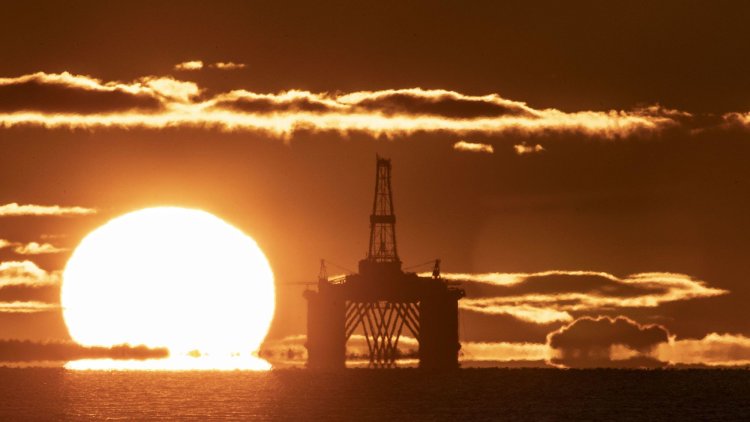
There are growing calls to provide new licenses to extra oil from the North Sea as the US-Israeli war with Iran continues. (Alamy)


6 min read
There are growing calls, including from US President Donald Trump, for the UK to allow new drilling in the North Sea in response to the spike in energy prices triggered by the Iran war. How much difference would it make?
It is not just Trump who has urged Keir Starmer to reverse the government’s position on drilling for gas and oil in the North Sea.
Conservative leader Kemi Badenoch has said she would get “all our oil and gas out of the North Sea” if she became prime minister, and on Tuesday, her party used an opposition day motion to force a House of Commons debate on the subject.
Last week, Reform UK leader Nigel Farage used his question in PMQs to ask Starmer why the UK couldn’t follow Norway’s lead and grant more licenses to drill in the North Sea, to create “thousands of jobs, increased tax revenues and cheaper gas prices”.
On Monday, The i newspaper reported that some Labour MPs were changing their mind on the subject amid the pressure being put on British energy prices by the Iran war. “This price shock has woken up a lot of people who hadn’t really engaged on the topic,” said one.
On the same day, Labour MP Henry Tufnell publicly called for the government to reverse its position on North Sea oil and gas, writing in The Sun: “In the face of further geopolitical turmoil, now is the time to alter our approach to energy to protect families.”
However, while political pressure to permit more North Sea drilling is rising, experts have cast doubt over how much it would actually help the UK deal with the current energy shock.
Why are energy prices rising?
The ongoing conflict in Iran is having a major impact on the supply of oil and gas.
In response to strikes by the US and Israel, Iran has threatened to attack ships seeking to pass through the Strait of Hormuz, which is one of the world’s most important shipping lanes, responsible for around a fifth, or 20 per cent, of the world’s oil supply. As a result, traffic through the lane has fallen sharply since the conflict started.
As well as threatening the Strait, Iran has also conducted strikes on other oil-rich countries in the region it views as allies of the US, including Saudi Arabia and the United Arab Emirates. Last week, international gas prices soared after reports that Tehran had carried out significant strikes on Qatar’s Ras Laffan, the world’s biggest liquified natural gas terminal.
This severe disruption to key sources of energy is leading international prices to rise sharply, with the UK very much among the countries impacted.
Petrol prices have taken an immediate hit, with the RAC estimating on Monday that drivers in the UK have paid an additional £307m for petrol and diesel since the conflict started at the end of February than they otherwise would have. Petrol and diesel prices per litre have risen from 132.9p to 146.4p and from 142.4p to 169.8p, respectively.
Last week, leading energy consultancy Cornwall Insights said it now expects typical household energy bills to increase by £332 when the current Ofgem price cap expires in July.
The government has already announced financial support worth £50m for houses reliant on heating oil, which are particularly exposed to the early impact of the crisis, and is currently considering targeted support for households nationwide if prices remain high.
What is the government’s policy on North Sea extraction?
The suspension of new oil and gas licences for the North Sea was one of Labour’s flagship energy policies when it was elected to office in 2024. Secretary of State for Energy Security and Net Zero, Ed Miliband, ordered a ban within days of taking power.
The move was part of the Labour government’s wider policy of developing more clean energy at home and making the UK less reliant on the international fossil fuel market.
“There is one lesson from this crisis, and only one in my view for the long term on energy policy, and that is that we need home-grown, clean power that we control,” Miliband recently told the BBC.
According to Politico, Miliband doubled down at a meeting of the Parliamentary Labour Party on Monday evening, telling MPs: “Anyone who tells you that new licenses in the North Sea will make any difference to price is not telling you the truth.”
In a briefing document prepared for Labour MPs ahead of Tuesday’s opposition day debate, seen by PoliticsHome, backbenchers were encouraged to put questions to the Tories and Reform like asking whether they “recognise that oil and gas is sold on the international market and therefore we are a price taker, not a price maker?”
Critics like the Conservatives and Reform accuse the government of putting its net zero agenda before a policy that could ease cost-of-living pressures facing households.
What impact would new North Sea drilling have?
However, if the government were to change course, what impact would it actually have on the current energy shock?
Adam Bell, director of policy at Stonehaven consultancy and former government energy adviser, told PoliticsHome that even if the government allowed a drilling “free-for-all” in the North Sea, it would not make any immediate difference to oil and gas prices.
Bell explained that while having more oil at home would have kept prices down to some degree, as it wouldn’t have had to travel via international shipping lanes affected by the Iran war, the infrastructure needed to carry out new drilling takes a long time to build, making the suggestion irrelevant to the current energy shock.
“We would have needed to have done that about three years prior,” he said.
Dr Hafez Abdo, an expert in oil and gas at Nottingham University, made the same point in an interview with Channel 4’s FactCheck this week, explaining that new drilling projects “typically require significant time before production begins”.
Bell also argued that there isn’t that much oil left in the North Sea to extract.
“There is also the reality that it would only have a marginal effect. There’s just not that much left in the North Sea. You might squeeze a bit more out, you might reduce the price by about a dollar in global terms,” he told PoliticsHome.
Chair of the energy security and net zero select committee, Labour’s Bill Esterson, said comparisons with Norway don’t really work as the country “has far greater reserves left than we do because we extracted much more of our oil and gas much sooner than they did”.
He added that Norway has a state-owned oil and gas company, giving it “far greater control” over the energy reserves than the UK has over what is in the North Sea.
“Oil and gas are produced by international companies, who sell it on the open market to the highest bidder, so there’s no way of reducing the price by what we produce in the North Sea,” the committee chair argued.
Abdo and Newcastle University Dr Mark Ireland told FactCheck that increasing production in existing North Sea sites was a better option than new projects, but would still have little effect on household energy bills, as prices are largely determined by international markets.

You must be logged in to post a comment Login