The second round of the 2026 Arnold Palmer Invitational begins Friday morning, March 6, at Bay Hill in Orlando, Fla. You can find full Arnold Palmer Invitational tee times for Friday’s second round at the bottom of this post.
Featured tee time for Round 2
Scottie Scheffler was asked about his slow starts to tournaments this season in his pre-tournament press conference at the Arnold Palmer Invitational. He was quick to remind reporters that in four starts, he’s really only had three bad rounds.
That tracks when you look at Scheffler’s record heading into Bay Hill. In addition to his American Express victory, the World No. 1 has two other top-4 finishes. His worst result is a T12. Not bad.
And Scheffler looked strong to start his opening round on Thursday as he vies for his third-career Arnold Palmer victory. The four-time major champion made two birdies over his first four holes in Round 1.
Advertisement
Scheffler will get his second round started on Friday at 1:30 p.m. ET alongside Russell Henley.
You can watch Friday’s second round of the 2026 Arnold Palmer Invitational from 2-6 p.m. ET on Golf Channel. PGA Tour Live on ESPN+ will provide exclusive streaming coverage starting at 7:30 a.m. ET on Friday, as well as featured group and featured hole coverage all day.
Check out the complete Round 2 tee times and pairings for the Arnold Palmer Invitational.
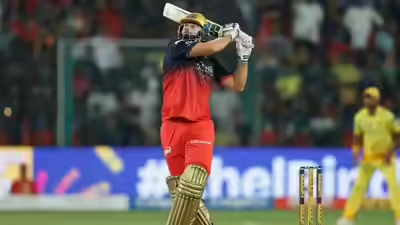
Tim David’s late hitting against Chennai Super Kings on Sunday not only lifted Royal Challengers Bengaluru to a big total but also placed him alongside some of the franchise’s notable power-hitters in the record books.Batting in the lower middle order at the M Chinnaswamy Stadium, David struck eight sixes during his innings. That effort is now the joint second-highest number of sixes hit by an RCB batter from No.5 or lower in an IPL match.The record in this category remains with Yuvraj Singh, who had smashed nine sixes against Delhi Capitals in 2014. David’s eight sixes equal the tally set by AB de Villiers, who had hit the same number against Sunrisers Hyderabad in 2014.
Watch
Shami reveals what makes this LSG team special after big win
All three of these innings have come at the same venue in Bengaluru, underlining how the conditions at the Chinnaswamy Stadium have often favoured attacking strokeplay, especially in the latter stages of an innings.Most sixes from No.5 or lower for RCB
9 – Yuvraj Singh vs DC, 2014
8 – AB de Villiers vs SRH, 2014
8 – Tim David vs CSK, 2026
(All in Bengaluru)David’s knock came at a crucial phase, with RCB looking to push their total in the final overs. His hitting ensured that the scoring rate rose sharply, as he repeatedly cleared the boundary during the closing stages.Royal Challengers Bengaluru scored 97 runs in the last five overs to finish at 250 for 3, the highest total of this season, against Chennai Super Kings in their IPL match on Sunday, turning the game with a strong finish in the first innings.The late surge came from Tim David, captain Rajat Patidar and Devdutt Padikkal, who built on the base set earlier in the innings. Padikkal scored 50 off 29 balls, David made 70 off 25 balls, while Patidar remained unbeaten on 48 off 19 balls. Royal Challengers Bengaluru won the match by 43 runs.
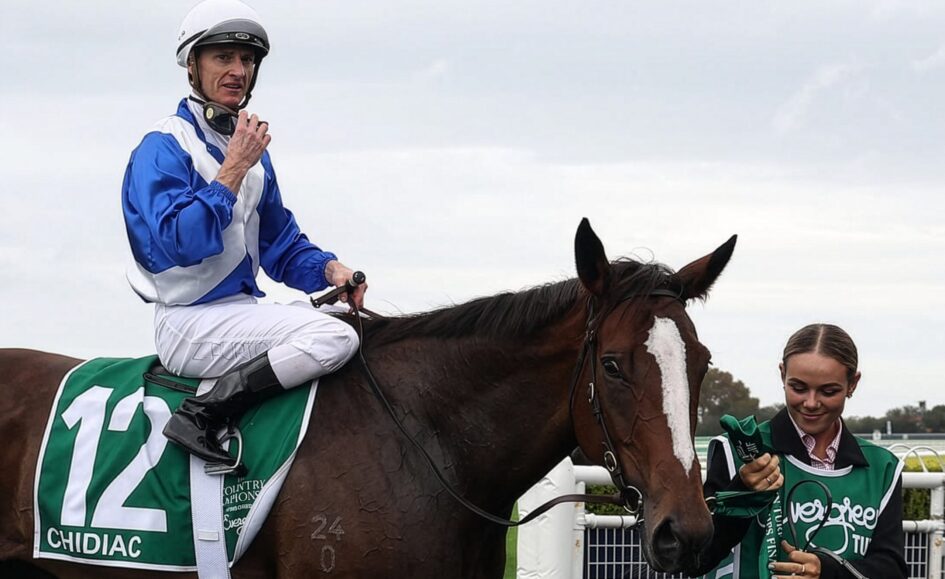
A monumental occasion unfolded for the Cavanough father-daughter team of Brett and Georgie when Chidiac stormed home to claim the Country Championships Final (1400m) at Royal Randwick over the weekend.
Brett Cavanough, boasting a tally exceeding 1100 training successes, was visibly moved by the occasion.
“I’ve got to try and hold it together a bit, very special today to do it with Georgie,” Cavanough said.
“She tipped Chidiac all week, she had faith in her.”
Advertisement
Georgie, newly partnered with her father this term, declared the mare her unwavering selection.
“She’s been my pick all along, she didn’t let us down, she’s a very classy mare,” she said.
“This is great – I couldn’t do it without Mum and Dad, it’s all just very exciting.”
From his Coffs Harbour roots, Hong Kong ace Zac Purton cherished partnering with locals for such a prestigious prize.
Advertisement
“I was a country boy my whole childhood, so it’s just great to team up with someone from there and win a race as important as this,” Purton said.
“She travelled really well, at no stage of the race did she give me any concerns.
“She was straight into the bridle, really happy and comfortable where she was in the going.
“Coming up the rise she was travelling so well but I thought she’s been here for a while, is she going to empty out, but she kept going all the way.”
Advertisement
At $5.50 in betting, Chidiac hit the front halfway down the straight and scored by a length over Graceful Ellen ($61), with Micro Mikki ($91) three-and-a-half lengths total away in third.
Cavanough’s provincial feature record grows stronger, now including the 2020 The Kosciuszko success with It’s Me.
The trainer shared his riding instructions for Purton on the mare.
“Zac just took bad luck out of the equation, he made it his race,” he said.
Advertisement
“I just said whatever you do, cuddle her for as long as you can and when you go for her, she is just sharp as.”
Chidiac, five-year-old daughter of Better Than Ready from initial low-grade starts at Quirindi, has six victories in 11 races and holds potential for major assignments.
“We might look at the Stradbroke Handicap in Brisbane,” Cavanough said.
Gerry Harvey races the mare, capping a highlight-filled day after John Singleton’s Blue Door won the Kindergarten Stakes.
Advertisement
Top-weighted Considered ($3.60) filled fifth spot, trainer Matthew Dunn believing the filly has run her race.
“I think she has come to the end of it,” Dunn said.
“She won her heat six weeks ago and it’s a long time to keep them going. But she won six straight so she has done a wonderful job.”
Follow the form from the Country Championships Final with racing betting markets available on leading betting sites.
Jul 27, 2022; Eagan, MN, USA; Minnesota Vikings head coach Kevin O’Connell looks on at TCO Performance Center. Mandatory Credit: Matt Krohn-USA TODAY Sports.
Last year was a difficult draft for most to handle or really enjoy when making mock drafts. The former general manager had decimated the Vikings’ draft capital by using future assets to move up for Dallas Turner and J.J. McCarthy.
While there is still time to prove those were the right moves, the lack of draft success before 2025 has caught up with the team to the point that the 2026 draft will have to be damn near perfect. The tough part is we really won’t know that for a couple of years as they develop.
Four Clear Draft Paths Define Minnesota’s Strategy at No. 18
In 2025, I felt the best strategy in the draft was to trade back to acquire more picks. With only four picks to start with, the Vikings needed more ammo and some key positions to fill. The Vikings took my third option of staying put and were rewarded with left guard Donovan Jackson, one of the players I speculated they might end up with.
Advertisement
Sure, it wasn’t the most exciting pick, but it was the best pick, and it strengthened a position that had been suffering for several years. Jackson was a solid performer and was the player Head Coach Kevin O’Connell had been dreaming about drafting.
Other than a broken wrist that caused him to sit out a few games, Jackson soon earned the respect of fans in an otherwise bad season. Will Fries at right guard was the most consistent performer among those who kept getting rotated out of the lineup due to injuries. Jackson was a close second.
Minnesota Vikings guard Donovan Jackson (74) goes through drills during a June 10, 2025 minicamp session at the team’s training facility in Minneapolis. The rookie lineman is expected to compete for a key depth role entering his first NFL season. Mandatory Credit: Matt Krohn-Imagn Images.
The rest of the draft picks are all “wait and see” players. Tai Felton didn’t do much of anything. Tyrion Ingram-Dawkins got a good amount of playing time as a rotational player and had a few splash plays. Kobe King got cut late in the season and got picked up by the Jets.
Gavin Bartholomew was put on injured reserve for the season. Some of the undrafted free agents the team brought in outshone some of the drafted players.
Advertisement
Now the team has Rob Brzezinski as their General Manager — even if it ends up being temporary and nine draft picks to work with to make moves if they feel they need to. With more ability to move up or down in the draft or even acquire future picks, the strategy this year will be different than last year.
I used Pro Football Network to run my mock drafts. Not a bad program, as you can trade players and picks, and the computer will throw out trades for the automated teams to you and between them, adding surprises every so often. It’s also free!
I ran 15 mock drafts where I controlled the Vikings’ choices, making tradebacks, trade-ups, and staying put to find the best possible plan for the Purple Squad to take and what they should avoid. I’m only going to talk strategy here with a player breakdown in a follow-up article.
4. Trade Back to the End of 1st Round orOut
Advertisement
Last year, my suggestion was that they aggressively trade back out of the 1st round to acquire more picks since they were sitting at pick 24. With the draft cupboard so bare in 2025 and the previous failures in the draft, the team needed to shore things back up.
This year, that scheme would not be a great idea. To me, this draft feels top-heavy with several players available for depth. Minnesota doesn’t need depth players; it needs impact players, and it needs them now. Could they find diamonds in the rough? Sure. But they can’t risk that by trading away high picks to fill the roster.
Vikings executive Rob Brzezinski speaks with Vikings.com’s Gabe Henderson during a sit-down interview on Feb. 17, 2022, discussing organizational philosophy, front-office strategy, and the hiring of head coach Kevin O’Connell while outlining Minnesota’s leadership structure and long-term football operations vision in a detailed digital feature segment. Mandatory Credit: YouTube.
They’ve done a great job with lower-level picks and undrafted free agents over the last few years who have played very well, but now they need guys who go from the draft floor straight to the playing field. This strategy should be avoided at all costs, especially if the guy everyone thinks they should take is sitting right there.
3. Trade Up Back Into The 1st Round
As I said, this draft is deep on supporting players and depth with a good amount of talent at the top. Sitting at 18 is right in the middle, and they should get a good player no matter what, but maybe they get aggressive and try to get back in the 1st round and snag another player of need.
Advertisement
The problem here is that you’re probably giving up 2027 picks to get there, and that draft is supposed to be stacked with talent. In the later rounds, I found that in most cases I could trade back and still get players of need and great value. I also found ways to get more picks for 2027, filling the missing 4th-round pick that goes to Carolina with a 3rd-round pick or two.
I think staying put in the upper rounds is still the way to go to lock down players who fill the team’s needs. One way to do this may be to trade away a player as part of a package deal, if necessary. Jordan Addison has many fans ready to part ways, and he could give the team some ammunition to move up. There are also Johnathan Greenard rumors that most hope don’t come true. Unless someone takes an absolute tumble down the boards, I don’t see any reason to open this door.
2. Trade Up
Sitting at 18 doesn’t sit well with some folks, as the Vikings went on a bit of a winning run at the end of the season. Once again, the team plopped down in sort of a no man’s land with the top picks just out of reach. However, there is some hope that they could move up if there is a payer they absolutely covet.
Advertisement
Oct 19, 2024; Atlanta, Georgia, USA; Notre Dame Fighting Irish running back Jeremiyah Love (4) runs against the Georgia Tech Yellow Jackets during the second half at Mercedes-Benz Stadium. Mandatory Credit: Dale Zanine-Imagn Images
Should there be a player they feel could dramatically alter the team’s strategies on either side of the ball, they could make that move, since they have more draft capital. Again, they would have to give up picks in 2027 to get there, putting strain back on next year’s draft.
If they see that’s the way to go, then that player had best not only be an impact player from the start but a starter before the season ends. The team and the staff as a whole can’t have more draft failures on their resume.
Can they do it? Yes. Should they? I feel that only if someone with high impact falls near them and they only have to go up a pick or two to secure “their guy”. Selling the farm won’t be in the best interests of the future over the next few years.
1. Stay Put
2025 had fans all in a twist, wanting to make a move one way or the other. When they didn’t, I was pretty surprised that they didn’t at least trade back. In the end, that was the best decision they could have made. You build through the trenches, and Jackson was a great pick.
Advertisement
Once the entire line can play as a unit and not be a fruit basket upset by injuries, they could be the best line in the division and maybe one of the best in the league. That’s why I think they should once again stay put and take the best player available at a position of need. Several great players will be taken at the top of the draft.
Dec 25, 2025; Minneapolis, Minnesota, USA; Minnesota Vikings head coach Kevin O’Connell looks on in the second quarter against the Detroit Lions at U.S. Bank Stadium. Mandatory Credit: Matt Krohn-Imagn Images
What’s unique is that several great players in the 20s are worthy. The Vikings need a safety, center, and cornerback the most, with running back, wide receiver, and tight end being needs to fill for future consideration.
With all the mocks I’ve gone through, the Vikings can get any of these players by being patient. Some might see it as more of a luxury to take the best player available, but it’s never bad to have too much of a good thing. Staying at 18 also lets them decide if trading back a spot or two and still getting their guy is in play.
The draft rarely goes the way most of us think it will. I don’t believe in the “that will never happen” scenario because I’ve seen it time and time again. If the team stays at 18, I think we will all be happy with the outcome on draft night.
I’m a small-town boy with12 years in telecommunications and 13 years in radio but a lifetime as a Vikings … More about Tony Schultz
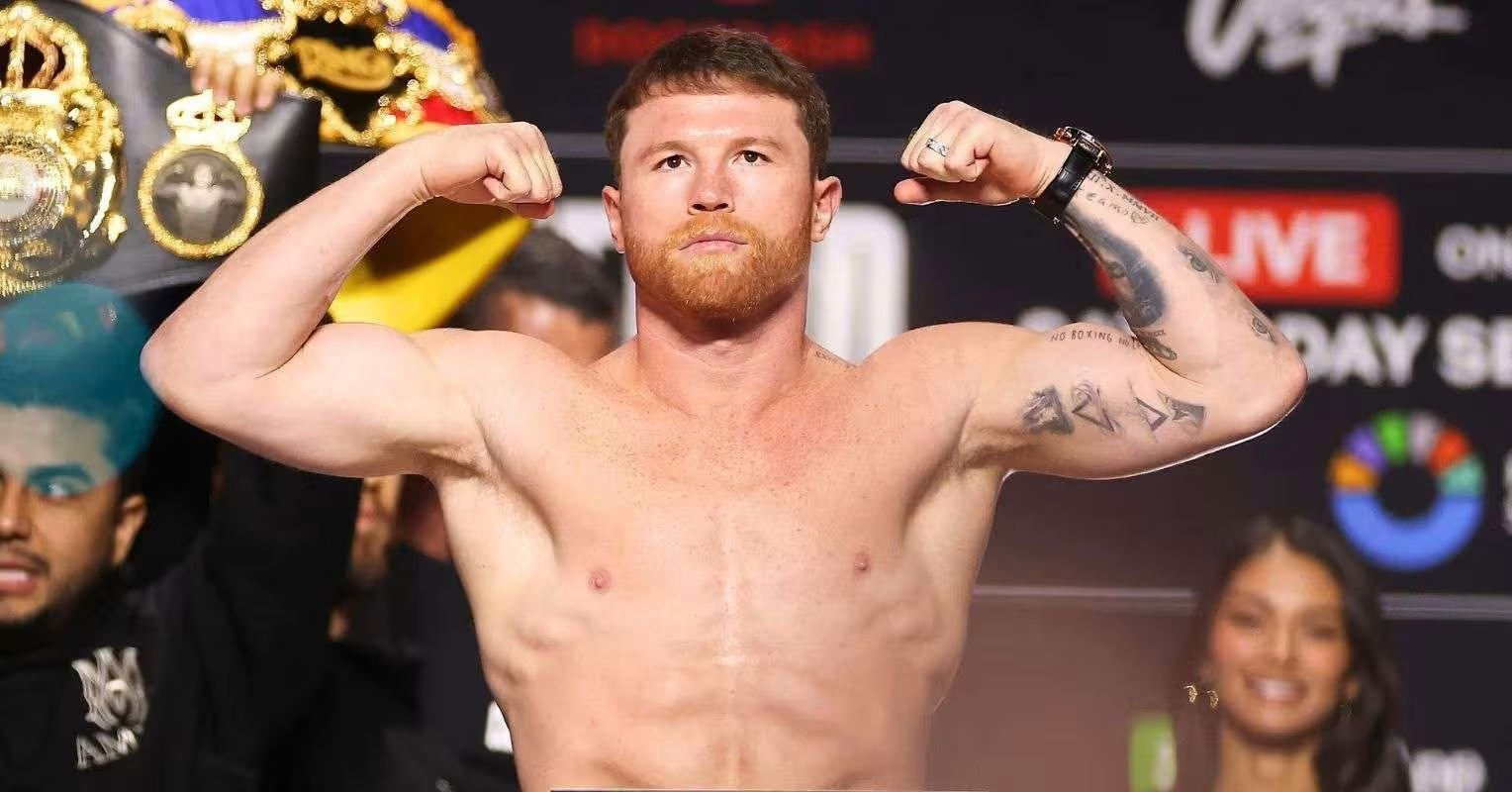
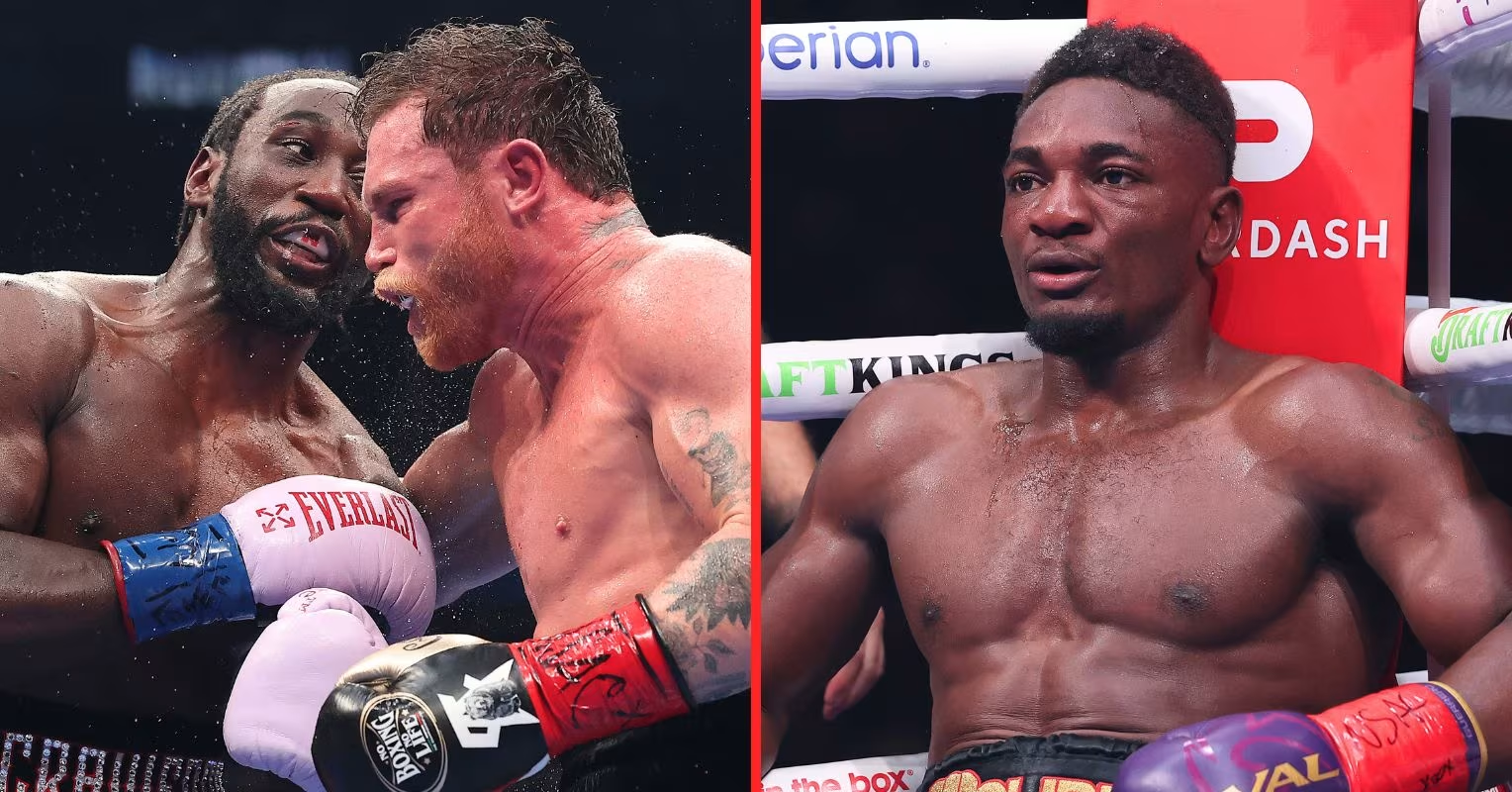
A new development means Canelo Alvarez is even more likely to challenge for a world title in his next outing.
Canelo was last in action in September when he lost his undisputed super-middleweight crown to Terence Crawford at the Allegiant Stadium in Las Vegas.
The Mexican superstar had hoped to secure a rematch with Crawford, but instead ‘Bud’ announced his retirement, resulting in the world title belts becoming vacant.
Advertisement
One of those titles is now in the possession of Christian Mbilli, who became WBC super-middleweight champion after he was elevated from interim status, and the 30-year-old has since made his intentions of sharing the ring with Canelo perfectly clear.
Mbilli’s trainer Marc Ramsay had told Boxing News this week that they were waiting on a decision from the WBC on whether they may need to face newly-crowned interim champion Lester Martinez before a potential Canelo bout, but a verdict has now been reached.
In their new divisional updates, the WBC revealed that Martinez will have to face two opponents in order to keep his belt and eventually earn a shot at the full title, paving the way for Canelo to head straight into a clash with Mbilli.
“Lester Martinez defeated Immanuwel Aleem on March 21 in San Bernardino, California, to capture the Interim Title. Martinez is now obligated to fulfill two mandatory defenses.
“Luka Plantic to fight an elimination bout. Jacob Bank vs. Paulinus Ndjolomino – eliminator – April 25 in Denmark.”
Advertisement
Canelo’s return is planned for Riyadh, Saudi Arabia in September, so all signs now point towards his next bout being a fight with Mbilli for the WBC super-middleweight title.
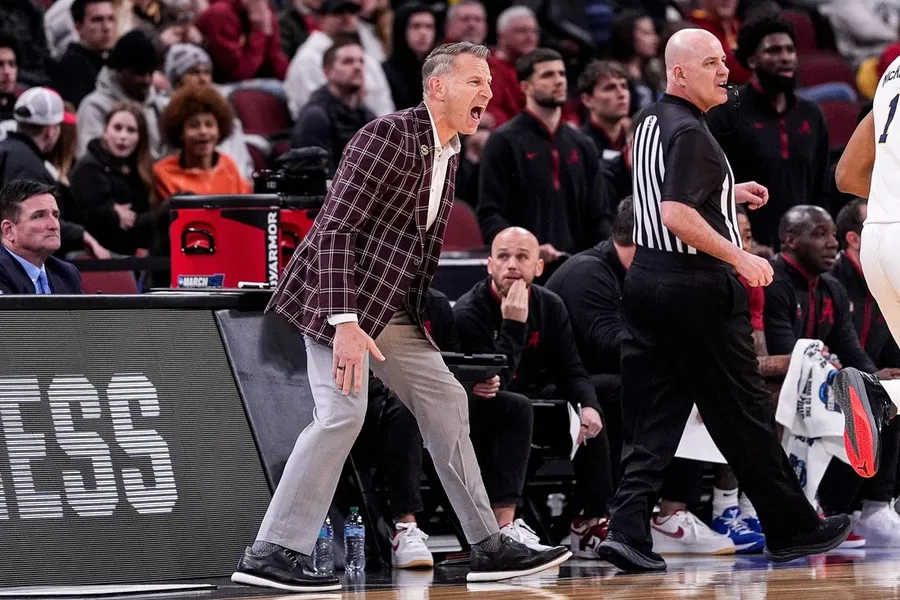
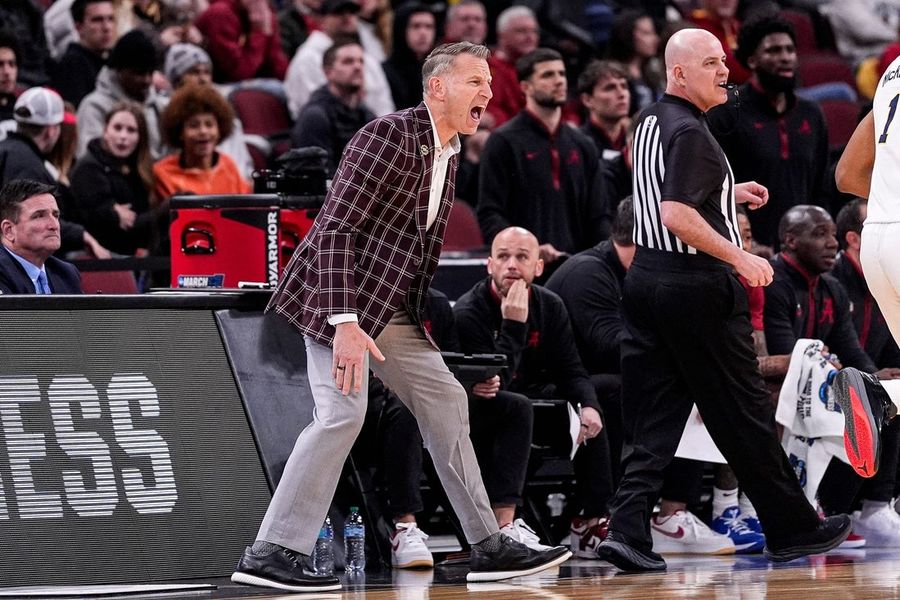
Alabama head coach Nate Oats reacts to a play against Michigan during the first half of NCAA Tournament Sweet 16 round at United Center in Chicago on Friday, March 27, 2026.
Alabama has agreed to a contract extension with men’s basketball coach Nate Oats that will make him one of the five highest-paid coaches in the sport, Alabama athletic director Greg Byrne announced Sunday via X.
“Appropriate members of The Board of Trustees have been notified of the proposed terms of the new agreement and it will soon be formally approved through the Board process,” Byrne wrote in a statement.
“We are good! He’s not going anywhere,” Byrne wrote on his personal X account.
This is the third contract extension in four years for Oats, whose previous extension in early 2024 ran through March 2030 and was scheduled to pay him $6.02 million for the 2026-27 season.
Complete details on the new contract have yet to be announced but, according to USA Today, the five highest-paid coaches at public schools in 2024-25 each made at least $6.1 million — when Oats tied for ninth nationally with a $5 million base salary.
Advertisement
Oats’ impending raise should put him in the same neighborhood with Kansas’ Bill Self, Arkansas’ John Calipari, UConn’s Dan Hurley, Michigan State’s Tom Izzo and Arizona’s Tommy Lloyd. On Friday, Arizona announced a new five-year deal with Lloyd that starts at $7.2 million, presumably to keep the national Naismith Coach of the Year from leaving for the open North Carolina job.
Alabama’s rationale for a new deal could have been driven by the same fear.
“As long as we’re able to compete to win championships here — SEC, national championships. We haven’t done that here yet — I’d love to be the coach to bring us our first national championship,” Oats said March 26 when asked about potential links to the North Carolina head coaching vacancy.
Advertisement
“To me, there’s absolutely no reason to leave here. While it’s flattering that a high school guy that caught a couple of breaks would be mentioned with some of these jobs, because they’ve got a lot of tradition, I’m not a guy that’s looking to get out of here any time soon.”
Oats, 51, has been the head coach at Alabama since 2019 and has compiled a 170-73 record (.700) in his seven seasons. The Crimson Tide have competed in a program record-tying six straight NCAA Tournaments.
This season Alabama lost to Michigan, who will play for the National Championship on Monday, in the Sweet Sixteen.
Oats’ deepest run was when he helped lead Alabama to the Final Four as a No. 4 seed during the 2023-24 season. The Crimson Tide fell short to eventual champion UConn.
Advertisement
Oats has led Alabama to at least two NCAA Tournament wins in all but one of his six appearances with the school.
Manchester City will return to Wembley later this month for the FA Cup semi-final
19:54, 05 Apr 2026Updated 20:10, 05 Apr 2026
Advertisement
Manchester City will face Southampton in the FA Cup semi-final later this month. The Blues will take on the Saints at Wembley on either Saturday, April 25 or Sunday, April 26.
Southampton dramatically knocked out Premier League leaders Arsenal on Saturday night, beating Mikel Arteta’s side 2-1 in arguably one of the shocks of the competition so far.
Ross Stewart opened the scoring ten minutes before half-time with Viktor Gyokeres equalising for Arsenal with 22 minutes left to play. Former City youngster Shea Charles netted a dramatic winner five minutes from time, though, to deal Arsenal back-to-back cup blows after Pep Guardiola’s men beat them in the Carabao Cup final before the international break.
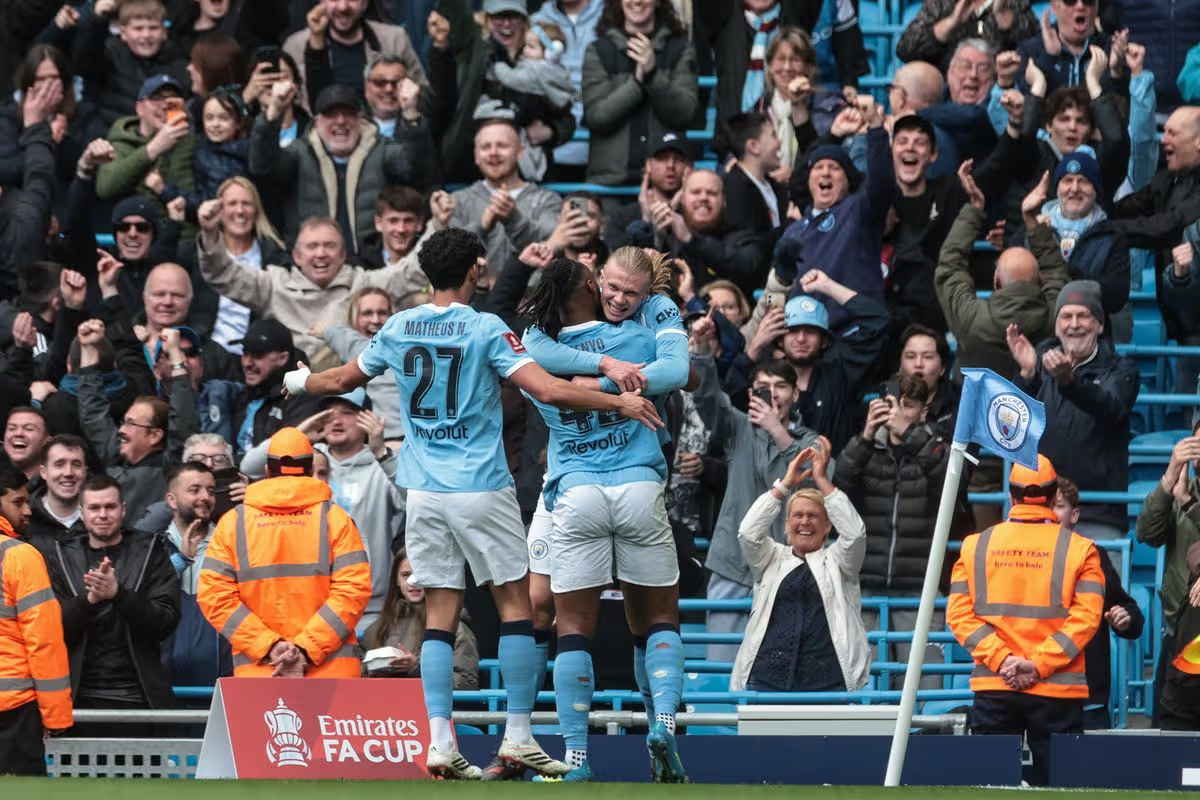
City, meanwhile, booked their place in the last four after a comfortable victory over Liverpool on Saturday. Erling Haaland opened the scoring from the spot after Nico O’Reilly was fouled by Virgil van Dijk.
Advertisement
Get MEN Premium now for just £1 HERE – or get involved in our City WhatsApp group by clicking HERE. You can also join our City Facebook page by clicking HERE and don’t miss out on our brilliant selection of newsletters HERE.
On the stroke of half-time City doubled their lead as Antoine Semenyo’s cross was headed in by Haaland. Semenyo added his name to the scoresheet shortly after the break to seal the victory, and there was still time for Haaland to complete his hat-trick as he tapped in O’Reilly’s low cross to make it 4-0.
The Blues are now favourites to win the FA Cup after Premier League leaders Arsenal were knocked out on Saturday night. City remain in the hunt for a domestic treble.
Having already won the Carabao Cup, the Blues need to eat up a nine-point gap to leaders Arsenal in the Premier League title race. City have a game in hand on the Gunners and will host them in a couple of weeks in a potentially title-deciding game.
Advertisement
The lineup for the semi-finals of the FA Cup was confirmed after Leeds United’s dramatic penalty shootout win at West Ham United on Sunday Afternoon. After City dispatched of Liverpool on Saturday, Chelsea and Southampton beat Port Vale and Arsenal respectively.
Content cannot be displayed without consent
Saul ‘Canelo’ Alvarez looks set to get an immediate opportunity to win back one of the world titles he lost to Terence Crawford in September last year.
While the WBO and IBF still remain vacant, Jose Armando Resendiz now holds the WBA, and the WBC – who actually stripped Crawford days before his retirement – has upgraded Christian Mbilli to full champion.
Advertisement
Mbilli is the man expected to face Canelo in his September comeback fight, currently booked for Saudi Arabia, though the location may change due to the war in the Middle East.
Responding to a fan on X, Crawford backed Alvarez to become champion once more if things play out that way.
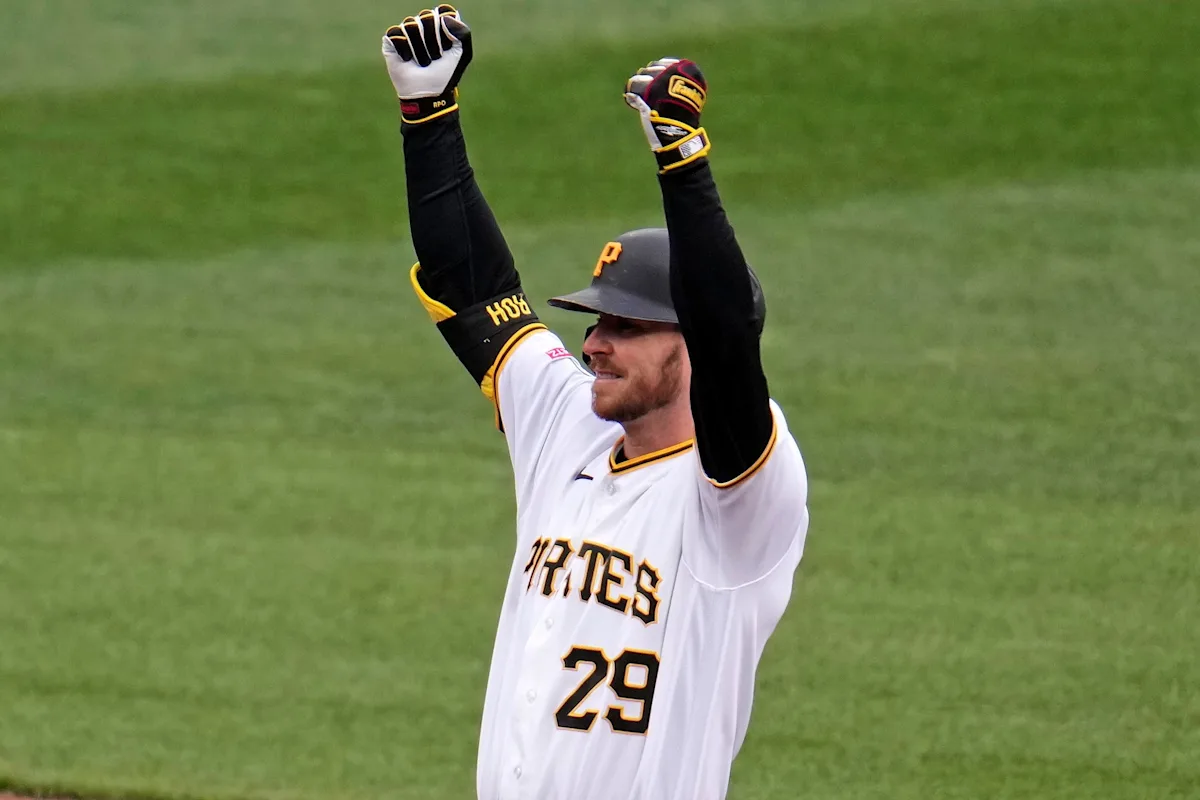
PITTSBURGH (AP) — Ryan O’Hearn homered and matched a career high with four RBIs as the Pittsburgh Pirates beat the Baltimore Orioles 8-2 on Sunday to sweep a three-game series and extend their winning streak to five.
O’Hearn hit a two-run shot to right-center in the first inning. In the second, his two-run double highlighted a four-run outburst as the Pirates pushed their lead to 6-0.
Advertisement
Oneil Cruz made it 8-1 with a two-run homer to center field in the sixth. He also singled home a run in the second.
Advertisement
Cruz’s homer came off left-hander Cade Povich. The center fielder is 7 for 10 with three homers against lefties after going 11 for 108 with one homer last season.
That was plenty of support for Braxton Ashcraft (1-1), who allowed one run and four hits in six innings. He had a career-high eight strikeouts and no walks.
Pirates starters have given up two earned runs or fewer in each of their eight games since 2025 NL Cy Young Award winner Paul Skenes was tagged for five runs while only getting two outs against the New York Mets on opening day.
Advertisement
Advertisement
Orioles starter Chris Bassitt (0-2) was roughed up for six runs in two innings. Signed to an $18.5 million, one-year contract as a free agent just before spring training, the right-hander has given up 10 runs over 6 1/3 innings in two starts.
Pete Alonso had an RBI double and Taylor Ward got three hits for the Orioles, who lost for the fifth time in six games.
Up next
Orioles: Were undecided on a starter for Monday night when they open a three-game road series against the Chicago White Sox and Erick Fedde (0-1, 5.40 ERA).
Pirates: Begin a three-game home series with San Diego on Monday night as rookie RHP Bubba Chandler (0-0, 0.00) faces RHP Germán Márquez (0-1, 12.00).
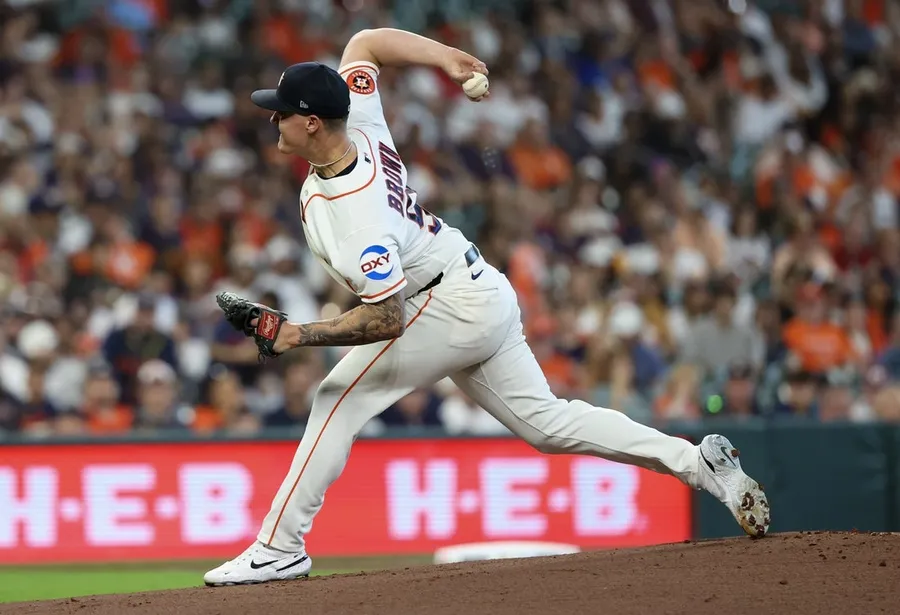
Mar 26, 2026; Houston, Texas, USA; Houston Astros starting pitcher Hunter Brown (58) pitches against the Los Angeles Angels in the first inning at Daikin Park. Mandatory Credit: Thomas Shea-Imagn Images
The Houston Astros placed ace right-hander Hunter Brown on the 15-day injured list Sunday with a right shoulder strain.
The move was retroactive to Thursday.
Brown finished third in American League Cy Young Award balloting last season. He is 1-0 with an 0.84 ERA in two starts this season, striking out 17 in just 10 1/3 innings.
Brown, 27, last pitched Tuesday when he defeated the Boston Red Sox. He gave up one run and one hit and struck out eight against two walks in six innings.
Advertisement
There was no immediate word on how long Brown might be sidelined. Houston announced the move before manager Joe Espada met with reporters prior to the club’s Sunday afternoon road game against the Athletics.
Brown made the AL All-Star team for the first time last season when he went 12-9 with a 2.43 ERA in 31 starts. He struck out a career-high 206 and posted a stellar 1.03 WHIP.
He is 37-31 with a 3.44 ERA in 102 appearances (94 starts) since reaching the majors in 2022.
The Astros promoted right-hander Christian Roa from Triple-A Sugar Land in a corresponding move. He had a 6.75 ERA in two relief appearances for Houston earlier this season.
Advertisement
The 27-year-old pitched one scoreless inning of relief in his lone outing for Sugar Land this season.
Gerry Harvey, the owner-breeder and entrepreneur, offered a timely advisory to yearling buyers when two passed-in horses from his stock notched feature victories one after another at Randwick.
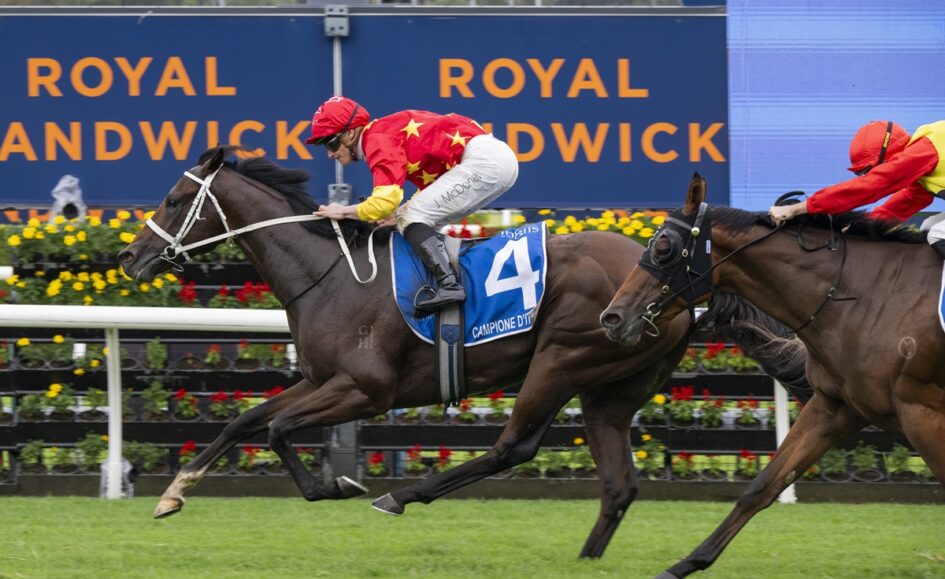
Part of the ownership for Campione D’Italia involves Harvey with an elite partnership including Newgate Bloodstock owned by Henry Field, and the colt had also been passed in at sales.
“I passed it in, and Henry Field and I had a talk. I said, ‘I want six hundred (thousand dollars) mate’, and he said, ‘I’ll give you five hundred’ and I said, ‘get lost’. Then I thought I better do it,” Harvey said.
Advertisement
“It’s a very exciting day because we just had the country winner as well. We passed it in for $25,000. No-one wanted it.
So if you want to buy a horse from my horse studs, always buy the passed-in ones. Never buy in the ring. You’ll do much better buying a passed-in one.”
Campione D’Italia, by Snitzel, elevated his stallion value via the Group 1 conquest, extending from a powerful fourth in the Golden Slipper (1200m) closing from the rear.
The horse’s trainer, Chris Waller, highlighted the enhanced starting position and steady improvement as decisive.
Advertisement
“Today was his fourth career start and each run has got a little bit better, a little bit better,” Waller said.
“His run in the Golden Slipper was amazing. He just got too far back. It was no-one’s fault, and the horse is just learning all the time.
He got a lovely draw today, and that was the difference between having him in the firing line or going back like he was last start.
It was good to see him knuckle down and get the job done.”
Advertisement
A next step could be the Champagne Stakes (1600m) for Campione D’Italia, emulating stablemate Militarize who achieved it three years back after Sires’.
“Militarize, he won the Sires’ and then he won the Champagne, so I’ll have a talk to the team and see what they suggest,” Waller said.
“We’ve got to nurse him a little bit, so we’ll see how he comes through it.”
At $4.20, Campione D’Italia held off Miss Chanel ($15) by three-quarters of a length, followed identically by stablemate Fireball ($18) in third.
Advertisement
The Champagne Stakes is on the table for Fireball subject to how he pulls up.















































You must be logged in to post a comment Login