Or [Insert number] things you didn’t know about Ryan Fox.
Or something like that. Over the past 24 hours, you’ve likely seen more than a few articles with those discovery-based headlines; hell, even this site wrote one. In the encyclopedia-in-your-pocket era, what these stories do is catch you up with subjects now celebrated but previously a bit unheralded — and what you usually won’t find are similar-styled pieces about multiple-time major winners or those in and around the world top 25 because sports, at their core, are about who wins, and sports stories are about telling you how that happened, so, by now, you’re well acquainted with the folks who have won dozens of times over such as Nelly and Scottie and Rory.
So let’s indulge this: Who’s Ryan Fox, the 39-year-old New Zealander who, on Sunday, won the Open Championship for his first major championship?
Advertisement
He’s you, actually.
Or at least perhaps closer to you than, say, Nelly and Scottie and Rory. Fox needed a while to arrive and worked toward that. He started playing competitive golf in his late teens. Turned pro in his mid-20s. Reached the PGA Tour at 37. None of this is to say that Fox doesn’t have god-given ability, or that the aforementioned megastars are afraid to get their golf gloves dirty, so to say. It’s just that Fox’s path has had more twists and turns than Royal Birkdale’s fairways, which we all can relate to.
“Why it’s a slow burn? I don’t know,” Fox said Sunday. “It took — I was a rookie on the DP World Tour at 30. I was a rookie on the PGA Tour at 37 and now a major champion at 39. I’m definitely not following the trend at the moment. But if I can keep getting better a little bit every year, I’ll be pretty happy.
“I said it earlier; if you’d have given me my career up till yesterday when I first turned pro, I would have jumped at it. Now I probably would have killed people for it.”
Advertisement
Sunday night, I wanted to test my theory. I texted my 18-year-old golfing nephew a tweet that shared the point that Fox didn’t start playing seriously until he was about the same age. The response?
“Dang, that’s crazy.”
Crazy like a … [insert bad pun here.]
As we look back at the Open Championship week that was, let’s make that observation No. 1 then. We’ll try for 49 more, and we’ll be fueled by the anticipation of eating a sausage roll, which will be had as soon as the keyboarding concludes.
Advertisement
2. How trying was the journey? Fox was close to quitting.
“My second year on the Aussie Tour, I was pretty close to giving it up,” he said. “I think I had three events left in the season, and I was not enjoying it. I played well enough in pro-ams to make a little money, but I had not played well on tour, and I was well outside keeping my card.
“I remember getting to the Aussie Masters at Royal Melbourne. It was the second-to-last event of the year. I had just missed the cut at the Aussie PGA badly. My dad came over and caddied for me, and he said to me, ‘Why do you play this game?’ And I said, ‘Well, it’s supposed to be fun.’ But it wasn’t really very fun at the time. He goes, ‘Well, let’s just go out this week and try to have some fun.’
“I think I finished fifth that week, and that made enough to keep my card for the year. Took the pressure off the rest of the year, and I came back the following year and played really, really well.
Advertisement
“Yeah, that was — I was very close to giving it up at that point.”
3. Who is Ryan Fox?
A finisher.
On the mine-filled 72nd hole, he nuked a drive, flushed an iron and sunk a putt, under the heat of needing a bird to win major No. 1. Has there been a better played hole, under the circumstances?
Advertisement
4. He played to win it, too. First or bust.
“I did say to my caddie, Dean [Smith, on the tee that we were going to take it on, that I was going to try to win the tournament,” Fox said, “and I’d live with the consequences if I stuffed it up.”
He didn’t stuff it up.
5. Who is Ryan Fox?
Advertisement
Efficient.
He played those shots on 18, along with all of his other ones, with few questions asked. He’s fast. On Sunday, the PGA Tour shared a video that you can watch below that showed he needed just 22 seconds on his 270th and final stroke.
Where does it come from?
“I was always that way as a kid,” Fox said. “I see things fast. I was the same when I was playing cricket growing up. I played almost every sport growing up, and tennis I wanted to hit the ball hard, and cricket I wanted to hit the ball hard. Everything just happened fast. I was never methodical at anything, to be honest, and it just carried over into golf.
Advertisement
“For me it’s — I don’t feel like it’s — I need to make sure this comes across right. It’s not that difficult to pick a shot and pick a club. I get in there, and it all happens quick. You hit — it’s always going to be between one or two clubs into a green, and I just see the shot quickly, pick a shot quickly, and the less time I have to think about it, the less bad stuff can creep in there.”
6. But pro golf is kinda, well, slow. How has he handled that?
“I think just playing professional golf in general, it used to frustrate me a lot early on, and I’ve just got better at switching off and talking to Dean, my caddie, or talking to my playing partners,” Fox said.
“Xander [Schauffele] and I did a great job of that yesterday. I get along with Sam [Burns] really well. There was a few chats going on down there, but we were probably a bit more focused today than we were yesterday.
Advertisement
“Yeah, like I just — you only really need to concentrate properly 30 seconds, a minute before hitting a shot, and then you can switch off again. That’s just the strategy I’ve had going pretty much my whole golf career.”
7. Has he ever played with anyone faster?
“I can think of one maybe, Renato Paratore, back in the day,” Fox said. “He used to hit while his name was getting announced on the 1st tee.
“He’s probably the only one that did it. I’ll go a little while — I played with Scottie Scheffler earlier in the year, and I can’t work out if this was a burn or a compliment. We played at Phoenix, and we’re in a three-ball on Saturday. We walk off the 9th tee, and he goes, ‘Foxy, it doesn’t even feel like you’re in the group. It just feels like we’re playing in a two-ball, you hit it so fast. It’s just in the air.’
Advertisement
“You guys can tell me if it’s a burn or a compliment. It is just always how I’ve played. I’m kinda glad I kept that routine down the stretch.”
8. Does Fox do everything fast? Drive fast? Eat fast?
“I can’t really — I can’t drive fast in New Zealand because we get too many speeding tickets,” he said. “Yeah, I would say just my brain works fast. That’s just how everything is. Yeah, it’s just always how I’ve seen it on the golf course.
“If you tried to slow me down and make me do everything slowly, I think I’d be pretty useless, to be honest.”
Advertisement
9. Who is Ryan Fox?
Son of a rugby legend. And a watcher of the sport. A bettor of it, too. On Saturday, the All Blacks — the team Fox’s dad, Grant, used to play for — defeated Ireland, and Fox and Irishman Shane Lowry supposedly had a wager going. After he shot his record-tying 62 on Saturday, Fox said he was going to watch a replay of the match and that he was “looking forward to taking 100 quid off of him, the little bet we had.”
10. Speaking of the All Blacks, I thought the video below, taken from Golf Channel’s “Live From” show, was good.
Ryan Fox’s commitment to the game and humility stems from the @AllBlacks New Zealand rugby team 🇳🇿🏉
The son of legend Grant Fox, he’s creating his own Kiwi legacy in a totally different sport 🙌 pic.twitter.com/Dp0sp9iZH0
11. Music break! Let’s go with Oasis, which formed about an hour’s drive to the east of Royal Birkdale, in Manchester. Below is song No. 1.
“>
Advertisement
12. One more word on New Zealand. Last week, at the Genesis Scottish Open, Scheffler said he has interest in playing in the country, which led to a reporter on Sunday asking him what about the country had appealed to him.
He started his answer this way:
“Just the views from ‘Lord of the Rings’ pretty much.”
13. Let’s start non-Fox player thoughts with Scheffler, who finishes the major season 0 for 4.
Advertisement
Winning majors is hard.
What he did in winning two last year may never be done again.
What he did this year — finishing in the top five in three majors while playing perhaps his less-than-best golf — is incredible.
14. I think he wins the PGA Championship next year.
Advertisement
15. I thought this was good from Travis Smyth, who played a practice round with Scheffler:
“Yeah, yesterday was sweet, playing with Scottie for the first time,” he said. “Watching the precision of his iron play was amazing. It was kind of demoralizing a little bit. It was like, damn, when I play good, I don’t think I have that in me.
“But it was good. It lights a fire in my stomach and makes me want to work hard. Now that I’ve seen what No. 1 in the world looks like, a little bit of a taste — it was only nine holes, but it was a great experience watching him play.
“He’s a lovely guy, really down to earth, which I’m happy about. He’s not like a d**khead or anything. So it was good.”
Advertisement
16. What if Bryson DeChambeau’s ball had ended up to the left of the grandstands like Scheffler’s did on Sunday?
17. Many, many words have been typed on DeChambeau and FescueGate, so I’ll keep the thoughts to just a few.
Both Scheffler and Max Homa said in response to the events of Friday that DeChambeau was not a cheater, and their point is made.
Doesn’t mean he’s mistake-proof, though.
Advertisement
18. Then there’s the thought that since players like DeChambeau are often televised, their actions, good or bad, are more visible than players who aren’t on camera.
But if you’re a player who believes in all that is good and holy about the game, wouldn’t you welcome any and all exposure? A colleague of mine made this point, and I agree.
19. DeChambeau dominated the headlines — and said few words to reporters.
Can writers tell the story without talking to him? Yes, we have more than our mouths. (Feel free to make your eating jokes here.) Eyes and ears can also do the job. Those associated with him can also be helpful.
Advertisement
Do I personally care whether DeChambeau talks? No, nor do I personally care whether others talk.
Do I care that you, the reader, cares? Yes, and that’s my job.
Do you want to know his side of what happened on Friday through questions you may have? And not through statements he might give?
22. I’ll just leave this item here: Geoff Shackelford of the Quadrilateral reported that DeChambeau wanted to bring President Donald Trump into his rules conversation with the R&A. You can — and should — subscribe to Shackelford’s newsletter here.
23. I think DeChambeau wins the Open Championship next year.
24. What if Cameron Young had hit a wedge out of the fairway bunker on 18 on Sunday?
25. What if Fox had hit his ball about an inch lower out of the fairway bunker on 18 on Saturday?
Advertisement
26. What’s the over-under total on career major wins for Young? I’ll go 2.5.
27. What’s the over-under total on career major wins for Burns? I’ll go 1.5.
28. There was only player to shoot in the 60s for all four rounds: Tommy Fleetwood.
32. I’ll never get over that men’s pro golf goes from one of its biggest events — that also ends the major season — to a standard tour event just a few days later.
33. On Friday, after his 62, Lucas Herbert was asked what he had for dinner the night before and he said a steak and a cheeseburger.
I’m still thinking about that on Monday.
34. Ahead of the tournament, I really believed Matt Fitzpatrick was going to contend, and certainly make the cut, but he did neither. I thought what he said on Friday was interesting.
Advertisement
“Yeah, it is disappointing, but like I say, I didn’t really feel like I played that bad,” Fitzpatrick said. “I’ve hit three shots today that I’ve hit them exactly how I wanted them, and one is in a bush 30 yards long. One has basically been on the green for basically 15 seconds and then dropped off the green, and that’s another dropped shot. Then I’ve hit one that somehow has gone less than the normal number, and there’s 15 yards of help downwind. Now all of a sudden you’re plugged in the face of a bunker.
“So I’ve got four shots, and three shots I’ve hit good. That’s the way links golf is. When it’s this firm, there’s a lot of luck of the bounces and luck of the lies. It is what it is.
35. I thought the quote below was interesting.
“The more I play that golf course,” Robert MacIntyre said of Royal Birkdale, “the more I realize that it’s not for — it doesn’t set up that well for me.
Advertisement
“There are certain holes that the longer hitters — the guys probably cruising it at 184 ball speed — are taking drivers on and there’s no punishment. I feel like that’s the way professional golf is going. I get we’re trying to get crowds in, but we’ve still got to have — links golf needs gorse bushes, and I’m watching everyone now, the longer hitters, bomb driver down 9. There’s one gorse bush down the left-hand side. You’re telling me — that hole reminds me of I think it’s 12 or something at Portrush, the dogleg left to right before the long par-5. I mean, it needs gorse bushes. Cam [Young] has hit a slightly wider one, but he knows it’s fine and then he’s pitched up to six feet and holed it.
“I feel like links golf courses are designed to be — it’s like you go and take the gorse bushes out at Troon on that one right by the railway — that’s what I feel is going to happen. That’s the way I feel the new designers are going. So yeah, it wasn’t to be my week. But always next year.”
36. I also thought this quote was interesting:
“If you give up on reaching your ceiling,” Jordan Spieth said, “then I don’t see a point in playing anymore.”
Advertisement
37. One of the best stories of the week was that of David Howard, who was diagnosed with cystic fibrosis when he was 7. Earlier in the week, he said this to the BBC: “When I was 12 or 13 I didn’t even think I’d live to this age — to be here now, healthy as ever and playing with all these top players, it doesn’t even make sense to me.” On Friday, he shot a one-under 69.
38. Another one of the best stories of the week was the journey of Marcus Plunkett. Below is a video about him.
39. Below is one of the pictures of the week. It was taken by Adrain Dennis of AFP.
Tyrrell Hatton on Thursday.
Getty Images
Advertisement
40. Below is also one of the pictures of the week. It was taken by Warren Little of Getty Images.
42. Minjee Lee wins the Women’s Open, which would also give her four of the five women’s majors.
43. Here are a few of my favorite reads this week from the on-site GOLF.com staff. From Michael Bamberger, his column here on the DeChambeau incident was great.
44. From James Colgan, his column here, also on DeChambeau, was great.
Advertisement
45. From Sean Zak, his story here on Young’s Sunday wait was great.
46. I also liked Dylan Dethier’s Winners and Losers stories after each round. You can read them here, here, here and here.
47. Every video at Birkdale was shot by Darren Riehl. A few of my favorites are here, here and here.
48. Two years ago, my wife and I went to England together, and I’ve been thinking about the pasty-and-meat slice of heaven that is a sausage roll ever since. Our first night, we bought some from the nearby market. Then the second night. And the third …
Advertisement
49. On Monday night, we went to the Churchill Tavern in New York City, where they have ’em.
50. In the fall, my wife and I are headed to Scotland, where next year’s Open will be. So … what do you think we should do? I might not be able to play any golf, but there’s a chance. Feel free to email me at nick.piastowski@golf.com.
India’s Commonwealth Games campaign has traditionally been built on the shoulders of a handful of sports. Wrestling dominated the medal charts for over a decade, shooting routinely delivered double-digit podium finishes whenever it featured, while badminton and table tennis emerged as reliable contributors in recent editions.
Glasgow 2026, however, has changed that equation before a single medal has been awarded.
Advertisement
Faced with financial constraints after taking over as the replacement host, Glasgow has reduced the Games programme to just 10 sports. In the process, wrestling, badminton, table tennis, hockey and cricket — all of which contributed significantly to India’s 61-medal haul at Birmingham 2022 — have been dropped.
Collectively, those sports accounted for 28 medals, nearly 46 per cent of India’s total, leaving a sizeable gap that cannot be filled by one discipline alone.
Advertisement
Instead, India’s success will now depend on how effectively the remaining sports step up. Athletics has emerged as the country’s biggest medal hope, while weightlifting and boxing are expected to continue their long tradition of Commonwealth success. Judo and swimming may not produce double-digit returns, but even a handful of medals from those disciplines could prove decisive in India’s final standing.
In this article, we have listed five sports that could possibly yield the most medals for the Indian contingent at the 11-day multisport event. Take a look.
Athletics: Finally ready to lead India’s campaign
If there is one sport capable of replacing the medals lost through the programme changes, it is athletics.
Advertisement
Historically, Indian athletics has produced iconic champions but rarely enough depth to rival wrestling or shooting as the country’s biggest source of medals. That has changed dramatically over the past Olympic cycle.
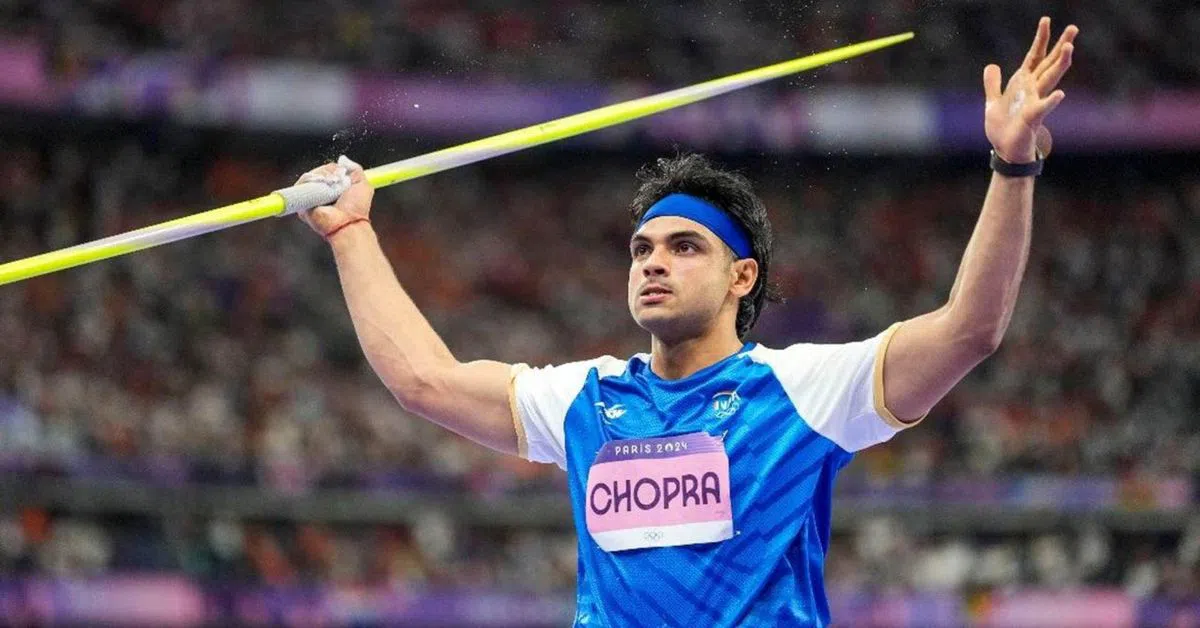
The resurgence began with Neeraj Chopra’s Olympic gold in Tokyo and has since evolved into something much bigger. India now has medal contenders spread across multiple disciplines rather than relying on one superstar. Long jumper Murali Sreeshankar has returned to world-class form after injury, Gulveer Singh has rewritten the national record books in both the 5,000m and 10,000m, while Parul Chaudhary has established herself among Asia’s leading distance runners. Triple jumper Praveen Chithravel, decathlete Tejaswin Shankar and shot putter Tajinderpal Singh Toor further underline the squad’s remarkable depth.
Advertisement
The transformation was evident at Birmingham 2022. Despite Chopra missing the Games through injury, India still collected eight athletics medals — its best overseas Commonwealth Games performance. That result, coupled with strong displays at the Asian Games, World Championships and Asian Athletics Championships over the past three years, suggests Indian athletics is no longer dependent on isolated brilliance.
For the first time, India enters a Commonwealth Games with genuine medal prospects across throws, jumps, distance running and combined events. That breadth makes athletics the country’s strongest candidate to emerge as its biggest medal-producing sport in Glasgow.
Few sports have rewarded India as consistently at the Commonwealth Games as weightlifting.
Unlike athletics, where medals are spread across dozens of events, weightlifting offers fewer opportunities but a significantly higher conversion rate. Indian lifters have repeatedly demonstrated an ability to peak at Commonwealth competitions, making the sport one of the country’s most dependable medal contributors.
Advertisement
The squad is once again spearheaded by Olympic silver medallist Mirabai Chanu, who returns after overcoming injury and remains one of India’s strongest gold medal hopes. Bindyarani Devi has developed into one of the continent’s most consistent lifters and enters Glasgow as a genuine title contender, while Harjinder Kaur and Gyaneshwari Yadav provide additional podium opportunities across multiple weight categories.
The Commonwealth field also tends to be less competitive than the Olympics or World Championships, allowing Indian lifters to maximise their medal potential. That combination of experience, proven pedigree and favourable competition makes weightlifting India’s safest investment once again.
Boxing: Experience meets a fearless new generation
If weightlifting is India’s safest medal sport, boxing is arguably its most unpredictable.
Advertisement
One difficult draw or an off day can end a medal campaign. Yet, despite that uncertainty, Indian boxing has consistently delivered on the Commonwealth stage through a blend of experienced campaigners and emerging talent.
Olympic bronze medallist Lovlina Borgohain remains India’s standout prospect and one of the favourites in her weight category. Alongside her, youth world champion Sachin Siwach has made a seamless transition to the senior circuit, while Preeti Pawar and Jaismine Lamboria have established themselves as regular podium contenders in international competitions.
Advertisement
What gives India confidence is the depth of the squad. Rather than relying on one or two marquee names, the country has realistic medal hopes across both the men’s and women’s draws. Boxing may never offer certainty, but it continues to provide India with one of its strongest opportunities to add multiple medals.
Judo: Small numbers, significant opportunity
Judo is unlikely to dominate India’s medal tally, but its importance has grown considerably following the reduction in the Commonwealth Games programme.
Advertisement
With fewer sports available, every medal carries greater significance. That places added emphasis on disciplines in which India has realistic podium hopes, even if the contingent is relatively small.
Heavyweight judoka Tulika Maan has consistently challenged the best athletes in Asia and enters Glasgow as India’s strongest medal prospect in the sport. Harsh Tokas has also made steady progress over the past two seasons and possesses the ability to challenge for a podium finish in the men’s competition.
Advertisement
Unlike the Olympics, where Japanese, French and Georgian judokas dominate, the Commonwealth field is comparatively open. That creates opportunities for athletes such as Tulika and Tokas to convert years of continental success into Commonwealth medals.
Swimming: A chance to rewrite history
Swimming has rarely featured prominently in India’s Commonwealth Games success story.
Unlike athletics or weightlifting, India has never viewed the pool as a major source of medals. Glasgow, however, offers a realistic opportunity to change that perception.
Advertisement
Backstroke specialist Srihari Nataraj has spent the past few years consistently lowering national records while competing against some of the world’s best swimmers. Distance freestyle swimmer Aryan Nehra has also narrowed the gap with leading Commonwealth competitors through a series of impressive performances over the past two seasons.
A medal remains a difficult target, given the strength of swimmers from Australia, England and Canada, but India’s leading swimmers are now closer to Commonwealth standards than any previous generation. Even one podium finish would represent a landmark achievement and provide a significant boost to India’s overall medal tally.
Advertisement
How the biggest contenders of 2026 have fared in the last four editions
The five sports expected to spearhead India’s challenge in Glasgow have collectively accounted for a significant share of the country’s Commonwealth Games success over the past four editions. Athletics, weightlifting, boxing and judo have consistently contributed medals, while swimming, despite making steady progress in recent years, is still searching for India’s second-ever Commonwealth Games swimming medal.
The country’s lone medal in the sport came when Khazan Singh won bronze in the men’s 200m butterfly at the 1986 Commonwealth Games in Edinburgh. Since then, Indian swimmers have come close on a few occasions but are yet to return to the podium, with the medal tally standing at zero across the last four editions.
Advertisement
Weightlifting has been India’s most consistent performer among these disciplines, producing 41 medals since Delhi 2010. Athletics has contributed 26 medals, recovering from a lean phase in 2014 and 2018 with an eight-medal haul in Birmingham. Boxing has added 28 medals, showcasing its reputation as one of India’s most reliable Commonwealth sports, while judo has quietly chipped in with 11 medals, often performing above expectations despite fielding relatively small contingents.
A different road to success
Glasgow 2026 will test India’s ability to adapt more than any recent Commonwealth Games.
The country can no longer depend on wrestling, badminton or table tennis to deliver a sizeable portion of its medals. Instead, success will be determined by whether athletics fulfils its promise, weightlifting maintains its remarkable consistency and boxing once again produces under pressure. Judo and swimming may contribute fewer medals, but in a condensed Games programme, every podium finish could prove crucial.
Advertisement
The challenge is undoubtedly greater than in previous editions. Yet, it also presents an opportunity for a new generation of sports to redefine India’s Commonwealth Games identity.
If these five disciplines perform to their potential, Glasgow could mark the beginning of a new chapter — one where India’s medal tally is driven not by its traditional powerhouses but by a broader and more balanced sporting ecosystem.
This figure represents a significant increase on the £39 million bid previously understood to have been made by Serie A side Roma, with Manchester United and Aston Villa also having shown interest in the 24-year-old.
Summerville, who still has three years remaining on his contract at the London Stadium, has been widely expected to depart following West Ham’s relegation from the Premier League in May.
While United and Villa were keen to keep him in the top flight, Roma had appeared closest to securing his signature before the Saudi club’s considerably higher offer.
The Netherlands international is now expected to undergo a medical and finalise a long-term contract.
Advertisement
This move will conclude his six-year tenure in England, which began when he joined Leeds from Feyenoord in 2020.
During his time at Elland Road, he scored 25 goals in 89 appearances before moving to the Hammers after Leeds failed to secure promotion in 2024.
Last season, Summerville featured 31 times for West Ham, netting five goals as the club faced relegation.
Summerville, who featured for Netherlands at the World Cup, scored five goals for West Ham last season (Getty)
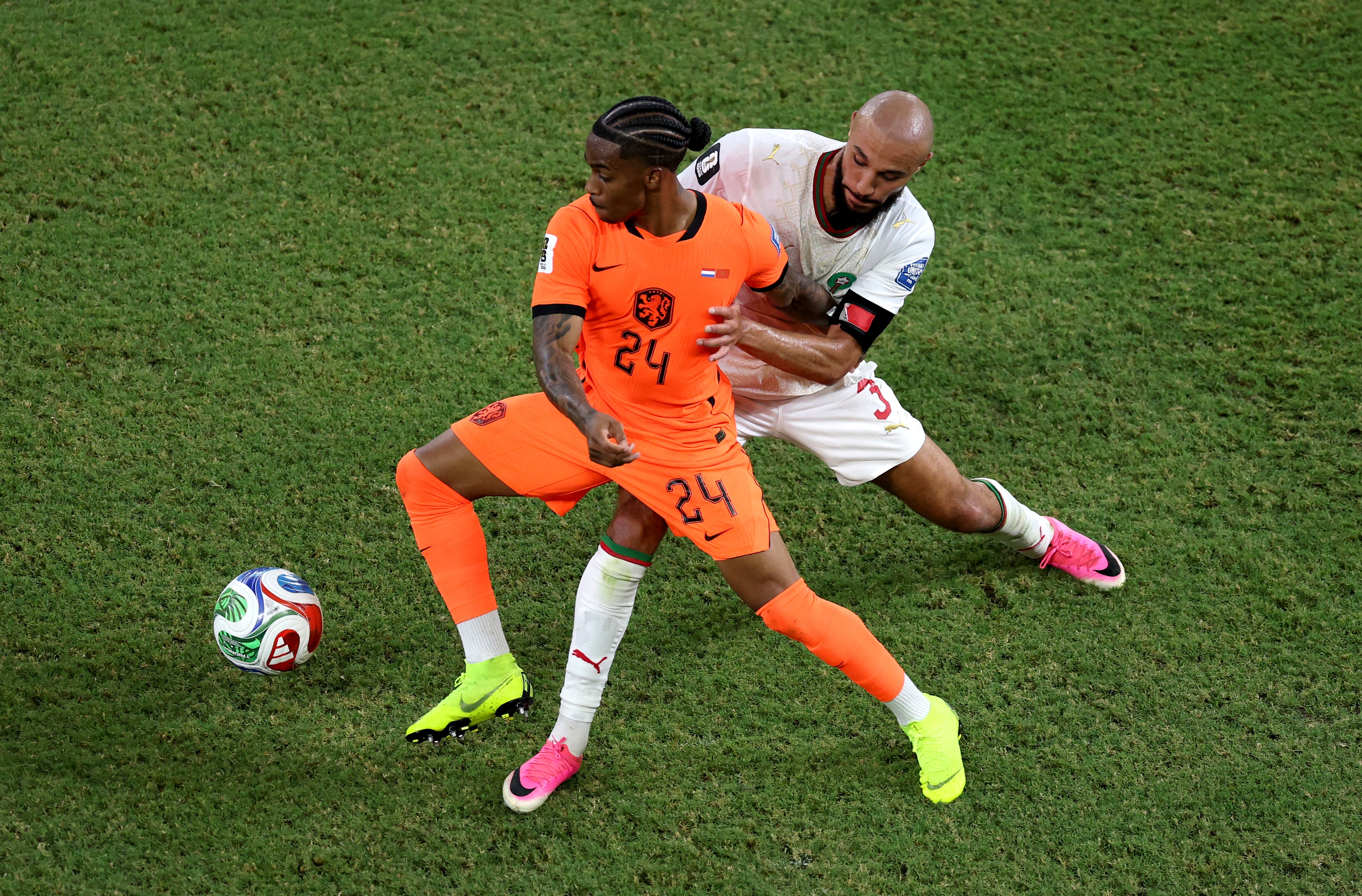
His performances, however, earned him a call-up to his national side’s World Cup squad, where he scored twice before the team’s elimination by Morocco in the last 32.
Should the deal be completed it would mark West Ham’s second big-money exit this summer following the move of Mateus Fernandes to Tottenham Hotspur.
Advertisement
Spurs reached an agreement with West Ham to capture the services of Fernandes for a guaranteed fee of £85m.
“I’m very excited for this next step. Spurs is a massive club and the head coach was a key part of why I have decided to join,” Fernandes told the official club website.
“When we spoke, it was very special. We look at football in the same way – going onto the pitch as a strong team, with fight and energy, to try and win every game.
Advertisement
“I can’t wait to get started, to meet the fans, to meet everyone and give everything for the club.”
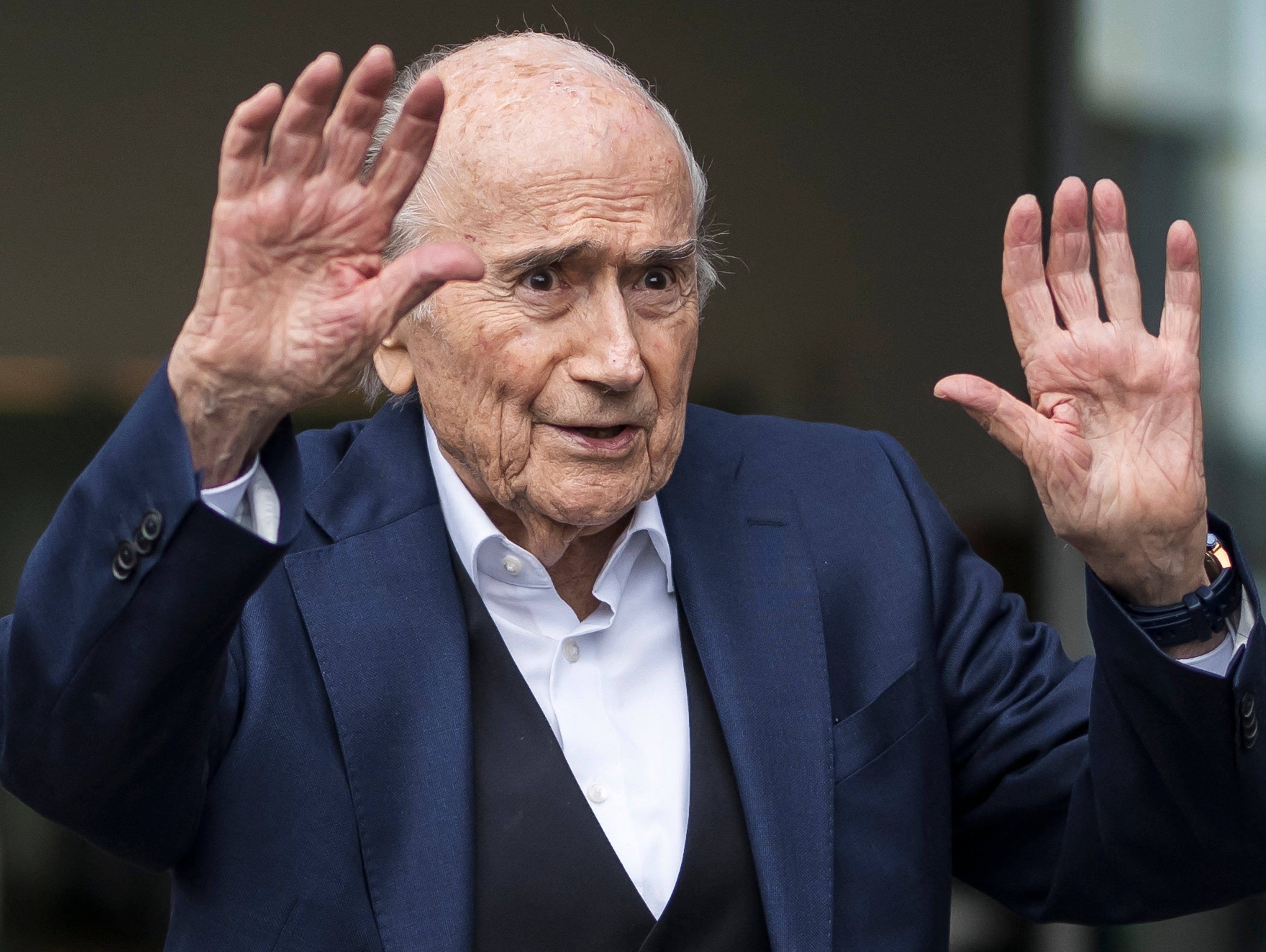
Former Fifa president Sepp Blatter has urged the world of football to kick Gianni Infantino out of the role, claiming the recent World Cup “lost its credibility” due to the actions of his successor.
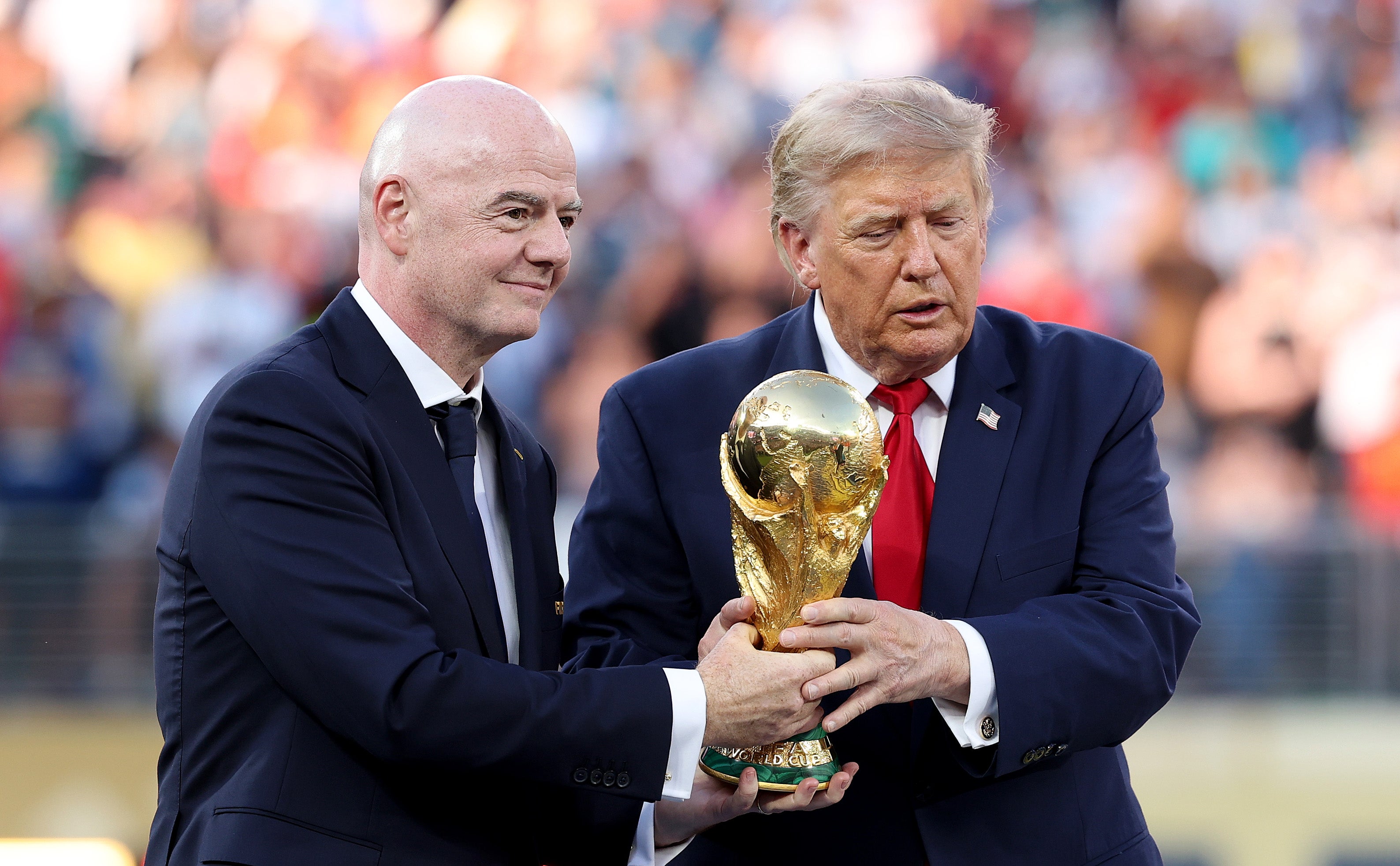
Blatter – whose own Fifa presidency was rife with accusations of corruption – insisted that “politics must not be allowed to overshadow the game”, seemingly in reference to Infantino’s close relationship with US president Donald Trump, which helped lead to the controversial overturning of USA striker Folarin Balogun’s ban for the red card he received against Bosnia.
Trump intervened, getting on the phone to Infantino urging him to look at Balogun’s sending off and, in due course, Fifa unprecedentedly suspended the ban for a year, enabling the forward to play in the last-16 clash with Belgium, where the US were hammered 4-1.
Donald Trump’s fingerprints were all over the tournament, happily abetted by Gianni Infantino (Getty)
And reflecting on the World Cup, which ended on Sunday evening with Spain beating Argentina 1-0 after extra time in an ill-tempered final, Blatter was unimpressed.
“The longest World Cup has come to an end – with the right champions,” he wrote on social media. “But on the way to the final whistle, the tournament had lost its credibility.
“Politics must not be allowed to overshadow the game. Now it is up to the fans, players and national associations to reclaim football and bring it back to its roots under new leadership.”
Advertisement
Blatter followed this missive with a string of hashtags including ‘Fifa half-time show’, ‘Donald Trump’ and ‘Gianni Infantino’.
Sepp Blatter is no fan of his successor Infantino (AFP/Getty)
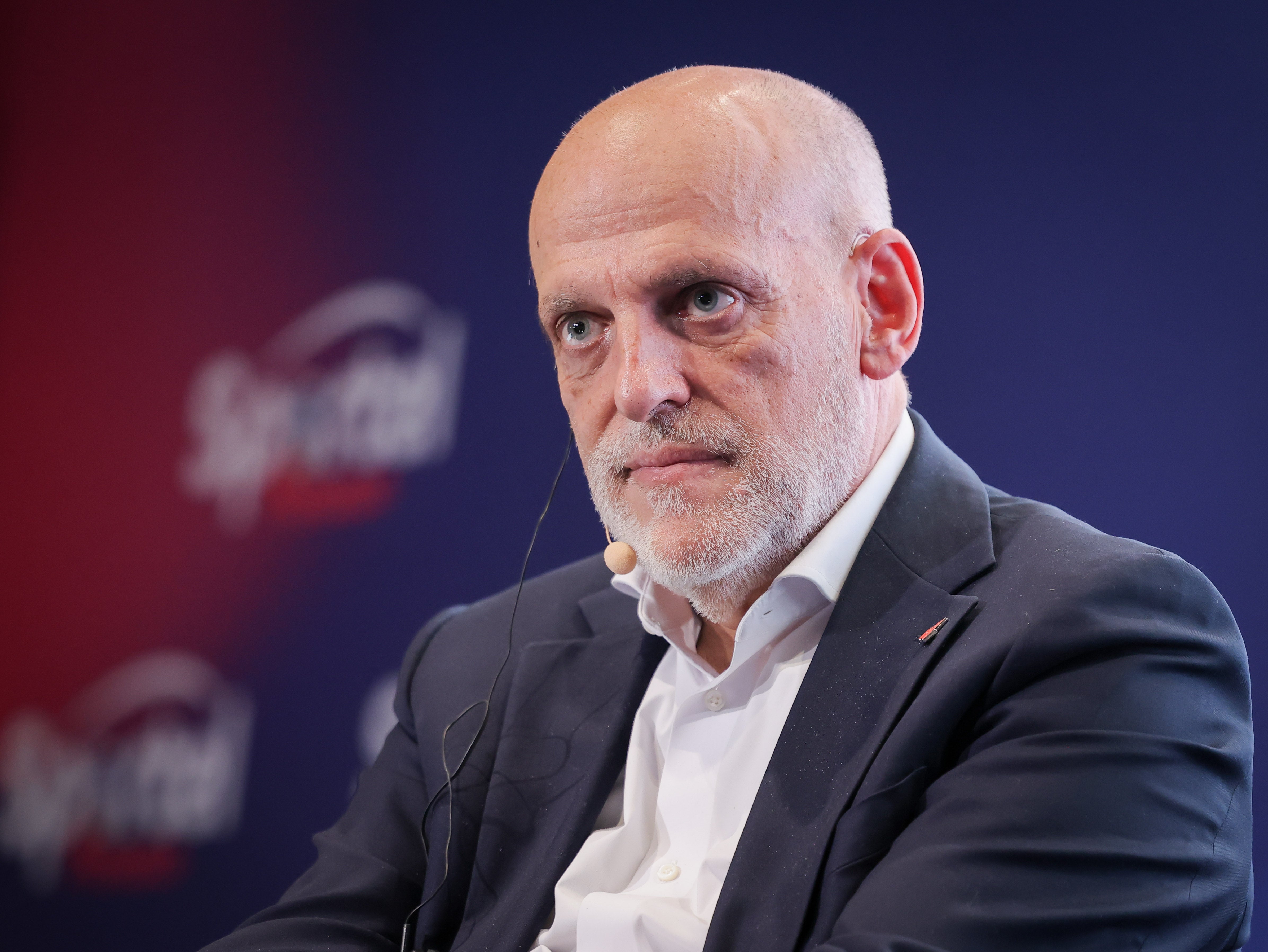
The ex-Fifa president wasn’t the only man to criticise Infantino and call for his removal, with LaLiga president Javier Tebas specifically calling out the Balogun incident.
“The suspension of the American player’s ban is an extremely serious matter,” said Tebas in an interview with Italian newspaper La Gazzetta dello Sport.
“They were lucky that Belgium eliminated the US because otherwise a case could have arisen that might have cost Infantino his job. Since Belgium won, they managed to bury the matter. But these things are just the tip of the iceberg.”
Tebas went further, saying he believe Fifa is “destroying the football industry” by expanding international competitions at the expense of domestic leagues and clubs.
Advertisement
When asked if he believes Infantino should quit, Tebas said: “In my opinion, yes, I think his time is up.”
LaLiga president Javier Tebas has called for Infantino to resign (Getty)
Infantino said back in April that he would seek re-election for a fourth term as Fifa president, with the vote for the 2027-2031 cycle scheduled to take place in Morocco on 18 March next year. He may well run unopposed but even if another candidate emerges, the chances of them winning are miniscule.
“He shouldn’t stay, but the current state of affairs means he won’t leave,” Tebas added. “There’s no opposition candidate; no one wants to run to lose.
“This is the system, and it’s a system that’s flawed from the ground up. I’ve heard a lot of people against Infantino, who don’t agree with what he’s doing. They say it, but then they don’t do anything.”
Tebas and Blatter aren’t the only dissenting voices, with Uefa president Aleksander Ceferin not attending the World Cup final following a series of disagreements between Uefa and Fifa over disciplinary procedures, refereeing logistics and match operations.
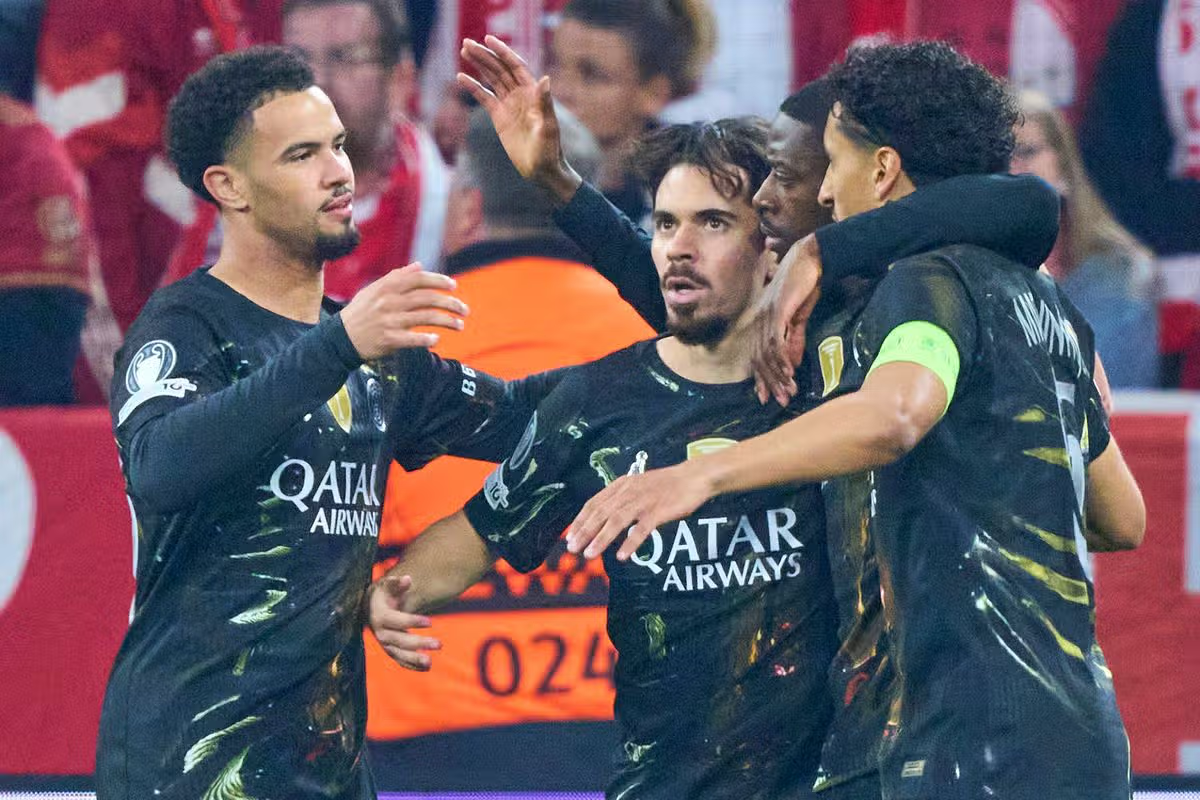
Warren Zaire-Emery has emerged as the latest midfield transfer target for Manchester United with interest dating back to 2023
Manchester United are reportedly weighing up a €60million (£51m) offer for Paris Saint-Germain star Warren Zaire-Emery. Old Trafford chiefs first considered a move for the midfielder back in 2023 when he was just 17 and it looks as though he could be targeted as their third midfield signing this summer.
With the likes of Sandro Tonali, Elliot Anderson and Mateus Fernandes moving for significant fees, United will likely have to fork out to make another signing but Zaire-Emery could be the solution. The 20-year-old has been on the fringes at PSG which could help United strike a deal.
According to French outlet Top Mercato, he is highly-regarded by those at the club, so much so that a €60million (£51m) approach is being ‘prepared’ in order to see PSG’s stance on a potential sale.
The report goes on to add that the European champions value him at closer to €80m (£68m). Zaire-Emery made 54 appearances in the 2025/26 season and followed that up with 109 minutes at the World Cup for France.
It is unclear whether or not Zaire-Emery would consider a move away from the French capital having made so many appearances in both midfield and at right-back
However, injuries to Fabian Ruiz and Achraf Hakimi offered him more minutes but Luis Enrique relegated him back to the bench when those players were back fit and for PSG’s most important matches.
Attackers have also been under consideration by those at United with Everton’s Iliman Ndiaye and Crysencio Summerville emerging as targets.
Interest from United in the Dutch winger had cooled over recent weeks with any move linked to the future of Marcus Rashford. He looks set to stay at his boyhood club with Barcelona having signed Anthony Gordon and Karim Adeyemi to permanent deals.
United kick off their 2026/27 campaign away to newly-promoted Hull City. Their pre-season has already started with Rashford possibly featuring in one or two friendlies once back from his mandatory break after the World Cup.
Stuttgart entered the race for Leo Sauer alongside the negotiations with VfL Wolfsburg for Dženan Pejčinović. The Slovak international scored three goals for Feyenoord in 20 Eredivisie appearances last term.
Hoffenheim are already on the track as the potential alternative to RB Salzburg’s Adam Daghim, who spent last season on loan at Wolfsburg. According to several reports, the Sinsheim club are currently prioritizing the deal for the Danish winger.
Advertisement
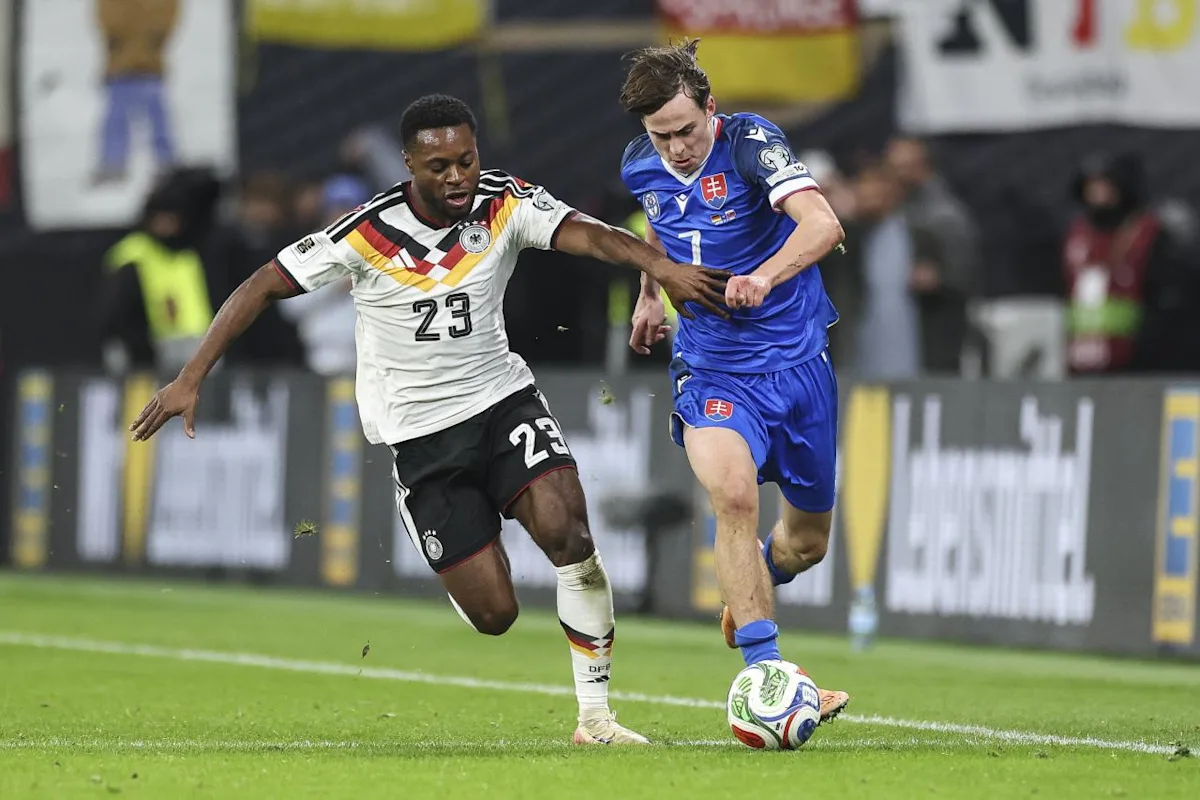
Saur had his breakthrough season in 2024/25 when he scored seven league goals in his loan stint at NAC Breda. The now 20-year-old was one of the top performers when Slovakia stunned Germany in the opening fixture for the World Cup qualifiers last year.
More than a decade on from Lance Armstrong’s disgrace, cycling is still unable to shake the shadows of its past. The sport’s paranoia over doping and its inability to ever truly prove itself has been in the spotlight again this week, as a result of some unusual measures to combat doping which have possibly had unintended consequences.
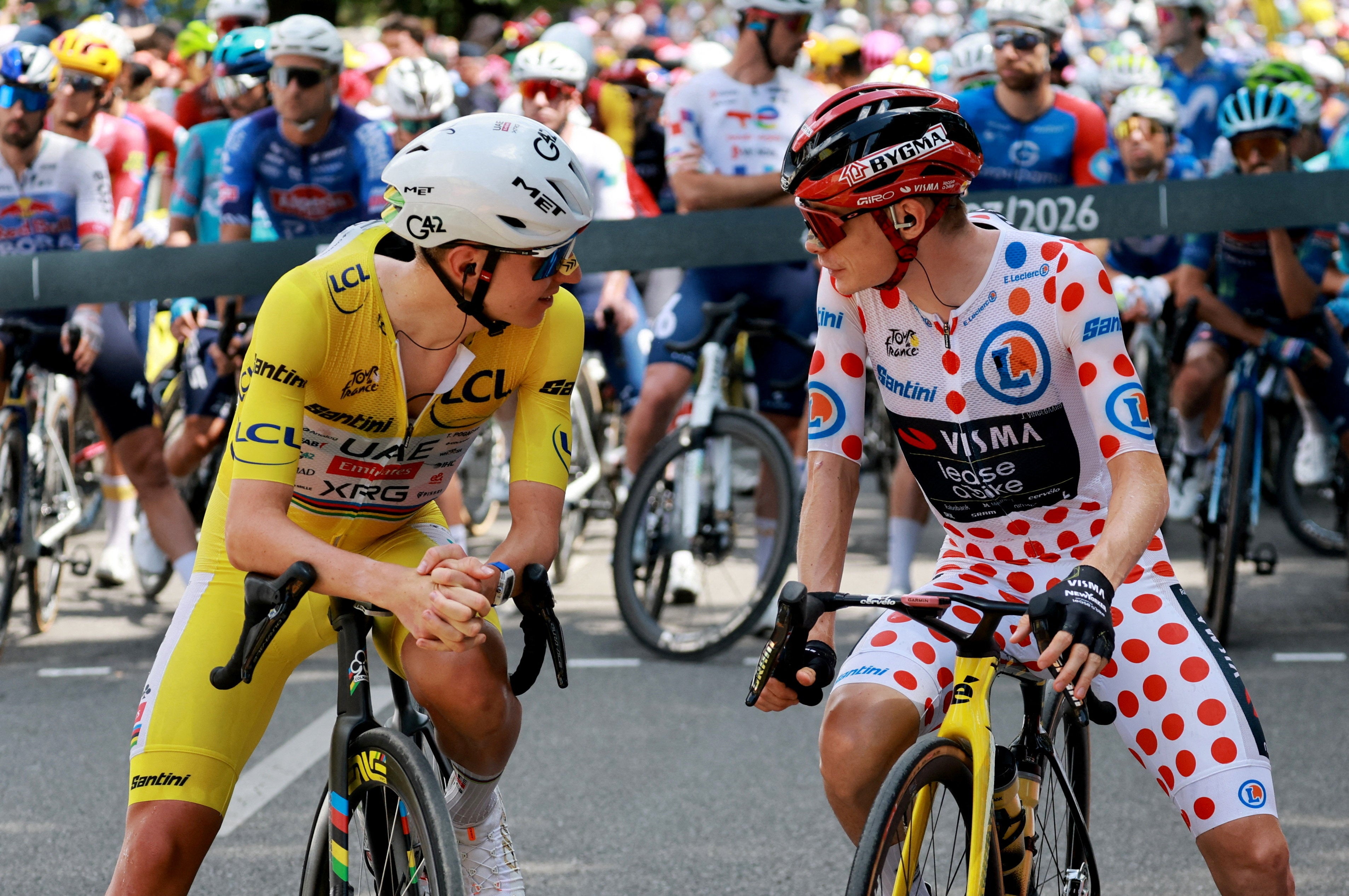
Two-time Tour de France champion Jonas Vingegaard and race leader and four-time winner Tadej Pogacar were both woken in the small hours of Sunday for out-of-hours doping tests. Visma-Lease a Bike’s Vingegaard was woken up at 2am, Pogacar at 5am; the latter said he could not get back to sleep afterwards. The tests occurred mere hours before a difficult mountain stage heading to the hors-categorie climb of Plateau de Solaison in the Alps, a key point in the three-week race.
The regulations of the Union Cycliste Internationale (UCI), cycling’s governing body, state that usually riders are tested between the hours of 6am and 11pm, with riders required to give one-hour whereabouts windows each day and accept that they may additionally be tested outside those times. The UCI has delegated responsibility for doping controls to the International Testing Agency (ITA) since 2021, and the latter required permission from the World Anti-Doping Agency (WADA) to conduct these nocturnal visits, as well as from a Parisian judge.
What seemed an innocuous crash on an awkward but otherwise inconsequential piece of road has acquired greater significance in light of the fact that his sleep was heavily disturbed by the 2am call and could possibly have led to lapses in concentration during a hard day’s racing. The Dane is not prone to crashing; he had never previously abandoned a grand tour and had come through five Tours de France unscathed. It is certainly an unusual occurrence.
Advertisement
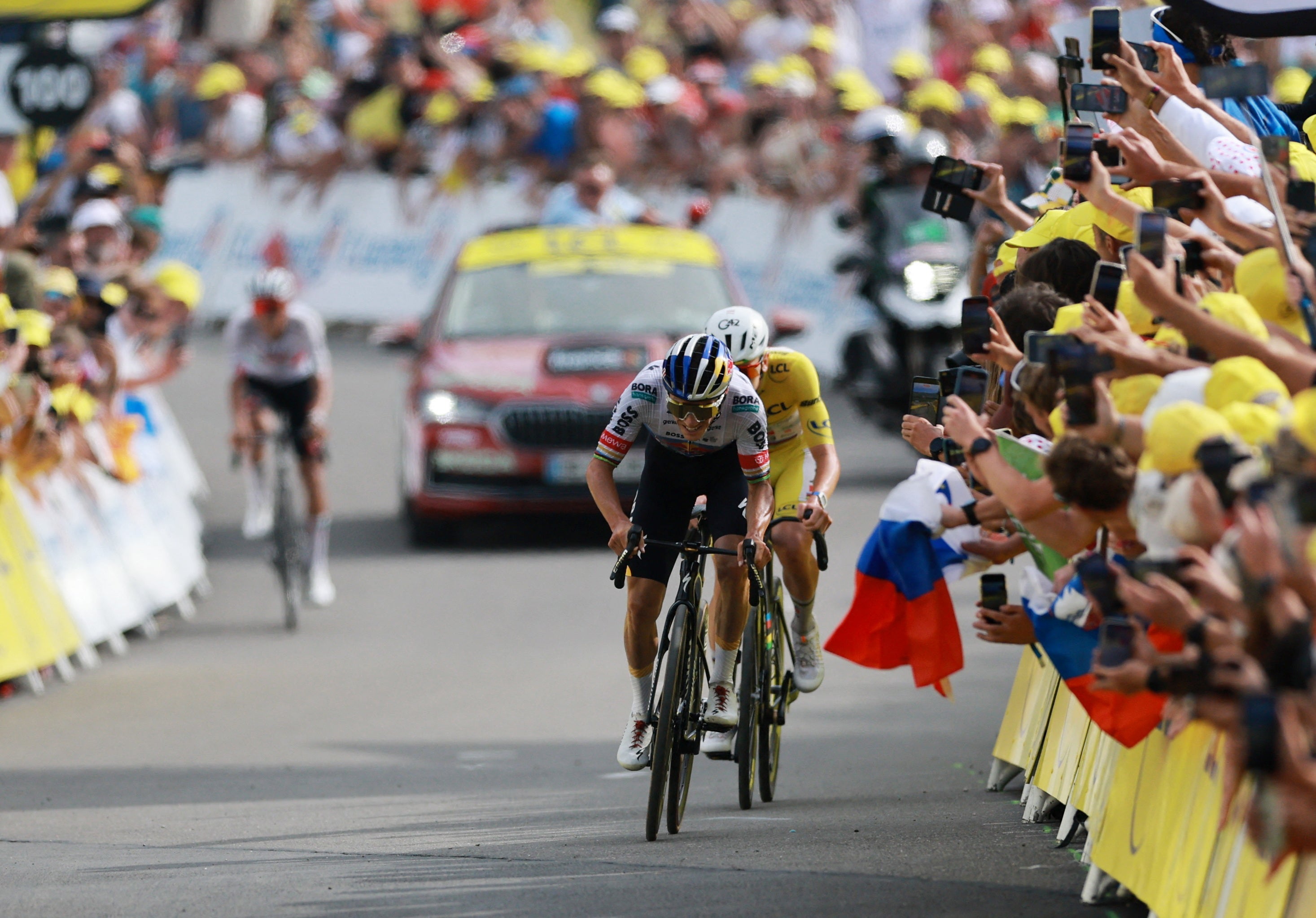
His Tour is “ruined”, as Pogacar put it, and the Slovenian, as well as other riders and commentators, openly speculated that the late-night doping test may have played a part. Remco Evenepoel, who won stage 15, described the 2am call as “inhuman”.
Cycling’s most famous doper – Armstrong – then accused anti-doping officials of “human rights issues”, although it feels as though you must take any of the American’s proclamations on drug-related issues in the sport with a pinch, or perhaps vat, of salt. Either way, it has sparked a furore around whether such out-of-hours testing is fair to the riders, or necessary at all.
The whole point of night-time doping is to catch riders micro-dosing performance-enhancing substances such as EPO, which would otherwise go undetected. The UCI’s own rules say as much: “It is known that some riders use low doses of EPO during these hours so that it will be undetectable in the morning.” There is a clear case to be made for the sport to permit this sort of testing given its heavily chequered past.
Vingegaard and Pogacar were both targeted by the late-night tests (Reuters)
Former rider Jonathan Vaughters, who admitted blood doping on the US Postal team and who now manages the EF Education-EasyPost team which is riding the Tour, wrote on X: “If [the] UCI had tested us in 2001 at 2am? We’d all have been suspended and saved the sport 25 years of drama.”
Twenty-five years of further drama is what the likes of the UCI and ITA are trying to avoid. And the late-night testing is by design highly unusual: the UCI’s own regulations say it will not test between the hours of 11pm and 6am “unless it has a serious and specific suspicion that the rider may be engaged in doping”. Cycling Weekly has reported that a number of teams, believed to be up to eight, have also been subjected to night-time testing at this Tour, suggesting that the governing body has widespread “serious and specific” suspicions about a number of riders, or teams.
Advertisement
We may never know the results of any of these tests – the ITA said that like all tests it conducts, the outcomes “would be published according to our public disclosure policy, only in the case of an apparent anti-doping rule violation”. But if they have been as prevalent as has been reported, that suggests there is significant paranoia about doping in the current edition of the Tour. We can only hope that that is unfounded.
But is it fair to disturb riders in the middle of the night for a doping test, when recovery is so crucial to the utterly gruelling experience of riding a grand tour, and so hard to come by? Perhaps the bigger question is whether testing the integrity of the sport in this way more important than playing fair?
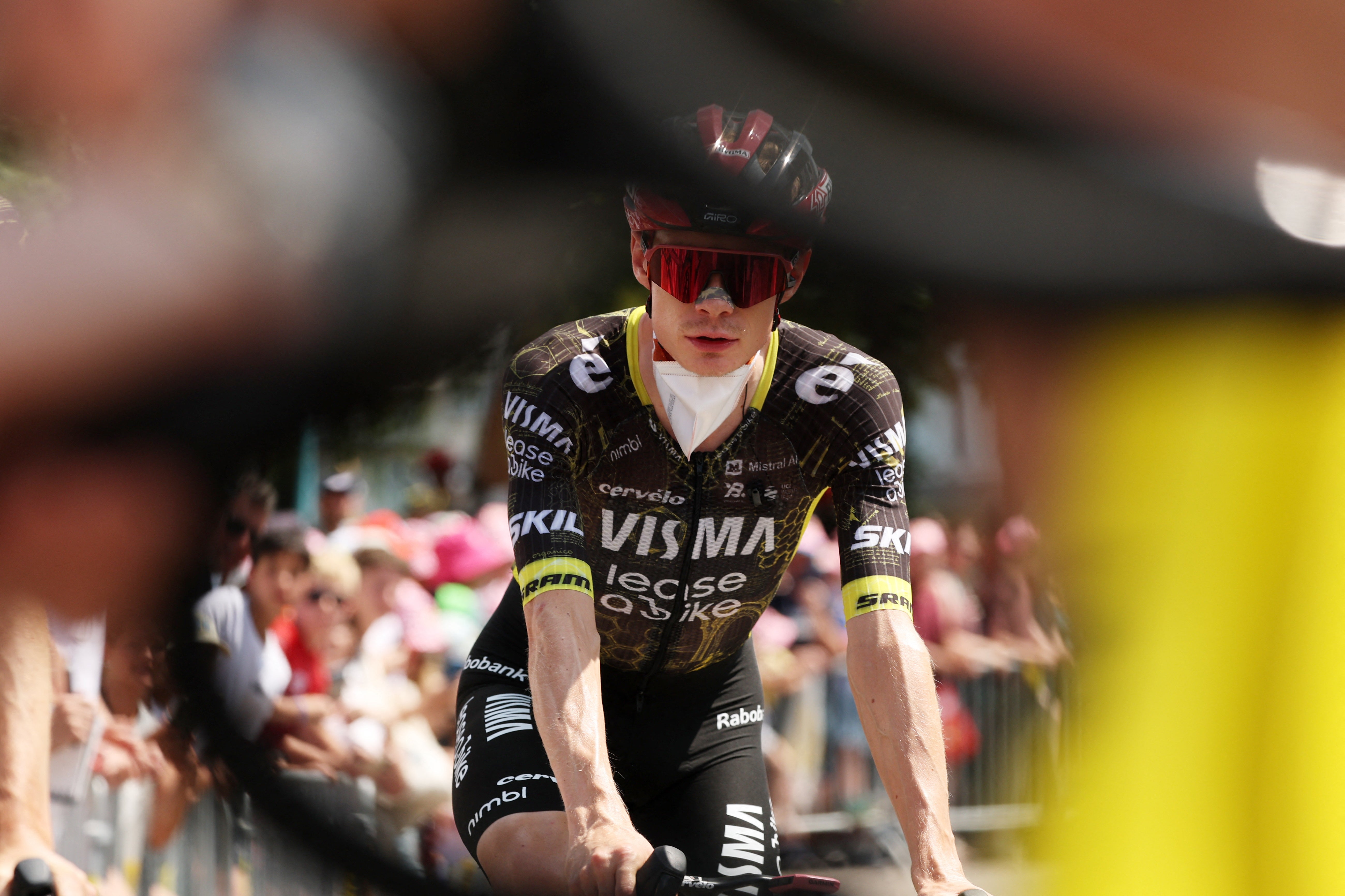
Vingegaard had to do a 40-minute doping control in the early hours of Sunday (Reuters)
Pogacar himself seemed resigned to it being a necessary evil. The race leader said on Sunday that he “totally accepts” the irregular tests “if this is necessary to prove that we are riding clean”.
Vingegaard, whose Tour dreams have been crushed, is a very measured character and struck the sort of note one would expect from him. He said: “It’s good that they test, but when it’s affecting performance and your sleep, I don’t think it’s so good.” He refused to say his crash was to do with his lack of sleep: “I don’t want to blame it on that, because it’s a bicycle race, and crashes happen in bicycle races.”
Evenepoel, now up to second overall, is a far more outspoken character and he was blunt in his assessment: “It’s inhuman and this is something we actually should not accept as athletes, because everybody knows sleep is the only recovery that we have in the night. This is the hardest and the biggest race in the world. This is a shame that this happened, and I hope it doesn’t happen any more in the future.”
Advertisement
Which gets to the fundamental point. Riders are aware that doping controls are a fact of life and cycling more than any other sport has to bear the cross of its past. But in a sport as inherently unsafe as cycling, which has seen several riders killed in horrific crashes in recent years, everything must be done to keep them as safe as possible – including letting them recover between long and exhausting days of racing. Vingegaard himself said he “luckily” only sustained a broken collarbone. It could have been much worse.
Evenepoel described the late-night testing as ‘inhuman’ and ‘disrespectful’ (Reuters)
The ITA said it was “conscious that night-time testing may be disruptive to riders’ rest and recovery. Due consideration has therefore been given to minimise as much as possible the impact testing activities have on riders.” But it added it “has the responsibility to ensure the effectiveness of the cycling anti‑doping programme and the integrity of cycling races”. It is stuck between a rock and a hard place.
Funding for anti-doping testing in cycling has heavily increased since the ITA took responsibility for it in 2021, but there has not been a slew of positive tests since then. Either the mechanisms to cheat are becoming more sophisticated and the methods of detection poorer, or cyclists really aren’t cheating the way they used to.
The anti-doping process is deliberately opaque and unpredictable so dopers can’t get one step ahead of the authorities, but that also means the authorities aren’t required to explain, or able to justify, their decisions, either to the riders or the public.
You can’t prove something you can’t catch; that is the issue the ITA and UCI are wrestling with. Riders are aware of it too – they have to support the anti-doping authorities, because cycling has a lot to atone for, but equally they have to protect their own health, especially at one of the toughest sporting events on the planet.
Advertisement
The 2am testing is here to stay – but whether it should be is another matter, and another question for which the sport has no easy answers.
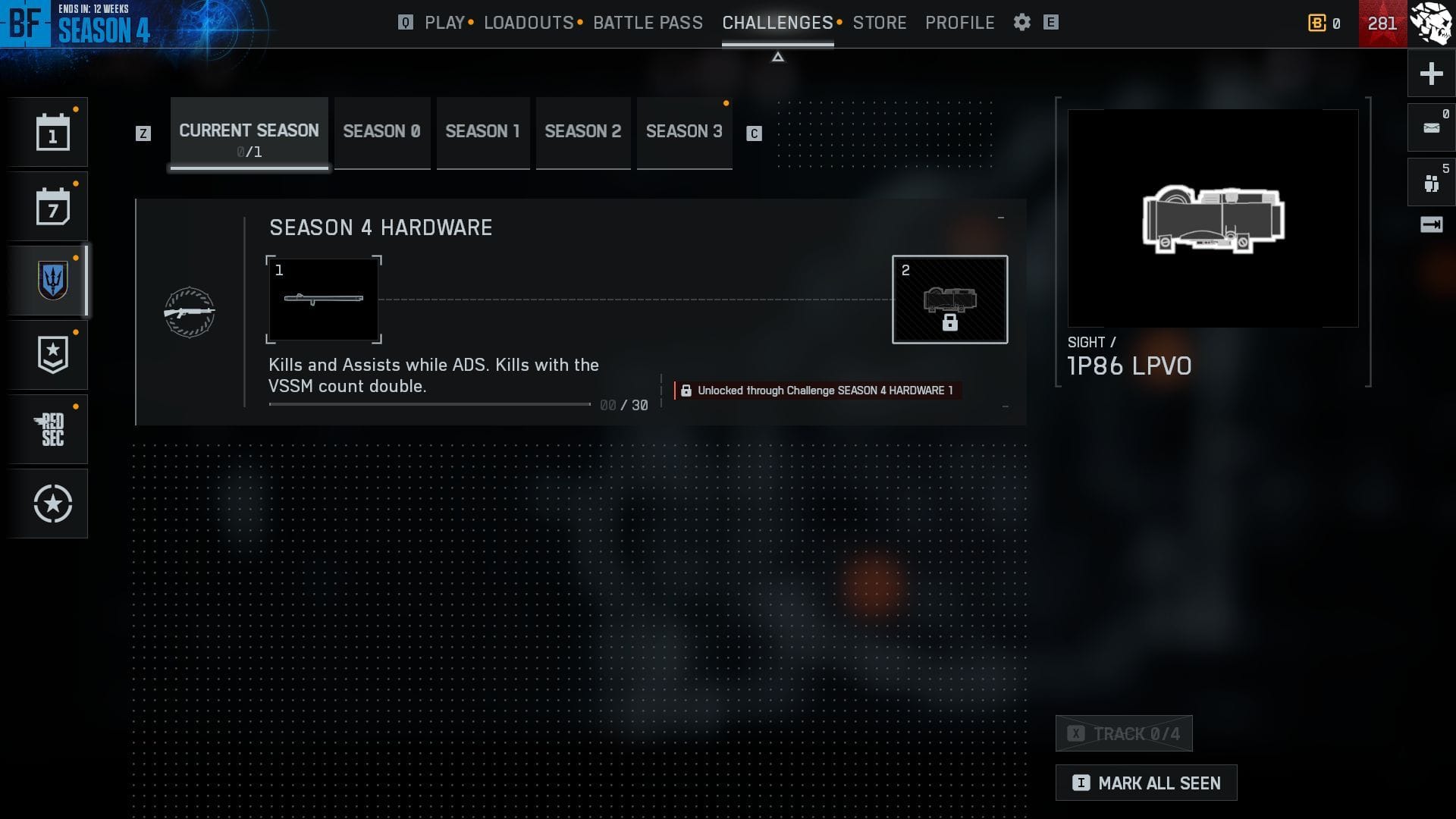
There are two Hardware Challenges available to complete in Battlefield 6 Season 4. Season 4 is now live, and players can start progressing these challenges right away. Unlike the previous season, there are only two rewards this time, both of which come with their own advantages and drawbacks. Fortunately, the challenges are quite easy to complete and won’t take much time.
Read on to learn about all Hardware challenges and rewards in Battlefield 6 Season 4.
Battlefield 6 Season 4: All hardware challenges and rewards
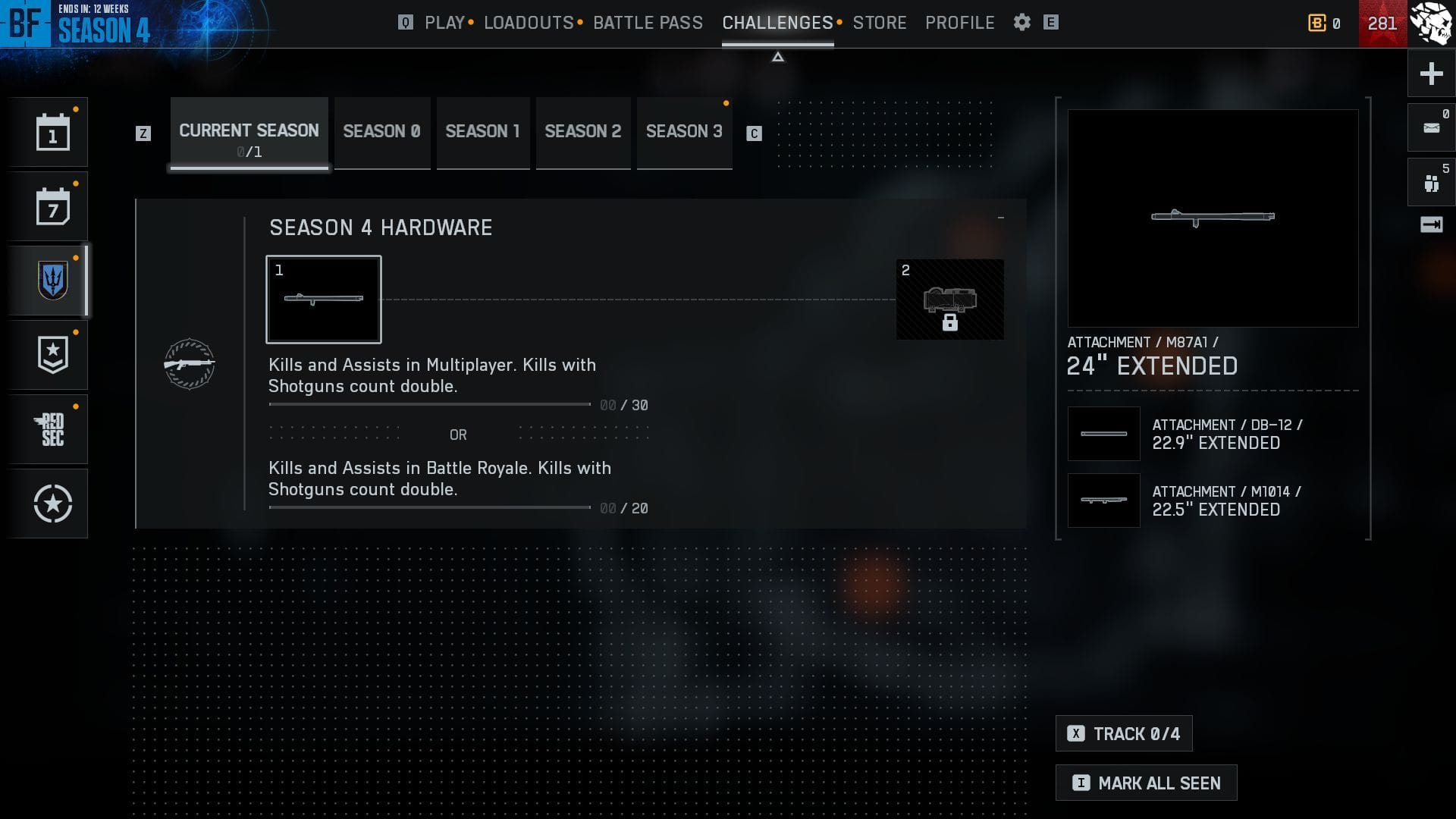
Battlefield 6 Season 4 features two Hardware Challenges that offer two exclusive rewards. Here are the challenges and their rewards:
Attachment/M87A1/ 24′ Extended: Kills and Assists in Multiplayer. Kills with Shotguns count double, or Kills and Assists in Battle Royale. Kills with Shotguns count double.
Sight/1P86 LPVO: Kills and Assists while ADS. Kills with VSSM count double.
Advertisement
Here’s what you can expect from these two attachments:
M87A1/ 24′ Extended (Attachment)Complete the hardware challenges to get the Extended attachment for shotgun (Image via EA)
The Attachment/M87A1/ 24′ Extended for a non-double-barreled shotgun is a great addition to dominate close-range fights. It simply increases the projectile velocity of the weapon, so enemies will get less time to move out of the path, making shots much easier to land.
However, it does come with a few drawbacks. If you equip this extended sight, it will reduce the weapon’s Aim Down Sight (ADS) speed and slightly lower your overall mobility.
Advertisement
1P86 LPVO (Sight)Get 1P86 LPVO (Sight) from Season 4 Hardware (Image via EA)
The 1P86 LPVO is the perfect competitor of the SU-230 LPVO. While the SU-239 LPVO Optic offers a magnification range of 1.0x to 4.0x, players can now equip the 1P86 LPVO Optic for a slightly higher range of 1.5x to 4.5x. Although the difference is only 0.5x magnification, it can sometimes create a huge difference during a gunfight.
Entering the World Cup, the race for the Ballon d’Or seemed like it came down to three people: Harry Kane, Michael Olise, and Kylian Mbappe. But with all three failing to win the tournament, and Kane not even being the sole highest scorer on the England squad, this is a race that is now open for one of the most prestigious awards in global soccer. Previously, the award only accounted for accomplishments in one calendar year, but since the last edition in 2025, which Ousmane Dembele won, it now accounts for an entire standard European season, which runs from August 1 to July 31.
Have no fear, because Lionel Messi and other players in leagues that aren’t following the European cycle are still eligible for the award since geographic restrictions on it came to an end in 2007 — prior to then, it was an award meant for soccer players based in European leagues. Someone also doesn’t need to win the World Cup to be eligible for the award, which brings us into murky territory. When there isn’t a World Cup, these awards can be a bit easier to make sense of, as more teams and players are involved in continental national team competition vs. a tournament where only 48 teams in the entire world can make it.
There are three main pillars that are used in Ballon d’Or voting. Individual performance when stat-based metrics are used, team achievements, which aren’t available to everyone depending on what competitions a team takes part in, and then there’s class and fair play, which is more subjective and where this award can go a bit off the rails, especially when at any moment new awards can be created.
Back in 2020, Robert Lewandowski was favored to win the Ballon d’Or, but it was canceled due to COVID. But in 2021, he came in second behind Messi, with a new award being created to be given to the striker of the year. Lewandowski won that award in back-to-back seasons, but didn’t secure the full award.
Advertisement
There was a monopoly held on the award by Messi and Cristiano Ronaldo, who won it a whopping 13 times since Ronaldo’s first in 2008, with only two players, Luka Modric and Karim Benzema, breaking their streak before Messi’s move to Inter Miami. Since that move in 2023, Rodri has captured the Ballon d’Or and Dembele has won it as well.
Rodri’s win was during what would be considered a down season when it came to candidates, with Manchester City capturing the treble, winning the Premier League, FA Cup, and Champions League, while Spain also won the European Championship. That year, Vinicius Junior was expected to win, leading to Real Madrid boycotting the ceremony. Considering that there is no clear frontrunner, this is another time where an unexpected winner could rise to the top of the ranks. Kane is still the odds-on favorite right now, but considering the existence of the striker-specific award, the Bayern Munich man could come in second in the award rankings and then win the award for best striker, where he does have a leg up on Erling Haaland.
This was the first World Cup with Haaland due to Norway’s improvement as a soccer power, and there was a star who didn’t make the tournament in Khvicha Kvaratskhelia. The Paris Saint-Germain man was excellent for club and country, scoring 22 goals, but it’s not enough of an output to outweigh not being at the World Cup. There likely is too much emphasis put on the tournament, but that won’t be changing anytime soon.
Ballon d’Or top candidates
All stats include play for club and country.
Advertisement
Harry Kane
Bayern Munich
England
65
Advertisement
73
8
81
Bundesliga Golden Boot, Bundesliga title, DFB Pokal, German Super Cup, DFB Pokal Golden Boot
Kylian Mbappe
Advertisement
Real Madrid
France
60
58
Advertisement
13
71
LaLiga Golden Boot, FIFA World Cup Golden Boot, UEFA Champions League Golden Boot
Lamine Yamal
Barcelona
Advertisement
Spain
57
25
20
Advertisement
45
LaLiga, FIFA World Cup, Spanish Super Cup
Lionel Messi
Inter Miami
Argentina
Advertisement
49
45
31
76
Advertisement
MLS Cup, MLS MVP, MLS Golden Boot
Rodri
Manchester City
Spain
46
Advertisement
2
0
2
FIFA World Cup
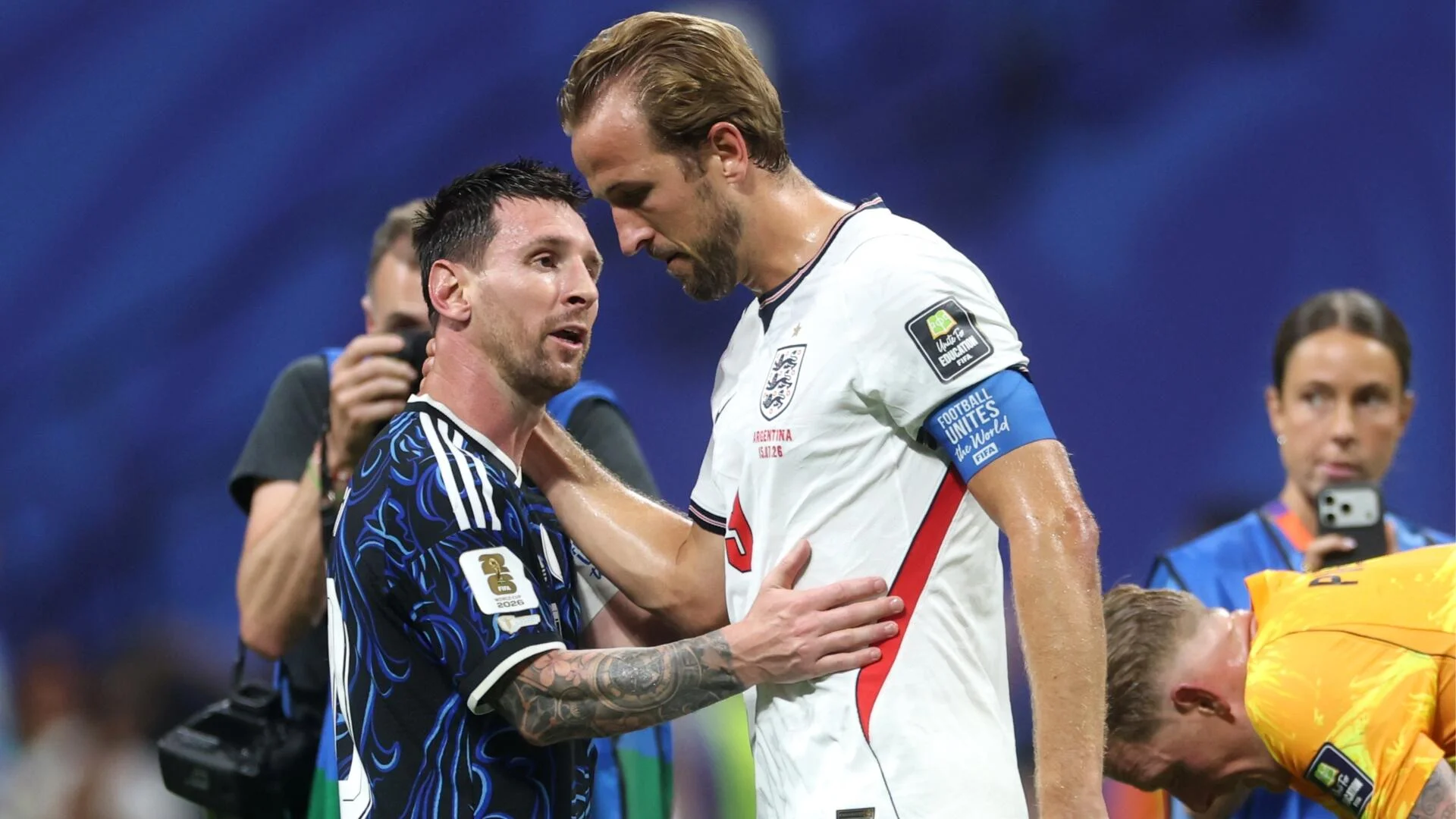
When breaking it down, you can see why Kane would be the leading candidate for the award. He has the most goals and assists with 81 and also has the most individual honors, so that should be done and dusted, right? Well, not exactly. Spain’s candidates don’t exactly stack up, with Lamine Yamal only scoring once during the World Cup and Rodri struggling with injuries in what was a down year for Manchester City. With a World Cup title, Kane or Mbappe would’ve had iron-clad cases, but with both playing in the third-place game, it opens the door for Lionel Messi.
Advertisement
The Ballon d’Or is not a lifetime achievement award, but sometimes it is treated as one. While Argentina didn’t win the World Cup, Messi has absolutely dominated Major League Soccer and put up an absurd goal output. Contributing 1.55 goals per game is just nuts; there’s no way around it. And when there’s uncertainty in the race for the Ballon d’Or and Messi is having a season that would statistically be worthy, fortune favors the Argentine.
Intangibles also come into play, as at 39 this could be the final time that Messi is truly eligible for this award. Mbappe and Haaland are looking to take up his mantle, and Yamal is also coming. With eight Ballon d’Ors to his name, what better time to add a ninth and potentially final one? There are issues to this form of thinking, but it’s an award determined by humans, so there’s no perfect criteria that will break down how votes are cast. Kane is a deserving winner, especially with the ceremony taking place in London, but in a field of uncertainty, Messi could rise and claim it.
Long-serving Premier League referee Anthony Taylor has announced his retirement after 16 years in England’s top flight.
The 47-year-old will end his refereeing career after the 2026 FIFA World Cup. His final match was the Round of 16 game between Portugal and eventual champions Spain.
Taylor finishes his career after officiating 831 matches across English, European and international football.
Advertisement
In England, he took charge of 432 Premier League matches and refereed every major domestic cup final, including the FA Cup finals in 2017 and 2020, and the League Cup final in 2015.
He also spent 14 years on FIFA’s international list and represented England at the 2022 and 2026 FIFA World Cups. During his career, he officiated 163 international matches and worked at two UEFA European Championships and two FIFA Club World Cups.
Speaking after announcing his retirement, Taylor said it was the right time to step away because of the pressure that comes with the job.
Advertisement
“Officiating at the highest level has been an immense privilege, but the pressure is intense and the scrutiny is constant. The time is now right to step aside and look forward to the next chapter of my career,” he said.
Taylor faced one of the toughest moments of his career in 2023 when he and his family were confronted by angry Roma supporters at Budapest Airport after the Europa League final. Former Roma manager Jose Mourinho had strongly criticised his performance after the match.
Last year, Taylor revealed that his family no longer attended matches he officiated because of the abuse directed at referees. He also said the expectation for referees to be perfect had made him think about leaving the profession on several occasions.
His final Premier League match was West Ham United’s 3-0 victory over Leeds United on the last day of the 2025/26 season. Despite the win, West Ham were relegated to the Championship.
Advertisement
Taylor leaves the game as one of the most experienced referees in Premier League history, having overseen more than 400 top-flight matches and officiated in some of football’s biggest competitions.
KRAFTON India has unveiled its H2 2026 BGMI Esports Roadmap, introducing two major tournaments for the second half of the competitive season. The roadmap features the BGMI International Cup (BMIC) and the BGMI Showdown (BMSD).
While the former, as the name suggests, is an international tournament, the latter is a domestic championship featuring the country’s top-performing teams. In both events, teams will battle for supremacy and a share of the lucrative prize pool attached to each competition.
In this article, we will walk you through everything you need to know about KRAFTON India’s H2 2026 BGMI Esports Roadmap.
Everything we know about KRAFTON India’s H2 2026 BGMI Esports tournaments
As mentioned earlier, KRAFTON India has announced two flagship tournaments as part of its H2 2026 competitive roadmap: the BGMI International Cup (BMIC) and the BGMI Showdown (BMSD). Both events will feature a prize pool of INR 1 crore, making them among the biggest BGMI tournaments of the year. Below is a closer look at each competition.
Advertisement
BGMI International Cup (BMIC) Season 2
Gear up for some intense action brought by the best teams (Image via Instagram/@kraftonindiaesports)
The BGMI International Cup (BMIC) Season 2 Grand Finals will take place as a LAN event from October 30 to November 1, 2026, at the Dome, Sardar Vallabhbhai Patel (SVP) Indoor Stadium in Mumbai. In this tournament, 16 teams will compete for the championship.
There will be six teams from India, five each from South Korea and Japan. With some of the best squads from three regions set to clash, the tournament promises high-level competition as teams compete not only to be the winner but also to claim the INR 1 crore prize pool.
BGMI Showdown (BMSD)
BMSD will begin on 22nd Sept (Image via Instagram/@kraftonindiaesports)
Unlike BMIC, BMSD is an invite-only domestic championship exclusively for the country’s top-performing BGMI teams. That means players cannot register for the tournament through an open qualification process. The competition will feature 48 invited teams, with invitations being determined based on a team’s performance across the following three parameters:
BMSD will begin on September 22, 2026, with teams progressing through multiple competitive stages before reaching the LAN Grand Finals. Below is the exact schedule:
Advertisement
Phase
Schedule
Week 1 (Promotion/Relegation)
September 22–24
Week 2 (Promotion/Relegation)
September 25–27
Week 3 (Promotion/Relegation)
September 28–30
Upper Bracket Survival
October 1–3
Lower Bracket Survival
October 4–6
Semi-Finals
October 8–11
Last Chance Stage
October 12–13
LAN Grand Finals
October 16–18
With BMIC and BMSD set to take center stage, the second half of KRAFTON India’s 2026 tournaments is shaping up to be one of the biggest competitive seasons in BGMI esports.
Check out more gaming news and guides on Sportskeeda
Why did you not like this content?
Advertisement
Was this article helpful?
Thank You for feedback
Are you stuck on today’s Wordle? Our Wordle Solver will help you find the answer.



;)
;)











































You must be logged in to post a comment Login