Connect with us
DAPA Banner
DAPA Coin
DAPA
COIN PAYMENT ASSET
PRIVACY · BLOCKDAG · HOMOMORPHIC ENCRYPTION · RUST
ElGamal Encrypted MINE DAPA
🚫 GENESIS SOLD OUT
DAPAPAY COMING

Sports

6 positions from J.J. Spaun’s swing that every golfer should copy

Published

on

J.J. Spaun’s ascent from mini-tour anonymity to 2025 U.S. Open champion was a remarkable transformation. Born August 21, 1990, in Los Angeles, Spaun had a standout collegiate career at San Diego State University and turned pro in 2012, competing on West Coast mini-tours. He survived on shoestring budgets, often just scraping by while chasing his PGA Tour dream.

He earned Web.com status for the 2016 season, which he parlayed into a PGA Tour card the following year. Even with the occasional brilliant round on Tour, his inconsistency fueled long slumps and tested stretches of frustration. After a serious health scare in 2023, Spaun enlisted the help of Adam Schriber, a Michigan-based coach at LochenHeath Golf Club. Schriber’s holistic approach rebuilt Spaun from the ground up. They focused on core stability, efficient rotation and mental resilience, allowing him to minimize strain while simultaneously enhancing power. 

“Adam reconstructed my swing and mindset,” Spaun said.

Early in the week of the 2025 U.S. Open, Spaun added short-game coach Josh Gregory to the team, and it paid off immediately with a chip-in on the very first hole. At Oakmont, his refined technique and composed attitude kept him in the hunt after a shaky start, culminating with a 64-foot birdie putt on the final hole, clinching a two-stroke win.

Advertisement

“This is ours,” Spaun told Schriber, trophy in hand.

Known for his calm demeanor under pressure and ultra-solid ball striking, Spaun built his game around discipline rather than flash. Friends describe him as relentlessly curious, always seeking incremental gains. His journey reflects perseverance, humility and belief — proof that patience, persistence and dedication can outlast early-career obscurity.

Check out below for a breakdown of six positions from Spaun’s swing that every golfer should copy.

jj spaun swing sequence

Mark Newcombe / Visionsingolf.com

1. Setup 

Many shorter amateur golfers bend over too much, causing them to stand excessively far from the ball and limiting their pivot. J.J. adopts just enough forward tilt to allow for a comfortable arm swing and easier wind and unwind.

Advertisement

2. Takeaway 

Spaun rotates his torso away from the ball without unnecessary right-leg straightening, allowing minimal right-arm bend while keeping his arms in front and limiting clubface rotation.

3. Top

J.J.’s arms form a neat, equilateral triangle at the top with perfect left wrist and clubface position. You can’t get to this position with a “hold the tray” right forearm. Additionally, he has turned enough to reach this hand location without overturning.

4. Downswing

Spaun keeps from over-closing the clubface by not overdoing the Internet-popular arching of the left wrist. His wrist remains plenty neutral as the club is lowered and pulled into a great position to unload it without fear of a quick hook.

5. Impact

A top-flight professional impact position requires body twisting that most amateurs have never experienced but could learn: hips forward, tucked and open, lower torso turned, but upper torso right tilted and less open. Do these things, and that hall-of-fame arms-and-hands position is possible. Just like Spaun’s.

Advertisement

6. Release

Take note of the bent right arm and open clubface in No. 4 and the fully released toe of the clubhead and straightened right arm here. All while keeping the right arm under the left. This brilliantly keeps his fade from being a weak wipe and a pull all but impossible.

Source link

Continue Reading
Click to comment

You must be logged in to post a comment Login

Leave a Reply

Sports

Abilities, best combos, how to play, and tips and tricks

Published

on

Ghost Rider in Marvel Tokon Fighting Souls is one of the most unique characters. He is a mid-to-long-range fighter who deals heavy damage using chain-based attacks and hellfire. However, his core mechanic is the Vengeance Gauge, which can either be his biggest strength or weakness. As such, mastering the gauge is crucial to playing the character effectively.

This article explains how to efficiently play Ghost Rider in Marvel Tokon Fighting Souls.


Marvel Tokon Fighting Souls Ghost Rider guide: All abilities and best combos

Here is a list of all Ghost Rider’s abilities in Marvel Tokon Fighting Souls:

  • Revelator Chain
  • Hell Throttle
  • Hellfire
  • Penance Driver
  • Judgement Cradle
  • Hell Scorcher
  • Inferno Engine (Super Skill)
  • Eternal Damnation (Ultimate Skill)
  • Tokon Assemble

Also read: Marvel Tokon Fighting Souls character tier list


Best Ghost Rider combo attacks in Marvel Tokon Fighting Souls

Light attack combo
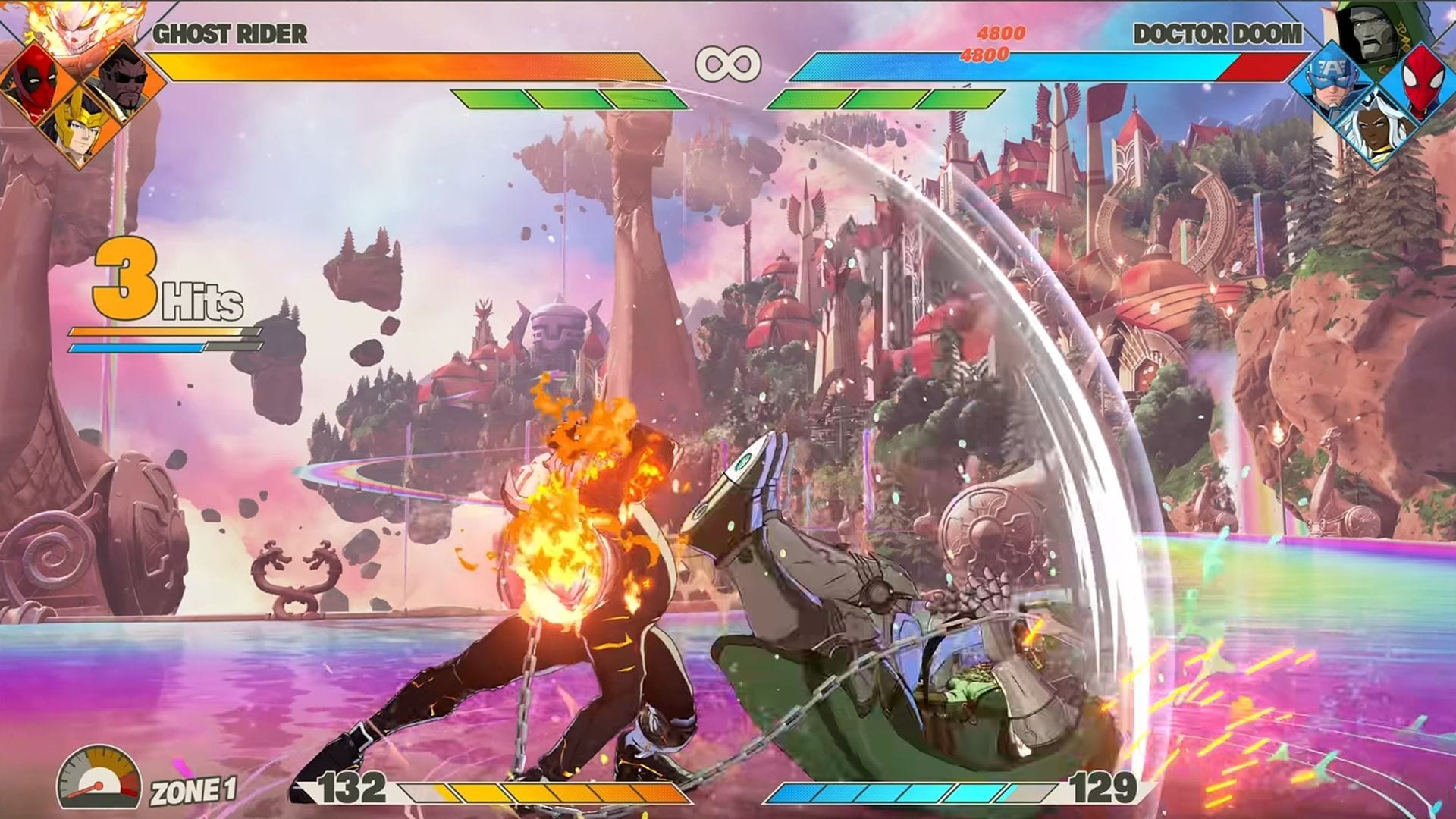
The third hit uses the chainThe third hit uses the chain
The third hit uses the chain

Spamming Light attacks while standing in front of your opponent is one of the cleanest ways to deal damage with Ghost Rider. He uses the chain on the third hit, pushing enemies back and creating a distance between you and the foe.

Finish the sequence with Tokon Assemble to bring in your teammates and add a burst of extra damage.


Medium and Heavy attack combo
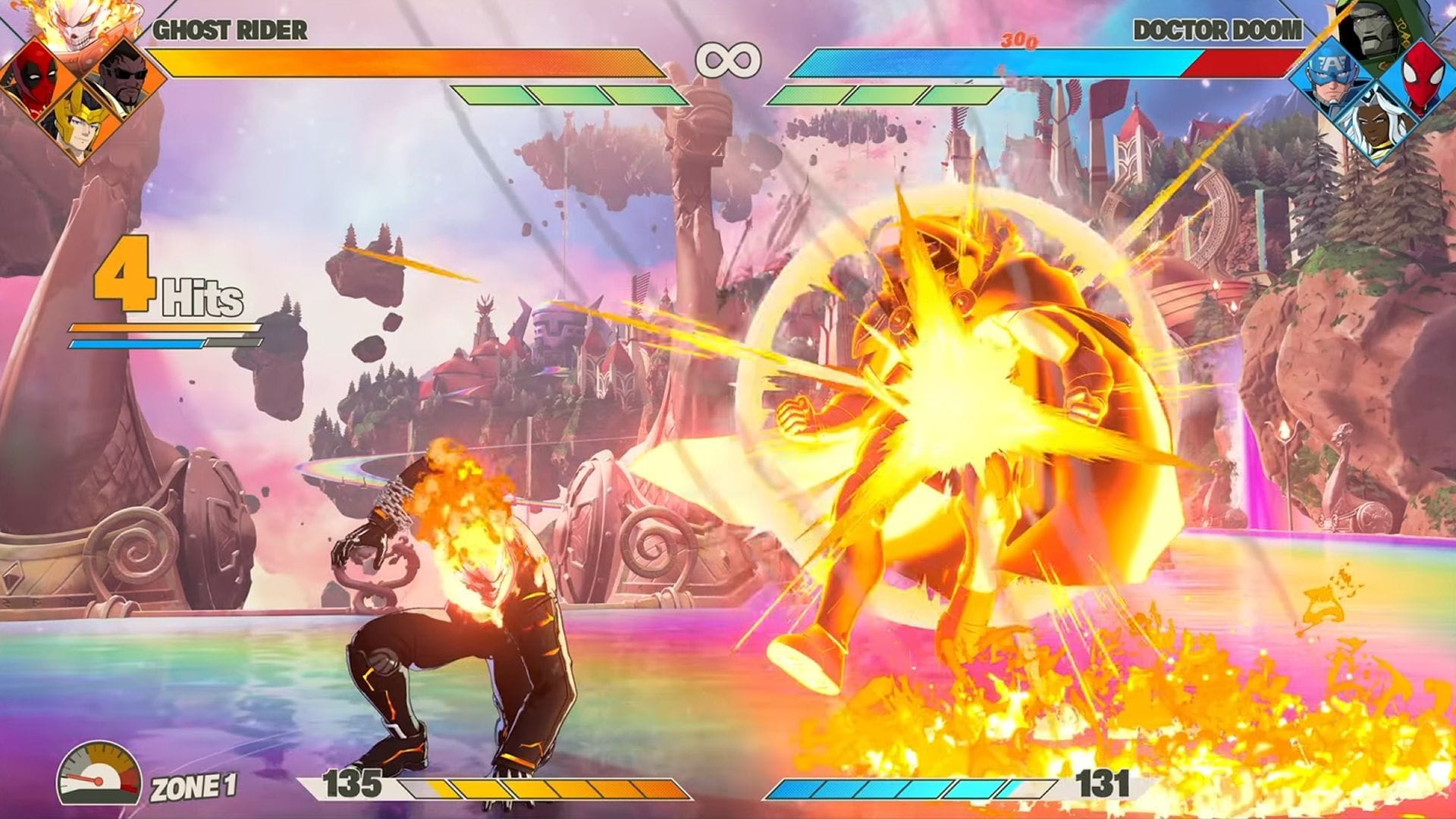
The final hits rely on hellfireThe final hits rely on hellfire
The final hits rely on hellfire

Hellfire is one of Ghost Rider’s most useful tools and can build up the Vengeance Gauge, along with other skills. When using Medium or Heavy attack combos, the third hit will deal hellfire damage. Use it to increase the gauge to further increase the strength of your attacks.


Inferno Engine (Super Skill)
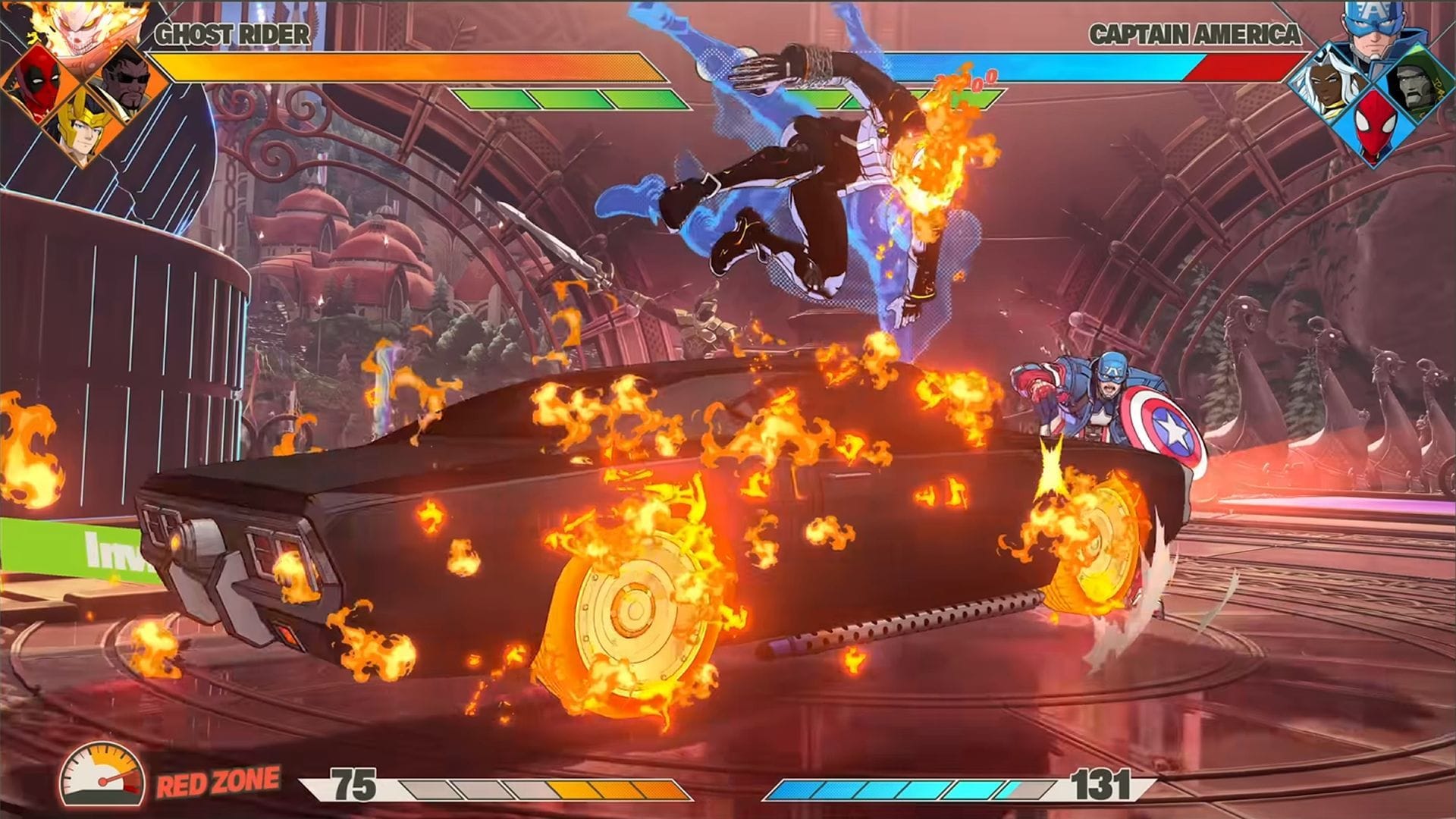
Summons Ghost Rider's carSummons Ghost Rider's car
Summons Ghost Rider’s car

The Inferno Engine is Ghost Rider’s Super Skill in Marvel Tokon Fighting Souls and summons his car to attack the enemy. Not only does this move deal a lot of damage, but it also depletes the Vengeance Gauge, allowing you to manage it.


Eternal Damnation (Ultimate Skill)
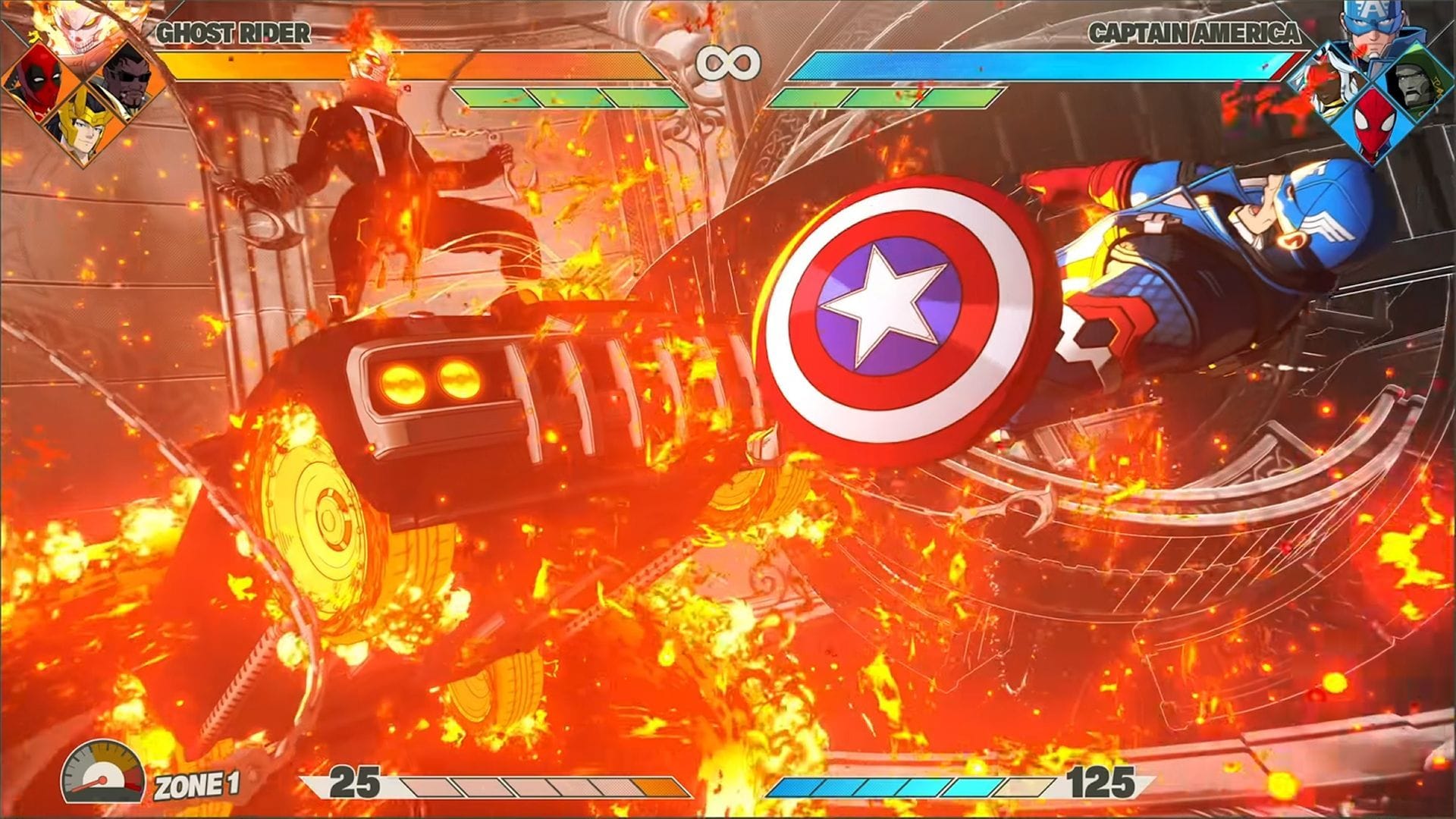
Deals damage with the chain and carDeals damage with the chain and car
Deals damage with the chain and car

Eternal Damnation is Ghost Rider’s Ultimate Skill and costs 100 gauge. When triggered, Robbie uses his chains to pull enemies and deal damage twice, followed by crashing into them with his car. Overall, it is a very strong finisher.


How to play Ghost Rider in Marvel Tokon Fighting Souls
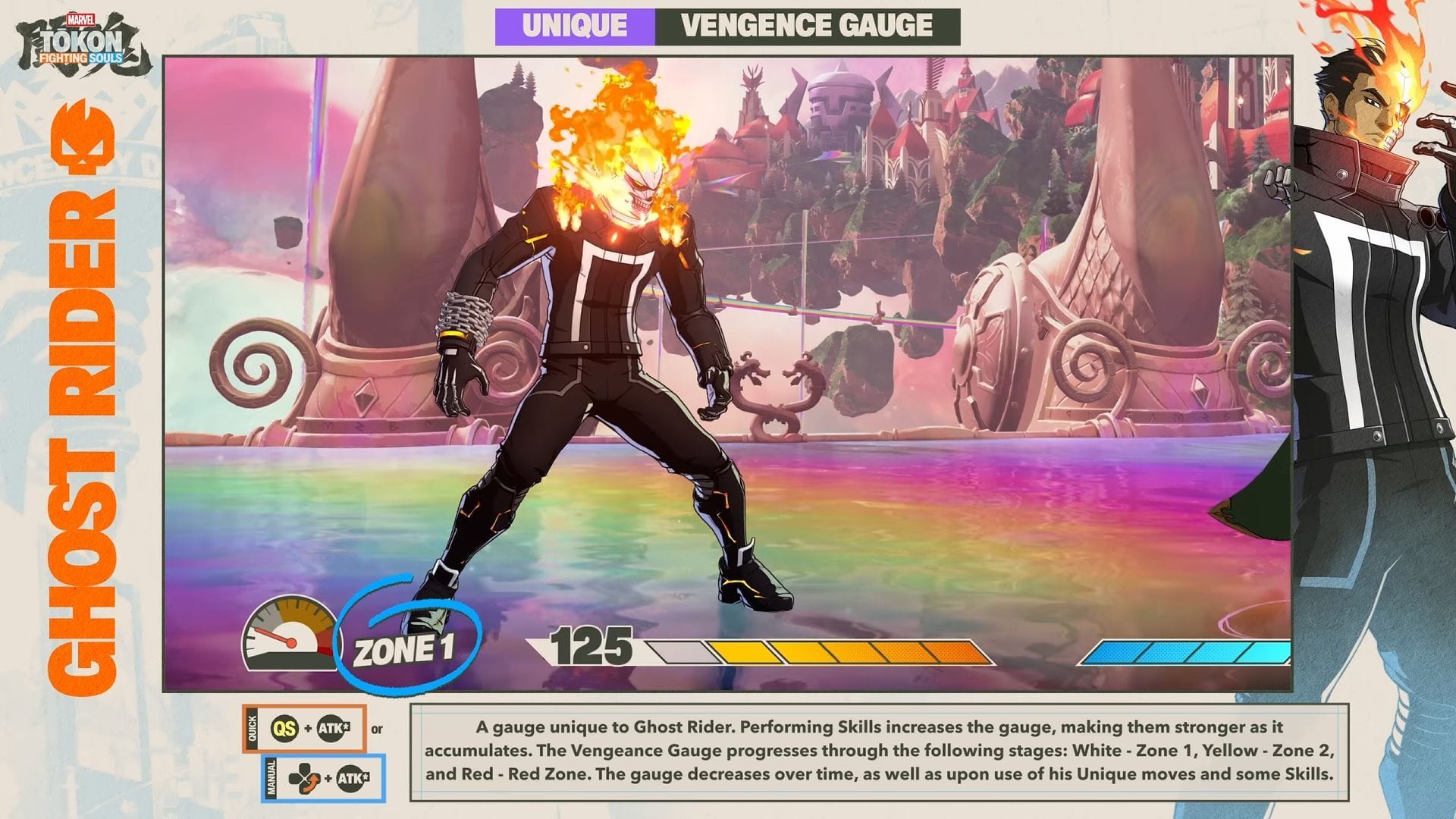
Managing the Vengeance Gauge is essentialManaging the Vengeance Gauge is essential
Managing the Vengeance Gauge is essential

Ghost Rider plays best from mid-to-far range. His chain attacks give him reach that most characters cannot match at close quarters, so try to keep your distance and use Revelator Chain and Hellfire to control the space between you and your opponent.

Other than that, the most important habit a Ghost Rider player should have is monitoring the Vengeance Gauge at all times. Every time you use a Skill, the gauge fills, and when the gauge enters the red zone, your Skills deal more damage. As such, you will want your gauge to be red during most of your fight.

However, if the gauge reaches maximum, Ghost Rider suffers from the Overheat status. At this point, he is stunned and cannot attack until the gauge drops. As such, use Penance Driver often to bring the gauge back down or spend it to cast your Super Skill or Ultimate Skill.

Advertisement

Check out the links below for more such guides: