Sports
Arkansas, Tyson Foods strike major jersey patch deal

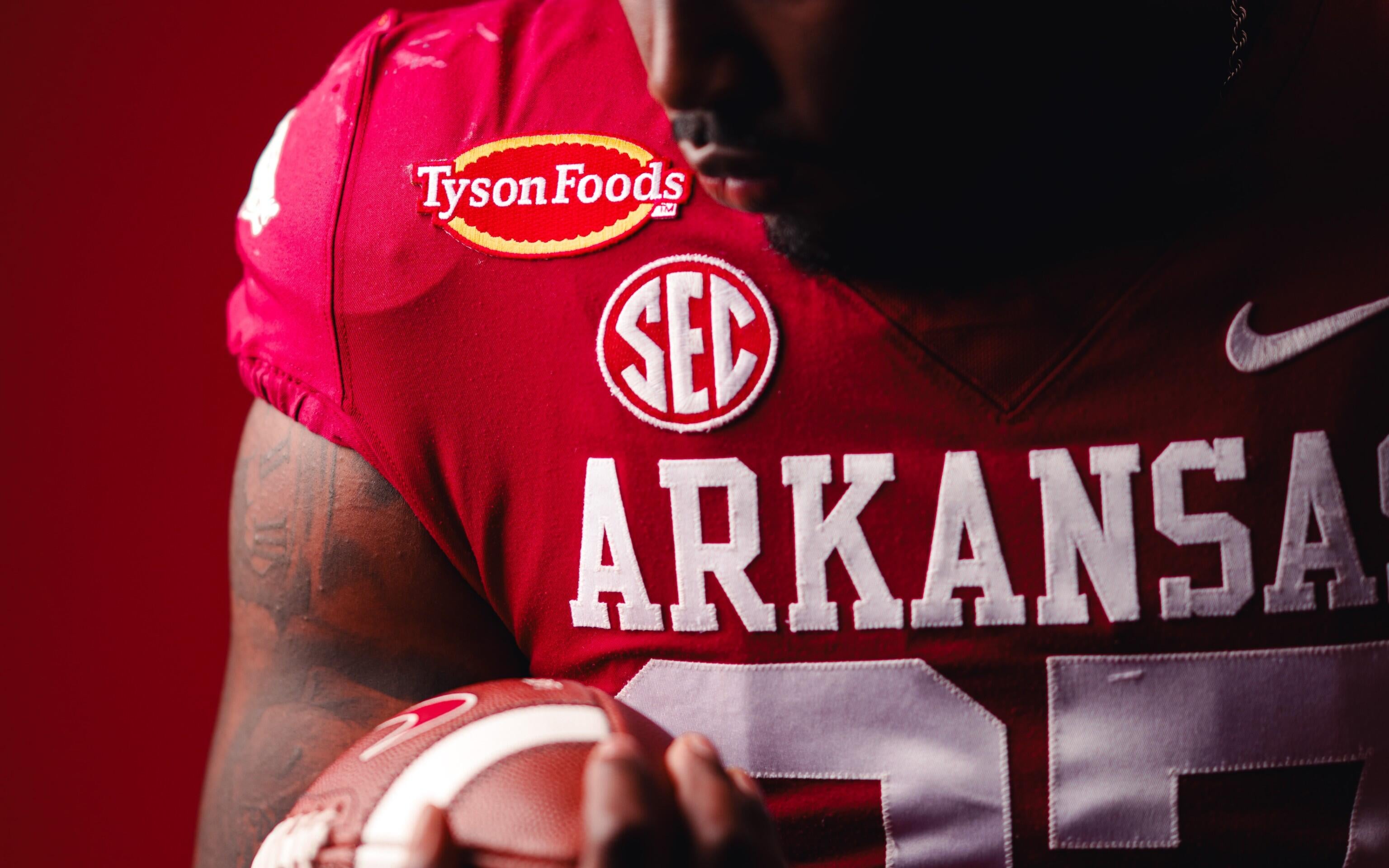

FAYETTEVILLE, Ark. — As college athletics scrambles to fund the exploding cost of paying athletes, Arkansas may have landed on one of the sport’s most aggressive new models: a corporate sponsorship designed primarily to pay players.
The Razorbacks and Tyson Foods have entered into a sweeping five-year partnership that will place the company’s logo on the jerseys of all 19 Arkansas teams beginning in the 2026–27 academic year. But the branding is only part of the story — roughly 90% of the money generated by the deal is expected to flow directly to Arkansas athletes through name, image and likeness opportunities with the company.
Arkansas athletics director Hunter Yurachek calls the agreement announced Wednesday “the largest true sponsorship agreement in college athletics right now.”
“The intention is that every student-athlete will be positively impacted by this partnership,” Yurachek said. “That was really important to Mr. Tyson and Donnie King, their president and CEO, and Kristina Lambert, their chief growth officer. And it’s really important to us as well.”
Specific financial details of the Razorbacks’ mega deal with Tyson Foods — headquartered just a few miles away in nearby Springdale — were not disclosed. Tyson Foods chairman John Tyson told CBS Sports, however, that speculation about a nine-figure agreement is misplaced.
“It’s not $100 million, let’s put it that way,” Tyson said.
Still, the structure of the deal is what could make it notable nationally.
“The game’s changing so quickly,” Tyson said. “NIL sponsorships, funding for universities — the model is moving really, really quickly.”
The agreement also reflects the rapidly emerging market for jersey patch sponsorships in college athletics, which is in its infancy following the NCAA’s approval in January.
Learfield CEO Cole Gahagan told CBS Sports earlier this year that early valuations for the new asset could range from roughly $500,000 to more than $12 million annually, depending on the program and market size. He also noted that most jersey patch partnerships in professional sports come from companies located within about 250 miles of the team, a trend expected to translate to college athletics — a dynamic that makes Tyson Foods, headquartered just miles from Arkansas’ campus in Springdale, a natural fit.
Tyson Foods’ partnership extends beyond jerseys. The company will also receive branding across Arkansas courts and fields and become the “Official Protein of the Razorbacks,” aligning its products with athletic performance and campus life through brand ambassador programs with athletes — the mechanism through which NIL compensation will be distributed.
Arkansas and Tyson began discussing the concept roughly three to four months ago when it became clear the NCAA would soon approve jersey patches.
Arkansas is the second major school to announce an all-sport corporate jersey sponsorship, joining LSU, which struck a seven-year agreement with Woodside Energy in February. LSU has not disclosed financial details. UNLV signed a five-year deal worth $11 million with Accesso Biologics in December, one month before the NCAA formally approved the asset.
More schools are expected to land jersey patch sponsorships before the upcoming football season. In a CBS Sports survey conducted this week, 15 of 17 major athletic departments said they are actively pursuing deals.
Tyson has long been one of Arkansas athletics’ most visible supporters, particularly in basketball, track and golf. He attends Razorbacks home basketball games from a courtside seat across from coach John Calipari, whom he helped recruit to Arkansas from Kentucky two years ago.
But Tyson said his interest in the sponsorship extends beyond Arkansas’ highest-profile programs.
For him, the university serves as what he called the region’s “economic sports engine,” particularly for Olympic sports that rely on college athletics as their primary development pipeline.
“My bigger worry in this NIL college sports day is where we develop athletes beyond the big three (sports),” Tyson said. “That still needs to be funded somehow.”
Arkansas and Tyson developed a formula to spread NIL opportunities to players across all 19 sports.
Arkansas athletics currently operates with roughly a $200 million annual budget, Yurachek said, while major SEC competitors like Texas operate with roughly double that.
“We’re trying to find every avenue we can to monetize our athletic program,” Yurachek said.
To remain competitive, Arkansas has aggressively pursued new revenue streams, including stadium and arena concerts, stadium naming rights and jersey patch sponsorships. The Tyson partnership represents one of the largest steps in that strategy.
Learfield Sports, which represents Arkansas, is also nearing an agreement on a naming-rights deal for Razorback Stadium.
“We’re really, really close to being to the finish line on that,” Yurachek said. “We’ll have some things that people will see in the very near future about that.”