Connect with us
DAPA Banner

Sports

Big Ten takes the top spot for 1st rounders, while SEC sets record for total players drafted

Published

on

The SEC’s reign as the king of the first round of the NFL draft was toppled by the Big Ten.

But the conference that coined the mantra “It Just Means More” for its dominance of college football in the 2010s remained in the top spot for the entire draft after the SEC set a record for the number of players picked over the three days.

Advertisement

Thanks to recent national champions Indiana and Ohio State, the Big Ten led the way with 10 first-round picks, marking the first time the SEC didn’t have the most players taken in round one since 2015. The SEC only had seven — down from a record 15 last year — and the lowest total for the conference since that 2015 season when the ACC and Pac-12 led the way with nine first-rounders each and the SEC had seven.

Advertisement

The first player drafted from an SEC school came when LSU cornerback Mansoor Delane went sixth overall to Kansas City, marking the first draft without a top five SEC player since 2018 when Roquan Smith was the first taken at No. 8 overall by the Bears.

But the depth of the SEC shined on the final two days with the conference leading the way with 29 day two picks in rounds two and three and 51 more over the last four rounds on the final day of the draft. The 87 players in total were the most ever and easily beat the total of 67 from the Big Ten.

The SEC has had the most players picked for 20 straight drafts since the ACC took top honors in 2006. Florida won the national title the following season, starting a stretch where the conference won 13 of 17 national championships.

Advertisement

Advertisement

That run of dominance ended when Michigan won it all in 2023 with fellow Big Ten members Ohio State and Indiana following that up with titles of their own.

The other two power conferences were far behind with the Big 12 and ACC each having six first-rounders and 38 players picked in all.

The recent realignment that added more schools to all four power conferences, along with reduced restrictions on transfers and the advent of NIL payments all have combined to consolidate the talent at the biggest schools.

San Diego State cornerback Chris Johnson was the only player who didn’t finish his college career in the SEC, Big Ten, Big 12, ACC or Notre Dame who was taken in the first round after going 27th to Miami.

Advertisement

Advertisement

The next Group of Six player off the board was Toledo safety Emmanuel McNeil-Warren at No. 58 to Cleveland and only one other was picked on the first two days with Georgia State receiver Ted Hurst going 84th to Tampa Bay.

In all, just 14 players from the Group of Six were drafted with the American and MAC leading the way with four each. There were 39 others who transferred from a Group of Six school to a Power Four conference.

Seven players came from FBS independents with Notre Dame having six and UConn one.

Advertisement

There were four players who came from FCS-level schools and one who didn’t play college at all with Philadelphia taking Nigerian native Uar Bernard in the seventh round as part of the NFL’s International Pathway Program.

Advertisement

Record low draft for running backs

The first round of the draft provided some memorable milestones for running backs with Jeremiyah Love becoming the first top five back in eight years when Arizona took him third overall. His Notre Dame teammate Jadarian Price went with the final pick of the round to Seattle.

That marked the sixth time in the common draft era starting in 1967 when two running backs from the same college were taken in the first round of the same draft with it last happening in 2008 with Arkansas’ Darren McFadden and Felix Jones.

Advertisement

Running backs mostly were an afterthought after that.

Advertisement

The next back off the board came near the end of the third round when San Francisco took Indiana’s Kaelon Black 90th overall, marking the fewest running backs taken in the first three rounds of the common draft.

Only 10 more running backs went on the final day with the 13 total the fewest taken in any draft.

Advertisement

Tight ends had a banner weekend with 22 picked, the most since 2015, according to Sportradar, when there were also 22 selected as the league’s trend of more multi-tight end formations put a premium at the position.

The trenches as usual were dominant with teams drafting 51 defensive linemen and 50 offensive linemen. There also were 46 defensive backs, 36 wide receivers, 26 linebackers, 10 quarterbacks and three specialists.

Advertisement

Ohio State leads the way

Ohio State was the third fastest school ever to have four players picked in a draft with Carnell Tate, Arvell Reece, Sonny Styles and Caleb Downs all going in the top 11 of the draft.

Advertisement

The only schools ever to have four players picked that quickly were Michigan State with four of the top eight in 1967 and Notre Dame with four of the top 10 in 1946.

The Buckeyes didn’t slow down from there with seven more players drafted, giving them the most of any school this year with 11. Alabama and Texas A&M each had 10, followed by Clemson, Miami and Texas Tech with nine apiece.

This also marked the 88th straight draft that both Michigan and USC had a player picked for the longest streaks of any school. Notre Dame has missed only one year (1977) of having a player picked in the regular draft since 1938 but did have running back Al Hunter taken in the supplemental draft that year.

Advertisement

Advertisement

Wisconsin had its streak of at least one player picked each year since 1979 snapped.

Speeding up the draft

The NFL shortened the time between picks in the first round from 10 minutes to eight minutes, cutting the total duration of the round to under three hours.

The league said the first round took 2 hours, 53 minutes, down 36 minutes from last year and 40 minutes less than the average of the previous five drafts.

The duration of the first round has been cut in half since commissioner Roger Goodell’s first draft in 2007. Teams that year had 15 minutes to make their picks in the opening round, leading to a 6 hour, 8 minute round in 2007.

Advertisement

Source link

Continue Reading
Click to comment

You must be logged in to post a comment Login

Leave a Reply

Sports

Ryan Rickelton Leaves Behind Sanath Jayasuriya, Rohit Sharma; Does What No Other Mumbai Indians Batter Has Done In IPL

Published

on


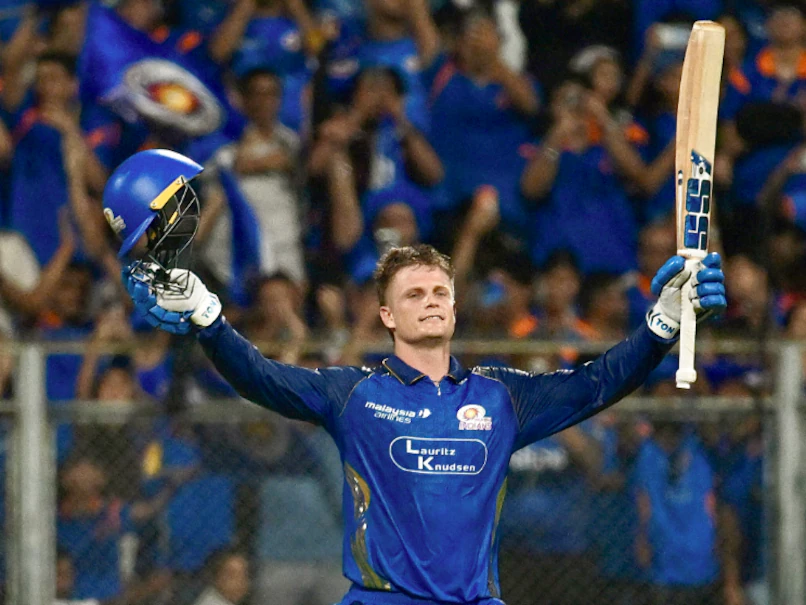
Ryan Rickelton had been dropped for inconsustent from after three single digits scores in five matches. Before Wednesday, Rickelton last played on April 16. He came back into the XI against Sunrisers Hyderabad and made it worthwhile. Rickleton struck the fastest ever century by a Mumbai Indians batter to propel his team to massive 243 for five in their must-win IPL clash against Sunrisers Hyderabad on Wednesday. Rickelton batted through the innings for an unbeaten 123 off a mere 55 balls with 10 fours and eight sixes, anchoring MI’s charge to an at-par total on a batting friendly track here at the Wankhede Stadium.
The 29-year-old Rickelton brought up a third century (other two coming in SA20 for MI Cape Town) for his franchise as MI made a desperate attempt to revive their fortunes with their highest total of the season so far.

Rickelton’s 123* is the highest scores by a MI batters surpassing Sanath Jayasiruya’s 114* (vs Chennai Super Kiings in 2008). In his first 100 for MI in the IPL, pushed Sanath Jayasuriya, Quinton de Kock (112*), Rohit Sharma (109* and 105*) and Suryakumar Yadav (103*) in the list of top run-scorers for MI. Rickelton reached the century run-mark in 44 balls, the fastest by any MI batter. He surpassed Jayasuriya’s 45-balls mark (in 2008 vs CSK).

Advertisement

Using the long handle to maximum effect, not for once did Rickelton take any unwarranted risk but executed his strokes with conviction.

Alongside Rickelton’s exploits, MI also had England opener Will Jacks (46 off 22 balls) and skipper Hardik Pandya (31 off 15 balls; 2 fours, 2 sixes) delivering the goods.

With a new opening partner in the form of Jacks, the South African wicketkeeper-batter Rickelton provided MI with the spunk they have missed most of this season hitherto.

The pair put on 78 in the powerplay and 93 for the first wicket in seven overs to set the tone in a fearless approach with the bat.

Advertisement

But more importantly, Rickelton hung around for a long haul as his innings proved to be the glue which held MI together as well as kept driving them towards a strong total.

Once he was away with a huge six over midwicket off Praful Hinge (2/54) in the second over, Rickelton did not take the foot off the pedal, competing his first half-century in 23 balls. He got the next fifty runs in only 21 deliveries.

Rickelton’s knock also helped MI recover from a quiet few overs in between, wherein they lost Jacks, Suryakumar Yadav (5) and even Naman Dhir (22).

While Jacks did a fine job in his first outing this season striking three sixes and five fours, there were no visible signs that Suryakumar is anywhere close to getting his form back as he was bounced out by Eshan Malinga (1/29).

Advertisement

The Indian T20I skipper pulled the short ball but appeared to not have responded well to the bounce as an edge flew straight to Abhishek Sharma at fine leg.

Dhir also could not keep up with the scoring rate from the other end as Rickelton continued to push on, perishing to Hinge in the 14th over.

Mumbai Indians’ players, meanwhile, took the field wearing black armbands due to the untimely passing of the daughter of one of their support staff members.

With PTI inputs

Advertisement


Featured Video Of The Day


IPL 2026 News | RCB Outplay CSK For 2nd Win On Trot, Ruturaj Gaikwad & Co Suffer 3rd Loss

Topics mentioned in this article

Advertisement

Source link

Continue Reading

Sports

Kansas joins Top 25 And 1 after landing Tyran Stokes, nation’s No. 1 recruit

Published

on


1


Florida
This ranking is based on the Gators returning six of the top seven scorers — specifically Thomas Haugh, Alex Condon, Boogie Fland, Reuben Chinyelu, Urban Klavsar and Isaiah Brown — from a team that finished 27-8 and advanced to the second round of the 2026 NCAA Tournament. That core will be joined by a recruiting class highlighted by Kentucky transfer Denzel Aberdeen and 7-foot center Jones Lay. — 27-8
2


Duke
This ranking is based on the Blue Devils returning four of the top six scorers — specifically Patrick Ngongba II, Caleb Foster, Cayden Boozer and Dame Sarr — from a team that finished 35-3 and advanced to the Elite Eight of the 2026 NCAA Tournament. That core will be joined by a recruiting class highlighted by Wisconsin transfer John Blackwell, Belmont transfer Drew Scharnowski and five-star prospects Cameron Williams, Deron Rippey Jr. and Bryson Howard. — 35-3
3


Michigan
This ranking is based on the Wolverines returning two of the top five scorers — specifically Elliot Cadeau and Trey McKenney — from a team that finished 37-3 and won the 2026 NCAA Tournament. That core will be joined by a recruiting class highlighted by Tennessee transfer J.P. Estrella, Cincinnati transfer Moustapha Thiam, LSU transfer Jalen Reed, five-star prospect Brandon McCoy Jr., and four-star prospects Lincoln Cosby, Quinn Costello and Joseph Hartman. — 37-3
4

Advertisement


Illinois
This ranking is based on the Illini returning six of the top nine scorers — specifically Andrej Stojakovic, David Mirkovich, Tomislav Ivisic, Zvonimir Ivisic, Jake Davis and Brandon Lee — from a team that finished 28-9 and advanced to the 2026 Final Four. That core will be joined by a recruiting class highlighted by Providence transfer Stefan Vaaks, four-star prospects Quintin Coleman and Lucas Morillo and three-star prospects Ethan Brown and Landon Davis. — 28-9
5


UConn
This ranking is based on the Huskies returning three of the top seven scorers — specifically Braylon Mullins, Silas Demary and Jayden Ross — from a team that finished 34-6 and advanced to the championship game of the 2026 NCAA Tournament. That core will be joined by a recruiting class highlighted by Duke transfer Nikolas Khamenia, Seton Hall transfer Najai Hines, Stanford transfer Oskar Giltay, Wofford transfer Nils Machowski and four-star prospects Colben Landrew and Junior County. — 34-6
6


Michigan St.
This ranking is based on the Spartans returning five of the top eight scorers — specifically Jeremy Fears Jr., Coen Carr, Kur Teng, Jordan Scott and Cam Ward — from a team that finished 27-8 and advanced to the Sweet 16 of the 2026 NCAA Tournament. That core will be joined by a recruiting class highlighted by Charlotte transfer Anton Bonke and four-star prospects Ethan Taylor, Carlos Medlock Jr., Julius Avent and Jasiah Jervis. — 27-8
7


Arkansas
This ranking is based on the Razorbacks returning two of the top four scorers — specifically Meleek Thomas and Billy Richmond III — from a team that finished 28-9 and advanced to the Sweet 16 of the NCAA Tournament. That core will be joined by a recruiting class highlighted by five-star prospects Jordan Smith Jr., JJ Andrews and Miikka Muurinen, Furman transfer Cooper Bowser, Georgia transfer Jeremiah Wilkinson and four-star prospect Abdou Toure. — 28-9
8

Advertisement


Gonzaga
This ranking is based on the Zags returning three of the top five scorers — specifically Braden Huff, Davis Fogle and Mario Saint-Supery — from a team that finished 31-4 and advanced to the second round of the 2026 NCAA Tournament. That core will be joined by a recruiting class highlighted by Houston transfer Isiah Harwell, Arizona State transfer Massamba Diop and four-star prospects Luca Foster, Sam Funches and Jack Kayil. 3 31-4
9


Texas
This ranking is based on the Longhorns returning one of the top two scorers — specifically Matas Vokietaitis — from a team that finished 21-15 and advanced to the Sweet 16 of the 2026 NCAA Tournament. That core will be joined by a recruiting class highlighted by TCU transfer David Punch, Colorado transfer Isaiah Johnson, Tennessee transfer Amari Evans, Auburn transfer Elyjah Freeman, Saint Mary’s transfer Mikey Lewis and four-star prospects Austin Goosby, Bo Ogden and Joe Sterling. 1 21-15
10


Arizona
This ranking is based on the Wildcats returning two of the top five scorers — specifically Motiejus Krivas and Ivan Kharchenkov — from a team that finished 36-3 and advanced to the 2026 Final Four. That core will be joined by a recruiting class highlighted by North Carolina transfer Derek Dixon, Washington transfer JJ Mandaquit, five-star prospect Caleb Holt and four-star prospect Cameron Holmes. 1 36-3
11


Virginia
This ranking is based on the Cavaliers returning five of the top 10 scorers — specifically Thijs De Ridder, Sam Lewis, Chance Mallory, Johann Gunloh and Elijah Gertrude — from a team that finished 30-6 and advanced to the second round of the 2026 NCAA Tournament. That core will be joined by a recruiting class highlighted by UC Irvine transfer Jurian Dixon. 1 30-6
12

Advertisement


Iowa St.
This ranking is based on the Cyclones returning three of the top six scorers — specifically Killyan Toure, Blake Buchanan and Jamarion Bateman — from a team that finished 29-8 and advanced to the Sweet 16 of the 2026 NCAA Tournament. That core will be joined by a recruiting class highlighted by Robert Morris transfer Ryan Prather Jr., Northwestern transfer Tre Singleton, Bradley transfer JaQuan Johnson, Kansas State transfer Taj Manning, Northern Iowa transfer Leon Bond III, four-star prospects Dorian Rinaldo-Komian, Jackson Kiss and Christian Wiggins and three-star prospect Yusef Gray Jr. — 29-8
13


Houston
This ranking is based on the Cougars returning three of the top seven scorers — specifically Joseph Tugler, Mercy Miller and Chase McCarty — from a team that finished 30-7 and advanced to the Sweet 16 of the 2026 NCAA Tournament. That core will be joined by a recruiting class highlighted by LSU transfer Dedan Thomas Jr., Kent State transfer Delrecco Gillespie and four-star prospects Arafan Diane and Ikenna Alozie and — 30-7
14


USC
This ranking is based on the Trojans returning three of the top five scorers — specifically Rodney Rice, Alijah Arenas and Jacob Cofie — from a team that finished 18-14 and missed the 2026 NCAA Tournament. That core will be joined by a recruiting class highlighted by five-star prospect Christian Collins, four-star prospects Adonis Ratliff and Darius Ratliff, Georgetown transfer KJ Lewis, UConn transfer Eric Reibe and Colgate transfer Jalen Cox. — 18-14
15


Louisville
This ranking is based on the Cardinals returning the fifth-leading scorer — specifically Adrian Wooley — from a team that finished 24-11 and advanced to the second round of the 2026 NCAA Tournament. That core will be joined by a recruiting class highlighted by Kansas transfer Flory Bidunga, Oregon transfer Jackson Shelstad, Arkansas transfer Karter Knox, Iowa transfer Alvaro Folgueiras, Dayton transfer De’Shayne Montgomery, USC transfer Gabe Dynes and former G League player London Johnson. — 24-11
16


St. John’s
This ranking is based on the Red Storm returning two of the top eight scorers — specifically Ian Jackson and Ruben Prey — from a team that finished 30-7 and advanced to the Sweet 16 of the 2026 NCAA Tournament. That core will be joined by a recruiting class highlighted by Syracuse transfer Donnie Freeman, Columbia transfer Avery Brown and international prospects Quinn Ellis, Djordije Jovanovic and Lazar Stojkovic. — 30-7
17

Advertisement


Tennessee
This ranking is based on the Vols returning two of the top 10 scorers — specifically Dewayne Brown II and Ethan Burg — from a team that finished 25-12 and advanced to the Elite Eight of the 2026 NCAA Tournament. That core will be joined by a recruiting class highlighted by Notre Dame transfer Jalen Haralson, Cal transfer Dai Dai Ames, Belmont transfer Tyler Lundblade, VCU transfer Terrence Hill Jr., Loyola Chicago transfer Miles Rubin, Kennesaw State transfer Braedan Lue, four-star prospects Christopher Washington Jr., Ralph Scott and Manny Green, and three-star prospect Marquis Clark. — 25-12
18


Alabama
This ranking is based on the Crimson Tide returning four of the top 10 scorers — specifically Aden Holloway, Amari Allen, London Jemison and Keitenn Bristow — from a team that finished 25-10 and advanced to the Sweet 16 of the 2026 NCAA Tournament. That core will be joined by a recruiting class highlighted by Boise State transfer Drew Fielder, Kentucky transfer Brandon Garrison, NC State transfer Cole Cloer, Mississippi State transfer Jamarion Davis-Fleming and four-star prospects Qayden Samuels, Jaxon Richardson and Tarris Bouie. — 25-10
19


Purdue
This ranking is based on the Boilermakers returning five of the top nine scorers — specifically C.J. Cox, Daniel Jacobsen, Omer Mayer, Gicarri Harris and Jack Benter — from a team that finished 30-9 and advanced to the Elite Eight of the 2026 NCAA Tournament. That core will be joined by a recruiting class highlighted by 2024 Ivy League Player of the Year Caden Pierce, and four-star prospects Luke Ertel, Jacob Webber and Sinan Huan. — 30-9
20


Indiana
This ranking is based on the Hoosiers returning one of the top eight scorers — specifically Trent Sisley — from a team that finished 18-14 and missed the 2026 NCAA Tournament. That core will be joined by a recruiting class highlighted by Notre Dame transfer Markus Burton, Villanova transfer Bryce Lindsay, Alabama transfer Aiden Sherrell, SMU transfer Samet Yigitoglu, Duke transfer Darren Harris, Georgia Tech transfer Jaeden Mustaf and four-star prospects Vaugn Karvala, Prince-Alexander Moody and Trevor Manhertz. — 18-14
21

Advertisement


Miami
This ranking is based on the Hurricanes returning three of the top seven scorers — specifically Shelton Henderson, Dante Allen and Marcus Allen — from a team that finished 26-9 and advanced to the second round of the 2026 NCAA Tournament. That core will be joined by a recruiting class highlighted by Villanova transfer Acaden Lewis, Robert Morris transfer DeSean Goode, Georgia transfer Somto Cyril and four-star prospect Caleb Gaskins. — 26-9
22


BYU
This ranking is based on the Cougars returning two of the top eight scorers — specifically Robert Wright III and Khadim Mboup — from a team that finished 23-12 and advanced to the first round of the 2026 NCAA Tournament. That core will be joined by a recruiting class highlighted by five-star prospect Bruce Branch III, four-star prospect Dean Rueckert, Kentucky transfer Collin Chandler, Clemson transfer Jake Wahlin, Syracuse transfer Tyler Betsey and UC Riverside transfer Nate Pickens, the last of whom committed to BYU last May but missed the season with an ankle injury. — 23-12
23


N. Carolina
This ranking is based on the Tar Heels returning three of the top 11 scorers — specifically Jarin Stevenson, Isaiah Denis and Jaydon Young — from a team that finished 24-9 and advanced to the first round of the 2026 NCAA Tournament. That core will be joined by a recruiting class highlighted by Virginia Tech transfer Neoklis Avdalas, Utah transfer Terrence Brown, international prospect Sayon Keita and four-star prospect Maximo Adams. NR 24-9
24


Vanderbilt
This ranking is based on the Commodores returning two of the top nine scorers — specifically Tyler Tanner and Chandler Bing — from a team that finished 27-9 and advanced to the second round of the 2026 NCAA Tournament. That core will be joined by a recruiting class highlighted by Nebraska transfer Berke Buyuktuncel, Washington State transfer Ace Glass, Auburn transfer Sebastian Williams-Adams, Colorado transfer Bangot Dak, Missouri transfer T.O. Barrett and four-star prospects Ethan Mgbako, Anthony Brown and Jackson Sheffield. 1 27-9
25

Advertisement


Kansas
This ranking is based on the Jayhawks returning one of the top seven scorers — specifically Kohl Rosario — from a team that finished 24-11 and advanced to the second round of the 2026 NCAA Tournament. That core will be joined by a recruiting class highlighted by five-star prospects Tyran Stokes and Taylen Kinney, four-star prospects Davion Adkins, Trent Perry and Luke Barnett, Charleston transfer Christian Reeves, Toledo transfer Leroy Blyden Jr. and Utah transfer Keanu Dawes. NR 24-11
26


Nebraska
This ranking is based on the Cornhuskers returning five of the top nine scorers — specifically Pryce Sandfort, Braden Frager, Ugnius Jarusevicius, Connor Essegian and Cale Jacobsen — from a team that finished 28-7 and advanced to the Sweet 16 of the 2026 NCAA Tournament. That core will be joined by a recruiting class highlighted by Belmont transfer Sam Orme and four-star prospects Colin Rice and Jacob Lanier. 2 28-7

Source link

Advertisement
Continue Reading

Sports

Afghan women’s team recognized in blow to Taliban

Published

on

After years of fleeing, fighting, advocating and training, Afghanistan’s women have won the right to compete for football’s biggest prizes as their country’s official national team.

An unprecedented decision made by world football’s governing body, FIFA, in Toronto on Tuesday paves the way for the current squad to try to qualify for the Los Angeles Olympics in 2028 and then future World Cups and Asian Cups.

It is another huge step for a team who have had to fight for their right to play, with the Taliban-run football association refusing to sanction an Afghanistan national women’s team.

“It’s something really huge for us, to show the world that Afghan women and girls are capable of doing amazing things,” national team goalkeeper Elaha Safdari told DW.  “It’s a hard slap to the face of the Taliban and those people who were against us.

Advertisement

Football and freedom: Afghan women against the world

To view this video please enable JavaScript, and consider upgrading to a web browser that supports HTML5 video

“We are just showing that we are capable of doing amazing things through sports. And of course, we are still raising our voice for all the voiceless who are back home.”

Afghan example may open the door for others

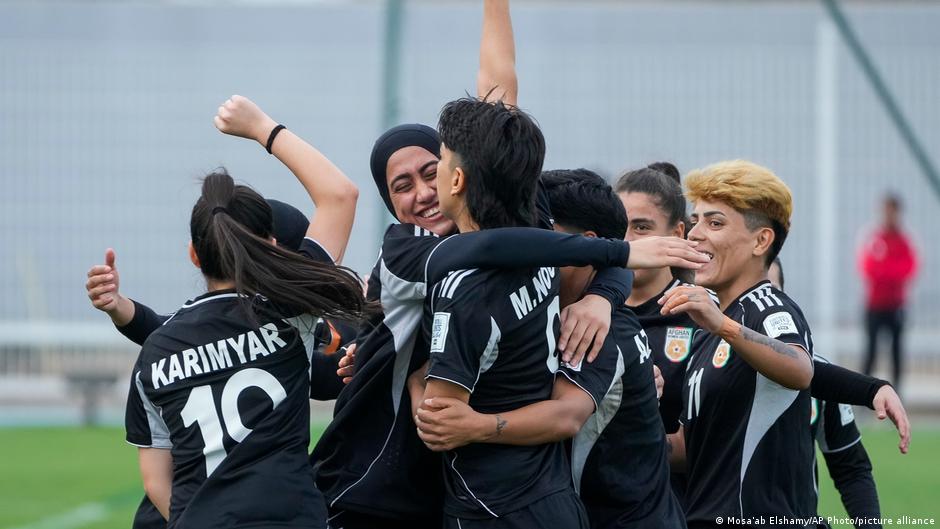
Safdari was one of the Afghanistan Women’s United squad who took part in a small tournament called ‘FIFA Unites Women’s Series’ in Morocco in 2025. The squad are made up of refugees who now live mostly in Australia and Europe and have faced a host of logistical and political challenges. They will likely form the bulk of the new national team.

FIFA president Gianni Infantino said the amendment made at the organization’s Council was “momentous.” He said it meant FIFA can now “approve the registration of a national or representative team under exceptional circumstances where a Member Association is unable to do so.”

Advertisement

“This is a powerful and unprecedented step in world sport,” he added. “FIFA has listened to these players as part of its responsibility to protect the right of every girl and woman to play football and to represent who they are.”

Infantino also pointed to his organization’s ‘Strategy  for Action for Afghan Women’s Football, approved in 2025, as a key driver of the change. 

Goalkeeper Elaha Safdari catches a ball with a smile on her face while warming up
Goalkeeper Elaha Safdari now lives in Engand and plays club football for Rotherham UnitedImage: Francois Nel – FIFA/FIFA via Getty Images

Andrea Florence, the Executive Director of the Sport and Rights Alliance advocacy group, pointed out that the precedent set by this amendment “demonstrates that governing bodies can adapt their rules to protect human rights when extraordinary circumstances demand it.”

This will likely open the door for other national teams, often women’s ones, who are denied the opportunity to play by their federations.

Big moment in Afghanistan and in exile

Khalida Popal, the former Afghanistan captain, who has become a figurehead for the new generation, sat next to Infantino when the news was announced as the current squad watched together online elsewhere.

Advertisement

“It means so much. The whole situation that Afghanistan women have is very emotional,” she said. “This is our moment, this is our time and football is our voice and our platform.”

Afghan Women United players stand in a circle putting their hands together in a locker room in Morocco, October 2025
Afghanistan won one of their three games at the FIFA Unites Women’s Series 2025 and forged team spiritImage: Ann Odong/FIFA

For Safdari and her teammates, this is a chance to look ahead and build on the momentum and team spirit forged at the tournament in Morocco, in which the Afghans were not recognized as a full national team.

“Our situation is quite different from other teams but I feel like that’s a big strength for us,” Safdari said. “We’ve been training hard, we’ve been aiming for this, and it’s a new hope for us. It shows our resilience and it just shows that if we work hard, we can definitely achieve [our goals].”

Fight not over until Taliban are out

But with the brutal repression of women continuing back home, Safdari and the other players know that their fight is not fully won while the Taliban remain in power. Nevertheless, Safdari and the rest of the squad enjoy a rare platform as Afghan women international athletes. Now that their stage is even greater, they remain determined to shout from it for those back home.

Advertisement

“First of all I [thought of] my parents, who are still back home. They’ve already heard the news and are just proud of how far that I came personally. It’s really something for me to play for my country and make my people, my family and my parents proud.

Dreams in the dust – The divided rise of Afghan cricket

To view this video please enable JavaScript, and consider upgrading to a web browser that supports HTML5 video

“Of course, I’ve heard so many good things from friends and the people who are still back home. And we’ve seen how they were supporting us through this news on social media.”

The squad, who are funded and supported by FIFA during international breaks, are set to get together in New Zealand for their first matches since the games in Morocco last October. They will play a match against the Cook Islands as part of an eight-day training camp before Olympic qualifiers are set to start, likely later this year. That will be followed, eventually, by World Cup and Asian Cup qualifiers and all sorts of other opportunities afforded to them by their new status.

Advertisement

“It sounds really great [to hear Afghanistan can compete in those tournaments] and I still cannot believe it that we are finally official and we can play qualifiers,” Safdari said.

With the team having barely been in the same country, let alone played together in recent years, there is plenty of work to do to catch up. But for players like Safdari who have had to forge new lives in foreign lands at a young age while fighting for their right to play football, that is not a daunting proposition.

Edited by: Janek Speight

Source link

Advertisement
Continue Reading

Sports

With Nolimit gives Josh Halford his first Grade 1 victory

Published

on

On a day of Grade 1 firsts, With NoLimit (14/1) gave amateur rider Josh Halford his first success at the highest level.

Riding the Gordon Elliott-handled runner, Halford and With Nolimit ran out one-and-three-quarter length winners of the Grade 1 Race & Stay at Punchestown Champion Bumper.

The Mourne Rambler (11/8), the winner of the Champion Bumper at last month’s Cheltenham Festival and the race favourite this afternoon, took second under Declan Lavery.

Boycetown (5/1), representing Gavin Cromwell and Derek O’Connor, was third, three-quarters-of-a-length behind the runner-up.

The post With Nolimit gives Josh Halford his first Grade 1 victory appeared first on SportsNewsIreland.

Source link

Advertisement
Continue Reading

Sports

Massive WWE debut; Former world champion breaks silence

Published

on

WWE hosted the biggest event of the year in Las Vegas, and the company is now focused on introducing new stars on all three brands. Recently, EVIL made his debut for the company and broke his silence on X.

There have been times when superstars hone their craft on the independent circuit or train for years in Japan before signing with the Stamford-based promotion. From AJ Styles to Talla Tonga, notable names have had runs in the Land of the Rising Sun before joining WWE. On the recent edition of WWE NXT, EVIL made his debut for the company.

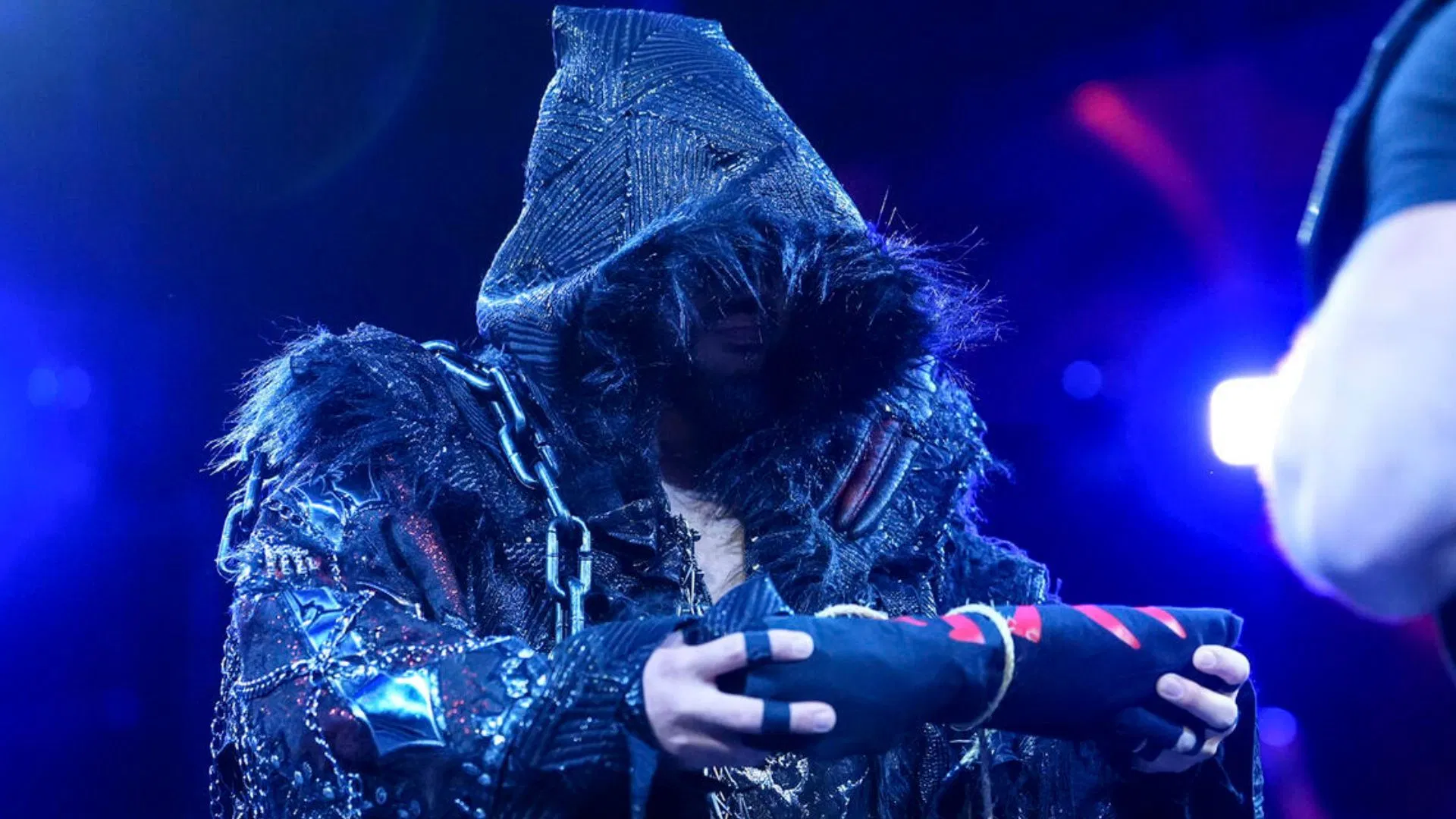
The former IWGP Heavyweight Champion interrupted Tony D’Angelo with a warning and left the ring. Later, the champion was attacked by Tavion Heights and Will Kroos. Later, the 39-year-old star broke silence on social media when he retweeted his debut with a message.

Advertisement

“I’ve Arrived. #WWENXT,” EVIL’s tweet on X.

During the show, the former IWGP Heavyweight Champion wasn’t addressed mysteriously, but without a proper in-ring name. The company has a trademark filed, which could be for the 39-year-old star, but only time will tell.


Why is EVIL on WWE NXT?

In the past, superstars have joined the developmental brand and had a run under Triple H’s creative leadership before they moved to the main roster. Shinsuke Nakamura, Samoa Joe, Finn Balor, and more have had prior experience in wrestling, but started from the black and yellow brand.

There have been exceptions to this rule when AJ Styles debuted for the company at the Royal Rumble in 2016. Over the past few years, top names from Japan have joined the company under the new regime and made it to the main roster without a run on the developmental brand.

Tama Tonga, Tonga Loa, JC Mateo, and Talla Tonga joined Friday Night SmackDown. According to Bodyslam, the former IWGP Heavyweight Champion, EVIL, wanted to start from the developmental brand instead of starting on the main roster.

Advertisement

The 39-year-old star wants to get accustomed to the wrestling scene in the United States, which is why he’s starting with NXT. As for his name, a new report suggests the management is still trying to figure it out. It’ll be interesting to see what’s next for EVIL in the Stamford-based promotion.