STERLING, Va. — When Scott O’Neil gets stressed, he eats. His snack of choice: chocolate-chip cookies baked by his wife, Lisa. At Trump National D.C. on Wednesday, O’Neil said he’d downed four of them, but you couldn’t have blamed him if he felt the urge to munch on a few more.
O’Neil, who is in his 17th month as LIV Golf’s chief executive officer, is in a pinch. His league’s financial backers — Saudi Arabia’s Public Investment Fund — announced that they are divesting from LIV at the end of the 2026 season, leaving O’Neil and his board of advisors to find a new investor or investors, and quickly.
Advertisement
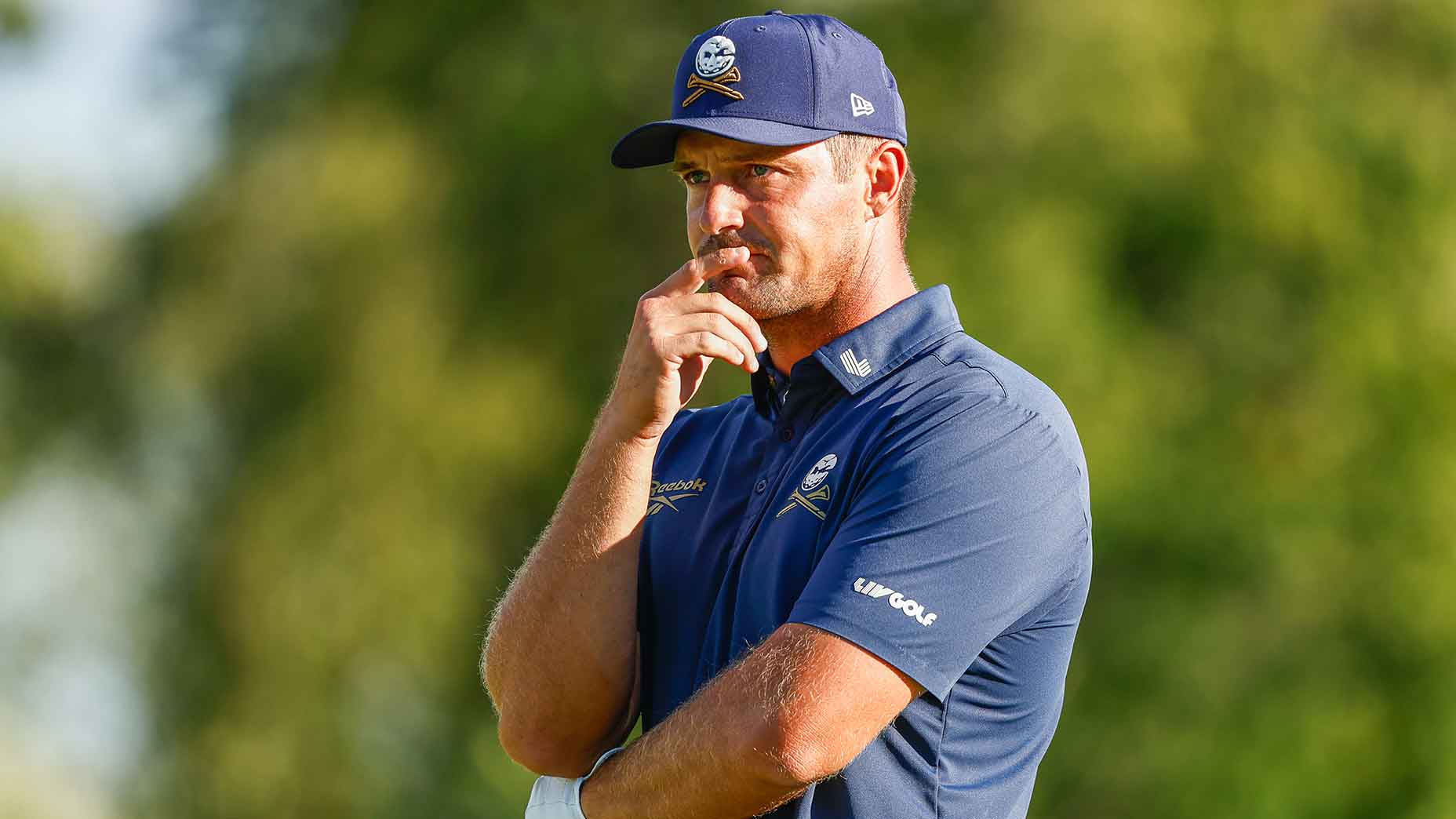
O’Neil will tell you that the league doubled its revenue from 2024 to ’25. That LIV expects four of its events and 10 of its 13 teams to turn a profit this year. That viewership and ticket sales are up. But the fact remains that he is taking to market an organization that has burned through billions, and which O’Neil has said could be a decade away from profitability. Complicating matters further, LIV lynchpin Bryson DeChambeau is unsigned beyond this season. O’Neil is confident DeChambeau will stick around but he cannot tell potential investors with certainty that the league’s biggest star will be part of its future.
O’Neil knows time is of the essence, but his focus, he says, is singular. “If any amount of that time is spent in any other fashion other than working towards this transaction, it’s a terrible use of my time,” he told GOLF.com in an interview earlier this week.
O’Neil says he thrives on the pressure, that he’s wired for facing and solving hard problems, that his more than 25 years in the sports and entertainment industries — including posts with the NBA’s New York Knicks and Philadelphia 76ers, the NFL’s Philadelphia Eagles and the NHL’s New York Rangers and New Jersey Devils — will serve him well as he works to secure a path forward for LIV.
In a 30-minute conversation, O’Neil spoke to the pressure of the moment, the DeChambeau dilemma and what kind of investors he believes might be drawn to a global golf league.
Advertisement
This interview has been edited for length and clarity.
GOLF: Let’s start with DeChambeau. There has been much speculation about the status of his contract. Can you provide any kind of update?
SCOTT O’NEIL: We have negotiations with players ongoing. His happens to get quite a bit of attention. Bryson is an extraordinary partner. He is the most popular golfer on the planet. He’s winning. He loves team golf. He believes in the vision of LIV. He’s willing to travel around the world, grow the game. And of all the athletes I’ve worked with in my career — and there’ve been a lot of them, from a lot of different sports — he’s the most pure to the mission of an athlete I’ve ever met. And Bryson has asked to sit side by side with me and Ducera [LIV’s investment bank] to raise money together.
As you’re seeking investors, how do you navigate those conversations without knowing DeChambeau’s status? Because presumably one of the first questions a potential investor will ask is, “Is Bryson part of the deal?”
Advertisement
Bryson is more pro-LIV than I am. We talked yesterday [Tuesday] about him joining me for the investor meetings, so I think that’ll be a pretty good indication as to what’s going to transpire. He’s really smart. He’s very intuitive. He’s as good a brand builder as I’ve ever seen. From a marketing standpoint, his creativity almost knows no bounds, surrounds himself with good people, and has a real strong opinion as to how we should go forward together. So he’s very well in the plans, and he’ll be joining me on a lot of investor pitches.
If you’re unable to come to an agreement with Bryson, can LIV survive without him?
I don’t think we’ll have to.
You’re that bullish that he’ll be a part of the future of this league?
Advertisement
Yes.
What makes you say that?
I spent time with him. He’s my partner in this business. He’s a great thought partner. He’s a leader. And he believes in this product. I’ve seen it, every day. … He does what he says he’s gonna do at a world-class level. When the light shines brightest, he can certainly step up, and when the lights aren’t on, it’s the same thing, which I love.
Do you have an investment figure in mind that you need to hit to make LIV viable?
Advertisement
I do, yeah. I won’t share it.
Any sense for what kind of investors LIV might appeal to?
I think there are three groups generally, at least that’s what we’ve heard from so far. And we haven’t done any outbound. We’ve just taken inbound calls.
Private equity is the most obvious. Most of the guys who run private-equity funds play golf. There are so many private-
Advertisement
equity funds that are directed to sports now, which wouldn’t have been the case 10 years ago, but it is now.
Then there are family offices. If you look at who’s buying up sports teams, particularly internationally, they’re coming from family offices.
And then there’s the high net-worth billionaires, who say, “I love golf. This would be fun.”
There are advantages and disadvantages to each of those groups. And we’ll talk to all of them, see what the best fit is. And whether it’s some combination, whether it’s one or whether it’s four, I’m not quite sure yet. We won’t know until we get to the market.
Advertisement
The PIF is withdrawing its funding at the end of the season, and its governor, Yasir Al-Rumayyan, has stepped down from your board. But the PIF still owns LIV Golf, correct?
Right, the ownership structure has not changed.
Does that mean as you as you’re seeking investors that the PIF still has a seat at the table? Will they have to sign off on whatever decisions you make in the coming months?
I wouldn’t comment on that. But that’s a good question.
Advertisement
He’s very well in the plans, and he’ll be joining me on a lot of investor pitches.
Scott O’Neil on Bryson DeChambeau
There was a player meeting Tuesday evening here in Virginia. Were you in attendance?
Yes. That was my meeting.
What was on the agenda?
Advertisement
We talked about the future of LIV, talked about some of the reports, talked about the reality, how we’re going to market, the fact that this has been and always will be a player-driven, player-led league. We do that through our competition. We do that through our marketing. We do that through ownership structure, and as we partner with them. We talked about the importance of them making sure that they’re showing up as their best selves on and off the course.
He said in part that LIV’s detachment from Saudi funding could benefit the league: “I don’t think we could have ever imagined how deep this would go. The hatred. It’s funny, but if we can shift the narrative away from Saudi Arabia and bring some U.S. money and get rid of that narrative … because that narrative is just nasty.” How do you respond to that?
Advertisement
I would have to read the whole article. I don’t want to duck the question, [but] I always like to see things in context, the way they were said and reported. I will tell you that I came into this role excited about the opportunity to grow it. Where it was, the investor base as it was, and today I stand even more excited about the opportunity and what the potential is.
The good news about a process when you’re raising money is it’s as pure a process as you can get. If you have a plan that people love and there can be a return, you will find your way. It’s as pure a form of competition as you will find. It just happens to be set up on a golf course, instead of in an office somewhere. Our jobs are to focus on a plan that we feel is sound. The players are going be partners and come along for the ride. And then finding some potential partner on the back end, which we’re pretty confident in.
What’s the go-or-no-go timeline look like for continuing past 2026?
If you think of the time of your waking hours as 100 percent, the only thing you can do to increase that [time] is to sleep less. If any amount of that time spent in any other fashion other than working towards this transaction, it’s a terrible use of my time. The good news is, when we have conversations like this, because golf is played by most of the people who make these kinds of decisions, it’s a great use time. So we’re completely aligned.
We are working at an incredible pace. Our partners, Alix Partners and Ducera, and our two board members, Gene Davis and John Zinman, understand the urgency. They understand the decision-making process. They’ve been through this before, and I’ve been through this before. This is kind of what we’re what we’re meant to do and meant to be and that’s why we’re here. But there’s certainly pressure. I love it; it’s what I like. I’m glad we’re in this situation.
You’re glad? Can you elaborate?
My whole life, if you look at my experience, I’ve always walked into roles where they’ve been really challenging. I choose them and they choose me. In fact, I remember one day [when I was working] at the Philadelphia 76ers — and I have four daughters — and it was a particularly spicy time in the media around the “trust the process” movement. [Ed note: The period when the 76ers intentionally maintained a weak roster to improve their draft picks.] I remember one of my daughters coming home, she was getting a hard time at school. So I sat all the girls down at the table and just had a nice conversation. I said, “The Golden State Warriors are not calling your daddy. It’s not how it works. We do hard things. We do hard things in life, we do hard things in our family, and we choose to do hard things at work.”
Advertisement
I think that’s where all the learning is. I think that’s where all the action is. That’s what all the fun is. When I accepted this role and recruited some of my best friends in the world to come work here with us, some really talented people out of really, really good jobs. I didn’t say to them, “Hey, this is gonna be great! I’m gonna travel the world. We’re gonna play a ton of golf, and it’s gonna be fun.” I said, “I’ve never seen a mountain this tall before.” That was my recruiting pitch. “I’ve never seen so many obstacles put up around this mountain, and yet I’ve never been more excited to scale it. Do you want to come and be part of this?”
Those are the people that are here. So everyone here opted into this. I know it’s hard for people to understand. I know uncertainty is hard for people to understand, and some people have spent their whole life in one role. And some people have taken a really safe path through life. I think those are wonderful experiences for people. I don’t have a judgmental bone in my body. I know what I choose. And I know what this team here chooses. And by the team, I don’t just mean my executive team or the staff that’s incredible that works here — but players, too, and caddies. Everybody chose this. If we wanted the carousel, we would have paid our two bucks and hopped on. We chose a roller coaster, Kingda Ka [a rollercoaster at Six Flags Great Adventure in New Jersey].
You can’t choose Kingda Ka and then whine when it flips you upside down. You may scream, but it better be a scream of exhilaration. That’s where we find ourselves. This is a group of colleagues, friends, associates, professionals, executives, players that are banding together, locking arms, and saying, “Let’s go do this.”
So that’s what I mean [when I say “I’m glad”]. I don’t mean it to be sarcastic or funny or cynical. I mean it in the truest sense of the word. This is why we came here: to do something that’s really rewarding and challenging and stretching — and leading us or pushing us beyond what’s like a rational limit. This is as fun as it gets in this business.
Advertisement
This is as fun as it gets in this business.
Scott O’Neil
Your idea of fun is little different than mine.
[Laughs] And that’s okay. If mine was the same as yours, I’d been doing what you do, right? And if yours were like mine, you’d be doing what I do.
From the outside looking in, in light of the billions in funding that’s going away, it looks like an impossible hill you’re trying to climb. I think it’s just hard for people to wrap their heads around.
Advertisement
I’ve been reading what the other tours are going through, and there’s quite a bit of transition, transformation, in some cases restructuring going on in golf, and I think it’s time for that. If we are going to continue to believe that golf is good, I hope you believe that resilience and consistency and humility and this notion of focusing on the flag and hard work, all the things that you learn through and around golf are good.
Then you have to ask yourself, “Well, is LIV Golf good?” That’s the series of questions, when taking this job, I asked myself: Is golf good? I think, yeah, golf is really good. The world is better with more golf in it. I believe that.
Then I asked myself, is the world of golf better with LIV in it? And I had like a 100-percent-unquestionable-not-even-close “yes.” Because we’re taking the game to markets that are starved for what we do. We’re introducing team golf, like, beyond the Ryder Cup and the Presidents Cup and college golf, the Olympics — this great notion of team golf. And then we’re infusing this sense of nationalism. You go to Australia and people wear Rippers hats and they’re going crazy for Cam [Smith] and Herbie [Lucas Herbert] and Liesh [Marc Lieshman] and Elvis [Smylie]. And you go to South Africa and they’re singing the national anthem on an 18, people are crying on the 1st tee, and you think, Huh, there’s something really special here.
And so that’s my series of questions: Does golf matter? Yes, golf is good. Does LIV Golf matter? Yes, it clearly does. It’s making an impact. Okay, how do we take all that stuff we done and how do we put that into a business that’s sustainable? And can make our players and other players want to be here and want to play? That part we’re very far along on. You’ll see it when the world sees it, and and I think investors are really going to like it.
Advertisement
You inherited a global golf league with a framework already in place. If you were starting one from scratch today, what would you do differently?
I can only speak to what I walked into [in January 2025]. It’s very hard to understand it. I read all the stuff. I looked at all the old documents. I looked at all the players who wanted to play for LIV, many of whom would surprise you quite a bit. Our biggest critics all made offers to come play, all of them, every one of them.
The media scrutiny was very intense. From what I understand, it was very difficult. You weren’t allowed to play at [certain] courses. You were restricted from working for sponsors. You were restricted from working for television networks. There’s major restrictions, OWGR restrictions. I can’t begin to imagine what that situation was like and what the team had to endure during that time. Because I can’t pretend to know; I wasn’t here.
But a lot of what was built was really special. The team concept works. The focus on attracting young people to this game with music and art and fashion and culture and food, it works. It’s worked in every other sport. This notion that there’s time for change when — I worked in the NBA when hand-checking was legal. I worked in the NHL when the two-line pass was not legal. And goalie pads were bigger. And overtime could last for a long time. I never worked in baseball, but I thought putting a run around second and having a pitch clock was, was — people would have thrown you out of the room 10 years ago. Yet Rob [Manfred, MLB commissioner] was courageous and Adam [Silver, NBA commissioner] was courageous and Gary [Bettman, NHL commissioner] is courageous, and good for them. I like the fact that there’s opportunity for change.
Advertisement
So to answer your question directly, I would say a lot of what you’ll see in the next 10 days or so is exactly what we would have built from scratch from the beginning.
Ten days? So big announcements are coming?
No, I wouldn’t say big announcement. But that’s about when we’ll start talking to players about where we’re heading and bringing them in and getting their feedback. I like where we’re heading. I’m not answering your question directly, but there’s a lot of what we do that I like a lot. And there are lots of new elements that we’ll pull in and do differently. But I love the teams. I love global. I love players as partners. I love player-run player involvement. And I love building the next generation of stars and the next generation of youth fans. I love a super social-media presence in terms of growing fan bases. I love bringing technology into the sport. So there’s a lot of stuff that I absolutely love that we’ve done and I’ve inherited and I’m grateful for that.




You must be logged in to post a comment Login