We finally know the four countries that will be competing for gold on the men’s side at the Winter Olympics.
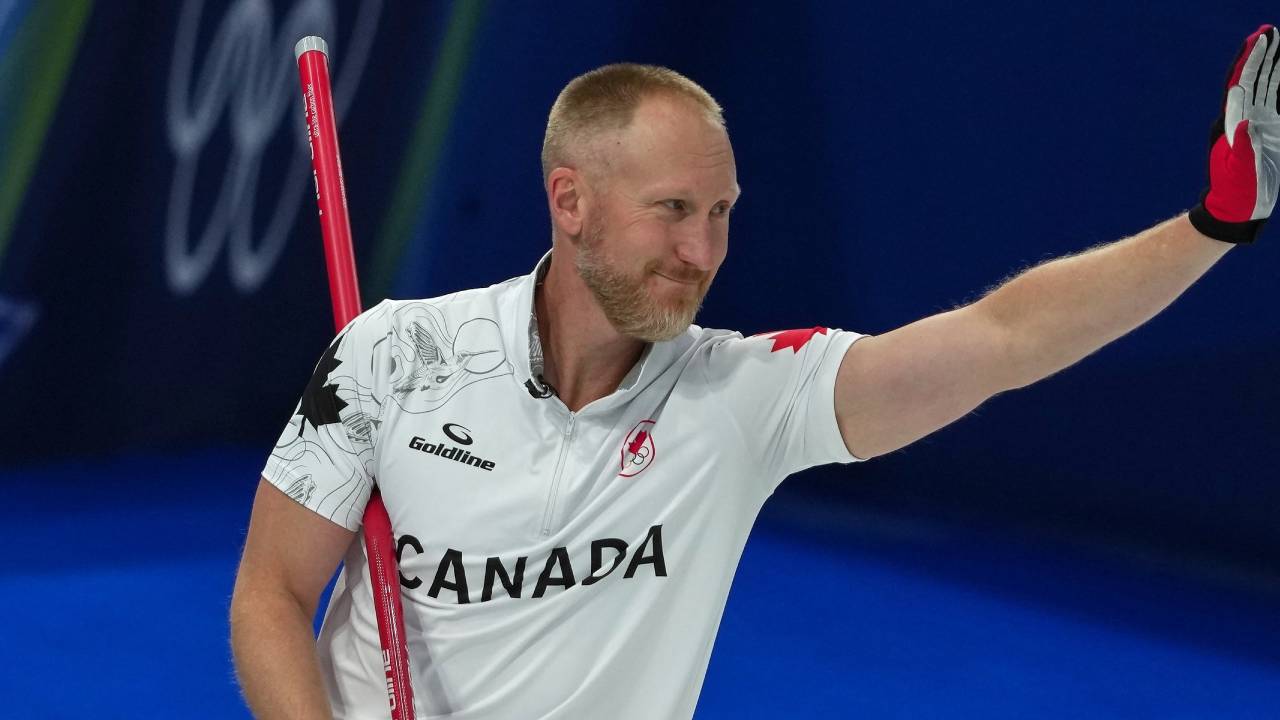
Canada’s Team Brad Jacobs fell to Norway’s Team Magnus Ramsfjell 8-6 on Thursday in what was a win-and–in game for the Norwegians to reach the semifinals. With the loss, the Canadian rink finished the 10-team round-robin at 7-2.
Canada, which was locked into second, will again face Norway in the semis on Thursday at 1:05 p.m. ET / 10:05 a.m. PT (CBC Gem, Sportsnet+).
Entering the final draw on Thursday morning, there were many different playoff scenarios to figure out who the top four teams were going to be with only Canada and Switzerland’s Team Yannick Schwaller qualified.
Advertisement
Four teams, including world No. 1 ranked Great Britain’s Team-Bruce Mouat, which was idle, were gunning for the final two spots. Italy, Norway and the idle U.S. also were in the hunt.
Italy’s 9-5 loss to Switzerland sealed the final spot for Mouat, who will battle the Swiss in the other semi at the same time as the Canada-Norway game.
The first five ends for the Norwegians couldn’t have gone any better as they cruised to a 7-2 lead after Ramsfjell made timely hits to score big ends and limit Canada.
In the second half, things changed as the Norwegians played very sloppy sixth and seventh ends with poor strategic decisions to let Canada score four and make the game 7-6.
Advertisement
However, Norway held on to just barely edge the Canadians.
Canadian spare Tyler Tardi played the full game to keep Ben Hebert, 42, who has been giving it his all on the sweeping front, rested for the semifinal.
In the other game of importance, Italy’s Team Joel Retornaz needed to beat Switzerland to earn its playoff spot, but a massive three-ender in the seventh end by the Swiss ruined any chance the host country had.
Semifinal winners go to the gold-medal game on Saturday and the losers will face off for bronze on Friday.
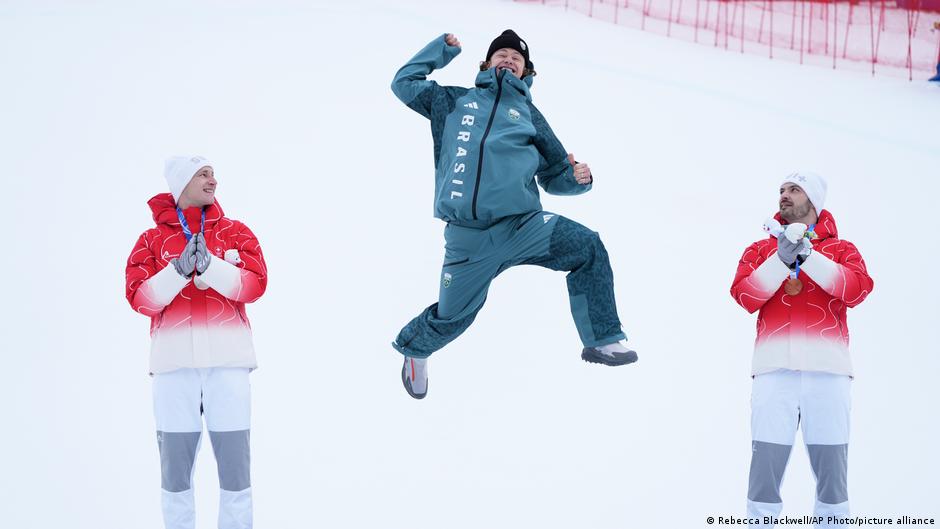
After winning gold in Italy, becoming the first South American to win a Winter Olympic medal, Lucas Pinheiro Braathen said: “I just hope that Brazilians look at this and truly understand that your difference is your superpower.”
Pinheiro Braathen, who competed for Norway in the 2022 Winter Olympics and is the son of a Brazilian mother and a Norwegian father, is far from the only athlete with mixed nationality. However, his success reignited a long-standing debate about nationality and identity at the Olympics.
The five factors affecting Olympic nationality
Gijsbert Oonk is a professor at the Erasmus University of Rotterdam who specializes in global history, sport and the migration of athletes and national identity. The Dutchman says there are several important stakeholders to consider when discussing nationality in sport.
Individual athletes want to compete at the top level, but may find themselves caught between a sending state which wants to retain them after investiging in their training and career, and a receiving state that might challenge a medal and thereby increase its prestige. Then there are the sports federations which wish to create a level playing field on the international stage, and the audiences who want to feel connected to their sporting heroes.
Advertisement
“There is a competition on who decides on belonging,” Oonk told DW.
“States provide you with citizenship, but now in sports, states increasingly provide certain fast-track citizenship procedures that normal people don’t have access to.”
Karen McGarry is an associate professor at McMaster University in Hamilton, Canada, who specializes in the anthropology of sport. McGarry believes one of the most decisive factors is the desire to compete at the elite level.
“In international sporting competitions like the Olympics, athletes will increasingly move to whatever country provides them with the most resources, incentives or chances of competitive success,” McGarry told DW.
Advertisement
“The current French Olympic champion in ice dancing, Laurence Fournier Beaudry, has competed for Canada, Denmark and France. Some fans view such practices as selfish, overly individualistic, or not in keeping with a more sociocentric ‘Olympic’ mentality that position the ‘nation’ at the heart of the competition, others are indifferent.”
Laurence Fournier Beaudry (top) has competed for multiple nations at the OlympicsImage: Bernat Armangue/AP Photo/dpa/picture alliance
The International Olympic Committee’s (IOC) charter states that an athlete who has represented one country at the Olympics or another major international competition must wait three years before representing another.
But as socio-economic and political climates change, so does the perception of nationality, particularly in sport. According to a news report in The Moscow Times, over 30 Russian athletes who changed their sporting nationality are competing for other countries in Italy this month.
“I’m from Canada, for instance, and Canadian patriotism and nationalism is currently very high, largely as a form of resistance to threats of tariffs and political takeover from (US president) Donald Trump,” McGarry explained.
“When political tensions escalate, for instance, nations often become insular, exclusionary, and nationalistic, which can spill over to the Olympic games, particular with reference to media coverage.”
Changing nationality is not a new phenomenon. Perhaps more interesting is that the notion of representing nations is not what the Olympics was founded on.
“In the beginning there were obviously no regulations,” Oonk said. “The whole idea was that actually, athletes should represent themselves, not a country or a king.”
Advertisement
Indeed, it was Baron Pierre de Coubertin, the co-founder of the IOC, who said: “The true Olympic hero is, in my view, the individual adult male.”
While his idea in terms of gender is outdated, the focus on the athlete rather than the nation is intriguing. But eventually countries were asked to select their best athletes and send them, and that’s when things began to change.
“And here you see the countries coming in, with their interests, financial and political aspects, and the importance of the flag and the hymn,” Oonk explained.
Furthermore, Oonk believes the media creation of the medal table, which came along during the 1920s and 30s when the Olympics started to become more accepted as an event and the competition between the United States and the British became more intense, also aided the development of competition between nations.
Advertisement
Nevertheless, even in the face of increased migration from the 1980s onwards and the mobility of international athletes in terms of training and development, the cultural construct of nationality has remained valuable.
“Nationality and nationalism have a market value in domestic contexts,” McGarry said.
“Olympic corporate sponsors, for instance, recognize the value of showcasing their athletes as ‘homegrown’ athletes to appeal to a certain kind of domestic nostalgia for ‘national’ athletes.”
Audience role not to be underestimated
Perception is not to be underestimated. The way the world views an athlete plays a huge role in either being accepted or dismissed.
“Audiences are very nationalized because they are fed by the national language and the national media,” said Oonk, who added that the way national history is taught in schools also plays a key role.
Advertisement
“The idea of nationality and belonging is kind of hyped into what in academic areas we call an imagined community. ‘I don’t know that sports person, but he’s one of us, he speaks my language… However, from a really academic and more philosophical point, who cares? These are individual athletes trying to do their best and trying to skate as fast or whatever as they can.”
Ultimately, with so many factors at playthis debate promises to continue to burn brightly in the years ahead. Right now marks perhaps a real reflection point when it comes to what it means to represent a country at the Olympics.
“It’s an interesting time because, while we are seeing the rise of populism and insular forms of nationalism on the global political stage, we also see that many people increasingly view their identities as cosmopolitan and fluid, including national affiliations,” noted McGarry.
NEW DELHI: The Karnataka State Cricket Association (KSCA) confirmed on Thursday that the upcoming Ranji Trophy final between Karnataka and Jammu and Kashmir will be played in Hubballi. The move has been made to allow safety upgrade work at the M Chinnaswamy Stadium in Bengaluru to progress faster.The final will begin on February 24.“KSCA had the option of hosting this prestigious final either at the M Chinnaswamy Stadium, Bengaluru, or at the KSCA Hubballi grounds. After careful evaluation and detailed consultations, the Association, in coordination with the Board of Control for Cricket in India, has taken a considered and strategic decision to stage the final at Hubballi,” said Vinay Mruthyunjaya, the KSCA official spokesperson.He said infrastructure and safety upgrade work is in progress at the Bengaluru venue as per recommendations of a state-appointed expert committee and other authorities.“Several spectator gates and access points are currently being dismantled and widened, along with other critical improvement works.”“In view of these ongoing developments, it would not have been feasible to ensure the high-quality match-viewing experience and spectator convenience that a marquee fixture such as the Ranji Trophy Final deserves,” said Mruthyunjaya.He added that the shift also allows a major match to be staged outside Bengaluru, in line with the vision of the newly elected KSCA managing committee led by Venkatesh Prasad.“This initiative is aimed at promoting cricket across the State, nurturing regional fan engagement, and strengthening the sporting ecosystem beyond Bengaluru,” he added.
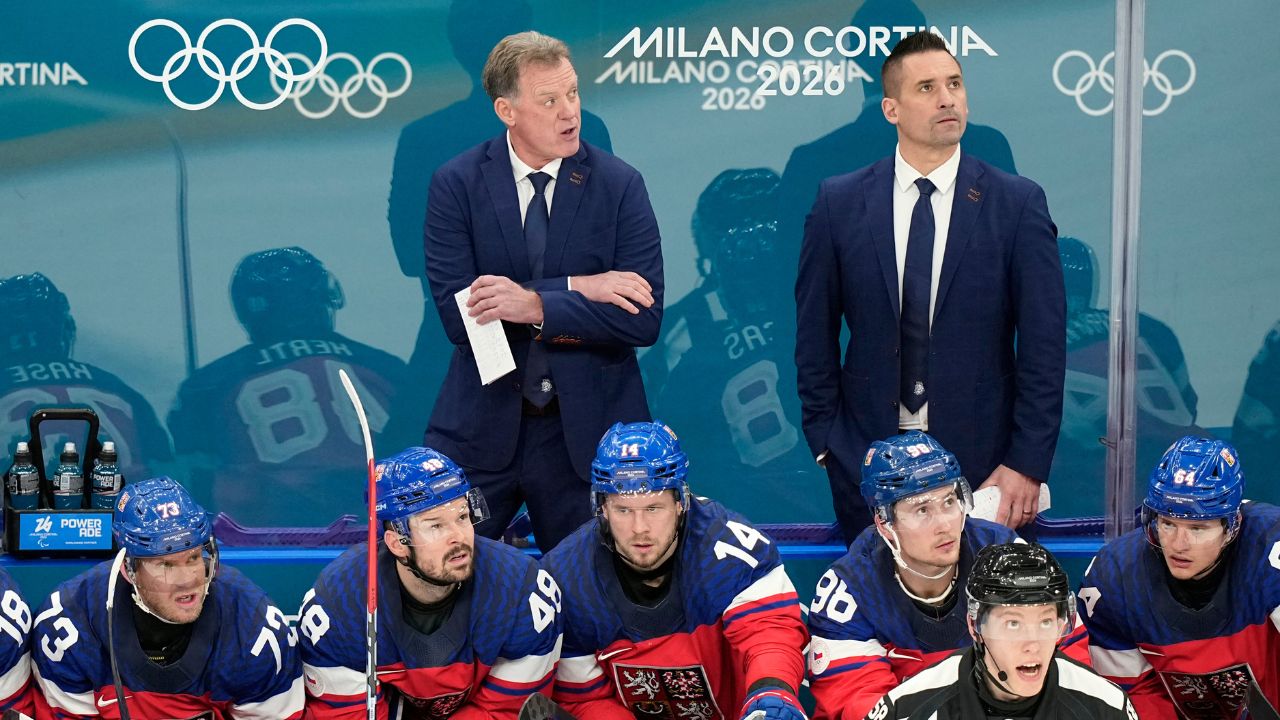
Team Czechia’s head coach, Radim Rulík, was livid with the officiating in Wednesday’s hard-fought 4-3 overtime loss to Canada in the Olympic quarterfinal.
“The referees really worry me. What they’re allowing against us is unacceptable. After every game, we send them two or three clips where they confirm that the opponent should have been penalized. I don’t understand it. I just don’t get it. I feel like everyone is afraid to call anything against Canada,” Rulík told Czech reporters upon elimination (and translated here by RonoHockey.com).
“We were basically playing against six players. I don’t want to make excuses, and no one has to agree with me, but the video backs me up. In this respect, it’s not a fair tournament. It was happening to us even against Denmark. The mix of NHL and European referees hasn’t worked — everyone calls the game differently.”
The game was officiated by American Chris Rooney (NHL) and Sweden’s Mikael Holm (SHL). Canada was awarded three power plays, Czechia two, and the stripes did not settle on a standard.
Advertisement
Canada’s Macklin Celebrini was whistled for interference on inconsequential play that would have been a Czech icing. David Pastrnak scored on the ensuing power play.
Sidney Crosby was later interfered with blatantly, checked into the board by Ondrej Palat in the neutral zone, and no call was made.
Radko Gudas was given a ticky-tack roughing penalty for simply finishing a check, but that appeared to be a makeup call for his earlier aggression toward Crosby, whom he injured.
“I’m really sorry about it. The guys deserved a top-level performance from the referees. They always admit afterward that we were right, but nothing ever changes,” Rulík continued.
Advertisement
“We should have had power plays against Canada. But they were afraid Pasta or (Martin) Necas would score another power-play goal. And if Gudas was penalized, then (Drew) Doughty should have been too for the hit on Pasta.”
Ironically, the most egregious missed call came on Palat’s third-period goal.
Eight Czech skaters were on the ice. Six gathered to celebrate the go-ahead marker.
And still, there was no call for too many men.
Advertisement
“Not aware at all,” Canada’s Connor McDavid said, twice.
“I’m not sure how we missed it. Nobody even mentioned it until after the game. So, we’ve got to do a better job paying attention. That being said, the refs do too. Everybody can. I feel like everybody missed it. It was kind of a weird play that way, but we have to pay more attention.”
An IIHF spokesperson told The Athletic ’s Pierre LeBrun Thursday that the goal was reviewed. The IIHF saw what we all did. The refs missed a clear infraction, but mistakes happen.
Had Canada not rallied to victory, the unspotted extra Czechs would’ve turned this mistake into international uproar. In real time, however, it was hardly noticed.
Advertisement
“We didn’t know until after the game,” Doughty said.
“Not a single player, coach knew until after the game. Nobody. Yeah, we talked about it. We’re like, ‘How did that get missed?’ But, I mean, we all missed it. It makes sense that the refs could miss it too. S— happens.”
Canada’s Sam Bennett, who was too ill to play, can’t believe he didn’t count the extra skaters from his perch in the arena’s stands.
“I didn’t, actually,” Bennett said.
Advertisement
“I’m surprised, because I was watching that game pretty intensely. But I missed that.”
It may seem like Scottie Scheffler wins every tournament he plays. Especially after the World No. 1 won his first start of the season. But while he finished T4 at last week’s AT&T Pebble Beach Pro-Am, Scheffler didn’t win. Collin Morikawa did.
Morikawa’s victory was the culmination of a lengthy pursuit to refine his game, and the payoff “took a lot of work” and “trial and error,” as he explained in his press conference ahead of this week’s 2026 Genesis Invitational.
But the two-time major champion also shared a major revelation he’s had about golf that helped him top the World No. 1 to win his first PGA Tour event since 2023.
How Morikawa refined his game to end winless drought
From 2019-2023, Morikawa captured six victories, with two major titles among them (at the 2020 PGA Championship and 2021 Open Championship). But after winning the 2023 Zozo Championship, Morikawa’s elite game seemed to disappear.
Advertisement
He went winless in 2024, and then again failed to earn a PGA Tour title in 2025. He still finished second in the 2024 FedEx Cup standings but he fell to 19th last season.
“You can look and say, well, what’s wrong; why are you going down these paths, to try and figure it out and trying to get — because I know deep down, I’m not able to go and play that freedom of golf unless I figure something out,” Morikawa explained.
Advertisement
But sometimes overthinking can become a detriment to improving one’s game, as Morikawa said happened to him earlier in his career.
“Now, a lot of the times I think you can get in your own way where you start adding too much and you’re trying too much. I think if I look back early on in my career, yeah, maybe you tried to get better in one area but then you forgot to keep getting better in another area, and you lose a little bit,” Morikawa said. “The senses and the style of golf, you kind of lose that, of who you are.”
However, Morikawa was quick to explain than during his recent winless drought, he didn’t “get in his own way.” Instead, he had to examine and work on every part of his game to reach a point where he could play “free golf” on the course, which finally happened at Pebble Beach.
“I had to keep trying things because if I didn’t, I wouldn’t be able to go out and play that free golf for four days,” Morikawa said. “I played it for two days last week [at the AT&T Pebble Beach Pro-Am], and it obviously won me the tournament. But I want to be able to keep going out, week after week, and play four days of golf like that.”
Advertisement
Morikawa’s revelation: ‘Biggest thing’ I’ve learned about beating the best
While Morikawa admitted he still has plenty of work to do to be completely satisfied with his game, his Pebble Beach win proved that his intensive improvement process is working.
And a major revelation he had about competing against the best golfers in the world had a lot do with his recent success.
That revelation? If you want to beat the best players like Scheffler, you can’t copy what they’re doing. Instead, you have to learn what works best for you and pursue greatness within that framework.
“What I’ve learned the biggest thing is you just cannot copy anyone else. You might be able to take a small little bit, but just because Scottie [Scheffler] is doing something great does not mean I have to go do it,” Morikawa revealed.
Advertisement
He continued: “I think that’s something I have to keep reminding myself is what I’m doing is my thing, and that’s — hopefully I’m putting my best ability to go do it. It doesn’t mean I can’t take good things out of what he’s doing, but I think too many people try and copy that exact whatever formula that says, hey, this is how you’re going to go play good golf.”
Ironically, Scheffler is perhaps the best proof of Morikawa’s point. He’s ridden a completely homegrown swing to a stretch of dominance only comparable to Tiger Woods’ greatest heights.
Collin Morikawa explains why he doesn’t use a yardage book at home
Earlier in his pre-tournament press conference at Riviera, Morikawa was asked this: if he were to stop overthinking his game and give up on the constant improvement process he had described in detail, would he still be good at golf?
In response, Morikawa admitted much of his practice comes from “playing with the guys at home.” But he also explained the massive difference between rounds with friends and tournament golf.
“I think what you’re describing is kind of playing when you’re at home sometimes and playing with the guys. A lot of my practice is playing against the guys at home. It doesn’t matter the amount of money you’re playing for, doesn’t matter what’s on the line. It’s always different than playing in a tournament. It is,” Morikawa explained.
To highlight his point, he revealed another interesting factoid about his practice: When he plays casual rounds, he never uses a yardage book.
“Conversing between your caddie, looking at yardage — I don’t look at a yardage book at home. I don’t know anyone looks at a yardage book when they’re at home. If they do, props to them,” Morikawa joked. “But it’s a very different rhythm of things. I think you just have to be able to, in a tournament, really hone in on those skills and figure out what works for you.”
Advertisement
Based on last week’s triumph at Pebble Beach, Morikawa is finally feeling dialed in.
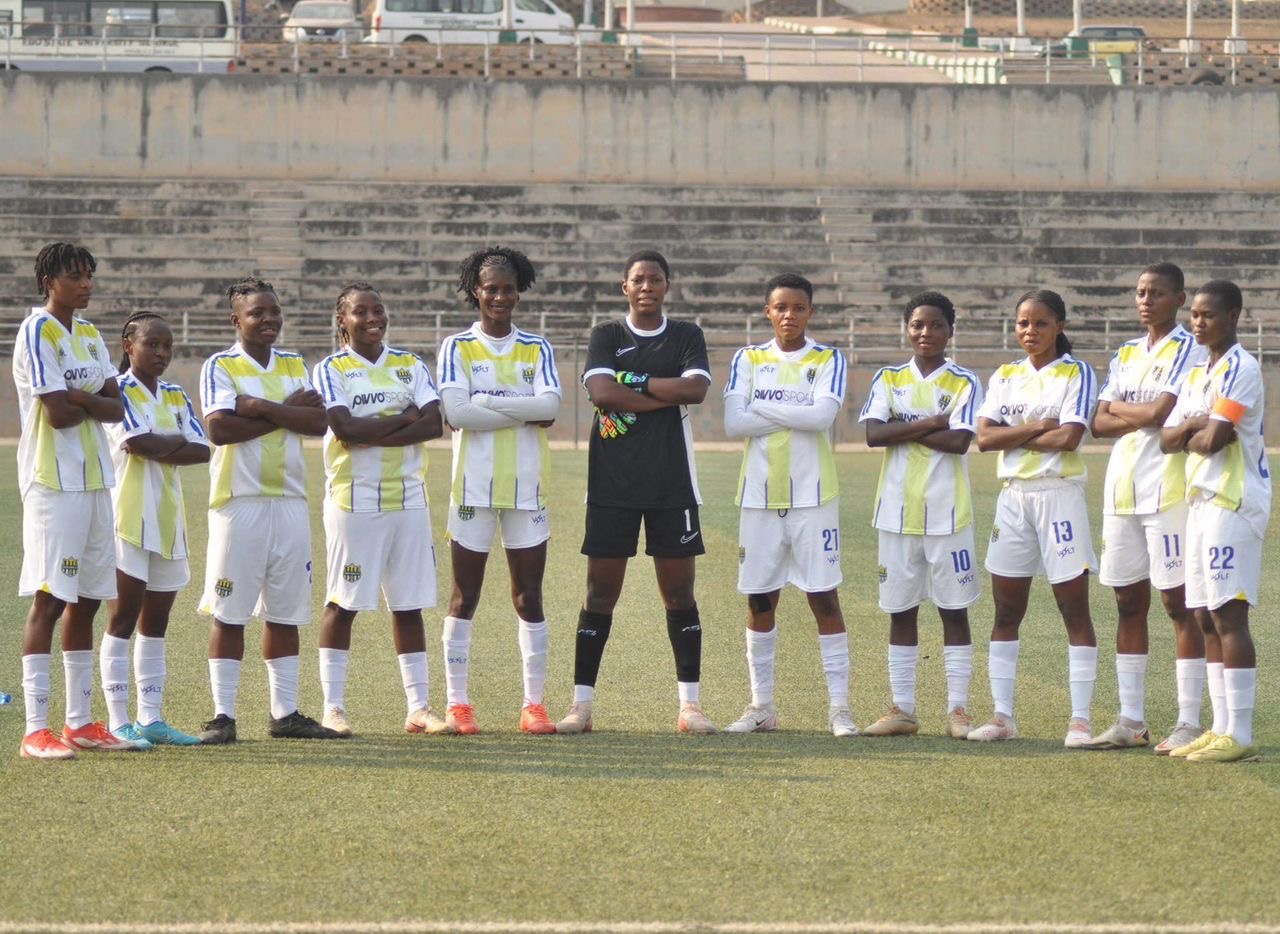
The Nigeria Women Football League (NWFL) has fined Osun Babes FC ₦2.5 million after their 2025/2026 Premiership match against FC Robo Queens failed to hold in Lagos.
The match, scheduled for Wednesday, 18 February 2026, at Onikan Stadium, was called off because Osun Babes did not provide an alternative set of jerseys, despite a confirmed colour clash with the home team. As a result, the officials awarded a walkover to FC Robo Queens.
The league said Osun Babes violated its rules by failing to use their second-choice kit for an away match and by not honouring the fixture without a valid reason. The club was fined ₦1 million for the jersey breach and ₦1.5 million for failing to play the match.
Advertisement
NWFL Chief Operating Officer, Modupe Shabi, said the league would continue to enforce its rules to maintain professionalism and protect the integrity of the competition. The league also warned clubs to follow all regulations to avoid future sanctions.
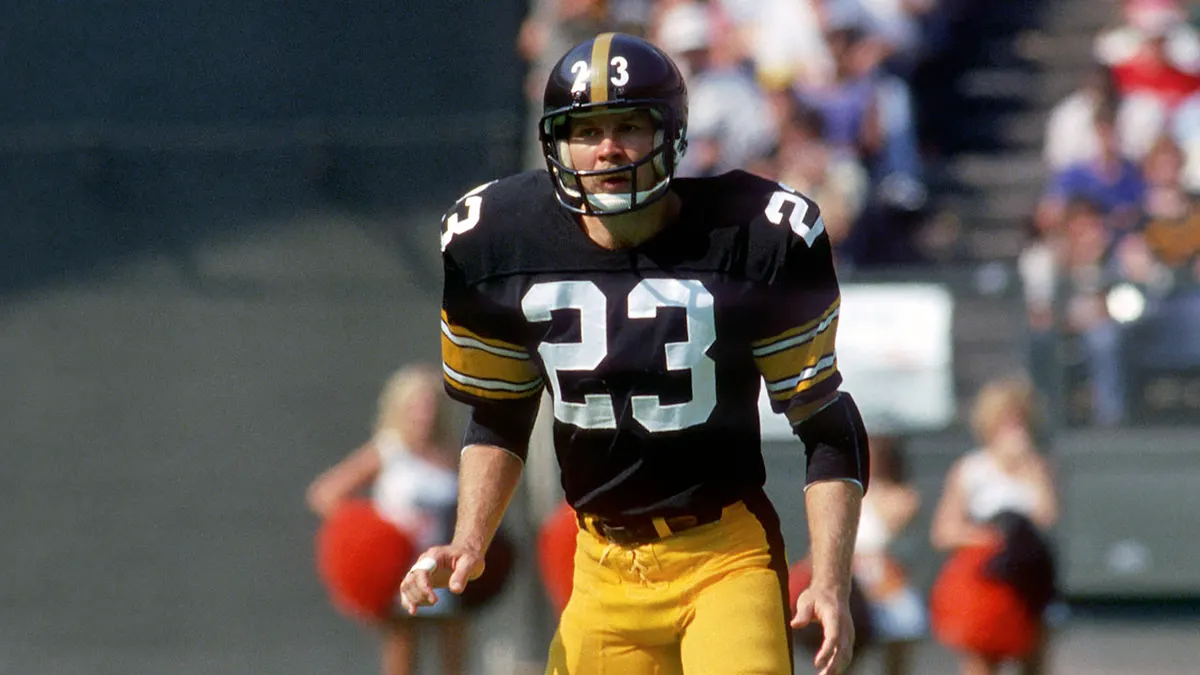
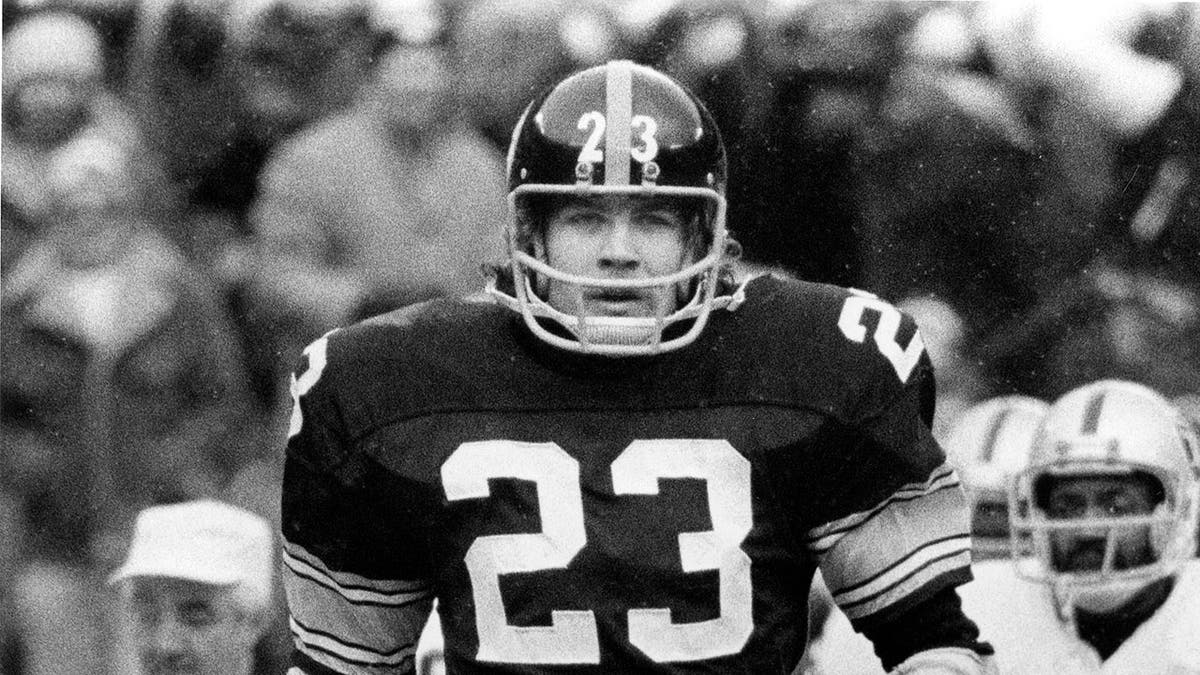
Former Pittsburgh Steelers defensive back Mike Wagner, a four-time Super Bowl champion with the franchise during its “Steel Curtain” dynasty, has died at 76.
The Steelers announced Wagner’s death on Wednesday night with a statement.
“We are deeply saddened by the passing of Mike Wagner, a tremendous player and an integral part of some of the most successful teams in Pittsburgh Steelers history,” Steelers owner Art Rooney II said in a statement.
Safety Mike Wagner of the Pittsburgh Steelers looks on from the field during a game against the Cincinnati Bengals at Riverfront Stadium circa 1979 in Cincinnati, Ohio. (George Gojkovich/Getty Images)
No cause of death has been provided.
Wagner was a two-time Pro Bowler during his 10-year career for the Steelers, racking up 36 interceptions and five forced fumbles from 1971-80.
The Steelers took him 268th overall in the 1971 NFL Draft, which was the 11th round at the time.
“Mike played a key role on our championship teams of the 1970s. As a member of four Super Bowl-winning teams, his toughness and consistency were paramount to our secondary. His contributions on the field were significant, but it was also his steady presence and team-first mentality that truly defined him,” Rooney’s statement continued.
“On behalf of the entire Pittsburgh Steelers organization, we extend our heartfelt condolences to Mike’s family. He will always be remembered as a champion, a great teammate, and a proud member of the Steelers family.”
Wagner’s football journey is a unique one leading up to the NFL Draft.
Advertisement
Safety Mike Wagner of the Pittsburgh Steelers returns to the sideline holding the football after intercepting a pass against the Oakland Raiders during the 1975 season AFC Championship playoff game at Three Rivers Stadium on Jan. 4, 1976 in Pittsburgh, Pennsylvania. (George Gojkovich/Getty Images)
He went to Western Illinois University, but he didn’t play for the football team until he asked the head coach for a tryout after not getting interest to compete at any other school.
Western Illinois coach obliged, and Wagner made the team. However, he was still waiting tables as a means to make money while playing for the team.
The Steelers would eventually take a shot on him, but the late-round pick wasn’t an afterthought in his rookie season.
Wagner started at safety following an injury on the depth chart, and he wouldn’t relinquish his starting position from there.
Advertisement
He started in 116 of his 119 career games, and in 1973, he led the league with eight interceptions.
Mike Wagner, former safety for the Pittsburgh Steelers, looks on from the sideline during a game between the New Orleans Saints and Pittsburgh Steelers at Heinz Field on Nov. 30, 2014 in Pittsburgh, Pennsylvania. (George Gojkovich/Getty Images)
Among those career interceptions were the game-sealing one against the Minnesota Vikings, picking off the great Fran Tarkenton to give the Steelers the Super Bowl IX victory — the franchise’s first.
In 2020, the Steelers had Wagner enter its Hall of Honor and continued to be around the organization until his death.
“It offers the perfect combination of grueling climbs and exhilarating descents,” explains Tatjana Paller.
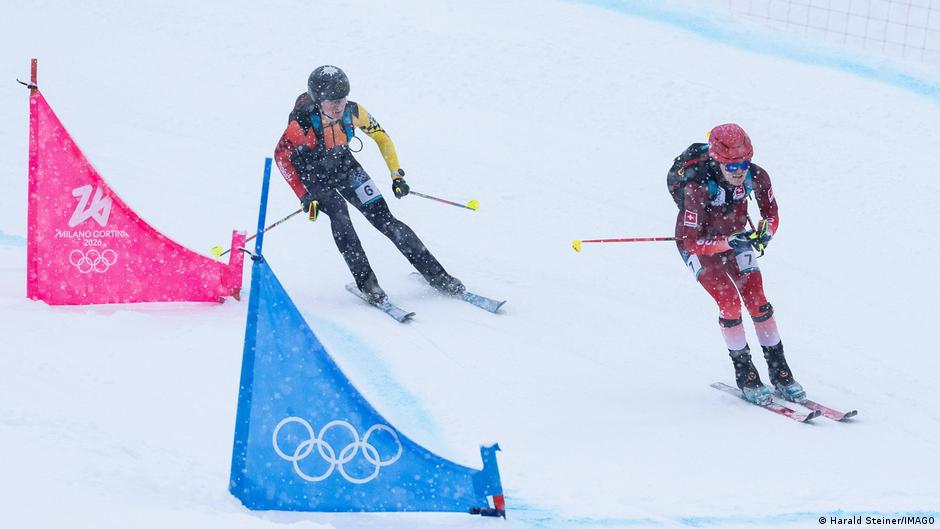
The 30-year-old German finished fourth in the Olympic sprint and will also compete in the mixed team event of ski mountaineering, or” skimo” for short.
Last year, Paller won bronze in the sprint at the World Championships in Morgins, Switzerland. She has been a ski mountaineer since 2020; before that, she was a successful junior track cyclist.
Paller believes there are similarities between the two sports.
Advertisement
“Endurance sports are endurance sports. You either have a motor, or you don’t. But ski mountaineering is even more strenuous. At least you’re sitting down when you’re cycling,” says Paller.
A major facet of the competition is the ascent on skis Image: IPA Sport/ABACAPRESS/IMAGO
Ski touring
Skimo is the competitive version of ski touring, which is becoming increasingly popular in the European Alps due to skyrocketing lift ticket prices. The German Alpine Club (DAV), Germany’s national mountaineering association, estimates the number of ski tourers in Germany alone at more than 600,000, which is more than three times as many as at the turn of the millennium.
Ski touring has become a popular sport among amateur athletesImage: Moritz Wolf/imageBROKER/IMAGO
On a classic ski tour in the mountains, you don’t use a lift but ascend on skis and then ski down ungroomed slopes. However, many now also ascend along the edge of actual ski slopes and then ski down them.
Special bindings, climbing skins under the skis
The skis are equipped with special bindings that allow you to lift your heels while ascending. For the descent, the heels can be locked in place using the bindings, just like on regular downhill skis.
To prevent the skis from slipping back while ascending, climbing skins made of synthetic or natural fibers are attached to them. These are either glued on or adhere to the skis on their own. Once you reach the top, you remove the skins and can ski down the hill.
There are now also so-called hybrid skins. They hold almost as well as glued-on skins but are as easy to attach as self-adhering skins.
Advertisement
Skimo athletes – like Germany’s Toni Palzer – need to remove or attach climbing skins in a matter of secondsImage: Herbert Berger/imageBROKER/IMAGO
“I use hybrid skins for the sprint and mixed relay because you can peel them off quickly,” Paller explains.
The procedure only takes a few seconds.
Light, narrow skis
The skis, which are carried on the skiier’s back during a mandatory foot climb, weigh between 700 and 800 grams (24.7 – 28.2 ounces), making them extremely light. They are also wider than cross-country skis but narrower than normal downhill skis: around 6.5 centimeters wide (2.6 inches) in the middle. The minimum ski length is 1.50 meters (4′ 11″) for women and 1.60 meters for men.
In the sprint in Bormio, a 610-meter course awaits the athletes, with a 70-meter elevation gain. The race is divided into:
Advertisement
• The ascent on skis
• A carrying section where the athletes, with their skis on their backs, must climb a set of stairs
• Another short ascent phase
•The final descent, where the gates are spaced approximately the same distance apart as in a giant slalom race
Advertisement
Speed and tactics
The transition phases are crucial, where every second counts. One lap lasts between 2:30 and 3:30 minutes. Six athletes compete against each other in each heat. The two fastest advance to the next round.
In the mixed relay, one female and one male athlete per team alternate, completing two laps each. Here, it’s not just about speed, but also about the right tactics and good teamwork.
“We push each other really well,” says Tatjana Paller, who competes in the relay with 23-year-old Finn Hösch. They are both good individual athletes, adds Hösch.
Advertisement
“But it’s a different kind of pressure when you know you’re influencing not just your own result, but the team’s overall performance.”
First World Championships in 2002
The sport’s roots go back more than 100 years. One of its forerunners was the so-called military patrol, which made its Olympic debut at the first Winter Olympics in Chamonix in 1924. In this event, teams of four—in uniform and with gear in backpacks—had to complete a 30-kilometer (18.6 miles) course with considerable inclines on skis and then shoot at targets—similar to the biathlon.
Once the athletes have reached the top, it’s time to turn into a conventional downhill skiierImage: Davide Vaninetti/IPA Sport/IMAGO
Skimo in its modern form, however, is still relatively young. The first World Championships were held in 2002, and the World Cup premiered in 2004.
Distance competitions not yet Olympic
Skimo comprises of four disciplines, but medals will only be awarded in the two fastest this week in Bormio: the women’s and men’s sprints on Thursday, and the mixed relay on Saturday.
The other two disciplines are not yet Olympic: the so-called individual, with up to 1,900 meters of elevation gain, the longest competition distance, and the vertical, which consists of just one long ascent and no descent.
Advertisement
“The original form of ski mountaineering is the longer one. That’s why I can understand everyone who misses distance competitions in the Olympic program,” says sprint specialist Paller.
“But for us, it was a stroke of luck that the sprint competitions were chosen.”
Whether skimo will also be an Olympic sport at the next Winter Games in 2030 in the French Alps is not yet clear, but it does seem likely, given the current boom in ski touring.
This article was originally published in German.
Advertisement
Concerns about shady deals ahead of 2026 Winter Olympics
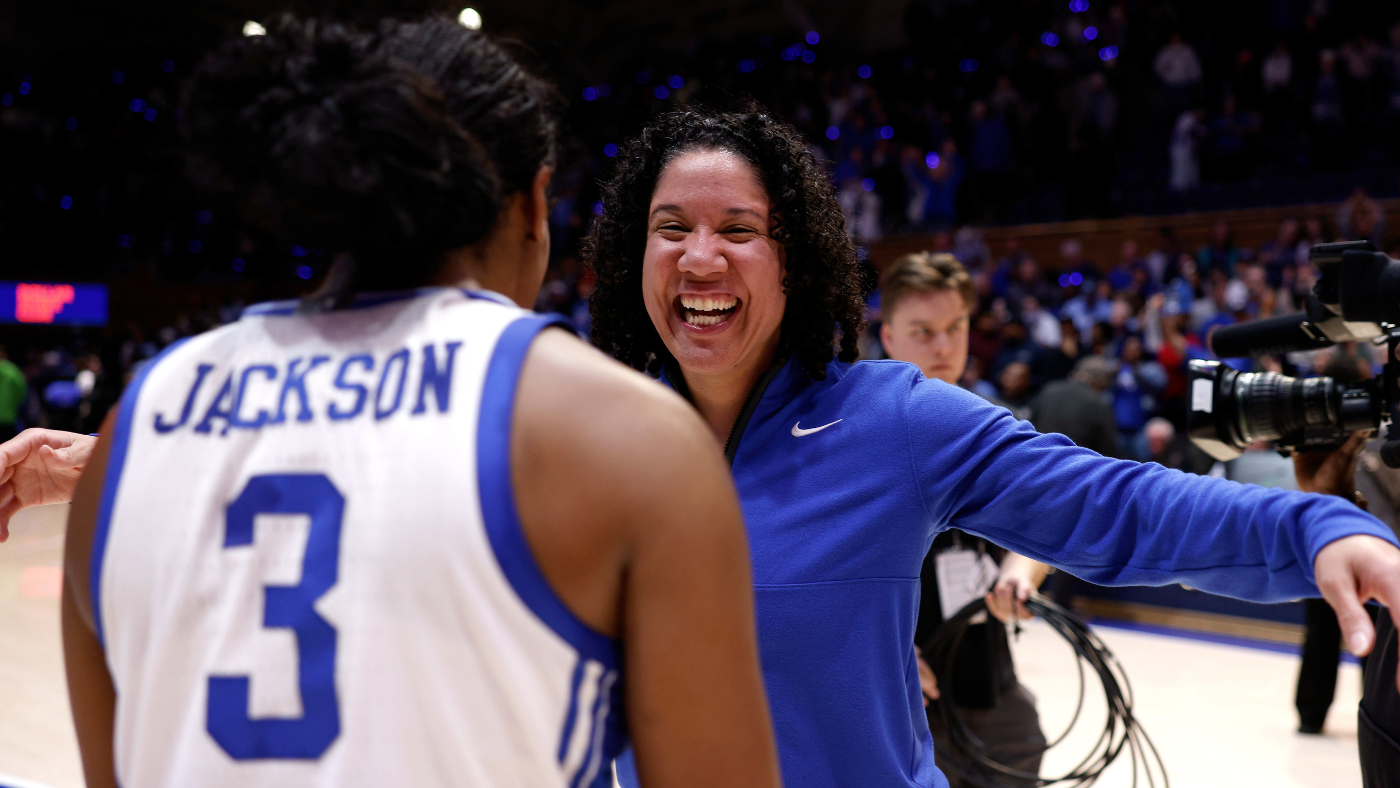
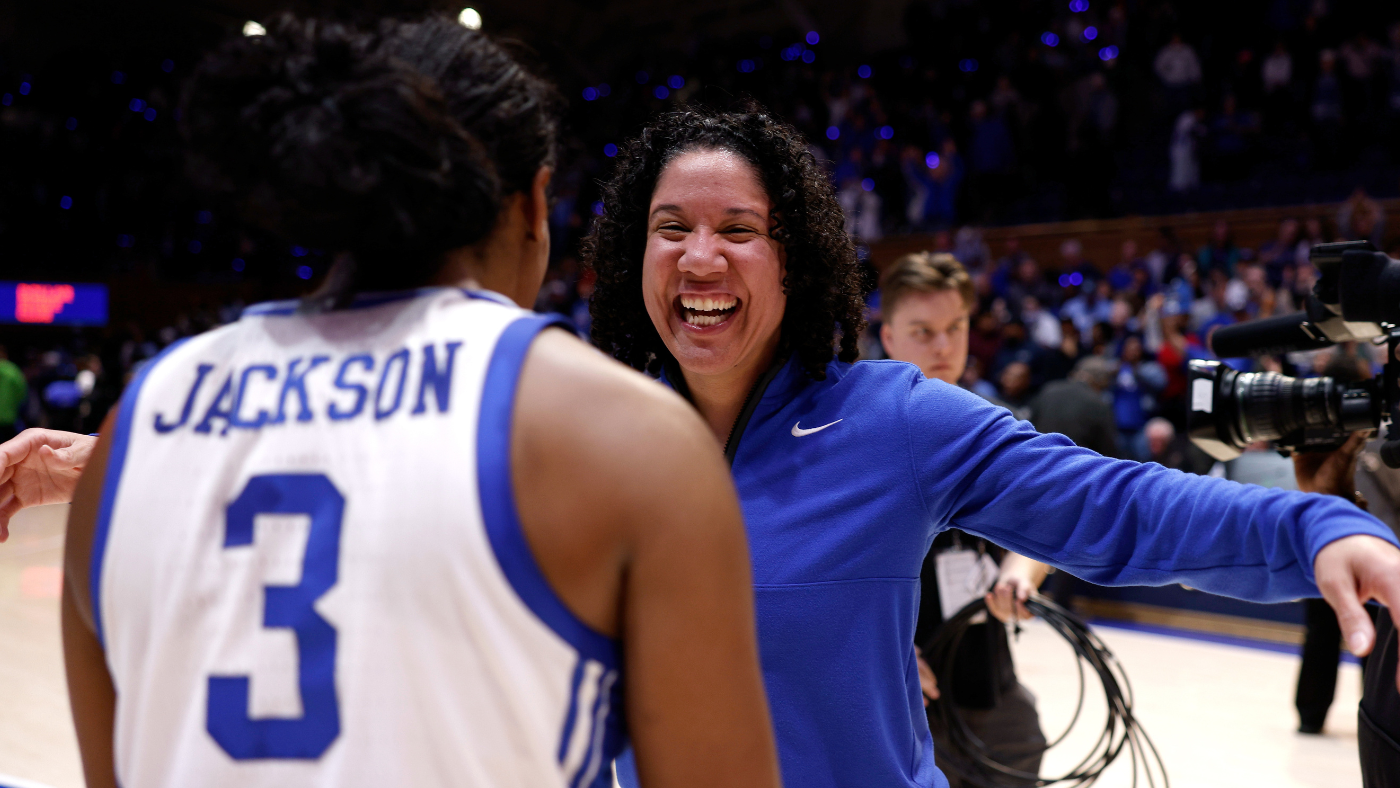
Last Sunday afternoon, the Duke Blue Devils beat the North Carolina Tar Heels, 72-68 in front of a raucous, sold-out crowd at Cameron Indoor Stadium. The win kept Duke undefeated in ACC play and atop the conference. When the buzzer sounded, head coach Kara Lawson beamed as she embraced her two seniors, Ashlon Jackson and Taina Mair, who capped off an emotional senior night by leading the team in scoring and making key plays down the stretch to seal the win.
The postgame vibes on the court were completely different from those nine weeks ago, when Duke fell 93-77 to LSU for its fourth loss in a row to drop to 3-6 on the season.
Every basketball season has its ups and downs, but Duke’s arc — from being preseason No. 7; to being out of the top 25 all together by the third week of the season amid a stretch that included a humiliating road loss to a West Virginia team that played the entire second half with only one starter and four bench players due to ejections and a loss to a South Florida team that is currently No. 75 in the NET rankings; to its current 16-game winning streak and return to No. 9 in the rankings — has been one of the most extreme in recent memory.
So how exactly has Duke turned things around so dramatically? There’s never just one factor, especially in a team sport, but Lawson’s postgame presser gave some invaluable insight — just not for the reason you might think.
Advertisement
First, here’s Lawson’s response when a reporter asked what she said to her team back in November in the thick of their struggles.
I think what’s really important, whether you’re in a season of prosperity or you’re in a season of adversity … I think it’s really important that you stick to what’s real and true. What’s real and true in basketball? Film, analytics, what you see every day from your team. And when you stay focused and locked in on that, then you can give a real assessment of where you are and where you need to get to. Anything outside of that is irrelevant, right? Someone’s opinion doesn’t change whether you can do it or not. It’s just someone’s opinion. So to spend time and energy on that doesn’t serve you. And so the fastest way to get from a season of adversity to a season of prosperity is to lock in on what’s real and true. Figure out where you need to work and get better, and then it will turn at some point.
We don’t get to control the length of our adversity. That’s a frustrating thing about life. When we’re in adversity, we’re like, ‘OK, is it over yet?’ You wake up and you’re like, ‘Is it over yet?’ You don’t get to control that. You get to control who you are in it. That’s it. Who are you in adversity? That’s what you get to control. So what I focus on during that time, and what I encourage my players to focus on, is, ‘Who are we in this time, and where do we need to get to?’ And when you lock in on that, then you’re gonna have success at some point.
Her answer has struck a nerve with people, which isn’t a surprise. If you’ve paid any attention to Lawson over the years, you know she always has a deep reflection on life, work or personal growth on the tip of her tongue, even moreso than most coaches I encounter on the job, and her speeches frequently go viral.
But on Sunday, I wasn’t so much struck by the words she was saying, though they certainly were powerful. Rather, I was struck by how familiar they sounded.
Advertisement
Sure enough, when I went back and revisited her press conference after the LSU loss, I realized she gave the exact same message. When asked what she was telling her players, she said she was telling them the truth and getting them to focus on film and individual plays rather than wins and losses. She praised them for staying positive amidst the adversity.
If you’ve gone through adversity in your life … you know you want it to end right away. You know, most of us want adversity and go really quickly. Like, OK, it’ll be tough for half a day and then we’re done. And this has been tough for longer for us. Like, good! Good. Because this is what life is about. You don’t get to control the length of your adversity. All you get to do is control your attitude and your focus and just work like heck to try and change it. And so it’s such a great life lesson for us, and I think it will turn for us at some point and I think we’ll look back on this stretch as a formative part.
Again, she said this minutes after her team suffered its fourth loss in a row, a loss that dropped the preseason ACC favorites to 3-6. People were calling for her to be fired.
That consistency and commitment to the big picture have clearly served her players well. Because it wasn’t just Lawson whose Feb. 15 press conference sounded eerily similar to her Dec. 4 one.
“We’re in the mud right now, and that’s both physically and literally,” Jackson said after the LSU game. “We’re very uncomfortable right now, which is a good thing, because in March, everybody is on and popping, so the team that is most comfortable with being uncomfortable, they usually succeed.”
Advertisement
And after the North Carolina win?
“We got out of the mud,” Jackson said. “We all know how we started the season, but that was on purpose. How are you supposed to grow if you’re not used to playing this type of environment?”
Let’s be clear about one thing: Motivational words and self-help philosophies alone do not win games. Duke’s rebirth can be attributed to many things: Mair gaining confidence in a more assertive offensive role; the impressive development of redshirt freshman center Arianna Roberson; Riley Nelson’s move into the starting lineup; a relatively weak year in the ACC, to name a few. And it is far from a given that Duke will win the ACC tournament and make it back to the Elite Eight like it did last March. But after the way this team started the season, the fact that Lawson has them back in contention to achieve those things is a testament to her connection with her players.
“During that time, you know, Coach took a lot for us. It was not Coach. It was simply us. So we just really had to buy in and take accountability at some point. We couldn’t let her hold everything by herself. We had to have her back, because she always has our back,” Jackson said on Sunday.
Advertisement
“There’s not a thing in this world that I don’t love about Kara Lawson, even whenever she’s mad at me. She challenges me, she trusts me, she believes in me.”
He hadn’t sat on the Extreme Choice youngster in barrier trials before the debut, acknowledging the Chris Waller operation’s careful early judgments as the horse wasn’t tested rigorously in sessions.
“No-one overwhelmed me with confidence before the race because he’s a very casual customer at trackwork,” Lloyd said.
“But he got a lovely run and that enabled him to sprint well, and he did win quite comfortably.
Advertisement
“Hopefully he has switched on mentally from that and can race well again on Saturday.
Market leaders at $4 are Tulloch Lodge’s filly Shiki and Canonbury Stakes placegetter Confederation, with James McDonald loyal to the colt after their debut ride where he endured faults to stay competitive.
Advertisement
The Canonbury Stakes saw Michael Freedman runner Incognito as heavy favourite but fifth after palate displacement was identified post-race.
Steps have been taken by Freedman to correct it, and the Breeders’ Plate champ gets tongue control plus lugging bit for the weekend.
Check racing odds for the Silver Slipper Stakes on leading betting sites.
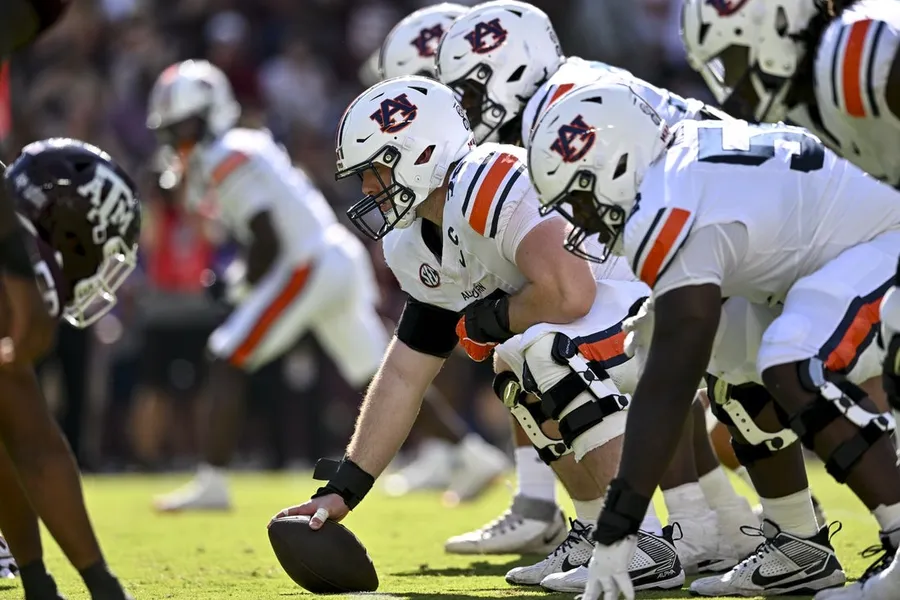
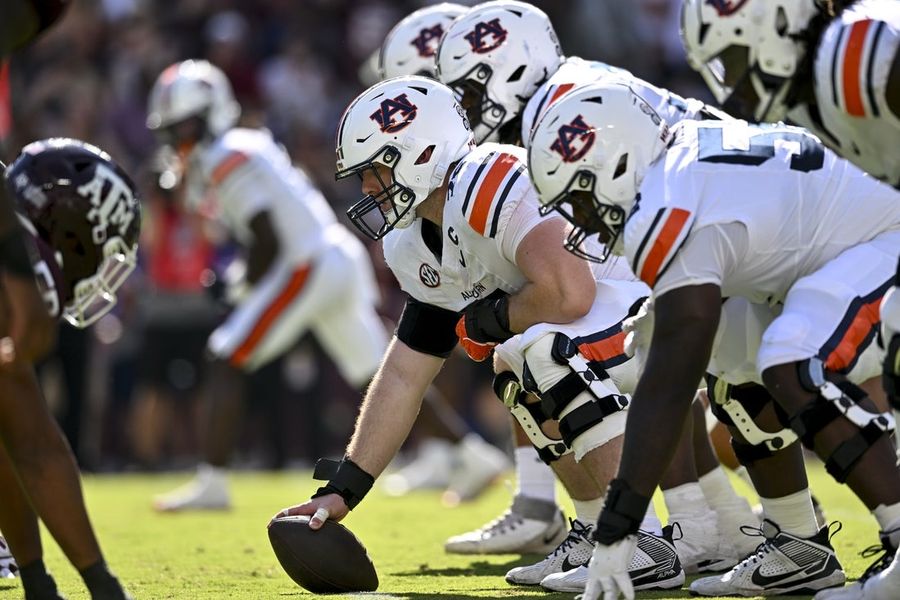
Sep 27, 2025; College Station, Texas, USA; Auburn Tigers offensive lineman Connor Lew (75) sets the ball against the Texas A&M Aggies at Kyle Field. Mandatory Credit: Maria Lysaker-Imagn Images
Ahead of the 2026 NFL Scouting Combine, Field Level Media draft analysts ranked the top prospects at every position.
Offensive linemen arrive in Indianapolis on Thursday to conduct interviews by request with teams and participate in medical exams.
Workouts begin Sunday, March 1, following media availability on Saturday, Feb. 28.
The top center prospects entering the combine are outlined below.
1. Connor Lew, Auburn
Advertisement
6-3, 303
Lew is a technician, natural leader and has pro-level awareness. He started 25 consecutive games before an ACL injury in October 2025.
2. Brian Parker II, Duke
6-5, 305
Advertisement
Transitioned from tackle to center. Polished blocker with easy movement in all directions. Has mental acuity and technical precision to become a great pro.
3. Jake Slaughter, Florida
6-4, 303
Advertisement
A multi-year starter and team captain with elite football IQ, refined technique and natural pass protection skills.
4. Logan Jones, Iowa
6-3, 302
Very good athlete with movement skills to thrive in a zone-blocking scheme.
Advertisement
5. Matt Gulbin, Michigan State
6-3, 316
Already 25 years old and average athletically, Gulbin is versatile with starts at guard and center.






;)
;)