Sports
Chloe Kelly: ‘Taking control of my own destiny was really important – sometimes you have to see the realness’

To understand Chloe Kelly’s year and the series of game-turning inventions that led to the historic successes in Lisbon and Basel, you have to go back to her bathroom floor in Liverpool and the toughest period of her life. Kelly could not get up from it, sick with anxiety and struggling with panic attacks, crushed by the feeling of not being in control of her own future. It was January 2025, a few months before the Euros, and Kelly was desperate to move away from Manchester City and to get more minutes on the pitch. Not just that, she needed to take charge again.
Even at her lowest, she knew the determination and talent were still there; what was missing was a sense of purpose and the joy she first felt dribbling a ball when growing up in the five-a-side street cages of west London. A journey that began by trekking across the city after school with Lotte Wubben-Moy to get to Arsenal’s academy, taking the underground, a train, a bus and finally a walk over the M25, was in danger of fizzling out as the hours ticked towards the transfer deadline. She felt as if the door to getting out was closing. At the age of 27, she was prepared to walk away and quit.
But, clearly, that was not Chloe Kelly’s year, not after a summer that was shaped by how both she and the Lionesses refused to bend or break but then rose above everything in their way.
To mark International Women’s Day, Kelly has been named top of The Independent’s influence list, in recognition of the role she played in England’s Euro 2025 triumph. The Lionesses successfully defended their European crown and became the first senior England side, men’s or women’s, to win a major tournament on foreign soil.

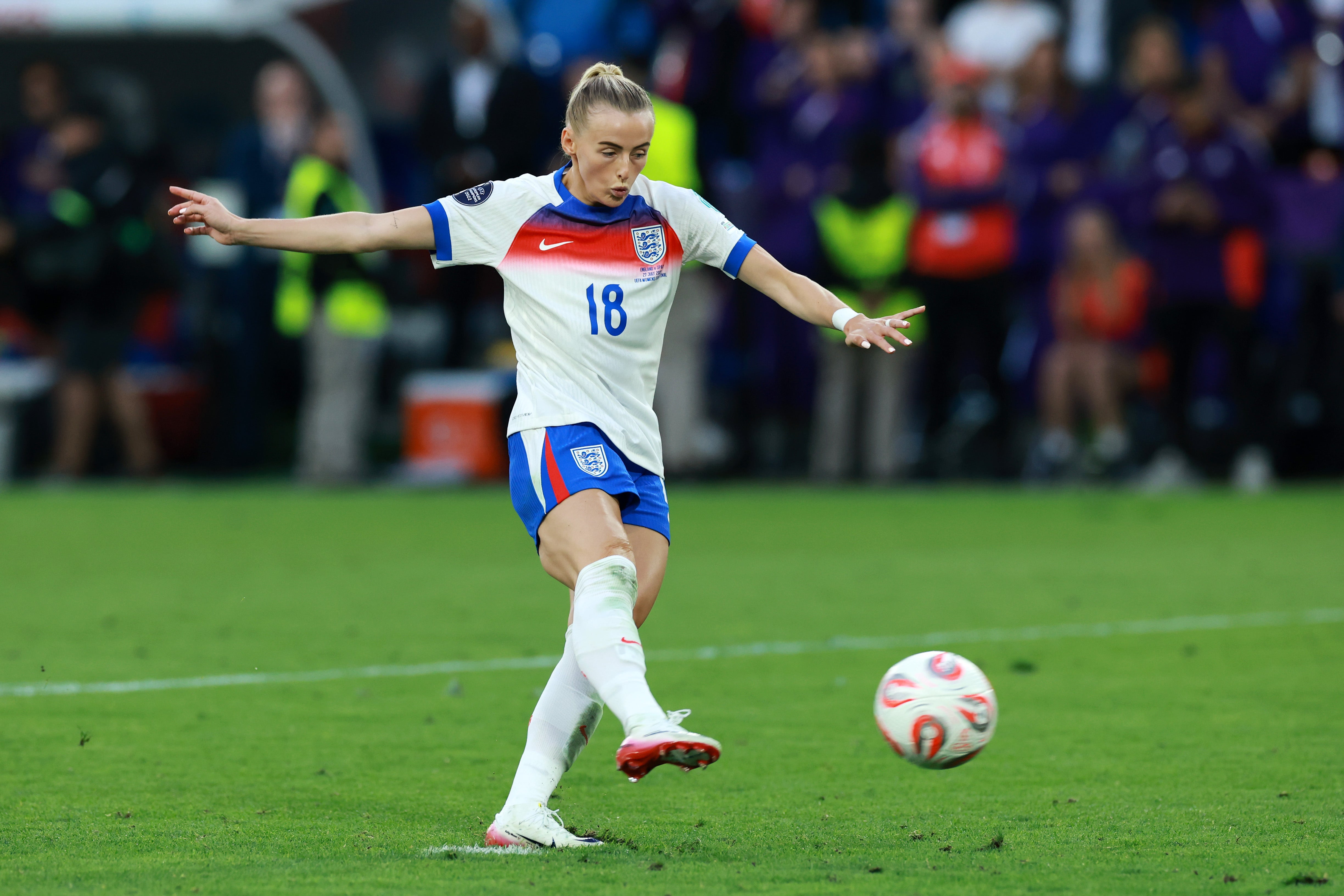
“It’s not the action, it’s the reaction,” Kelly said during the rollercoaster of England’s run. The match-winner in the transformative Euro 2022 final at Wembley three years before, Kelly was reborn from the resilience and strength she had shown when all had appeared lost. By the end, her growth and England’s survival in Switzerland came to mirror each other.
“My journey and taking control of my own destiny, writing your own script, was really important,” Kelly tells The Independent. She has a powerful sense of what her message is and what it represents: that speaking up when feeling down can be the first step towards turning a story around.
For Kelly, it was posting where she stood and where she was coming from. Her situation at City, she told her millions of followers on Instagram, was having “a huge impact on not only my career but my mental wellbeing” – it was not necessarily a cry for help, but a vow to not suffer in silence. “The world’s full of social media where you see great things all the time, but sometimes you have to see the realness,” she says. “I’m proud I did do that, because I don’t think I’d be in the position I am in without it.”
It led to her deadline day return to Arsenal, initially on loan, as well as a reframing of her season. At Arsenal, she told her new coach, Renee Slegers, that she wanted to enjoy her football again. At the Lionesses, Sarina Wiegman took the pressure off trying to make her Euros squad away by letting her know she had time. Outside of her close bubble of family and friends, there was understanding, too. “It’s important, especially for young girls, to see that not everything is bright and daisy, not everything is about winning,” Kelly says. “Sometimes it’s the dark moments that get you to those winning moments.”
Not that it was immediately clear how dark those moments were. Kelly recently told Fearne Cotton’s Happy Place podcast that her hair was falling out due to the stress of her situation at Manchester City, and that she was conscious of covering the patches during her first few games at Arsenal. But after settling back into a familiar environment, the smile returned, and Kelly started to put things together piece by piece. A starring role in Arsenal’s comeback against Real Madrid was followed by the full-circle moment of helping the Gunners become European champions again in Lisbon, following the example of her idols Kelly Smith and Rachel Yankey from 18 years before.

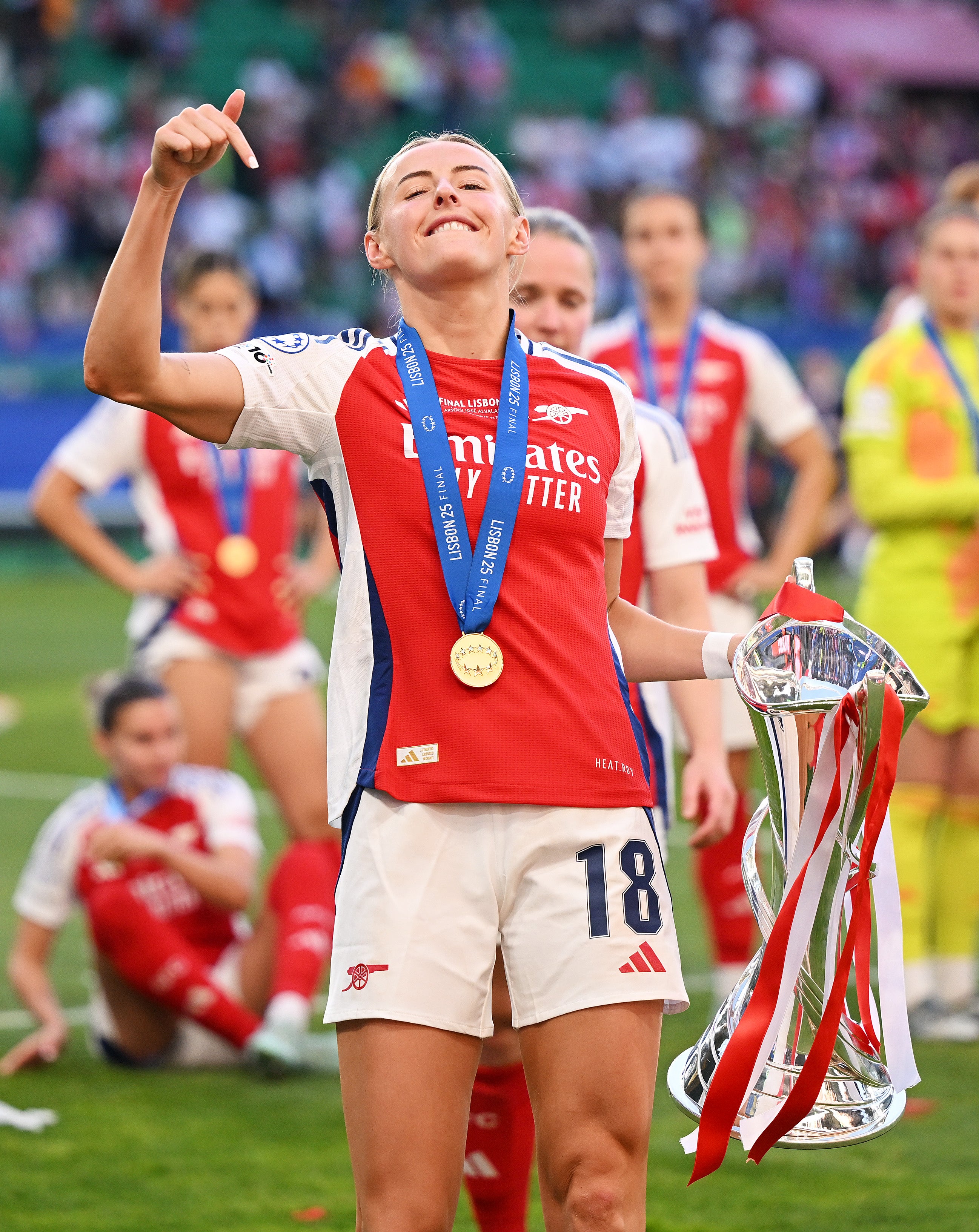

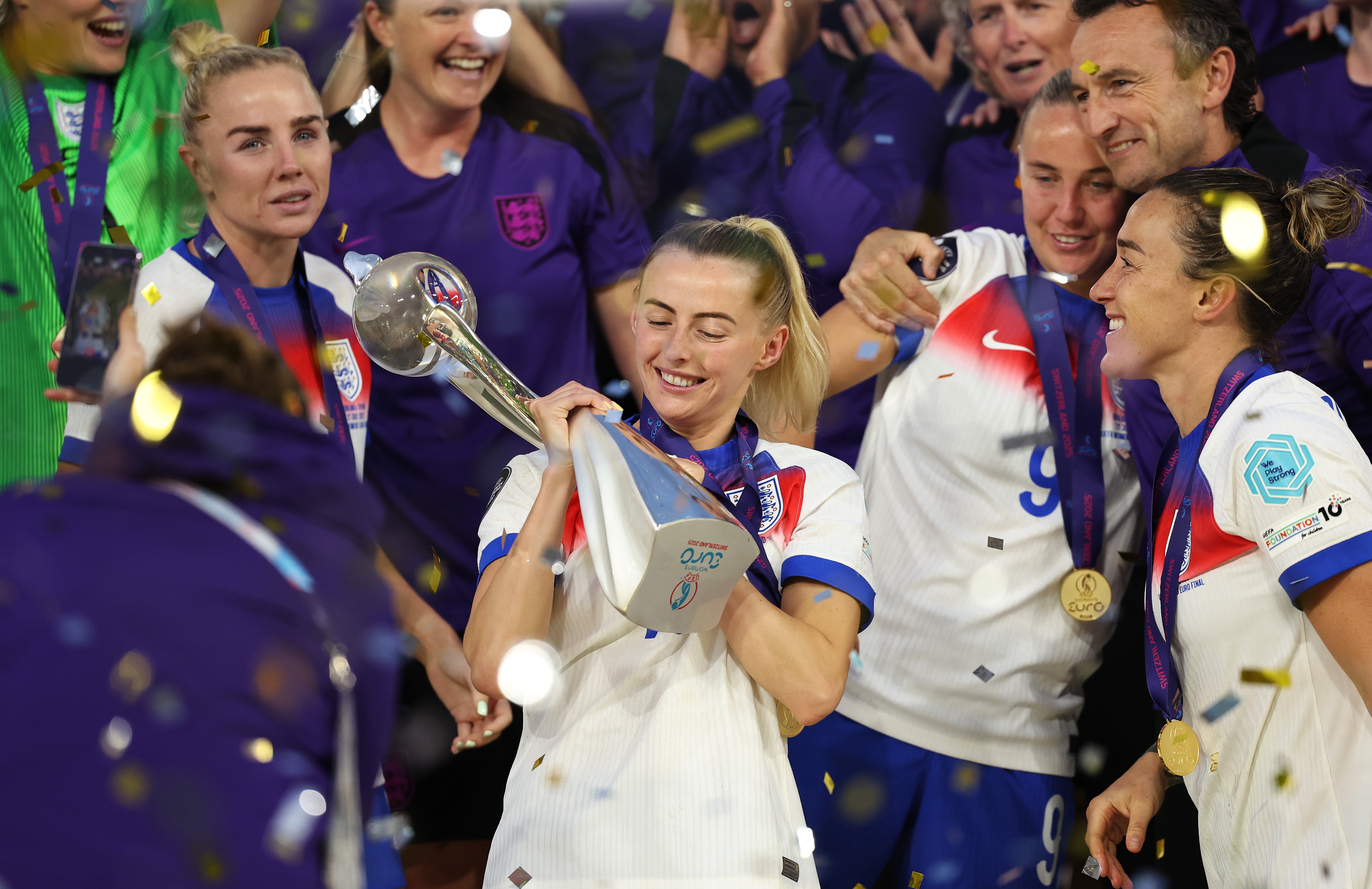
And then there was the Euros – “the most chaotic tournament ever”, as Wiegman famously said. “Going down, it didn’t phase us,” adds the super-sub whose arrival off the bench would signal a shift in mentality from the Lionesses and bring a change-changing moment. There were two assists to rescue England against Sweden, and another crucial penalty in that quarter-final shoot-out. Coming on again against Italy, Kelly scored the winner at the end of extra time. Then, in the final and another shoot-out, the ball was again placed in Kelly’s hands. And yet it is in those moments, where time stands still, that Kelly thrives the most.
But for confidence to be declared unbreakable, it needs to be tested. Kelly’s was. At the Euros, other moments would become just as iconic because of how she responded; to standing on the touchline until the 78th minute against Sweden, as England trailed in the quarter-finals; to putting a last-minute corner into the side-netting against Italy, as the Lionesses desperately chased an equaliser; to missing three penalties in training on the day before the Euros final, knowing she was still going to be given the fifth if it went to the shootout.
These were also the moments that made Kelly’s year, as they gave her the opportunity to show that what comes next is always what matters. “The action is always the one you think about, but the reaction is what makes the story even better. I think that does shape the whole of 2025 for me,” Kelly says. “You have to ride the wave at times, and speak out, and be proud of speaking out too. Hopefully, it inspired many women and young girls this year to achieve great things. For me, it’s just being real.”
Read The Independent’s influence list for International Women’s Day 2026 here.