Sports
Ex-reality star Jessie Holmes seals repeat victory in 1,000-mile Alaska sled dog race

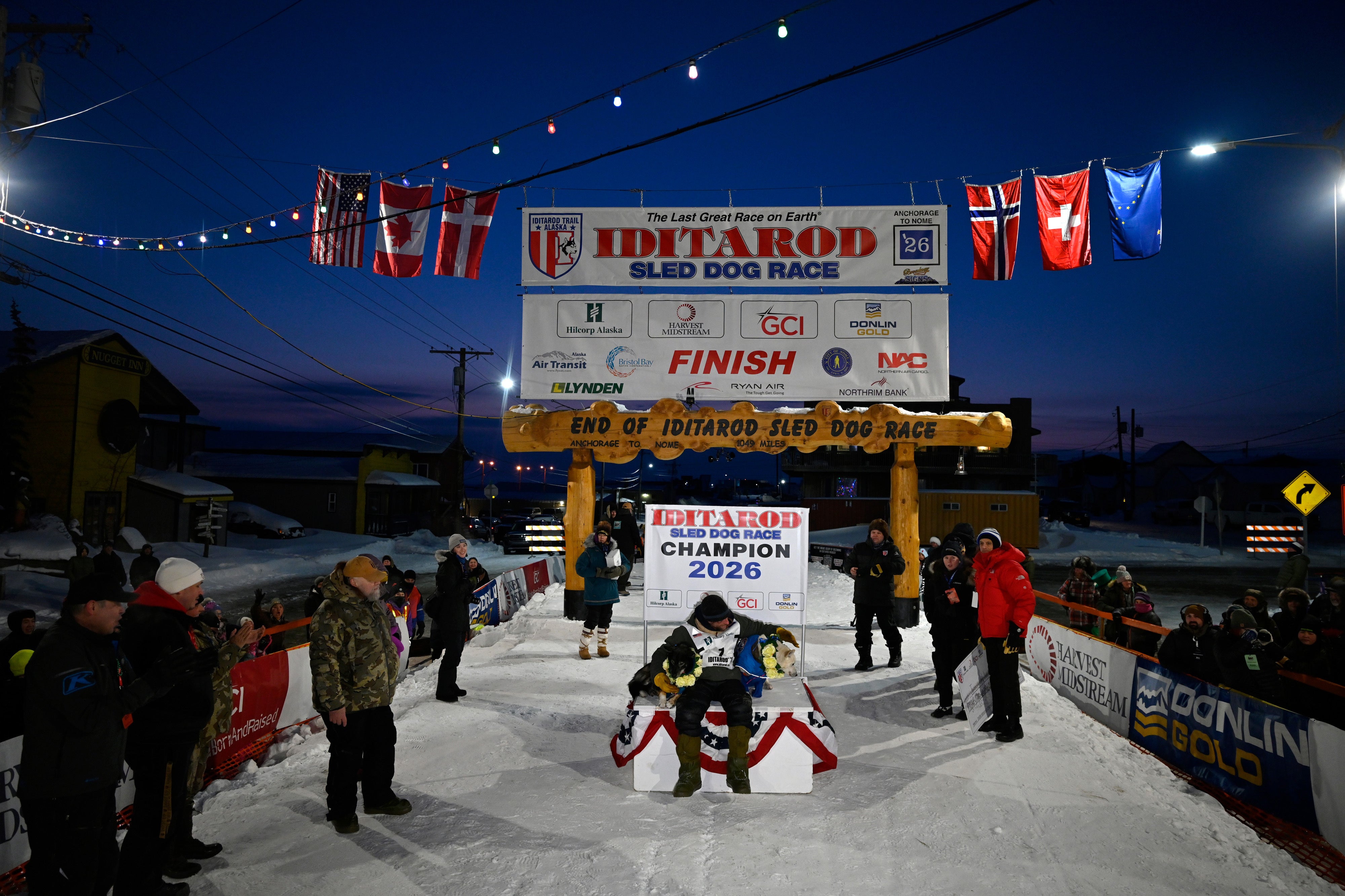
Reality television personality Jessie Holmes has clinched a second consecutive victory in the grueling Iditarod Trail Sled Dog Race after guiding his team across approximately 1,000 miles of Alaskan wilderness.
His triumph marks a significant achievement in the challenging endurance event.
Holmes navigated his dog team to the finish line on Tuesday night in Nome, a Bering Sea coastal community.
The arduous race began on 8 March in Willow, following a ceremonial start in Anchorage, taking mushers and their dogs over two mountain ranges, along the frozen Yukon River, and across the unpredictable Bering Sea ice.
This repeat win places Holmes, a former cast member of National Geographic’s “Life Below Zero,” among an elite group.

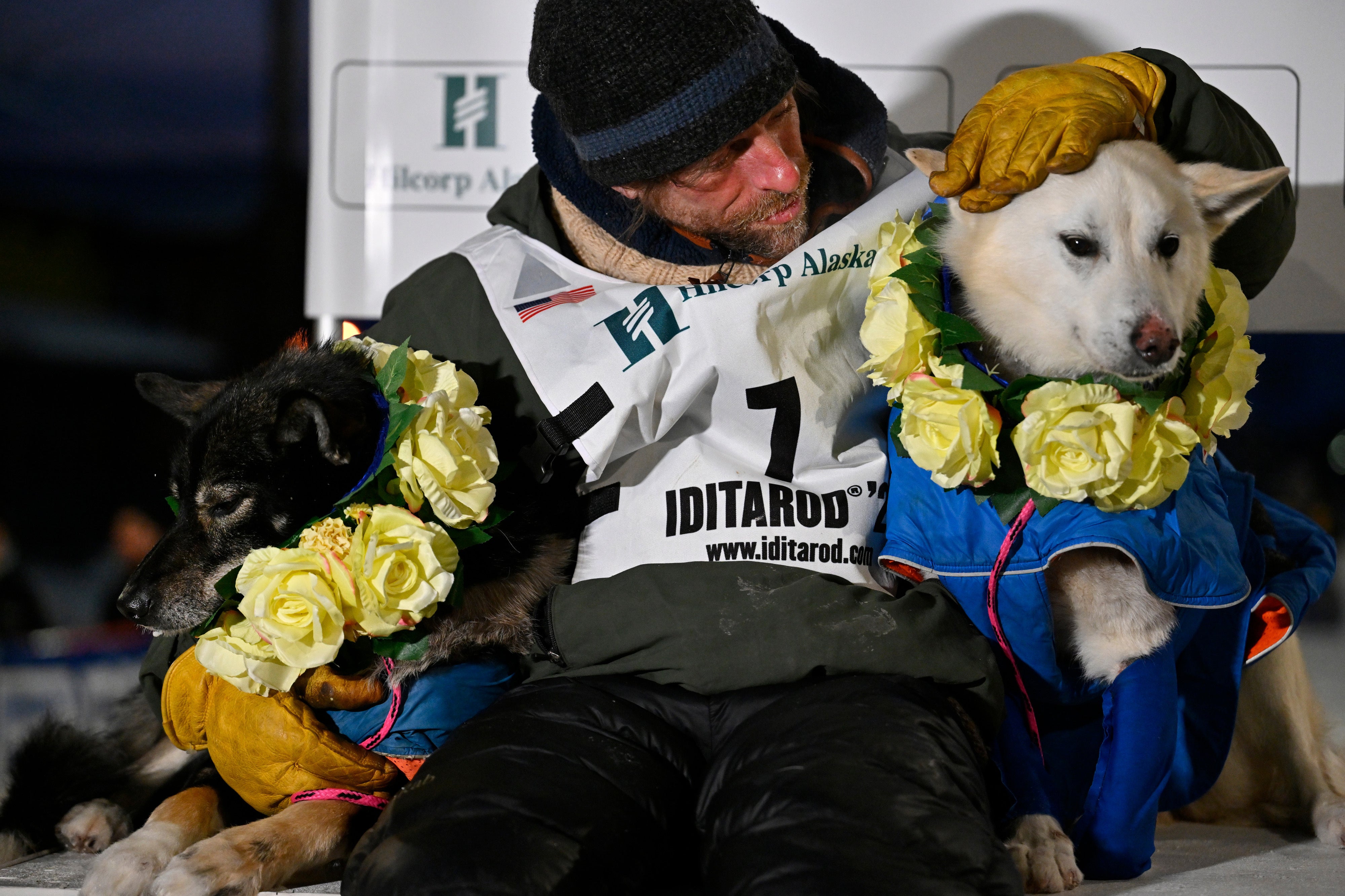
He is only the third competitor in the Iditarod’s 54-year history to win back-to-back races after their initial victory, joining legends Susan Butcher (1986-1987) and Lance Mackey (2007-2008), both of whom went on to claim four titles.
Before the race, Holmes described this year’s Iditarod as the most crucial of his career.
He told The Associated Press: “That’s hard to put that on yourself because you got to live with that pressure every day. And if I do not make it, it is going to absolutely crush me.”
He will pocket about $80,000 for this year’s win, up from the $57,000-plus he took home last year.
The prize fund was bolstered by Norwegian billionaire Kjell Rokke, who also participated in a new, non-competitive amateur category. Rokke reached Nome on Monday, under rules allowing outside support from a former Iditarod champion, flexible rest periods, and dog swaps.
Holmes first competed in the Iditarod in 2018, earning rookie of the year honours with a seventh-place finish. He has now raced nine times, achieving seven top-10 placements and securing a top-five spot in his last five attempts.
His eight-year stint on National Geographic’s “Life Below Zero”, chronicling life in rural Alaska, provided the means to acquire better dogs and equipment.
It also enabled him to purchase raw land near Denali National Park and Preserve, where the carpenter has established a homestead in the wilderness, his closest neighbour some 30 miles away.
Rokke, who now lives in Switzerland, provided $100,000 in additional prize money and $170,000 to Alaska Native villages that serve as checkpoints.
Canadian entrepreneur Steve Curtis, another non-competitive musher, pledged $50,000 to help youth sports programmes in the villages, though he did not finish the race.
The Iditarod continues to face criticism from People for the Ethical Treatment of Animals (PETA), which claims over 150 dogs have died in the race’s history.
PETA urged Rokke to spend his money helping dogs rather than putting them through “hazards and misery.” The Iditarod has never provided its count of dog fatalities.
Tragically, one dog has died in this year’s event: a four-year-old female named Charly from musher Mille Porsild’s team, as confirmed by the Iditarod in a statement on Tuesday. A necropsy is scheduled to determine the cause.
This year’s race saw 34 competitive mushers start, matching the 1973 inaugural event for the second-lowest number in its history.
The dwindling participation is attributed to the retirement of many seasoned mushers and the escalating costs of supplies, such as dog food, which have kept field sizes small this decade.
You must be logged in to post a comment Login