A Minnesota Vikings helmet rests on the turf at TCO Performance Center during organized team activities on Jun 11, 2019, in Eagan. Images like this are common during the early offseason as players prepare for camp and roster battles begin to take shape. Mandatory Credit: Harrison Barden-USA TODAY Sports.
In my 20+ years as an NFL exec, I was often asked what I did in the offseason. Many fans, friends, and even some family members assumed I took several months off after the season. They thought I had a schedule similar to the players who were on vacation until offseason workouts in mid to late April, and were surprised when I said the offseason months were my busiest time as a GM or team president.
It always was extremely hectic from January until I had two weeks of vacation in late June and early July before preparing for training camp.
Franchise and Transition Tag Pressure Peaks
Immediately after our final game of the just-completed season—which was usually a playoff game—I met with the coaches to get player grades for the season and discuss team needs in advance of free agency and the draft. I was also in scouting meetings where we were starting to hone in on potential trade and free agency targets, including our own players we wanted to retain and outside free agents we were interested in.
Advertisement
The salary cap was a constant focal point as I considered players likely to be released, asked to stay at a reduced salary, or strong candidates for contract restructures to lower their cap numbers in the upcoming season.
I never had to deal with a $40 million cap shortfall as the Vikings must do by the start of the new league year next month, but there were plenty of years when I had to cut or restructure several players to get under the cap. I also never had $20-30 million increases in the cap from one year to the next, as has been the case the past several years, as NFL revenues have risen significantly.
The period for teams to place franchise or transition tags on top pending free agents opens in mid-February but we were planning on possible moves and I was often in negotiations in January and February to try and sign potential top free agents who were franchise or transition tag candidates as I didn’t want to tie up excessive salary cap space with a tag if it wasn’t necessary.
Advertisement
The Minnesota Vikings’ state-of-the-art TCO Performance Center is shown in Eagan, Minnesota, on Jul 28, 2018. This world-class facility serves as the team’s headquarters, featuring cutting-edge training, rehabilitation, and meeting spaces. Since its opening, it has become the central hub for all things Vikings, from offseason prep to daily operations. Mandatory Credit: Brad Rempel-USA TODAY Sports.
In late January, I would attend the Senior Bowl in Mobile and meet with our coaches and scouts in attendance. Upon returning home, it was an intense period in February of free agency planning and pre-Combine meetings, as is the case this week at Vikings HQ with the Combine coming up next week. At this juncture, we would identify draft-eligible players we wanted to interview at the Combine and players to closely check their physical status if they were coming off injuries, while continuing to update our draft board.
Then it was off to the Combine, where I would watch player workouts, participate in player interviews, and meet with our scouts in between numerous negotiation sessions with agents for our players. There were also discussions with agents on free agents from other teams who were on our radar.
These conversations would involve discussing parameters rather than concrete numbers, since it would technically constitute tampering before the league’s “legal tampering” period, which begins three days before the official start of free agency (those dates are March 9 and March 11 this year).
I’ll talk more in the coming weeks on the Combine, free agency and the draft including who I see as candidates from the current Vikings roster to be released, restructured, extended or re-signed and possible free agent and trade targets including a potential veteran QB to compete with or back up J.J. McCarthy (with rumors continuing on a possible Kirk Cousins return to Minnesota).
Around the NFL–Franchise/transition tag period
Advertisement
The two-week window for teams to apply franchise or transition tags to players opened on Monday and runs through March 3. The tags consist of a one-year tender associated with the franchise tag (basically the average of top five cap hits at a position or 120% of the previous salary and the old team retains a right of first refusal and receives two first-round picks if a player signs elsewhere unless it’s the exclusive franchise tag that is more costly) or transition tag (average of top 10 salaries; old team retains right of first refusal and no draft choice compensation if he signs elsewhere).
Jalen Nailor lined up for the Minnesota Vikings during the NFC wild card round on Jan 13, 2025, at State Farm Stadium in Glendale. The wide receiver, wearing number 83, faced the Los Angeles Rams in a postseason matchup that tested Minnesota’s depth and offensive playmakers under the playoff spotlight. Mandatory Credit: Mark J. Rebilas-Imagn Images.
It’s highly unlikely the Vikings will utilize either tag for any of their 14 pending unrestricted free agents. The Vikings’ best free agents-to-be are No. 3 WR Jalen Nailor ($960,000 salary last season; projected franchise tag $28.8 million; projected transition tag $25 million) and starting LB Eric Wilson ($2.6 million salary in 2025; $28.2 million franchise tag, $23.6 million transition tag). Punter/holder Ryan Wright is another key pending free agent, but the Vikings are not going to tag him at $6 million-plus when the league’s highest-paid punter (Seattle’s Michael Dickson) is making $4 million per year.
Around the league, the top candidates to be hit with the franchise tag include:
George Pickens (Cowboys WR, 93 receptions for 1,429 yards and nine TDs last season, $28.8 million franchise tag, $25 million transition tag);
Daniel Jones (Colts QB, 8-5 record in his 13 starts before tearing his Achilles, career-best 100.2 passer rating, which ranked ninth, franchise tag a pricey $47 million, transition tag would be an estimated $41 million);
Advertisement
Kenneth Walker III (Seahawks RB, Super Bowl MVP after 135 yards rushing, 1,340 rushing yards last season, including playoffs; despite the relatively inexpensive $14 million RB franchise tag, Seattle is rumored not to be planning to place the franchise tag on him, perhaps they’ll use the transition tag at $11.7 million);
Jan 17, 2026; Seattle, WA, USA; Seattle Seahawks running back Kenneth Walker III (9) reacts after scoring a touchdown against the San Francisco 49ers during the second half in an NFC Divisional Round game at Lumen Field. Mandatory Credit: Steven Bisig-Imagn Images
Trey Hendrickson (Bengals DE, only four sacks in seven games in an injury-hampered 2025 season, but he led the league with 17.5 sacks in 2024, $27.3 million franchise amount, and $22.9 million for transition);
Kyle Pitts (Falcons TE, 88 catches for 928 yards and five TDs in 2025, $16.3 million—franchise tag, $13.9 million transition tag);
Breece Hall (Jets RB, 1,065 rushing yards plus 350 receiving yards with five total TDs for a lousy Jets offense last season).
Jeff Diamond is a former Vikings GM, former Tennessee Titans President and was selected NFL Executive of the Year … More about Jeff Diamond
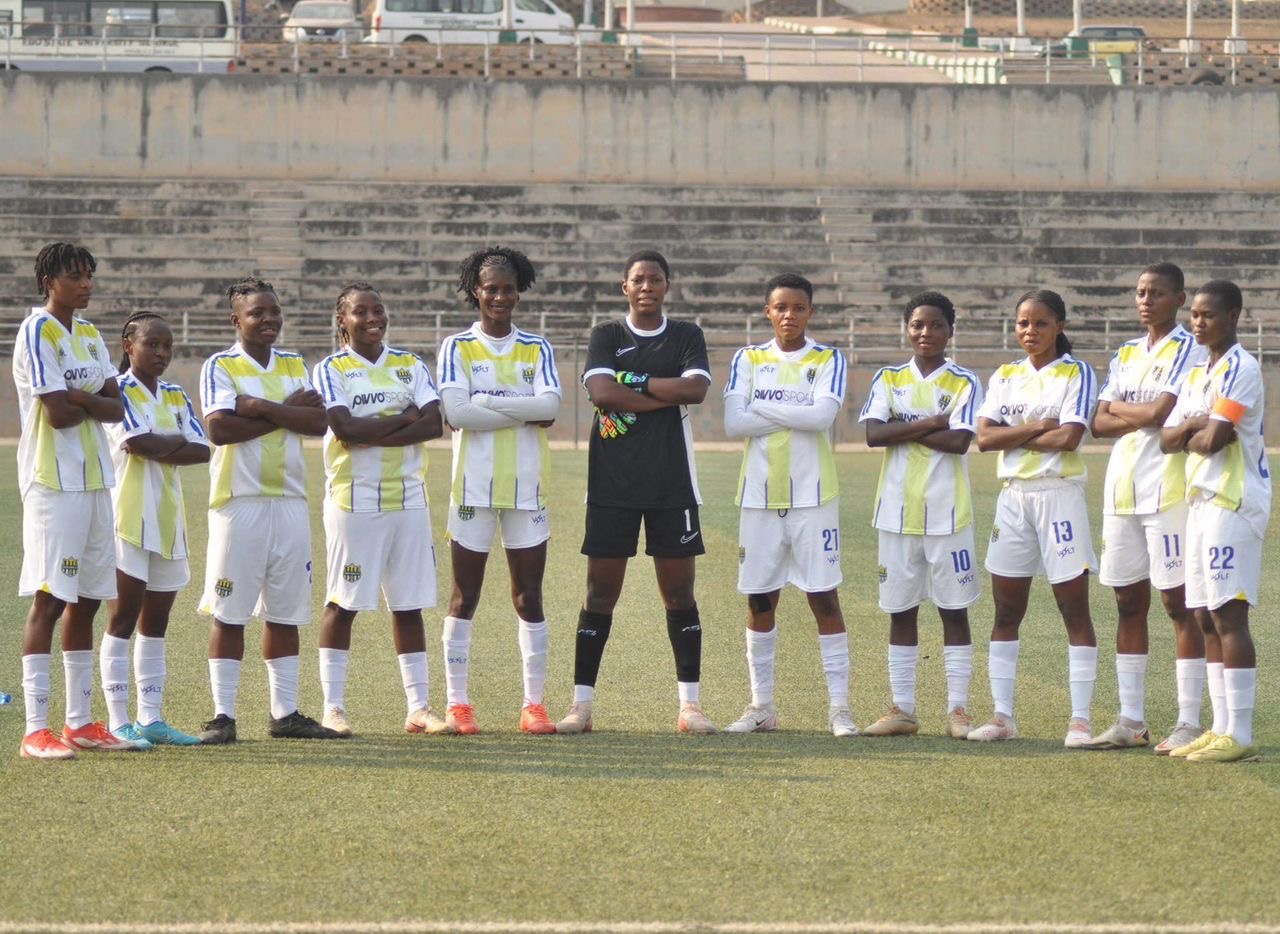
The Nigeria Women Football League (NWFL) has fined Osun Babes FC ₦2.5 million after their 2025/2026 Premiership match against FC Robo Queens failed to hold in Lagos.
The match, scheduled for Wednesday, 18 February 2026, at Onikan Stadium, was called off because Osun Babes did not provide an alternative set of jerseys, despite a confirmed colour clash with the home team. As a result, the officials awarded a walkover to FC Robo Queens.
The league said Osun Babes violated its rules by failing to use their second-choice kit for an away match and by not honouring the fixture without a valid reason. The club was fined ₦1 million for the jersey breach and ₦1.5 million for failing to play the match.
Advertisement
NWFL Chief Operating Officer, Modupe Shabi, said the league would continue to enforce its rules to maintain professionalism and protect the integrity of the competition. The league also warned clubs to follow all regulations to avoid future sanctions.
Former Pittsburgh Steelers defensive back Mike Wagner, a four-time Super Bowl champion with the franchise during its “Steel Curtain” dynasty, has died at 76.
The Steelers announced Wagner’s death on Wednesday night with a statement.
“We are deeply saddened by the passing of Mike Wagner, a tremendous player and an integral part of some of the most successful teams in Pittsburgh Steelers history,” Steelers owner Art Rooney II said in a statement.
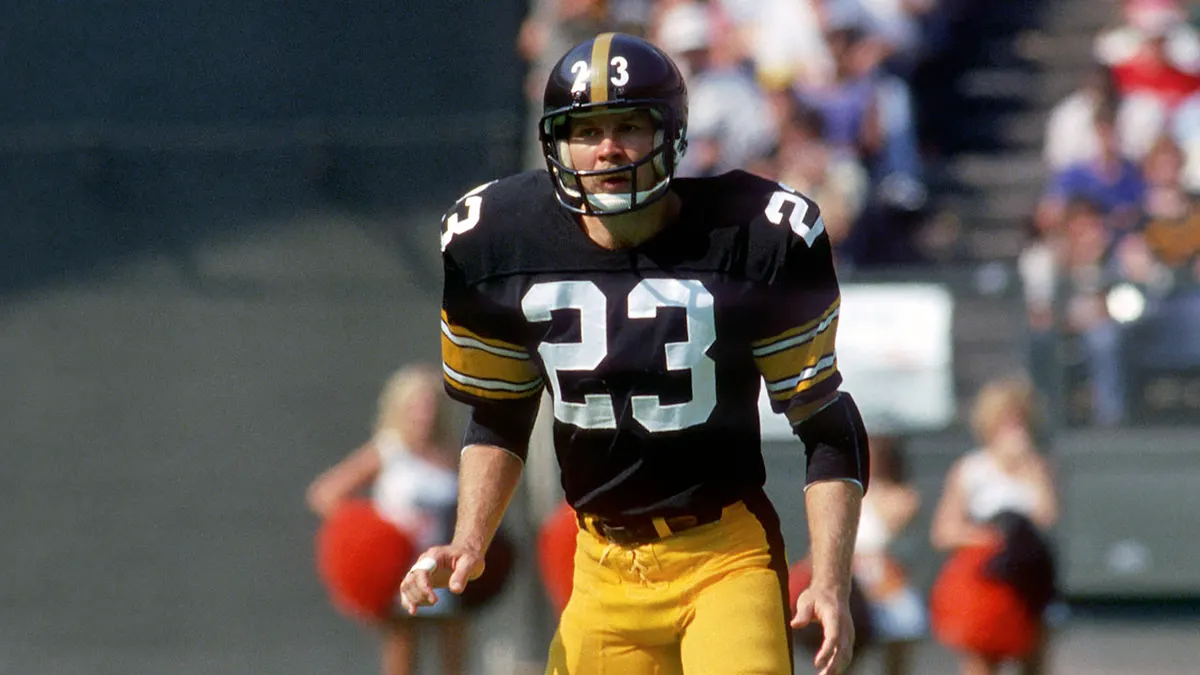
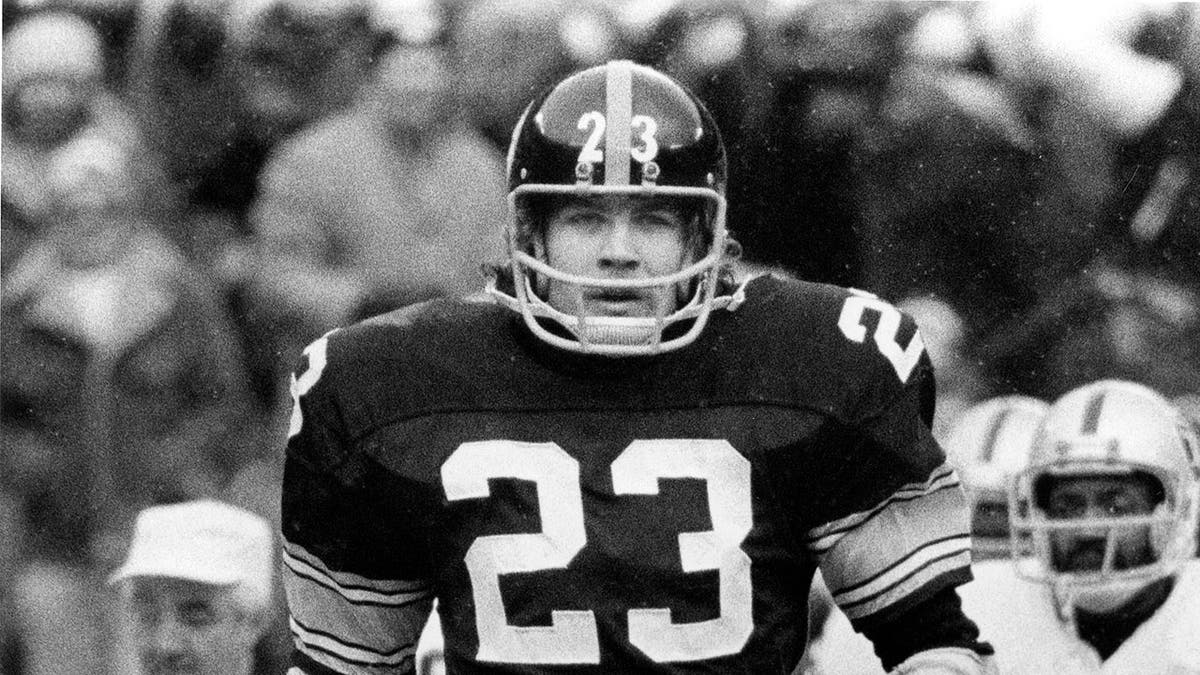
Safety Mike Wagner of the Pittsburgh Steelers looks on from the field during a game against the Cincinnati Bengals at Riverfront Stadium circa 1979 in Cincinnati, Ohio. (George Gojkovich/Getty Images)
No cause of death has been provided.
Wagner was a two-time Pro Bowler during his 10-year career for the Steelers, racking up 36 interceptions and five forced fumbles from 1971-80.
The Steelers took him 268th overall in the 1971 NFL Draft, which was the 11th round at the time.
“Mike played a key role on our championship teams of the 1970s. As a member of four Super Bowl-winning teams, his toughness and consistency were paramount to our secondary. His contributions on the field were significant, but it was also his steady presence and team-first mentality that truly defined him,” Rooney’s statement continued.
“On behalf of the entire Pittsburgh Steelers organization, we extend our heartfelt condolences to Mike’s family. He will always be remembered as a champion, a great teammate, and a proud member of the Steelers family.”
Wagner’s football journey is a unique one leading up to the NFL Draft.
Advertisement
Safety Mike Wagner of the Pittsburgh Steelers returns to the sideline holding the football after intercepting a pass against the Oakland Raiders during the 1975 season AFC Championship playoff game at Three Rivers Stadium on Jan. 4, 1976 in Pittsburgh, Pennsylvania. (George Gojkovich/Getty Images)
He went to Western Illinois University, but he didn’t play for the football team until he asked the head coach for a tryout after not getting interest to compete at any other school.
Western Illinois coach obliged, and Wagner made the team. However, he was still waiting tables as a means to make money while playing for the team.
The Steelers would eventually take a shot on him, but the late-round pick wasn’t an afterthought in his rookie season.
Wagner started at safety following an injury on the depth chart, and he wouldn’t relinquish his starting position from there.
Advertisement
He started in 116 of his 119 career games, and in 1973, he led the league with eight interceptions.
Mike Wagner, former safety for the Pittsburgh Steelers, looks on from the sideline during a game between the New Orleans Saints and Pittsburgh Steelers at Heinz Field on Nov. 30, 2014 in Pittsburgh, Pennsylvania. (George Gojkovich/Getty Images)
Among those career interceptions were the game-sealing one against the Minnesota Vikings, picking off the great Fran Tarkenton to give the Steelers the Super Bowl IX victory — the franchise’s first.
In 2020, the Steelers had Wagner enter its Hall of Honor and continued to be around the organization until his death.
“It offers the perfect combination of grueling climbs and exhilarating descents,” explains Tatjana Paller.
The 30-year-old German finished fourth in the Olympic sprint and will also compete in the mixed team event of ski mountaineering, or” skimo” for short.
Last year, Paller won bronze in the sprint at the World Championships in Morgins, Switzerland. She has been a ski mountaineer since 2020; before that, she was a successful junior track cyclist.
Paller believes there are similarities between the two sports.
Advertisement
“Endurance sports are endurance sports. You either have a motor, or you don’t. But ski mountaineering is even more strenuous. At least you’re sitting down when you’re cycling,” says Paller.
A major facet of the competition is the ascent on skis Image: IPA Sport/ABACAPRESS/IMAGO
Ski touring
Skimo is the competitive version of ski touring, which is becoming increasingly popular in the European Alps due to skyrocketing lift ticket prices. The German Alpine Club (DAV), Germany’s national mountaineering association, estimates the number of ski tourers in Germany alone at more than 600,000, which is more than three times as many as at the turn of the millennium.
Ski touring has become a popular sport among amateur athletesImage: Moritz Wolf/imageBROKER/IMAGO
On a classic ski tour in the mountains, you don’t use a lift but ascend on skis and then ski down ungroomed slopes. However, many now also ascend along the edge of actual ski slopes and then ski down them.
Special bindings, climbing skins under the skis
The skis are equipped with special bindings that allow you to lift your heels while ascending. For the descent, the heels can be locked in place using the bindings, just like on regular downhill skis.
To prevent the skis from slipping back while ascending, climbing skins made of synthetic or natural fibers are attached to them. These are either glued on or adhere to the skis on their own. Once you reach the top, you remove the skins and can ski down the hill.
There are now also so-called hybrid skins. They hold almost as well as glued-on skins but are as easy to attach as self-adhering skins.
Advertisement
Skimo athletes – like Germany’s Toni Palzer – need to remove or attach climbing skins in a matter of secondsImage: Herbert Berger/imageBROKER/IMAGO
“I use hybrid skins for the sprint and mixed relay because you can peel them off quickly,” Paller explains.
The procedure only takes a few seconds.
Light, narrow skis
The skis, which are carried on the skiier’s back during a mandatory foot climb, weigh between 700 and 800 grams (24.7 – 28.2 ounces), making them extremely light. They are also wider than cross-country skis but narrower than normal downhill skis: around 6.5 centimeters wide (2.6 inches) in the middle. The minimum ski length is 1.50 meters (4′ 11″) for women and 1.60 meters for men.
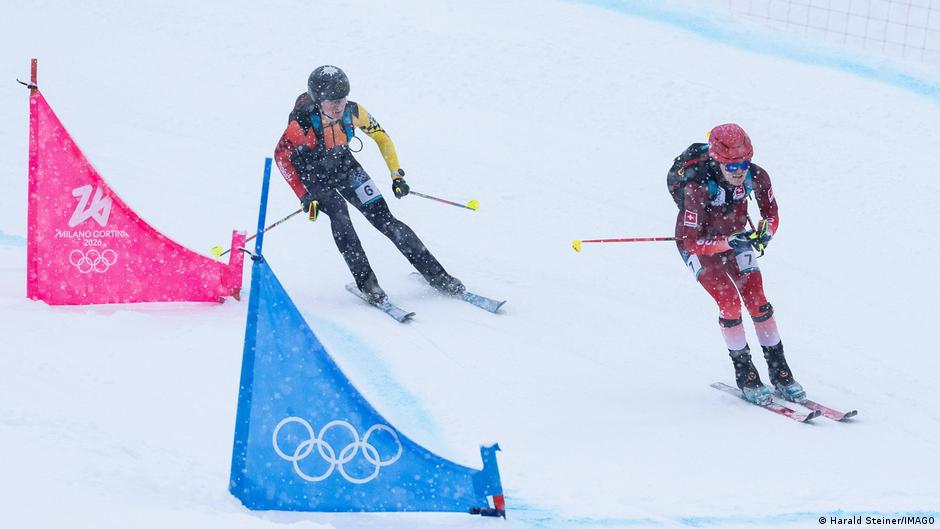
In the sprint in Bormio, a 610-meter course awaits the athletes, with a 70-meter elevation gain. The race is divided into:
Advertisement
• The ascent on skis
• A carrying section where the athletes, with their skis on their backs, must climb a set of stairs
• Another short ascent phase
•The final descent, where the gates are spaced approximately the same distance apart as in a giant slalom race
Advertisement
Speed and tactics
The transition phases are crucial, where every second counts. One lap lasts between 2:30 and 3:30 minutes. Six athletes compete against each other in each heat. The two fastest advance to the next round.
In the mixed relay, one female and one male athlete per team alternate, completing two laps each. Here, it’s not just about speed, but also about the right tactics and good teamwork.
“We push each other really well,” says Tatjana Paller, who competes in the relay with 23-year-old Finn Hösch. They are both good individual athletes, adds Hösch.
Advertisement
“But it’s a different kind of pressure when you know you’re influencing not just your own result, but the team’s overall performance.”
First World Championships in 2002
The sport’s roots go back more than 100 years. One of its forerunners was the so-called military patrol, which made its Olympic debut at the first Winter Olympics in Chamonix in 1924. In this event, teams of four—in uniform and with gear in backpacks—had to complete a 30-kilometer (18.6 miles) course with considerable inclines on skis and then shoot at targets—similar to the biathlon.
Once the athletes have reached the top, it’s time to turn into a conventional downhill skiierImage: Davide Vaninetti/IPA Sport/IMAGO
Skimo in its modern form, however, is still relatively young. The first World Championships were held in 2002, and the World Cup premiered in 2004.
Distance competitions not yet Olympic
Skimo comprises of four disciplines, but medals will only be awarded in the two fastest this week in Bormio: the women’s and men’s sprints on Thursday, and the mixed relay on Saturday.
The other two disciplines are not yet Olympic: the so-called individual, with up to 1,900 meters of elevation gain, the longest competition distance, and the vertical, which consists of just one long ascent and no descent.
Advertisement
“The original form of ski mountaineering is the longer one. That’s why I can understand everyone who misses distance competitions in the Olympic program,” says sprint specialist Paller.
“But for us, it was a stroke of luck that the sprint competitions were chosen.”
Whether skimo will also be an Olympic sport at the next Winter Games in 2030 in the French Alps is not yet clear, but it does seem likely, given the current boom in ski touring.
This article was originally published in German.
Advertisement
Concerns about shady deals ahead of 2026 Winter Olympics
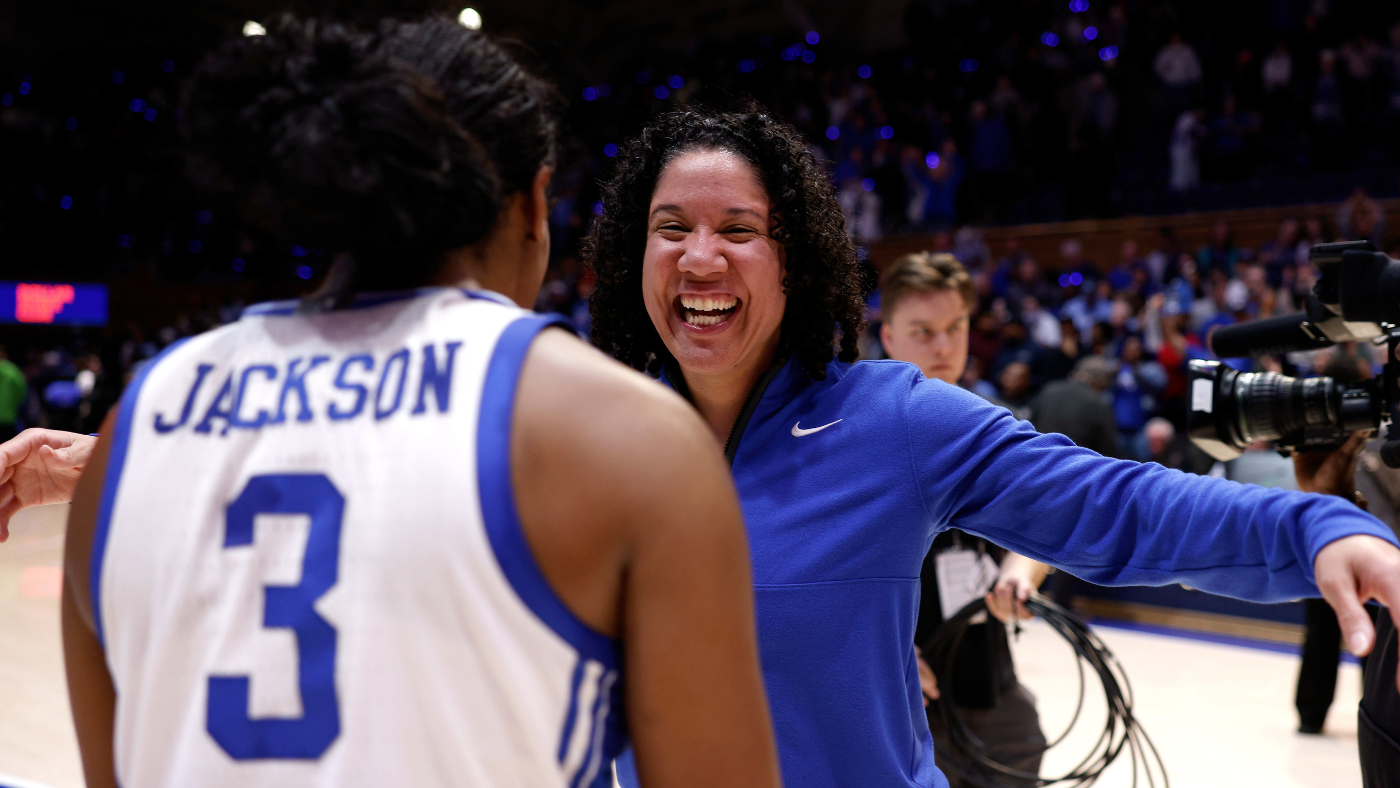
Last Sunday afternoon, the Duke Blue Devils beat the North Carolina Tar Heels, 72-68 in front of a raucous, sold-out crowd at Cameron Indoor Stadium. The win kept Duke undefeated in ACC play and atop the conference. When the buzzer sounded, head coach Kara Lawson beamed as she embraced her two seniors, Ashlon Jackson and Taina Mair, who capped off an emotional senior night by leading the team in scoring and making key plays down the stretch to seal the win.
The postgame vibes on the court were completely different from those nine weeks ago, when Duke fell 93-77 to LSU for its fourth loss in a row to drop to 3-6 on the season.
Every basketball season has its ups and downs, but Duke’s arc — from being preseason No. 7; to being out of the top 25 all together by the third week of the season amid a stretch that included a humiliating road loss to a West Virginia team that played the entire second half with only one starter and four bench players due to ejections and a loss to a South Florida team that is currently No. 75 in the NET rankings; to its current 16-game winning streak and return to No. 9 in the rankings — has been one of the most extreme in recent memory.
So how exactly has Duke turned things around so dramatically? There’s never just one factor, especially in a team sport, but Lawson’s postgame presser gave some invaluable insight — just not for the reason you might think.
Advertisement
First, here’s Lawson’s response when a reporter asked what she said to her team back in November in the thick of their struggles.
I think what’s really important, whether you’re in a season of prosperity or you’re in a season of adversity … I think it’s really important that you stick to what’s real and true. What’s real and true in basketball? Film, analytics, what you see every day from your team. And when you stay focused and locked in on that, then you can give a real assessment of where you are and where you need to get to. Anything outside of that is irrelevant, right? Someone’s opinion doesn’t change whether you can do it or not. It’s just someone’s opinion. So to spend time and energy on that doesn’t serve you. And so the fastest way to get from a season of adversity to a season of prosperity is to lock in on what’s real and true. Figure out where you need to work and get better, and then it will turn at some point.
We don’t get to control the length of our adversity. That’s a frustrating thing about life. When we’re in adversity, we’re like, ‘OK, is it over yet?’ You wake up and you’re like, ‘Is it over yet?’ You don’t get to control that. You get to control who you are in it. That’s it. Who are you in adversity? That’s what you get to control. So what I focus on during that time, and what I encourage my players to focus on, is, ‘Who are we in this time, and where do we need to get to?’ And when you lock in on that, then you’re gonna have success at some point.
Her answer has struck a nerve with people, which isn’t a surprise. If you’ve paid any attention to Lawson over the years, you know she always has a deep reflection on life, work or personal growth on the tip of her tongue, even moreso than most coaches I encounter on the job, and her speeches frequently go viral.
But on Sunday, I wasn’t so much struck by the words she was saying, though they certainly were powerful. Rather, I was struck by how familiar they sounded.
Advertisement
Sure enough, when I went back and revisited her press conference after the LSU loss, I realized she gave the exact same message. When asked what she was telling her players, she said she was telling them the truth and getting them to focus on film and individual plays rather than wins and losses. She praised them for staying positive amidst the adversity.
If you’ve gone through adversity in your life … you know you want it to end right away. You know, most of us want adversity and go really quickly. Like, OK, it’ll be tough for half a day and then we’re done. And this has been tough for longer for us. Like, good! Good. Because this is what life is about. You don’t get to control the length of your adversity. All you get to do is control your attitude and your focus and just work like heck to try and change it. And so it’s such a great life lesson for us, and I think it will turn for us at some point and I think we’ll look back on this stretch as a formative part.
Again, she said this minutes after her team suffered its fourth loss in a row, a loss that dropped the preseason ACC favorites to 3-6. People were calling for her to be fired.
That consistency and commitment to the big picture have clearly served her players well. Because it wasn’t just Lawson whose Feb. 15 press conference sounded eerily similar to her Dec. 4 one.
“We’re in the mud right now, and that’s both physically and literally,” Jackson said after the LSU game. “We’re very uncomfortable right now, which is a good thing, because in March, everybody is on and popping, so the team that is most comfortable with being uncomfortable, they usually succeed.”
Advertisement
And after the North Carolina win?
“We got out of the mud,” Jackson said. “We all know how we started the season, but that was on purpose. How are you supposed to grow if you’re not used to playing this type of environment?”
Let’s be clear about one thing: Motivational words and self-help philosophies alone do not win games. Duke’s rebirth can be attributed to many things: Mair gaining confidence in a more assertive offensive role; the impressive development of redshirt freshman center Arianna Roberson; Riley Nelson’s move into the starting lineup; a relatively weak year in the ACC, to name a few. And it is far from a given that Duke will win the ACC tournament and make it back to the Elite Eight like it did last March. But after the way this team started the season, the fact that Lawson has them back in contention to achieve those things is a testament to her connection with her players.
“During that time, you know, Coach took a lot for us. It was not Coach. It was simply us. So we just really had to buy in and take accountability at some point. We couldn’t let her hold everything by herself. We had to have her back, because she always has our back,” Jackson said on Sunday.
Advertisement
“There’s not a thing in this world that I don’t love about Kara Lawson, even whenever she’s mad at me. She challenges me, she trusts me, she believes in me.”
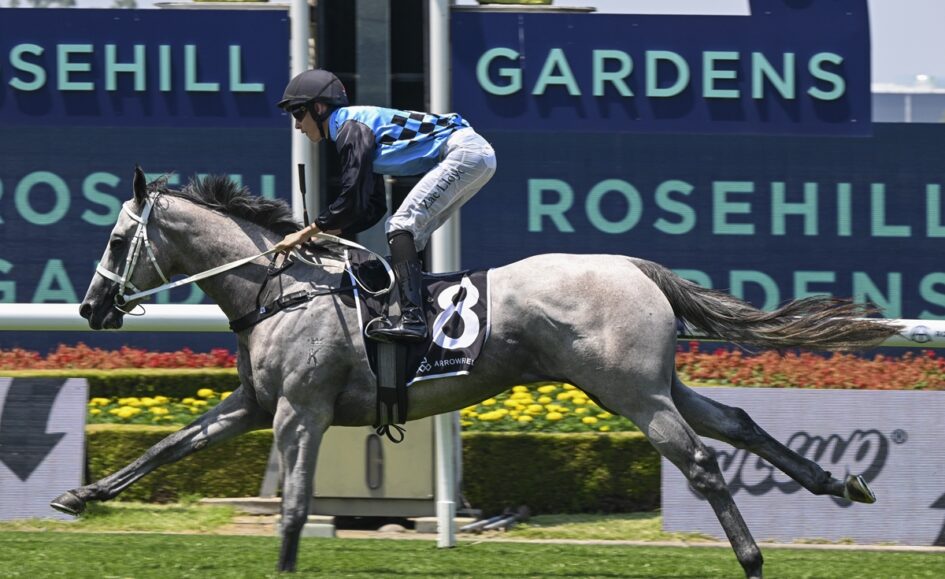
He hadn’t sat on the Extreme Choice youngster in barrier trials before the debut, acknowledging the Chris Waller operation’s careful early judgments as the horse wasn’t tested rigorously in sessions.
“No-one overwhelmed me with confidence before the race because he’s a very casual customer at trackwork,” Lloyd said.
“But he got a lovely run and that enabled him to sprint well, and he did win quite comfortably.
Advertisement
“Hopefully he has switched on mentally from that and can race well again on Saturday.
Market leaders at $4 are Tulloch Lodge’s filly Shiki and Canonbury Stakes placegetter Confederation, with James McDonald loyal to the colt after their debut ride where he endured faults to stay competitive.
Advertisement
The Canonbury Stakes saw Michael Freedman runner Incognito as heavy favourite but fifth after palate displacement was identified post-race.
Steps have been taken by Freedman to correct it, and the Breeders’ Plate champ gets tongue control plus lugging bit for the weekend.
Check racing odds for the Silver Slipper Stakes on leading betting sites.
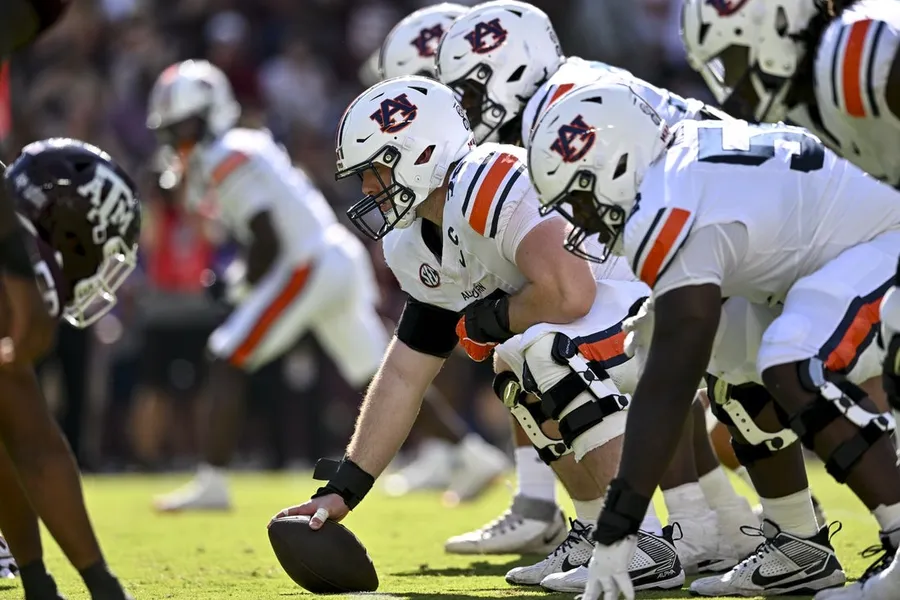
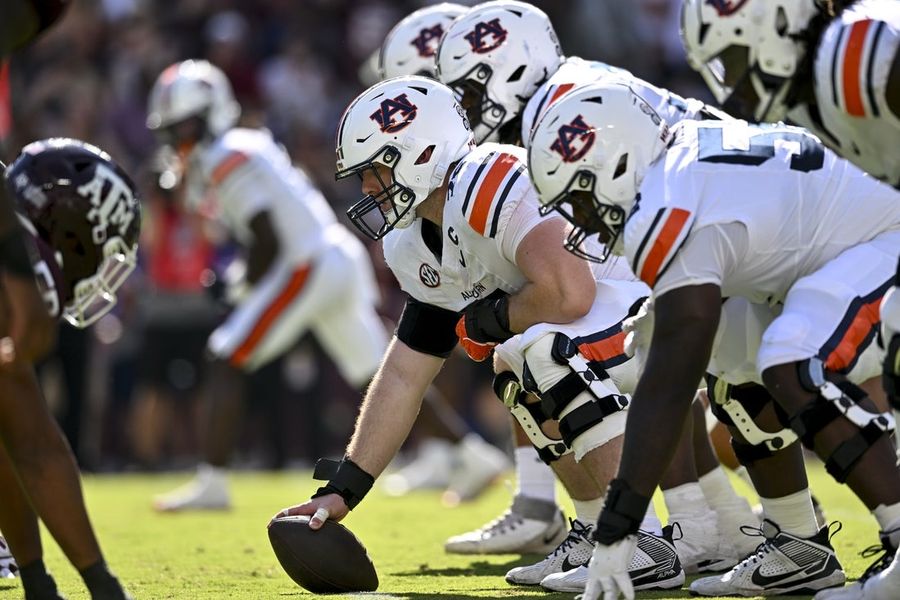
Sep 27, 2025; College Station, Texas, USA; Auburn Tigers offensive lineman Connor Lew (75) sets the ball against the Texas A&M Aggies at Kyle Field. Mandatory Credit: Maria Lysaker-Imagn Images
Ahead of the 2026 NFL Scouting Combine, Field Level Media draft analysts ranked the top prospects at every position.
Offensive linemen arrive in Indianapolis on Thursday to conduct interviews by request with teams and participate in medical exams.
Workouts begin Sunday, March 1, following media availability on Saturday, Feb. 28.
The top center prospects entering the combine are outlined below.
1. Connor Lew, Auburn
Advertisement
6-3, 303
Lew is a technician, natural leader and has pro-level awareness. He started 25 consecutive games before an ACL injury in October 2025.
2. Brian Parker II, Duke
6-5, 305
Advertisement
Transitioned from tackle to center. Polished blocker with easy movement in all directions. Has mental acuity and technical precision to become a great pro.
3. Jake Slaughter, Florida
6-4, 303
Advertisement
A multi-year starter and team captain with elite football IQ, refined technique and natural pass protection skills.
4. Logan Jones, Iowa
6-3, 302
Very good athlete with movement skills to thrive in a zone-blocking scheme.
Advertisement
5. Matt Gulbin, Michigan State
6-3, 316
Already 25 years old and average athletically, Gulbin is versatile with starts at guard and center.
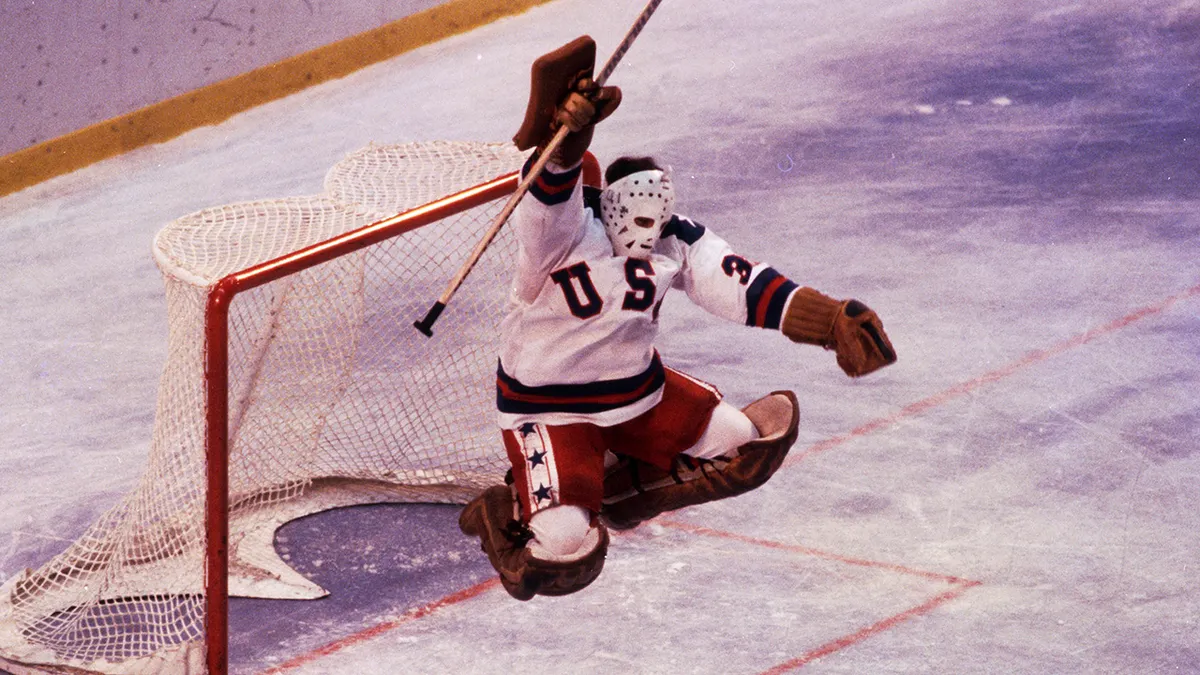
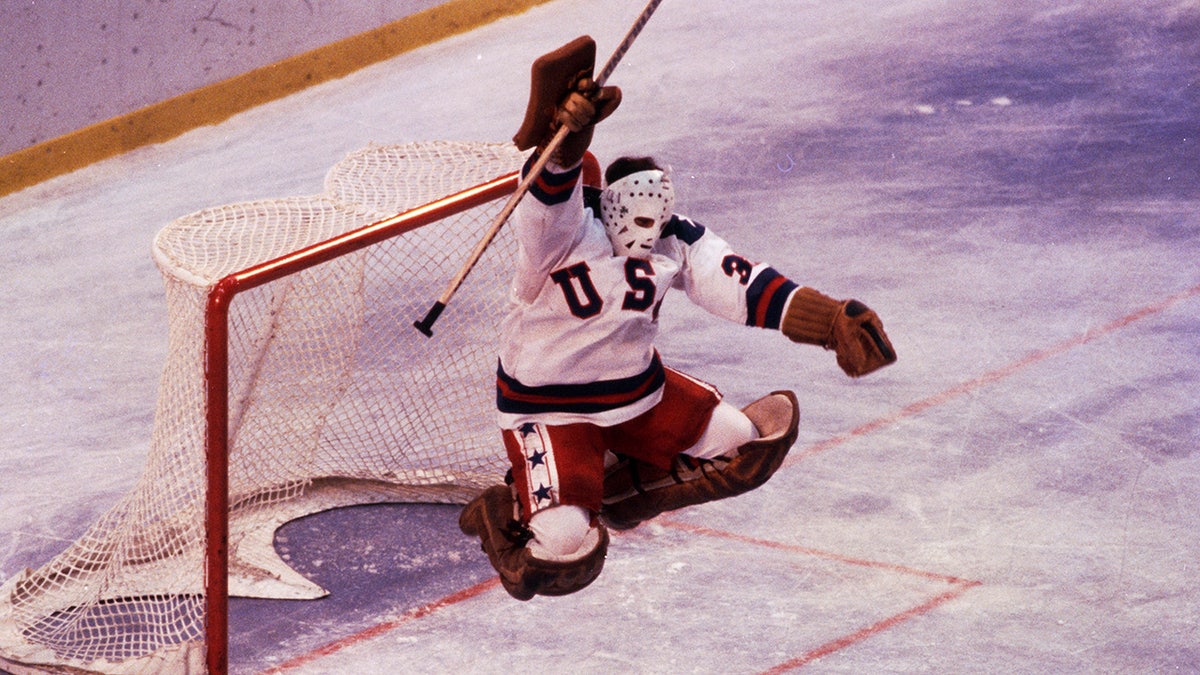
Jim Craig celebrates Team USA’s win over USSR on Feb. 22, 1980. (Disney General Entertainment Content via Getty Images)
He shared some advice for the women’s team ahead of the game.
“As the women of Team USA go for gold, remember — the moment isn’t bigger than you. You’ve prepared for this,” he wrote on X. “Trust the work. Trust each other. Compete with heart.
“When you play for the name on the front of the jersey, anything is possible.”
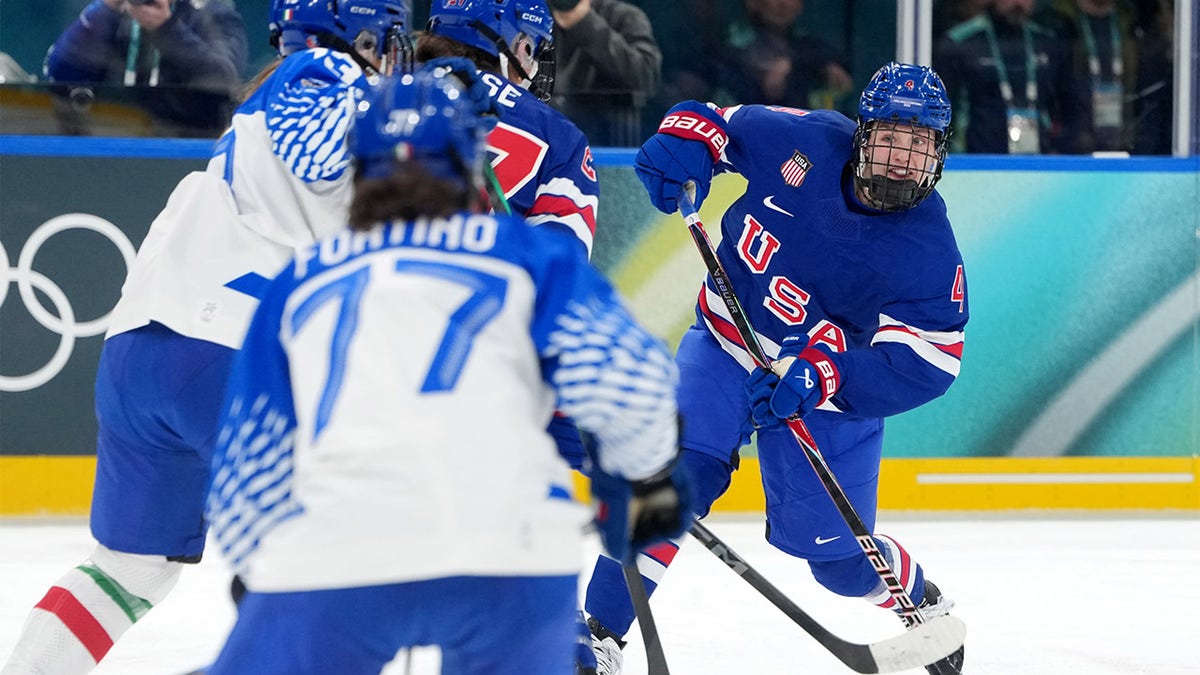
United States’ Caroline Harvey (4) shoots during the second period of a women’s ice hockey quarterfinal match between the United States and Italy at the 2026 Winter Olympics, in Milan, Italy, Friday, Feb. 13, 2026. (AP Photo/Carolyn Kaster)
Craig was the netminder for Team USA when the U.S. won gold in the 1980 Winter Olympics, upsetting the Soviet Union and topping Finland for the gold.
It hasn’t been the same strife for the women’s side as they have mostly been in cruise control during the Olympics this time around. The Americans outscored their opponents in group play, 16-1, including a 5-0 victory over Canada on Feb. 10.
In the tournament portion, Team USA has outscored their opponents 11-0.
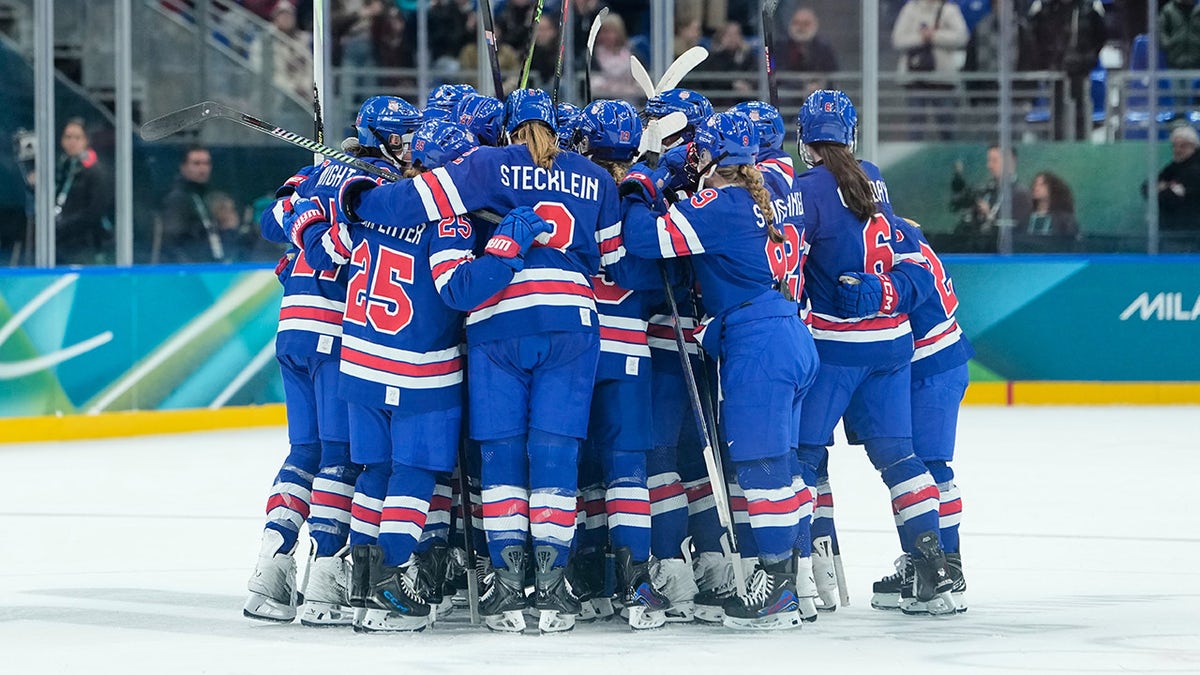
U.S. players celebrate after a semifinal match of women’s ice hockey between the United States and Sweden at the 2026 Winter Olympics, in Milan, Italy, Monday, Feb. 16, 2026. (AP Photo/Petr David Josek)
The U.S. will look to capture gold in a revenge moment from the 2022 Beijing Games. Canada topped the U.S., 3-2, in that game. The U.S. and Canada have squared off in each gold medal game since the 2010 Olympics in Canada.
If you’re in the market for irons that not only offer game-changing performance but also head-turning style, you simply must check out the latest edition of Srixon’s best-selling ZXi5 and ZXi7s — now available in a sleek, limited-edition black chrome finish.
Sold as a 7-club set (4-PW in the ZXi7 and 5-AW in the ZXi5), these irons offer an appealing blend of form and function. The ZXi5 irons, in fact, hold the distinction of being Fairway Jockey’s top-selling irons of 2025.
GOLF Director of Gear Johnny Wunder tested both models last year, and was impressed by their looks right off the bat. The ZXi5s are a players’ performance model, while the ZXi7s are tour cavity backs.
“While my GIR percentage with both ZXi models was really good, even my mishits didn’t look or feel much like mishits,” Wunder wrote. “These shots not only found the greens but their numbers also didn’t change much. There’s a reason why Srixon irons are so popular. They check off every box.”
The ZXi5 design attributes include a forged face, Srixon’s MainFrame technology (which amplifies ball speed and adds forgiveness) and a Tour V.T. sole to help deliver solid feel, fast ball speeds and smooth turf interaction.
For better ball-strikers, the ZXi7s feature the latest edition of Srixon’s PureFrame technology — basically, a piece of steel forged directly into the body of the iron to dampen vibrations — to offer exceptional feel.
And now, you can be among a select group to purchase these sets in a stunning, limited-edition black chrome package. Check out the clubs in detail via the links below. Once you click, you’ll have the chance to customize your shaft length, flex, grip and more. Shop while while they last!
Advertisement
Shop Srixon’s limited-edition black chrome ZXi5 and ZXi7 iron sets
As a four-year member of Columbia’s inaugural class of female varsity golfers, Jessica can out-birdie everyone on the masthead. She can out-hustle them in the office, too, where she’s primarily responsible for producing both print and online features, and overseeing major special projects, such as GOLF’s inaugural Style Issue, which debuted in February 2018. Her original interview series, “A Round With,” debuted in November of 2015, and appeared in both in the magazine and in video form on GOLF.com.
Minnesota Vikings wide receiver Jalen Nailor (83) goes through pregame warmups at Nissan Stadium in Nashville, Tennessee, on Nov. 17, 2024, loosening up ahead of kickoff against the Titans. Nailor works through drills on the field as the Vikings finalize preparations for the road matchup. Mandatory Credit: Steve Roberts-Imagn Images
With free agency just 18 days away, roughly a dozen Top 50 or Top 100 free agency lists are circulating from various outlets, and Minnesota Vikings wide receiver Jalen Nailor had been left almost all of them — until now. The Athletic‘s Daniel Popper ranked the league’s best free agents, and out of nowhere, Nailor checked in at No. 29.
A top-30 free agent tag might change the conversation for Nailor, forcing Minnesota to weigh his McCarthy chemistry against price and role.
It’s quite the prestige for Nailor, a player who has never accrued over 500 receiving yards in a season.
Advertisement
Jalen Nailor Gets a Top 30 Free Agent Endorsement
Nailor gets a little respect.
Jalen Nailor secures a contested touchdown through contact at AT&T Stadium in Arlington, Texas, on Dec. 14, 2025, extending Minnesota’s second-half surge against Dallas. Nailor finishes the play in tight coverage as the Vikings capitalize on timing and coverage leverage during a pivotal offensive stretch. Mandatory Credit: Raymond Carlin III-Imagn Images
The Athletic: Nailor Is NFL’s 29th-Best FA
Nailor notably outranked reputable NFLers like Rashid Shaheed, Romeo Doubs, Aaron Rodgers, and Keenan Allen in free agency, according to Popper.
He wrote about Nailor at No. 29, “Contract projection: 3 years, $36 million. Nailor’s production does not jump off the screen. The 2022 sixth-round pick had a career-high 444 receiving yards in 2025. But Nailor was playing behind Justin Jefferson and Jordan Addison, and he dealt with poor quarterback play last season.”
Advertisement
“More importantly, the tape shows a player who is ready to take a big jump in the right environment. Nailor has the spatial awareness to weave through zones and find soft spots. He was predominantly a slot player in Minnesota but has inside-outside flexibility. He flashes late hands to prevent defensive backs from turning and locating the ball.”
The speedy wideout built rapport with Vikings QB1 J.J. McCarthy last season and might’ve even been his favorite target.
Popper added, “Nailor is not a burner, but he can push vertically out of the slot on fades, wheels and corners. He is compact ball carrier who is capable after the catch, and he is also a quality run blocker for his size.”
“Nailor can get bogged down at the line of scrimmage against bigger, more physical corners. He is not a household name right now, but he could be in the future.”
Advertisement
A Staggering Contract Estimate
From Vikings fans’ viewpoint, $12 million per season is the absolute top rung of the ladder someone with Nailor’s production should command. Spotrac estimates his value to be under $5 million. There’s a vast variance between the upper and lower range of Nailor’s next deal, and Hopper pounded home the ceiling.
But last offseason, Los Angeles Rams wideout Tutu Atwell earned a deal for one year and $10 million, so the estimate of Nailor may be merely a continuation of an escalating NFL salary cap. Atwell later caught 6 passes for 192 yards in 2025 and is a free agent once again.
If Nailor’s price is $12 million annually, the Vikings would almost assuredly exit stage left from contract negotiations. Minnesota is cash-strapped, and $12 million for a player who posts WR4 numbers isn’t worth it.
Advertisement
Nailor in MIN
Throughout McCarthy’s first ten starts, Nailor was one of the few receivers with whom he consistently clicked. Their timing has been more reliable than McCarthy’s connection with Justin Jefferson, and a lot of McCarthy’s better plays in 2025 involved throws to Nailor — a big plus for a quarterback still finding his feet.
In 2025, Nailor snagged 29 catches for 444 yards and 4 touchdowns. The year before, with Sam Darnold throwing the ball, he had 414 yards and 6 scores. While his stats might say “WR4,” his game film occasionally shows flashes of something more.
A December game against the Dallas Cowboys is an apropos example: 3 catches, 47 yards, 2 touchdowns, and a serious momentum shift. Nailor exploded. But then he followed that up with zero catches in the next two weeks against the New Giants and Detroit Lions. That’s Nailor in a nutshell — quiet stretches broken up by sudden sweet bursts of production.
Advertisement
Minnesota Vikings wide receiver Jalen Nailor (83) hauls in a pass during the first quarter at U.S. Bank Stadium in Minneapolis, Minnesota, on Aug. 10, 2024, against the Las Vegas Raiders. Nailor tracks the ball cleanly over his shoulder as the Vikings test their passing game in preseason action. Mandatory Credit: Brad Rempel-USA TODAY Sports
This makes him a tricky free agency case. Given the rollercoaster that was McCarthy’s season, keeping some familiar faces around him is key. Letting go of the one receiver who empowered him seems risky.
And Nailor’s likely to get some attention. Speed always plays, and a team might think a bigger role could unlock his true potential. The Las Vegas Raiders, Los Angeles Rams, Kansas City Chiefs, Pittsburgh Steelers, and Seattle Seahawks all make sense as possible destinations, based on their roster needs, offensive schemes, or coaching connections. Las Vegas, his hometown, and a team needing playmakers on the depth chart, could be a particularly good fit.
An Eric Wilson Shoutout
Linebacker Eric Wilson, who experienced a career resurgence in 2025, also made Hopper’s list at No. 79.
Hopper scribed, “Contract projection: 3 years, $19.5 million. Wilson is a downhill off-ball linebacker who can blitz and defend the run. He is more limited as a coverage player. He has sideline-to-sideline speed and attacks plays in front of him.”
Advertisement
Minnesota Vikings linebacker Eric Wilson (55) celebrates at Ford Field in Detroit, Michigan, on Nov. 2, 2025, after defeating the Lions. Wilson raises his arms amid teammates and crowd noise as Minnesota closes out a divisional matchup on the road. Mandatory Credit: Lon Horwedel-Imagn Images
“Wilson also got some edge work in coordinator Brian Flores’s scheme. Wilson is undersized, which limits him when he is asked to take on climbing guards and centers in the run game.”
The veteran defender posted Pro Bowl-level numbers and efficiency in 2025, and it’s a safe bet that Minnesota will re-sign Wilson, especially with Flores back as the defensive coordinator.
In free agency, it will probably be Nailor out, and Wilson in.
At the most recent edition of the Genesis Invitational at Riviera, in 2024, the brutish par-3 4th hole made the players squirm. For the week, the 230ish-yard hole played to a meaty stroke average of 3.204, making it the third hardest hole on the course. In the fourth round just 6 of 51 players hit the green in regulation, with many tee shots getting held up in the sticky kikuya grass fronting the green.
“Terrible” is how veteran pro Adam Schenk, after missing the cut by four, described the hole in a tweet in which he tagged tournament host Tiger Woods. “Tell them to grow poana [sic] short of 4 for the left 2/3 of green rewarding good shots & keep current grass short on right 1/3 of green.”
Two years later, the world’s best players are back at Riv (in 2025, the L.A. wildfires forced the tournament to relocate to Torrey Pines), and Schenk, who is not in the field this week, got half his wish. Changes have been made to the 4th hole — just not the kind of changes he’d lobbied for.
Instead of shortening or swapping out the grass to make the Redan-style green more accessible, the club has lengthened the hole by about 40 yards, meaning it can now play up to 270 yards, and repositioned the tee box well to the right of its original site. Riv said it made the changes to better align the hole with designer George Thomas’s original vision but the beefing up of an already stout test has raised the eyebrows of at least a few players, including world No. 2 Rory McIlroy, who characterized the new-look 4th as a “horrible change.”
Advertisement
Asked to expound, McIlroy said, “Like 15 percent of the field hit the green last time when it was played at its original yardage at 230. If you want it to be a 275-yard par-3, you have to change the apron leading up onto the green. It can’t be kikuyu, it has to be another type of grass that can help you run it onto the green because, again, in the right conditions, you try to fly that ball on the green with a 3-iron, it’s going to land — it’s going to finish up on the 5th tee box.”
The hole doesn’t have to play all stretched out, of course, and likely won’t on cool, damp days or when the wind is blowing in hard toward the players. As PGA Tour rules official Steve Rintoul told my colleague Jack Hirsh in 2024, “I suspect the players in the Genesis will see a bit of everything over the four days. However, the summertime events coming up at Riviera (Women’s U.S. Open, Olympics and the U.S. Open) will allow for firmer and warmer conditions where the ball played along the ground, chasing onto the green, will be more effective.”
Rintoul added, “As always we will evaluate the playability of the hole and gather player input on the design, but our usual strategy is to tip-toe into using major changes.”
So far that input hasn’t been especially positive. Collin Morikawa, who won at Pebble Beach last week, said Wednesday was his first day playing the retooled 4th and even from pushed-up tees he still needed to hit a 3-wood. “Hit and hope, I guess,” he said. “It’s too soft, unfortunately, to have a lot of control to say, man, I’m going to play a tight 5-iron and run it up. I think a lot of us play it left to chip uphill, but with a 3-wood in hand, that cart path on the left honestly comes into play. … I think it’s just a very long par-3. There’s not a lot of thought to it other than just kind of hitting the green and moving on, unfortunately.”
Jordan Spieth also offered a less-than-ringing endorsement of the hole, telling Golf Channel’s Brentley Romaine, “It’s the only weak spot on the course.” Other players weighed in from afar. Graeme McDowell, who won a U.S. Open up the coast at Pebble Beach, isn’t in the field but filed this observation on X: “Few holes that you would like to lengthen on this great course, but this wouldn’t be my first choice. Obsession with total yardage can destroy individual great holes.”
Riv’s 4th is now the longest par-3 on Tour, edging out the 265-yard 11th at Puntacana Resort. Still, both of those holes are relative mites compared to the par-3 8th at Oakmont, which played 289 yards at the U.S. Open last summer and drew this dig from Viktor Hovland: “I just think all the best par-3s are under 200 [yards]. You can maybe have it just over 200, but as soon as you start to take head covers off on par-3s, I just think it gets a little silly.”
Head covers will most assuredly be coming off at Riv’s 4th this week. Defending U.S. Open champion J.J. Spaun played the hole Wednesday with a 3-wood, feeding his shot in from the front right of the green. His ball released to about six feet from the hole from where he missed his birdie try but made a stress-free par.
Advertisement
Easy . . . right?
“It’s Wednesday,” Spaun said after his round. “It didn’t matter really today.”






;)





;)