
Connect with us
DAPA Banner

Sports

Formula One’s April pause: Between Antonelli’s rise and changing rulebook | Other Sports News

Published

on


April has rarely been a quiet month for Formula One (F1). This year, it has been forced into one. The cancellation of the Bahrain and Saudi Arabian Grands Prix amid the ongoing war in West Asia has reduced the calendar to 22 races and, more unusually, created a five-week gap before the season resumes in Miami on May 1.


For a sport that rarely pauses, the break has shifted attention away from immediate results and towards the early shape of the season, and what those first few races are beginning to indicate rather than simply produce.


Advertisement


At the centre of that shift is Andrea Kimi Antonelli.


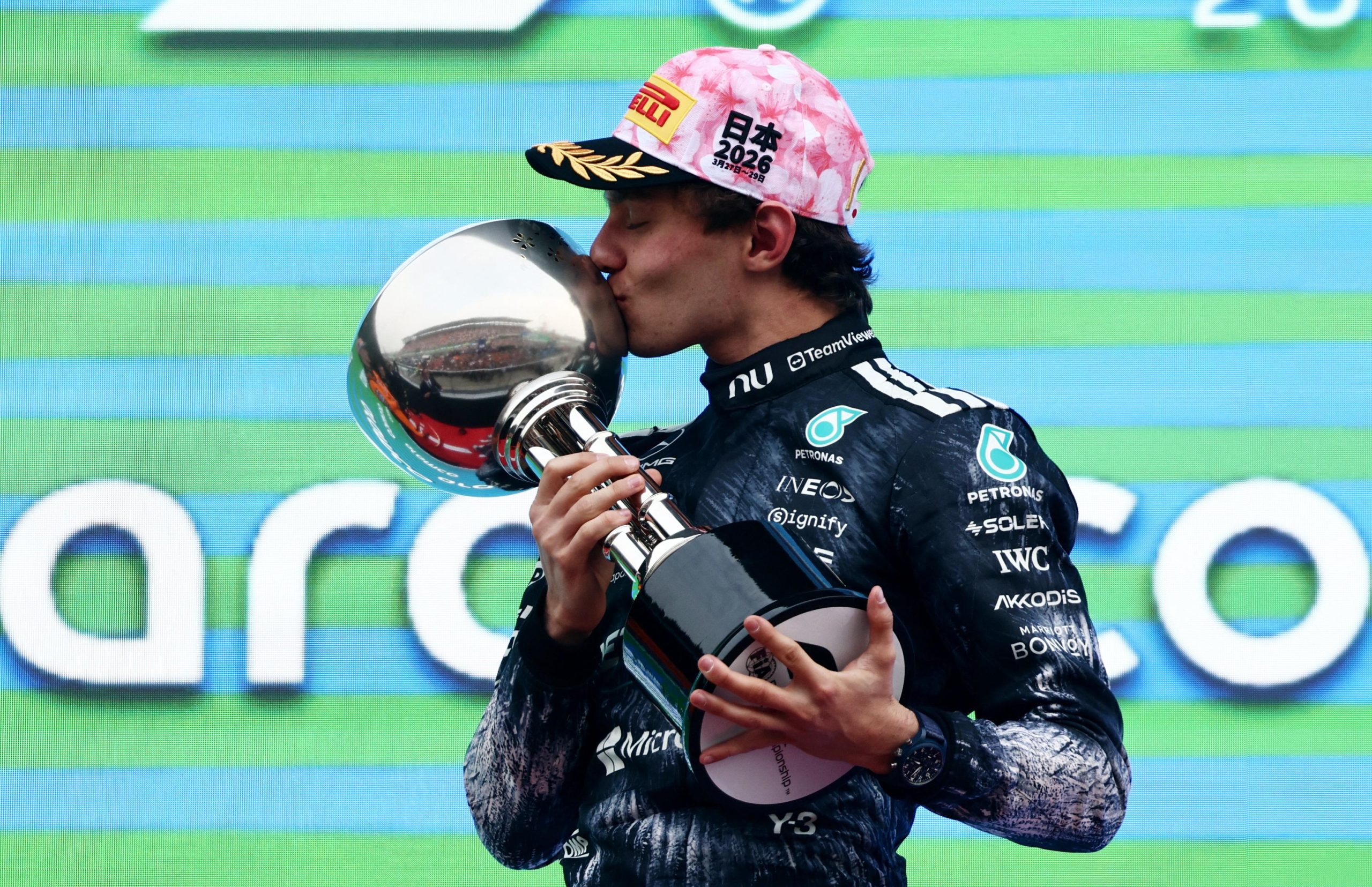
At 19 years and just over seven months, the Mercedes-AMG Petronas Formula One Team driver became the youngest championship leader in Formula One history after his victory at the Japanese Grand Prix on March 29. The record, built on back-to-back wins early in the season, is easy to isolate. What it reflects is less a spike in performance than a profile that already appears suited to how the current grid is operating. Mercedes team principal Toto Wolff has been quick to temper expectations, noting after Antonelli’s early win that it was “too early” to frame the season in championship terms and pointing instead to the need for consistency across a full campaign. 


Mercedes team principal Toto Wolff was quick to temper expectations, noting after Antonelli’s early win that it was “too early” to frame the season in championship terms and pointing instead to the need for consistency across a full campaign

Advertisement


Antonelli’s early races have not been built on dominance across every phase of the weekend. If anything, they have exposed a split profile. Over a stint, his pace has remained controlled, with minimal correction, stable tyre usage and an ability to hold the racing line rather than fluctuate within it. It is the kind of repeatability that usually arrives with experience, but here appears pre-conditioned.


The opening phase of races, however, tells a different story. Revised power unit behaviour has made starts less predictable. Without the MGU-H, which earlier helped smooth power delivery, and with greater reliance on hybrid systems, getting off the line is now less controlled, making traction trickier and early position changes more common. Across the opening rounds, Ferrari-powered cars have collectively gained positions on the opening lap, while Mercedes-powered entries have struggled to consistently hold ground, underlining how sensitive the start phase has become under the new configuration. Antonelli has mirrored that trend, frequently losing positions in the run to the first corner even when starting from the front.

Advertisement


The contrast is instructive. Modern F1 is increasingly operating across two distinct phases. The start has become compressed and high-variance, shaped by reaction time, clutch performance and energy deployment within a few seconds. The race that follows rewards something else: control, tyre management and the ability to operate within narrowing margins over a sustained run. Increasingly, it is the latter that determines outcomes.


Antonelli already appears more fluent in that second phase.

Advertisement


The margins have tightened in both directions. If Antonelli’s control has stood out, so have the consequences of error. Oliver Bearman’s high-speed crash earlier in the season, described as “frightening” and followed by an FIA defence of its safety procedures, brought renewed attention to how the current regulations are playing out in race conditions, even as some drivers and teams have raised concerns over how they are behaving under pressure. With power delivery and car balance shifting more abruptly in certain phases, particularly under braking and initial acceleration, small misjudgements can escalate quickly, leaving limited room for recovery once control is lost. 


Hass-Ferrari F1 Team driver, Bearman’s high-speed crash earlier in the season, described as “frightening” and followed by an FIA defence of its safety procedures, brought renewed attention to how current regulations are playing out in race conditions

Advertisement


That alignment is not incidental. Antonelli’s progression has been tightly managed within Mercedes’ development system, combining early identification with accelerated movement through the junior ladder, including a direct step into Formula 2, the category directly below F1. More significantly, it has been supported by extensive simulator work and private testing in older F1 machinery. The programme has included substantial mileage in previous-generation cars across multiple circuits, effectively replicating race conditions away from competitive weekends.


By the time Antonelli reached the grid, much of what once defined a rookie adjustment period had already been internalised. The result is a driver who does not appear to be learning the category in real time, even if certain phases, most visibly the start, remain in development.

Advertisement


That profile begins to align closely with how recent championships have been constructed. Drivers such as Max Verstappen have built success on sustained race pace and error minimisation rather than isolated bursts of speed, a model that increasingly defines the modern title fight.


Antonelli’s early performances sit within that framework. His gains have not depended on overextension, and his losses have tended to stabilise rather than compound. That balance, control over volatility rather than its absence, is already visible and increasingly valuable in a field where margins are narrowing.

Advertisement


The gap in April has allowed that pattern to come into clearer focus. It does not resolve into a conclusion. It does, however, suggest something more immediate. Antonelli’s rise is not only a function of speed or circumstance. It reflects a point of alignment between how drivers are now prepared and what Formula One is beginning to demand of them.


In a season still taking shape, that alignment may prove as significant as any early result.

Advertisement

Source link

Continue Reading
Click to comment

You must be logged in to post a comment Login

Leave a Reply

Sports

Giants 4-round mock draft after blockbuster Dexter Lawrence trade with Bengals

Published

on

Giants 4-round mock draft after blockbuster Dexter Lawrence trade with Bengals originally appeared on The Sporting News. Add The Sporting News as a Preferred Source by clicking here.

With just days to go before the 2026 NFL Draft, the New York Giantspulled off a blockbuster trade with the Cincinnati Bengals that jettisoned star defensive tackle Dexter Lawrence.

Advertisement

The deal saw the Giants send Lawrence to the Bengals for the No. 10 overall pick, which was no doubt more than anyone was expecting them to get. Now, Big Blue stands armed with two first-round picks, with the other coming at No. 5 overall.

Advertisement

With needs on both sides of the ball, the Giants can now take care of the offense and defense with blue-chip prospects inside the top 10 of the draft later this week.

And that’s exactly what we have them doing in our new mock draft in the wake of the Lawrence trade with the Bengals.

Giants 4-round mock draft after Lawrence trade

Sonny Styles

Sonny Styles

Imagn Images

Round 1, Pick 5: LB Sonny Styles, Ohio State

Advertisement

ESPN’s Jordan Raanan mentioned Styles as one of three players the Giants like with the No. 5 pick, and it’s not hard to see why.

Advertisement

“Staying at No. 5, the three players who seem to be most squarely on their radar are Notre Dame running back Jeremiyah Love, Ohio State linebacker Sonny Styles and  (Ohio State safety Caleb) Downs,” Raanan wrote.

Styles is a freak athlete with sideline-to-sideline speed and great length. He’s a strong tackler, good in run defense and has shown elite skills in coverage after posting an 87.4 Pro Football Focus grade in that area last season.

Advertisement

The Ohio State product can wear the green dot and will be a leader in New York’s defense for a decade.

Round 1, Pick 10 (via CIN): WR Jordyn Tyson, Arizona State

The Giants were one of the teams to attend Tyson’s workout, which was his last opportunity to quell fears about his injury history. By all accounts, Tyson did manage to do that.

Advertisement

Advertisement

“I think Jordyn Tyson goes much higher than earlier expected,” ESPN’s Matt Miller said. “Teams are comfortable with the INJ history. Conversation for him starts at 5 but he’s off the board no later than 16.”

If not for his injury history, Tyson would likely be the undisputed No. 1 receiver in this class. The 6-foot-2, 203-pound pass-catcher can line up anywhere on the field, is a polished route-runner and can even block.

After losing Wan’Dale Robinson in free agency, the Giants need another weapon for quarterback Jaxson Dart across from star wideout Malik Nabers. Not only would Tyson check that box, he could very well provide an upgrade over Robinson.

Round 2, Pick 37: DT Kayden McDonald, Ohio State

Advertisement
kayden mcdonald

kayden mcdonald

The loss of Lawrence will leave a void in the middle of the Giants’ defense, hurting both the pass-rush and run defense. Making matters worse, New York was already weak upfront, even with Lawrence on the roster.

Advertisement

While McDonald isn’t much of a pass-rusher, he showed improvement in that area last season with a career-high three sacks. He really shines as a run defender, with the Ohio State product posting the best PFF grade in the nation in run defense.

Once viewed as a first-round pick, the belief is most teams now have him with a second-round grade because of his lack of pass-rush prowess.

Advertisement

That’s just fine for the Giants, as McDonald can provide the kind of boost to the run defense from Day 1 that New York needs.

Round 4, Pick 105: CB Tacario Davis, Washington

The loss of Cor’Dale Flott leaves the Giants with a big void after the team failed to adequately address the position in free agency, leaving a potential starting duo of Paulson Adebo and uninspiring free-agent signing Greg Newsome outside.

Advertisement

Advertisement

After taking a step back in 2024, Davis rebounded with a strong showing after he transferred to Washington. The 6-foot-4, 200-pound cornerback gave up a passer rating of just 50.6 in coverage, notched a personal bests two interceptions and he showed out in the run game with an impressive PFF grade of 81.8.

Davis can offer some competition for Newsome on the boundary, and it’s not crazy to think he could win that competition in Year 1.

Source link

Advertisement
Continue Reading

Sports

Munich 2026 Final: Ben Shelton vs Flavio Cobolli preview, head-to-head, prediction, odds, and betting tips

Published

on

Match Details

Fixture: (2) Ben Shelton vs (4) Flavio Cobolli

Advertisement

Date: April 19, 2026

Tournament: Bavarian International Tennis Championships

Round: Final

Venue: MTTC Iphitos e.V. tennis club in Munich, Germany

Advertisement

Category: ATP 500

Surface: Clay

Prize Money: €2,561,110

Live Telecast: USA – Tennis Channel | UK – Sky Sports | Canada – TSN

Advertisement

Ben Shelton vs Flavio Cobolli preview

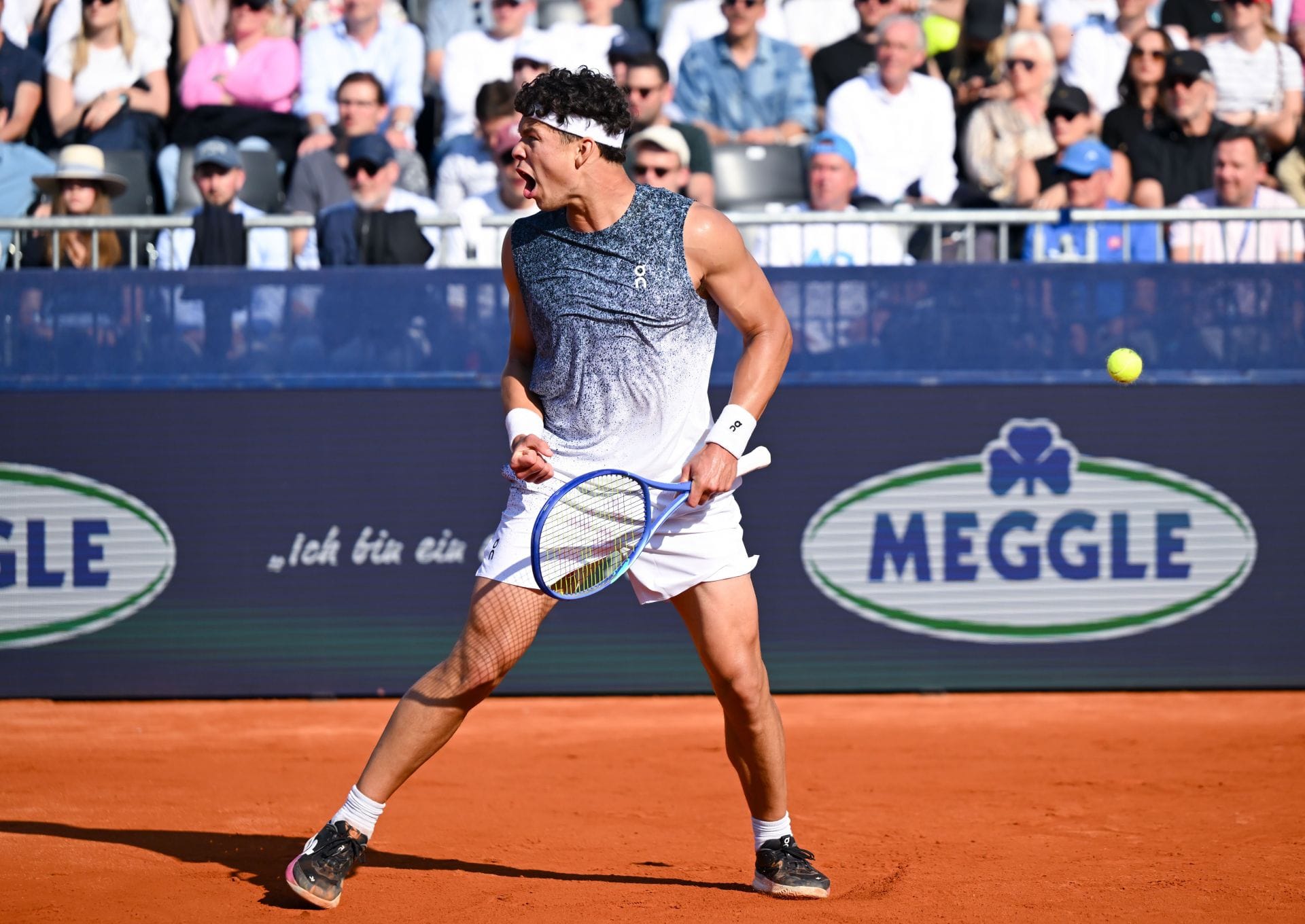
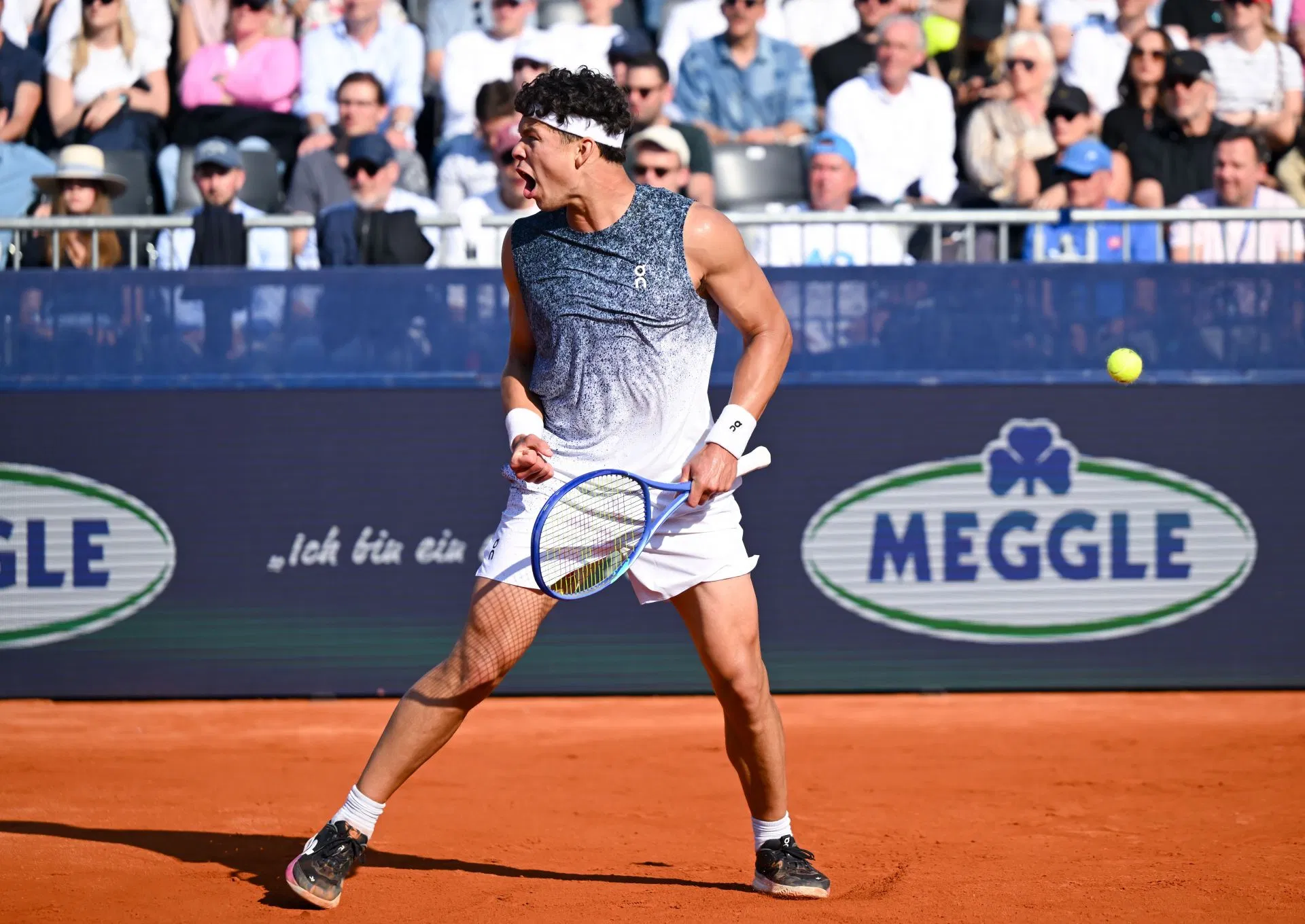
Shelton pictured at the 2026 BMW Open | Image Source: GettyShelton pictured at the 2026 BMW Open | Image Source: Getty
Shelton pictured at the 2026 BMW Open | Image Source: Getty

Second seed Ben Shelton will face off against fourth seed Flavio Cobolli in the final of the 2026 BMW Open on Sunday, April 19.

Shelton started his season with a quarterfinal run at the ASB Classic and followed it up with another quarterfinal finish at the Australian Open, where he lost to Jannik Sinner. He then went on to win the Dallas Open and reached the quarterfinals in Houston before arriving in Munich. There, he defeated Emilio Nava, Alexander Blockx, Joao Fonseca, and Alex Molcan 6-3, 6-4 to reach the final.
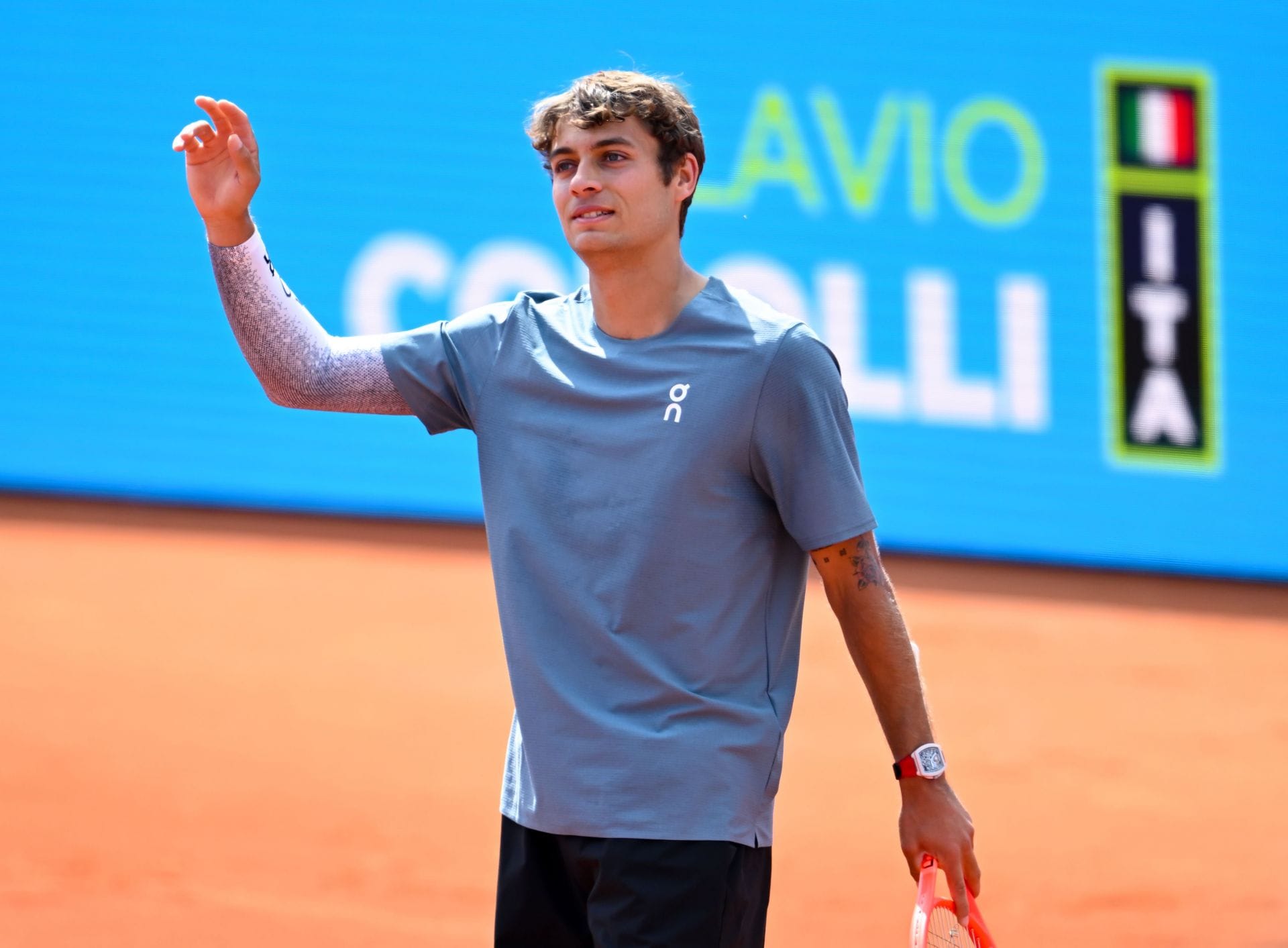
Cobolli pictured at the 2026 BMW Open | Image Source: GettyCobolli pictured at the 2026 BMW Open | Image Source: Getty
Cobolli pictured at the 2026 BMW Open | Image Source: Getty

Meanwhile, Cobolli’s standout result this season is his title run at the Mexican Open. He also made the semifinals of the Delray Beach Open, losing to Sebastian Korda, but hasn’t had many other notable results. In Munich, he beat Diego Dedura, Zizou Bergs, Vit Kopriva, and Alexander Zverev 6-3, 6-3 to set up a clash with Shelton.


Ben Shelton vs Flavio Cobolli head-to-head

Shelton leads Cobolli 3–2 in their head-to-head. Cobolli won their first two meetings in Geneva and Washington in 2024, while Shelton has taken the last three in Acapulco, the Canadian Open, and the Paris Masters in 2025.

Advertisement

Ben Shelton vs Flavio Cobolli odds

Player Moneyline Handicap Bets Total Games
Ben Shelton -525 -4.5 (-105) Over 21.5 (-115)
Flavio Cobolli +360 +4.5 (-140) Under 21.5 (-125)

(Odds via BetMGM)


Ben Shelton vs Flavio Cobolli prediction

Shelton plays with clear intent. The serve sets the tone, the forehand follows, and he looks to finish points before rallies really take shape. When he’s confident, everything happens quickly and on his terms.

Cobolli is more about structure and balance. He moves well, absorbs pace, and is comfortable building points rather than rushing them. He’s willing to stay in rallies and wait for openings instead of forcing them.

The key is whether Shelton can keep control early. If he’s landing first serves and dictating with his forehand, Cobolli may struggle to settle. But if rallies extend, Cobolli’s consistency and movement can start to make things uncomfortable. The American’s firepower gives him the edge, but he’ll need to stay disciplined to avoid letting the match drift.

Advertisement

Pick: Shelton to win in straight sets.


Ben Shelton vs Flavio Cobolli betting tips

Tip 1: The match will have over 21 games.

Tip 2: Shelton to win at least one set with a score of 7-5 or better.