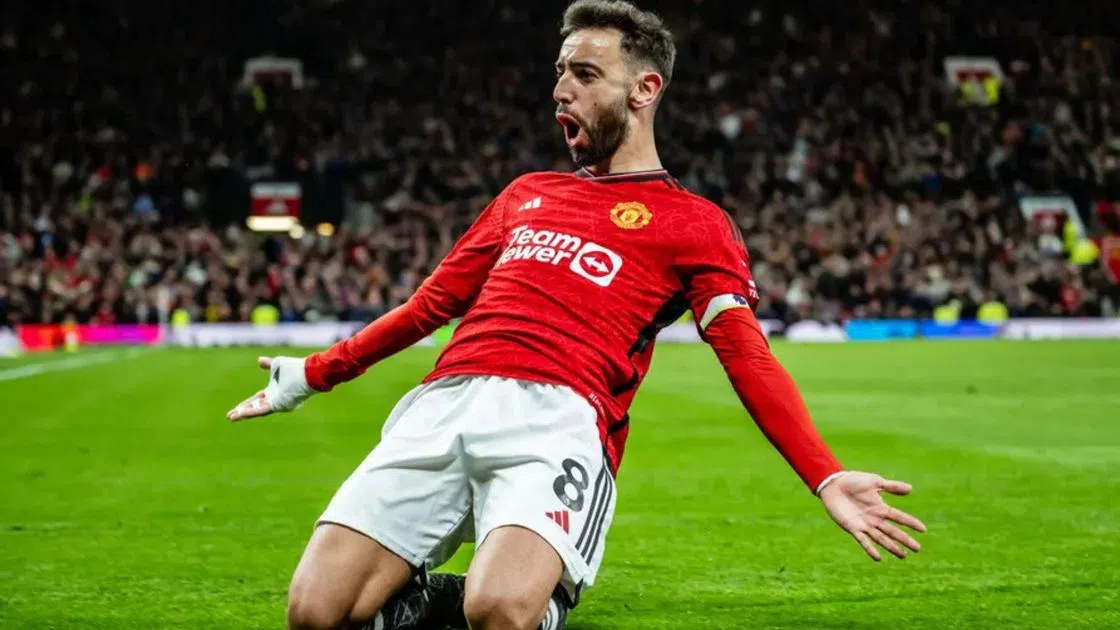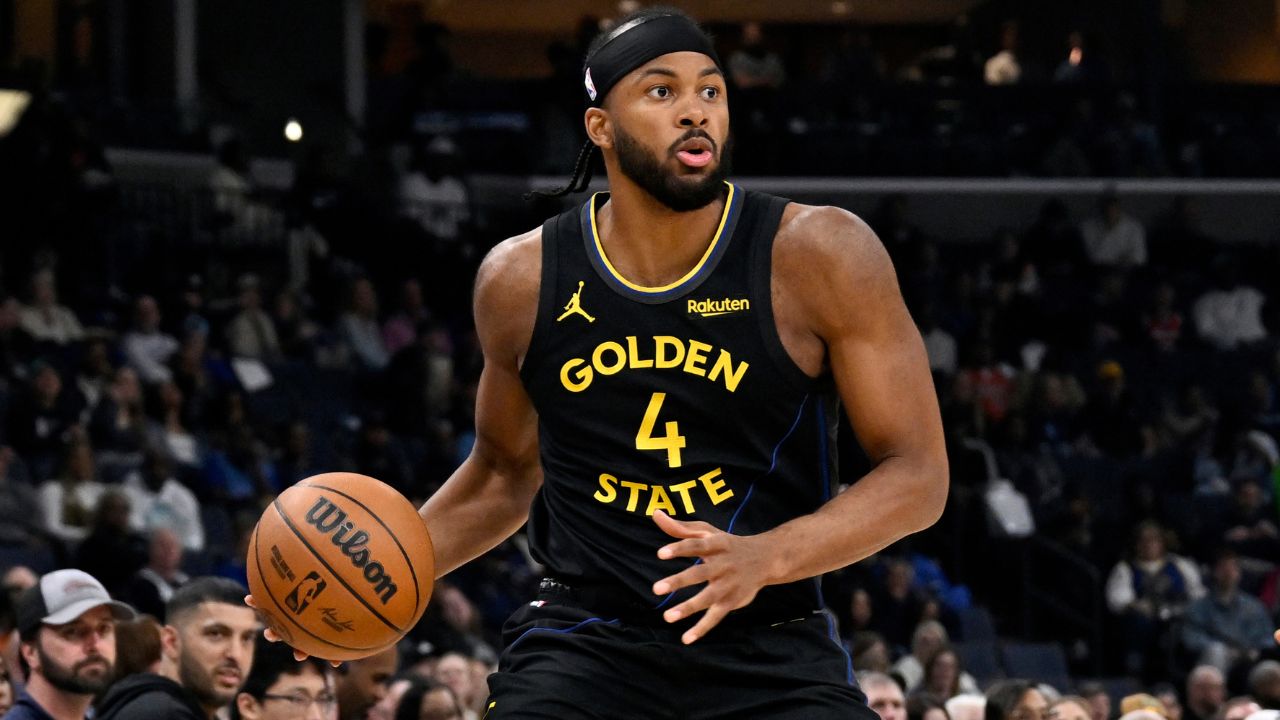

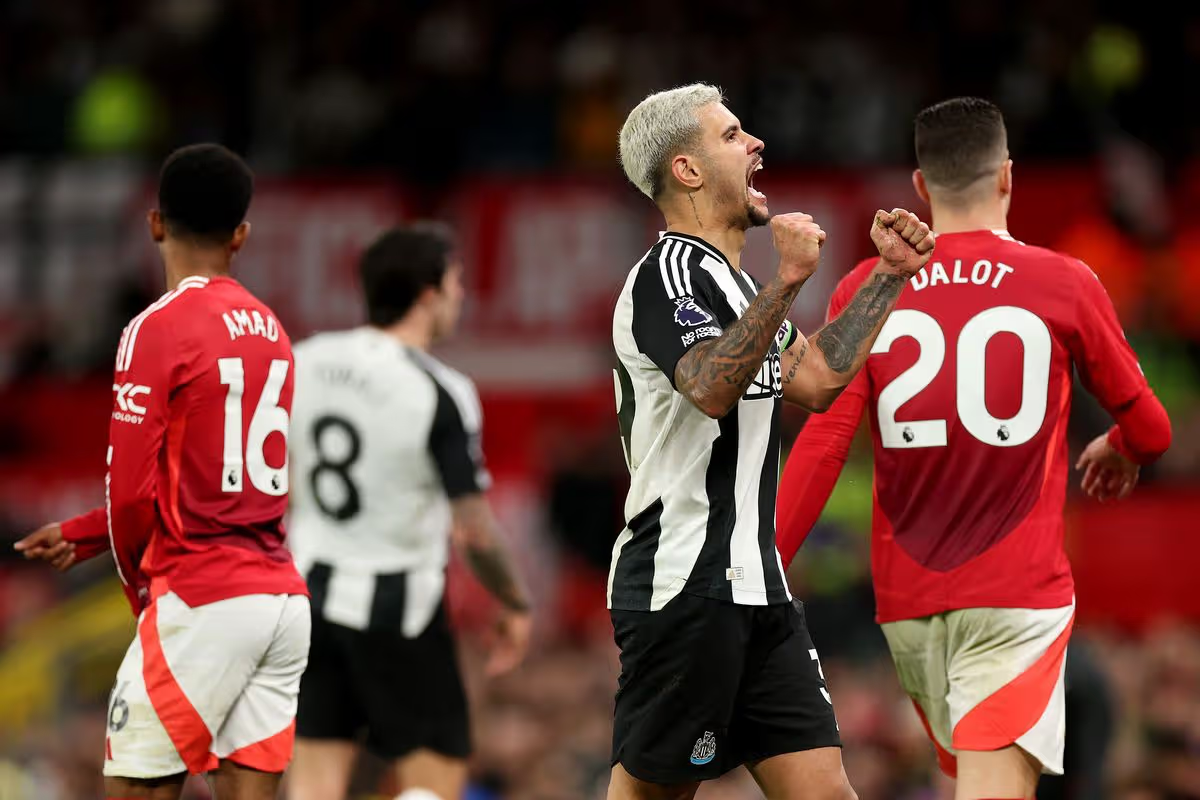
In the same bracket as Fernandes is Semenyo. Keeps starting, keeps scoring.
Every Manchester City player carries a slight question mark as they enter a period that also involves Newcastle away in the FA Cup, two legs against Real Madrid and the Carabao Cup final against Arsenal.
But it’s also impossible to second-guess Pep Roulette so start Semenyo with confidence – Fernandes is my vice-captain if he doesn’t play.
Another player returning from gameweek 28’s team and, at this price, how can you resist?
A team-high four shots last week and a big chance created, Tavernier ended up with bonus points and an assist.
He has a lot of routes to points for a £5.3m midfielder and faces a Brentford side that conceded three – and should possibly have been more – at Burnley.
KDH is the forgotten budget gem after his long injury, but he’s got three returns in four games and is always a good shout for defensive contribution points.
This home match against Burnley is too good to pass up.
Trae Young hasn’t played an NBA game yet in 2026 as he has recovered from knee and quadriceps injuries, but on Monday, we got two pretty significant bits of news about the former All-Star point guard:
Marc Stein reported that he has been “repeatedly advised” that Young and the Washington Wizards are expected to come to terms on a contract extension that is “widely projected” to be a three-year pact. Young has a $49 million player option this offseason.
Hours later, ESPN reported that Young is expected to make his Wizards debut on Thursday when Washington faces the Utah Jazz. Young later confirmed that report on Instagram.
Stein’s reporting isn’t binding, of course. Nobody has put pen to paper here on a new contract. But rumblings about a new deal between Young and the Wizards aren’t new. On Jan. 9, Tim Bontemps and Brian Windhorst reported for ESPN that “the strong expectation around the league is Young will sign an extension with the Wizards.” Young is extension-eligible now, and given both Atlanta’s reported reluctance to give him a new deal and Charania’s reporting in January that Washington was his preferred destination in a trade, it’s not hard to imagine that the two sides have had a basic framework in mind since the trade.
The sequencing in that respect seems a bit backward. Shouldn’t the Wizards have wanted to see Young play for them, examine his fit with the existing roster and then determine if they want to keep him for the long haul?
The answer is probably yes, though these situations can be complicated. Trades involving stars often come with understandings about future contracts. That usually happens because teams are reluctant to give up meaningful assets for a player they aren’t sure they’ll be able to keep.
Where the Young situation differs, though, is that the Wizards didn’t give up notable assets to get Young. The Hawks cap-dumped him for CJ McCollum’s expiring contract and Corey Kispert, a reserve shooter. Interest in his services appeared to be limited. Aside from Washington, no other team is known to have made a serious offer for Young this season, and with the Hawks uninterested in paying him, Young didn’t exactly have much leverage in securing another payday upon the expiration of his existing contract.
Advertisement
This was one of the theoretical benefits of acquiring Young. He was a low-risk, high-reward target. His defensive vulnerabilities and limitations as an off-ball player on offense made him a tricky fit for most win-now teams in a league increasingly moving away from heliocentric offense, but he’s still a 27-year-old four-time All-Star. By all means, get that player for nothing. See how he fits. His presence could potentially be quite beneficial as a table-setter for Washington’s young players, who could use his veteran presence as a developmental aide.
Maybe he works out. If he doesn’t, his existing contract makes it pretty easy to cut bait. He is owed nothing beyond the 2026-27 season. This is notable for a few reasons. The first is that the Wizards start to get more expensive after that. If Young signs a new three-year deal, for instance, his next contract would overlap with rookie extensions for Alex Sarr and Kyshawn George, both of which should be pretty big.
The second is that Washington’s roster has already changed meaningfully since Young’s acquisition, and it is going to change more by the end of his current contract. Since trading for Young, the Wizards have also traded for Anthony Davis, who is owed more than $121 million for the 2026-27 and 2027-28 campaigns. Perhaps more pressingly, you could argue that the most important player for Washington’s current rebuild isn’t even on the team yet.
That would be their 2026 lottery pick. The Wizards have done well to hold Young out as long as they have, as that pick is top-eight protected and they needed to make sure they won’t hand it over to the Knicks. It is, broadly speaking, safe now. The 16-win Wizards currently have the fourth-worst record in the NBA, which would guarantee their pick falls no lower than No. 8. Even if they slip to No. 5, they’d have a 99.4% chance of keeping the pick. Considering the No. 6 Pelicans don’t own their pick and therefore have no incentive to lose while every team “below” them in the lottery standings has an advantage of at least five wins over Washington, the Wizards should feel relatively confident that they’ll keep their pick.
Advertisement
But what are they going to do with it? That will depend on the lottery drawing of course, but there is a good chance they wind up with a high-usage player that needs the ball more than an offense led by Young is capable of giving it to him. The Wizards would have to reap some significant benefit in order to justify guaranteeing Young his payday before seeing how he fits with that draft pick and the homegrown core.
This is where things get tricky. We don’t know what a Young deal will look like yet, and yes, there is a price so low that the reward outweighs the risk. It just seems unlikely Young is willing to eschew free agency for such a price. More likely, a deal looks a bit more like the one Rudy Gobert signed with Minnesota before last season. Gobert, like Young, had a player option worth max money at the end of his previous deal (in his case, it was for $46.6 million). He declined that player option and dropped his salary for the 2025-26 season down to $35 million. That dip meant quite a bit to the contending Timberwolves, who needed to clear money to re-sign Julius Randle and Naz Reid while staying below the second apron. In exchange for that pay cut, Gobert got two more years worth $74.5 million.
Say Young signs a deal structured similarly. He’d decline his player option and take a pay cut next season to reflect the limited league-wide interest in small guards at the moment. In exchange, he’d get two extra years of security, aligning with Stein’s reporting that an extension would give him a three-year deal. The key difference here is that Washington has no obvious need for short-term savings. They could have still planned for cap space after the Young trade, but getting Davis afterward vaporized most of their remaining flexibility below the cap. Even with Davis, they’re far enough away from the luxury tax that they can use the full mid-level exception and leave some wiggle room for trades. Having any player at a lower salary than he could have earned is nice, but there’s not a specific type of move that’s immediately visible in which getting those short-term savings would be necessary, though that can obviously change based on further transactions.
It seems as though the Wizards are moving forward expecting Young to be a foundational player for them moving forward. It’s not a crazy expectation given how much he’s accomplished, but it’s not a sentiment many other teams appeared to share when Atlanta was shopping Young a few months ago. If he had much of a market, it probably would have cost more for Washington to trade for him. He certainly could prove the market wrong, but the downside risk of paying him before doing so vastly outweighs the premium it would cost to keep him if he does. It’s better to give a giant contract to a sure thing than a pretty big one to a coin flip.
Advertisement
Again, nothing here has been finalized, but the reporting has pretty consistently suggested an extension is the likeliest outcome. Given where they are and how much their circumstances could change in the next season and change, that just seems a bit premature. The Wizards are still figuring out what they have. They’re still evaluating their recent draft picks and in a position to make another high one. A long-term commitment to Young only makes sense once they’re sure he fits with what they’ve already built, but if the reporting here is any indication, it seems like they may have been leaning that way before even seeing him suit up for a single game.
Austin Smotherman tapped in his three-foot birdie putt on Sunday and exhaled. With the Florida sun fading over PGA National, the 31-year-old smiled, shook hands with playing competitor Shane Lowry and walked off the green with the look of a man who had just won his first PGA Tour event.
Except he hadn’t.
Smotherman brilliantly navigated his way around a treacherous PGA National through three rounds. He entered Sunday tied for the lead, and said he had “chills” as he looked toward a day that could be career-changing. Smotherman fired a two-under 69 on Sunday, but that wasn’t enough to keep pace with Nico Echavarria, who grabbed the trophy after Lowry collapsed over the final three holes.
Austin Smotherman couldn’t get it over the line. Winning your first PGA Tour event, no matter your age, is a terrifying task. Everything has to go right. It didn’t for Smotherman, but he didn’t leave PGA National empty-handed.
Advertisement
He entered the week at No. 31 in the Aon Next 10. A strong finish through the Bear Trap on Sunday would mean the difference between a ticket to the Arnold Palmer Invitational, a Signature Event, and a trip to the Puerto Rico Open, an opposite-field event.
As Lowry melted down beside him, Smotherman made pars at 16 and 17 before getting up-and-down from 82 feet for birdie on 18 to jump into a tie for second and book his trip to Bay Hill.
“Huge. First-ever Signature Event, first time playing Bay Hill,” Smotherman said after the round. “Watched it on TV, a lot of iconic shots. I’ll go see them in person and realize just how tough Arnie used to make that place.
“That’s not a bad spot to be, knowing that the work is done,” Smotherman said of the closing birdie to get into API. “It wasn’t exactly holding the trophy or getting to a playoff, but held the lead for 54 holes. Was way back; birdies down the stretch are going to matter a ton.”
A T2 finish gave Smotherman 208.333 FedEx Cup points, vaulting him to 22nd in the FedEx Cup and No. 8 in the Swing 10. Smotherman, who lost his PGA Tour card after the 2024 season and earned it back via the Korn Ferry Tour last year, knew exactly how important every shot was coming down the stretch. Even when Lowry’s lead grew to five on the back nine, Smotherman’s focus didn’t drift and his morale didn’t drop. He might not win, but he was going to make the most of what he described as the best week of golf he has played on the PGA Tour in his career.
“This was kind of just my first really big pedestal,” Smotherman said. “Kind of had a back door-ish top 5 in the Mexico Open at Vidanta a couple years ago, and never really had the same kind of moments coming down the stretch … This will be a week I always look back at.”
Two weeks ago at Riviera, Jordan Spieth finished in a tie for 12th, which earned him 105 FedEx Cup points. Afterward, Spieth, who finished last season outside the top 50, referred to the Signature Events as “house money” in a player’s quest to accrue the points needed to finish inside the top 50 and become eligible for all Signature Events the following season. For comparison, had Smotherman finished in a four-way tie for 12th this week, as Spieth did in Riviera, he would have only earned 59.2 points compared to the 105 Spieth earned. A good week or two at a Signature Event can be the difference in finishing inside the top 70, top 50 or fighting for your card.
Prior to his week at the Cognizant, Smotherman had just one career top-five finish. He had made just 47 of 81 cuts and had to go back to the Korn Ferry Tour in 2025. All of that has taught Smotherman to be present in the moment, to celebrate the small wins and not wish that his road had been something different.
“I think it’s just acknowledging that all of us out here have our own path in our careers, however it is, and comparison is kind of a thief of joy, so I’m going to follow in my career, the things I’ve done, the joyous moments we’ve had, which are more than I can count really,” Smotherman said. “Just little things daily even. Appreciative of playing on the PGA Tour every single day. It’s pretty awesome.”
He secured a different kind of win on Sunday at PGA National. And for the first time, that path now leads to Bay Hill and all the possibilities it can unlock if another career week awaits at Arnie’s Place.
Tennessee has ruled out star freshman Nate Ament for Tuesday night’s game against South Carolina, the team announced on Monday night. Ament suffered a leg injury on Saturday against Alabama and the Volunteers are still evaluating the severity of the injury.
There is currently no timetable for Ament’s return as he receives further evaluation. The five-star freshman didn’t practice on Monday, but he did work out off to the side, according to 247Sports. Assistant coach Justin Gainey told reporters that Tennessee was still waiting to get the results of the MRI Ament underwent on Sunday.
“(Sunday) it wasn’t a lot of information that we got because they hadn’t received the MRIs yet,” Gainey said. “So we didn’t have a lot of information, just kind of general. And so today hopefully we kind of get updated on that and where things are with it.”
Ament left Tennessee’s 71-69 loss to Alabama in the first half after getting tangled up with a couple Crimson Tide players while diving for a loose ball. Ament didn’t return in the first half, but he did re-enter the game in the second half before leaving again. Ultimately, Ament was limited to just 11 minutes.
After an uneven start to his freshman season on Rocky Top, Ament really hit his stride in February. He is second on the Vols in points per game (17.4) and leads the team in rebounds per game (6.4). If Ament does miss significant time, that will test Tennessee’s scoring depth while putting even more weight on leading scorer Ja’Kobi Gillespie.
Advertisement
No. 24 Tennessee wraps up regular season play this week with Tuesday’s road game against the Gamecocks before hosting rival Vanderbilt on Saturday. After that, the Volunteers will travel to Nashville for the SEC Tournament, and the absence of Ament would loom large on the doorstep of the NCAA Tournament for Tennessee, a No. 5 seed in CBS Sports Bracketology.
Real Madrid fans are questioning manager Alvaro Arbeloa after their 1-0 defeat at the Santiago Bernabeu to Getafe. Many believe that he took too long to introduce Brahim Diaz in the game.
Getafe took the shock lead in the match through a stunning volley by Martin Satriano. The goal was enough to help them seal the win, making it two losses in a row in the league for Los Blancos for the first time since 2020.
Thanks for the submission!
Advertisement
Real Madrid fans were quick to point fingers at Arbeloa, blaming him for the defeat. They claim that the manager was not proactive and should have made better decisions with the substitutions.
Advertisement
The manager introduced Diaz in the 85th minute, and the fans were furious with the decision. Many posted:
Arbeloa spoke about the defeat, saying that he was to blame for the loss. He claimed that the game was getting paused too many times, but they needed to appreciate Getafe for doing well and said:
“I’m the one to blame for this loss. I won’t blame the players after their effort tonight. We can improve but it’s on me. There were many breaks during the game. The referee allowed that. But it’s not criticism, Getafe were good.”
Arbeloa was unwilling talk about the absence of Kylian Mbappe and Jude Bellingham’s injuries for the defeat. He believes that they had enough players to get the win and said:
“The reason we lost is because Mbappé and Jude are injured? No, this is Real Madrid, we have more than enough players to win games. I won’t find excuses. To create chances, we often go too much for the ‘easy choice’, which is giving the ball to Vini and expecting him to create danger. We need to find other ways to create danger.”
Los Blancos are now four points behind Barcelona in the league table after 26 matches.
Advertisement
Real Madrid manager not giving up on La Liga title
Real Madrid manager Alvaro Arbeloa has refused to give up on the league title despite the loss. He claimed that they still have 36 points to play for and will be able to catch up and said:
“La Liga is over? No, no. There are still 36 points to get and we will fight until the end. It’s just 4 points, we can catch up. This is Real Madrid. Our objective is to get the 36 points left. We have to win next game in Vigo. No one gives up.”
Los Blancos face Celta Vigo next in the league, before taking on Manchester City in the UEFA Champions League.
The Minnesota Vikings have approximately 25-30 quarterback options in the open market this offseason, as the franchise seeks to add veteran oomph behind third-year passer J.J. McCarthy. Near the top of the list lives Kyler Murray of the Arizona Cardinals, and according to reports, Minnesota won’t even need to trade draft capital to get him.
A release would let Minnesota pursue Murray while keeping draft capital intact for roster upgrades elsewhere.
It’s becoming increasingly likely that Arizona will flat-out release the 28-year-old.
Advertisement
A Kyler Murray Release Would Change Minnesota’s Plan
Minnesota’s quarterback choice nears.
Arizona Cardinals quarterback Kyler Murray (1) looks on during pregame warmups before facing the Cleveland Browns at State Farm Stadium in Glendale, Arizona, Dec. 15, 2019. Murray prepared on the field as Arizona readied for the late-season matchup at home against Cleveland. Mandatory Credit: Matt Kartozian-USA TODAY Sports.
Murray Likely to Be Released, Not Traded
Talking on ESPN airwaves, former NFLer Booger McFarlan opined on Murray late last week, “Realistically, I don’t think anybody’s going to trade for Kyler Murray. He’s gotten to a point right now where when you look at him as a 5’-10″-maybe quarterback who struggled throwing from the pocket. Yeah, he’s athletic, but he’s been hurt. I just think the market for him to go to another team is going to be small.”
“It’s clear the Arizona Cardinals don’t want Murray anymore. So, asking Monti Ossenfort to go into his David Copperfield hat and pull something out, I think I know he’s good. I don’t think he can do magic. So, to ask him to go and pull out a third, a fourth, or a fifth-round pick, I don’t know if you can give Murray away right now.”
Advertisement
Revenge of the Birds‘ Barry Schuck added, “The ESPN Insiders are giving Murray a 5% chance of Murray getting traded to any NFL club. Rumors regarding moving him began right before the NFL trade deadline last year, but that came and went.”
“The whole roadblock is that mammoth contract Murray was given that every Arizona fan shouted was a huge mistake at the time of the signing. This story appears to be getting some footing regarding Murray wanting his outright release. And now, it appears some of it is coming from the Murray camp itself.”
Basically a Free QB in 2026
Murray signed the mega $230 million extension in 2022, and his guaranteed money has not run out. Put plainly, he’s still owed $36.8 million from the Cardinals — no matter what. Typically in the situation, because it’s not secret leaguewide that the player has been paid, the man signs a small contract with his new team after the release.
Advertisement
For example, in 2024, when the Denver Broncos cut ties with Russell Wilson, he signed with the Pittsburgh Steelers for just over a million bucks because Denver had paid him for that season. That’s what’s going on with Murray in this scenario.
A trade, on the other hand, would put Minnesota, or any other team, on the hook for Murray’s remaining contract. That’s why it’s so crucial for Arizona to release him — if you want your favorite team to snatch Murray. A roster cut makes Murray free in NFL speak for 2026.
All the Tools
If Minnesota’s choice is between Murray and a lower-ceiling bridge quarterback, the superior option is clear. Murray’s statistics speak for themselves. Over a 17-game season, he averages roughly 3,997 passing yards, 30 total touchdowns, 11 interceptions, a 67.1% completion rate, and 623 rushing yards.
Advertisement
Moreover, his career EPA+CPOE surpasses those of Baker Mayfield and Trevor Lawrence, demonstrating consistent production over multiple seasons.

Arizona Cardinals quarterback Kyler Murray sits in the front row as Jonathan Gannon is introduced as head coach at the team facility in Tempe, Arizona, Feb. 16, 2023. Murray attended the news conference as the organization outlined its new leadership direction. Mandatory Credit: Rob Schumacher-Arizona Republic.
Admittedly, Murray has reached the playoffs only once in his seven years with Arizona. His team’s record hasn’t always reflected his individual talent.
But Murray possesses undeniable skills. He can throw the ball 65–70 yards, previously ran a 4.38, and demonstrates exceptional accuracy. He’s far more than just a novelty or a limited passer.
While he might not be a seamless fit for Kevin O’Connell’s system, the decision hinges on the alternatives. If the Vikings’ choice is between Murray and a quarterback in the mold of Jimmy Garoppolo, the potential outcomes are vastly different — a point even Murray’s detractors would likely concede.
Will Vikings Recognize the Value?
Advertisement
Then, the main event: the Vikings must decide if Murray’s so-called aloof attitude is a legitimate character defect or a product of the Cardinals’ culture. The NFLPA leaked the annual report cards last week, and Arizona’s ownership received an ‘F’ grade.
Minnesota Vikings head coach Kevin O’Connell speaks during the NFL Scouting Combine at the Indiana Convention Center in Indianapolis, Indiana, Mar. 1, 2023. O’Connell met with media and league personnel as Minnesota evaluated draft prospects and offseason priorities. Mandatory Credit: Kirby Lee-USA TODAY Sports.
Some fans have also questioned Murray’s scheme fit within O’Connell’s system. He’s not elite by the numbers throwing over the middle; can O’Connell accommodate Murray’s strengths, or will he remain rigid enough to tell the guy with 4.38 speed, supreme arm strength, and elite passing accuracy … no thanks.
If the Cardinals drop Murray, making him suddenly free to 31 teams, the Vikings, needing a quarterback, almost have to sign him due to the value.
Feb 24, 2026; Stillwater, Oklahoma, USA; West Virginia Mountaineers forward Brenen Lorient (0) drives around Oklahoma State Cowboys forward Parsa Fallah (22) during the second half at Gallagher-Iba Arena. Mandatory Credit: William Purnell-Imagn Images
It’s likely too late to make a difference in West Virginia’s postseason destiny, but a win over a ranked team on Saturday was exactly what the program needed.
The Mountaineers hope to parlay their upset of then-No. 19 BYU into a strong finish to the season, starting with Tuesday’s trip to face Kansas State in Manhattan, Kan.
West Virginia (17-12, 8-8 Big 12) snapped a three-game losing streak with a 79-71 win at home against the Cougars on Saturday. Honor Huff scored 19 points and dished out six assists, while Brenen Lorient added 18 points. Lorient’s nine rebounds helped the team secure a 39-29 edge on the boards.
“I told the guys in the locker room that I really felt like (Saturday) was a byproduct of the previous 72 hours,” West Virginia head coach Ross Hodge told reporters, “and just their ability to stay the course, stay together, handle disappointment in the same manner that they handle success, be the same guys, put the same work in, learn from it, not run from it, not point fingers, not blame and getting that 72 hours onto the floor.”
The Mountaineers won’t appear in any bracketologists’ latest mock tournament fields, but a trip to the NIT or College Basketball Crown isn’t out of the question. They’re also playing for better seeding in the Big 12 tournament, where running the table would give them a surprise NCAA Tournament bid.
Advertisement
None of this is true for Kansas State (11-18, 2-14), which can finish no better than 15th in the 16-team Big 12 and would need a miraculous five wins in five days there.
The Wildcats are already two weeks removed from firing coach Jerome Tang, and while it produced a 90-74 win over Baylor in interim coach Matthew Driscoll’s first game on the job, they’ve lost three in a row since, most recently 77-68 on Saturday vs. TCU.
P.J. Haggerty continues to shoulder the load for K-State with 23.3 points, 5.3 rebounds and 4.0 assists per game.
Advertisement
Driscoll indicated that Abdi Bashir Jr., the team’s No. 2 scorer with 13.2 ppg on 44.4% from 3-point range, was not close to returning from a stress fracture in his foot that’s sidelined him since mid-January. Driscoll explained that the nature of the injury is delicate.
“It’s gonna be a game-time decision until it’s not,” Driscoll said.
Colman McCarthy, one of my golf and writing heroes, died the other day. He was best known as a liberal op-ed page columnist and editorial writer for the Washington Post, where he had a nearly 30-year run, starting in the late 1960s. He was a true believer in a core value of Quaker teaching, that war begets war. As a golfer, he was a true believer in miss-’em-quick — and still he broke par innumerable times.
Before Colman became a reporter, writer and columnist, he had two long and almost unintentional apprenticeships. He spent almost a decade, through high school on Long Island in the 1950s and then college in western Alabama, planning to become a professional golfer. Then, after playing college golf at Spring Hill College, a Jesuit school in Mobile, he spent a half-decade living in a monastery in rural Georgia, training to become a Trappist monk. That was his pathway to his life in journalism, and to the long series of classes he taught, in universities and high schools, under a rubric he called Peace Studies.
As he settled into his inside-the-Beltway life, with his wife and their three sons, Colman made a return to golf. His adulthood unfolded in a city — the nation’s capital — where fluency in golf is a kind of passport, whether you’re touring the East Potomac public course or visiting Burning Tree, the no-women-allowed golf club for presidents and diplomats and other grandees. When the spirit moved him, Colman wrote about the game, always with unfailing logic and a light touch.
Advertisement
When the spirit moved him, Colman wrote about the game, always with unfailing logic and a light touch.
The Lords of Augusta, back in the day, could not have had much use for Colman McCarthy. On the eve of the 1977 Masters, in his widely syndicated column, Colman mocked the tourney for its tiny, handpicked fields, as it casually excluded many established and hot-handed golfers, to say nothing of Black golfers and stars from distant lands. He suggested a player boycott of the Masters by which (as he called it then) the “Tournament Players Championship” would rise to major status and the Masters would be rechristened as the “Clifford Roberts Invitational,” in mock tribute to the club chairman. A half-year later Roberts died (Colman had nothing to do with it!), and in time the criteria for a tournament invitation became way more meritocratic.
Colman McCarthy was born on the North Shore of Long Island in 1938. His father was a golf-and-baseball loving immigration lawyer, an attorney out of the do-gooder Atticus Finch tradition, except the elder McCarty was an Irish-Catholic New Yorker. Colman never lacked for heroes. Tommy Bolt, as a kid. (Colman caddied for him a number of times.) Mother Teresa, years later. He was drawn to people who figured out their own paths in life. Chi Chi Rodriguez, for instance, even though their politics were on opposite sides of the fairway. Colman liked Notah Begay, too.
In 1977, Colman wrote a slender book called “The Pleasures of the Game,”which I found as a new release in my local library in Patchogue, on the South Shore of Long Island. I was a senior in high school, and it was a game changer. Colman wrote about the pleasures of the nine-club bag, the benefits of walking, playing briskly, abiding by the rules, bringing your own food. He described his days caddying at an upper-crust Long Island club, sometimes for luminaries like the Duke of Windsor and Perry Como.
Then came a sort of demotion, to the pro shop, where he sold socks by the pair and golf balls by the sleeve. Finally, his big break: “From there, I went into darkness — working as the nightman in charge of rotating fairway sprinklers. In between rotations, especially midnight to 3 a.m., I practiced putting by moonlight, sighting Venus in my plumb-bob on sidehill putts.”
Advertisement
Colman taking a cut in 2015.
courtesy jim mccarthy
Long Island summer nights in those days were (and remain) warm, humid and still. Those old-timey ‘round-and-‘round fairway sprinklers, typically on a stake, offered a rhythmic, spritzing evening soundtrack, along with the occasional and impromptu passing shower. Colman’s picture landed in me. With it came the idea of the golf course as a sort of monastery. Early in “Pleasures,”McCarthy got golf’s broad joys down to a single sentence: “Golf exercises the body, stimulates the mind and elevates the spirit.”
I have a vague memory of writing to the author after reading “Pleasures,” and I am certain I met Colman at the 1985 Kemper Open at Congressional, where I was caddying and he was wandering, wearing a bucket hat and carrying a reporter’s notebook. One night that week I sat in on his Peace Studies class at American University. (Over the years I have pointed students to the class. One of Colman’s main points is that it’s not enough to be aware of violence throughout the world — our responsibility is to do something about it.)
After the class, Colman and I got a quick cafeteria dinner. (He was a vegetarian.) Done with supper, I got on a Metro to return to my digs for the week, the sofa of a reporter friend from college living in Foggy Bottom. I don’t recall how Colman got back to his home but he didn’t own a car and was famously committed to public transit, as well as his three-speed Raleigh. He biked everywhere.
Advertisement
In his travels, he talked to everybody. That was one of his things: talk to everybody, because you can learn from anybody. He lived as he preached. He counted Joan Baez and Sargent Shriver as friends, as were various golf pros, Congressional staffers and bus drivers. We stayed in touch (though too sporadically) over the past 40 years. I am proud to say that Colman McCarthy shaped my life immeasurably.
I can’t imagine a life without heroes. I don’t know how you feel about the subject.
With his granddaughter, Vivienne, in 2022.
courtesy jim mccarthy
About a month ago, a young woman with a hint of the South in her voice was scanning my items at a neighborhood grocery store in Philadelphia, where I live. She said she was from Mobile, Ala., and that she had attended school there, at Spring Hill College, but left without getting her degree when she ran out of money. I offered the young lady a squib about Colman McCarthy — though nothing about his sub-70 scoring average as a junior on the Spring Hill golf team — and his later life a teacher. The young lady said she was saving money with a plan to return to school and begin her own career as a teacher.
Advertisement
Colman’s wife, who went by Mav, was a nurse, a Scotch drinker, a meat-eater, a conservative — as a couple they were further proof that opposites can and do attract. (Both were, it should be noted, devout Catholics, though she from High Society Greenwich, Conn.) Mrs. McCarthy died in 2021. When the couple met and quickly became engaged, Colman’s future father-in-law had a plan to scuttle the relationship — take him out for golf at the family’s high-brow club! In tennis shoes and borrowed sticks, Colman went around in 66. The marriage was on.
Two of their sons, John and Edward, became teachers and baseball coaches. A third son, Jim, became a public relations executive and advisor who helped Augusta National’s leadership through its point-of-a-bayonet brouhaha as a single-sex club in the early 2000s. Colman and his three sons formed a golfing foursome whenever the occasion arose, sometimes on Long Island or in the Dominican Republic, where John McCarthy lives. Since Mav’s death, Colman lived with John and his family in the Dominican, and he died there on Feb. 27 at age 87. He was puttering around the Casa de Campo practice greens to his end, still smitten by the game. All the while, he remained eager to make the world a more just place for its 8 billion human citizens, including the 60 million golfers roaming our planet’s many and varied fairways.
You may have noticed that Rory McIlroy has been leaning on a new-ish shot off the tee — especially when the wind starts to swirl. Some call it a low bullet, others refer to it as a stinger. Whatever its name, the goal is the same: a low-launching drive that maintains a stable, piercing ball flight that can cut through the breeze instead of ballooning.
It’s a shot that McIlroy says he’s been refining over the past few years.
“I think I started to use it a lot more at Pinehurst in ’24,” he said at the Genesis Invitational last month. “I started to hit the low one there. I’ve always had it, but I started to hit it more.”
What started as a specialty shot has quickly become an old reliable for the five-time major champion.
Advertisement
“When I start to hit it more, I start to become more confident with it, and it’s become more of a go-to shot,” he said, “It’s something I’ll use a few times a round.”
It’s no surprise McIlroy relies on this shot. The low bullet drive is designed to do one thing: find the fairway — regardless of the conditions.

Whether you’re playing baked-out courses where every extra yard of roll counts, in gusty winds that demand trajectory control or a tee shot that leaves little margin for error — this stinger-style shot delivers.

And, says Keith Bennett, an instructor at McCormick Ranch Golf Club in Scottsdale, Ariz., with a few setup adjustments, you can master this tour-trusted shot and leave it in the short grass every time. Here’s how to pull it off.
Advertisement
Go low like Rory.
getty images
1. Tee it low(ish)
The first step in mastering McIlroy’s low bullet drive is finding the right tee height. To start, Bennett recommends teeing up your driver with the top of the ball just below the crown of the club.
Once you’ve dialed in this shot, you can experiment with lowering your tee height for an even more dramatic stinger effect — but keep in mind, the lower you tee it, the smaller your margin for error.
2. Set up for a shallow angle of attack
Typically, a driver calls for a wider stance to encourage an upward angle of attack. But off a low tee, that same wide base can cause you to hit it lower on the face, leading to a weak shot that slices uncontrollably or barely dribbles into the fairway.
Advertisement
Instead, Bennett says to narrow your stance by pulling your back foot in a few inches. This adjustment will bring your weight slightly forward and allow your sternum and pelvis to naturally align, creating a more neutral spine position.
“A lot of people will get in their normal driver set up with a lot of tilt to the right [away from the target],” he says, “But that ball is lower. With the tilt to the right [away from the target], the club is more likely to be moving away from the ground by the time it gets to the ball, but we don’t have the high tee height like we’re used to so we’re going to catch it low on the face.”
Before taking the club back, check that your shoulders are in a neutral position; your lead and trail shoulders should feel level. If your lead shoulder feels higher, you may still be unintentionally setting up with spine tilt.
3. Aim for a slice
Your last set up key is to aim left. Not only does this help you account for the low, fading ball flight you’ll produce, but it will also help with ball position. As Bennett explains, when you aim left (for right-handed golfers), it naturally pulls the ball position back in the stance.
Advertisement
“This is going to help us catch it in the right part of our ‘swing circle’ so that we can make the contact that we’re after,” Bennett says.
Remember, the goal for this shot is for the clubface to enter impact at the ideal point in your swing arc where it’s moving on a shallow — or even slightly descending — angle of attack.
Aiming left sets you up to achieve that proper angle of attack, time your swing properly and create crisp contact every time.
4. Finish low
While each of these adjustments puts you in position to execute this shot properly, Bennett says there’s one final swing key that every player should keep in mind to truly master McIlroy’s low-bullet drive: finish low.
Advertisement
“The most important thing is the intention for your follow through,” he says.
Remember, this isn’t your stock driver swing. Instead of trying to “swing up” to launch it high, Bennett says to feel the opposite — groove the feeling of your clubhead staying low as it approaches impact and continuing low through the strike.
“It can help to think about getting your weight forward to keep the clubhead low, or you can also think about keeping the clubhead low which is naturally going to pull you onto your lead side,” he says. “Each player is going to have a different cue that resonates with them.”
One of the simplest ways to train that feel is with slow, deliberate rehearsal swings. Focus on keeping the clubhead low through the strike, extending down the target line rather than up into a high finish. You can even set your driver head a few inches in front of the ball and practice making a low, level exit to really ingrain the feeling.
Advertisement
However you choose to frame it, the objective is the same: control the bottom of your swing arc to control your ball flight. Do that, and you’ll be hitting low bullets like Rory in no time.
Double Olympic medallist and world champion PV Sindhu will not be able to participate in this year’s All England Badminton Tournament. The All England Tournament is scheduled to be held in Birmingham from March 3 to 8. Because of the US-Iran conflict, PV Sindhu has been stuck in Dubai. She kept sharing updates about herself and other passengers on Instagram. Sindhu also said that the Dubai airport authorities and Emirates airlines have taken good care of her. Speaking exclusively to NDTV, Badminton Association of India (BAI) secretary Sanjay Mishra said, “We have been in constant touch with PV Sindhu. The first and most important thing is that she is safe there. But in the current situation, she will not be able to travel to Birmingham for the All England Tournament.
“But she will participate in the Swiss Open, which is scheduled between March 10 and 15.”
He added that it is still difficult to say when the airspace will reopen, and whether Sindhu will travel directly to Switzerland from there or return to India first.
Advertisement
According to the Badminton Association of India, this uncertainty is the reason Sindhu withdrew her name from the All England Badminton Championship. The double Olympic medallist and five-time world championship medallist, including a gold, had recently shown signs of returning to form. In such a situation, this is a major setback for her and for Indian badminton.
Sindhu may be out of the All England event, but Sanjay Mishra said, “Look, apart from Sindhu, many other Indian players have already reached Birmingham. India will now be represented by the likes of Dhruv Kapila, Tanisha Crasto, Rohan Kapoor, Ritvika Shivani, Malvika Bansod, Unnati Hooda, Chirag Shetty, Satwik Reddy, Lakshya Sen, Ayush Shetty and K Srikanth.”
The Badminton Association of India expressed hope that Sindhu may be able to leave Dubai in the next two-three days. For now, Sindhu is completely fine both mentally and physically, and is bravely handling the difficult situation