Foldable smartphones have matured dramatically by April 2026, shedding much of their early bulk and fragility to become practical daily drivers with improved durability, battery life and multitasking capabilities. Leading models from Samsung, Google, Motorola and others now compete closely with traditional flagships while offering the unique appeal of a compact device that unfolds into a mini-tablet or stylish flip form factor.
Industry analysts and reviewers from outlets including PCMag, PhoneArena, ZDNet and Wirecutter highlight a clear top tier based on hands-on testing, real-world performance and value. While availability varies by region — with some Chinese brands like Honor and Oppo offering exceptional hardware but limited U.S. support — the following five stand out as the best foldable phones currently on the market.
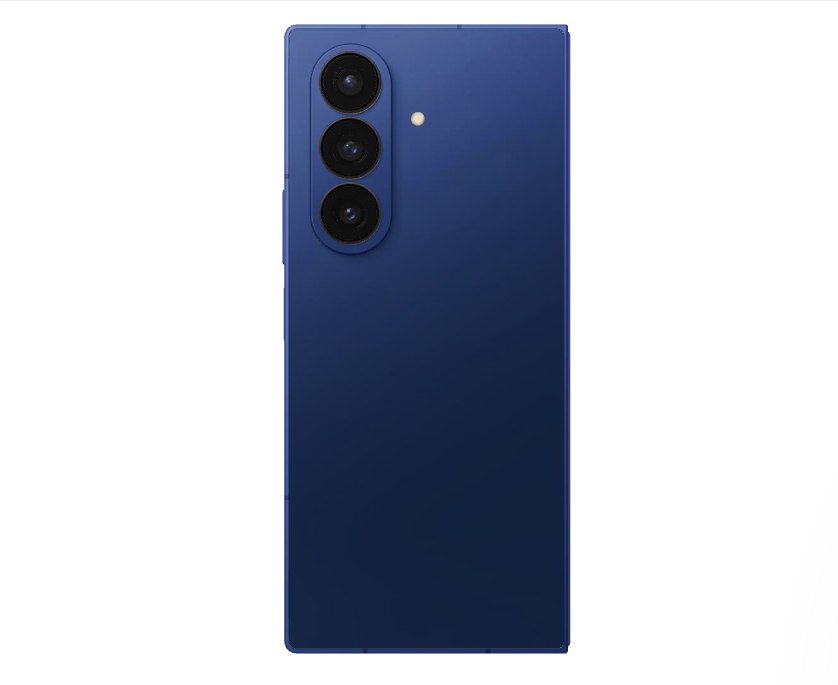
Samsung Galaxy Z Fold 7
1. Samsung Galaxy Z Fold 7 — Best Overall Book-Style Foldable
Samsung’s Galaxy Z Fold 7 earns frequent nods as the top foldable for most users thanks to its ultra-slim profile, premium build and polished software experience. Measuring just over 8mm thick when closed and weighing around 215 grams, it feels remarkably close to a conventional flagship yet unfolds into an expansive 8-inch inner display ideal for productivity, media consumption and split-screen multitasking.
The device features a bright 6.5-inch cover screen with 120Hz refresh rate, allowing full app functionality without unfolding. Powered by the Snapdragon 8 Elite for Galaxy processor, it delivers smooth performance across demanding tasks. Cameras have seen meaningful upgrades, with a standout 200-megapixel main sensor producing sharp, vibrant photos that rival non-foldable competitors.
Advertisement
Reviewers praise the refined hinge, improved crease visibility and long software support extending years into the future. Drawbacks include a premium price tag often starting near $1,900 and average battery life that may require midday top-ups for heavy users. Still, its ecosystem integration with Galaxy Watch, Buds and DeX mode makes it a compelling choice for Samsung loyalists and power users alike.
2. Google Pixel 10 Pro Fold — Best for Durability and Cameras
Google’s Pixel 10 Pro Fold stands out for its rugged construction and photography prowess. It boasts a full IP68 dust and water resistance rating — a rarity among foldables — along with enhanced hinge durability and drop protection on the main display. At roughly 258 grams, it feels more substantial than Samsung’s offering but rewards owners with reliable all-day performance.
The Tensor G5 chipset powers intuitive AI features, including real-time call translation, audio magic eraser and Gemini Live integration. Cameras shine with computational photography that delivers natural colors and excellent low-light results, making it a favorite for content creators. The 6.3-inch cover screen and large inner display support seamless multitasking with clean Android 16 software.
Advertisement
Battery life impresses in testing, often outlasting slimmer rivals. Pricing starts around $1,800, positioning it as a strong value for those prioritizing longevity and photography over the absolute thinnest design. Limitations include slightly warmer performance under sustained loads compared to Snapdragon-equipped devices.
3. Motorola Razr Ultra (2025/60 Ultra) — Best Flip-Style Foldable
For users seeking pocketable convenience with flair, the Motorola Razr Ultra delivers one of the most stylish and functional clamshell experiences. Its vertical fold design snaps shut into a compact square, while the generous external display supports full apps, notifications and even quick camera previews.
Equipped with strong battery life that frequently tops competitor flip models, the Razr Ultra handles daily tasks efficiently on its Snapdragon processor. The inner 7-inch display offers smooth 120Hz visuals, and the overall build feels premium with thoughtful details like a titanium hinge option in select variants. Cameras perform adequately for casual use, though they trail book-style models in versatility.
Advertisement
Reviewers highlight its fun factor and practicality for one-handed operation. Starting prices often land in the mid-$1,000 range, making it more accessible than premium book-style foldables. Potential downsides include a smaller unfolded screen compared to tablet-style devices and occasional software quirks in the Motorola skin.
4. Samsung Galaxy Z Flip 7 — Best Compact Flip for Everyday Use
Samsung’s Galaxy Z Flip 7 refines the flip formula with a larger 4.1-inch edge-to-edge cover screen that finally enables meaningful interaction without unfolding. The 6.9-inch inner display provides ample space when needed, while the overall design remains slim and lightweight for easy pocket carry.
Battery improvements help it last through a full day for moderate users, and the Exynos 2500 or Snapdragon variant (depending on region) ensures snappy performance. New DeX support on the Flip adds desktop-like productivity when connected to external displays. Cameras remain solid for social media and quick shots, with the main 50-megapixel sensor delivering reliable results.
Advertisement
Priced starting around $1,100, it offers strong value within the Samsung ecosystem. Critics note it can overheat during intensive multitasking and that battery claims sometimes exceed real-world endurance. Its stylish appeal and improved cover screen functionality make it a top pick for fashion-conscious users or those transitioning from traditional bar phones.
5. Honor Magic V5 — Best Ultra-Thin Alternative for Multitasking
The Honor Magic V5 earns acclaim for its exceptionally slim design, measuring under 9mm folded and around 4.4mm unfolded in some configurations. It targets users who want a near-nonexistent crease and premium feel without Samsung’s ecosystem lock-in.
Featuring a large inner display and capable outer screen, it excels at multitasking with smooth software optimizations. The Snapdragon 8 Elite processor paired with generous RAM handles heavy workloads, while a sizable silicon-carbon battery supports fast charging and extended use. Cameras offer competitive performance, particularly in daylight scenarios.
Advertisement
Availability may require importing in some markets, and software updates could lag behind Google or Samsung. Still, its combination of thinness, battery capacity and vibrant displays positions it as a compelling choice for enthusiasts seeking cutting-edge hardware at potentially competitive pricing.
Buying Considerations in 2026
Foldable phones now address many early criticisms: creases are subtler, hinges more robust and repair programs more widespread. Most top models promise four to seven years of software support, reducing obsolescence concerns. Battery technology has advanced, though heavy multitasking or camera use still drains power faster than slab phones.
Prices remain elevated, with book-style models often exceeding $1,800 and flips starting above $1,000. Trade-in deals, carrier promotions and installment plans can ease the cost. Buyers should consider ecosystem preferences — Samsung for seamless integration, Google for pure Android and AI, Motorola for flip charm.
Advertisement
Durability has improved markedly, but users should invest in quality cases and screen protectors. Coverage for accidental damage varies by manufacturer and carrier.
Regional factors matter: U.S. buyers enjoy broad carrier support for Samsung, Google and Motorola models, while international shoppers may access superior specs from Honor, Oppo, Vivo or Huawei at lower prices, albeit with potential Google service limitations on some devices.
The Future of Foldables
As 2026 progresses, expectations include further refinements such as even lighter builds, under-display cameras that eliminate notches and possible trifold designs from Samsung and others reaching wider markets. Apple’s rumored foldable iPhone could reshape the segment later in the year or in 2027.
Advertisement
For now, the market offers something for nearly every preference: productivity powerhouses, stylish compacts and durable all-rounders. Early adopters who hesitated in previous years will find 2026 models far more refined and reliable.
Consumers weighing a purchase should evaluate their primary needs — screen size for work, portability for travel or camera quality for photography — and test devices in-store when possible. With rapid iteration, waiting for carrier deals or next-generation hints may also pay off.
Foldables represent more than a novelty in 2026; they deliver genuine utility that enhances how many people work, create and consume content on the go. Whether opting for the versatile Galaxy Z Fold 7, the rugged Pixel 10 Pro Fold or a fun flip like the Razr Ultra, buyers are investing in devices that continue to evolve the smartphone experience.
National seafood group KB Seafood will be taking over operational control of Indian Ocean Rock Lobster’s Cervantes processing facility, in a move that doubles its capacity in WA.
OAKLAND, Calif. — A viral X thread capturing live courtroom notes from Elon Musk’s high-stakes lawsuit against OpenAI has thrust the landmark trial into the spotlight, with the plaintiff’s lawyer dramatically declaring that the company “stole a charity” created for the benefit of humanity rather than private profit. The April 28 post by attorney Ariel Givner, who received real-time updates from inside the federal courthouse, quickly spread as opening statements laid bare the bitter feud between Musk and OpenAI CEO Sam Altman.
Givner’s thread, posted during the first full day of testimony in the Ronald V. Dellums Federal Building, detailed Musk’s side of the story: how he co-founded OpenAI in 2015 as a nonprofit dedicated to safe, open artificial intelligence development for all mankind. Musk contributed tens of millions of dollars, recruited top talent including Ilya Sutskever, and emphasized existential risks from advanced AI. The lawyer argued that OpenAI’s later shift to a for-profit structure, fueled by billions from Microsoft, betrayed that mission and left the nonprofit shell with “almost no assets.”
The dramatic line — “THEY STOLE A CHARITY” — capped the plaintiff’s opening and echoed through social media. Givner’s notes highlighted an emotional close: “NOBODY SHOULD BE ALLOWED TO STEAL A CHARITY.” The thread also shared a 2017 email exchange in which Musk told Altman, “Either go do something on your own or continue with OpenAI as a nonprofit,” and Altman replied enthusiastically, “I remain enthusiastic about the non-profit structure!” A contemporaneous diary entry from OpenAI President Greg Brockman reportedly called the nonprofit commitment a “lie” if the company pursued a B-corp structure.
9/ This email exchange from September 2017 was shown to jurors
Musk: “Either go do something on your own or continue with OpenAI as a nonprofit.”
Advertisement
Altman: “I remain enthusiastic about the non-profit structure!”
The lawsuit, filed in 2024, accuses Altman, Brockman and OpenAI of breaching fiduciary duties by converting the organization into a profit-driven entity valued at hundreds of billions and preparing for an IPO. Musk seeks more than $150 billion in damages and an order to unwind the changes, returning control and intellectual property to the nonprofit. He claims the original mission required no financial return and focused on humanity’s benefit, not enriching insiders or partners like Microsoft.
Advertisement
OpenAI’s lawyers fired back in their opening, arguing Musk knew about plans for a for-profit arm from the start and left the board voluntarily in 2018. They portray the suit as a competitive move by Musk, whose own xAI startup now rivals OpenAI. Defense attorney William Savitt told jurors the case boils down to Musk not getting his way, not a betrayal of any binding promise.
The trial, which began with jury selection on April 27 and opened in earnest April 28, has already featured heated testimony. Musk took the stand as the first witness, recounting his upbringing, early companies and long-standing fears about artificial general intelligence. He described OpenAI as a response to Google’s dominance and insisted he could have launched it as a for-profit but chose the nonprofit path for ethical reasons. Cross-examination grew tense, with Musk accusing OpenAI’s lawyer of trying to “trick” him and snapping, “You’re misleading.”
As of May 1, the proceedings have entered their fourth day. Musk has spent multiple days on the witness stand, with cross-examination continuing and expected to wrap soon. Altman, Brockman and Microsoft CEO Satya Nadella are among those slated to testify later. The monthlong trial before U.S. District Judge Yvonne Gonzalez Rogers could reshape AI development, corporate governance and the balance between nonprofit ideals and commercial realities in Silicon Valley.
Legal observers say the case hinges on whether OpenAI’s founders made enforceable promises to keep the organization nonprofit forever. Musk’s team presented the 2017 emails and Brockman’s diary as evidence of bad faith. OpenAI counters that the nonprofit structure was always intended to evolve with a for-profit subsidiary to fund research, similar to a museum gift shop supporting the museum. The company argues it has delivered on its mission by developing safe AI while attracting necessary capital from Microsoft.
Advertisement
The courtroom drama has drawn intense media attention and public fascination. Demonstrators gathered outside the Oakland courthouse during jury selection, reflecting broader debates about AI ethics, corporate power and Musk’s influence. Givner’s real-time X updates, which included apologies for typos and promises of more notes during breaks, turned the usually opaque legal process into a live-streamed spectacle followed by tech enthusiasts and Musk supporters.
Musk founded xAI in 2023 partly to counter what he sees as OpenAI’s closed, profit-driven direction. He has repeatedly warned that unchecked AI development poses existential risks, a theme he reiterated in testimony. OpenAI maintains it remains committed to safety and has implemented safeguards in models like ChatGPT, while pursuing the resources needed to compete globally.
The stakes extend far beyond personal animosity between former friends Musk and Altman. A ruling in Musk’s favor could force OpenAI to restructure, potentially slowing its momentum or returning valuable IP to the nonprofit. A defense victory would affirm the company’s right to adapt its structure and validate its multibillion-dollar valuation. Either outcome could influence how future AI labs are organized and funded.
Givner, an IP and corporate attorney with experience in fintech and crypto, positioned her thread as neutral live coverage. Her bio notes roles with MonkeDAO and DiversiFi, lending credibility to her detailed legal observations. The thread’s rapid spread underscored X’s role as a primary source for breaking courtroom news in the social media era.
Advertisement
As the trial continues into its second week, both sides prepare for testimony from key figures who shaped OpenAI’s early days. Musk has described himself as a “fool” for continuing to fund the organization after tensions arose, while OpenAI insists he was fully aware of and supported early commercial moves. The jury will ultimately decide whether the shift from nonprofit to for-profit constituted a betrayal or a necessary evolution.
For now, the viral thread from April 28 serves as a time capsule of the trial’s explosive opening, capturing the raw emotions and high principles at stake. Whether Musk’s vision of AI as a public good prevails or OpenAI’s commercial model is upheld, the case has already highlighted the tensions between idealism and pragmatism in the race to build the future’s most powerful technology.
Insperity, Inc. (NSP) Q1 2026 Earnings Call April 30, 2026 5:00 PM EDT
Company Participants
James Allison – Executive VP of Finance, CFO & Treasurer Paul Sarvadi – Co-Founder, Chairman & CEO
Advertisement
Conference Call Participants
Daniel Maxwell – William Blair & Company L.L.C., Research Division Jeff Martin – ROTH Capital Partners, LLC, Research Division Mark Marcon – Robert W. Baird & Co. Incorporated, Research Division Tobey Sommer – Truist Securities, Inc., Research Division Brendan Biles – JPMorgan Chase & Co, Research Division
Advertisement
Presentation
Operator
Good day. My name is Ali, and I will be your conference operator today. I would like to welcome everyone to the Insperity First Quarter 2026 Earnings Conference Call. [Operator Instructions] And please note, this conference call is being recorded.
At this time, I would like to introduce today’s speakers. Joining us are Paul Sarvadi, Chairman of the Board and Chief Executive Officer; and Jim Allison, Executive Vice President of Finance, Chief Financial Officer and Treasurer.
Advertisement
At this time, I’d like to turn the call over to Jim Allison. Mr. Allison, please go ahead.
James Allison Executive VP of Finance, CFO & Treasurer
Thank you. We appreciate you joining us today. Let me begin by outlining our plan for this afternoon’s call. First, I’m going to discuss the details behind our first quarter 2026 financial results. Paul will then comment on 3 strategic initiatives in 2026: Our margin recovery plan, our efforts to rebuild growth momentum, including the HRScale rollout and our AI initiatives. I will return to provide financial guidance for the second quarter and full year 2026. We will then end the call with a question-and-answer session.
Advertisement
Before we begin, I would like to remind you that Paul or I may make forward-looking statements during today’s call, which are subject to risks, uncertainties and assumptions. In addition, some of our discussion may
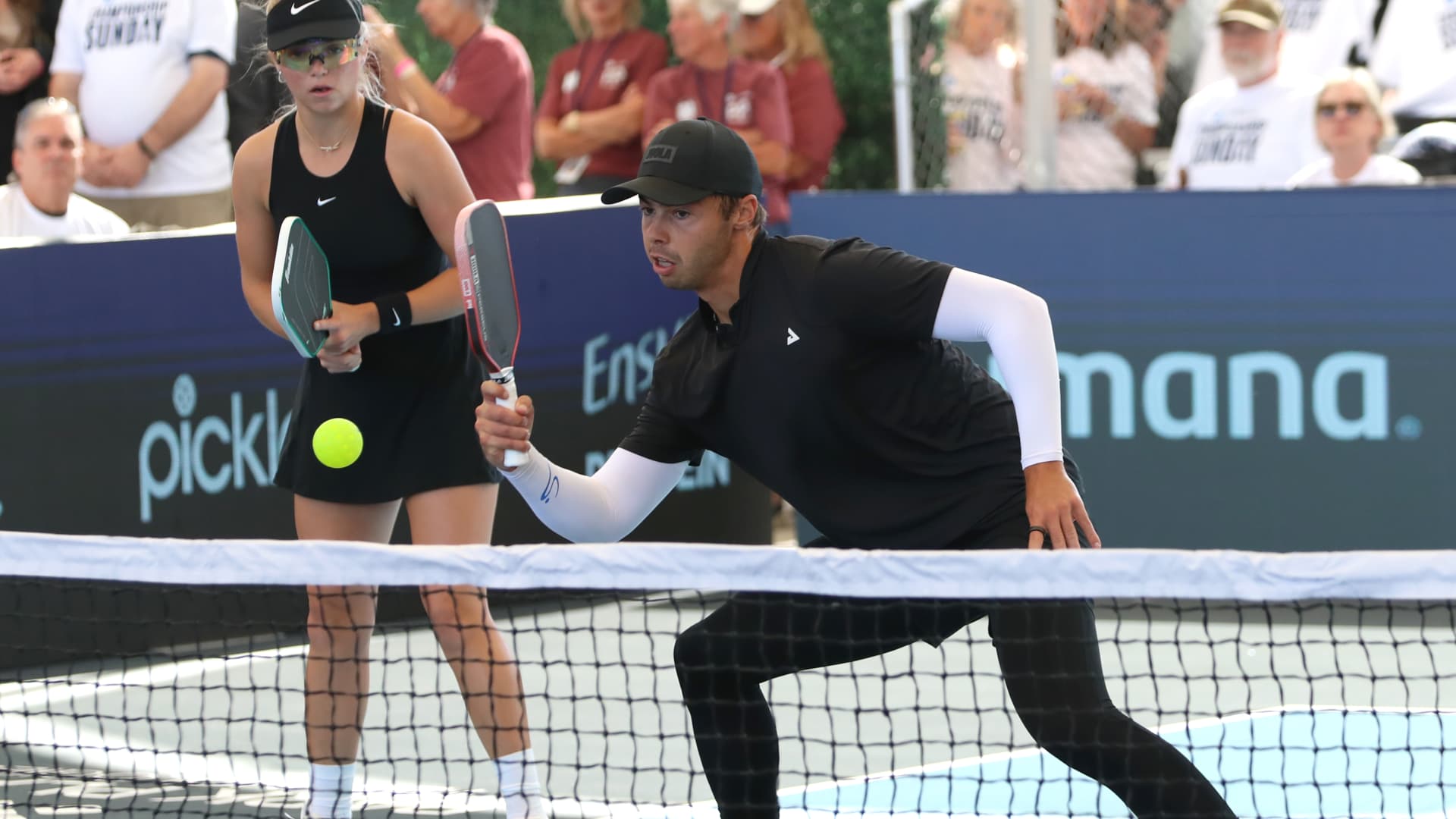
Ben Johns comes over to the right side to hit a dink shot against Anna Bright and Hayden Patriquine in the 2026 PPA Carvana Mesa Cup finals match of the Pro Mixed Doubles Division at Arizona Athletic Grounds on February 22, 2026 in Mesa, Arizona.
Bruce Yeung | Getty Images
Pickleball Inc., the new parent company of Major League Pickleball and the PPA Tour, said Friday it has raised a record $225 million in new investment, as the paddle sport continues its rapid growth trajectory.
Advertisement
The latest investment comes from Apollo Global Management’s newly created sports fund, Apollo Sports Capital, and Dundon Capital Partners, owned by billionaire Tom Dundon. Dundon is an owner of the Portland Trail Blazers NBA team and the Carolina Hurricanes NHL team and was an early investor in pickleball.
The fresh funds bring the total investment in Pickleball Inc. to $315 million, as investors continue to look at emerging sports as a place to park their money. The raise values Pickleball Inc. at $750 million, according to a person familiar with the matter, who asked to remain unnamed because they were not authorized to speak publicly about the company’s valuation.
The deal also includes rolling up several pickleball assets under the Pickleball Inc. umbrella, creating what the company called the largest pickleball ecosystem to date.
Pickleball Inc. will take on a portfolio of pickleball assets previously owned by Dundon, including Pickleball Central, a leading site for pickleball equipment founded in 2006. The portfolio also includes PickleballTournaments.com, software that powers thousands of tournaments across all levels of play, as well as Just Courts, a pickleball court installer.
Advertisement
Pickleball Inc.’s newly merged business verticals combined generated over $140 million in 2025 revenue, the company said.
In a release, MLP and PPA Tour CEO Connor Pardoe called the new investment a “seismic day” for pickleball’s rapidly growing business at all levels.
“This investment allows us to fully integrate the sport into one cohesive ecosystem – uniting professional pickleball, consumer goods, technology, and media under a single, unified platform,” Pardoe said.
Dundon and the Pardoe family will remain majority shareholders in the business after the investment.
Advertisement
Pickleball has exploded in popularity in recent years, with more than 24 million U.S. players participating in 2025, making it the fastest growing sport in the country over the last three years, according to the Sports & Fitness Industry Association’s Annual Report.
At the professional level, the MLP and PPA Tour have seen major growth with a combined $30 million in sponsorship revenue in 2025 and $60 million in combined top line revenue for 2025, according to the United Pickleball Association, which operates both leagues. The MLP and PPA Tour are projecting $74 million in combined revenue in 2026.
The new capital for Pickleball Inc. will be used to further integrate the pickleball business at all levels of play and create a streamlined pickleball ecosystem, the company said.
“This capital raise will allow us to expand our focus into new and scalable opportunities like content, media, and the development of infrastructure to support our fast growing events,” MLP Commissioner Samin Odhwani said in a statement. “The continued and dynamic year-over-year growth data has proven without doubt that pickleball is no longer an emerging sport, and is instead quickly becoming the next tier one sport in America.”
Advertisement
Get the CNBC Sport newsletter directly to your inbox
The CNBC Sport newsletter with Alex Sherman brings you the biggest news and exclusive interviews from the worlds of sports business and media, delivered weekly to your inbox.
Gold prices were trading almost flat in the international market on Friday, but the yellow metal is on track to record a nearly 2% weekly loss. This comes as oil prices briefly skyrocketed to $126 per barrel, fuelling inflation worries and reinforcing expectations of higher interest rates for longer.
Spot gold prices were steady at around $4,620 per ounce on Friday morning. US gold futures for June delivery rose 0.1% to $4,632.70. This came after gold prices dropped to a one-month low on Wednesday.
Notably, MCX is closed in the morning session today on account of Maharashtra Day. Earlier on Thursday, gold futures with June expiry on the exchange closed around Rs 114 higher at Rs 1,51,225 per 10 grams. The contracts with August expiry also closed marginally higher at Rs 1,54,390 per 10 grams.
Iran-US war
After hitting as high as $126 per barrel on Thursday, oil prices cooled down but continued to remain elevated above $110 per barrel today. This comes as the war between Iran and the US entered its third month, with the Strait of Hormuz continuing to remain choked and keeping investors on edge.
Advertisement
Live Events
US President Donald Trump said that the military blockade of Iranian ports could last for months. A report by Reuters, citing officials, hinted that the US President may be planning a series of fresh military strikes to compel Iran to negotiate an end to the conflict. Iran, meanwhile, said that it would respond with “long and painful strikes” on US positions if Washington renewed its strikes. Iranian Foreign Ministry spokesman Esmaeil Baghaei stated that it was not reasonable to expect quick results from US talks, according to the official IRNA news agency. “Expecting to reach a result in a short time, regardless of who the mediator is, in my opinion, is not very realistic,” he was quoted as saying.
What lies ahead?
“In the near term, gold is expected to remain volatile and range-bound, with support near Rs 1,48,000 and resistance around Rs 1,52,000,” said Jateen Trivedi, VP Research Analyst of Commodity and Currency at LKP Securities.
Gold prices fell as oil prices rose, suggesting that the market is fearing increasing inflation and a potential central bank reaction more than rising growth risks, said Carsten Menke, Head Next Generation Research at Julius Baer. “Such short-term and sometimes sharp swings typically mirror moves in the paper market, not the physical market. They are the result of position squaring by speculative futures traders and trend followers, not safe-haven seekers,” he said.
Deutsche Bank, Germany’s leading international investment bank, recently predicted that the bullion’s share in global central bank reserves could increase to 40%, up from around 30% currently. Based on this scenario, the bank’s calculations indicate that gold prices could climb to $8,000 an ounce within five years, implying nearly 80% upside from current levels.
(With inputs from agencies)
Advertisement
(Disclaimer: Recommendations, suggestions, views and opinions given by the experts are their own. These do not represent the views of The Economic Times)

















































You must be logged in to post a comment Login