
Sports
How Kara Lawson guided Duke from ‘a season of adversity to a season of prosperity’

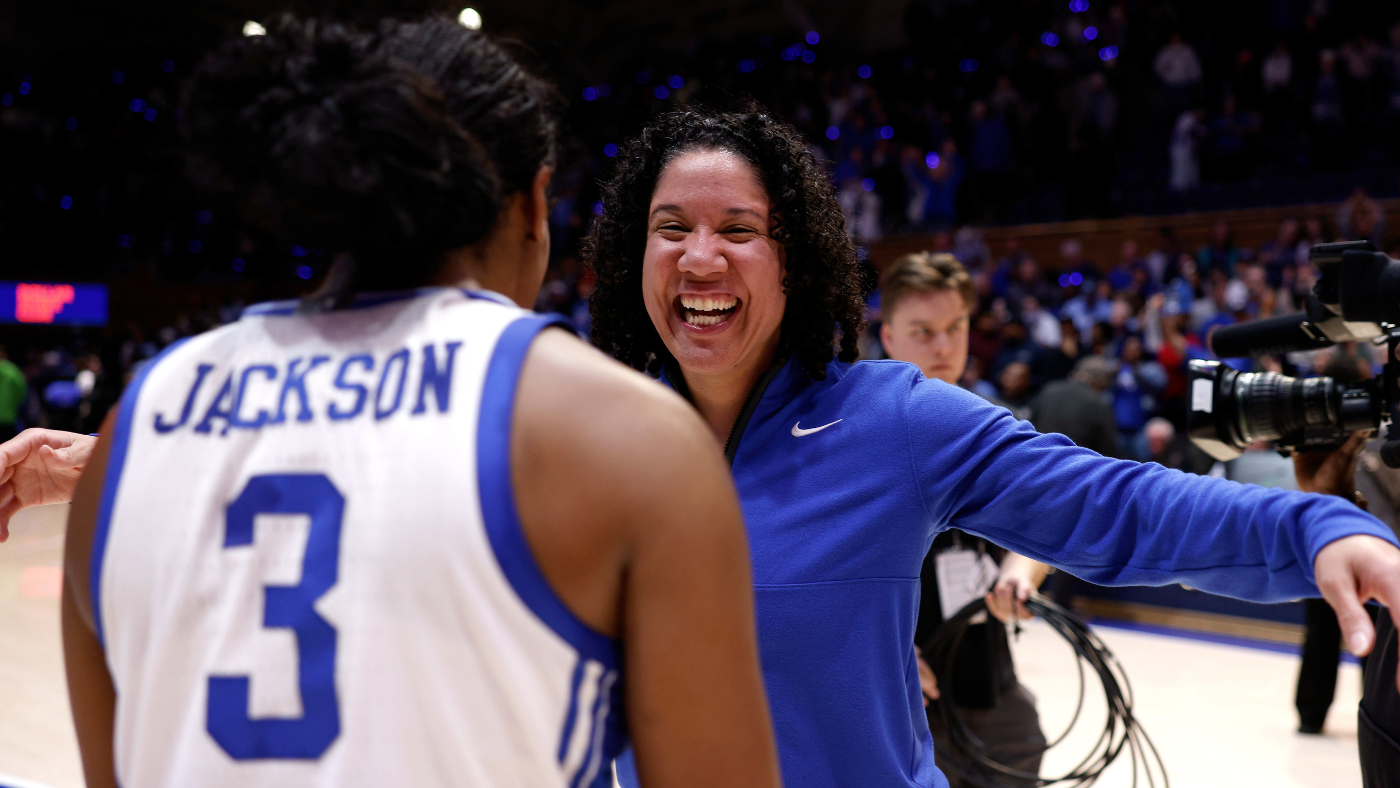
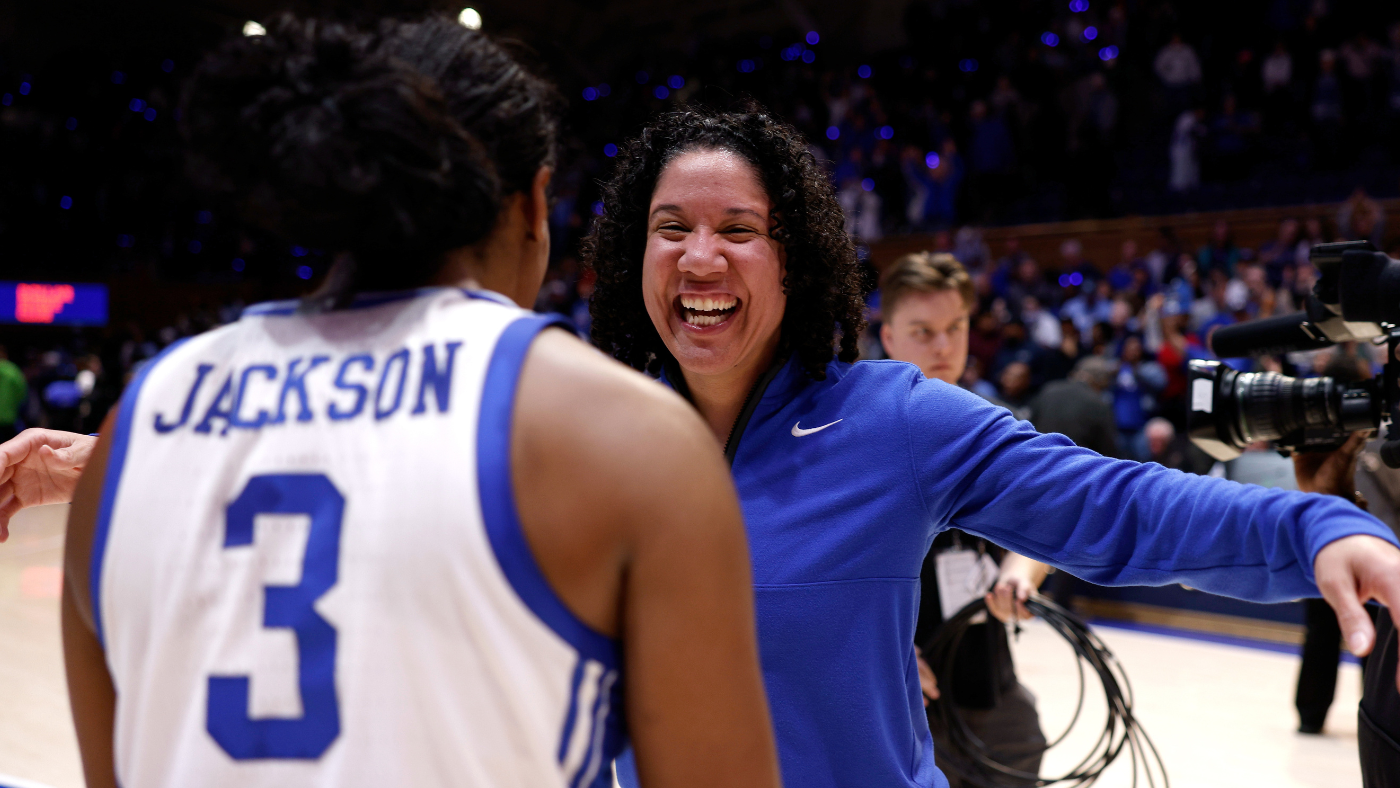
Last Sunday afternoon, the Duke Blue Devils beat the North Carolina Tar Heels, 72-68 in front of a raucous, sold-out crowd at Cameron Indoor Stadium. The win kept Duke undefeated in ACC play and atop the conference. When the buzzer sounded, head coach Kara Lawson beamed as she embraced her two seniors, Ashlon Jackson and Taina Mair, who capped off an emotional senior night by leading the team in scoring and making key plays down the stretch to seal the win.
The postgame vibes on the court were completely different from those nine weeks ago, when Duke fell 93-77 to LSU for its fourth loss in a row to drop to 3-6 on the season.
Every basketball season has its ups and downs, but Duke’s arc — from being preseason No. 7; to being out of the top 25 all together by the third week of the season amid a stretch that included a humiliating road loss to a West Virginia team that played the entire second half with only one starter and four bench players due to ejections and a loss to a South Florida team that is currently No. 75 in the NET rankings; to its current 16-game winning streak and return to No. 9 in the rankings — has been one of the most extreme in recent memory.
So how exactly has Duke turned things around so dramatically? There’s never just one factor, especially in a team sport, but Lawson’s postgame presser gave some invaluable insight — just not for the reason you might think.
First, here’s Lawson’s response when a reporter asked what she said to her team back in November in the thick of their struggles.
I think what’s really important, whether you’re in a season of prosperity or you’re in a season of adversity … I think it’s really important that you stick to what’s real and true. What’s real and true in basketball? Film, analytics, what you see every day from your team. And when you stay focused and locked in on that, then you can give a real assessment of where you are and where you need to get to. Anything outside of that is irrelevant, right? Someone’s opinion doesn’t change whether you can do it or not. It’s just someone’s opinion. So to spend time and energy on that doesn’t serve you. And so the fastest way to get from a season of adversity to a season of prosperity is to lock in on what’s real and true. Figure out where you need to work and get better, and then it will turn at some point.
We don’t get to control the length of our adversity. That’s a frustrating thing about life. When we’re in adversity, we’re like, ‘OK, is it over yet?’ You wake up and you’re like, ‘Is it over yet?’ You don’t get to control that. You get to control who you are in it. That’s it. Who are you in adversity? That’s what you get to control. So what I focus on during that time, and what I encourage my players to focus on, is, ‘Who are we in this time, and where do we need to get to?’ And when you lock in on that, then you’re gonna have success at some point.
Her answer has struck a nerve with people, which isn’t a surprise. If you’ve paid any attention to Lawson over the years, you know she always has a deep reflection on life, work or personal growth on the tip of her tongue, even moreso than most coaches I encounter on the job, and her speeches frequently go viral.
But on Sunday, I wasn’t so much struck by the words she was saying, though they certainly were powerful. Rather, I was struck by how familiar they sounded.
Sure enough, when I went back and revisited her press conference after the LSU loss, I realized she gave the exact same message. When asked what she was telling her players, she said she was telling them the truth and getting them to focus on film and individual plays rather than wins and losses. She praised them for staying positive amidst the adversity.
If you’ve gone through adversity in your life … you know you want it to end right away. You know, most of us want adversity and go really quickly. Like, OK, it’ll be tough for half a day and then we’re done. And this has been tough for longer for us. Like, good! Good. Because this is what life is about. You don’t get to control the length of your adversity. All you get to do is control your attitude and your focus and just work like heck to try and change it. And so it’s such a great life lesson for us, and I think it will turn for us at some point and I think we’ll look back on this stretch as a formative part.
Again, she said this minutes after her team suffered its fourth loss in a row, a loss that dropped the preseason ACC favorites to 3-6. People were calling for her to be fired.
That consistency and commitment to the big picture have clearly served her players well. Because it wasn’t just Lawson whose Feb. 15 press conference sounded eerily similar to her Dec. 4 one.
“We’re in the mud right now, and that’s both physically and literally,” Jackson said after the LSU game. “We’re very uncomfortable right now, which is a good thing, because in March, everybody is on and popping, so the team that is most comfortable with being uncomfortable, they usually succeed.”
And after the North Carolina win?
“We got out of the mud,” Jackson said. “We all know how we started the season, but that was on purpose. How are you supposed to grow if you’re not used to playing this type of environment?”
Let’s be clear about one thing: Motivational words and self-help philosophies alone do not win games. Duke’s rebirth can be attributed to many things: Mair gaining confidence in a more assertive offensive role; the impressive development of redshirt freshman center Arianna Roberson; Riley Nelson’s move into the starting lineup; a relatively weak year in the ACC, to name a few. And it is far from a given that Duke will win the ACC tournament and make it back to the Elite Eight like it did last March. But after the way this team started the season, the fact that Lawson has them back in contention to achieve those things is a testament to her connection with her players.
“During that time, you know, Coach took a lot for us. It was not Coach. It was simply us. So we just really had to buy in and take accountability at some point. We couldn’t let her hold everything by herself. We had to have her back, because she always has our back,” Jackson said on Sunday.
“There’s not a thing in this world that I don’t love about Kara Lawson, even whenever she’s mad at me. She challenges me, she trusts me, she believes in me.”

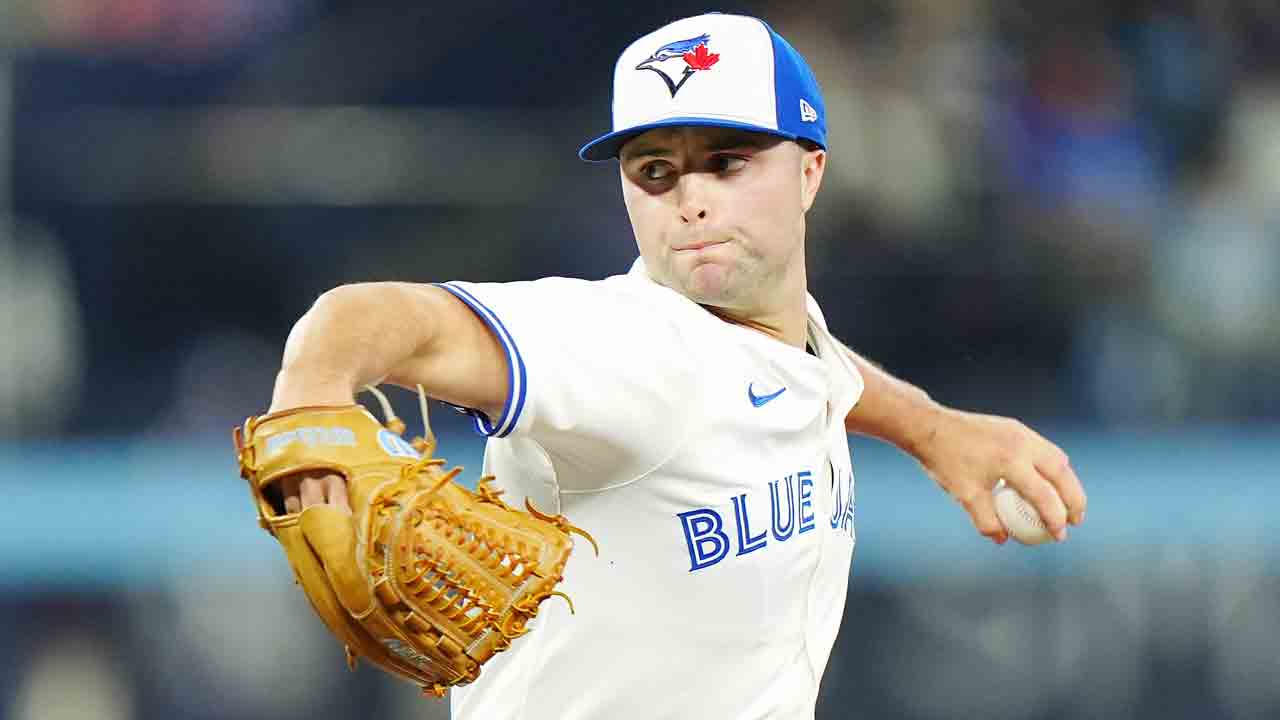
The left-handed reliever will start Saturday’s Game 2 against the Chicago White Sox, Sportsnet’s Ben Nicholson-Smith reported Friday.
Eric Lauer had been scheduled to start, but manager John Schneider told reporters pre-game on Friday that the team elected to give him an extra day’s rest.
Fluharty, 24, has pitched 1.2 innings across four games this year, owning a 10.80 ERA with four strikeouts and no walks.
In his rookie season in 2025, the Lewes, Del., native owned a 4.44 ERA with 56 strikeouts and 24 walks across 52.2 innings in relief.
Catch Saturday’s game on Sportsnet and Sportsnet+ with coverage beginning at 2 p.m. ET / 11 a.m. PT.


Adelaide Oval will play host to Friday’s
Round 4 AFL game between Adelaide Crows and
Fremantle Dockers. The game kicks off at 7:15 pm with Adelaide Crows heading into the game as favourites with the bookmakers. Continue reading for our in-depth preview of the Adelaide Crows vs.
Fremantle Dockers
game and give you our free tips and bets.
When: Friday April 3, 2026 at 7:15 pm
Where: Adelaide Oval
Bet 💰: Bet On This Match HERE
Adelaide Crows vs Fremantle Dockers Odds
Adelaide Crows vs Fremantle Dockers Preview
Two sides fully invested in their 2026 ambitions face off in what shapes as a revealing early-season encounter. Both teams have shown flashes of high-end performance, but consistency remains a work in progress. Midfield battles and turnover efficiency are expected to be pivotal, with each side looking to control tempo and territory. Defensive structures will also come under scrutiny against attacking units capable of quick scoring bursts. With pressure building to deliver results, this match offers a valuable insight into which team is better equipped to sustain performance and handle key moments.
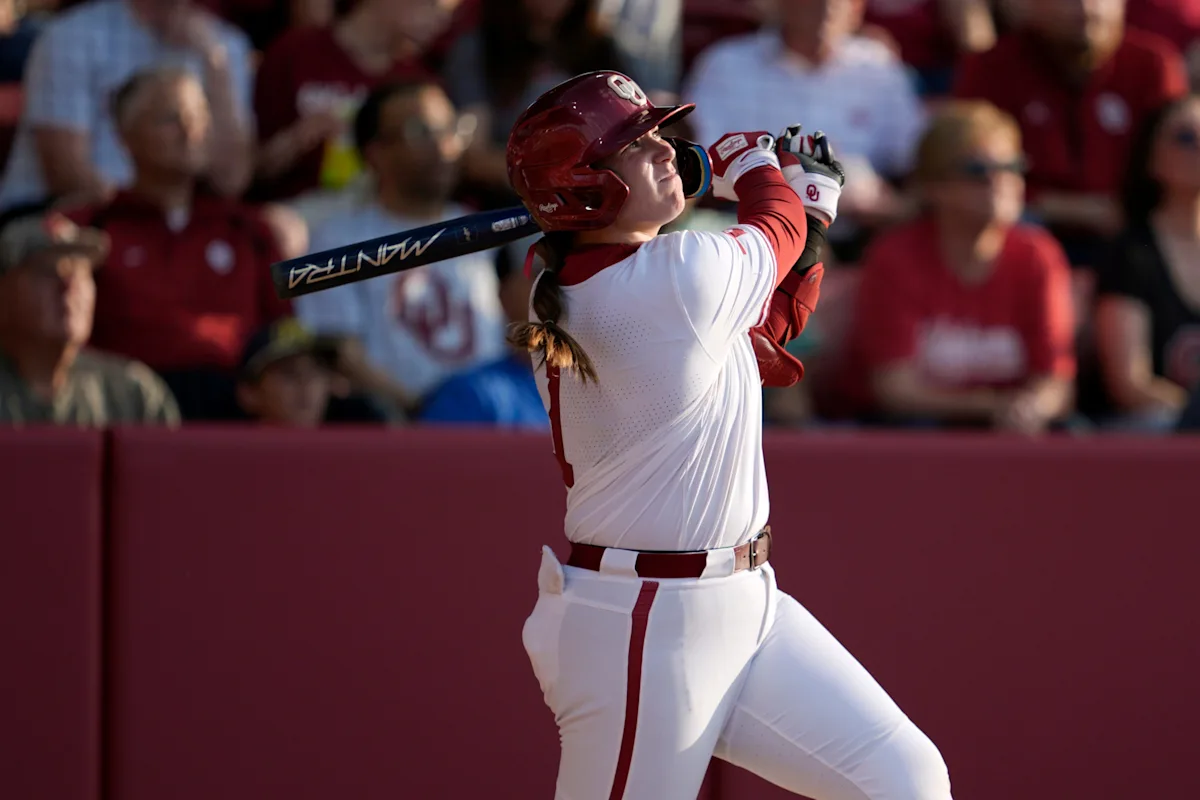
The Oklahoma Sooners moved to 37-3 and 10-1 in SEC play with a 9-1 run-rule win over the Kentucky Wildcats on Friday. It was the Sooners’ fourth straight win and their 11th game in a row in which the pitching staff allowed fewer than four runs.
The Sooners fell behind in the first inning once again when Kentucky took a 1-0 lead on Carly Sleeman’s lead-off home run. But starting pitcher Miali Guachino settled in to retire the next three hitters in order. That kicked off a run of nine straight Kentucky hitters retired by Guachino. The Wildcats’ next hit wouldn’t come until the fourth inning, a lead-off single from No. 2 hitter Allie Blum.
Advertisement
In the win, Guachino allowed just three hits over four innings, striking out three, to move to 11-0 on the season.
It didn’t take long for the Sooners to answer the first inning home run by Sleeman. In the bottom of the first, Lexi McDaniel and Ailana Agbayani earned two-out walks with the bases loaded to push across a pair of Oklahoma runs to retake the lead.
In the second inning, Oklahoma’s lineup went to work. Kendall Wells’ sacrifice fly moved Abby Dayton to third on a sacrifice fly, and Kasidi Pickering drove Dayton in on an infield single. Ella Parker doubled to drive in Gabbie Garcia to make it 4-1, and Lexi McDaniel’s two-RBI single made it 6-1 Sooners.
After a strong night hitting with two outs on Thursday, the Sooners picked up right where they left off with each of their first six runs coming with two outs on Friday.
Advertisement
In the third, Kendall Wells hit her 29th home run of the season, giving her eight home runs in 11 SEC contests in her true freshman season.
Fellow freshman McDaniel put Oklahoma in run-rule territory with a two-run home run, giving her five RBIs on the day. The home run was her ninth of the season. It was McDaniel’s first home run since March 11 against Tulsa.
With the win, the Sooners secured the series against the Wildcats. They’ll close the series with a Saturday morning contest vs. Kentucky, looking to complete the three-game sweep ahead of their series with the Texas Longhorns next weekend in Austin.
Contact/Follow us @SoonersWire on X (formerly known as Twitter), and like our page on Facebook to follow ongoing coverage of Oklahoma news, notes, and opinions. You can also follow John on X @john9williams.
This article originally appeared on Sooners Wire: Oklahoma beats Kentucky 9-1 in run-rule fashion
Sports
‘Spinners’ off day cost us’: CSK captain throws Rahul Chahar and Noor Ahmad under the bus after loss to PBKS | Cricket News
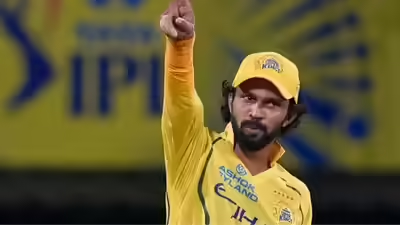

Ruturaj Gaikwad blamed his spinners for Chennai Super Kings’ five-wicket loss to Punjab Kings in their IPL match on Friday, saying an off day from them hurt the team despite a strong total on the board.Chennai Super Kings posted 209 for 5, with Ayush Mhatre scoring 73 off 43 balls. But Punjab Kings chased down the target in 18.4 overs, led by captain Shreyas Iyer, who made 50.After the match, Gaikwad pointed to the performance of his spinners, Noor Ahmad and Rahul Chahar, as a key factor in the defeat. Chennai had seam options like Gurjapneet Singh and Jamie Overton available as impact substitutes but chose to bring in Chahar.“We felt we had three seamers going in, and obviously we have two good wrist spinners (Noor Ahmad and Rahul Chahar) bowling in tandem, especially in the middle after the powerplay. We felt that, you know, it will help,” said Gaikwad.“But I think, you know, slight off day for both of them. So, I think, that is what cost us. Sometimes we executed really well. Sometimes we just didn’t execute at the right time,” he added.He said the team could not build pressure in the middle overs.“There was a point when it (required run-rate) went to 11, and a couple of good overs would have taken it to 12-13. We just did not get momentum in the middle (with the ball).”Gaikwad added that the batting had positives, with contributions from Mhatre and Shivam Dube, but said the bowling needs to improve.Punjab Kings captain Shreyas Iyer said the start given by openers Priyansh Arya and Prabhsimran Singh played a big role in the chase.“The way we started today, that was an exceptional start for us. I feel the way they (Arya and Prabhsimran) have been batting has been phenomenal and it stabilises the rhythm for us,” Iyer said.“I am glad everyone is getting to bat. It gives immense confidence to the team. Whenever we are in a pressure situation, people are aware on how to handle it. We just decided in the dressing room, we will play a brand of cricket to impress each other — that gives us a certain sort of clarity, and basically challenging each other.”In the chase, Iyer’s 50 off 29 balls and his 59-run stand with Nehal Wadhera helped Punjab reach 210 for five. The target was 209.Punjab also got contributions from Priyansh Arya (39 off 11), Prabhsimran Singh (43 off 34) and Cooper Connolly (36 off 22).Iyer started slowly, scoring 8 off 9 balls while Connolly took charge. After Connolly fell to Anshul Kamboj, Iyer took control and targeted the spinners. He reached his fifty in 26 balls but was later dismissed by Kamboj while going after a wide delivery.Punjab completed the chase in 18.4 overs, handing Chennai their second loss in a row.
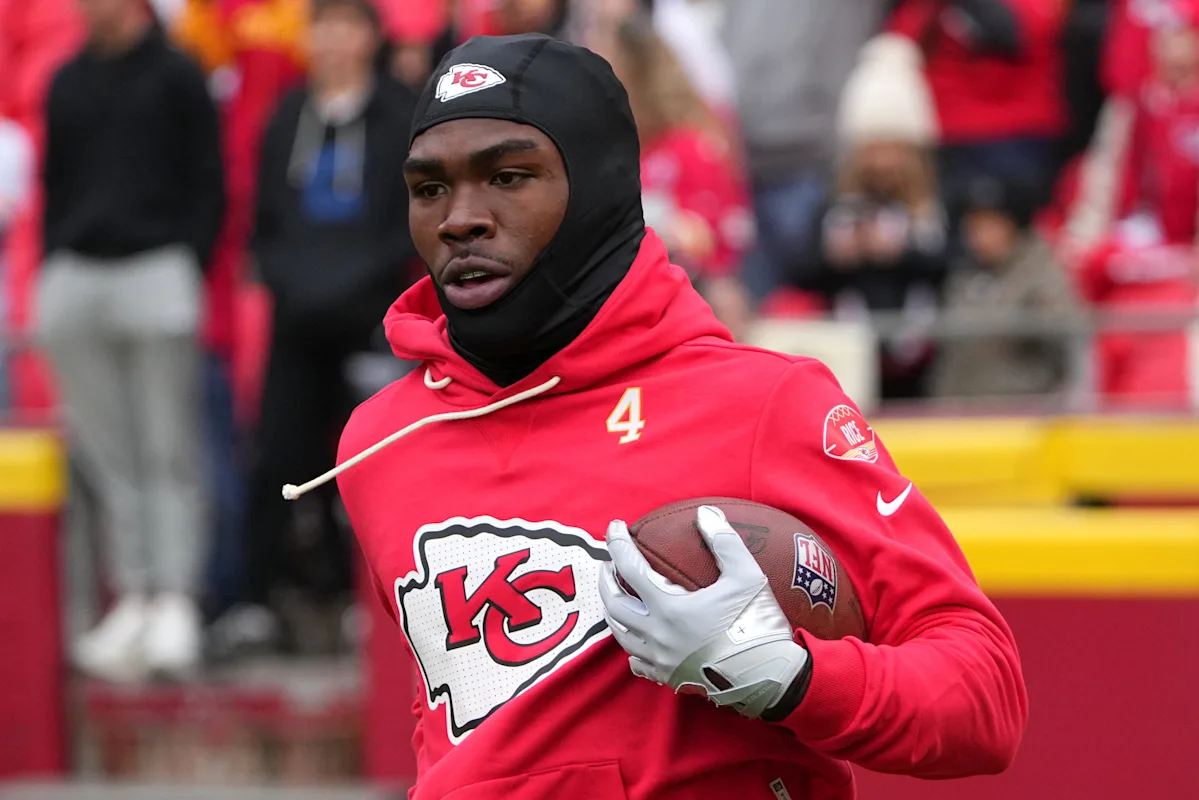
Kansas City Chiefs wide receiver Rashee Rice will not face discipline under the NFL’s personal conduct policy amid an ongoing civil lawsuit accusing him of domestic assault.
The NFL announced April 3 it had concluded its investigation into the accusations made against Rice by his former girlfriend, as ESPN’s Adam Schefter reports.
Advertisement
“There was insufficient evidence to support a finding that he violated the personal conduct policy,” NFL spokesman Brian McCarthy said in a statement.
Sean Lindsey, an attorney representing Rice, addressed the news with a statement of his own.
“Mr. Rice wants to thank the NFL for their thorough investigation, and looks forward to the start of the 2026-27 NFL season,” Lindsey said.
LERNER: The NFL is investigating Rashee Rice − here’s what happens next
Rice was named in a civil lawsuit filed by his ex-girlfriend in the Dallas County (Texas) court system on Feb. 16, 2026. The lawsuit alleged Rice assaulted the woman multiple times over a 19-month period. Police have not filed criminal charges related to the allegations against Rice.
Advertisement
The complaint alleged that the Chiefs wide receiver had “grabbed, choked, strangled, pushed, thrown, scratched, hit, and headbutted” his ex-girlfriend. She also alleges Rice threw things at her, “destroy[ed] property, punch[ed] walls, [broke] furniture” and locked her out of their shared home “in the middle of the night.”
Rice’s former girlfriend, who is also the mother of their two children, shared an Instagram post on Jan. 7 alleging she had been the victim of domestic violence for several years. She did not mention Rice by name in that post, which featured a picture of her with a bloody lip. The post has since been deleted.
“It’s been nothing but hell,” she wrote, adding, “I’ve protected his image too long and I’m done doing that. It’s time to protect my peace, protect my children and stand up for myself.”
According to the lawsuit, Rice’s ex-girlfriend was pregnant during much of the alleged abuse. She is seeking more than $1 million in damages in the civil suit.
Advertisement
The lawsuit remains open, according to Dallas County court records.
USA TODAY Sports’ Jack McKessy also contributed to this report.
This article originally appeared on USA TODAY: NFL concludes Rashee Rice investigation, will not discipline Chiefs WR
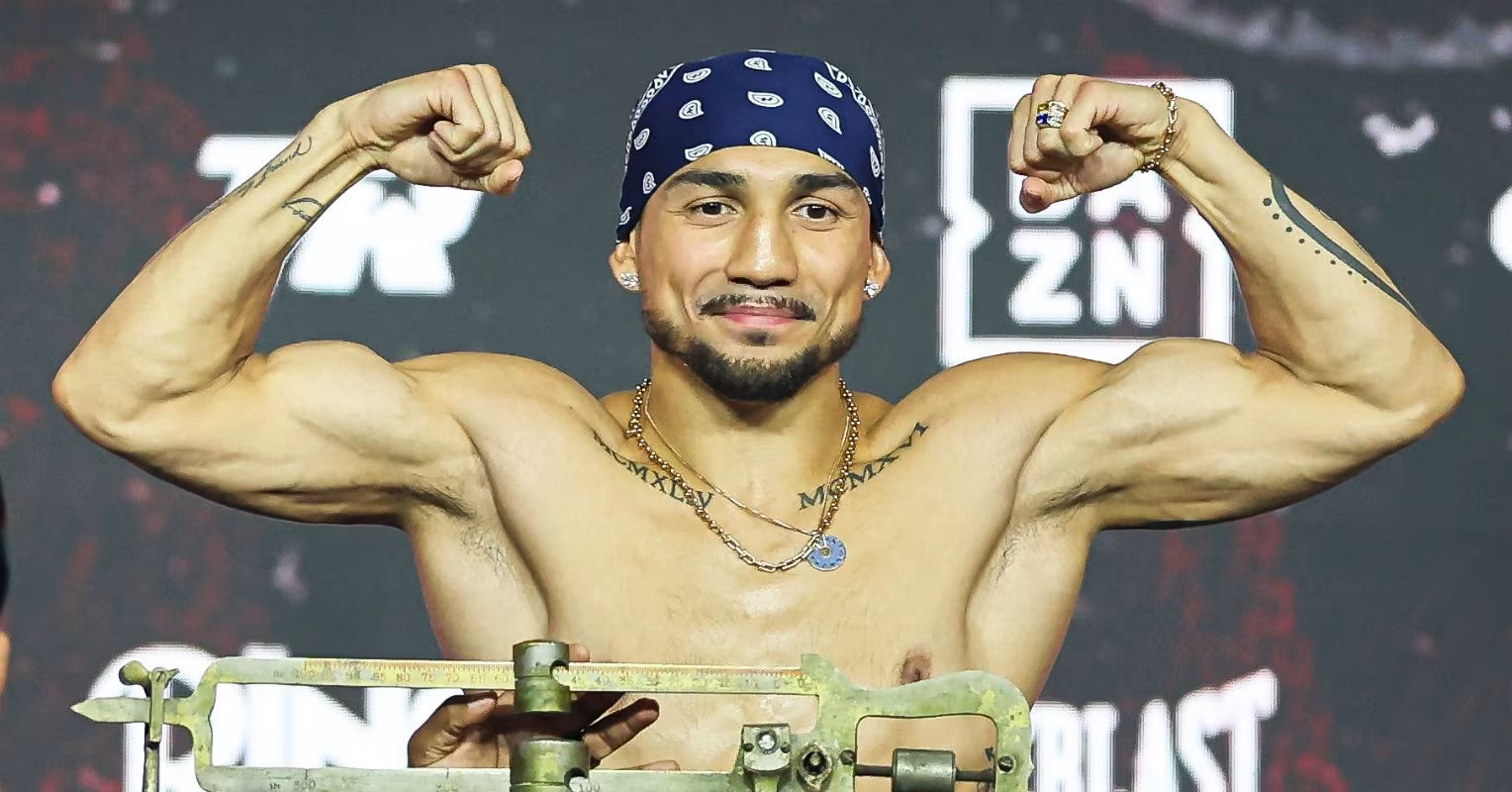

Teofimo Lopez could be handed an immediate opportunity to bounce back in a major way following a one-sided defeat to Shakur Stevenson.
Lopez put his WBO super-lightweight world title on the line against Stevenson back in January. Despite boasting a size advantage, the champion was thoroughly outclassed by the challenger, with Stevenson winning almost every round on the scorecards to become a four-weight world champion at just 28.
Not long after the loss, Lopez announced that he would be moving up to welterweight to join a stacked division, complete with champions Devin Haney, Ryan Garcia, Lewis Crocker and Rolando Romero.
‘King Ry’ won the WBC belt by handily beating Mario Barrios three weeks following Lopez-Stevenson. Though he has publicly targeted a unification fight with WBO champ Haney – a rematch following their controversial 2023 meeting in 2023 – he appears to have settled on a voluntary defence against Lopez, who is not yet ranked in the division.
The fight, however, is not official, and it would be a bold move for the WBC to allow yet another voluntary defence of their belt, with a mandatory fight not enforced in several years.
Barrios was upgraded from interim to full champion in 2024, and made his first defence against number eight ranked Abel Ramos, retaining the belt with a draw.
He then made another voluntary defence against returning Manny Pacquiao, drawing again to retain the title, before facing Garcia in yet another non-ordered bout. The sanctioning body made Conor Benn mandatory challenger at the beginning of this year.
He fights next weekend in London against Regis Prograis in a catchweight bout at 150lbs. Despite recently linking up with Zuffa Boxing – a promotional company intent on sidelining the major sanctioning bodies – the Brit says he will fight for the belt before the end of the year.

Some have insisted that Kevin O’Connell is now the top decision maker in the Twin Cities. Minnesota’s well-respected head coach is the CEO over all things football, getting the final call on contracts, trades, draft picks, and so on.
Not so.
Rob Brzezinski is functioning as the team’s GM. Part of that job involves getting the final call on draft picks, just like a normal GM even if that’s not his official title. Mr. Brzezinski clarified the detail in a recent conversation with The NFL Network’s Ian Rapoport and Tom Pelissero, getting the detail across the finish line before the 2026 NFL Draft.
Kevin O’Connell is the Vikings’ HC, Not Team CEO
The question had to do with how to settle disagreement within the front office when Minnesota is on the clock. Who gets the tiebreaker if there’s disagreement? Turns out the answer is quite clear.
Check out how Brzezinski discussed the hypothetical: “You’re hoping that you can have the answers to the test before you’re in the firing line. But there are times, maybe, when issues crop up. And the Wilfs have asked me to handle that in the event that we get into a position like that.”
Pretty straightforward.
The Wilfs are the team’s owners. For a long time, Brzezinski has worked for the Wilfs, meaning there’s a track record of trust in what the executive can do. Logically, there’s then some willingness to lean on him to make the final call if there ends up being an issue.
What’s similarly fascinating is that Brzezinski doesn’t foresee an issue. A situation where Kevin O’Connell is advocating for a specific player while Brian Flores is pushing for another while Chisom Opara, Jamaal Stephenson, and Ryan Grigson all make cases for their guys just isn’t going to happen.
Why not? Good question.
The reason why that scenario is very unlikely is because the debate is occurring right now. The powerful people working in Eagan are putting the finishing touches on the evaluation process, forming opinions along the way. Part of that process is internal debate, discussion, and disagreement. All healthy, all part of the process.
At some point, a final call is going to be made to form a draft board. There will then be a hierarchical list to rank the players. The Vikings will assemble a minimum of 18 players whom they’re comfortable with — nay, excited about — choosing in the 1st. Doing so ensures that there’s a minimum of one of those names left standing when decision time arrives.
Kevin O’Connell clarified at the league meeting that he does jump into player evaluations. He’s therefore going to toss his name into the mix as perhaps the most important influence on the final decision, but he’s still just one voice within a vast chorus.
In theory, some debate could exist if two or three of the best players are there at No. 18. Maybe the grades are identical, leading to a true flip of the coin. In that scenario, Rob Brzezinski makes the final call if there’s internal debate.
Likewise, a situation could exist where the debate is between a trade option or choosing a coveted young lad. If so, then Brzezinski gets the final call. He’s functioning as the GM, meaning he gets the authority of a GM.
Quite possibly, Brzezinski asks for Kevin O’Connell’s opinion and then choose to do what his head coach wants to do (personally, I’d do what Flores thinks is best, but that’s just me). O’Connell has proven to be pretty good at his job, so there are worse ideas in the world than opting to side with the 2024 NFL Coach of the Year. But, crucially, that will be the decision of the fill-in at GM.
Kevin O’Connell is going to have opinions. He’s going to be encouraged to offer them, but that’s not going to involve him hijacking the process on the night of Thursday, April 23rd.

Senior Editor for Vikings Territory & PurplePTSD . Twitter & Bluesky: @VikingsGazette. Email: k.joudry[at]vikingsterritory[dot]com. Canadian. Jude 1:24-25.
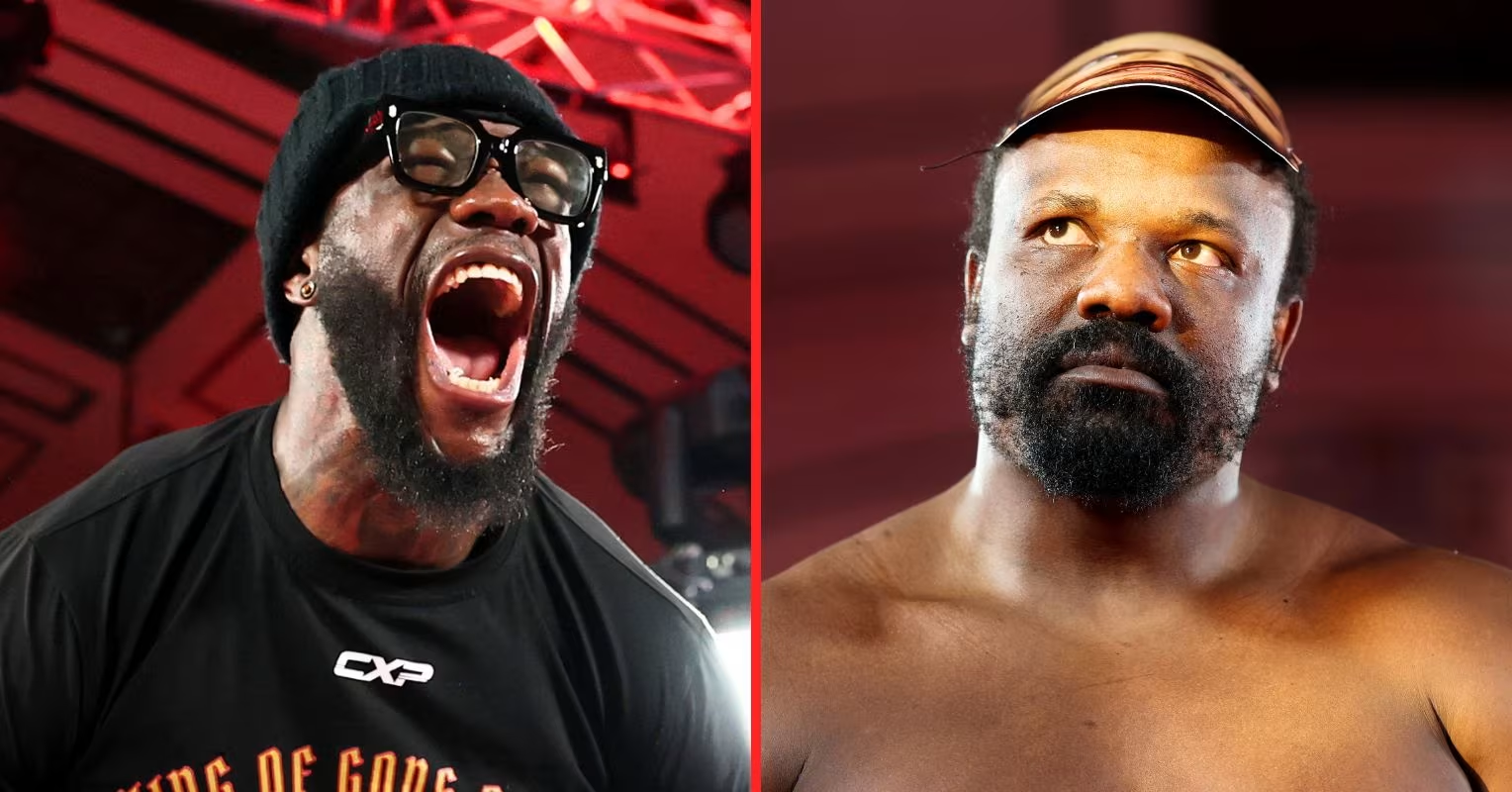

This weekend’s heavyweight banger between Derek Chisora and Deontay Wilder hit a stumbling block just a day out.
The pair of veteran heavyweights co-star in an intriguing match-up that promises to end in at least one retirement. There has been little tension between the pair, but there was drama behind the scenes today – something promoter Kalle Sauerland described as ‘a big issue.’
At the gloves meeting before the weigh-in, Wilder reportedly insisted on using his own gloves, but they did not comply with the regulations in place by the British Boxing Board of Control.
It is currently unclear in what way Wilder’s chosen gloves fell short of the required standard – it could be as simple as the brand not being approved – however officials are understood to have stood firm on the rules, and would have had to have received such a request weeks in advance.
At the final face-off, the American said:
“I’ve broke my hands so many times and [I wasn’t happy] with the gloves that were provided. We had an issue with the glove being too tight on my hand. We’ll see what happens and get it straightened out.”
Speaking to the media afterwards, Chisora – who had previously said he was not aware of the issue – summed up the situation.
“The gloves are sorted out now. It’s done now. He wanted to use his own gloves, but I said no because they’re not board approved. So, I stood on my toes and said this is business. It’s all done now.”
The fight marks number 50 in the professional ranks for both men, with Chisora insisting he will retire win, lose or draw, but Wilder, confident of a win, saying he plans to fight on and look to regain the heavyweight world title.

Gian van Veen admitted his next clash with Luke Littler may not be “very friendly” following their tense exchange during the Premier League Darts in Manchester on Thursday.
The Dutchman avenged his World Championship final defeat to Littler in the quarter-finals at the AO Arena, coming out on top in a last-leg decider.
Van Veen missed a match dart, which led to Littler celebrating in front of the crowd, before the two-time world champion gestured at his opponent on his return to the oche and failed to wrap up the match himself.
His 23-year-old rival then sealed a 6-5 victory, but not before Littler produced a cry baby action and brief handshake as he walked off the stage.
Van Veen, who lost his fourth nightly final of the campaign to Josh Rock, said after his opening win that Littler was a “bad loser” and that his conduct on the oche was “out of order”.
On Thursday evening, 19-year-old Littler shared an image of Van Veen’s comments on his Instagram Stories, adding three laughing emojis below.
Speaking to Swedish streaming service Viaplay about the incident, Van Veen said: “No, we haven’t spoken.
“He hasn’t approached me either. I saw his reaction on social media. He thought it was funny.
“Well, I don’t think things will be very friendly between us anytime soon.
“I’m here for myself. He’s a fantastic darter, the world number one, so what he does for the sport is great, but I care little about what he thinks of me.”
The pair will not face each other in the European Tour event held in Munich this weekend as Littler has not entered.
World number three Van Veen returns to action during Sunday’s second round against either William O’Connor or Sebastian Bialecki.
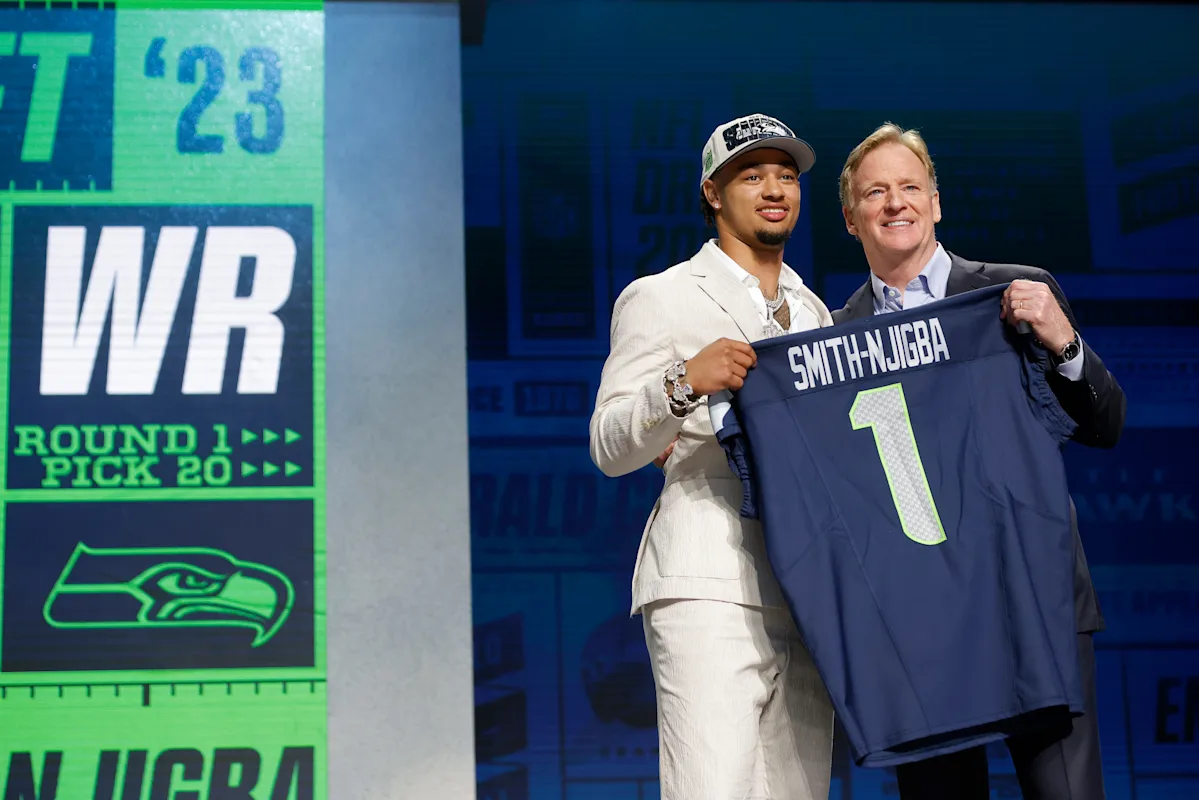
The 2026 NFL draft starts three weeks from today, but who the Seattle Seahawks will target in the draft is as up-in-the-air as it’s ever been.
The team’s needs are relatively mild coming off their Super Bowl LX win. They only hold four picks total, but they get to choose the best player available without worrying as much as the majority of other teams about plugging holes in certain positions.
Advertisement
There are definite vacancies to fill. Free agency saw them lose four key starters- running back Kenneth Walker, cornerback Tariq Woolen, safety Coby Bryant, and edge Boye Mafe. Almost every single mock draft you see will replace one of these four positions in the first round.
Seahawks.com put out an article this morning showing the plethora of options John Schneider and the team’s brass have from a roster construction standpoint. They include nine different analysts’ opinions on who the Seahawks should take at No. 32. Seven of the nine have them taking a cornerback- four for Clemson’s Avieon Terrell, two for Tennessee’s Colton Hood, and one for South Carolina’s Brandon Cisse. Pete Prisco has them taking Oregon safety Dillon Thieneman, and Josh Edwards has them taking Clemson edge T.J. Parker.
But not everything needs to be an eye for an eye.
Ty Okada could plausibly step into Coby Bryant’s role, and Rodney Thomas II could fill Okada’s backup spot. Zach Charbonnet, Emanuel Wilson, George Holani and Kenny McIntosh could be the running backs they go with. Witherspoon and Woolen were the main starters at cornerback last year and don’t need a replacement desperately. As one of their many current mottos goes, the Seahawks have the flexibility to chase edges anywhere they find one in this draft.
Advertisement
When they took Jaxon Smith-Njigba 20th overall in 2023, some questioned the decision to take a “number 3 receiver” when they had other needs to fill. Look how that turned out.
There will always be roster needs in a sport with 22 starting players (and more if you include substitution packages), but the Seahawks will find the best way to improve the team, no matter how it looks on paper.
This article originally appeared on Seahawks Wire: Seahawks flexibility in 2026 NFL Draft allows open, not needy approach

Revel Performa4 Speaker Series Debut at AXPONA 2026 Priced From $2,000-$7,000

Asian Doll & Rick Ross React To Pooh Shiesty, Gucci Mane Case

Lucid misses first-quarter vehicle delivery estimates on supplier disruptions


-

 NewsBeat1 day ago
Steven Gerrard disagrees with Gary Neville over ‘shock’ Chelsea and Arsenal claim | Football
-
Entertainment4 days ago
Fans slam 'heartbreaking' Barbie Dream Fest convention debacle with 'cardboard cutout' experience
-

 Business23 hours ago
No Jackpot Winner and $194 Million Prize Rolls Over
-

 Crypto World2 days ago
Gold Price Prediction: Worst Month in 17 Years fo Save Haven Rock
-

 Fashion4 hours ago
Weekend Open Thread: Spanx – Corporette.com
-
 Entertainment6 days ago
Lana Del Rey Celebrates Her Husband’s 51st Birthday In New Post
-

 Tech5 days ago
The Pixel 10a doesn’t have a camera bump, and it’s great
-
Crypto World3 days ago
Dems press CFTC, ethics board on prediction-market insider trades
-

 Tech5 days ago
Avatar Legends: The Fighting Game comes out in July and it looks pretty slick
-

 Sports3 days ago
Tallest college basketball player ever, standing at 7-foot-9, entering transfer portal
-

 Tech4 days ago
EE TV is using AI to help you find something to watch
-

 Business2 days ago
Login and Checkout Issues Spark Merchant Frustration
-

 Fashion6 days ago
Amazon Sundays: Soft Spring Layers
-

 Fashion7 days ago
When Evening Dressing Gets Colorful for Spring
-

 Tech5 days ago
Elon Musk’s last co-founder reportedly leaves xAI
-

 Tech4 days ago
How to back up your iPhone & iPad to your Mac before something goes wrong
-

 Tech4 days ago
Apple will hide your email address from apps and websites, but not cops
-

 Politics4 days ago
Should Trump Be Scared Strait?
-

 Crypto World4 days ago
U.S. rule change may open trillions in 401(k) funds to crypto
-

 Tech4 days ago
Flipsnack and the shift toward motion-first business content with living visuals
You must be logged in to post a comment Login