The U.S. World Cup team this summer will wear uniforms it helped design — a process that began with discontent at a photo shoot before the last tournament.
“The team wasn’t too fond of the [uniforms] we were going to be wearing [in Qatar], just because we didn’t feel it represented us necessarily and the country as we’d like,” midfielder Tyler Adams, the 2022 U.S. World Cup captain, said recently. “When you have an opportunity to represent your country at a World Cup … you just want to love the kit.”
Advertisement
They did not love the kit, which is soccer parlance for uniform.
Advertisement
And they were not going to do the photo shoot, Adams said, unless they were given a voice in designing their 2026 uniforms. Nike and the U.S. Soccer Federation agreed.
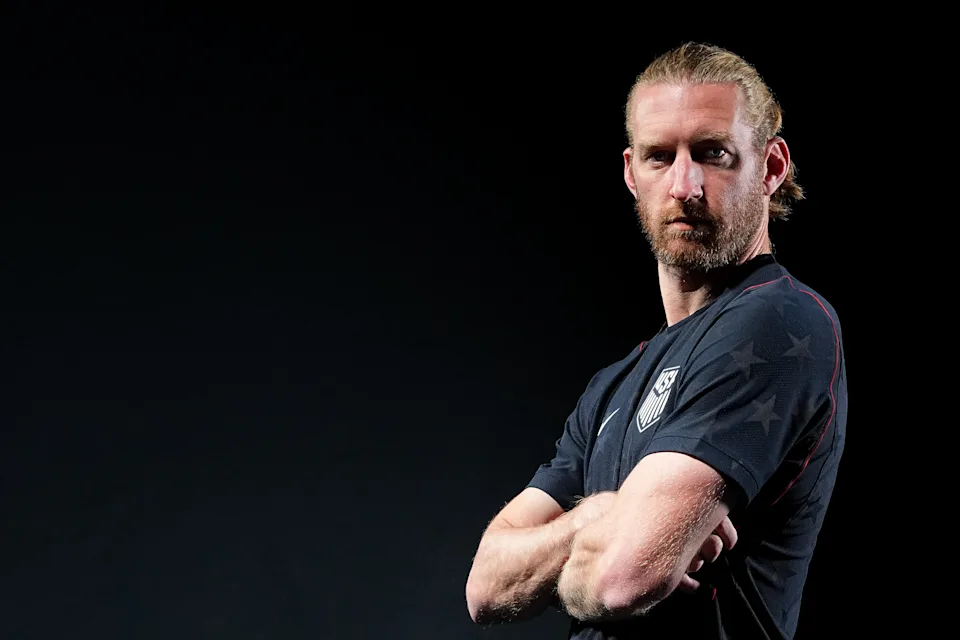
As part of a multiyear collaboration, the group came up with two designs: wavy red stripes with blue trim over a white shirt (known as the Stripes kit) and a “dark obsidian” (black) shirt with shiny stars and red trim (the Stars kit). Both feature original fonts and the USSF’s “The Best of U.S.” ethos stitched inside the back below the neckline.
Advertisement
Advertisement
The marketing campaign began Monday, and the players will wear each kit in the friendlies in Atlanta against Belgium on March 28 and Portugal on March 31 — the final camp before Mauricio Pochettino names his World Cup squad May 26.
What did the players want in their new jerseys?
“For me, it was simple: I want something that’s timeless,” Adams said. “I want to have that kit you look back at in 30 years and you’re like, ‘That’s still the best one.’ … It’s pretty straightforward: You have to have stars and stripes of some sort. They represent us perfectly.”
Striker Folarin Balogun concurred.
Advertisement
Advertisement
“I wanted it to be something when you’re gifting the jersey to friends and family, and they’re wearing it, they’re excited and they have the feeling this jersey is extremely unique,” he said. “And as we’re one of the host nations, there was a big emphasis to make sure it stood out from the other nations.”
For the first time, all 27 teams under the USSF’s umbrella, including women and youth, will wear the same uniforms this year, the federation said. The women’s senior team is expected to give input on a special design ahead of the 2027 World Cup in Brazil.
(Courtesy U.S. Soccer)
The men’s reaction to the 2026 kits is a far cry from the 2022 unveiling, when the players had no say in a plain white shirt with some red and blue and a deep blue jersey with black blobs.
Advertisement
Advertisement
“We just as angry as y’all,” winger Tim Weah, agreeing with fan criticism, wrote on social media at the time.
“Tried to tell them,” posted midfielder Weston McKennie, adding a crying emoji.
In his recent interview with reporters, Adams said in general he doesn’t “necessarily care too much about the kits. A kit’s a kit … but top to bottom, we agreed we can at least have something that represents better.”
Advertisement
He added, “There was definitely a sense [Nike was] very, very uncomfortable with the [2022] situation, especially when you have 20-25 guys on a team saying they all hate the jerseys they’re about to play in. But there was a quick turnaround. They honestly welcomed the criticism and they brought us right into the loop to start the design process for the next ones.”
Advertisement
The collaboration began in 2024 with Nike conducting listening sessions and design workshops to learn what the uniform means to the players and what they’d like to include on it.
The second phase involved the company welcoming feedback from the players on various designs, patterns, styles and colors. At the November 2025 camp, the final vision was presented to the players.
Advertisement
“Weston, at one point, was coming up with some crazy designs that no one agreed with, just things that [defeated] the whole purpose of why we’re having these conversations,” Adams said with a grin. “Guys, let’s just come up with a design that makes sense. At one point they’re showing us colors, and someone’s like, ‘Oh, I love that green.’ And I was like, ‘Get out of the room! Like, what are we doing here?’ But it’s good. It all came to the right spot.”
From a design perspective, the players said they picked everything from how red the red was in the stripes to the shorts and socks combinations. There were tweaks along the way.
Advertisement
“I feel like we had more say than Nike had in it, to be honest with you,” Adams said.
Advertisement
(Courtesy U.S. Soccer)
According to the USSF, the players also provided input on fabric weight, seam placement, fit and mobility — a key factor during a competition to be played at times in hot conditions.
World Cup veteran Matt Turner made suggestions for the goalkeeping kit, which is part of Nike’s colorful “Hollywood Keepers” line worn by several national teams.
“You need to have kits that you just love putting on,” Adams said. “You just get that feeling like, look good, play good. And it sounds corny, but I believe in that.”
When a famous World Cup goal is scored or victory achieved, the jersey becomes part of that history — seen around the globe for generations.
Advertisement
Advertisement
“At the same time, if a kit is ugly, it’s ugly,” Balogun said. “It’s going to get negative reaction” forever.
The Stripes jersey is reminiscent of a popular one the U.S. wore last decade, unofficially known as the “Where’s Waldo” kit: red and white horizontal stripes, like the shirt worn by the main character in the popular children’s books. “We wanted some iteration of that,” Adams said.
The broader aim is to establish a uniform that becomes globally recognized, such as the Netherlands (bright orange), Brazil (canary yellow with blue), Portugal (red and green) and Croatia (checkerboard).
Advertisement
“You want that one jersey that kind of stays consistent,” Adams said. “When you talk to a Dutch national team player, that orange jersey is the top of playing in the Dutch national team system. For us, we have like crazy shapes or something on our jerseys. What does that have to do with the U.S.? We just want to be stars and stripes.”
Advertisement
Both Adams and Balogun said they prefer the 2026 Stars over Stripes.
“I think that’s going to become an all-time classic jersey,” Adams said. “Something about stars for me, which you don’t really see often [and] makes it pop.”
Advertisement
Balogun added, “I just like the stealthiness to it. It’s got so much hidden detail. It’s such a beautiful kit. It’s a lot more of a statement.”
For fans, they won’t come cheap: $180 MSRP for authentic match jerseys, $100 for replicas.
New Balance is teaming up with the Patriots, making the brand the official and exclusive athletic footwear and apparel partner of the team and Gillette Stadium.
The partnership includes the development of a new state-of-the-art training center in New England. It will give the company a major presence across performance, facilities and community initiatives.
Thanks for the submission!
Advertisement
The Patriots’ new training complex next to Gillette Stadium will be named the New Balance Athletics Center, according to ESPN’s Adam Schefter on Monday. It will open this spring, while the surrounding practice fields will be known as the New Balance Practice Fields.
Advertisement
•
Looking to predict NFL playoff Scenarios? Try our NFL Playoff Predictor for real-time simulations and stay ahead of the game!
Advertisement
The name announcement sparked reactions from NFL fans on X, with some posting jokes and humorous takes about the facility.
New Balance maintains a broad global sponsorship portfolio that spans teams, leagues and athletes. Among its notable partnerships are the New York Road Runners and the NBA, along with MLB franchises such as the Red Sox and the Mets.
The brand also released collaborative product lines with prominent athletes, including Dodgers pitcher/designated hitter Shohei Ohtani and Clippers forward Kawhi Leonard.
A look at the moves the Patriots have made in free agency
The start of the new league year brought significant roster turnover to the New England Patriots. The team allowed two starters from last season, K’Lavon Chaisson and Jaylinn Hawkins, to leave in free agency, but quickly added new talent.
Advertisement
One of the headline additions was Kevin Byard, who reunites with Pats coach Mike Vrabel after spending six seasons together with the Titans. The veteran safety signed a one-year, $9 million contract and is expected to take over the starting job previously held by Hawkins.
Here’s the list of every free-agent signing New England has made in 2026.
WR Romeo Doubs – Four years contract ($68 million)
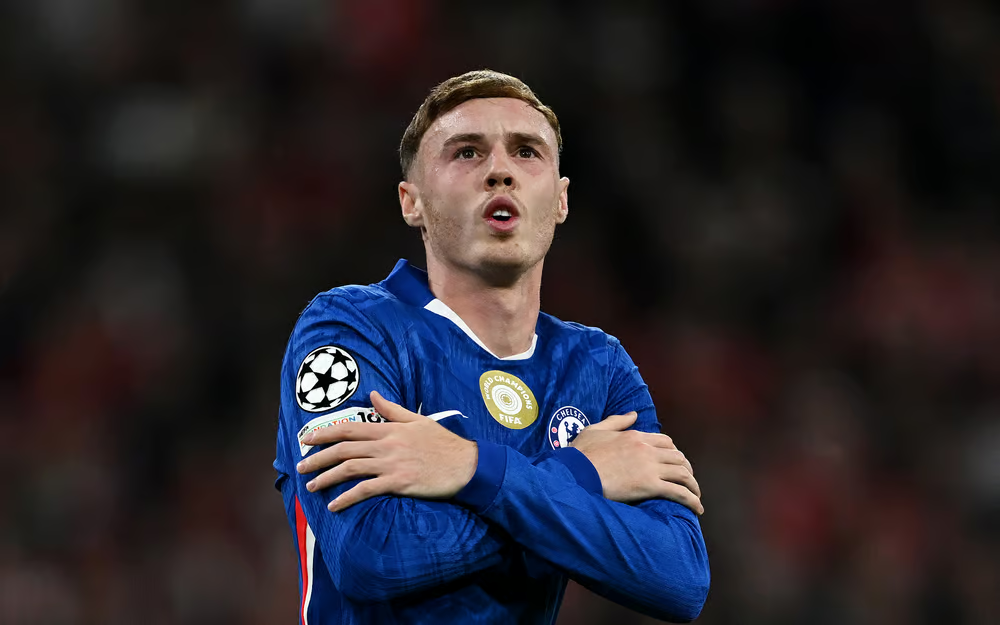
Chelsea captain Reece James is facing several weeks on the sidelines after sustaining a hamstring injury during Saturday’s Premier League defeat by Newcastle, a significant blow coming just days after he signed a new six-year contract.
The 26-year-old will miss Tuesday’s Champions League last-16 second leg against Paris St Germain, a match where the Blues must overturn a daunting 5-2 aggregate deficit. Adding to head coach Liam Rosenior’s concerns, Malo Gusto is also a doubt due to illness.
Rosenior confirmed the injury, stating: “Reece felt something in his hamstring at the end if the game against Newcastle. Really frustrating and disappointing one for us. We don’t know the full extent of that injury but he’s out for tomorrow’s game.”
He expressed concern over the potential duration of James’s absence, adding: “It could be (weeks) with a hamstring injury, it’s never great. Hopefully we can get him scanned, find out the full extent then we’ll know more.”
He highlighted James’s importance, calling him “an important leader” and “our captain.”
Advertisement
Liam Rosenior admitted James’ injury could keep him out for a while (AP)
The injury is particularly frustrating given James’s extensive history of hamstring issues, which saw him miss around seven months of the 2023/24 season after surgery and only recently regain the fitness to play regularly, making 36 appearances this campaign – his most since 2021/22.
However, there was some positive news for Rosenior, with Brazilian teenager Estevao returning to training.
“It’ll be assessed whether he can take part PSG,” the coach confirmed, as the team prepares for the monumental task against the French champions.
Advertisement
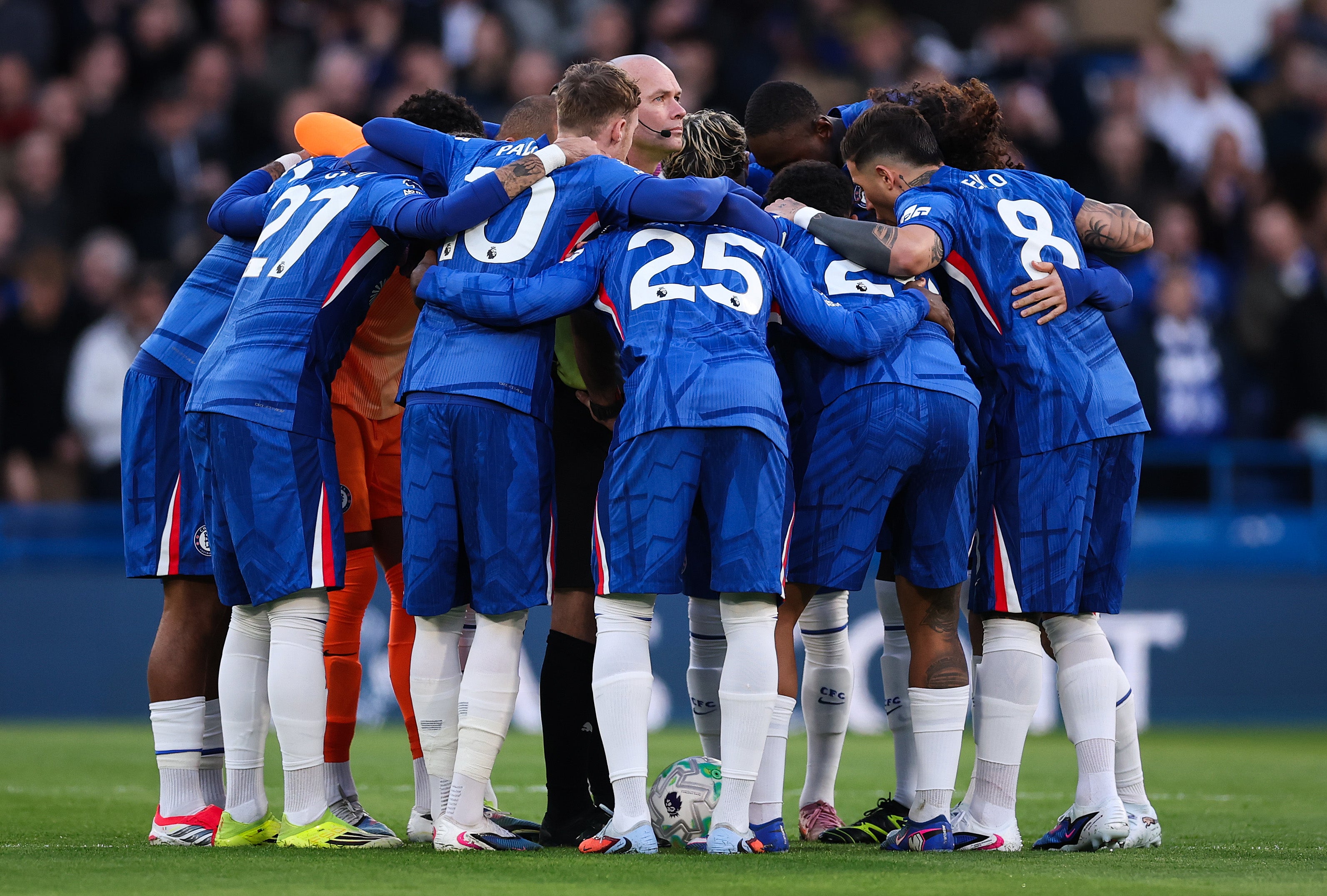
Meanwhile, Rosenior addressed the controversy surrounding the team’s pre-match huddle, which drew attention during Saturday’s match when referee Paul Tierney became inadvertently caught in the middle.
A decision is yet to be made on whether the team will continue the ritual around the match ball. Rosenior reiterated the huddle is intended to foster unity, not to intimidate.
“I think it’s been blown out of proportion,” he commented. “It’s a small thing amongst many serious things that we need to address, such as the massive game against PSG.”
Advertisement
Rosenior said his players are yet to make a decision on whether to do their pre-match huddle (Getty Images)
He added: “The lads have always wanted to show unity and togetherness, think they’ll continue to do that. But what we don’t want is to antagonise and bring more noise on ourselves. We’ll make the decision on where we do that on the pitch tomorrow.”
Rosenior also revealed plans to meet with PGMOL this week to discuss refereeing decisions that have gone against his team, though not necessarily the incident involving Tierney.
He dismissed the huddle debate as a “distraction for the media,” emphasising the team’s primary focus.
“We have a huge game against PSG tomorrow. We have an opportunity to do something really special. We know we need to be perfect. I’d rather focus on that,” he concluded.
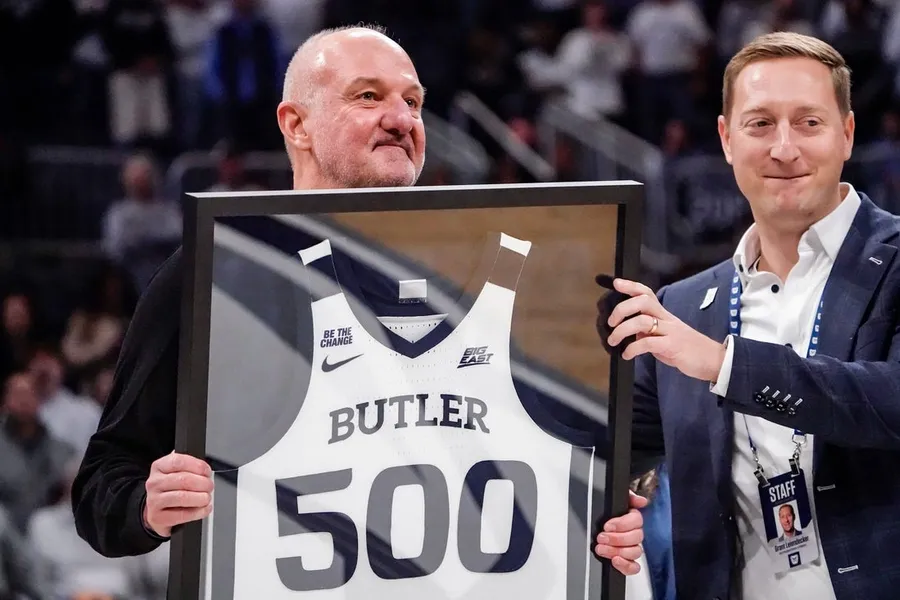
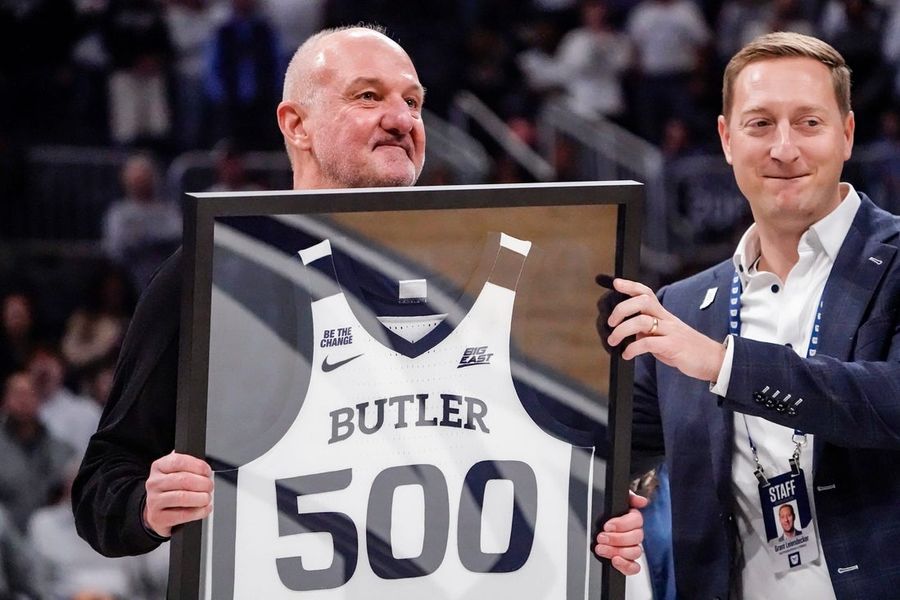
(From left) Butler Basketball Coach, Thad Matta and Butler AD Grant Leiendecker celebrate Matta’s 500th game win before a game between the Xavier Musketeers and Butler Bulldogs on Saturday, Feb. 21, 2026, at Hinkle Fieldhouse in Indianapolis.
Butler men’s basketball coach Thad Matta announced his retirement Monday after winning more than 500 games at three schools and earning four conference Coach of the Year honors.
Butler announced that Matta, 58, will remain at his alma mater as a special assistant to the president and athletic director. A national search for his replacement is already underway.
Matta compiled a 502-223 record across 21 seasons at Butler (2000-01, 2022-26), Xavier (2001-04) and Ohio State (2004-17).
His teams reached the NCAA Tournament 13 times, including Final Fours with the Buckeyes in 2007 and 2012. Ohio State lost to Florida in the 2007 national championship game and won the NIT title the next year.
“After taking some time to reflect following the end of the season, I have decided that the time has come for me to step away from the sidelines,” Matta said. “The love my wife, my daughters and I have for Butler is what brought us back four years ago, and it feels especially meaningful that I conclude my coaching career here.
Advertisement
“Butler has always meant more to us than just basketball — and that connection is why I’m grateful to continue working with the University and offering my help in any way I can. My commitment to Butler and to the future of this program remains as strong as ever. I want this program to compete at the highest levels of the BIG EAST and national landscape, and I am excited to be part of what we continue to build here.”
Matta was named the Atlantic 10 Coach of the Year in 2001-02 and the Big Ten Coach of the Year in 2005-06, 2006-07 and 2009-10.
“I will always be grateful for the experiences, the relationships, and the memories Butler has given me and my family,” Matta said. “I’m proud of what we’ve built together, and I look forward to staying connected and contributing in a new way as the next chapter begins.”
Advertisement
Matta’s Bulldogs finished 16-16 (7-13 Big East) this season, which ended with a 91-81 loss to Providence last week in the first round of the conference tournament in New York.
He recorded his milestone 500th victory with a 93-89 win at Georgetown on Feb. 18.
“Thad has made the thoughtful decision, together with his family, to step away from coaching and begin a new chapter in his remarkable career,” Butler president Jim Danko said. “He has built a Hall of Fame-worthy legacy in college basketball and has been a valued member of our campus community since he first arrived at Butler as a student-athlete in the 1980s. Butler has always been a special part of his story, and we are grateful that he chose to return and finish his coaching career where it all began. We extend our deepest thanks to Coach, his wife Barbara, and their daughters Ali and Emily for the dedication, leadership, and sacrifice they have given to Butler. We are thrilled that the Matta family will remain a part of the Butler community for years to come.”
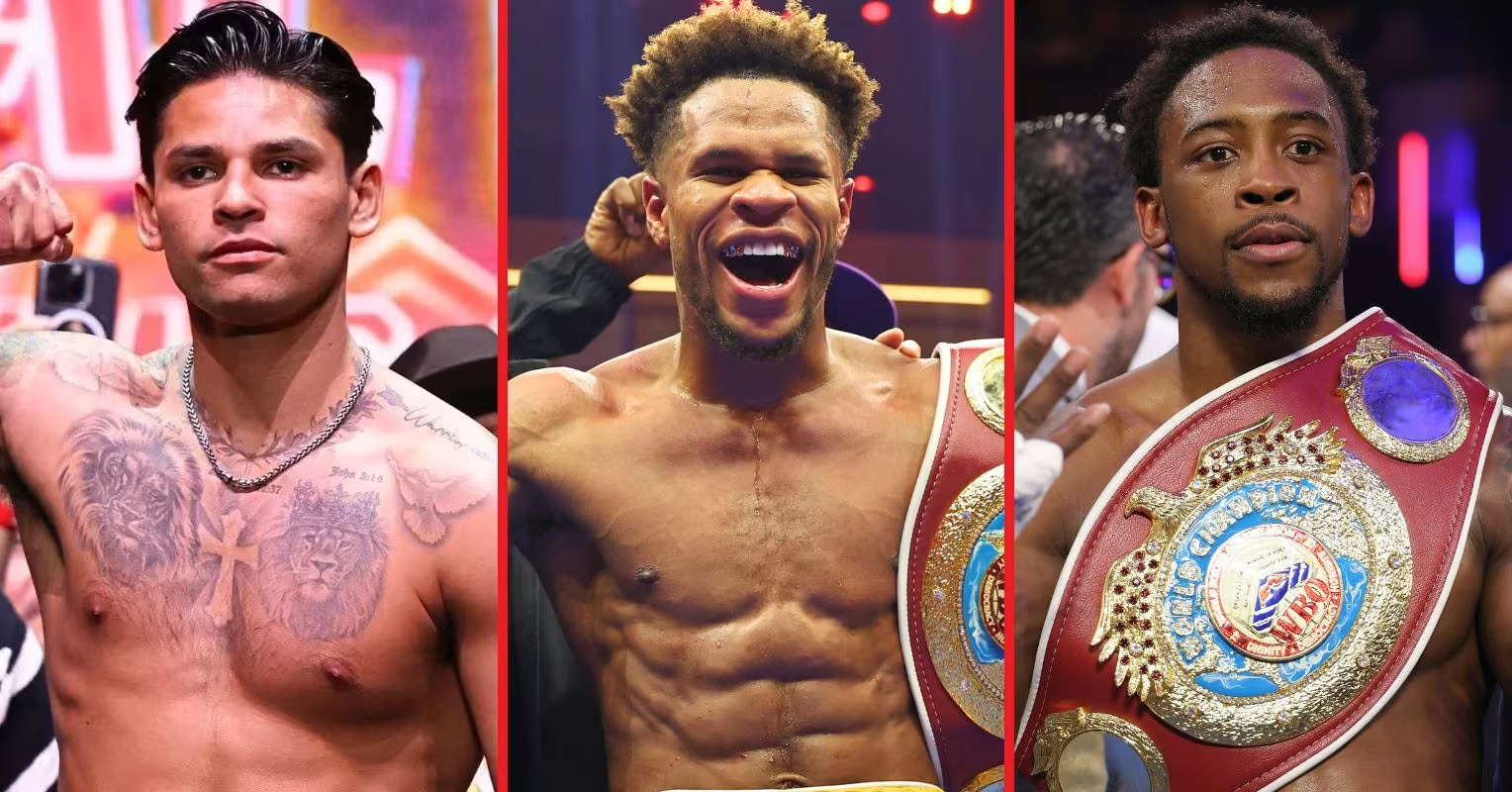
Ryan Garcia, Devin Haney and Keyshawn Davis are among those in the sights of one man hoping to thrust his name into the mix at the very top level.
At present, Haney holds the WBO welterweight world title whilst Rolando Romero is in possession of the WBA crown, and the US pair are expected to collide in May for a title unification bout.
Meanwhile, California’s Garcia has become one of the biggest names in the sport after winning the WBC welterweight world title by beating Mario Barrios, whilst Northern Ireland’s IBF ruler, Lewis Crocker, is set for a trip Down Under to face Liam Paro as the first defence of his belt.
Advertisement
Keyshawn Davis is another name that looks poised to be added into the equation, as he threatens a move up to welterweight.
After an impressive win over Kenneth Sims Jr. at the weekend, Los Angeles’ Arnold Barboza Jr. called out all of the above in his post-fight interview, seeking to secure a major fight.
“Who wouldn’t mind seeing me and Ryan Garcia in this arena, man? We would pack this s**t out. I want any of the champions, man; Ryan Garcia, Devin Haney, Rolly [Romero] and [Lewis] Crocker.
“But there is one person, that is annoying on Instagram, if he wants to come up to 147, where you at Keyshawn Davis?”
Barboza bounced back from a first career defeat at the hands of Teofimo Lopez to extend his record to 33-1 with a one-sided unanimous-decision win over Sims Jr. in Anaheim. The 34-year-old now hopes to agree to a second world title shot in this new division, adding yet another dimension to the intriguing picture at welterweight.
Advertisement
However, Barboza also shook hands on a potential showdown with Alexis Rocha during the aftermath of his win, teeing up a possible war between the Californian duo for this summer as the champions look more likely to book unfications.
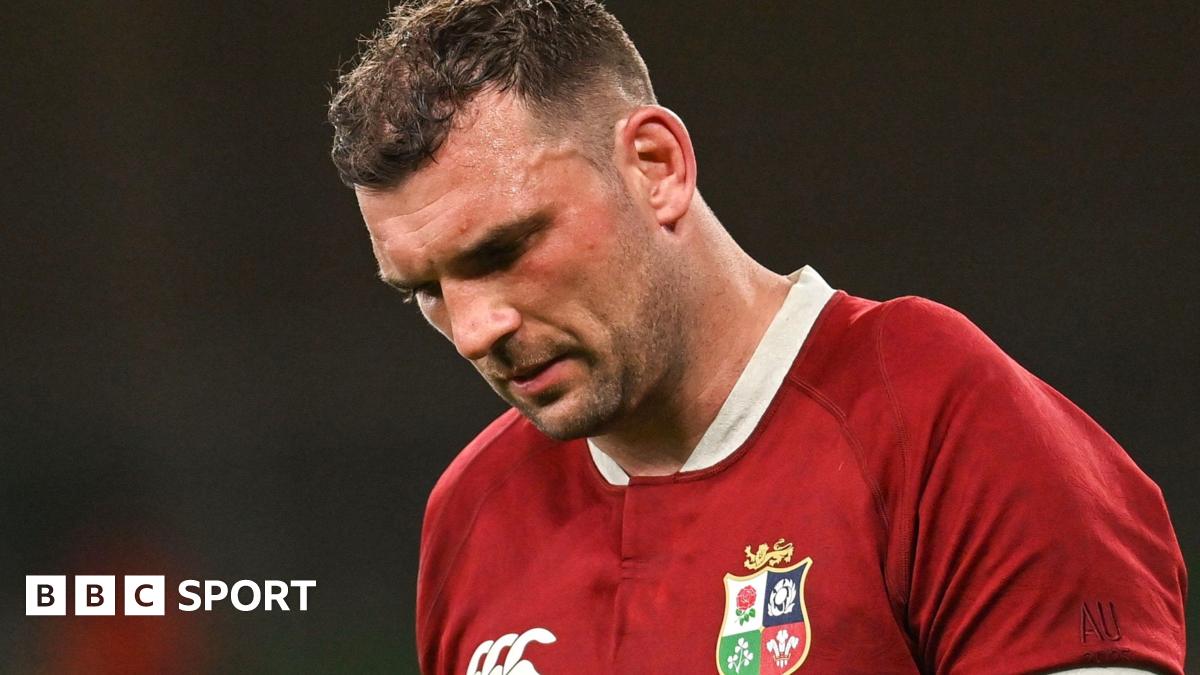
England wing Tommy Freeman and Ireland prop Tadhg Furlong both said similar after being involved in last summer’s Lions tour of Australia.
“Without realising it, I think I was tired,” Freeman said of his return to club side Northampton.
“My body felt like I was OK to go and I was saying to coaches ‘Yeah I’m fine, I’m fine’. I just think mentally it was a bit more of a struggle.”
Three-time Lion Furlong said: “Everything maybe seems insignificant the year after.”
Advertisement
France’s players may not have that much sympathy. A campaign in their domestic top flight – the Top 14 – can stretch to 29 matches.
The equivalent figure for the English Prem and the United Rugby Championship is 20 and 21 matches respectively.
However, unlike with the Home Nations, France usually rest their top stars for their summer tours.
While the Lions were touring Australia, across the Tasman Sea a France side took on New Zealand in a three-Test series without the likes of Louis Bielle-Biarrey, Matthieu Jalibert or Charles Ollivon.
Advertisement
Despite objections from their Kiwi hosts, concerned about the impact on ticket sales, France stuck to their policy as a second-string side suffered a 3-0 series defeat.
Ireland are adept at managing their stars’ overall workloads. For instance, Leinster and Ireland hooker Dan Sheehan has made only three starts for his province so far this season.
But Warburton believes that not all games are equal. In his opinion, the Test stages demands more of players.
“I think there’s something about playing international rugby – there’s only so many times I think you can play an international game of that magnitude, emotionally, in a year,” he said.
Advertisement
“The Lions tour obviously eats into that quota and I think it’s a massive part of it.”
The Six Nations’ regular calendar cycle might also play a part. In even-numbered years – in which every post-Lions Six Nations take place – France have three home games, rather than two.
Their home matches include meetings with Ireland and England, often title rivals.
France bookended their Six Nations campaign with victories against those two in Paris this year, crucial results in their championship success.
Mexico City set a Guinness World Record Sunday for having held the largest soccer class, with about 9,500 people having taken part in a training session in a public sqaure in the city.
Participants filled the central plaza, known as Zocalo, for a 40-minute open-air class, practicing drills under instructors as part of a campaign ahead of the FIFA World Cup in June.
Among those participating were members of the Mexico team that won the unofficial 1971 Women’s World Cup.
Guinness World Records judge Alfredo Arista confirmed the record during the event. Organizers said the turnout surpassed the previous record of 1,038 participants set in Seattle in June 2025.
Advertisement
Mexico City Mayor Clara Brugada congratulated participants saying, “Today we kick off the World Cup.”
Mexico building momentum as it gears up to co-host the World Cup Image: Quetzalli Nicte-Ha/REUTERS
What to know about situation in Mexico City more generally
Mexico will co-host the tournament along with the US and Canada.
This will be the third World Cup tournament in Mexico, after the country previously hosted the finals of the 1970 and 1986 tournaments.
But safety questions linger after authorities killed the nation’s most wanted drug-leader last month. That triggered a wave of violence in several parts of the country, including Guadalajara, one of Mexico’s three World Cup host cities.
Advertisement
President Claudia Sheinbaum has sought to assauge those concerns, telling the public that authorities will ensure security during the sporting event.
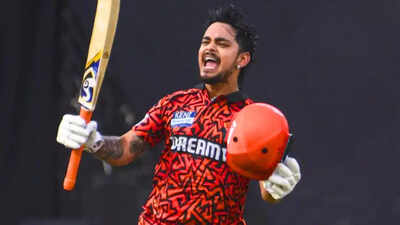
NEW DELHI: Team India’s left-handed batter Ishan Kishan is the frontrunner to lead Sunrisers Hyderabad in the upcoming IPL 2026 season, as there is yet no clarity on when Pat Cummins will link up with the squad. TimesofIndia.com reliably understands that the SRH management has had a discussion in this regard, and Kishan has been identified as the most suitable candidate to have the armband in the Australian fast bowler’s absence.
Jay Shah calls 2019 to 2026 as Indian cricket’s golden period
Ishan’s stocks are on a bull run at the moment. The 27-year-old has had a brilliant T20 World Cup campaign, where he became the toast of the nation for his performances, initially as a top-order batter and then at No. 3 when Sanju Samson returned to the Playing XI.
Ishan Kishan’s performance in last IPL
Kishan has established himself as one of the most explosive wicketkeeper-batters in the IPL. Across 119 matches in the tournament, playing for three franchises including Sunrisers Hyderabad, he has scored 2,998 runs from 112 innings at an average of 29.10 and a strike rate of 137.64. His tally includes one century, 17 half-centuries, 288 fours and 134 sixes, underlining his aggressive batting style. Behind the stumps, Kishan has also contributed with 59 catches and five stumpings. In the 2025 season, his first after being picked for Rs 11.25 crore in the auction, he scored 354 runs in 14 matches at a strike rate of 152.58, including a century and a fifty.
Advertisement
Kishan’s heroics in T20 World Cup 2026
Kishan played a key role for the India national cricket team during the ICC Men’s T20 World Cup 2026, finishing as India’s second-highest run-scorer with 317 runs in nine innings at an average of 35.22 and a strike rate above 193. His campaign included three half-centuries, including one in the final, helping India clinch the title. Speaking after the victory, he said, “Our team won, obviously, it is a very good thing, not only for us, but for the whole nation. We hope to continue playing cricket like this and keep winning.” He added, “It feels great because I believe the better I perform, the more motivation it will be for the young kids here who want to grow. I always try to ensure as many players as possible emerge from every corner. Now that we’ve played the World Cup, it shows that with hard work, you can succeed from anywhere.” On his future goals, Kishan said, “Nothing much, just keep scoring runs, keep playing, and keep winning.”
Chelsea FC have been fined £10.75 million ($14.27 million) and handed a suspended one-year transfer ban after being found guilty of historical breaches of Premier League rules.
The London club were also given an immediate nine-month ban from signing academy players, according to a statement released by the league on Monday.
The sanctions are linked to information provided to the Premier League by the consortium led by American businessman Todd Boehly after the group completed the takeover of the club from former owner Roman Abramovich in 2022.
Advertisement
Following its investigation, the Premier League discovered that between 2011 and 2018, several undisclosed payments were made by third parties connected to Chelsea to players, unregistered agents and other individuals.
Despite these findings, the league stated that even if the payments had been included in the club’s financial submissions at the time, Chelsea would not have violated the league’s profitability and sustainability rules.
Officials also noted that Chelsea’s willingness to report the issue, admit the breaches and cooperate fully with the investigation were considered when determining the sanctions.
Advertisement
In a related development, The Football Association has also charged Chelsea with 74 alleged breaches of its regulations, based on the same information submitted by the club’s current ownership.
The Minnesota Vikings arguably need more cornerback depth, and the Tennessee Titans cut ties with veteran L’Jarius Sneed last week. Therefore, the franchise should explore his 2026 price tag, as it probably won’t be much.
Minnesota may need one more experienced cornerback before the offseason wraps.
Sneed has struggled in the last two seasons, but that doesn’t mean he’s beyond salvation.
Advertisement
A Buy-Low Candidate Still Makes Sense for Brian Flores
Sneed as a Vikings CB3 or CB4 makes sense.
New Tennessee Titans cornerback L’Jarius Sneed speaks with reporters during his introductory press conference at Ascension Saint Thomas Sports Park in Nashville. The defensive back answered questions after arriving via trade, discussing his role in the Titans’ secondary during media availability on April 2, 2024, while beginning the next chapter of his NFL career. Mandatory Credit: Denny Simmons-USA TODAY NETWORK.
Titans Drop Sneed
It’s the end of the road for Sneed in Tennessee.
ESPN’s Turron Davenport wrote Friday, “The Tennessee Titans released cornerback L’Jarius Sneed on Friday, a move that saves $11.4 million in cap space. Sneed struggled to stay on the field for Tennessee, appearing in 12 games over two seasons.”
Advertisement
“He had signed a four-year, $76 million contract after the Titans acquired him in a 2024 trade with the Kansas City Chiefs. The Titans signed defensive backs Alontae Taylor, Cor’Dale Flott and Josh Williams earlier this week to restock their cornerbacks room.”
Not long ago, Sneed was the top cornerback on the free-agent market.
Davenport added, “Starting the 2025 season on the physically unable to perform list as he recovered from a knee procedure in May and a lingering quad injury, Sneed played seven games last season and finished with 26 tackles and three passes defended.”
“He suffered another quad injury in Week 7 against the New England Patriots and missed the final 10 games of the season after going on injured reserve.”
Advertisement
Vikings Won’t Get Away with Pristine CB Health Again
In 2025, the Vikings jaunted into the season with a rather teensy cornerback room, employing Byron Murphy Jr., Isaiah Rodgers, and Jeff Okudah as the main trio. Remarkably, Murphy Jr. and Rodgers remained healthy, playing 34 games between them, while Okudah sustained two concussions and didn’t play much in the second half of the season.
The club promoted Fabian Moreau from the practice squad, and he played wonderfully by the standards of an unsung CB3.
On the whole, Minnesota probably won’t get away with being perfectly healthy on behalf of the two main cornerbacks in 2026. It just doesn’t work that way. Therefore, adding a veteran like Sneed or drafting a rookie in April feels wise.
Advertisement
The Vikings’ Current CB Group + Sneed’s Career Resume
Here’s the Vikings’ current CB pecking order:
Byron Murphy Jr.
Isaiah Rodgers
James Pierre
Dwight McGlothern
Zemaiah Vaughn
It’s worth noting that McGlothern and Vaughn will be on the roster bubble this summer.
Tennessee Titans cornerback L’Jarius Sneed (38) runs onto the field during player introductions ahead of a matchup with the Indianapolis Colts at Nissan Stadium in Nashville. The defensive back energized the crowd while taking part in pregame ceremonies before kickoff on Oct 13, 2024, as the Titans prepared for divisional action. Mandatory Credit: Steve Roberts-Imagn Images.
Sneed missed 65% of all games in Tennessee due to injury after a productive and mostly healthy run in Kansas City from 2020 to 2023. The ideal scenario, if signed by the Vikings, is Sneed turning back the clock three years to reclaim his glory days. Brian Flores has proved a couple of times that players are capable of that. See: Eric Wilson and Isaiah Rodgers.
A to Z Sports‘ Buck Reising painted an unflattering picture of Sneed after his release: “After former general manager Ran Carthon traded a 2024 third-round pick to the Kansas City Chiefs for and then signed Sneed to a four-year, $76.4 million deal, things could not have gone worse. Sneed appeared in only 12 of a possible 34 regular season games due to various injuries.”
“Sneed accounted for zero interceptions and is credited with only one pass break-up in those 12 games, per Pro Football Focus. His presence was malignant in Tennessee on a number of different fronts. Current general manager Mike Borgonzi signed defensive backs Alontae Taylor, Cor’Dale Flott and Josh Williams this week prior to jettisoning Sneed from the Titans roster.”
Advertisement
That means he’ll be available for cheap.
A Depth CB Needed No Matter What
Let’s pretend Minnesota has no interest in Sneed, who will be gettable on an affordable prove-it contract. Flores should still add another corner. The top of the draft next month offers options like this:
Avieon Terrell (Clemson)
Brandon Cisse (South Carolina)
Chris Johnson (San Diego State)
Colton Hood (Tennessee)
D’Angelo Ponds (Indiana)
Jermod McCoy (Tennessee)
Keith Abney II (Arizona State)
Mansoor Delane (LSU)
Kansas City Chiefs cornerback L’Jarius Sneed (38) warms up on the field prior to a game against the Denver Broncos at GEHA Field at Arrowhead Stadium in Kansas City. Sneed went through pregame drills with teammates ahead of the AFC West matchup on Dec 5, 2021, continuing his routine before kickoff. Mandatory Credit: Denny Medley-USA TODAY Sports.
From free agency, in addition to Sneed, this is the current list:
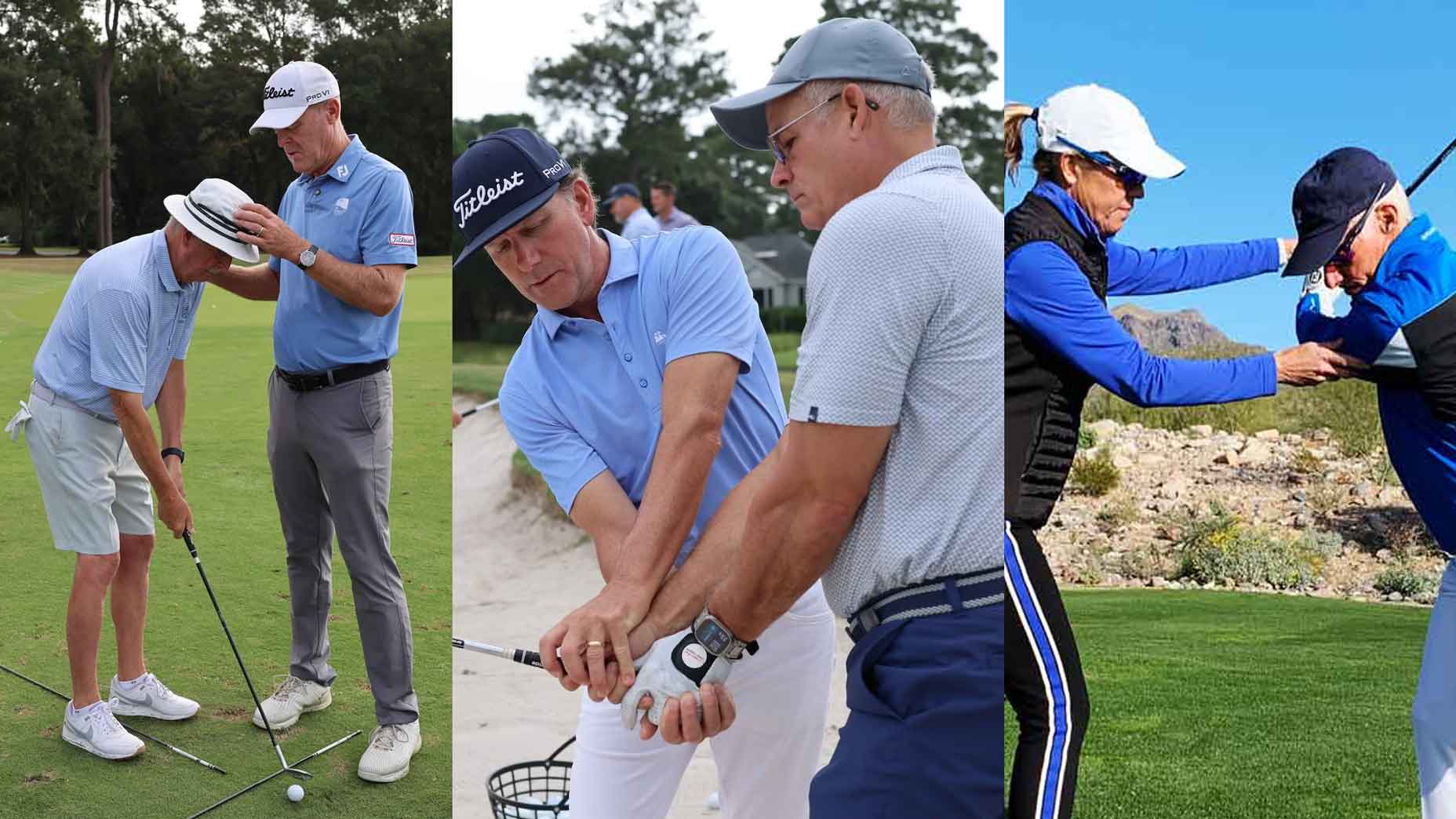
Have you ever wanted to take a lesson with one of GOLF’s Top 100 Teachers? Now you can. Introducing GOLF Schools, where golfers of all skill levels learn from the game’s top instructors at premier courses across the country, combining expert coaching with hands-on experience in a way few other programs can match.
When you sign up for a GOLF Schools event, you’ll work closely with some of game’s most respected coaches in a setting that’s designed to elevate every part of your game. Starting at $3,650, each program is fully comprehensive — covering everything from full-swing mechanics and scoring shots around the green to the fundamentals of putting — all set against the backdrop of some of the country’s most renowned golf courses and facilities.
Students will take the skills honed on the range to the course, where our on-course sessions will test you with real-life playing situations. Here, instructors provide guidance on shot selection, course management and strategy, ensuring that these lessons translate seamlessly to the course.
Enter your email to receive updates about future events!
Advertisement
Every GOLF School gives students the flexibility to tailor their experience to the areas that matter most to their game. Whether that means developing a reliable drive, learning to shape iron shots on command or mastering drills to maintain your game after the event is over, these programs aren’t just about instruction — they’re built to equip golfers with the tools to play your best golf ever.
Advertisement
But what really sets GOLF Schools apart from other learning intensives are three key elements: the elite instructors, distinguished courses and practical learning approach. Our elite coaching staff leads through a combination of individualized feedback, small-group coaching and guided play, allowing every golfer to gain a clear understanding of their tendencies and discover the adjustments that can lead to more consistent results.
If you’re interested in participating in one of our upcoming GOLF Schools events or would like to receive updates about future programs, click here or sign up below to stay in the loop.




















































You must be logged in to post a comment Login