


Connect with us
DAPA Banner

Sports

How wheelchair basketball challenges assumptions about the gender gap in sport

Published

on

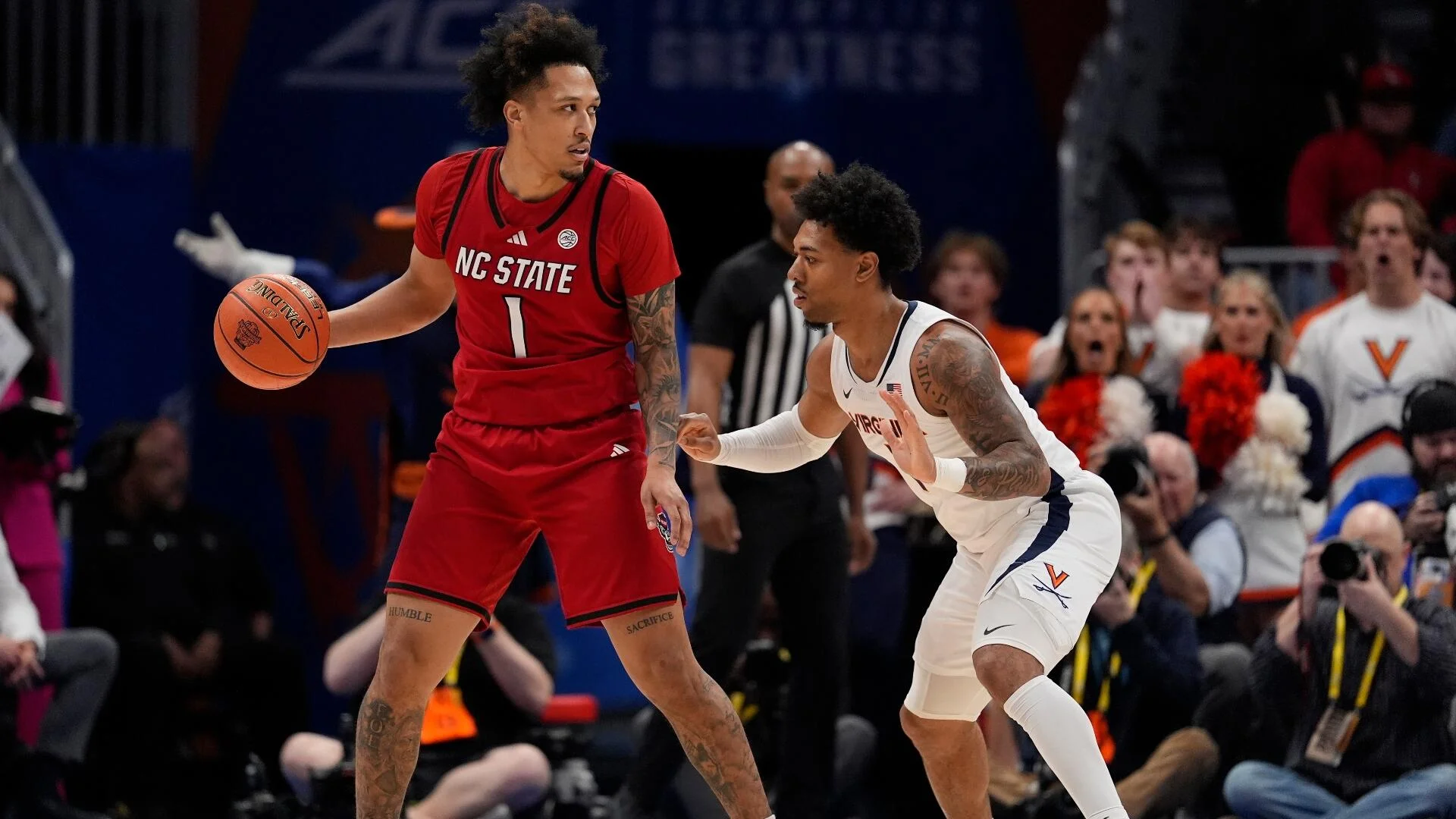
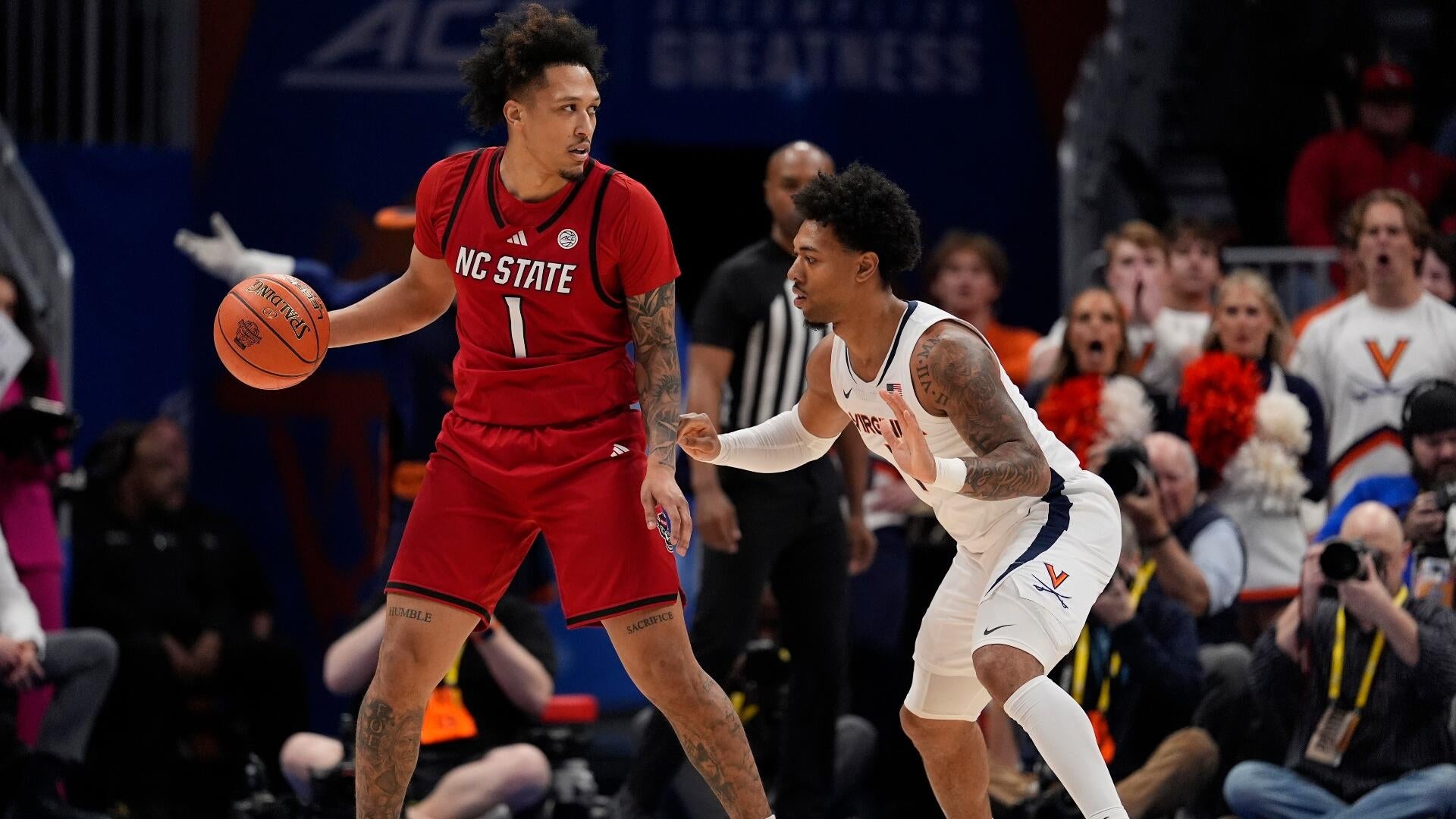
Every March, millions of Americans fill out brackets and tune in to watch the NCAA college basketball tournaments known as March Madness. The men’s and women’s competitions unfold in parallel, each with their own brackets, champions, storylines and fan bases.

The separation reflects one of the most deeply embedded assumptions in sports: that women and men perform differently enough that they must compete apart.

The divide is so normal, it’s rarely explained: On average, men are faster, stronger and have more endurance. As a result, performance differences between men and women are often assumed to follow directly from these physical traits.

This notion shape how sports organizations structure competition, how coaches train athletes and how researchers study performance. Sex becomes a shortcut – a way to predict what athletes can do before they ever step onto the court.

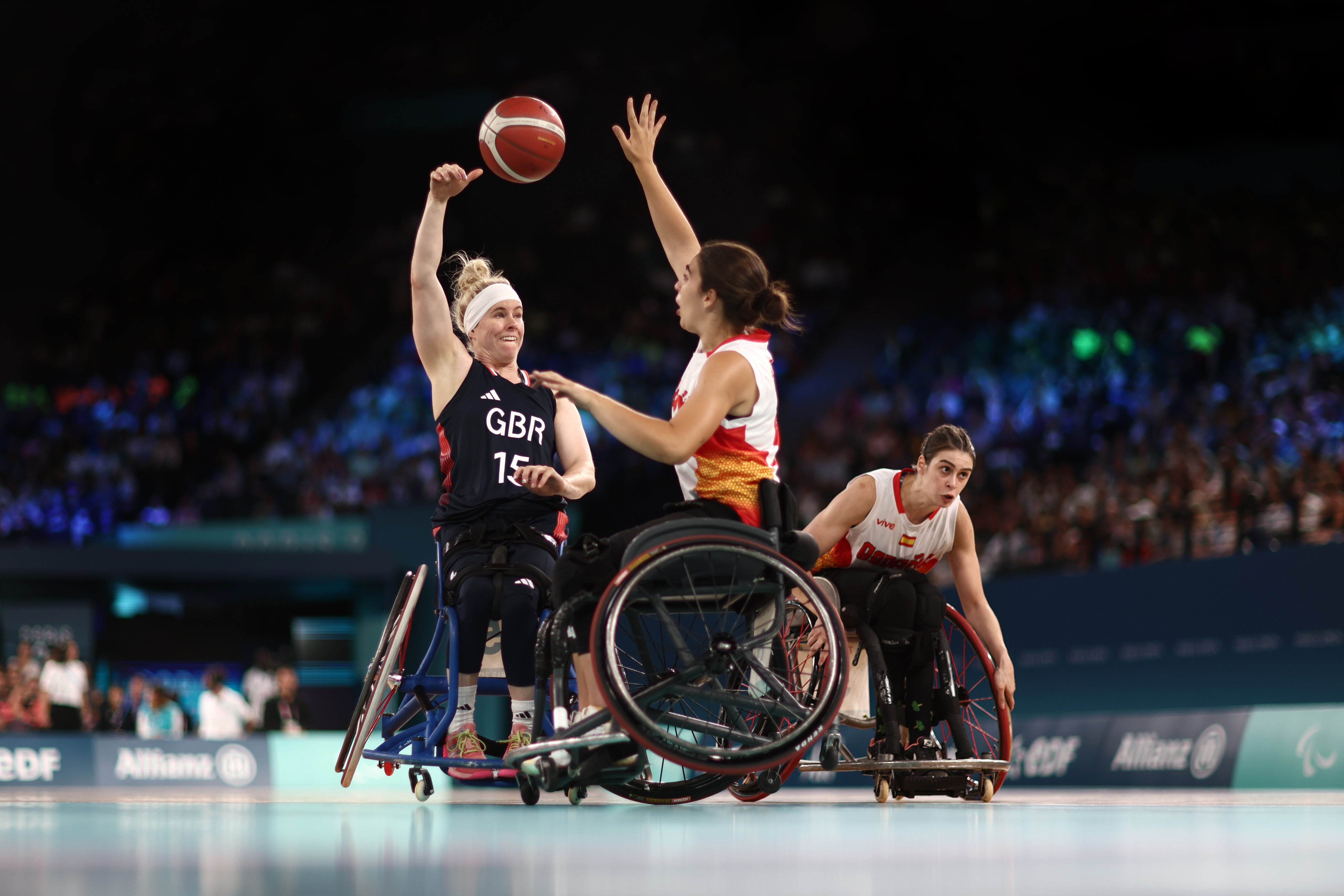
Although international competitions of wheelchair basketball have separate women’s and men’s teams, athletes at the national level often train together
Although international competitions of wheelchair basketball have separate women’s and men’s teams, athletes at the national level often train together (Naomi Baker/Getty Images)

As an exercise scientist who studies the physical demands of Paralympic sports, I wanted to know whether this assumption actually holds up.

My research on elite wheelchair basketball suggests it may not. I found that many of the differences widely attributed to physiological differences between women and men in sports are far less pronounced in wheelchair basketball players – and in most cases absent altogether.

Advertisement

It may seem that wheelchair sports are too different from nondisabled sports to compare. But in my view, they may instead reveal what sports look like when performance is measured by what athletes can do, rather than presumptions tied to their sex.

Although international competitions of wheelchair basketball have separate women’s and men’s teams, athletes at the national level often train together.

Testing different abilities

In most sports, presumptions about physical differences between the sexes appear early, often starting with elementary school physical education classes and youth teams.

Advertisement

Wheelchair basketball works differently. Although international competitions have separate women’s and men’s teams, athletes at the national level often train together, while women sometimes compete in men’s leagues and vice versa.

As part of my Ph.D. research, I examined how elite wheelchair basketball players move during competition by asking athletes from the Australian national men’s and women’s teams to wear movement sensors during five international-level games in 2022.

The sensors recorded how often players accelerated and decelerated, how frequently they changed direction, how fast they moved and how much distance they covered. Accelerations, decelerations and changes of direction are typically the most physically demanding movements in wheelchair basketball. To ensure fair comparisons, I adjusted all measures for playing time.

A consistent difference emerged. Players with less severe impairments – those with greater trunk control and stability – performed more high-intensity actions than players with more severe impairments. Female athletes with less severe impairments accelerated and decelerated more frequently and reached higher peak speeds, and male athletes showed the same pattern.

Advertisement

When I compared performance by sex, however, the differences were much less pronounced. Across most measures – including distance covered, average speed and high-intensity movements – female and male athletes performed similarly over the course of multiple games.

Performance beyond sex

If sex-based performance differences are so common in sports, why didn’t they appear in my research? The answer lies partly in how wheelchair basketball is organized.

To compete, athletes are assigned a classification based on how their impairment affects movement during play. These classifications range from 1.0 to 4.5, with lower numbers indicating more severe impairments. The system is designed to account for athletes with wide variations in physical disabilities, particularly differences in trunk control, balance and the ability to generate force and change direction in their game wheelchairs.

Advertisement

During games, teams must stay under a combined classification limit of 14 points for the five players on court. This means lineups are built around functional movement ability rather than sex, balancing players with different movement capacities within lineups so that no single team gains an unfair advantage.

Shelley Cronau, a player on Australia’s Paralympics wheelchair basketball team, grabs a loose ball in a match against Japan in the Tokyo 2020 Paralympic Games.

Wheelchair basketball uses a system of classifications to balance the wide variations in athletes’ disabilities. Carmen Mandato/Staff via Getty Images Sports

With this in mind, it makes sense that classification, not sex, explained the differences I observed. In other words, wheelchair basketball is designed around physical variation in sports – not just between women and men, but across individuals with very different movement capacities and roles on the court. In this context, sex becomes one variable among many, rather than the primary basis for performance.

Advertisement

This pattern isn’t unique to wheelchair basketball. In wheelchair rugby, where women and men compete together on the same international teams, research has also found that game demands are shaped more by players’ classification and on-court roles than by sex.

About the author

Leanne Snyder is an Assistant Professor of Exercise Science at Loyola University Chicago.

This article is republished from The Conversation under a Creative Commons license. Read the original article.

Challenging sports science norms

Advertisement

My findings challenge a near-universal assumption in sports: that sex is the primary factor defining physical ability.

To be clear, there are contexts where sex-based comparisons matter. Differences in average muscle mass, body size and hormone profiles can influence performance in many sports, which is one reason competitions are typically separated into women’s and men’s divisions. Safety concerns are also frequently cited as a reason for maintaining separate competitions.

But when sex becomes the primary framework for understanding performance, it can obscure other important factors such as strength, body size, training history and access to coaching.

Research supports this idea. One study comparing athletes by both sex and strength found that many differences often attributed to sex were better explained by strength. Another review found little consistent evidence for sex-specific movement patterns in jumping and landing tasks, concluding that many reported differences are better explained by training exposure, motor skill or sociocultural factors than by sex alone.

Advertisement

Put simply, what is often labeled a sex difference may instead reflect unequal opportunities to develop physical capacity – much of which is trainable – rather than fixed, innate ability.

This perspective does not mean sex differences disappear, but it suggests that they may not always be the most informative way to understand performance. In some cases, focusing primarily on sex-based categories may even risk underselling what some young athletes are capable of.

Looking more closely at individual factors such as strength, agility, sport-specific skills and training exposure may give coaches a clearer picture of how athletes actually perform, rather than relying on long-standing presumptions about what girls and boys are capable of.

Source link

Advertisement
Continue Reading
Click to comment

You must be logged in to post a comment Login

Leave a Reply

Sports

Iran women footballers granted asylum, spotted training in Brisbane | Football News

Published

on


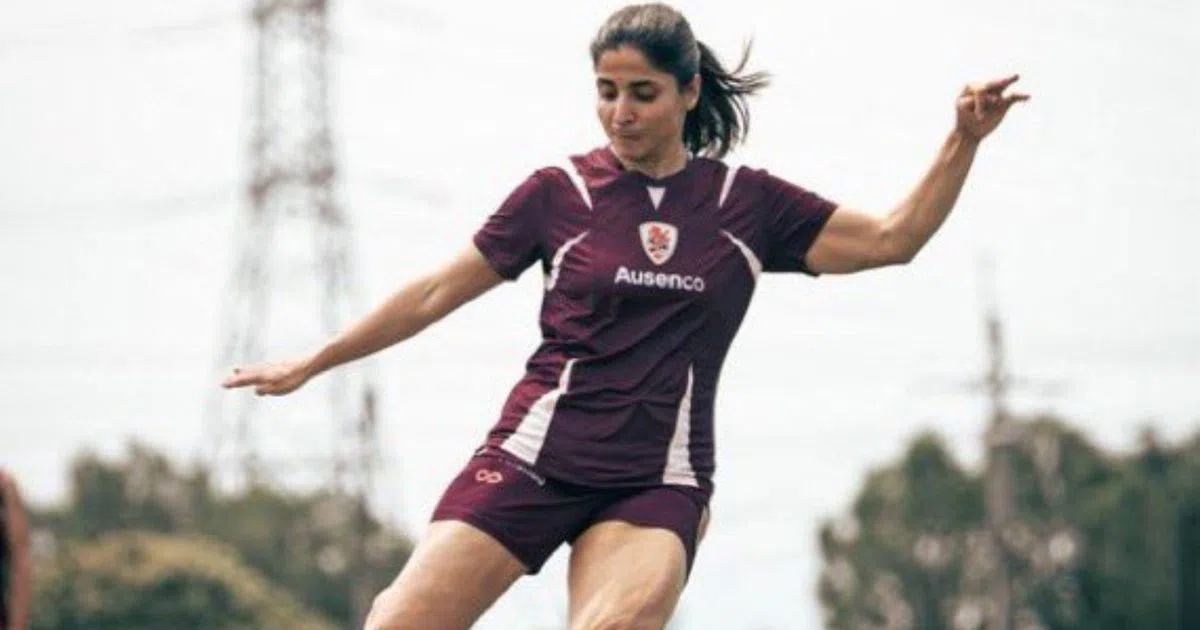
Two players from the Iranian women’s football team have joined a practice session with a professional club in Brisbane in their first publicly-shared appearance since it emerged they had been granted asylum in Australia.


Fatemeh Pasandideh and Atefeh Ramezanisadeh were pictured smiling and wearing the club’s colors as they posed alongside a women’s elite squad in photos posted to Instagram by the Brisbane Roar on Monday.


The update came as the rest of Iran’s soccer delegation left Malaysia bound for Oman, apparently capping a tumultuous episode that saw Australia’s government offering most of the squad humanitarian visas after the team was knocked out of the Women’s Asian Cup. Seven women initially accepted the asylum offer before five changed their minds and said they would return to Iran.


Advertisement


Brisbane Roar, which plays in Australia’s elite A-League Women’s domestic competition, posted a welcome to “Fatemeh and Atefeh” on Instagram, along with an emoji of a lioness, a nod to the name the Iranian players are known by.


“We remain committed to providing a supportive environment for them whilst they navigate the next stages,” Brisbane Roar CEO Kaz Patafta wrote.


Both women left comments on the post. “Thank you for everything,” Ramezanisadeh wrote.


The club declined further comment and referred all questions to Australia’s Department of Home Affairs. The Roar last week offered the women “a place to train, play and belong” in a statement on social media. 

Advertisement


They have been moved to an undisclosed safe location and are receiving assistance from the government, officials have said. They have not given interviews but Pasandideh posted to Instagram Monday a photo of herself and FIFA Chief Football Officer Jill Ellis, overlaid with the words, “Everything will be fine.” 
Teammates head home 
Iran’s squad had arrived in Australia for the women’s continental championship shortly before the Iran war began on Feb. 28. They drew global attention after some players stayed silent during Iran’s national anthem before their first game.


The silence was cast as an act of resistance or protest by some commentators and a show of mourning by others. The players didn’t publicly disclose their views or explain their actions and sang the anthem before their next two matches.


When the team was knocked out of the tournament and faced the prospect of returning to a country under bombardment, calls grew for Australia’s government to offer the women asylum. Iranian groups in Australia and United States President Donald Trump were among those who expressed fears for the women’s safety, with some citing remarks by Mohammad Reza Shahbazi, a hardline sports commentator in Iran, who on television referred to the women as “wartime traitors” because they didn’t sing the anthem.


An Iranian official last week dismissed suggestions that the women would be unsafe if they returned home.

Advertisement


“Iran welcomes its children with open arms and the government guarantees their security,” Iranian first Vice President Mohammad Reza Aref said. “No one has the right to interfere in the family affairs of the Iranian nation and play the role of a nanny who is kinder than a mother.” 
It follows a chaotic asylum saga 
================== 
Australian officials publicly divulged details of their asylum offers to the women before the Iranian delegation left Australia, which included private airport meetings with each women without team minders present. A total of six players and one team staffer at first accepted humanitarian visas and guarantees of permanent residence in Australia, while their teammates departed Sydney for Kuala Lumpur on March 10.


Over the next few days, however, five of those who accepted asylum offers changed their minds and flew to join their teammates in Malaysia. No reasons have been given publicly for the reversals, though Australian news outlets reported that local Iranian groups as suggesting the women had faced pressure from Tehran.


The remaining squad flew from Kuala Lumpur to Oman on Monday night. The Asian Football Confederation’s General Secretary Windsor John told The Associated Press the team’s departure was arranged by the Iranian embassy.


Asked if the Confederation was satisfied that the women would be safe in Iran, Windsor said his organization and FIFA would check on them regularly through the Iranian football federation “as they are our girls as well.

Advertisement

Source link

Continue Reading

Sports

TGL semifinals on Sportsnet: Jupiter vs. Boston

Published

on

Tiger Woods’ Jupiter Links meet Rory McIlroy’s Boston Common with a spot in the TGL championship on the line on Tuesday.

Live coverage on Sportsnet and Sportsnet+ begins at 9:30 p.m. ET / 6:30 p.m. PT.

Source link

Continue Reading

Sports

Tim Bradley u-turns on Devin Haney vs Ryan Garcia 2 prediction: “It should be easy”

Published

on

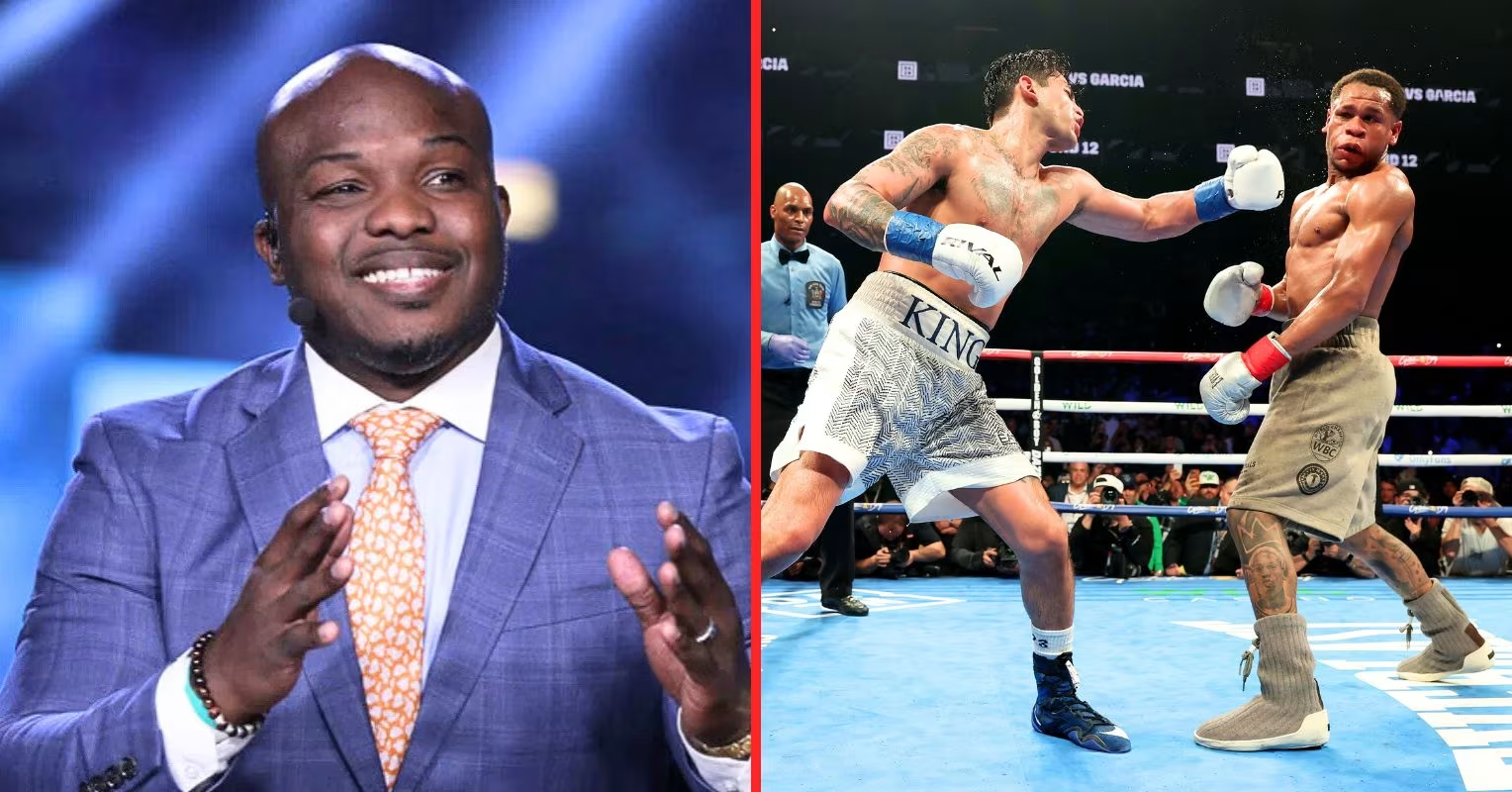
A rematch between Ryan Garcia and Devin Haney is fast becoming one of the biggest fights in the sport of boxing, with the fact that both men now hold welterweight world titles only adding to the allure of the second instalment of their fierce rivalry. In anticipation, Tim Bradley has reversed his prediction for the proposed contest.

Haney and Garcia first collided in April 2024, and Garcia looked to have secured a career-best win while simultaneously handing Haney the first defeat of his career.

However, the result of the bout – a majority decision in Garcia’s favour – was later overturned when he tested positive for a performance enhancing drug during, with the official outcome of the clash becoming a no-contest.

Advertisement

Both men have since moved up to the welterweight division and earned a world title, with Haney holding the WBO strap and Garcia in possession of the WBC crown.

A rematch between the duo would not only settle one of the most intense rivalries of recent times, but also a unify belts in a standout division.

When discussing the bout back in November, two-division world champion Tim Bradley spoke with confidence, suggesting that the demons and the mental impact of their initial encounter would mean a Garcia win.

“Just as well as Devin did a great job, I still see a little residue, it’s still there. It could be a part of his strategy, defence first, I get it.

“At the back end of the fight, he was winning easily, he didn’t want to take too many chances, he didn’t want to open himself up, but I saw Norman marching forward, letting his hands go and there was less and less activity from Devin – I can’t ignore that.

Advertisement

“It could be by design, maybe not. I’m just saying, Garcia has his number.”

Now, four months later, Bradley seems to have adopted a different mindset, releasing a video titled Haney will beat Garcia in the rematch. ‘Desert Storm’ now backs Haney to avoid the mistakes he made first time around.

“Looking at the fight, the first fight. Devin, in that fight, besides the rounds that he got knocked down in, he was winning those rounds, outboxing Ryan.

“He was taking the initiative at times, coming forward, forcing Ryan onto his back foot but keeping his distance at the same time and avoiding getting countered or hit with that big left-hook.”

“If Haney doesn’t touch the canvas, if he doesn’t get caught, if he doesn’t fall asleep, if he controls what is going on at all times and he is on his P’s and Q’s, he should be able to outbox Ryan Garcia with ease. He shouldn’t have a hard time outboxing a Garcia.”

Advertisement

Before Haney-Garcia II talk can gather too much momentum, ‘The Dream’ looks poised for an alternate unification opportunity, with reports suggesting that he will face off with WBA titleholder Rolando Romero on Saturday, May 30.

Source link

Advertisement
Continue Reading

Sports

When does Invincible season 4 premiere? First look, returning voice cast and more

Published

on

Invincible season 4 is the next part of the amazing animated superhero series on Prime Video. It will show what has happened to Mark Grayson as he deals with the results of his previous choices. Season 4 comes at a time when season 3 ended with its hero having gotten darker, and so the story will be more intense and emotionally complicated.

The show has a loyal fan base since it first aired in 2021 because of its mixture of superhero elements and focus on the characters. In season 4, the series will most likely unfold more aspects of the universe, bringing in new enemies as well as making the existing disputes more complex.

The new season is still based on the comic book series by Robert Kirkman, Cory Walker, and Ryan Ottley, and the show hasn’t lost its interest in major fights as well as in individual problems.

Invincible season 4 premieres on March 18, 2026, on Amazon Prime Video, continuing Mark Grayson’s story with returning voices like Steven Yeun, Sandra Oh, and J.K. Simmons alongside new cast additions.


When and where is Invincible season 4 releasing?

Invincible season 4 is coming to Amazon Prime Video on March 18, 2026. It can be streamed in over 240 countries and territories as it rolls out globally via the platform. Like all the previous seasons, season 4 will be included in the Prime Video library and accessible only to Prime subscribers.

The release keeps the show on track since the first two seasons were released on Prime Video as well. Even though the time when each episode will be made public has not been disclosed yet in the draft, the series has used both weekly and split-release formats before.

Advertisement

So, fans might see season 4 mainly as one of the platform’s top animated titles. Subscribers can also watch all the previous seasons, so it is possible to catch up on the earlier stories before season 4 is out. The series is still one of the most popular animated shows on Prime Video, with a great audience and critical response.

Read More: Will there be a Virgin River season 8? Renewal status explained/explored


More details on Invincible season 4

Invincible season 4 (Image Via Prime Video)Invincible season 4 (Image Via Prime Video)
Invincible season 4 (Image Via Prime Video)

Invincible season 4 will begin right after the events of the last season, when Mark Grayson’s story came to a rather bleak point. Naturally, the new season dives deep into the repercussions of his actions, especially as he fiercely resolves to shield those dearest to him.

Prime Video says,

“As the world slowly recovers from its recent ordeal, a changed Mark is battling to safeguard his home and his loved ones, a path that leads him to a confrontation with a threat that might change the destiny of humanity forever”.

New villains like Thragg, Dinosaurus, and Universa are among the introduced characters in Invincible season 4. They are likely to be instrumental in widening the conflict as Mark and his team confront more and more perilous situations. The story still revolves around Mark’s difficulties in juggling his superhero obligations and his personal life, which is, in fact, the show’s main focus so far.

Advertisement

The voice cast of season 4 reunites some of the familiar faces, with Steven Yeun reprising his role as Mark Grayson, Sandra Oh coming back as Debbie Grayson, and J.K. Simmons returning as Nolan Grayson. The show carries on with a huge ensemble cast that features famous actors like Gillian Jacobs, Seth Rogen, Walton Goggins, Jeffrey Dean Morgan, Jason Mantzoukas, Zazie Beetz, and Mark Hamill.

Besides the familiar voices, Invincible season 4 unveils a brand new set of actors to the cast, such as Lee Pace, Matthew Rhys, and Danai Gurira. These new faces are likely to stir up the series’ dynamics, especially as they unfold their roles as the main villains of the story.

Characters like Atom Eve and the Guardians of the Globe who are an integral part of the show’s main storyline will also continue to be a part of the season. As the storyline goes on, Invincible season 4 will be the characters developing their already intertwined relationships and, at the same time, widening the scope of their conflicts.

Read More: Shrinking season 3 episode 7 ending explained: What happened to Maya?

Advertisement

The show will premiere exclusively on March 18, 2026, on Prime Video.