A proposal currently under consideration by the Government of India could potentially transform the country’s sporting landscape over the next decade.
The Sports Ministry has reportedly submitted a proposal seeking the introduction of a Sports Passport framework that would allow eligible Persons of Indian Origin (PIO) and Overseas Citizens of India (OCI) athletes to represent India in international competitions.
While discussions around overseas-origin athletes have existed for years, particularly in football, this is perhaps the first time the idea has been explored as part of a wider national sports strategy rather than a sport-specific debate.
So what exactly is a Sports Passport, how does it work, and why has it become such an important topic in Indian sport?
What is a sports passport?
A Sports Passport is a special eligibility framework that enables athletes with a connection to a country, through ancestry, heritage, residency or national interest, to represent that nation in international sport.
Different countries implement the concept differently.
Some nations provide accelerated citizenship to elite athletes. Others create sporting eligibility pathways that allow athletes to compete for the country without going through the traditional immigration process.
The core objective remains the same: strengthen national teams and improve competitiveness on the international stage.
For countries seeking rapid sporting progress, it can become a valuable tool to access a wider talent pool.
Why is India considering it now?
The timing is significant. India is preparing a bid for the 2036 Olympic Games and simultaneously attempting to improve performances across multiple sports.
In football, the gap between India and Asia’s leading nations remains considerable. The men’s national team recently failed to qualify for the AFC Asian Cup, while the country remains absent from FIFA World Cup competition.
At the same time, several footballers of Indian origin are representing other nations at major international tournaments.
Supporters of the Sports Passport proposal argue that India already possesses a large global diaspora, and tapping into that resource could strengthen teams across multiple sports.
The conversation is no longer limited to football. Basketball, tennis, athletics, rugby and several Olympic disciplines could also benefit.
How could It work in India?
India currently does not allow dual citizenship.
Under existing rules, an athlete must hold an Indian passport to represent the country internationally in most sports governed by international federations.
That means players wishing to switch allegiance generally need to renounce their previous citizenship and acquire Indian nationality.
A Sports Passport framework could potentially create a more structured pathway for athletes of Indian origin who have strong ancestral ties to India.
The final model, if approved, would depend on decisions by the Government of India, the Ministry of Home Affairs and relevant sports authorities.
The Ryan Williams Example
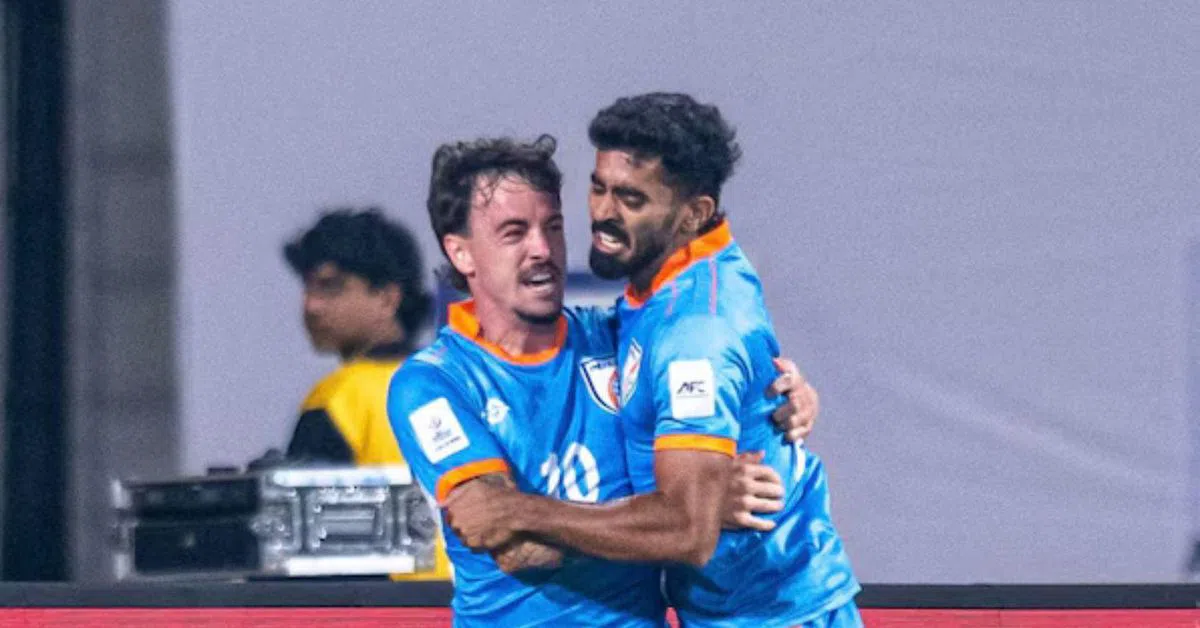
The challenges of the current system can be understood through the case of footballer Ryan Williams.
The Bengaluru FC forward became eligible to represent India only after giving up his Australian citizenship and obtaining an Indian passport.
He subsequently made his debut for the national team and scored for the Blue Tigers.
While successful, the process required significant personal and professional commitment, something not every athlete may be willing to undertake.
A Sports Passport mechanism could potentially simplify such pathways in the future.
Why Many Countries Have Adopted Similar Systems
India would not be entering unfamiliar territory.
Several nations already use sports naturalisation policies to improve sporting competitiveness.
Qatar is perhaps the most prominent example. The country has used sports eligibility pathways across football, athletics and handball, helping it win the AFC Asian Cup and compete at the FIFA World Cup.
Bahrain has strengthened its athletics programme through naturalised runners, while countries such as Turkey, Spain, Hungary and Austria have used special citizenship provisions to attract elite athletes in selected sports.
These systems are often viewed as strategic investments in sporting success.
Potential Benefits for India
Access to a Larger Talent Pool
India has one of the world’s largest diasporas spread across North America, Europe, Australia, Africa and the Middle East.
A Sports Passport framework would allow the country to engage with talented athletes who may have Indian roots but currently represent other nations or remain ineligible for India.
Immediate Competitive Improvement
Certain sports could witness an instant rise in quality.
Football, basketball and tennis are often cited as areas where overseas-developed athletes could provide immediate depth and experience.
Knowledge Transfer
Athletes raised in advanced sporting systems bring more than talent.
They often arrive with exposure to elite coaching, sports science, nutrition and professional environments, potentially benefiting teammates and domestic structures.
Stronger Olympic Ambitions
With India targeting greater success at future Olympic Games, expanding the athlete pool could increase competitiveness across multiple disciplines.
The Concerns and Criticisms
Not everyone supports the idea.
Critics argue that national teams should primarily represent athletes developed within domestic systems.
Some believe sports naturalisation can become a shortcut that masks deeper structural problems such as inadequate grassroots development and coaching infrastructure.
Others worry that opportunities for locally developed athletes could diminish if overseas-born players receive preference.
The challenge for policymakers would be balancing immediate performance gains with long-term domestic development.
Why this debate Is bigger than football?
For years, discussions around PIO and OCI athletes largely revolved around football.
However, the Sports Passport proposal signals a broader shift.
If implemented, the framework could influence multiple sports and become part of India’s wider sporting strategy ahead of major events such as the Olympics, Asian Games and future World Cups.
The proposal also reflects a growing recognition that modern sport is increasingly global, with many successful nations drawing talent from diaspora communities spread across the world.
A Potential Turning Point for Indian sport
Whether the proposal is ultimately approved remains uncertain.
Any decision will require careful consideration from multiple government departments and sports bodies.
However, the significance of the discussion itself cannot be ignored.
For the first time, India is actively examining whether its vast global diaspora can play a direct role in improving national sporting performance.
If adopted, a Sports Passport framework could become one of the most significant policy changes in Indian sport in recent decades—one that has the potential to reshape how the country identifies, develops and represents athletic talent on the world stage.



































































You must be logged in to post a comment Login