

Connect with us

Sports

IPL 2026: Sun Pharma signs three-year principal sponsor deal with RCB | IPL 2026

Published

on

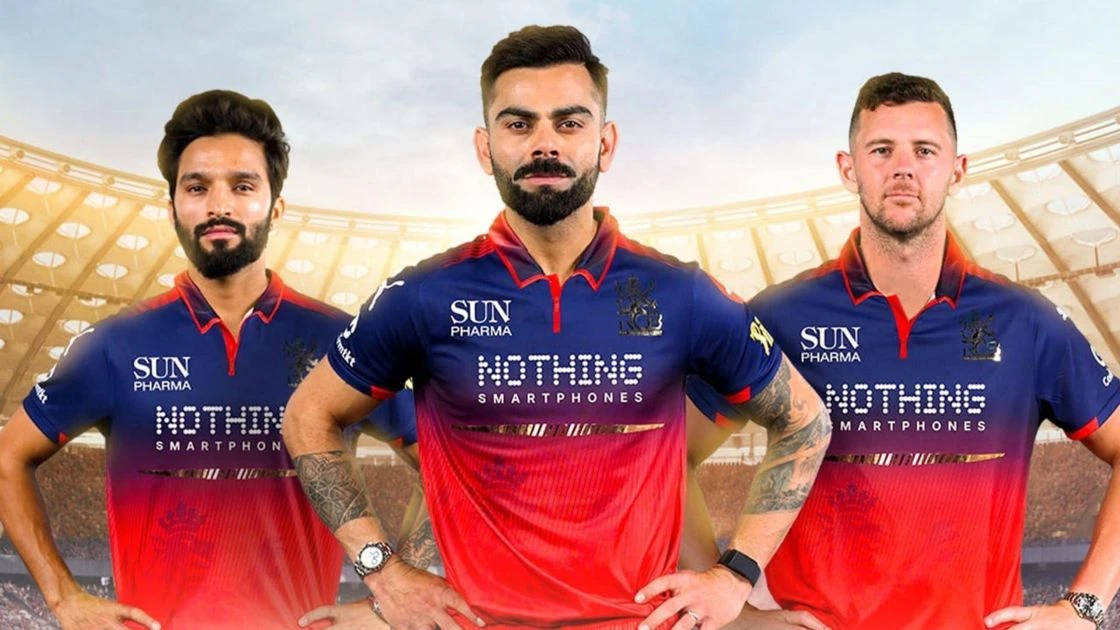
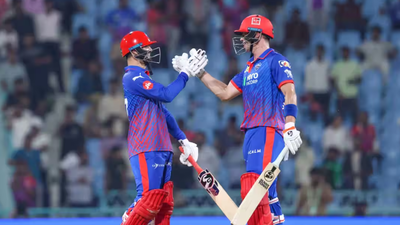
Sun Pharmaceutical Industries Limited on Wednesday announced a three-year partnership with Royal Challengers Bengaluru, coming on board as the franchise’s principal sponsor and health partner starting from IPL 2026. The agreement marks Sun Pharma’s first-ever entry into cricket sponsorship and a major step in expanding its corporate brand presence through sport. 


Jersey presence and stadium visibility


As part of the association, Sun Pharma’s logo will feature on the front of RCB’s playing jersey, the official green kit and training apparel. The partnership also includes prominent branding across the stadium during RCB’s home matches, ensuring year-long visibility throughout the IPL season.


Brand connect through cricket


Sun Pharma Managing Director Kirti Ganorkar said the partnership reflects the shared values of leadership, consistency and innovation between the two brands. He added that cricket’s unmatched reach in India offers an opportunity to bring fans closer to the company behind medicines used by millions every day.

Advertisement


Focus beyond on-field branding


RCB COO Rajesh Menon noted that the collaboration is designed to go beyond logo placement, with plans for fan engagement across digital platforms and match-day experiences. He said Sun Pharma’s entry as principal sponsor strengthens RCB’s efforts to build meaningful, impact-driven partnerships.


Linked to corporate campaign


The sponsorship aligns with Sun Pharma’s recent corporate brand campaign highlighting its patient-centric mission of touching 1,000 lives every minute. Through its association with RCB, the company aims to translate that message to a wider audience during the IPL.


Sun Pharma operates across specialty generics, innovative medicines and consumer healthcare, with a global manufacturing footprint, while RCB competes in India’s premier T20 league and remains one of the tournament’s most-followed franchises.

Advertisement

Source link

Continue Reading
Click to comment

Leave a Reply

Your email address will not be published. Required fields are marked *

Sports

Infantino, Ceferin hail agreement to finally end European Super League | Football News

Published

on


The controversial European Super League (ESL) project, which aimed to break away from traditional football structures, has officially collapsed. UEFA, in a surprise announcement just before its annual congress, revealed that an agreement had been reached between UEFA, Real Madrid, and the European Football Clubs (EFC) group. 
This marks the formal end of the divisive Super League project, which had generated heated debate and backlash since its inception.


The End of the Super League Dream


Advertisement


The ESL, initially launched in 2021, proposed a breakaway league featuring 20 of Europe’s top clubs. The project was spearheaded by Real Madrid, along with several other elite clubs, including Barcelona and Juventus. The plan was met with massive opposition from fans, governments, and football bodies, culminating in the withdrawal of several clubs from the project within days.


After more than three years of legal battles and protests, UEFA announced that a “principles agreement” had been reached, ensuring the end of the Super League concept. UEFA stated that the agreement respects the “principle of sporting merit” and focuses on long-term club sustainability and fan experience through technology. 


Advertisement


A Surprising U-Turn from Real Madrid


Real Madrid had remained the last major architect of the Super League project. However, the agreement signifies a shift in direction for the Spanish giants. The club had previously announced plans to seek “substantial damages” from UEFA over the rejection of the breakaway league, and their legal battle seemed poised to continue. However, the agreement reached with UEFA suggests that these disputes will now be resolved.


Advertisement


Real Madrid’s president, Florentino Pérez, a key figure behind the Super League, now finds himself aligned with UEFA and the EFC, a group he had previously distanced himself from. The decision for Real Madrid to rejoin the EFC marks a dramatic U-turn, following the withdrawal of Barcelona from the project earlier.


Reactions from Key Figures


Advertisement


FIFA President Gianni Infantino hailed the agreement as a victory for football, saying, “Football wins when we unite.” UEFA President Aleksander Ceferin echoed this sentiment, expressing his happiness that clubs like Real Madrid and Barcelona had “joined the family again.” Ceferin, who had been at odds with Pérez during the Super League saga, emphasized that the only true winner of the situation was the sport itself.


Al-Khelaifi, the EFC chairman, played a crucial role in steering the dialogue toward a shared direction, according to Ceferin. Infantino, known for his previous silence on the matter, also congratulated the key players involved in the agreement, expressing his relief that the dispute had finally been resolved.


Advertisement


The Legacy of the Super League


While the idea of a European Super League was eventually rescinded, the impact of the project will be felt for years to come. The proposal challenged the very foundations of European football and sparked a broader conversation about the commercialization of the sport and the need to preserve its traditions. However, with the conclusion of the legal disputes and the end of the breakaway league, many believe football is now on a path to healing.


Advertisement


In the end, the collapse of the Super League marks a pivotal moment in European football, reaffirming the importance of unity, fairness, and respect for the traditional structures that have made the sport beloved around the world.

Source link

Continue Reading

Sports

IND vs NAM: Ishan Kishan creates T20 World Cup history, becomes first Indian keeper ever to… | Cricket News

Published

on

IND vs NAM: Ishan Kishan creates T20 World Cup history, becomes first Indian keeper ever to...

NEW DELHI: Ishan Kishan made history for India in the T20 World Cup on Thursday at the Arun Jaitley Stadium by becoming the first Indian wicketkeeper to score a fifty in the tournament’s history. Coming into bat as an opener against Namibia, Kishan played a blazing knock of 61 off just 24 balls, having smashed six fours and five sixes at a strike rate of over 250.

Why is Ahmedabad likely to be the sporting capital of India? | Bombay Sport Exchange

His explosive innings helped India post a big total of 209 for 9 in 20 overs.Namibia had won the toss and chose to bowl, but India’s batters quickly took control. Sanju Samson gave a quick start with 22 off eight balls, while Tilak Varma added 25 and Suryakumar Yadav chipped in with 12. Hardik Pandya also played a crucial role, scoring 52 off 28 balls to keep the momentum going, while Shivam Dube made 23.Namibia’s captain Gerhard Erasmus was the standout bowler, picking up four wickets and slowing India down in the middle overs. Despite losing a flurry of wickets late in the innings, India still crossed the 200-run mark, thanks mainly to Kishan’s early assault and Pandya’s power-hitting.Kishan’s fifty was special not just for the runs, but for the record it created. No Indian wicketkeeper had ever scored a half-century in a T20 World Cup before, making his innings a milestone moment. His aggressive approach in the powerplay set the tone for India’s innings and put Namibia under pressure from the start.India’s strong batting display, led by Kishan’s historic knock, gave them a commanding total to defend and marked a memorable moment in India’s T20 World Cup campaign.

Source link

Continue Reading

Sports

Should more golfers play blades? Here’s what you should know

Published

on

Source link

Continue Reading

Sports

It’s what Viv Richards used to do in the 80s

Published

on

Former India batter Rohan Gavaskar hailed opener Abhishek Sharma for his ability to create fear in the opposition, similar to West Indian legend Vivian Richards, amid the T20 World Cup clash against Namibia in Delhi on February 12. The 25-year-old is missing the ongoing game due to illness, which he sustained in India’s tournament opener against the USA.

While Abhishek failed to open his account in his maiden ICC game, his T20I performances since his debut in 2024 have been nothing short of phenomenal. Ranked No.1 in the world in T20I batting, the southpaw has scored 1,297 runs at an average of over 36 and a strike rate of 194.45 in 39 T20Is.

Talking about Abhishek Sharma after the news about his absence for the Namibia encounter came out, Gavaskar said on Cricbuzz (11:05):

“Once you’ve got the weight of performances in the bank, even if you get out for a few first-ball ducks, you are still in the 11. So the fear of not being in the side is not there, which allows you to play without pressure. He puts the fear of God into the opposition. It’s what Viv Richards used to do in the 80s.”

He continued:

If the opposition has got 280 in a T20 and India are chasing that, they won’t be thinking we’ve got this game in the bag. Because they know in the first six overs, if Abhishek bats through that period, India could well be in that chase.

Abhishek holds the distinction of being the second fastest to a half-century (14 balls) and century (37 balls) in T20Is among Indian batters.

“If he was playing in the 1960s, he would have been a quality Test player” – Rohan Gavaskar

Rohan Gavaskar went a step further and said that Abhishek Sharma’s natural ability would have ensured he would have dominated any format across eras. The young left-hander has only played in T20Is for India in his two-year international career.

Advertisement

“It’s the naturally born ability. Like a Virat would have been great in any era. That’s when you are called an all-time great. Likewise, Abhishek Sharma, with the kind of ability he has, if he was playing in the 1960s, he would have been a quality Test player. You are a product of the environment you grow up in. He has enhanced that ability in T20s for this era. In another era, he would have excelled in the other formats,” said Gavaskar (via the aforementioned source).

Abhishek’s numbers are surprisingly modest in the longer domestic formats, averaging 33.78 and 30.60 in List-A and first-class cricket, respectively.