Sports
Knicks vs. Cavaliers: Five questions for Game 2 of Eastern Conference Finals

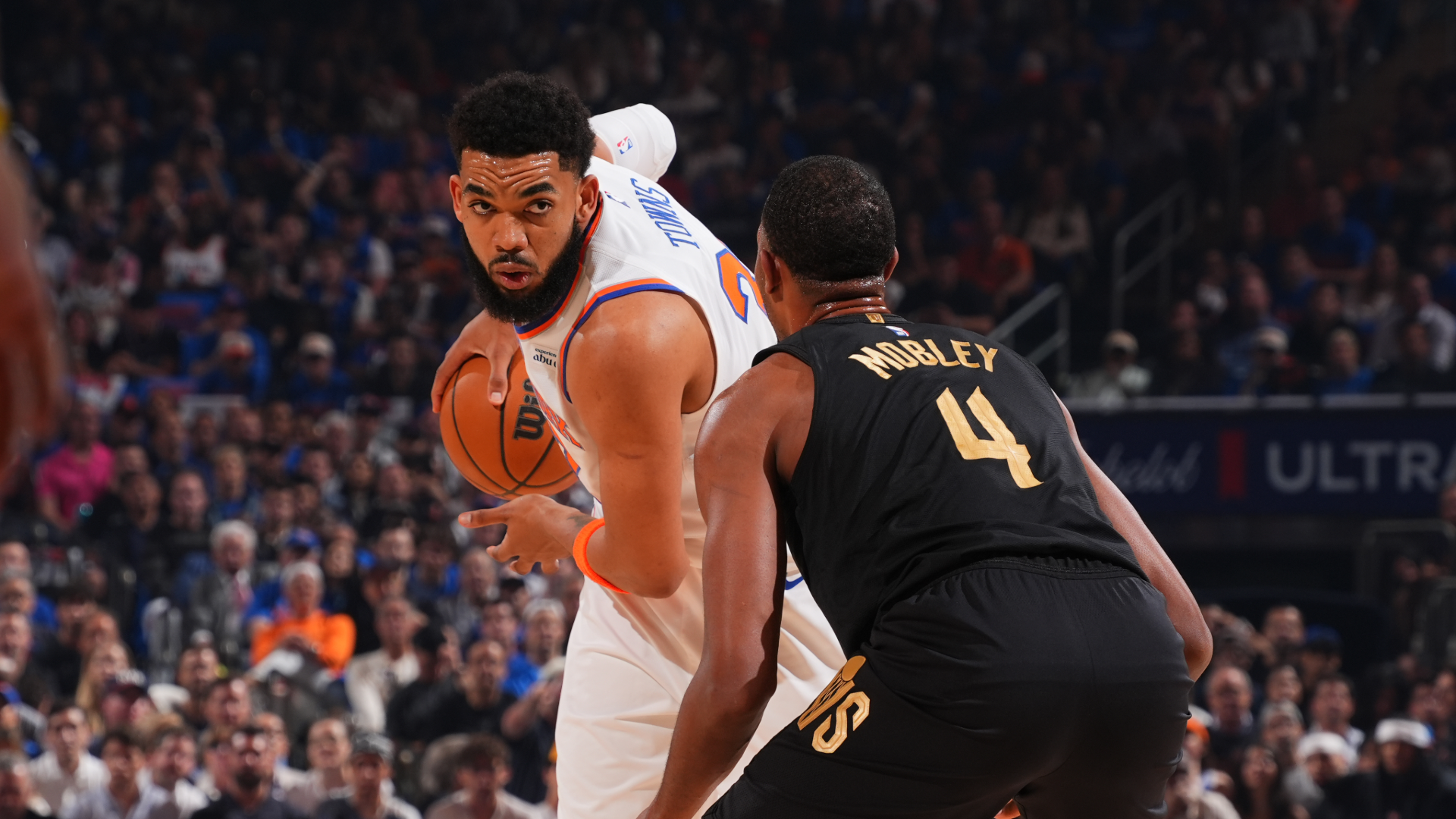

NEW YORK — The big question going into Game 2 of the Eastern Conference Finals: How do you come back from that?
In the opener, the Cleveland Cavaliers led by 22 points with less than eight minutes remaining in the fourth quarter before they disintegrated. Offensively, they started to “play the clock,” as Cavs big man Evan Mobley put it, slowing down instead of playing with the pace and purpose that had built the lead. Defensively, Cleveland gave up soft switches possession after possession, gift-wrapping the New York Knicks their preferred matchup: James Harden on Jalen Brunson. A bloodbath ensued.
The Knicks ended the game on a 44-11 run, coming away with a 115-104 win in overtime, the second-largest fourth-quarter comeback in a playoff game in the play-by-play era. Donovan Mitchell said his message to his teammates was straightforward: “We f—in’ blew it. All right, let’s respond for Game 2.”
When the media entered the visitors’ locker room at Madison Square Garden, it was as quiet as you’d expect. Maybe even quieter. Dean Wade, however, said that the Cavs are “not too down,” and Mitchell said they can’t let the loss “kill our momentum,” likening it to their Game 6 loss in the first round in Toronto, in which RJ Barrett’s crunch-time 3 bounced high above the backboard before falling through the net and forcing a deciding game.
Maybe Cleveland can bounce back on Thursday, the way it did in Game 7 of both the first and second rounds. Maybe it can’t, and it will unravel the way the Knicks’ last two playoff opponents did. Beyond noting that it’s a factor, though, there’s not much to say about the potential psychological impact of the collapse/comeback. So let’s talk about the basketball stuff.
Five questions about the rest of the Eastern Conference Finals:
1. Is Knicks’ fourth-quarter offense sustainable?
Just before Game 1, Cavs coach Kenny Atkinson said that New York was “a different team” than it was in the regular season, as it was running much of its offense through Karl-Anthony Towns. Atkinson said they needed to put pressure on Towns, and their off-ball defense needed to be on point, too. This, he said, would be one of the keys to the series.
Cleveland shut all of that down on Tuesday and lost anyway. The funny thing about the Knicks’ comeback is that it didn’t require any of the pretty stuff. They won with matchup-hunting and hero ball. Brunson got comfortable going at Harden one-on-one and converted a mix of clean looks and contested leaners. Eventually, Cleveland decided to put two on the ball, but its execution in those situations was terrible.
The Cavs obviously need to handle the Harden-hunting better. When New York surrounds Brunson with shooters, the way it did late in Game 1, the switches can’t be automatic. If and when they blitz him, they need to be on a string. I still can’t believe they played the 36-year-old Harden for the entire fourth quarter and overtime and left him on an island against Brunson as many times as they did. At the same time, though, the Knicks need to ask themselves a tough question: Can they win that particular way again?
For three-plus quarters, it seemed like Cleveland’s switching was going to be one of the major reasons it won the game. “I think we know we’re at our best when we keep people in front of us, and switching is the easiest way to avoid getting behind on screens,” Wade said. By staying out of rotation, the Cavs were able to prevent corner 3s, protect the defensive glass and slow down an offense that had been humming for weeks … until Brunson took over.
New York is surely thankful that the let-Brunson-cook strategy saved the day. Going forward, though, it might need to find other sources of offense.
2. Can Cavs put New York back in the blender?
Until the collapse, Cleveland’s offense appeared to be a step ahead of the Knicks. Mitchell in particular punished the Knicks for blitzing his pick-and-rolls, and the bigs made quick decisions in the pocket. There were some sloppy passes, but generally speaking, when the Cavs got in the paint, they knew they’d be able to find clean looks for their shooters, who did a good job relocating on the perimeter. They targeted Brunson a lot, and that almost always led to a high-quality shot.
“We were pinging the ball all over the place,” Atkinson said.
Then all of that went away. The ball movement was replaced by zero- or one-pass possessions. Was that because of fatigue? Complacency? Renewed spirit and fight from New York? These were likely all a part of it, but had the offense merely gone from good to bad instead of good to atrocious, Cleveland would have won.
“It’s night and day,” Harden said. “When our pace is fast, we’re moving, we understand what we’re doing, our quality of shots is much better. And we’re able to get our defense set back.”
Knicks coach Mike Brown said that, defensively, they need to make sure their energy, effort and focus is there “no matter what coverage we’re in.” He said they didn’t look like themselves early on and were “really slow” when they put two on the ball and had to rotate. New York had executed at an extremely high level for most of the playoffs, so it was alarming how easily Cleveland put the Knicks in the blender for most of Game 1.
3. Can KAT get going?
Had New York not pulled off a miracle, Towns would be taking some heat right now. The Knicks can live with the occasional poor shooting night — he was 1 for 5 from deep in Game 1 — but the silly fouls and seven turnovers are another story. Towns could not consistently take advantage of smaller defenders, had trouble keeping control of the ball on his drives and missed a couple of layups. He also really needs to stop grabbing opponents’ arms right in front of referees.
Ideally, New York will get more out of Towns as an offensive hub as the series goes along. If that’s not viable against Cleveland, then it at least needs to unlock him as a scorer. If the Cavs are going to switch smaller defenders onto him — and even start possessions this way — then Towns needs to use his size in the post or on the glass.
4. What will the Knicks do with Hart (and Shamet)?
Landry Shamet changed the game for New York on Tuesday. By playing him instead of Hart with the Knicks’ other starters in the fourth quarter and overtime, Brown took away Jarrett Allen’s hiding place on defense. And on the other end, Shamet pestered Mitchell as much as he could, both on and off the ball, which had a lot to do with Cleveland’s difficulties getting into its offense.
There’s an argument that, based on how Game 1 ended, Shamet should take Hart’s place in the starting lineup. Hart has been the starter since late November, though, and the Knicks are used to teams putting their centers on him. Hart has shot just 12 for 45 (26.7%) from 3 in the playoffs, but shot 41.3% during the regular season.
“If Josh is open and his feet are set, he’s gotta let it fly,” Brown said. “He’s made shots. We feel like he’ll make shots. And if he doesn’t want to shoot it, he can get to his middy or he can go (dribble-handoff) with somebody.”
No one will be shocked if Hart makes a bunch of 3s, grabs a bunch of offensive rebounds and terrorizes Cleveland in transition on Thursday. He was -23 in 31 minutes in the opener, though, and, if New York’s spacing is an issue again, he could see fewer minutes in Game 2.
5. Will Mobley’s inverted pick-and-rolls return?
During the Pistons series, Mobley’s usage changed out of necessity. Atkinson told reporters after Game 7 that Cleveland had him handle the ball “more than ever” because it was trying to avoid Ausar Thompson, who was an absolute demon on defense.
In the last few games of the second round, the Cavs got good stuff out of Mobley’s inverted pick-and-rolls. He’s a smart passer and a dangerous driver, and opposing bigs aren’t used to navigating screens on the perimeter. They didn’t do much of this at MSG, though, and I wonder if they might go back to it, if only to lighten the load on Mitchell. (Despite Mitchell being quiet near the end of the game, Game 1 was only the third time this postseason — and the first time since Game 7 against the Raptors — that he spent more time with the ball in his hands than Harden did.) The stagnation down the stretch suggested that Cleveland could stand to diversify its attack.
You must be logged in to post a comment Login