LAS VEGAS — For a fleeting 20 minutes, it looked like the return of Cale Makar might actually be the answer.
The spark. The jolt. The lifeline the Colorado Avalanche desperately needed to salvage a series that has spiralled into something bordering on surreal.
Instead, it became the cruelest tease of all.
Because after a 3–0 first‑period burst that had the Presidents’ Trophy winners looking every bit like the powerhouse they were supposed to be, a nine‑minute collapse to open the second period somehow has them staring down a 3–0 series deficit they have absolutely no answers for.
Advertisement
And the knockout blow didn’t come from the returning superstar in burgundy.
It came from the one in gold.
Makar’s return was supposed to be the story. And early on, it was. He played more minutes than anyone on the ice in the opening frame, looking like the same dynamic, downhill‑attacking force who tilts the ice in every rink he steps onto.
“It felt like it took me a little bit to get back in the rhythm, but overall the body felt great,” said Makar, who missed the first two games of the Western Conference Final with an upper-body injury.
Advertisement
“I wish I could have done a little bit more. Definitely was a passenger for a bit tonight,”
Because 19 seconds into the second period, the building shook.
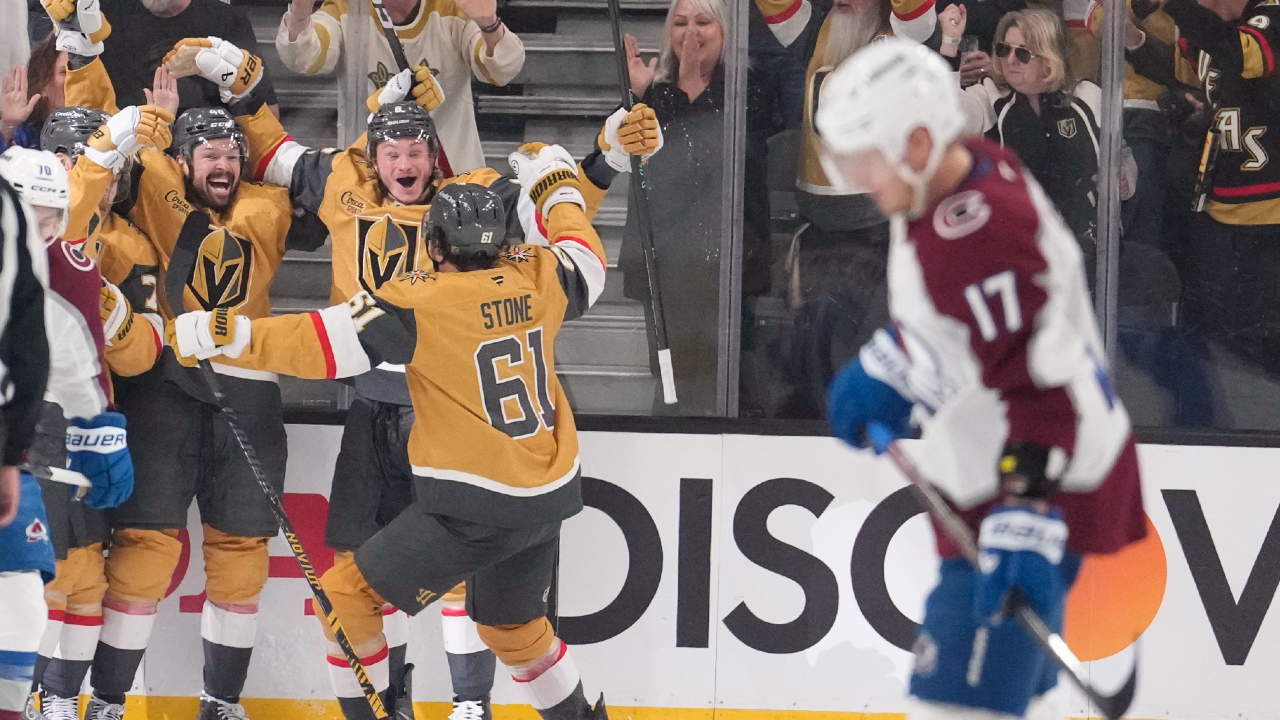
Mark Stone, playing his first game since May 8, parked himself at the side of the net and redirected a gorgeous Mitch Marner feed past Scott Wedgewood with a power-play kick starter.
T‑Mobile Arena roared back to life, and the Golden Knights, who have looked downright unstoppable since John Tortorella took over, fed off it instantly.
Advertisement
They’re now 18‑4‑1 under him. And if you think that’s a coincidence, coach Tortorella would like a word.
“This is a game where we showed some (guts),” said Tortorella, basking in the glow of a 5-3 comeback win that will ultimately be remembered for burying the Avalanche.
“This team, in the short time that I’ve been with them, has shown me nothing but (fearlessness). They’re not afraid. It’s something we’ve tried to stress, don’t be afraid to make a mistake. I think they just have an uncanny ability to stay together.”
Stone’s goal was the spark. William Karlsson’s first of the playoffs was the accelerant. And then came the moment that sucked the oxygen out of the Avalanche bench.
Advertisement
With eight minutes left in the period, Nathan MacKinnon stepped in front of a Shea Theodore blast and took it flush off the right kneecap. He crumpled instantly, stayed down for half a minute, then hobbled off in visible agony.
As he hung his head on the bench, trying to process the pain, the crowd erupted less than a minute later — this time for Keegan Kolesar’s tying goal. Tie game.
MacKinnon spent the rest of the night unsure if he should be out there, playing sparingly in a desperate attempt to stop the momentum before Tomas Hertl undressed Sam Malinski and lifted a backhand in to score the eventual game winner eight minutes into the third.
“It’s tough,” said Makar of MacKinnon’s injury.
Advertisement
“He sells out for a shot block. Unfortunately it’s because of a bad turnover from us. Shouldn’t happen.”
As far as Makar goes, he did everything he could. His skating, his poise, his blue‑line manipulation — all of it was there, as he recorded three shots on goal in a game-high 27 minutes of ice time.
But, as the coach reiterated, “You get a nine‑minute stretch that costs you the hockey game.”
And that’s the story of this series. Colorado hasn’t been outclassed for 60 minutes. They’ve been undone in pockets — five minutes here, nine minutes there — and against a team this opportunistic, that’s fatal.
Advertisement
Bednar wasn’t ready to sugarcoat anything when asked about resiliency as they look to save their season Tuesday.
“We’re not there yet, I don’t know,” he said of the mood following the team’s first first loss of the season after holding a multi-goal lead.
“Everyone’s down in the dumps right now and that’s what the next 36 hours are for, to get our team back and make sure our focus is in the right place. It seems like a tough hill to climb too, obviously especially against a tough team like Vegas.”
He’s right. With MacKinnon banged up, with Valeri Nichushkin injured, with a goalie change inevitable, and with their confidence shaken, the Avalanche look like a team searching for something that isn’t there.
Advertisement
When push comes to shove, the Avalanche don’t have any answers.
The Golden Knights do. They have Stone. They have swagger. They have Tortorella. And they have a 3–0 stranglehold on a series that feels, for all intents and purposes, over.
Canada recorded the first men’s World Cup win in their history in stunning fashion, thrashing Qatar 6-0 at BC Place in Vancouver on June 18.
Jesse Marsch’s side produced a dominant display from start to finish, overwhelming their opponents and securing one of the most memorable victories in Canadian football history.
The hosts took the lead in the 16th minute through Cyle Larin before Jonathan David scored twice before half-time to put Canada firmly in control. Qatar’s problems worsened when Homam Ahmed was sent off in the 33rd minute.
Advertisement
Canada’s dominance was reflected in the statistics. According to Opta, the team registered eight shots on target before the break, matching a World Cup record set by Romania against Argentina in 1994.
The second half brought more goals as Qatar were reduced to nine men following the dismissal of Assim Madibo. Nathan Saliba added a superb free-kick in the 64th minute before an own goal by Mohammed Manai made it 5-0.
David completed his hat-trick in stoppage time to seal a famous victory for the hosts.
Advertisement
The night was not without concern for Canada after midfielder Ismaël Koné suffered a serious leg injury and had to leave the pitch. Saliba paid tribute to his teammate by holding up Koné’s No. 8 shirt after scoring.
After the match, coach Jesse Marsch described the occasion as a historic day for Canadian football. It was a landmark moment for a nation that had previously failed to win a match in its men’s World Cup appearances in 1986 and 2022.
This time, however, Canada made history in emphatic style with a record-equalling first-half performance and a memorable six-goal victory.
“Amercians have been used to in-play ads for 40, 50 years, so culturally this fits right in,” says Rob di Gisi, lecturer in sport management at the University of Pennsylvania’s Wharton School.
“There is very little pushback here. Any changes which make games more Americanised will be embraced without people noticing.”
Fellow US broadcaster Telemundo, which shows matches in Spanish and is aimed at Latino Americans, is one of the few broadcasters which has decided not to show ads during the breaks.
During Canada’s opening match last week, its commentator said: “We prefer the old school way. We should be able to see what the players do.
Advertisement
“We show fans, people enjoying themselves, not the corporate direction of football.”
BBC Sport has contacted Fox Sports and Telemundo for comment.
In other big markets around the world ads are being used too, including in Mexico, Canada, France, Germany, Italy, Spain, China, Japan, India, Australia, the Middle East and Sub-Saharan Africa.
The broadcasters in those territories will not be able to charge prices as high as Fox Sports, and not all are running them for the maximum duration allowed, but the total amount accrued will be huge.
Advertisement
“When you start scaling that up over all the rest of the countries, it’s probably a billion dollars (£756m) from hydration break ads across the globe,” Di Gisi adds.
Having eyeballs on products during in-game breaks doesn’t necessarily guarantee success, however.
“Will advertisers in the hydration break be met with enough discontent that it negates the value of the advertising?” says T. Bettina Cornwell, head of marketing at the University of Oregon.
“It is the case that when brands violate the expected experience, in this case the flow of the game, fans can react negatively.”
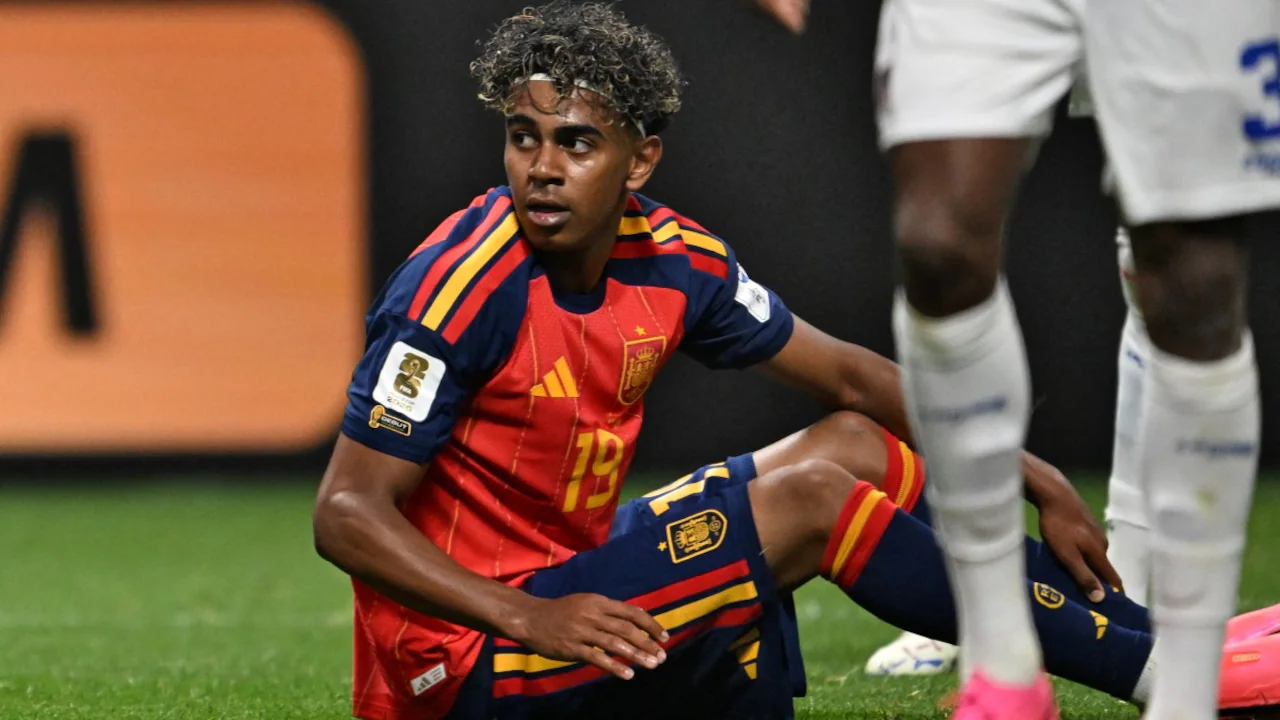
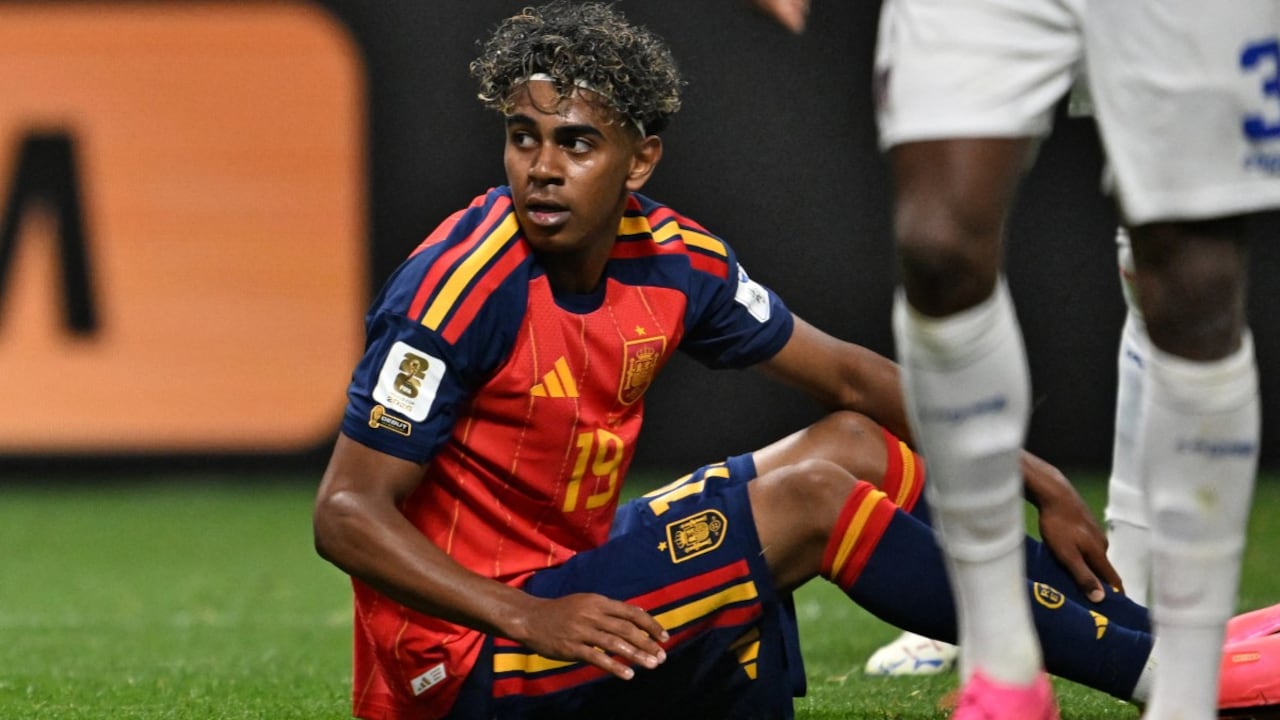
After Spain’s disappointing draw in their opener against Cape Verde, speculation is, whether or not Lamine Yamal will start against Saudi Arabia. Several Spanish websites have reported that he may be ready to play for 45 minutes on Sunday. While Spanish coach Luis de la Fuente had said that he is in perfect shape, Barcelona won’t want to see the national team take risks with the forward. Yamal‘s fitness aside, one of the big talking points has been why La Roja’s biggest star is not wearing the most famous shirt number at the World Cup. And nobody in the dressing room seems to mind. The No.10 jersey has always carried a certain mystique. It belongs to artists, play-makers and match-winners. To the players who make stadiums rise from their seats. At this World Cup, Lionel Messi, Kylian Mbappe, Jude Bellingham, Bernardo Silva, Florian Wirtz and Luka Modric are all carrying that iconic number. Neymar, once he makes his tournament bow, will join the list.
Yet Spain’s brightest talent, and arguably one of the biggest attractions of this World Cup, has stepped onto the pitch wearing No.19. And for Lamine Yamal, that is perfectly fine.
The 18-year-old sensation arrived in North America as Spain’s main attacking weapon and one of the favourites to light up the tournament. At Barcelona, he has already inherited the famous No.10 shirt, following in the footsteps of Lionel Messi and generations of club legends. But with La Roja, things seem to work differently.
Advertisement
Spain’s No.10 belongs to Dani Olmo. And that is a sound decision, backed by team culture.
Olmo may not be considered a bigger player. But his seniority counts. Olmo, who wears No.20 at Barcelona, has been part of the national setup much longer. With 50 caps to his name, he earned first choice when squad numbers were distributed. Yamal, despite already becoming the face of Spanish football, has made 25 appearances since his debut in 2023 and falls behind his Barcelona team-mate in the pecking order.
The system is straightforward. Players with the most international appearances get first pick among the available numbers. Olmo had the No.10 long before Yamal burst onto the scene, and no one inside the camp sees any reason to change that.
Yamal has already proven he can handle the burden that comes with football’s most glamorous shirt. Barcelona handed him the No.10 last summer, a responsibility that once proved too heavy for Ansu Fati.
After Messi’s emotional departure in 2021, Barcelona desperately searched for an heir. Fati inherited the number but injuries and enormous expectations made life difficult. The club later felt that placing such weight on a young player had been premature.
Advertisement
Yamal’s story has unfolded differently.
The teenager embraced the challenge. Last season, he delivered the finest campaign of his career, scoring 24 goals and adding 17 assists in 45 appearances. The number on his back mattered little because football spoke loudly enough.
That has been the case with Spain as well.
Inside the squad, there is no sense of frustration or rivalry over the jersey. Those close to the team insist Yamal has never viewed Olmo as an obstacle. If anything, respecting the established order is considered part of his growth.
Commercially, there is an argument that Spain are leaving money on the table. Yamal wearing No.10 would almost certainly boost shirt sales, and further strengthen the image of the country’s biggest football star.
Advertisement
But many feel Luis de la Fuente has built something more valuable than marketing opportunities.
His Spanish team thrives on collective values where hierarchies are respected. Veterans are valued. Individual status, however glittering, does not override team culture.
Even when that individual happens to be Lamine Yamal, he does not necessarily get the most famous shirt. And perhaps that says as much about the team’s unity as it does about the teenager’s maturity.
Besides, Yamal hardly needs a number to announce himself.
Advertisement
Everyone already knows who he is. And at the World Cup Spanish fans are waiting for the real Yamal to show up.
Featured Video Of The Day
IPL 2026 | Delhi Capitals Wins By 6 Wickets Against Mumbai Indians: Redemption For Sameer Rizvi
A costly goalkeeping mistake by South Korea’s Seung-Gyu Kim handed Mexico a 1-0 victory and secured their place in the FIFA World Cup round of 32.
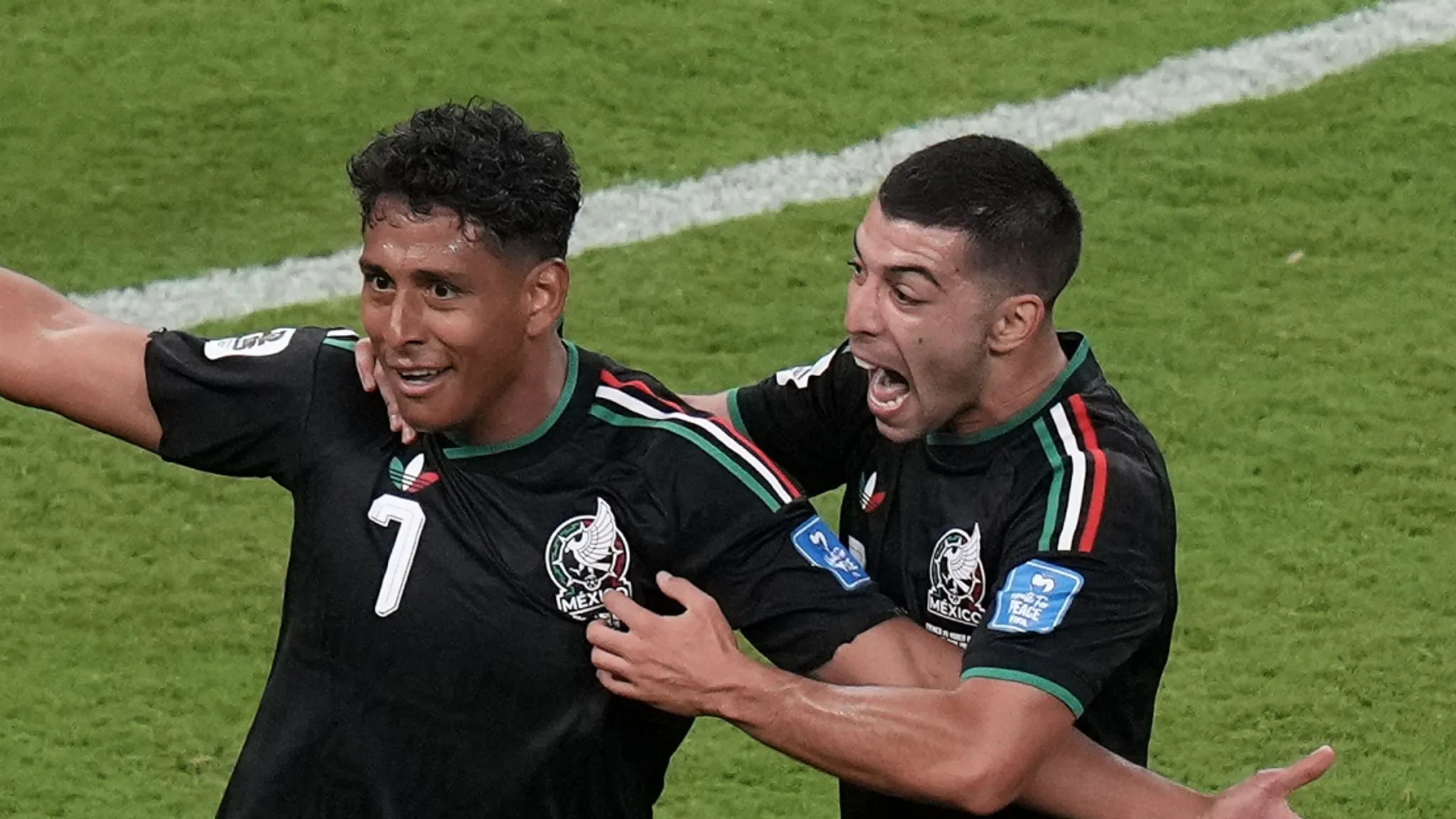
In a largely uneventful Group A match in Guadalajara, the decisive moment came when Kim failed to hold a header from Raul Jimenez. The loose ball fell kindly to Luis Romo, who calmly lifted his effort over the South Korean goalkeeper and into the net.
The error proved enough to separate the two teams in a match that produced few clear chances.
Advertisement
South Korea pushed for an equaliser late in the game, but Mexico goalkeeper Raul Rangel came to his side’s rescue with two excellent saves to deny substitute Gue-Sung Cho.
The victory means Mexico become the first nation to qualify for the round of 32. Javier Aguirre’s men now have six points from two matches after also beating South Africa in their opening game.
Mexico are in a strong position to finish top of Group A, which would allow them to play their round-of-32 tie in Mexico City.
Advertisement
For South Korea, qualification hopes are still alive, but they must defeat South Africa in their final group match to stand a chance of progressing.
While Mexico celebrated another important win, South Korea were left to reflect on the goalkeeping error that ultimately decided the contest.
Man United and Manchester City could both challenge for the Premier League title in the 2026/27 season
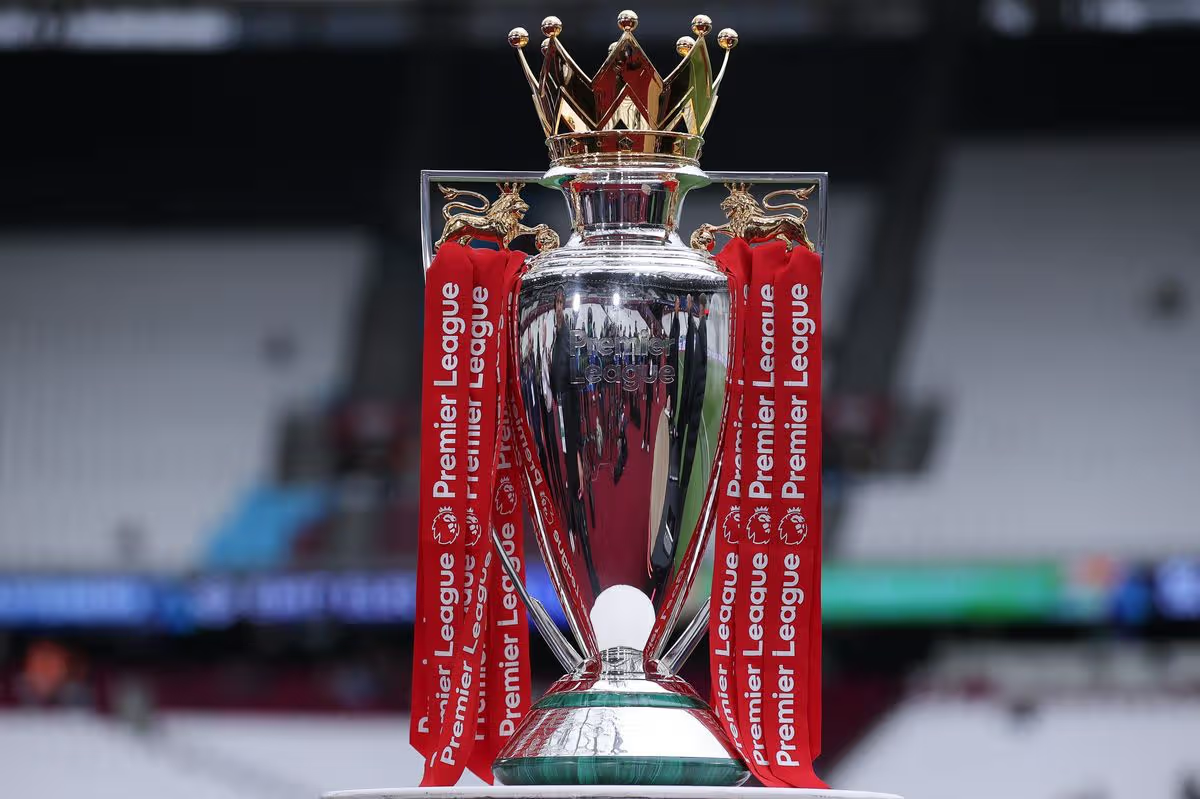
Manchester City and Manchester United are second and fourth favourites respectively to win the Premier League title. The Blues took the title race down to the last week of the campaign last season with a draw at Bournemouth ultimately ending their hopes of winning the league as Arsenal were crowned champions.
City are going through a period of change with Pep Guardiola, Bernardo Silva and John Stones all leaving at the end of the last campaign. However, according to Betfair, the Blues are expected to overcome the upheaval and have a strong season with odds of 5/2 on them winning the league.
Advertisement
Meanwhile, United are backed to do well this season after their resurgence under Michael Carrick in the second half of the last campaign. The decision to sack Ruben Amorim in January paid off as the Reds lost just two Premier League matches on the way to a third-place finish.
The turnaround from United ensured Carrick was handed the job on a permanent basis. However, despite finishing third, they are predicted to finish a place worse off next season with Betfair offering odds of 13/2 on United winning the league. Currently, Arsenal are favourites to retain the title.
They are priced at 6/4 to do what only City have managed in the past decade – retain the Premier League. As mentioned, the Blues are second favourites while Liverpool are third most likely to regain the league, priced at 6/1. The Manchester clubs’ only other realistic title challengers, according to the bookmakers, are Chelsea.
Under new head coach Xabi Alonso, they are priced at 11/1. Check out the full list of odds for the Premier League title below:
Advertisement
Arsenal – 6/4
Manchester City – 5/2
Liverpool – 6/1
Manchester United – 13/2
Chelsea – 11/1
Aston Villa – 28/1
Newcastle United – 40/1
Tottenham Hotspur – 50/1
Brighton and Hove Albion – 150/1
AFC Bournemouth – 200/1
Everton and Brentford – 250/1
Sunderland, Leeds United, Fulham, Nottingham Forest, Crystal Palace – 500/1
John Chayka is closing in on his first blockbuster as general manager of the Toronto Maple Leafs.
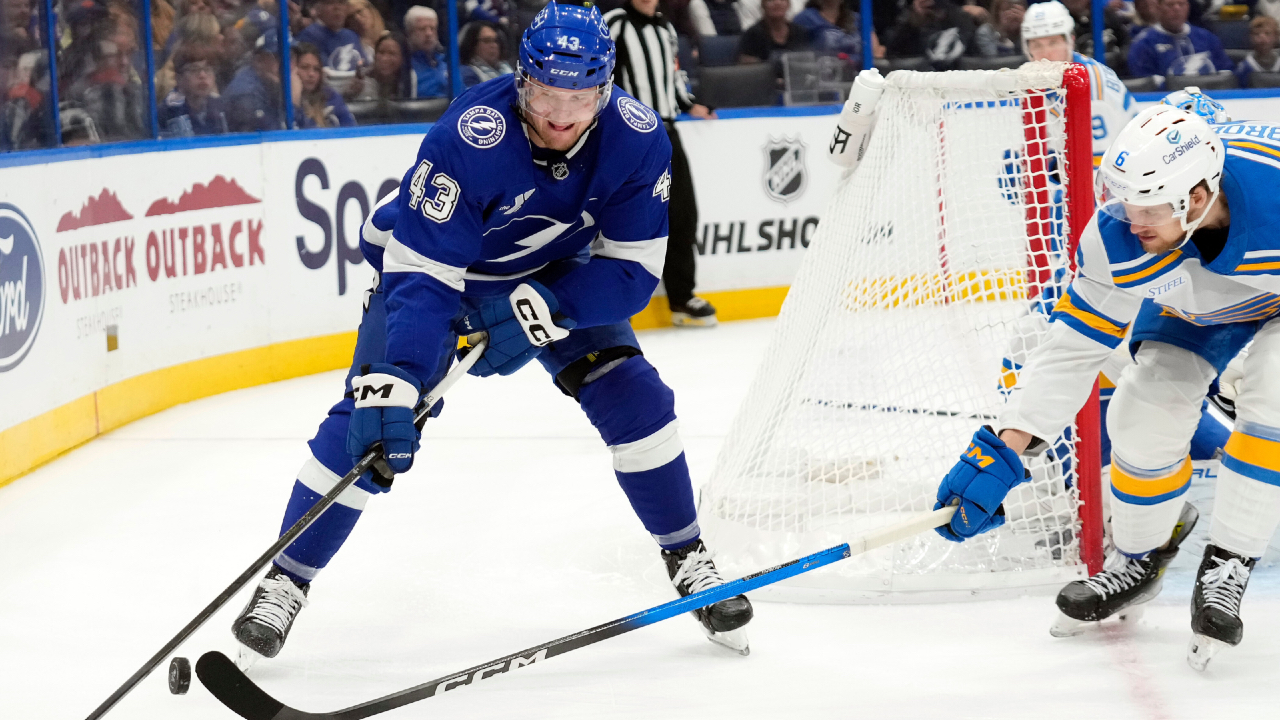
The Maple Leafs are working on a sign-and-trade for Tampa Bay Lightning defenceman Darren Raddysh, Sportsnet’s Elliotte Friedman reported in the early hours of Friday morning.
Raddysh, 30, had a breakout season with the Lightning in 2025-26, posting 22 goals and 70 points. He was also a plus-21 and averaged 22:42 of ice time. All were career highs.
The Toronto native was scheduled to become an unrestricted free agent on July 1.
Advertisement
Raddysh was signed by the Lightning as a free agent on July 28, 2021, and has career totals of 35 goals and 108 assists for 143 points in 249 games.
File photo of former India cricketer Yuvraj Singh. (ANI)
New Delhi: Former India cricketer Yuvraj Singh will join the Delhi Capitals support staff from the 2027 edition of the Indian Premier League (IPL). TimesofIndia.com has learnt that Sourav Ganguly, who is expected to lead the franchise’s support setup when JSW Group returns to take control for the next two years, will have his former teammate in the dugout.A senior DC official confirmed the development and TimesofIndia.com has also reached out to Yuvraj and JSW Sports founder and director Parth Jindal for a comment. The story will be updated when they respond.The role will mark Yuvraj’s first coaching stint in the IPL. The 44-year-old has mentored players such as Abhishek Sharma, Prabhsimran Singh and Abdul Samad in recent years, while also working with Sanju Samson, Rishabh Pant and Priyansh Arya. However, he has not yet been part of a formal coaching setup.Multiple franchises have closely followed his work with young cricketers and the impact he has had on careers, particularly that of Abhishek Sharma. His experience and hands-on approach are viewed as valuable assets, with Delhi Capitals potentially becoming the first franchise to bring him into an official role.“Who wouldn’t want a Yuvraj Singh in the dugout? Many of his former teammates, including Ashish Nehra, Zaheer Khan and Virender Sehwag, have had coaching stints in the IPL. Yuvraj may be a little late to the party, but he has spent considerable time working with youngsters and understanding the demands of the role,” a well-placed source said.“He doesn’t just train players; he mentors them. It’s not limited to phone calls or virtual sessions. He spends hours on the ground, often standing behind the nets and working under the sun alongside his players. It’s a genuinely hands-on approach that has benefited numerous cricketers,” the source added.
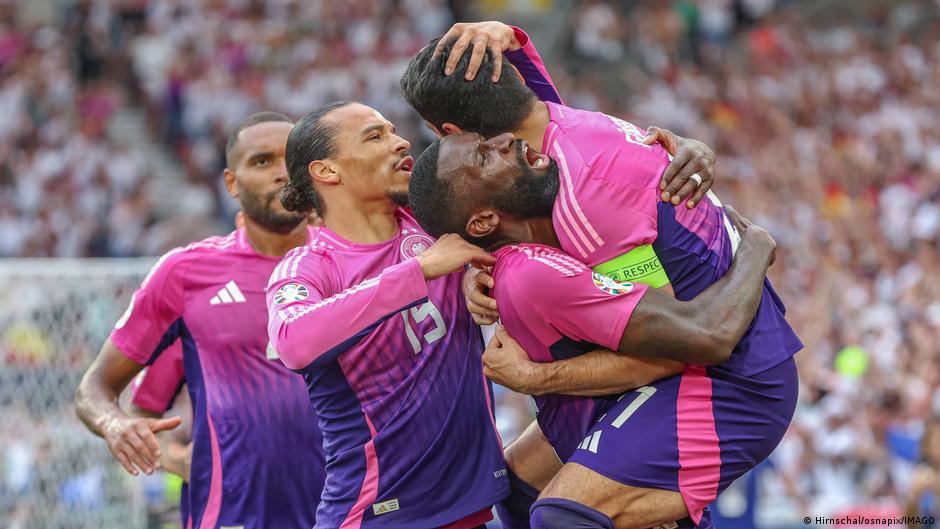
Most of the news about Germany’s World Cup squad was around the return of Manuel Neuer. But beyond the headlines lies another story.
Eight of the 26 players representing Germany this summer have roots in Africa: Jonathan Tah (Ivorian father), Antonio Rüdiger (Sierra Leonean mother), Leroy Sane (Senegalese father), Felix Nmecha and Jamal Musiala (both Nigerian fathers), Assan Ouedraogo (both parents from Burkina Faso), Malick Thiaw (Senegalese father) and Jamie Leweling (Ghanian father).
In fact, if you look at the last year of Germany squad selections, there have been a total of 17 players with African roots called up. The connection Germany’s footballers have with African countries is inescapable and of huge importance at the 2026 World Cup.
“Today we have great diversity in the team, which symbolizes a new generation of German players,” Annalena Baerbock, President of the UN General Assembly, told DW. “That wasn’t always the case,” Baerbock added. “That shows how important anti-racism campaigns are. A team is also always a reflection of society.”
Advertisement
Diversity important in time of division
Musa Okwonga, a Ugandan-British author and football podcaster who has lived in Berlin for over a decade, believes the timing of this team’s diversity is significant.
“With the far right leading some major polls in Germany by five, six, seven points, I think it’s really important at this point in time, when a quarter of immigrants who arrived in Germany are thinking about leaving again, to show there are people here who are thriving within this country, who are not white, who have a heritage from elsewhere, who grew up here, who moved here, and made Germany their home,” Okwonga told DW.
The German FA (DFB) haven’t explicitly gone out of their way to highlight the diversity of this team, but do recognize its significance.
“At the end of the day, everyone is united to make a decision by conviction and less to do with picking the place where more sporting success is likely,” DFB Director Andreas Rettig told DW.
Advertisement
“We were happy to see an early commitment to the Germany team and that left an impression on us,” said Rettig, referencing the example of Jonathan Tah.
“We know it from the economy, mixed teams with men and women or different nationalities, young or old, is always advantageous to the end product so we are happy to have this diversity in the team,” added Rettig.
In early 2025, Tah visited the Ivory Coast for the first time since he was 14, explaining in an interview with DW that the trip was “extremely grounding.” Rüdiger has also set up a foundation in Sierra Leone.
“Going back to a place where you have benefited from the Western European colonial extraction, and you’re going back to see relatives of yours who only two generations ago, you were with and would have been around, that’s hard for a lot of people,” said Okwonga.
Given Germany has colonial historical roots in Namibia, Tanzania, Cameroon and Togo to name but a few, it is clear why connecting to both one’s country of origin and one’s new home comes with conflicting and complication emotions. Okwonga believes though that the visibility of footballers who have African roots but are also equally proud of having Germany as their home is an important symbol.
Advertisement
Musa Okwonga is an expert in football and has lived in Berlin for over a decadeImage: Michel Rosenberg
Impact beyond football
In the build-up to Euro 2024, Germany head coach Julian Nagelsmann called out a survey by German public broadcaster WDR that revealed 21% of those asked wanted more white players on the national team.
“A football team can be a role model of how to unite different cultures, religious backgrounds and skin color. It is good the way it is now. We play the Euros for everyone in the country and whoever plays top football is invited to be a national team member,” said Nagelsmann.
His bullish stance on non-football matters was noteworthy, because the symbolic value and influence of the German team and football as a whole is widespread.
“In the 12 years of being here, the team I saw at the Euros was the best version of a Germany team. In terms of the football they played, how they worked together, how they supported each other. It’s everything you’d want from a football team, a collective, a community,” said Okwonga, who also said Vincent Kompany being Bayern Munich head coach has also positively impacted the environment for German players with African roots.
Vincent Kompany’s presence and leadership at Bayern Munich has had an impact on the way African players in Germany are viewedImage: Frank Hoermann/Sven Simon/IMAGO
Clearly, a lot has changed since Gerald Asamoah became the first African-born German to appear in a World Cup in 2006. But the issue remains, as incidents such as the one in 2023 proved when two Germany youth internationals with African roots were inundated with racist comments on social media after missing penalties. Systemic issues can be improved by policies not the actions or words of a football team, but that doesn’t make their symbolism any less significant.
“I think this actually the diversity of this team is not really about the people that hate to see it. It’s about modeling the fact that friendship across all groups is entirely possible,” Okwonga said. “If they don’t win, it’s not because the multi-ethnic project was a failure. It’s because they got beaten by a better team.”
“If Germany win the World Cup, it’s primarily a triumph for this group of players and the supporters that were behind them. I don’t think it is a point of political leverage in a progressive sense, because I think too many other things are going wrong in Germany at the moment,” Okwonga explained.
“I think that success in the football field from a diverse team can be a catalyst in the right political context. I do not, unfortunately, believe this is the right context.”
Advertisement
With or without the right context, the diverse heritage of this Germany team requires recognition.
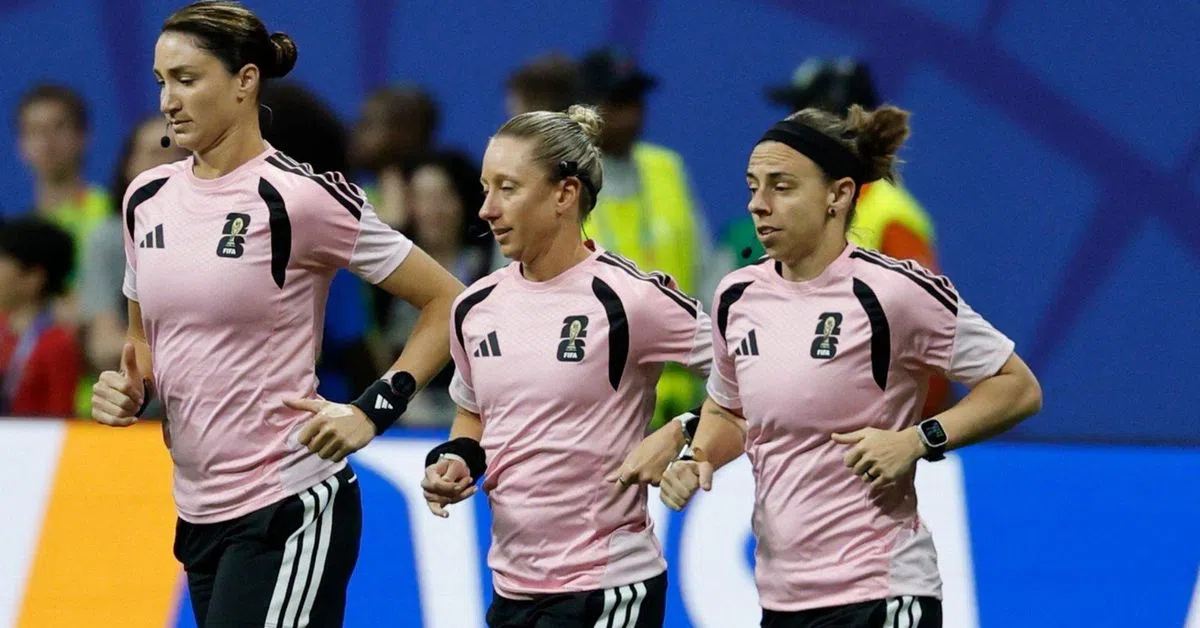
The FIFA World Cup witnessed another landmark moment on Thursday as an all-women refereeing team took charge of the Group A encounter between Czechia and South Africa at Atlanta Stadium.
Referee Tori Penso, alongside assistant referees Kathryn Nesbitt and Brooke Mayo, became only the second all-female on-field officiating crew to oversee a men’s World Cup match. The appointment also marked the first time an entirely American refereeing trio officiated a men’s World Cup fixture.
Advertisement
Their selection continues FIFA’s efforts to increase representation at the highest level of the sport and follows the trailblazing example set at the 2022 World Cup in Qatar, when France’s Stephanie Frappart, Brazil’s Neuza Back and Mexico’s Karen Diaz Medina became the first all-women refereeing team to officiate a men’s World Cup match.
Tori Penso: From Marketing Professional to World Cup Referee
Advertisement
Leading the historic crew was Tori Penso, whose journey into officiating began as a teenager in Florida.
Initially taking up refereeing at the age of 14 as a way to earn extra income, Penso later established a successful career in digital marketing and also worked as a university lecturer. Despite balancing multiple professional commitments, she steadily climbed through football’s officiating ranks.
Advertisement
Her breakthrough came in 2020 when she became the first woman in nearly two decades to referee a Major League Soccer match. After receiving her FIFA badge in 2021, Penso was selected for some of football’s biggest events, including the 2023 FIFA Women’s World Cup final and the Paris Olympic Games.
By officiating Czechia’s clash against South Africa, she became the first American woman to referee a men’s FIFA World Cup match.
Advertisement
Kathryn Nesbitt: The Scientist Who Chose Football
Assistant referee Kathryn Nesbitt brings one of the most unique stories in international football.
Advertisement
Before becoming a full-time official, Nesbitt built an academic career in science. She earned a doctorate in analytical chemistry from the University of Pittsburgh and worked in research and teaching, focusing on neurological and brain-related studies.
Her passion for officiating eventually led her away from academia and into professional football.
Advertisement
Since earning FIFA accreditation in 2016, Nesbitt has officiated at multiple Women’s World Cups and Olympic tournaments. She also made history in Qatar four years ago when she became the first woman to serve as an assistant referee in a men’s World Cup knockout-stage match during England’s Round of 16 encounter against Senegal.
Brooke Mayo: Breaking Barriers Beyond Football
Advertisement
Completing the trio was Brooke Mayo, whose football journey has included playing, coaching and officiating.
The Texas native played collegiate football before working as a physical education teacher and high-school coach. She later transitioned fully into refereeing and quickly established herself among the top officials in the United States.
Advertisement
Mayo joined FIFA’s international refereeing panel in 2018 and has since worked at major tournaments, including the Women’s World Cup, Olympic Games and FIFA Club World Cup.
Her achievements were recognised in 2025 when she received U.S. Soccer’s Female Referee of the Year award.
Advertisement
Mayo’s appointment in Atlanta also carried broader significance. She became the first openly gay match official to officiate a men’s FIFA World Cup fixture, representing an important milestone for LGBTQ+ visibility in international football.
A Historic Step Forward
Advertisement
The trio are already familiar with making history together. In 2023, they became the first American officiating team to work a FIFA World Cup final when they oversaw the Women’s World Cup title match between Spain and England.
They added another milestone in 2025 by becoming the first all-female crew to officiate the Lamar Hunt U.S. Open Cup final.
Advertisement
Now, their appointment at FIFA World Cup 2026 adds another chapter to that journey, highlighting the growing role of women in elite football officiating and showcasing how the sport continues to evolve on its biggest stage.











 Oregon has used the transfer portal very well in recent years to bolster its roster and fill holes.




























You must be logged in to post a comment Login