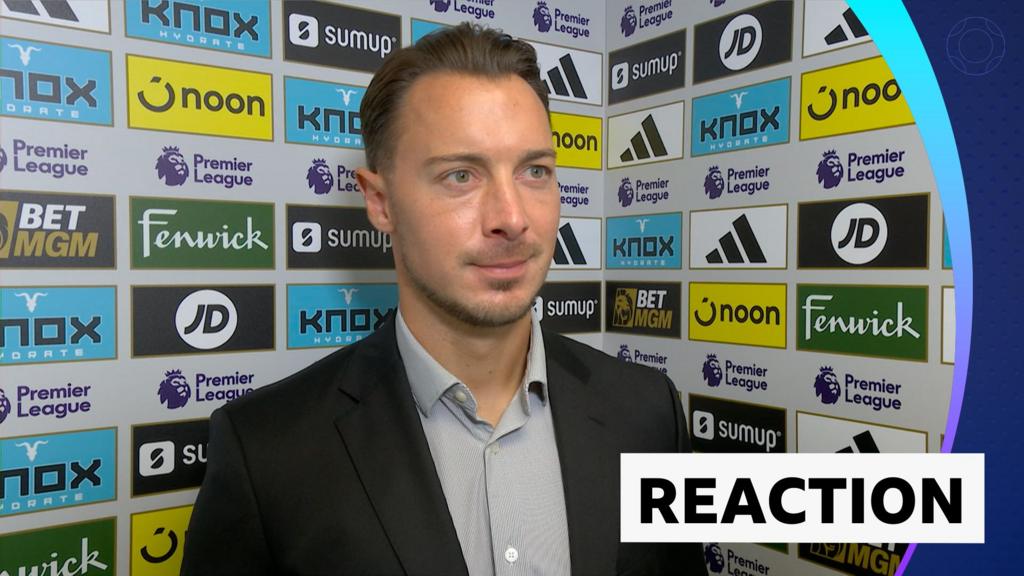
Newcastle United manager Matthias Jaissle shares his “mixed feelings” on their late 2-2 draw against Bournemouth, describing the goals conceded by his side at St. James’ Park as “slapstick”.
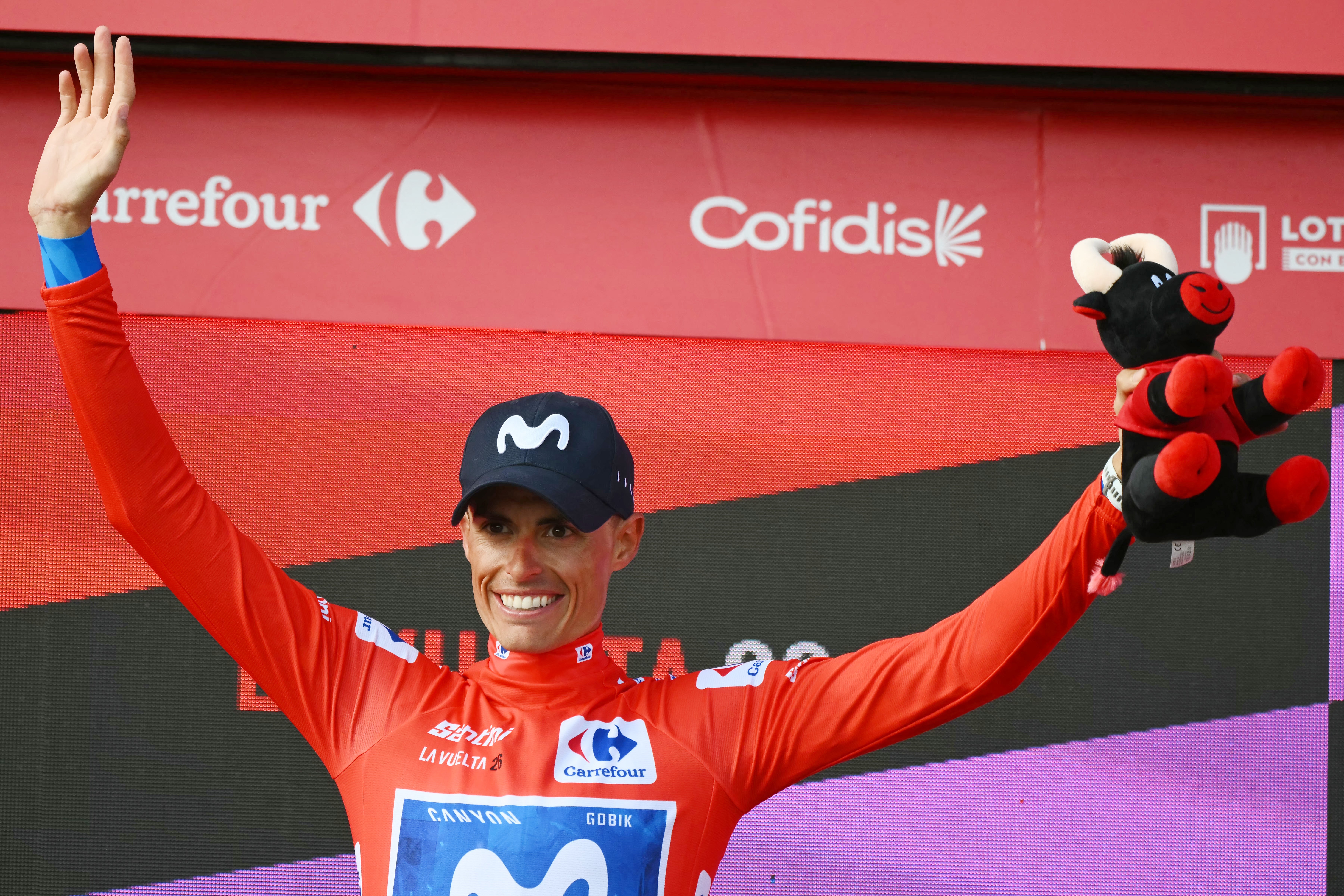
Enric Mas extended his lead of the Vuelta a Espana in a reverse result to the last time the race summited the Sierra de la Pandera, as Marco Brenner took his first grand tour stage win and only his third pro victory.
24-year-old Brenner was part of a four-rider group who got clear on the category-one final climb, chasing down a late flyer by Santiago Buitrago and passing him for the biggest win of his career.
“I think yes [it’s the best day of my career],” a beaming Brenner said. “I cannot really believe it yet, I wasn’t feeling super until now, not feeling like myself, struggling with some sickness early in the race and a crash.
“I really wanted to show myself and my teammates that I can be up there. On the final climb I could feel that I actually have the kick today, and in the end I started believing it. You live for days like today, I guess.”
Spain’s Mas lost time to rival and eventual champion Primoz Roglic when the race visited the Andalusian climb in the 2022 edition, one of two in which Mas has finished runner-up to the Slovenian.
Advertisement
But this time he added another 25 seconds to his lead over the four-time champion, accelerating away on the upper slopes on another day in which his Movistar squad got their tactics exactly right.
Roglic slipped to third overall, 2’10”, as Felix Gall – who could not be separated from the maillot rojo despite the Swiss rider’s best attempts – moved up to second, 2’06” behind Mas.
As expected all the drama came on the final climb of the day, Sierra de La Pandera, an 11.8km monster averaging 7.5% but with multiple sections – including towards the summit – of 15% and some hitting gradients of 17%.
The 154.5km stage from Jaen was the last major mountain stage of the second week, and as in previous days an enormous breakaway got up the road, with UAE Team Emirates-XRG rider Kevin Vermaerke the first to break clear.
Advertisement
The American attacked with 53km to go but his solo charge was brought to an end by Georg Steinhauser with 14km remaining.
The lead chopped and changed on the final climb until a final quartet was established, with Brenner reacting superbly to a late attack by king of the mountains leader Buitrago – despite being caught zipping up his jersey at the exact moment Buitrago launched.
Enric Mas extended his lead to over two minutes (AFP/Getty)
Brenner bridged across quickly and edged ahead of him in the final kilometre, punching the air as he crossed the line.
The last time the Sierra de la Pandera featured in the Vuelta Richard Carapaz won the stage and his EF Education-EasyPost squad attempted to lead him out for more heroics this time around.
But Movistar wrestled back control, leading the peloton up the punishing slopes, until the Ecuadorian launched from a heavily reduced group of favourites. Only Gall, Mas and Roglic were able to keep pace with the former Giro d’Italia winner before he and Roglic were distanced.
Advertisement
Gall suffered a blow earlier in the stage as he lost a second key lieutenant in as many days: after Gregor Muhlberger abandoned during stage 13 Jordan Labrosse withdrew partway through stage 14, with the balance of power within the peloton shifting towards Movistar ahead of a difficult final week.
But the Swiss produced another fine climbing performance to leapfrog Roglic, a key move ahead of stage 18’s individual time trial, where Roglic is expected to gain significant ground on both Gall and Mas.
There were no other changes to the order of the top eight in the general classification, with Britain’s Oscar Onley remaining in fifth place and in the best young rider’s jersey, 5’44” behind Mas having lost another 1’15”.
The race continues on Sunday with a hilly 189.7km run from Palma del Rio to Cordoba.
Advertisement
In the Tour of Britain Cees Bol won stage 4 in Leyburn as British rider Lewis Askey lost the overall lead to Tim Wellens; the Belgian leads him by 21 seconds going into the final stage.
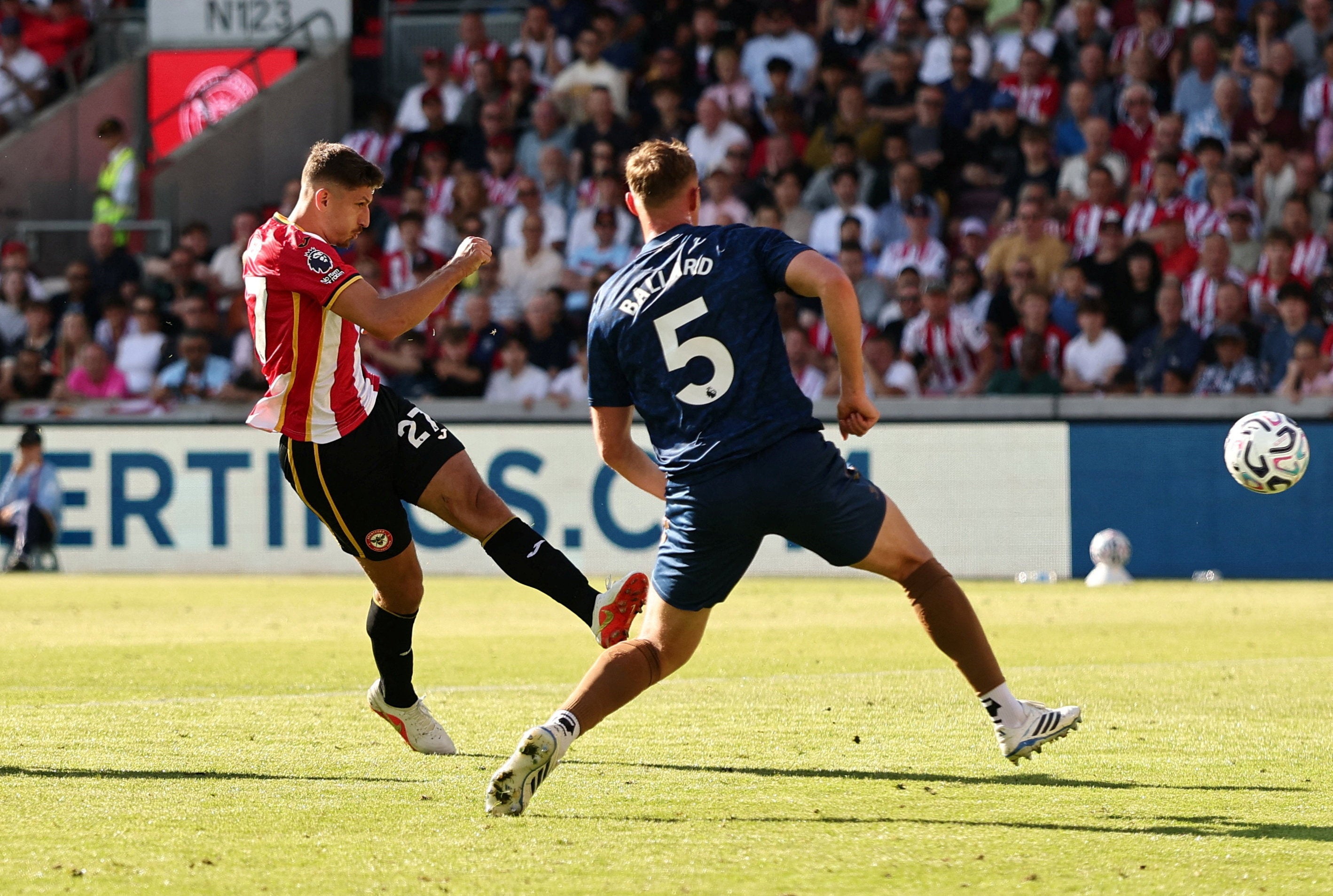
Enzo Le Fee scored a late penalty to rescue a point for Sunderland in a lively 1-1 draw against Brentford at the Gtech Community Stadium.
It was a moment of redemption for the midfielder, who embarrassed himself with a botched panenka spot-kick on this ground last season.
Regis Le Bris’ side were comfortably beaten that day in January but here they bullishly refused to go down easily after falling behind to Vitaly Janelt’s half-volley early in the second half.
At that stage, they looked like paying the price for failing to take advantage of a first half they had dominated, a contentious and highly drawn-out VAR check chalking off a goal from Dan Ballard whilst Le Fee struck a post and Brentford clung on more by luck than by design.
Keith Andrews suffered the misfortune of losing his captain Nathan Collins inside 20 minutes, then having gone behind, gambled on three half-time changes that looked to have paid off in the shape of Janelt’s strike and three points.
Advertisement
Then, in the 82nd minute, substitute Wilson Isidor went down with Keane Lewis-Potter’s hands on him. A penalty was the decision and there was catharsis for Le Fee as he got it right from 12 yards.
Sunderland were excellent in the first half. Ballard finished smartly into the bottom corner after eight minutes before a VAR check determined Kevin Danso, on his debut, had strayed offside and blocked goalkeeper Caoimhin Kelleher’s view.
Collins was forced off after clashing with Noah Sadiki. Deprived of their captain, Brentford were inches away from falling behind moments later when Le Fee struck the post with a powerful shot from 10 yards.
Thomas Meunier ought to have done better when firing a first-time effort straight at substitute Jannik Schuster.
Advertisement
The home side were struggling with Sunderland’s physicality and directness, particularly the runs in behind by Meunier and Nilson Angulo, and the unyielding midfield stewardship of Granit Xhaka.
Brentford could count themselves lucky to be level at the break and Andrews responded with three changes, which did the trick.
Suddenly it was Sunderland who had no outlet, no means of escaping their own half, and just before the hour the hosts led.
Brentford’s Vitaly Janelt scores their first goal (Reuters)
Nordi Mukiele did well to adjust and head away a dangerous cross, but no team-mate in blue was there to help him and finish the job, with Janelt allowed to stride onto the ball 15 yards out and strike it sweetly into the top corner.
Lewis-Potter should have settled it but miscued a volley into the ground and over, then Anthony put the ball in the net but was penalised for taking the ball from the hands of goalkeeper Robin Roefs.
Advertisement
Kelleher got down well to keep out Isidor’s free-kick, but with 10 minutes to go Sunderland levelled.
Lewis-Potter had his hands on Isidor but the award of a penalty appeared generous. However, Le Fee sent the goalkeeper the wrong way to earn a point and make amends for his profligacy here at the start of the year.
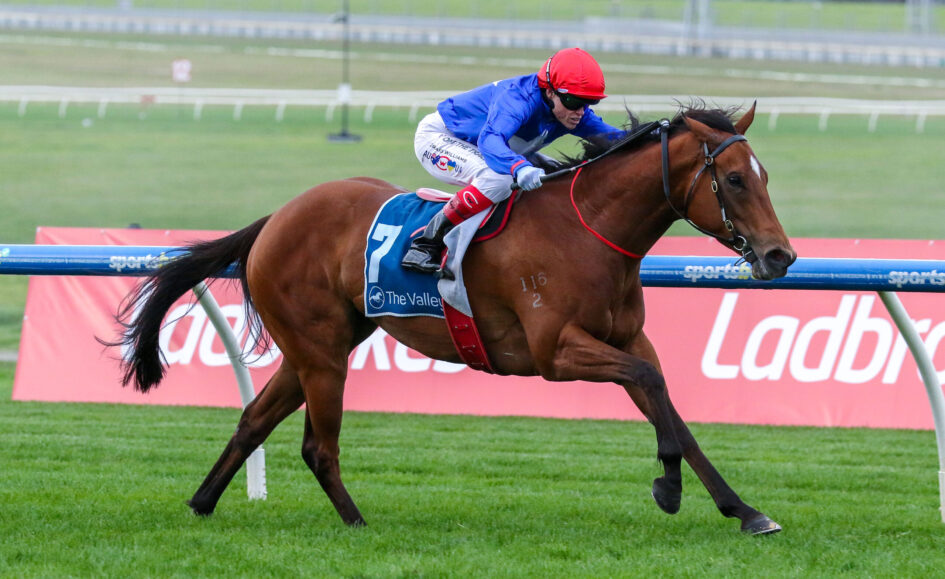
History is aligning for Cavalry Girl as she aims to extend her winning streak in the Group 1 Moir Stakes.
Since the Moir Stakes was moved to an early September date in 2024, both subsequent winners, Baraqiel and Mornington Glory, had previously succeeded in the Carlyon Stakes (1000m) in the lead-up.
Cavalry Girl clinched the Carlyon Stakes at Sandown a mere two weeks ago and is aiming to maintain that perfect sequence when she contests the Moir Stakes (1000m) at Sandown this Saturday.
This year’s Moir Stakes is being held at Sandown as Moonee Valley is undergoing reconstruction, a factor that Cavalry Girl’s trainer Tom Dabernig is fully aware of.
Advertisement
Crucially, Cavalry Girl passed an important test when victorious in the Carlyon Stakes, proving she could handle the demanding uphill finish at Sandown.
Dabernig indicated it would be imprudent not to pursue a Group 1 win with Cavalry Girl, especially given her current excellent form.
Cavalry Girl has triumphed in four of her last five starts, including her last three consecutive races. Nevertheless, Dabernig understands the step up in class the mare faces on Saturday.
“That Carlyon form has traditionally been good into the Moir as well as that benchmark 100 that she won before that as well,” Dabernig commented.
Advertisement
“We’ll follow the pattern and see what she can run well again.
“I realise it’s going to be a different ballgame again, but she’s ticked that box having won at Sandown now and she’s a 1000-metre specialist.
“We might as well give it a go whilst she’s in form, as if you tip them out, you don’t know whether they will come back.
“You could also wait for races over Caulfield Cup week and Melbourne Cup week, and you miss your window.”
Advertisement
Having previously outpaced her rivals in victories at Morphettville and Caulfield Heath before her Carlyon Stakes win, Dabernig mentioned it was pleasing to see the mare relax off the pace.
“It was good to see her come back and prove that she doesn’t have to lead all-the-time,” Dabernig said.
“She is good down the straight (at Flemington) so we might give her a freshen after this for Cup week, but we’ll get over Saturday first and worry about that later.”
Ahead of the Moir Stakes, explore the available betting markets for the race at Australian betting sites.
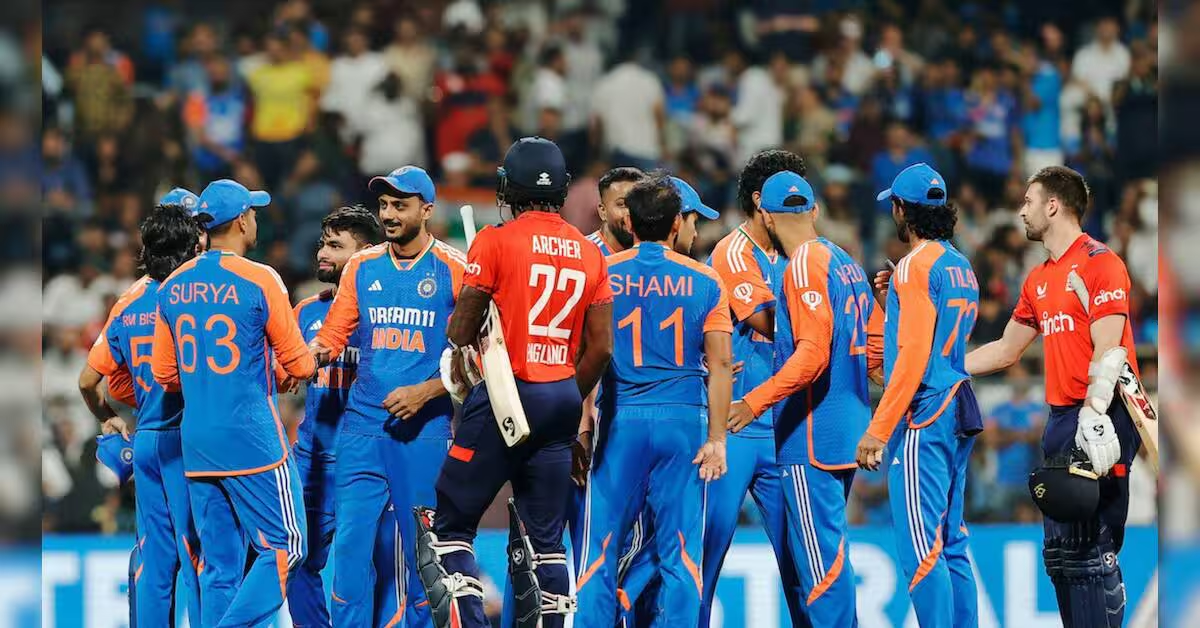
Cricket remains one of the most commercially valuable sports in the subcontinent, with India accounting for a significant share of the game’s financial activity. The Board of Control for Cricket in India (BCCI) has retained its position as the world’s richest cricket board, with an estimated net worth of $2.2 billion (around ₹18,760 crore), according to a report by Business Today.
The BCCI’s revenues are supported by media rights, sponsorships, international cricket and the Indian Premier League (IPL). Cricket Australia ranks second with an estimated net worth of $79 million, followed by the England and Wales Cricket Board (ECB) at $59 million and the Pakistan Cricket Board (PCB) at $55 million.
Advertisement
Top 10 richest cricket boards (as of September 5, 2026)
Rank
Cricket Board
Country
Est. Net Worth (USD)
Est. Net Worth (INR)
1
BCCI
India
$2.2 billion
₹18,760 crore
2
Cricket Australia
Australia
$79 million
₹674 crore
3
ECB
United Kingdom
$59 million
₹503 crore
4
PCB
Pakistan
$55 million
₹469 crore
5
BCB
Bangladesh
$51 million
₹435 crore
6
Cricket South Africa
South Africa
$47 million
₹401 crore
7
Zimbabwe Cricket
Zimbabwe
$38 million
₹324 crore
8
Sri Lanka Cricket
Sri Lanka
$20 million
₹171 crore
9
West Indies Cricket Board
West Indies
$15 million
₹128 crore
10
New Zealand Cricket
New Zealand
$9 million
₹77 crore
BCCI continues to reign at the top
The BCCI’s position at the top is not merely a reflection of India’s status as one of cricket’s biggest markets; it is the result of a highly developed commercial ecosystem around the sport. The IPL sits at the heart of that ecosystem, with its media rights alone having been sold for more than $6.2 billion for the 2023-27 cycle.
The board also benefits from sponsorships, ticket sales, merchandise, international cricket rights and its share of ICC revenues. India’s huge television and digital audience allows broadcasters and sponsors to command a premium, while the emergence of the Women’s Premier League has added another significant commercial property.
Advertisement
The BCCI’s dominance becomes clearer when compared with the rest of the list. At $2.2 billion, its estimated net worth is more than 27 times that of Cricket Australia, the second-ranked board at $79 million.
The financial strength also gives Indian cricket considerable room to invest in infrastructure, player contracts, domestic competitions and talent development while continuing to generate substantial commercial returns.
Advertisement
Australia, England continue to hold top-three spots
Cricket Australia remains second on the list with an estimated net worth of $79 million, while the England and Wales Cricket Board occupies third place with $59 million. Both boards have strong domestic cricket ecosystems and long-established international markets, helping them remain comfortably ahead of most other governing bodies. Australia’s financial strength is supported by the Big Bash League, international cricket and major broadcast partnerships. Its domestic and international rights, along with sponsorship agreements, provide multiple revenue streams beyond Test cricket.
The ECB, meanwhile, benefits from the commercial value of England’s international teams, domestic competitions and broadcast rights. The Hundred, alongside traditional competitions such as county cricket, adds another commercial property to its portfolio. The presence of two established cricket economies behind India underlines the financial divide at the top of the sport. However, even Australia and England remain far behind the BCCI, highlighting just how valuable India’s cricket market has become.
Pakistan claims fourth spot, Bangladesh fifth
The Pakistan Cricket Board occupies fourth place with an estimated net worth of $55 million, narrowly ahead of the Bangladesh Cricket Board at $51 million. Pakistan’s financial position has been helped by the growth of the Pakistan Super League (PSL), which has become one of the country’s most important cricket properties. Along with the PSL, the PCB earns through international broadcast rights, sponsorships, ticket sales and its share of ICC revenues.
Advertisement
Bangladesh, meanwhile, sits fifth with an estimated net worth of $51 million. The BCB’s revenue streams include broadcast agreements, sponsorships, ticket sales and domestic cricket, with the Bangladesh Premier League providing an important franchise-based property. The narrow gap between Pakistan and Bangladesh shows how competitive the middle of the rankings is. While neither board comes close to the commercial scale of the BCCI, both have built sizeable cricket economies around strong domestic audiences and growing franchise competitions.
South Africa, Zimbabwe lead the bottom half of top 10 list
Cricket South Africa is sixth on the list with an estimated net worth of $47 million, followed by Zimbabwe Cricket at $38 million.
Advertisement
South Africa remains one of the sport’s historically important cricket markets and has multiple sources of income, including international broadcast rights, sponsorships and domestic competitions. Its financial position can also receive a major boost when India tours the country, given the enormous commercial value of India’s matches.
A previous estimate cited by NDTV suggested that a 30-day India tour could generate around $68.7 million for CSA.
Advertisement
Zimbabwe’s $38 million valuation puts it seventh, ahead of Sri Lanka, the West Indies and New Zealand. The remaining three boards are valued at $20 million, $15 million and $9 million, respectively.
Sri Lanka Cricket continues to benefit from international cricket and the Lanka Premier League, while the West Indies has the Caribbean Premier League as a major commercial property. New Zealand Cricket rounds out the top 10 at $9 million, despite operating in a market considerably smaller than those of the leading boards.
How cricket boards earn money
Cricket boards have traditionally relied on a combination of broadcasting rights, sponsorships, ticket sales and international cricket, but franchise leagues have transformed the financial model. The biggest boards can now monetise almost every major part of the sport — from television and digital rights to jersey sponsorships, stadium advertising, merchandise and hospitality.
Advertisement
Domestic T20 leagues have become particularly valuable because they provide boards with additional broadcast and commercial properties. The BCCI’s IPL is the clearest example, but Australia’s Big Bash League, Pakistan’s PSL, Bangladesh’s BPL and the Caribbean Premier League also contribute significantly to their respective cricket ecosystems.
Another important source is the ICC’s revenue distribution. Full-member boards receive a share of the international governing body’s earnings, while bilateral series can generate substantial broadcast and sponsorship income.
Advertisement
Hosting a high-profile team such as India can be particularly lucrative because of the size of the Indian audience and the resulting demand from broadcasters and advertisers. International fixtures, therefore, are not merely sporting events but major commercial assets.
Together, media rights, sponsorships, franchise leagues, ticketing, ICC distributions and commercial partnerships determine how successfully a cricket board can convert the popularity of the sport into financial strength.
The Arizona Diamondbacks visit the Houston Astros on Saturday, September 5, 2026 at 7:15 p.m. ET from Daikin Park, Houston, TX.
The Houston Astros enter at 73-69 (.514), while the Arizona Diamondbacks sit at 74-68 (.521). Ethan Pecko (1-0, 6.23 ERA) takes the mound for the Astros, while Brandon Pfaadt (7-2, 3.49 ERA) starts for the Diamondbacks.
Below, we’ll give you all the details you need to know about how to watch this game.
How to Watch Diamondbacks vs. Astros
Players to Watch
Houston needs its biggest bat front and center in this matchup, and Alvarez has been that guy all season. He leads the Astros in home runs with 37, batting average at .317, and RBI with 94 while carrying a .434 on-base percentage and .601 slugging percentage. For a Houston lineup that ranks fifth in MLB with 184 home runs, he is the clearest game-changing threat.
This matchup puts extra weight on every middle-of-the-order plate appearance because Arizona’s pitching staff has been steadier than Houston’s over the full season, posting a 4.15 ERA and 1.28 WHIP. Alvarez is the hitter most capable of cutting through that with one swing. When he is driving the ball, Houston’s offense looks far more dangerous.
Advertisement
For Arizona, Moreno stands out as the bat most likely to pressure Houston across multiple at-bats. He leads the Diamondbacks in batting average at .299 and is tied for the team lead with 68 RBI, while adding an excellent .379 on-base percentage and .467 slugging percentage. In a game where Arizona may need to string together quality plate appearances, his profile fits the moment.
The Astros’ pitching staff has allowed 588 walks this season, so Moreno’s ability to reach base and keep innings alive could shape the flow of the night. He gives Arizona a steady offensive anchor, and that matters against a Houston club fighting to protect first place in the AL West.
Speed changes the picture for Arizona in this matchup, and Carroll brings the most of it among the projected starters. He is expected to play after being in the lineup Wednesday despite lower-back discomfort, and his season line still shows impact: 19 home runs, 61 RBI, a .335 on-base percentage, a .466 slugging percentage, and 21 stolen bases.
Arizona’s 98 stolen bases rank tied for 11th in MLB this season, and Carroll can stress the Astros in ways that go beyond extra-base power. One sharp night from him can turn singles into scoring chances fast, like a spark catching dry grass.
Want great stories delivered right to your inbox? Create or log in to your FOX Sports account, follow leagues, teams and players to receive a personalized newsletter daily.
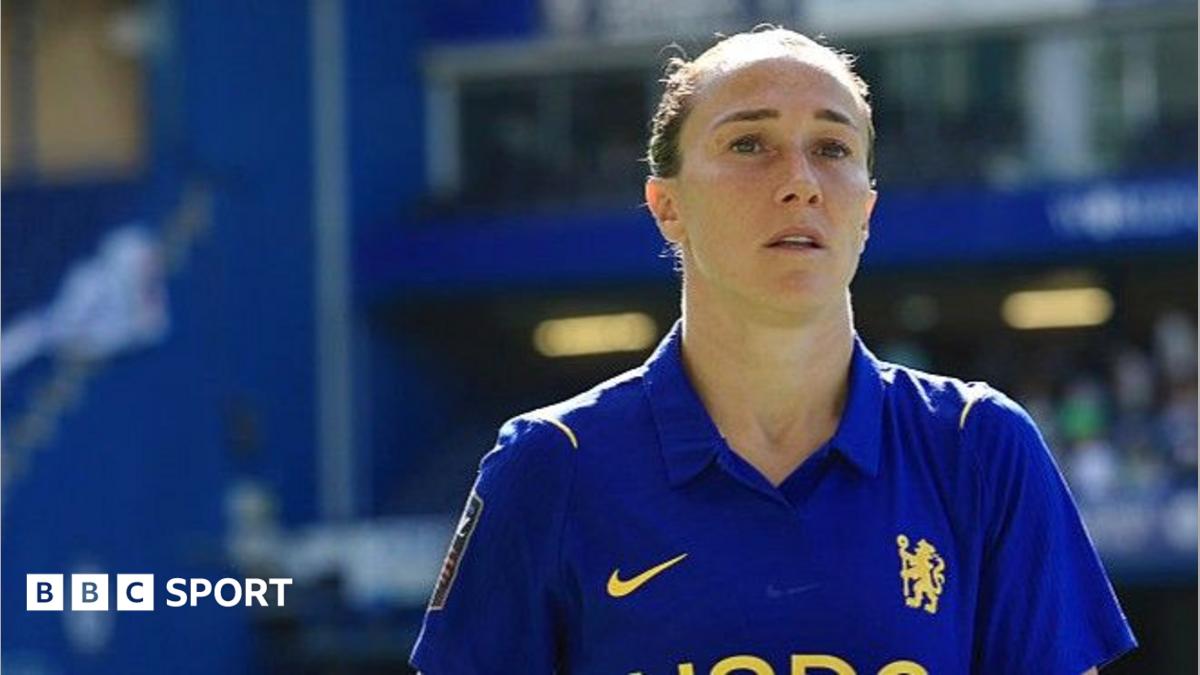
Chelsea attempted 34 shots in the game, their highest total in a WSL match since the start of last season.
James hit the ground running with a superb strike that flew into the roof of the net within 11 minutes and Chelsea fans expected the floodgates to open.
Villa barely laid a glove on their opponents and had only five touches in Chelsea’s box.
But, against the run of play, Noelle Maritz’s shot ricocheted off goalkeeper Hannah Hampton and bounced in off Chelsea defender Veerle Buurman late on.
Advertisement
Villa boss Natalia Arroyo threw her arms in the air and their supporters punctured the silence of disbelief that fell across Stamford Bridge.
“If you analyse the performance and the statistics, then you would say it’s crazy that we didn’t win. We created so many opportunities,” said Bompastor.
“The reality of football is that if we were two or three nil up then the game is over. It’s a completely different game in the second half.
“We have to speed up the game, keep that momentum and sustain that. We need to make sure we accelerate to kill the game. That is not what happened today.
Advertisement
“At the end, we are all frustrated because it’s not a good result.”
Bompastor’s biggest frustration was that she could do little to help.
With summer signing Melvine Malard out with a minor injury picked up in training and Mayra Ramirez still continuing her recovery, attacking options were limited.
England forward Aggie Beever-Jones led the line, taking the baton from recently-departed Sam Kerr, but her confidence is clearly low.
Advertisement
She had opportunities but scuppered them and when she did eventually put the ball in the net, it was ruled out for offside.
“What can we do in this scenario? We have to stay confident, stick together and work hard,” said manager Bompastor.
“In football some of these things are mental. It’s the mentality – the mindset of being ruthless and clinical in the box.
“The best teams don’t need many opportunities. They just need one or two and maybe that’s enough to win the game. That is something we need to work on.”
13’ – The All Blacks are very much on top. Immediately from the restart, South Africa knock on and the New Zealand scrum dominates again.
Alan Smith5 September 2026 16:27
Advertisement
TRY! South Africa 0-7 New Zealand (Savea, con: Love)
12’ – With the penalty, NZ kick to touch. From the lineout Aumua makes initial ground with a bustling drive forward. The next phases sees Savea collect from the ruck and add the final couple of yards to get the visitors off the mark.
Love’s conversion is straightforward.
Alan Smith5 September 2026 16:26
Advertisement
South Africa 0-0 New Zealand
10’ – New Zealand up the pace and work it through eight phases before Feinberg-Mngomezulu commits a knock on. They make more progress with the advantage ongoing before the referee whistles and goes back to the offence.
The TMO, France’s Eric Gauzins, is having a look and the SA No. 10 is shown a yellow card for a deliberate knock-on. They discuss whether it’s worth a penalty try and decide not.
To compound matters for the hosts Kolbe is off for a HIA and Libbok is on in his place.
Alan Smith5 September 2026 16:24
Advertisement
South Africa 0-0 New Zealand
7’ – Scrum time for the first time. New Zealand will put it in just inside their half. Their pack has a weight advantage of about 32kg.
Barrett gets it moving quickly and there are then a couple of kicks exchanged before Jordan gathers and embarks on a menacing run down the middle, gaining sufficient ground into the Springbok half.
Alan Smith5 September 2026 16:20
Advertisement
South Africa 0-0 New Zealand
5’ – But the hosts are penalised for not releasing in the ruck and New Zealand are gifted an opportunity to ease the threat for now. The kick is held up by a strong wind that is immediately noticeable but the All Blacks retain the ball from the lineout on the 22.
Alan Smith5 September 2026 16:17
Advertisement
South Africa 0-0 New Zealand
4’ – The TMO is having a look at a high tackle by Tupaea on Feinberg-Mngomezulu. Their heads clash and the slo mo replay makes it look fairly nasty. But the recommendation is just a penalty, which is swiftly put into touch on the left and the edge of the All Blacks 22.
Alan Smith5 September 2026 16:15
South Africa 0-0 New Zealand
2’ – The All Blacks work it left but too far left – Barrett passing it straight out for a lineout. Marx throws it in, Nortje claims it uncontested and the hosts will try and get a move going.
Advertisement
Alan Smith5 September 2026 16:13
We’re underway! South Africa 0-0 New Zealand
And we’re playing in Johannesburg. Ruben Love kicks off with his All Blacks moving from left to right as we watch.
Alan Smith5 September 2026 16:11
Advertisement
Tears and passion aplenty
We’ve been treated to rousing renditions of both anthems and there are no shortage of tears – in the stands and on the pitch.
Already the intensity levels are phenomenal.
Alan Smith5 September 2026 16:07
Advertisement
Here come the teams
Fears of thunderstorms have not become reality just yet. The teams are on their way out of the tunnel and we’re almost set for the haka.
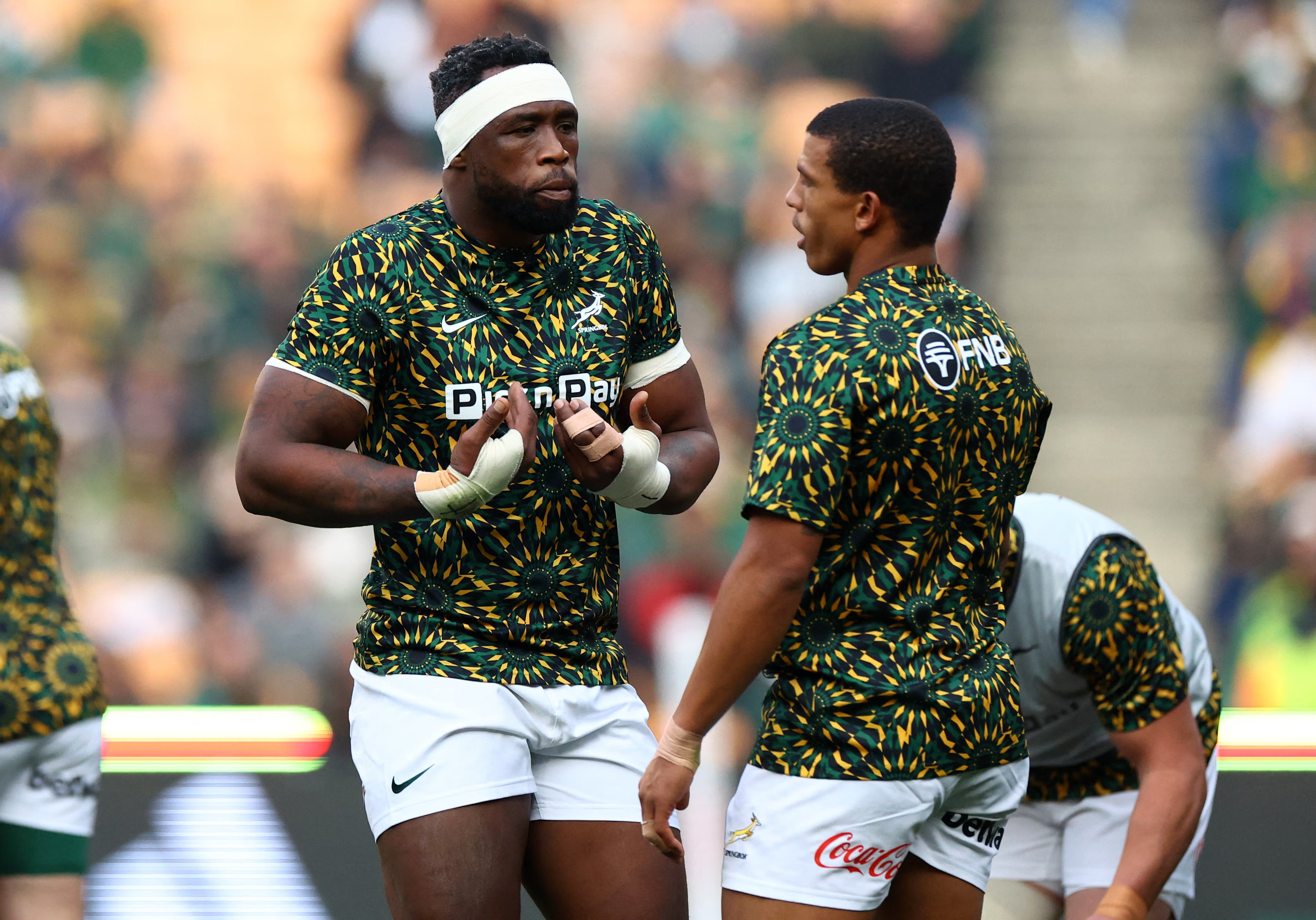
South Africa’s Siya Kolisi during the warm up before the match (Reuters)
Nigeria international Victor Osimhen is hoping to return to action when Galatasaray face Sporting Lisbon in the UEFA Champions League next week.
Osimhen suffered an injury during Galatasaray’s 3-2 away win over Istanbul Başakşehir on Friday. The striker was forced to leave the pitch in the first half after picking up the knock.
Despite the setback, the Super Eagles forward remains hopeful of recovering in time for the Champions League clash with Sporting Lisbon.
Advertisement
Speaking after the match, Osimhen said he did not want to take any risks with the injury and would like to play if the coach believes he is fit enough.
“I have nothing, I didn’t want to risk myself. If our coach deems it appropriate for the Sporting Lisbon match, I want to be on the field,” Osimhen said.
Galatasaray have confirmed that Osimhen underwent further medical examinations, including an MRI scan, to determine the seriousness of the injury.
Advertisement
The Turkish champions are expected to monitor his recovery closely before deciding whether he will be fit to face Sporting Lisbon.
Osimhen has become an important player in Galatasaray’s attack since joining the club permanently. His return would be a major boost for the Turkish champions as they continue their Champions League campaign.
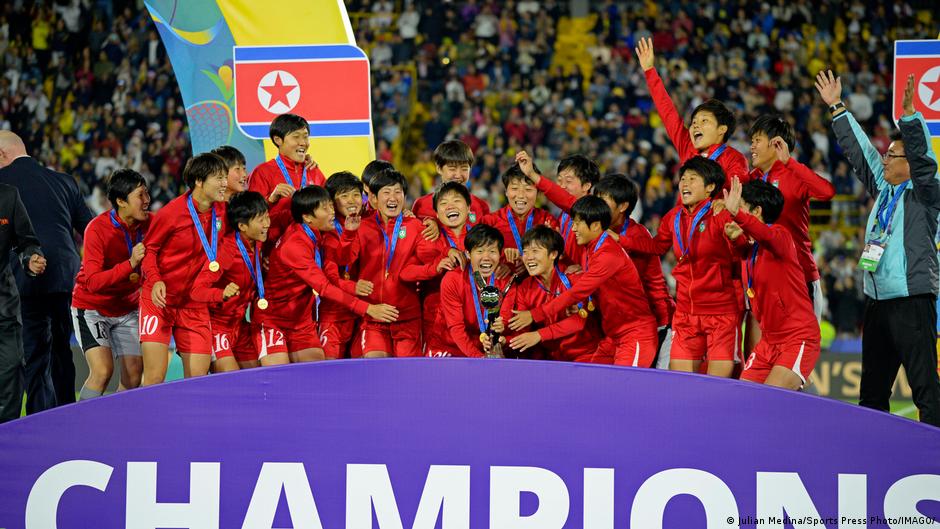
A year ago, North Korea’s women successfully defended their U-17 World Cup title after defeating the Netherlands 3-0 in Morocco. It was the fourth time that the country has won the competition.
Now the country’s U-20 team enter the World Cup in Poland as defending champions, having won their third World Cup in 2024. North Korea’s women have clearly cemented their status as the dominant force in women’s youth football.
But what is it that makes a state that, according to the United Nations, “does not have any parallel in the contemporary world,” so good at youth football?
“International sport is one of the few ways to demonstrate their sovereignty, existence and identity to the international community, so this type of big success, from their point of view, is an important occasion where they can wave their national flag in front of the international audience,” Dr Jung Woo Lee, a senior lecturer in Sport and Leisure Policy at the University of Edinburgh, told DW.
Advertisement
“At the same time, domestically, North Korea often uses sport as their propaganda tool to glorify their leaders and also how great their country is.”
A clear and conscious strategy
Football is popular in the country, but recognizing that the gap to the top in senior football is much harder to close than in youth football, North Korea’s leaders turned to women’s youth football, where the gap is more manageable. It’s also why success at this level hasn’t benefited the senior team over the years. This strategy is not about pathways. It’s about winning.
“The gap between established and developing clubs is also high because in many European countries, there is a professional league, and they get more support from a number of different stakeholders,” Lee said.
“In youth football, I think European sport organizations highlight more on having fun when playing football. Whereas in North Korea, even if you are 13 or 14 years old, they join very highly disciplined, highly systematic and highly professionalized training regimes, so in early ages they can excel.”
In Morocco, North Korea’s U-17 team only conceded three goals in the entire tournament, and scored three or more on four occasions. This was a continuation of their form the year before, while the U-20 women in 2024 not only beat Argentina 6-2 but also secured three straight 1-0 victories from the quarterfinals onwards to win the tournament.
Advertisement
With the help of the Pyongyang International Football School where young girls are selected, developed and educated following a highly disciplined and scientific approach, North Korea has seen an opportunity and taken it.
In 2025 North Korea’s U-17 team won a second consecutive World Cup, making them one of the most dominant forces in youth footballImage: IPA Sport/ABACA/IMAGO
Regime positioning, life-changing rewards
In the eyes of North Korea, this is also a victory for the state itself.
“You need to remember that North Korea still maintains a very strong socialist and communist regime,” Lee explained. “Particularly under Kim Jong Un, they try to compare capitalist and communist regimes and show the communist regime as superior to the capitalist. Also, when I look at some of the news reports about the North Korean performance in North Korean media, they highlighted that because they are (under) the communist regime, they do whatever they can, even if they’re physically exhausted.
“Then they directly compare those mentalities with capitalist countries. In capitalism, when athletes are physically exhausted and injured, there is no way to perform. They need to be changed by their coach. But in socialist systems their will is more important than (a) professional opinion from the coach or any medical staff. So North Korea frames that as a superior system.”
That psychological element has seemingly given the team an edge, but beyond a strong sense of patriotism and years of disciplined work lies the motivation of a life-changing reward.
Advertisement
“Although we often see North Korea as quite underdeveloped and very much agricultural and people experiencing hardship, those living in Pyongyang are quite different. They are kind of special,” Lee explained.
Choe II-son (in red) was the breakout star of the 2024 tournament, but is unlikely to play on a bigger stageImage: Jose Pino/Sports Press Photo/IMAGO
As an incentive, he said, the regime can give players living outside the capital residence certificates, which are required to enter Pyongyang. At the same time, many players have been given apartments.
This motivation is not to be underestimated. Life in rural North Korea is tough, with shortages in food and health care reportedly common. Living in the big city is quite different.
“This is a way to change their life. It’s kind of winning a lottery in a way,” Lee explained.
Advertisement
What next for talented generation?
For star players such as Yu Jong-hyang, topscorer at the 2025 U-17 World Cup, or Choe Il-son, a key player in both U-17 and U-20 World Cup victories in 2024, the instinctive reaction is to wonder which WSL (English top division) or NWSL(US top division) team will be trying to sign her, but that would be to forget the context in which she both lives and plays.
“I don’t think it’s impossible, but not so easy,” Lee said of the idea of either stars playing abroad.
“First of all, (there are) the economic sanctions now imposed on North Korea,” he added. “And also, whenever North Korean players joined a European league — there were a few occasions in basketball where any salary was not sent to the individual account of the players or the agent, but it goes to North Korea’s government account, so I think that’s another complexity involved.”
While much about this team, like the country, remains a mystery, there is no denying that success at the youth level has always been the plan.
Advertisement
Edited by: Chuck Penfold
This article was originally published on September 9, 2024. It was updated on November 9, 2025 to reflect North Korea’s U-17 World Cup title win. It was also updated on September 4, 2026 ahead of the kickoff of the U-20 World Cup in Poland.
Vaibhav Sooryavanshi is embarking on a series of cricket assignments starting Sunday. He will feature in the Duleep Trophy final, followed by the India vs Afghanistan T20I series and then the Asian Games. From October, he will be expected to play against the West Indies and New Zealand. While Sooryavanshi looks set to be one of the main choices as far as T20Is are concerned, a report by news agency PTI said that he is currently not “in the red-ball scheme of things as far as the national team is concerned.”
The Board of Control for Cricket in India (BCCI) Secretary Devajit Saikia on Thursday said the board wants young batting sensation Vaibhav Sooryavanshi and other emerging prospects to build long and successful careers like legendary India batter Sachin Tendulkar. The 15-year-old is being provided with the right guidance and support to ensure he does not become a “one-series or one-year wonder”.
The BCCI held a review meeting on Thursday, which was attended by Secretary Devajit Saikia, India Test and ODI skipper Shubman Gill, T20I captain Shreyas Iyer, head coach Gautam Gambhir, Centre of Excellence (CoE) head VVS Laxman, and other top BCCI officials at the board’s headquarters in Mumbai.
Advertisement
Among other matters discussed at the meeting, Saikia said the BCCI is closely monitoring Sooryavanshi and other young prospects, with the board focused on providing them with the right guidance and support to help them build long and successful international careers.
“You see, the BCCI can be proud that we are promoting a player at the age of 15 who is already making his mark on the international stage, and we are very cautious that he takes every right step forward so that he does not become a one-series or one-year wonder. We want Vaibhav Sooryavanshi, or any player of his stature, to continue and serve the country like Sachin Tendulkar did, and like other players who became legends in the past. So, we look at Vaibhav in a very serious manner. He is monitored from every angle and at every step he takes forward in his international career. The BCCI is taking a very close look at his future,” Saikia said.
At just 15, Sooryavanshi has enjoyed a remarkable run in cricket. Recently, at the age of 15 years and 157 days, he became the youngest player to score a half-century in the history of the Duleep Trophy, breaking a 57-year-old record.
He also scored 151 runs in three matches against Zimbabwe to claim his maiden Player of the Series award as India completed a 3-0 clean sweep.
Advertisement
With ANI inputs
Featured Video Of The Day
India Ends CWG Boxing Campaign With Record-Breaking Seven Gold Medals
























































You must be logged in to post a comment Login