







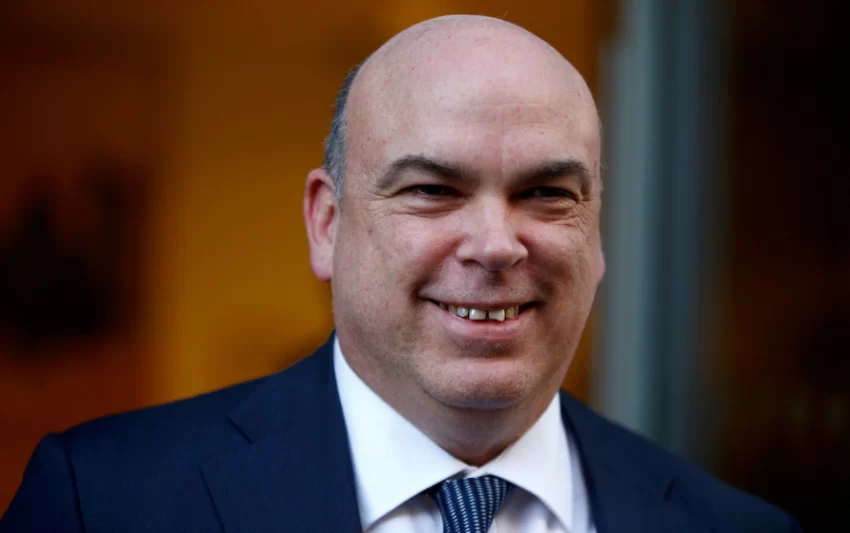


Chancellor speaks against backdrop of Middle East war
Chancellor Rachel Reeves has used her Spring Statement to insist she had the “right economic plan” for the UK despite the budget watchdog cutting its growth forecast for this year.
The Office for Budget Responsibility indicated gross domestic product will increase by 1.1% in 2026, down from the 1.4% it forecast in November. But the watchdog upgraded its forecasts for 2027 and 2028 from 1.5% to 1.6%.
Speaking in the House of Commons against a backdrop of conflict in the Middle East, Ms Reeves said: “This Government has the right economic plan for our country, a plan that is even more important in a world that in the last few days has become yet more uncertain.”
She added: “The new forecasts from the Office for Budget Responsibility confirm that our plan is the right one – inflation is down, borrowing is down, living standards are up and the economy is growing.”

The Chancellor told the Commons: “With the unfolding conflict in Iran and the Middle East, it is incumbent on me and on this Government to chart a course through that uncertainty, to secure our economy against shocks and protect families from the turbulence that we see beyond our borders.”
She added: “I want to reassure this House that I am in regular contact with the governor of the Bank of England (Andrew Bailey), with my international counterparts and with key affected industries, including our maritime sector, and tomorrow, I will meet with our North Sea industry leaders to discuss the implications that they face and work with them to manage this uncertain period.
“In an increasingly dangerous world, I am proud to be the Chancellor that is delivering the biggest uplift in defence spending since the Cold War, with £650 million committed in January to upgrade our typhoon fighter jets, a new Royal Navy frigate launched from Rosyth last week, and just yesterday, our £1 billion helicopter deal with Leonardo.
“I am in no doubt about Britain’s ability to navigate the challenges we face.
“The plan that I have been driving forward since the election is the right one – stability in our public finances, investment in our infrastructure including our Armed Forces, and reform for Britain’s economy.”
The Chancellor told MPs her Labour Government has “restored economic stability”, as she pledged to leave families “better off”.
She said: “Stability is the single most important precondition for economic growth, that is why we have committed to a single major fiscal event each year, limiting major policy changes to the budget and giving businesses and households the certainty they need.
“Today, the new forecasts from the Office for Budget Responsibility confirm that our plan is the right one: inflation is down, borrowing is down, living standards are up, and the economy is growing.
“This Government has restored economic stability. The previous government let inflation skyrocket to over 11%, stoked interest rates to 15-year highs, and delivered the first Parliament on record where people were poorer at the end than they were at the start.
“I recognise the impact that had on families. We promised change at the election, and I understand the responsibility on me to deliver that change. I know that the question people will ask themselves at the next general election is this: are me and my family better off? I am determined that the answer will be yes.”
READ MORE: Exporters pivot away from America and look to Europe and Asia as Chancellor urged to support UK growthREAD MORE: Why new £1bn Leonardo deal means Yeovil will be a global helicopter centre for years to come
The Office for Budget Responsibility has “adjusted the profile of GDP so that it grows slightly slower in 2026 and faster in 2027 and 2028”, growing by 1.1% in 2026, 1.6% in 2027 and 2028, and 1.5% in 2029 and 2030, Rachel Reeves said.
She added: “Last year, we demonstrated the resilience of Britain’s economy in the face of global headwinds, with the fastest growth of any G7 country in Europe.
“Today, the Office for Budget Responsibility has updated its growth forecasts, including reflecting lower net migration – average growth across the forecast period is largely unchanged, while the OBR has adjusted the profile of GDP so that it grows slightly slower in 2026, and faster in 2027 and 2028.
“GDP is forecast to grow by 1.1% in 2026, 1.6% in both 2027 and 2028, and 1.5% in both 2029 and 2030. And GDP per capita is set to grow more than was expected in the autumn, with growth of 5.6% over the Parliament, after falling under the Tories in the last Parliament.
“And by the next election, after accounting for inflation, people are forecast to be over £1,000 a year better off.”
Unemployment is set to peak later this year and then drop, the Chancellor said. She told the Commons: “I know that the economy is not yet working for everyone and that the deep economic scars left by the party opposite (the Conservatives) and their mates in Reform are still blighting the lives of too many people.
READ MORE: CBI Survey: Private sector set to decline but City bucks trendREAD MORE: Wetherspoons boss Tim Martin warns minimum wage is lowering living standards
“In today’s forecasts, unemployment is set to peak later this year and then fall in every year of the forecast period, ending the forecast period at 4.1%, lower than it was at the start of the Parliament, but young people in particular are still suffering from the aftermath of years of Tory mismanagement.
“In the last five years of the previous government, the number of young people not in education, employment or training (Neet) increased by 113,000, the number of inactive people reached record highs under their government, and over the last decade, apprenticeship starts by young people fell by 40%.
“This Government will not leave an entire generation of young people behind – we are already taking action with additional investment to reform apprenticeships to prioritise young people, and through the £820 million youth guarantee, providing young people with employment support and the guaranteed job.
“And in the coming weeks, I will set out more reforms to undo the Tory legacy of neglect and give young people the support and the opportunity that they deserve.”
Borrowing is set to reduce by “nearly £18 billion compared to the autumn”, with public sector net borrowing expected to fall from 4.3% this year to 3.6% next year, before hitting 1.8% in 2029-30, Rachel Reeves said.
The Chancellor said: “In their forecasts today, the Office for Budget Responsibility show that we are set to reduce borrowing by nearly £18 billion compared to the autumn.
“This year we are set to borrow less than the G7 average, something the Tories never achieved in fourteen years. The forecast today shows that Public Sector Net Borrowing is set to fall from 4.3% this year, to 3.6% next year, then 2.9%, 2.5%, and 1.8% in 2029-30.”
Meanwhile, the Chancellor said she has “confidence” the Government can outperform economic forecasts, as she warned “progress” was opposed by her rivals in the Conservatives, Reform UK, the Liberal Democrats and the Green Party.
READ MORE: British Business Bank commits £60m to NorthEdge investment fundREAD MORE: Pub landlord’s plea for support turns into UK-wide movement
She said: “In the face of global uncertainty, we beat the forecast last year. In the year ahead, the choices that we are making give me confidence that we will beat them again.
“And in the year ahead, more of the choices that we have already made will come into effect – discounts on business energy costs, trade deals with India, the US and the EU, reforms to back our entrepreneurs, investments in our infrastructure, skills funding for further education and more planning reforms.
“Progress – opposed by the Conservatives, opposed by Reform, opposed by the Liberal Democrats, and opposed by the Green Party too, because it is Labour, and only Labour, that has the right plan for our country.
“Our plan for growth is grounded in a profound rejection of the failed economic dogmas of the past, the trickle-down, trickle-out thinking that produced ever diminishing returns for working people.”
Rachel Reeves pledged to rebuild Britain’s credibility, as she told the Commons “if we stick to our plan” there could be an additional £15 billion a year “for the priorities of working people”.
The Chancellor said “headroom against the stability rule in 2029-30 has increased from £21.7 billion to £23.6 billion, with headroom against the investment rule also higher at £27.1 billion and debt is set to be lower in every year of the forecast compared to the autumn”.
She added: “I have never accepted that we have to choose between social justice and fiscal responsibility because there is nothing progressive, nothing Labour, about spending over £100 billion a year – that’s one in every £10 of public money – on servicing debt racked up by the Tories.
“After their disastrous mini-budget, our debt interest rates soared towards the highest in the G7, and since my budget, while average yields have risen for the rest of the G7, yields on UK Government debt have fallen. The Tories squandered Britain’s credibility and my plan is rebuilding it.
“Already, we are expected to spend £3 billion a year less on debt interest by the end of the Parliament than was forecast in the autumn.
“And if we stay the course and stick to our plan, and our debt interest rates return to the G7 average, we will have £15 billion a year more for the priorities of working people and to make working people better off: that is the prize on offer, that is the prize within our grasp.”