










Connect with us
DAPA Banner

Business

Expert Picks for Picture Quality, Gaming and Value

Published

on

OLED TV

As screen sizes continue to grow in popularity for home entertainment, 70-inch TVs offer an ideal balance of immersive viewing and manageable footprint for most living rooms. While exact 70-inch models remain limited—often budget-oriented—shoppers frequently turn to the closely related 75-inch and 77-inch classes, where premium technologies like OLED, QD-OLED and advanced Mini-LED dominate 2026 recommendations.

Experts from RTINGS.com, CNET, PCMag, TechRadar and Consumer Reports highlight a mix of high-end performers and value-driven options. True 70-inch sets tend to be entry-level LED models from brands like Samsung, LG and Hisense, but the best overall experiences come from stepping up to 75- or 77-inch versions for superior brightness, contrast and features.

Here are the top five recommendations for large-screen TVs in the 70-inch category for 2026, based on recent lab tests, real-world performance and current availability.

OLED TV
OLED TV

1. **Samsung S95F QD-OLED (77-inch)** — Best Overall Premium Pick

Samsung’s flagship QD-OLED series leads RTINGS.com’s rankings for 70-75-77 inch TVs in 2026. The 77-inch S95F delivers exceptional image quality with vibrant colors, near-infinite contrast and peak brightness that outperforms traditional OLEDs in bright rooms. It supports HDR10+, Dolby Vision (via updates in some regions) and boasts low input lag for gaming at up to 165Hz.

Advertisement

Reviewers praise its anti-reflective coating and wide viewing angles, making it ideal for family movie nights or sports viewing. Priced as a premium option, it excels in color volume and accuracy, earning top marks for HDR performance. Available in 77-inch (closest to 70-inch premium), it’s a standout for those prioritizing cinematic quality over exact size matching.

2. **LG G5 OLED (77-inch or 75-inch variants)** — Best for Color Accuracy and Versatility

CNET awarded the LG G5 its first Labs Award for Best Color Accuracy in 2026, calling it a “massive improvement” over predecessors. This OLED model shines with pixel-perfect blacks, excellent upscaling and support for Dolby Vision, HDR10 and HLG. It offers strong gaming features, including four HDMI 2.1 ports, 120Hz (up to 165Hz in some modes) and VRR.

Available in 77-inch for OLED purists and select 75-inch configurations, the G5 handles bright environments better than prior generations while maintaining OLED’s signature contrast. TechRadar and PCMag note its value in the high-end segment, especially for mixed-use—movies, gaming and streaming.

Advertisement

3. **TCL QM8K / QM7K Mini-LED (75-inch)** — Best Mid-Range Value

TCL’s Mini-LED lineup, particularly the 75QM8K, tops mid-range charts on RTINGS.com and appears in multiple “best 75-inch” lists. With thousands of local dimming zones, it achieves high brightness for HDR content and impressive contrast for an LCD-based TV. Google TV integration provides a smooth smart platform, plus 144Hz refresh rates for gaming.

The QM7K variant offers similar performance at a lower price point, making it a strong contender for budget-conscious buyers seeking big-screen impact. CNET and Business Insider highlight TCL’s affordability without major sacrifices in picture quality, positioning these as go-to options for sports enthusiasts and casual viewers.

4. **Hisense U8QG / U65QF Mini-LED (75-inch)** — Best Budget Bright-Room Performer

Advertisement

Hisense continues its rise with models like the 75U8QG, praised by PCMag and TechRadar for bold brightness and solid gaming credentials. Mini-LED backlighting delivers deep blacks and vivid colors, with support for Dolby Vision and high refresh rates. It’s particularly strong in well-lit rooms, where many OLEDs struggle.

The U65QF series earns “best budget” nods from PCMag for larger sizes, offering excellent value under $1,500 in some configurations. Consumer Reports includes Hisense in top-performing big-screen lists, citing great HDR and sound quality that reduces the need for external audio setups.

5. **Samsung S90F QD-OLED (77-inch)** — Best Balanced Mid-to-High End

Business Insider and CNET name the Samsung S90F as a top overall pick, blending QD-OLED excellence with relative affordability compared to flagships. It features wide color gamut, low reflection and gaming perks like 4K at 144Hz. The 77-inch version provides immersive scale with minimal compromises on contrast or motion handling.

Advertisement

Reviewers appreciate its lightweight design and easy setup, making it practical for wall mounting. It serves as a strong alternative to the S95F for those wanting premium OLED without the absolute top-tier price.

Key considerations for 2026 buyers include panel type: OLED excels in dark-room contrast and perfect blacks, while Mini-LED/QLED offers superior brightness for daytime viewing. Gaming features like HDMI 2.1, VRR and low latency matter for consoles, and smart platforms (webOS, Google TV, Tizen) affect usability.

Prices fluctuate with promotions, but 75-77 inch premiums range from $1,000-$3,000+, with budget LEDs closer to $800-$1,200. Availability favors 75-inch for LED/Mini-LED and 77-inch for OLED due to manufacturing standards.

As CES 2026 innovations like tandem OLED and RGB Mini-LED roll out, these models represent the current cream of the crop. Shoppers should check retailer deals and read hands-on reviews for the latest firmware updates enhancing performance.

Advertisement

Whether prioritizing cinema-grade blacks, blazing HDR brightness or wallet-friendly size, these five stand out in 2026’s competitive large-screen market.

Disclosure: This post contains affiliate links. We may receive a commission for purchases made through these links at no additional cost to you.

Continue Reading
Click to comment

You must be logged in to post a comment Login

Leave a Reply

Business

Form 144 ALAMO GROUP INC For: 24 March

Published

on


Form 144 ALAMO GROUP INC For: 24 March

Continue Reading

Business

ClearBridge Large Cap Growth Portfolios Q4 2025 Commentary

Published

on

ClearBridge Large Cap Growth Portfolios Q4 2025 Commentary

ClearBridge Large Cap Growth Portfolios Q4 2025 Commentary

Continue Reading

Business

CoinDCX promoters get bail in alleged cheating case

Published

on

CoinDCX promoters get bail in alleged cheating case
CoinDCX on Tuesday welcomed the court’s order granting bail to its co-founders. In a press statement issued today, the company claimed that the court observed no prima facie case had been made out against the co-founders.

Describing the case, CoinDCX said it involves a fraudulent website, ‘coindcx.pro,’ created by unknown actors to impersonate CoinDCX and deceive users.

“CoinDCX’s only official platform is coindcx.com. The fraudulent site has no direct or indirect connection to CoinDCX or its subsidiaries,” the press statement said.“The Court took into account key facts, including that CoinDCX Co-Founders were not present at the location of the alleged offence, the press release said. The investigation officer submitted to the court that some other person/s represented themselves as CoinDCX Co-Founders and cheated the complainant. The complainant also confirmed that the individuals involved were not Sumit Gupta or Neeraj Khandelwal but unidentified actors impersonating them. The investigating officer raised no objection to bail,” the statement said.This is consistent with CoinDCX’s position that the company and its leadership had no involvement in the incident and were themselves victims of a fraud perpetrated through impersonation.


The promoters of CoinDCX were arrested on Saturday by the Thane Police on allegations of criminal breach of trust, officials said.
The promoters of CoinDCX were arrested on Saturday by the Thane Police on allegations of criminal breach of trust, officials said.According to the police, co-founders Sumit Gupta and Neeraj Khandelwal were apprehended from Bengaluru and produced before a holiday court in Thane. The court had remanded the duo to police custody until Monday.

The Thane police registered an FIR against six individuals, including Gupta and Khandelwal, for allegedly cheating a complainant of Rs 71.6 lakh under the pretext of cryptocurrency investment and franchise opportunities linked to CoinDCX. The complainant, an insurance advisor, alleged that he was lured between August 2025 and February 2026 with promises of high returns and regulatory approvals. The accused reportedly collected funds through cash and bank transfers but failed to deliver the promised franchise or returns and later became untraceable. Police have invoked provisions of the Bharatiya Nyaya Sanhita (BNS) and initiated an investigation.

Advertisement

Read more: CoinDCX promoters arrested by Thane police on criminal breach of trust charges

The company has also invited industry attention on this incident, highlighting how impersonation and phishing scams are an increasing threat across digital financial platforms.

“Malicious actors are more frequently exploiting the trustworthiness of well-known brands by copying identities, platforms, and leadership figures to deceive users. CoinDCX strongly condemns such illegal activities. Responsibility lies with those who plan and carry out these scams, not with institutions whose identities are unlawfully exploited,” the statement said.

CoinDCX said the company continues to operate normally without any disruption. Trading, deposits, withdrawals, and all user services remain fully operational, the statement said.

Advertisement

(Disclaimer: The recommendations, suggestions, views, and opinions given by the experts are their own. These do not represent the views of The Economic Times.)


Continue Reading

Business

Salesforce everywoman in Technology Awards 2026 winners announced

Published

on

Salesforce everywoman in Technology Awards 2026 winners announced

Exceptional women from across the UK technology sector have been honoured at the annual Salesforce everywoman in Technology Awards, recognising innovation, leadership and impact at every stage of the career ladder.

Held at the Westminster Park Plaza Hotel in London, the awards mark the 16th year of the programme, which aims to spotlight female talent in a sector where representation remains a persistent challenge. Women currently account for just 24.8% of the STEM workforce, down from 29.4% in 2020, underlining the need for continued efforts to attract and retain female talent.

Organisers said this year’s winners reflect the breadth of the industry, from apprentices and early-career professionals to senior executives and entrepreneurs driving global change.

Nicole Goodwin and Sophie Catto, joint managing directors of AllBright everywoman, said the awards highlight not only individual achievement but the wider social impact of women in technology.

“Remarkable women across the technology sector are developing innovations that have the power to transform how we live and work,” they said. “By amplifying their stories, we create visible role models who can inspire the next generation to pursue careers in STEM.”

Advertisement

The prestigious Woman of the Year award was presented to Aji Bawo, Head of Commercial Product at Tesco. Bawo was recognised for her leadership in driving large-scale digital transformation in retail, alongside her work supporting girls’ education and empowering future female leaders globally.

Her work has focused on improving efficiency, scalability and customer experience through technology, while also championing diversity and mentoring emerging talent within and beyond her organisation.

Among the category winners, Nausheen Basha of Imperial College London took the AI Champion award for her work combining AI, simulation and engineering design to accelerate scientific discovery, including applications in renewable energy and vaccine manufacturing.

Rebecca Phelps of BAE Systems was recognised in cybersecurity for her work on secure systems and collaboration with national security bodies, while Nicola Emsley of Barclays was named CTO/CIO of the Year for her leadership in digital transformation and generative AI adoption.

Advertisement

In the entrepreneurship category, Fiona Roach Canning, co-founder and CEO of fintech platform Pollinate, was honoured for scaling a global business that supports banks in serving SMEs through data-driven insights.

Other winners included professionals working in digital transformation, software engineering, climate technology and education, alongside individuals recognised for their contributions to mentoring, inclusion and community engagement.

The awards also place a strong emphasis on early talent. Apprentice winner Kelly Howes was recognised for her transition into software engineering and advocacy for neurodiversity, while Nina Kumar received the One to Watch award for inspiring young women to pursue STEM subjects.

Zahra Bahrololoumi, CEO of Salesforce UK & Ireland, said the need for greater diversity in technology is becoming increasingly urgent as AI takes on a more central role in decision-making.

Advertisement

“As AI increasingly powers high-stakes decisions, it is essential that more women enter and advance in the technology industry to prevent perpetuating societal biases,” she said. “We cannot be what we cannot see.”

The awards come at a time when the technology sector is grappling with both rapid innovation and ongoing diversity challenges. While progress has been made in some areas, declining participation rates highlight the risk of widening gaps if action is not sustained.

By recognising role models across the industry, the Salesforce everywoman awards aim to shift perceptions, broaden access and ensure that the future of technology reflects a wider range of voices and experiences.

As the sector continues to evolve, particularly with the rise of AI, initiatives that promote inclusion and visibility are likely to play a critical role in shaping not only who works in technology, but how it is built and applied.

Advertisement

Amy Ingham

Amy is a newly qualified journalist specialising in business journalism at Business Matters with responsibility for news content for what is now the UK’s largest print and online source of current business news.

Advertisement
Continue Reading

Business

Adani Green block deal: BNP Paribas buys 6.9 lakh shares worth Rs 56 crore

Published

on

Adani Green block deal: BNP Paribas buys 6.9 lakh shares worth Rs 56 crore
Adani Green Energy witnessed a couple of block deals on Tuesday in which French multinational bank BNP Paribas was the buyer while Morgan Stanley was the seller.

BNP bought 6.9 lakh shares in the company through its affiliate BNP Paribas Financial Markets in a deal valued at Rs 56 crore. The shares were purchased at a price of Rs 808.3 apiece, a 1% discount from Monday’s closing price of Rs 816.45.

Morgan Stanley sold as many shares via its investment arm Morgan Stanley Asia (Singapore) Pte.

Adani Green Energy shares ended at Rs 839 on the NSE today, up by Rs 22.55 or 2.76%.

Advertisement

Adani Green Energy shares have underperformed the broader markets, declining 12% over a one-year period. In contrast Nifty and the BSE Sensex have declined by 2% and 4%, respectively.


The stock has slipped below its 50-day and 200-day simple moving averages (SMA) of Rs 908 and Rs 987, respectively, according to Trendlyne data.
Adani Green reported a net loss of Rs 41 crore in the December quarter, compared with a profit of Rs 492 crore in the year-ago period and Rs 583 crore in the September quarter. The loss/profit is attributable to the company’s shareholders. Total income during the reporting period rose 8% year-over-year (YoY) to Rs 2,837 crore.Revenue from power supply increased 21% YoY to Rs 2,420 crore in the October–December 2025 period, while EBITDA for the segment rose 23% YoY to Rs 2,269 crore.

Strong revenue and EBITDA growth in the power supply business was driven by greenfield capacity addition of 5.6 GW, deployment of advanced renewable energy technologies, strong plant performance and the commissioning of new capacities at resource-rich sites in Khavda, Gujarat, and Rajasthan.

“In 2026, Adani Green has continued its growth trajectory, adding 5.6 GW of renewable energy capacity, representing nearly 14% of all new solar and wind capacity installed across India,” said Ashish Khanna, CEO of Adani Green.

The company’s operational capacity reached 17.2 GW, keeping it on track to achieve its 50 GW target. The Khavda project, which is the world’s largest renewable energy installation, is progressing at an accelerated pace, the company said.

Advertisement

Also read: Brand Concepts bulk deal: Ashish Kacholia exits microcap as stock price erodes 36% in a year

(Disclaimer: The recommendations, suggestions, views, and opinions given by the experts are their own. These do not represent the views of The Economic Times.)

Continue Reading

Business

What employers need to know

Published

on

What employers need to know

In a recent Acas survey, employers and employees were asked which three changes in the Employment Rights Act 2025 would have the biggest impact in their workplace.

Surprisingly, the new rights on Statutory Sick Pay (SSP) topped the list for both groups, named by 43% of employers and 36% of employees. The reduction in the unfair dismissal qualifying period from two years to six months was the second most significant change (31% of employers and 30% of employees). Employers ranked the new paternity leave day-one rights as the third-largest reform, whereas employees said it was easier access to flexible working arrangements.

The SSP reforms take effect from 6 April 2026, aiming to improve financial security, particularly for part-time employees and those in low-paid jobs. While more employees will qualify for SSP, employers will face increased costs and compliance requirements, particularly for small and medium-sized enterprises.

Before looking at the reforms and what employers can do to prepare for them, let’s consider the current arrangements.

What is the current SSP framework?

An employee must be an “eligible employee” and earn at least the Lower Earnings Limit (LEL), which is currently £125 per week. Even if employees are eligible, SSP is payable only from the fourth consecutive day of sickness, as the first three days are unpaid waiting days.

Advertisement

It is estimated that around 1.3 million employees receive no SSP at all, and many lose pay for only short periods when unwell. Some face the choice of working while ill or losing income. This can spread illness in the workplace and reduce productivity.

What is changing from 6 April 2026?

Approximately 25% of employees only receive SSP (rather than contractual sick pay), and the SSP changes below will have a significant impact.

  • Removal of the Lower Earnings Limit, and employees will no longer need to meet the LEL to qualify for SSP.
  • A new earnings‑linked calculation and SSP will be paid at 80% of normal weekly earnings (NWE) unless the SSP flat rate is lower.
  • SSP will be payable from day one of sickness absence, as the Employment Rights Act 2025 abolishes the three unpaid waiting days.
  • SSP will increase from £118.75 to £123.25 a week on 6 April 2026.

It is important to mention atypical workers, such as zero-hours and agency workers, as well as seasonal and irregular-hours staff. Establishing NWE is not always straightforward because of their fluctuating pay and variable working patterns. Employers can determine NWE, for example, by averaging pay over the previous 8-12 weeks or by following the relevant contractual arrangements to ensure SSP reflects actual earning patterns.

What do the SSP changes mean for employers?

The scope of SSP entitlements is significantly widened. As well as administrative adjustments to update policies and payroll processes, the reforms carry a cost implication for organisations of all sizes.

The Government estimates that removing waiting days and abolishing the LEL, combined with introducing the 80% earnings‑linked calculation, will increase employer SSP costs by around £450 million a year. Although a significant sum, it equates to roughly £15 more per employee according to the Government’s impact assessment. Crucially, earlier access to SSP may boost productivity by allowing employees to stay home when unwell without feeling compelled to attend work.

Advertisement

Employer concerns about increased sickness absence could be mitigated through strengthened sickness management. This includes conducting return‑to‑work interviews promptly, even after short periods of illness, which can help to identify underlying issues early and reduce avoidable absences. It can also include structured return-to-work planning, phased returns, and temporary adjustments.

How can employers prepare for the changes?

  • Update payroll systems for earnings‑linked SSP and day‑one entitlement.
  • Review and update sickness absence policies, contracts and employee handbooks and communicate these changes to employees.
  • Budget for increased SSP.
  • Identify roles or departments most affected by the wider eligibility rules.
  • Train managers and HR on the new regime.
  • Strengthen sickness absence management processes.
  • Establish the number of atypical workers and how their normal weekly earnings are calculated.

Conclusion

The April 2026 SSP reforms represent a major shift in the UK’s approach to sick pay, expanding access and enhancing financial protection for employees. While these changes introduce additional costs and compliance requirements for employers, early preparation will support a compliant and well‑managed transition.

By reviewing systems and policies now, organisations can ensure they are ready for the new SSP regime and are equipped to support staff and manage sickness absence effectively.


Hannah Waterworth

Hannah Waterworth

Hannah Waterworth is an employment solicitor in Blake Morgan’s Employment, Pensions, Benefits and Immigration team.

Advertisement

Continue Reading

Business

United Airlines ditches more economy seats for bigger premium cabins

Published

on

United Airlines ditches more economy seats for bigger premium cabins

United Airlines aircraft at Denver International Airport, Aug. 4, 2023.

Antonio Perez | Chicago Tribune | Tribune News Service | Getty Images

LOS ANGELES — United Airlines‘ formula for higher profits: fewer but better seats.

Advertisement

The country’s second-most profitable carrier after Delta Air Lines on Tuesday unveiled new cabin designs, including on some of its smallest planes, that feature more premium seating options and fewer in standard coach.

The differences in airfare for those seats can be vast. For example, a flight between United’s hub at Newark Liberty International Airport in New Jersey and San Francisco in the first week of May is going for $423 in standard coach and $5,556 in the carrier’s top-tier Polaris class on a Boeing 757.

Even with the spike in fuel prices, United’s executives have said in recent weeks that demand remains strong, noting that premium-travel demand has outshined the main cabin.

“The main cabin is also improving, and we’ve seen very strong demand across the board for United in Q1, but premium did lead the way yet again in the quarter, and continues to do so,” Andrew Nocella, United’s chief commercial officer, told reporters last week.

Advertisement

United plans to introduce a subfleet of narrow-body Airbus A321neo jets dubbed the “Coastliner” for transcontinental flights that will have 20 Polaris seats, which can recline into beds. Each Polaris seat will have aisle access.

Those jets will also have 12 premium economy seats and 36 extra-legroom seats on board, with the rest regular economy. United said it removed three seats from the plane’s standard configuration to install a snack bar at the back of the plane.

Current layouts of the plane don’t have premium economy, but they do have 57 extra-legroom seats and 123 seats in standard economy, along with 20 that are first-class recliners, not the lie-flat Polaris seats.

United said the first Coastliners will begin flying this summer and it will have 40 of them by the start of 2028.

Advertisement

The airline also announced its configuration for its longer-range Airbus A321XLR aircraft, which will replace some older Boeing 757s. That layout also includes the 20 Polaris suites, 12 premium economy seats and 34 in extra-legroom. The plane will debut this summer, and United said it could operate on some of its existing routes to Spain, France, Portugal and Brazil.

Read more about airlines’ race to win over big spenders

United will also add a seven-seat first-class cabin to its Bombardier CRJ-200 jets for a total of 41 seats on board, compared with the current 51-seat layout, which has only one cabin.

The changes are part of an ongoing trend for airlines, which are dedicating more of the scarce real estate on planes to premium seats, as the growth from those higher-end options outpaces sales from regular economy.

Last year, United unveiled an upgraded Polaris suite for long-haul flights on its Boeing 787 Dreamliners that includes the “Polaris Studio,” which is larger than previous models and has 27-inch 4K screens as well as an ottoman for guests.

Advertisement

United’s chief rival, Delta, has said it expects premium revenue to overtake main cabin sales this year. That carrier said last month that starting in May, the first of seven of its new Airbus A321neo jets will have 44 seats in first class, more than double the 20 it usually has.

The demand has been so high for plush new suites and other premium seats that the supply chain can’t keep up. The bottlenecks have even delayed delivery of aircraft, CNBC has reported.

Why airlines demand for first-class seats delayed Boeing and Airbus production

Delta said the big first-class cabin on the A321neo is a medium-term measure, “intended to be in service for a limited time as Delta awaits delivery of flatbed suites that will ultimately be installed on these aircraft.” 

Meanwhile, United has been eyeing lie-flat seats for some of its newer narrow-body jets for years.

CEO Scott Kirby told reporters in August 2018 that the carrier was planning to offer lie-flat seats on new Boeing 737 Max 10 aircraft, though that plane still hasn’t been certified and is years behind schedule.

Advertisement

Other airlines are also adding higher-end seats.

JetBlue Airways, which was a pioneer in offering lie-flat seats and suites on its narrow-body Airbus fleet, plans to offer a less elaborate domestic first-class cabin later this year. Southwest Airlines recently debuted extra-legroom seats on its fleet of Boeing 737s, ending its decades of standard seating throughout its cabin.

Budget carriers Spirit Airlines and Frontier Airlines are also planning to add roomier seats.

Choose CNBC as your preferred source on Google and never miss a moment from the most trusted name in business news.
Advertisement
Continue Reading

Business

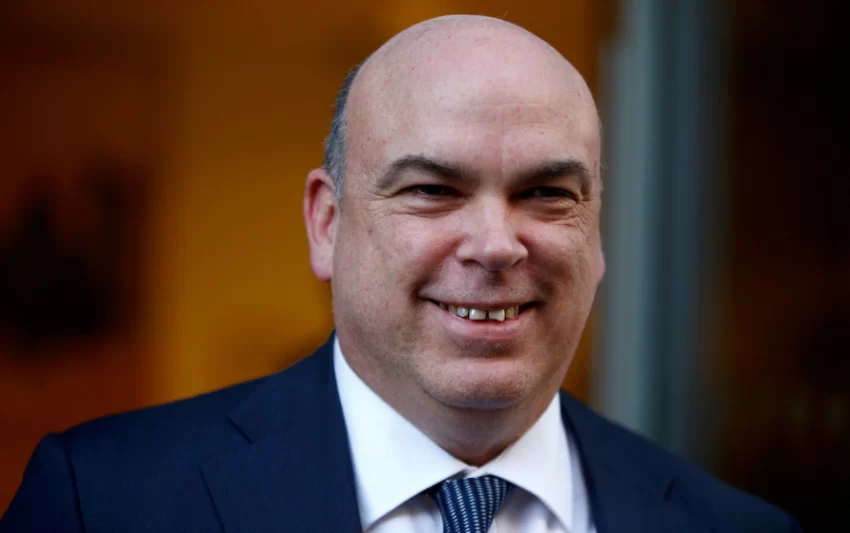
Mike Lynch estate faces $1.24bn payout to HPE after High Court ruling

Published

on

Mike Lynch, the British tech entrepreneur recently acquitted in a high-stakes £8bn fraud case, is missing after his yacht sank off the coast of Sicily.

The estate of late tech entrepreneur Mike Lynch is facing the prospect of being effectively wiped out after the High Court ordered it to pay $1.24 billion in damages and interest to Hewlett Packard Enterprise (HPE).

The ruling marks the latest development in one of the UK’s most high-profile corporate fraud cases, stemming from HPE’s $11.7 billion acquisition of Autonomy in 2011.

The court had already awarded HPE approximately £700 million in damages last year. However, the addition of interest, calculated at around $236 million, has pushed the total liability to $1.24 billion.

Mr Justice Hildyard confirmed the additional sum and rejected an application by Lynch’s estate for permission to appeal, although a further appeal could still be sought through the Court of Appeal.

The case dates back more than a decade, with HPE first alleging fraud in 2012. The company argued that Autonomy’s financial position had been misrepresented ahead of the acquisition, a claim upheld by the High Court in 2022.

Advertisement

The judge found that Lynch and his former chief financial officer Sushovan Hussain had misled HPE, although he also concluded that the US firm would likely have proceeded with the deal regardless due to Autonomy’s perceived strategic value.

Hussain, who was convicted in the US and served a prison sentence, reached a separate £77 million settlement with HPE last year.

The scale of the damages raises serious questions about the viability of Lynch’s estate, which is estimated to be worth around £500 million, significantly less than the amount awarded.

However, the ultimate impact may depend on the structure of family assets. Many holdings, including property and investments, are reportedly in the name of his widow, Angela Bacares. These include Loudham Hall in Suffolk and shares in cybersecurity firm Darktrace, which were sold for more than $300 million in 2024.

Advertisement

Legal experts suggest that HPE may seek to pursue those assets if it can demonstrate they were effectively controlled by Lynch, potentially extending the scope of recovery.

The ruling comes in the wake of Lynch’s death in August 2024, when he drowned alongside his daughter and others after a yacht accident off the coast of Sicily. The incident occurred shortly after his acquittal in a US criminal trial related to the same case.

Despite the scale of the damages award, the judge was critical of aspects of HPE’s approach, describing the company’s claimed losses as “exaggerated” and the litigation process as unnecessarily prolonged.

HPE welcomed the decision, stating it brings the company “another step closer to resolution” of the dispute.

Advertisement

For the Lynch estate, however, the focus now shifts to whether an appeal can be mounted, and how much of the remaining assets can be protected.

The case stands as a landmark in UK corporate litigation, not only for the scale of the damages but also for its long-running nature and the complex intersection of civil and criminal proceedings across multiple jurisdictions.


Jamie Young

Jamie Young

Jamie is Senior Reporter at Business Matters, bringing over a decade of experience in UK SME business reporting.
Jamie holds a degree in Business Administration and regularly participates in industry conferences and workshops.

When not reporting on the latest business developments, Jamie is passionate about mentoring up-and-coming journalists and entrepreneurs to inspire the next generation of business leaders.

Advertisement

Continue Reading

Business

Bellway produces more homes but warns of uncertainty over Iran conflict

Published

on

Business Live

The developer said demand had been stunted amid uncertainty in the lead up to November’s Budget

Bellway’s previous development in Lydney, Archer’s Walk. The housebuilder has been granted consent to build 200 homes at Forest Walk, to the east of the A48

A Bellway development in Gloucestershire.(Image: Bellway)

Housebuilder Bellway says it has grown half-year operating profits and the number of houses it has completed.

In an update to shareholders, it said total housing completions had grown 2.7% to 4,702 homes, up from 4,577 in the same period last year. Meanwhile underlying operating profit, before exceptional items and £10.7m legacy building safety issues costs, grew 1.5% to £159m.

Advertisement

Demand for Bellway’s homes was said to have been impacted by pre-Budget uncertainty in the run up to the Chancellor’s speech in late November. Chief executive Jason Honeyman said the firm had not experienced its typical pick-up in reservations during the autumn, but there had been increases in January.

The Newcastle-based firm, which is celebrating its 80th anniversary this year, said trading over the last six weeks had seen its private reservation rate per outlet per week, including bulk sales, fall slightly to 0.70 from 0.76. However, volume output in 2026 is expected to be ahead of previous expectations – at between 9,300 to 9,500 homes.

Average selling price is now expected to be about £325,000 – an increase owing, bosses said, to a change in the type of houses and expected conversions of completions from the firm’s bulk sales. Speaking to BusinessLive, Bellway’s chief commercial officer Simon Scougall said the firm was on track to deliver growth housing volume and profits this year.

Mr Scougall said the firm had not seen any marked deterioration in the market since the outbreak of war in Iran, with footfall to sites good and cancellation rates “steady”. He said: “It’s so far so good, but obviously it’s not lost upon us what’s happening out there and the troubles in the Middle East may have an impact in the next few months.

Advertisement

“It’s difficult to call that because you’ve got customers who’ve been coming out who will have made up their minds to buy a house from us about two months ago and have the benefit of a mortgage offer – and a pretty good mortgage offer further to that.

“So, we’re looking at recent history to a degree and we’re still in a comfortable position for year end, and we’re pretty well sold for year end. So we’ll see what the next few weeks bring – we’ll know more in April – and next weekend is probably when we’re going to see any impact, if at all.”

Jason Honeyman, chief executive, said: “Bellway has delivered a robust first half performance in a challenging market. While our industry continues to face several headwinds, we have seen an improvement in customer demand and reservations since the start of the new calendar year.

“At this stage, the situation in the Middle East has not had a material impact on trading and, supported by our forward order book, we are on track to deliver FY26 underlying operating profit within the range of £320m-£330m.

Advertisement

“The ongoing conflict in the Middle East heightens the risk of both inflationary cost pressures and an impact to customer demand, and we have already seen volatility return to the mortgage market. Notwithstanding this, I am confident that our self-help and drive for capital efficiency will help mitigate the impact on our strategy to increase cash generation and shareholder returns.

“Bellway has a strong balance sheet and land bank, and under stable market conditions, the Group is well-positioned to continue delivering volume growth and much needed high-quality new homes in the years ahead.”

Continue Reading

Business

Luxury Cornwall hotel visited by Queen Victoria and the Beatles sold off

Published

on

Business Live

The four-star property has been under the same family ownership for the last 40 years

The Atlantic Hotel, Cornwall

The Atlantic Hotel, Cornwall(Image: Christie & Co)

An historic Cornwall hotel whose visitors have included Queen Victoria and the Beatles has been sold off for an undisclosed sum. The Atlantic, in Newquay, was established in 1892 and commands a dramatic clifftop position with panoramic views of the ocean and Cornish coastline.

The four‑star venue, which has been owned by the Cobley family for the last 40 years, was acquired by the Cornwall Hotel Collection. The group already owns three hotels in the Duchy: The Greenbank, The Alverton, and The Falmouth, the most recent of which was acquired in 2024.

Advertisement

Ben Young, managing director of Cornwall Hotel Collection, said: “We are delighted to bring The Atlantic Hotel, Newquay, into our family of Cornish hotels. This landmark property perfectly complements the Cornwall Hotel Collection, strengthening our commitment to exceptional Cornish hospitality, heritage, and guest experience across our portfolio spanning Cornwall.

“We’d like to thank the previous owners for their stewardship over the past 40 years and we look forward to preserving and maintaining their legacy.”

The Atlantic is set in some eight acres of landscaped grounds and private headland. The hotel comprises 57 ensuite bedrooms and suites, two apartments, a large three-bedroom owner’s apartment, and dining, events and entertainment facilities, accommodating 1,200 guests. The property also has leisure and spa facilities including two pools.

The Atlantic Hotel’s former owner, Lorraine Stones, said: “After many successful years of trading, our family are so pleased to be able to pass on our iconic hotel to the Cornwall Hotel Collection in the knowledge its legacy will be safe in their hands. We wish them all the very best for the future.”

Advertisement

Stephen Champion, director at property firm Christie & Co, which managed the sale process, added: “We are delighted to confirm the sale of The Atlantic Hotel, one of Cornwall’s most iconic hotels.

“The hotel generated significant buyer interest when it launched to the market, attracting competitive bidding from multiple parties. We are proud to have acted in this landmark transaction and look forward to seeing the next chapter of The Atlantic Hotel under the Cornwall Hotel Collection’s ownership.”

Continue Reading

Trending

Copyright © 2025