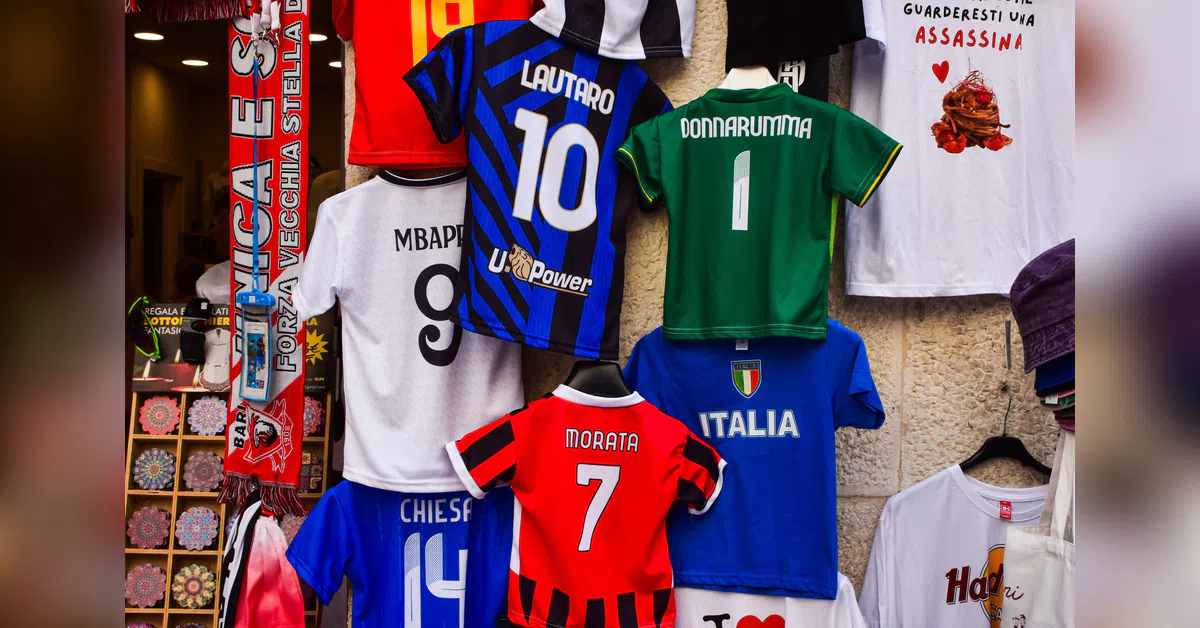
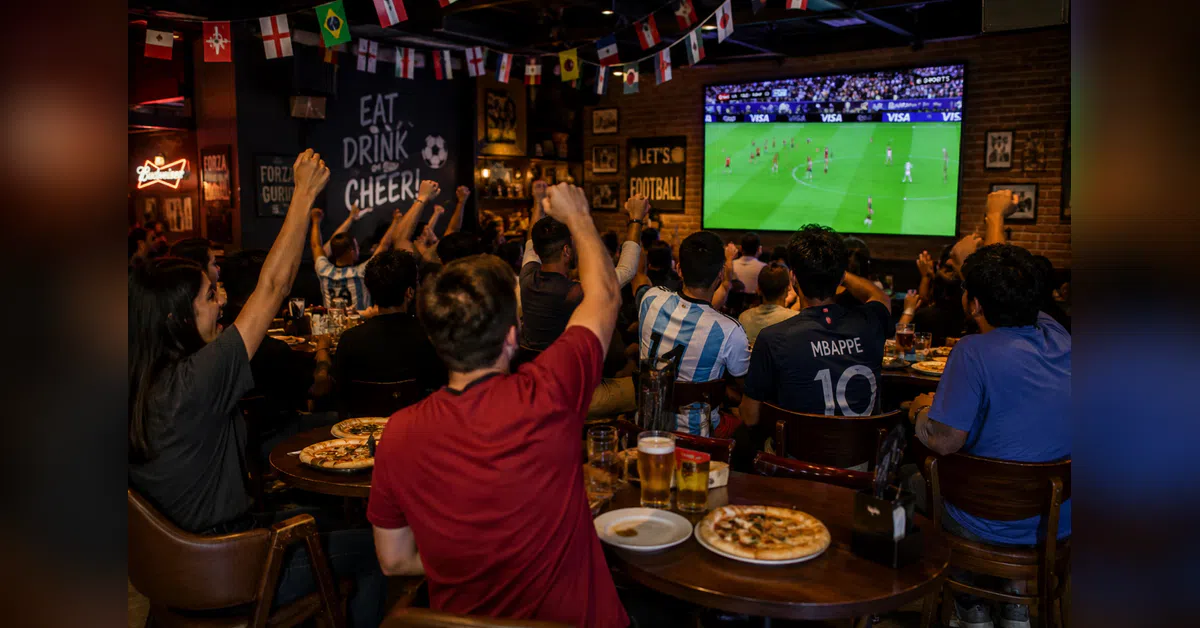
Since the start of the FIFA World Cup, shops in Delhi’s Lajpat Nagar market have been flooded with jerseys of teams from around the world. Most are not official merchandise but close copies that look similar to the originals, even if they do not feel the same.
While an original jersey can set you back by nearly ₹8,000-₹9,000 apiece, copies sold in Lajpat Nagar – long known for its bargain prices – cost between ₹600 and ₹1,100, depending on the fabric quality.
This price gap also captures a broader shift in India’s sports merchandise market. Jerseys are no longer bought only as match-day apparel. Instead, they have evolved into a fashion product, opening up an opportunity that brands in India and abroad are looking to tap as football apparel becomes part of daily wardrobes. Oversized jerseys, retro designs and football-inspired T-shirts are now being paired with trousers and sneakers as streetwear, a trend that has long been popular overseas and is increasingly finding resonance in India.
Given that the price difference between official jerseys and unlicensed copies remains one of the industry’s biggest structural challenges, it is this gap that the new products hope to fill.
Industry participants say that, over the past five years, sports merchandise has moved from being an event-driven purchase to a year-round lifestyle category. At the same time, brands are betting that consumers will gradually place greater value on authenticity, quality and design.
“Young consumers don’t just watch sport anymore; they build communities around it on social media, and merchandise has become an extension of that identity. India is still early compared to mature global markets, but the trajectory is strong, and interest beyond cricket has grown sharply in just the last three years,” said Dhruv Sayani, founder and managing director at Ccigmaa Lifestyle & KT, a personal care, FMCG and grooming brand focused around sports culture, athlete partnerships, and performance-driven consumer behaviour.
According to 6Wresearch, the India licensed sports merchandise market was estimated at $361 million in 2025 and is projected to reach $517 million by 2032, growing at a compound annual growth rate (CAGR) of 5.3 per cent between 2026 and 2032.
India’s large consumer base offers room for growth, but despite the projected increase in demand for licensed sports merchandise, many buyers may still be unwilling to spend a significant share of their income on official merchandise. Instead, they may turn to cheaper copies available at a fraction of the price.
That gap has also created space for a fast-growing middle segment of football-inspired apparel. Between low-cost counterfeit jerseys priced at ₹400-₹1,000 and official jerseys costing ₹7,000-₹9,000, brands are trying to build a category of design-led casual merchandise that lets fans express their support without paying premium prices.
These products are not the same as the performance jerseys worn by players on the field. Instead, they are designed as casual fashion products that allow fans to express support for a team, club, city or player. The fabric and styling are intended less for sport and more for everyday wear.
ShopFootball is one such brand. Rather than making performance jerseys, it focuses on football-inspired casualwear that fans can wear off the pitch.
“As a football fan, when you look out to buy something that is probably related to the favourite club that you support or the favourite country that you support, you have very limited options,” said founder Maaz Ahmad Siddique, who points out that ShopFootball – a bootstrapped firm – has been doubling its revenue annually, reflecting a change in consumer behaviour.
“In India, the average income is very low. You are not expected to wear a really expensive jersey,” he added.
According to him, demand in both cricket and football is still heavily driven by established stars.
“In cricket it is Rohit Sharma and Virat Kohli; and for football, it has always been Lionel Messi and Christiano Ronaldo,” he said. “We casually joke around in the office as well that if it wasn’t for Messi and Ronaldo, we wouldn’t have a business.”
Siddique said newer stars such as Erling Haaland and Kylian Mbappé generate short-term spikes in demand, but legacy players continue to drive sustained merchandise sales.
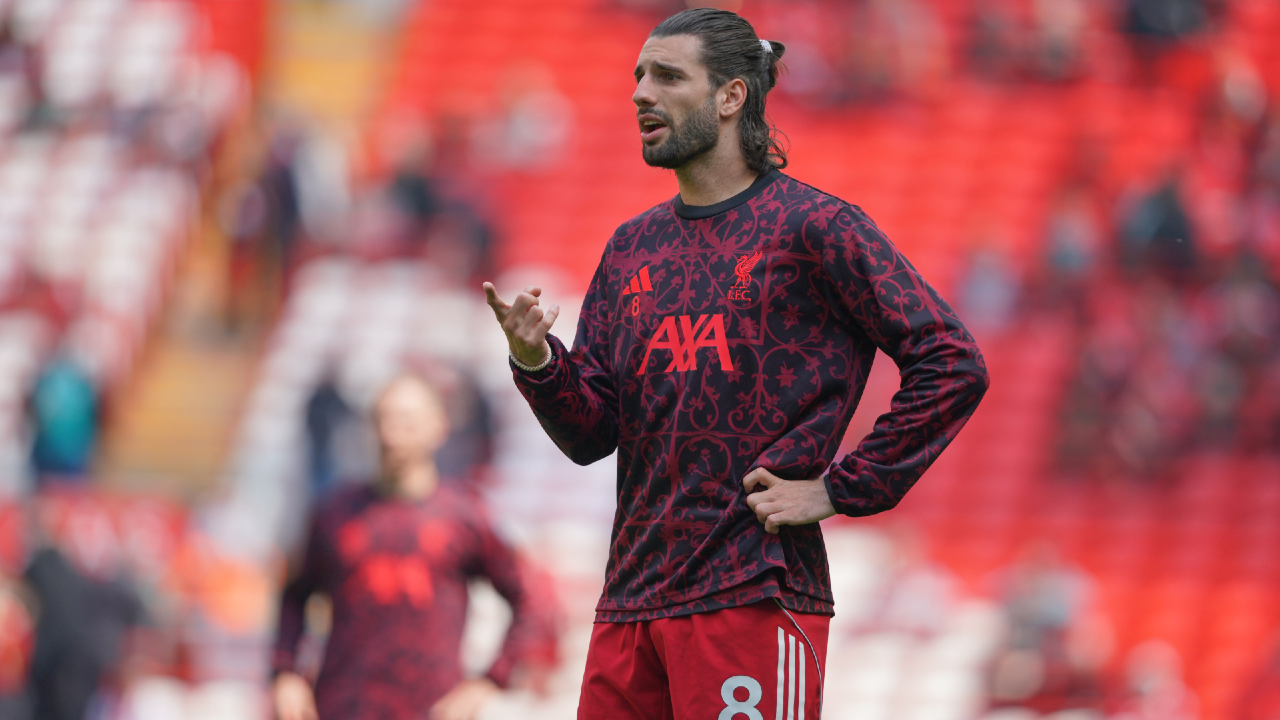
Demand also remains closely linked to the sporting calendar. Cricket merchandise sees a sharp rise during the Indian Premier League and major international tournaments. In football, buying intent is strongest between May and August when major teams like Arsenal, Liverpool, and Chelsea release new kits – including jerseys – and fans prepare for the start of a new, year-long season of club football.
“(The) Peak is June. And for the past three years, the peak has always been June,” Siddique said, adding that industry revenues typically decline by around 20-25 per cent during slower periods once the initial football buying season is over.
The company also experimented with cricket merchandise during the IPL. Its Bengaluru-themed T-shirt sold around 2,500 pieces in two months, leaving the company struggling to keep up with demand because it manufactures in batches of only 200-300 pieces to avoid locking up working capital.
However, growing demand has also created challenges for smaller brands, particularly around copying and design protection.
“Recently we did, we had a legal battle with one of these folks because they were actually blatantly copying it. That’s too stressful for us, and we are a team of around seven people. For a small brand, it becomes a task. With each design, you add more money to it. And you don’t even know if this will be like a… It will pay back or not,” Siddiqui said.
He said design registration itself costs roughly ₹4,000-₹5,000 for every design, making intellectual property protection expensive for small businesses.
For small companies, pursuing every alleged copy can be costly and time-consuming. Siddique described enforcement against counterfeit sellers as a “never-ending loop”, with one seller or website often replaced by another.
“The encouraging sign is that awareness is growing, and more consumers are choosing to pay a premium for something genuine because they’ve started connecting authenticity with quality,” Sayani said.
Industry participants believe sports merchandise in India is gradually evolving from niche fan gear into an everyday fashion category, with the biggest opportunities lying in products that combine affordability, distinctive design and authentic fan culture rather than relying solely on tournament-driven demand.











































You must be logged in to post a comment Login