Sports
SEC commissioner Greg Sankey sides with NCAA in Charles Bediako eligibility case

Alabama center Charles Bediako is scheduled for a court hearing on Friday wherein a judge will determine whether the NCAA may enforce its eligibility rules against him. Ahead of what could be a groundbreaking determination in Circuit Court, SEC commissioner Greg Sankey signed an affidavit asking judge Daniel Pruet to deny Bediako additional eligibility.
It is a significant move from Sankey, one of the most powerful voices in college athletics, as he seeks legal help in preventing one of his conference members from rostering a former professional player.
“I respectfully ask the Court to uphold the NCAA eligibility rules challenged in this case,” Sankey said in the affidavit obtained by CBS Sports’ Matt Norlander, “which are essential to the integrity of college sports, to the educational mission they serve, and to the opportunities they provide for current and future student-athletes.”
Charles Bediako returns to Alabama: Judge who is Crimson Tide booster recused from case
David Cobb
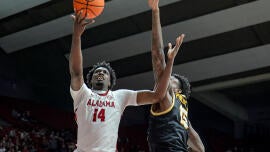

Bediako, 23, went undrafted two years ago after starting on an Alabama team that earned a No. 1 seed in the 2023 NCAA Tournament. He had two years of eligibility remaining but declared for the 2023 NBA Draft. After signing a professional contract — including a two-way deal with the San Antonio Spurs — and appearing in multiple G League games, he is back with the Crimson Tide as a result of a temporary restraining order against the NCAA’s eligibility rules. The 7-footer has appeared in four games and made two starts for Alabama over the last two weeks, averaging 9.6 points and 5.0 rebounds per contest.
The temporary restraining order expires on Feb. 18, but if Bediako is granted a preliminary injunction at Friday’s hearing, he could continue to play for the Crimson Tide deeper into the regular season and perhaps into the NCAA Tournament.
Bediako’s return to college basketball rubbed many across college basketball the wrong way, including Florida coach Todd Golden, who has been among the most vocal opponents of the eligibility ruling.
Sankey argued in the affidavit that permitting former professional athletes to return to college competition creates a “competitive disadvantage and fundamental unfairness” for athletes who remain within their eligibility windows. He said it is also unfair to the programs that continue to operate within the NCAA’s framework and have not added former pros to their rosters.
Sankey noted the impact that Bediako’s return — and the extension of eligibility clocks for other athletes — has on high schoolers who seek college athletics opportunities. Since roster spots are zero-sum, for every former professional player who returns to school and for every current athlete who is granted an additional year, a high school athlete loses a chance to play in college.
That the SEC commissioner is on the record standing against eligibility extensions is especially notable because two of his conference’s most prominent quarterbacks from the 2025 college football season are also in search of an additional year. Ole Miss’ Trinidad Chambliss and Tennessee’s Joey Aguilar both filed lawsuits against the NCAA seeking injunctions that would allow them to play in 2026 despite having already completed four years of competition.
You must be logged in to post a comment Login