Usually, the World Cup is an event hosted by a single nation, but this has not always been the case. The 2002 World Cup broke new ground when Japan and South Korea, two nations that have not always had an easy relationship, teamed up to host the tournament.
The 2026 World Cup goes one further, with three countries — the United States, Canada and Mexico — all hosting. While these countries have usually enjoyed good relations, US ties with Canada and Mexico have become strained since the start of President Donald Trump‘s second term in office.
2. More teams, more games
Love it or hate it, the move to expand the World Cup from the previous 32 to 48 teams was a bold move by FIFA President Gianni Infantino. More teams mean many more games, a total of 104 compared to 64 at the 2022 World Cup in Qatar.
This also means there will be 12 groups of four teams, compared to eight four years ago. An extra knockout round — the Round of 32 — has also been introduced to help whittle down the number of teams on the way to the final in New Jersey on July 19. That will be played on the 39th day of the tournament, 10 more than it took to complete the 2022 World Cup.
Advertisement
It hasn’t always been smiles between Donald Trump (second from left), Mexico’s Claudia Sheinbaum (second from right) and Mark Carney of Canada (right)Image: Amber Searls/Imagn Images/IMAGO
3. New participants
While critics will argue that increasing the number of teams could lower the overall quality of play, it has helped some countries qualify for a first-ever World Cup. Cape Verde, Curacao, Jordan and Uzbekistan will be making their debuts on football‘s biggest stage. Of these, Curacao are the biggest underdogs, coming from a country with a population of under 160,000 and ranked number 82 in the world.
Several other first-timers have the chance to join via the qualifying playoffs in March — including North Macedonia, Albania, Kosovo and even New Caledonia.
4. More travel
This is not the first time a World Cup will be held over a large geographical area, but the distances that teams and fans will have to cover in 2026 will be a shock to the system after Qatar, which is smaller than Connecticut — the third-smallest state in the US.
Farthest apart among the venues are Vancouver and Miami – 4,507 kilometers (2,800 miles). Germany stand to rack up 2,619 kilometers just to travel from Houston to Toronto to New Jersey for their group-stage matches — and that doesn’t even take into account travel to and from their base camp, the location of which has yet to be announced.
New York New Jersey Stadium, as it will be known during the World Cup, will host the final on July 19Image: felixtm/Depositphotos/IMAGO
5. Mandatory hydration breaks
While hydration breaks are not new to football, FIFA has announced that all matches at the 2026 World Cup will have two scheduled breaks — regardless of the weather conditions. Referees will be under instructions to halt games 22 minutes into each half so players can rehydrate, FIFA said in a statement.
Previously, referees were required to call cooling breaks 30 minutes into each half when the temperature at kickoff exceeded 31 degrees Celsius (87.8 degrees Fahrenheit).
Advertisement
The change comes amid concerns about high temperatures expected in some of the host cities, as was the case at last summer’s Club World Cup in the US. FIFA has said it took this into account when determining kickoff times.
6. Not all fans welcome, host cities in doubt
Two countries that have qualified for the World Cup, Iran and Haiti, are on a travel ban announced by Trump last June. As things stand, their fans won’t be able to travel to the US to support their teams.
In December, Trump imposed partial travel restrictions on two other countries qualified for the tournament, Ivory Coast and Senegal. The teams themselves should have no trouble entering the US, though, as the Trump executive order makes exceptions for, among others, “any athlete or member of an athletic team, including coaches, persons performing a necessary support role, and immediate relatives, traveling for the World Cup, Olympics, or other major sporting event as determined by the secretary of state.”
Advertisement
Where the games will actually be played is also in some doubt, as Trump has repeatedly threatened to move World Cup matches away from Democratic-run cities for “security” reasons. During a meeting at the White House in November, FIFA head Infantino offered no push back: “Safety and security is the No. 1 priority for a successful World Cup,” he said.
As Arizona prepares to play in its 22nd all-time Sweet Sixteen on Thursday, we’ve compiled a list of all such appearances by schools in the West.
But first, for those who may be interested, a little history.
The NCAA recognizes Sweet Sixteen appearances since the first tournament, in 1939, even though only eight teams played the tournament from 1939 to 1950.
Advertisement
Between 1951 and 1952, there were sixteen teams in the tournament, so all could claim a Sweet Sixteen appearance.
The team counts fluctuated from 22 to 25 between 1953 and 1974, and some of those teams received byes to the Sweet Sixteen.
However, from 1975 to 1984, all teams were required to play at least one game before the Sweet Sixteen, and since 1985, all have been required to play at least two games.
Here is the list of participating schools from the region.
Advertisement
All-Time Sweet 16 Appearances by Schools in the West
James McDonald brings along a piece of paper to racetracks on competition days, listing four concise mantras.
‘See it. Feel it. Win it. Enjoy it.’
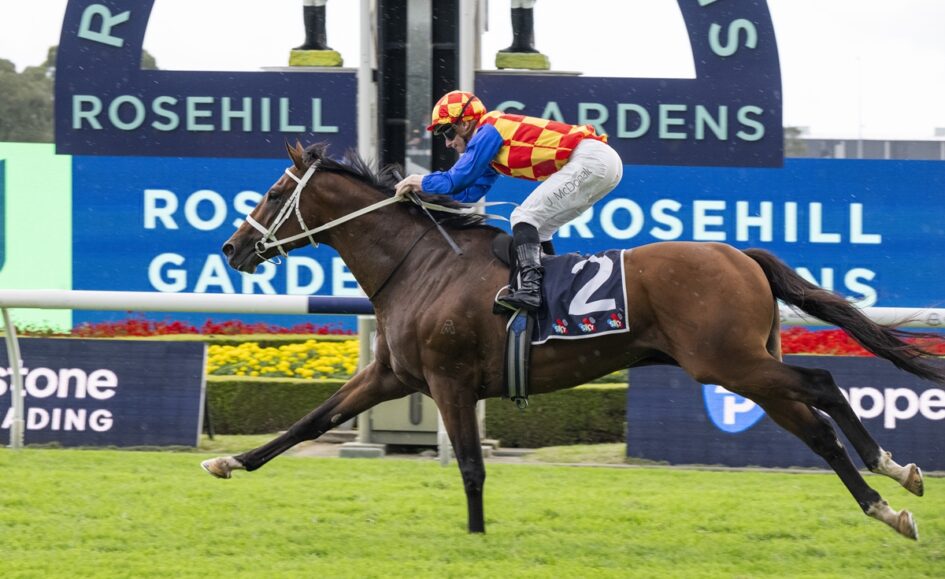
Saturday saw the premier jockey live out each phrase, ascending to Australia’s record-holding Group 1 pilot courtesy of Autumn Boy’s triumph yielding his 130th premier win in the Rosehill Guineas (2000m).
Alongside this, McDonald reached 100 Group 1s within Australia, while his alliance with Chris Waller exceeded the historic 54 Group 1s tally shared by Tommy Smith and George Moore over many years.
Advertisement
He shared that social media was off-limits during the week to zero in on history, with a supportive note from former All Blacks head Sir Stephen Hansen arriving on Golden Slipper Day morning to solidify his approach.
“He said, ‘Walk straight into it. Grab it with both hands and walk straight into it’”, McDonald said.
“I was thinking to myself, imagine him sitting down with the All Blacks, a fifteen squad of men, our greatest sport in New Zealand, and he’s saying, ‘Walk into it. Embrace it’.
“I thought that was quite special.”
Advertisement
Notably impressive about McDonald’s record is his youthfulness.
Turning 34 puts him at the entry to peak form for jockeys generally, though the reserved Kiwi attributes it to strong assistance and superior bloodstock.
“It’s lovely, but it’s a testament to the horses that I ride because they are phenomenal,” he said.
“There’s no two ways about it, that I do ride the best horses and most favourites each race and I’m blessed to have that opportunity.”
Advertisement
The record eclipsed belonged to his lifelong inspiration Damien Oliver, heightening the significance.
“To get to a mark like this, it’s obviously special. Especially with how I look up to Damien Oliver,” he said.
“When I was growing up as a ten-year-old kid, he was riding Melbourne Cup winners. One that comes to mind is Media Puzzle when he went through so much adversity and still had the vivacity to come out on top.”
The $2.45 favourite Autumn Boy shone in the Guineas with a clear two-length verdict over $21 shot Green Spaces, overshadowed only by McDonald’s milestone.
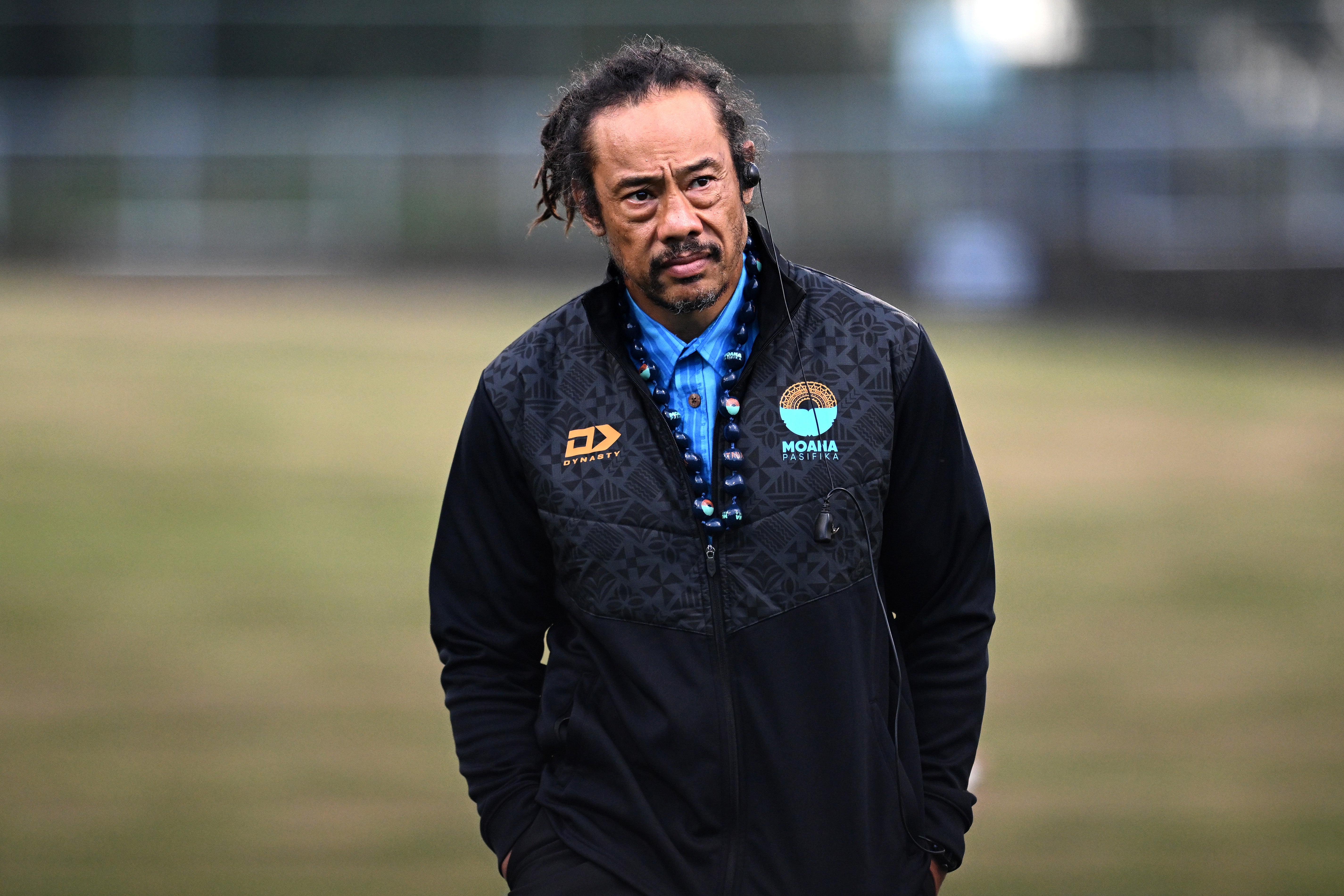
New Zealand coach Dave Rennie has purged all but one of Scott Robertson’s assistants while appointing former All Blacks skipper and Moana Pasifika boss Tana Umaga as defence coach.
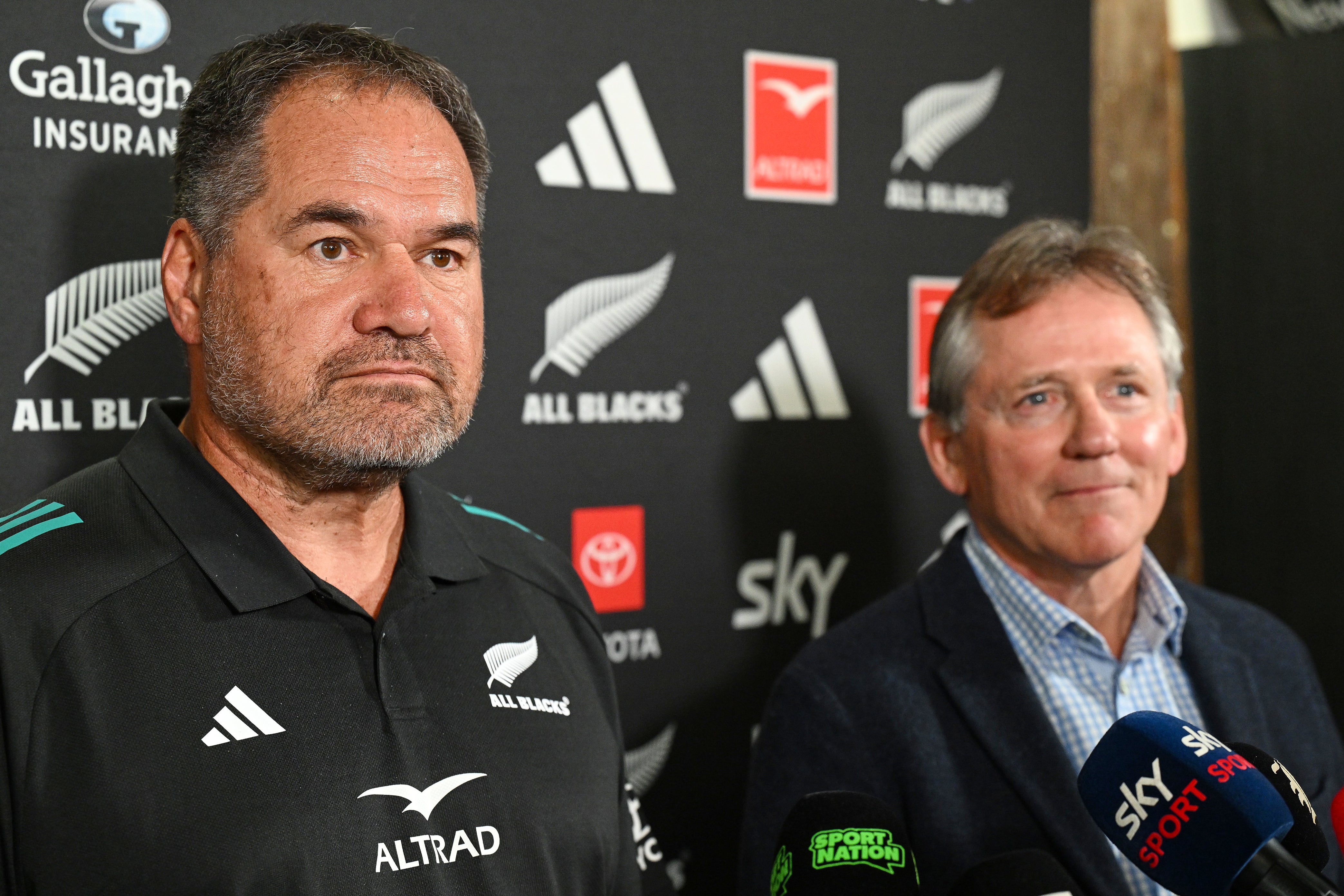
Rennie, who replaced the sacked Robertson three weeks ago, also named Neil Barnes, coach of New Zealand provincial side Taranaki, as his lone senior assistant coach, while handing his Kobe Steelers assistant Mike Blair the attack portfolio.
Forwards coach Jason Ryan is the sole Robertson assistant retained in the All Blacks setup, with Scott Hansen, Tamati Ellison and Bryn jettisoned.
“Neil provides outstanding leadership and strategic support; Jase (Ryan) has proven himself as one of the best forwards coaches in the game,” Rennie said in a New Zealand Rugby statement on Tuesday.
“Tana brings immense ‘mana’ and defensive insight and Mike will bring his innovative approach and attention to detail to our attack.
Advertisement
Dave Rennie, left, stands with New Zealand Rugby Chair David Kirk (AP)
“I know this group will challenge and support both me and our players to bring the best out of us all.”
Umaga, who played 74 tests for New Zealand, with 22 as captain, said he was thrilled to land the All Blacks job even if it meant sacrificing his personal life.
“I’ve been fortunate enough to actually captain this side and that was a big job,” he told New Zealand media on Tuesday.
“I had to understand that, then also understand what comes with that. The sacrifices that not just yourself, but your family have to make.
“I’m fortunate that I’ve felt that pressure before and … I know what I’m getting myself into.”
Advertisement
Head coach Tana Umaga of Moana Pasifika joins the All Blacks as an assistant (Getty Images)
Rennie also brought in Phil Healey as head of performance, having worked with the strength and conditioning trainer at the Waikato Chiefs, Glasgow Warriors and Kobe Steelers.
Rennie, the first New Zealand head coach with Pacific islander heritage, will see out Kobe’s season in Japan before preparing the All Blacks for the inaugural Nations Championship tests in July against France, Italy and Ireland.
NZR said Ellison had been appointed Maori Blacks head coach to replace Ross Filipo who left New Zealand last season for a coaching role in Japan.
On March 24, Channel A reported that BTS’ Gwanghwamun comeback concert projections estimated nearly 260,000 visitors. Based on this, nearby convenience stores increased stock levels, added extra refrigerators, and prepared items such as kimbap, drinks, and desserts for expected demand.
However, the actual crowd was far lower. Police estimates placed attendance at around 40,000. Due to strict safety control and restricted access, foot traffic remained limited. As a result, large volumes of perishable food went unsold. In several cases, stores reportedly discarded 600 to 700 kimbap in a single day. Hence, daily losses were estimated at 1 to 2 million won.
Advertisement
At the same time, dairy products and packaged items continued to pile up. Meanwhile, store owners questioned the origin of the 260,000 estimate, stating that on-site conditions did not reflect such numbers. With this, backlash has grown, pointing to inaccurate crowd forecasting and uneven stock planning. However, another section of fans is defending BTS.
“The report is about only one store because it brought excessively large quantities. This is not BTS’s fault—Seoul has several stores,” an X user commented.
The report is about only one store because it brought excessively large quantities. This is not BTS’s fault—Seoul has several stores.
Fans keep questioning what is BTS’ fault is here if stores choose to purchase more items.
Exactly, how is BTS to blame? This is on the stores choosing to purchase more items. Take a seat and cope.
Advertisement
Why bts are to blame when stores decided that and people came for bts not for buying things
I’m blink but what’s bts fault.
Others criticize the situation, calling it “overhyped” and saying the excessive preparation made the outcome seem disproportionate.
The company overhyped them so everybody over prepared. Sure, it was the stores’ decision but if it wasn’t overhyped then this wouldn’t be a problem.
Advertisement
HYBE overestimated how many people would show up to BTS’ concert in Seoul and it made business lose money and throw away food. Hybe’s smoke screen and over hype is biting them in the b*tt for once.
This is so ridiculous and embarrassing for the members, I don’t know if they agree with it, but projecting unrealistic success only makes their own irrelevance more evident.
BTS performance drives surge in Gwanghwamun store sales
On the other hand, sales at convenience stores near Gwanghwamun Square increased on March 21 during the BTS performance, based on industry data released the following day. CU reported that revenue at 10 stores in the area rose by 270.9% compared to March 14.
In the case of the three outlets closest to the venue, sales grew by 547.8%, which is more than five times the usual level. Customer traffic began building hours before the performance, and later, after the event ended, another rise in transactions was recorded.
Advertisement
Product data showed that items for immediate use led demand. Bottled water increased by 831.4%, iced drinks by 813.4%, and coffee by 460.8%. Food items followed, with kimbap up by 1380.4%, sandwiches by 1146.7%, and triangle kimbap by 884.3%. At the same time, outdoor-use goods also rose. Battery sales increased by 50.7 times, hot packs by 12.8 times, and portable chargers by 11.9 times. BTS albums recorded a 214.3 times increase, with the top four sales positions taken by these products.
GS25 reported that sales at five nearby stores increased by 233.1%compared with March 14, while customer volume rose by 181.2%. Stores located along main movement routes recorded higher growth, with sales rising to 378.4%. Sales of simple meal items increased, including kimbap at 379.1%, rice balls at 290.0%, sandwiches at 309.0%, and bread at 560.7%.
Beverage and snack categories also rose, with bottled water at 541.8%, coffee drinks at 255.5%, snacks at 333.5%, and milk at 240.6%. Outdoor-related products showed higher increases. Hot packs rose by 5698.8%, portable chargers by 2016.9%, and batteries by 3530.8%. Transport cards increased by 647.5%. Fandom-related consumption also contributed, as IGIN Highball rose by 1742.3%. Limited items such as key rings and perfumes recorded combined sales exceeding 10 million won.
E-Mart 24 reported that sales across 36 stores in the Gwanghwamun and Jongno area increased by 39% compared to the previous week. Meanwhile, some stores recorded increases of up to 301%. 7-Eleven reported that sales across 40 stores in the Gwanghwamun and Myeongdong area increased by 117% compared to the previous month. Five major stores near the venue recorded increases of up to seven times.
Advertisement
BTS’ schedule began on March 20 with the ARIRANG album release, followed by a comeback live concert in Seoul on March 21. Promotions continue with the Spotify SWIMSIDE event in New York on March 23, leading into the release of BTS: The Return documentary on March 27. From April 9 onward, the ARIRANG World Tour begins in Goyang.
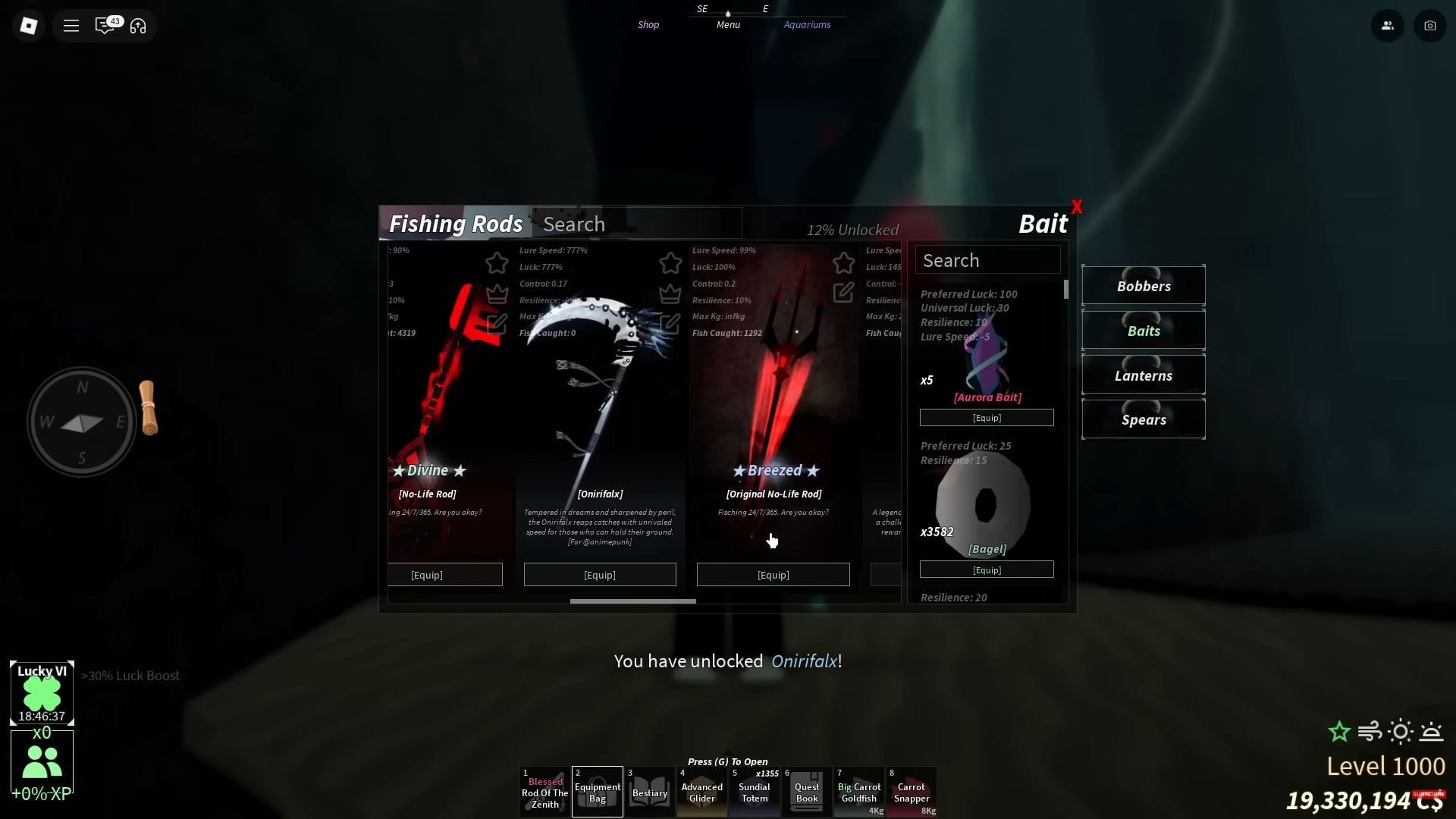
Onirfalx has been one of the best fishing rods in Fisch, geared specifically for late-game content. It is available as part of the quests offered by Nick, an NPC found in The Depths. The fishing rod is not particularly resilient, but its myriad passive progress speed bonuses make it easy to reel in some of the rarest fish species. Naturally, it is one of the most sought-after fishing implements in the game.
Here’s everything you need to know about Onirfalx in Fisch.
Breaking down Onirfalx in Fisch
How to get
Onirfalx is available through Nick’s quests (Image via Roblox || YouTube/@OfficialPixelPlayss)
In order to get Onirfalx, you can approach Nick, an NPC found in The Depths at these coordinates: 1261, -723, 1289. Nick offers three quests in total, and at the end of the third, you will receive Onirfalx as the main reward.
Advertisement
The three quests offered by Nick are as follows:
Quest 1: Fetch a Charred Boot. Boot is a common Trash category item, and you can apply the Charred Mutation using the Zeus Rod.
Quest 2: Fetch a Wrath Scylla. Scylla is exclusive to its Hunt-style event, which activates randomly. Use the Rod of the Zenith or Dead Man’s Rod to apply the Wrath Mutation.
Quest 3: Fetch a Shiny Sparkling Wrath Floppy. Use the Blessed and Glittered Enchantments on the Rod of the Zenith to apply Shiny, Sparkling, and Wrath attributes and Mutations. You can fish for Floppy at the Freshwater Pond in the Ancient Isle.
These quests are quite challenging to complete and are geared towards endgame players. Even veterans may have trouble finishing them quickly, so be sure to break up your farming endeavors into multiple sessions.
Onirfalx has excellent stats overall, apart from Resilience. It is also highly durable, meaning it can withstand high-intensity areas like Lava, Noxious Fluid, and the like without the line snapping. You can find the rod’s stat spread below:
Control: 0.17
Line Distance: 777 meters
Luck: 217%
Lure Speed: 777%
Resilience: -inf%
Weight Capacity: Infinite
The fishing rod has a lengthy passive ability as well, the effects of which are listed below:
Increases progress speed by 70%.
Increases progress speed by another 5% for each perfect catch (50% max).
Reduces Control by 0.01 for each perfect catch (0.1 max).
30% chance of instantly filling the progress bar by 30%.
50% chance to apply the Levitas Mutation.
7% chance to apply the Sacratus Mutation.
3% chance to apply the Puritas Mutation.
Onirfalx will be excellent at reeling fish in quickly, provided you can successfully keep the bar in line with the cursor. Considering its exceedingly low Resilience, Onirfalx is not an easy fishing rod to work with. Its Resilience cannot be remedied through Enchantments, but its Control deficit can be offset through Enchantments like Controlled and Unbreakable.
Sunrisers Hyderabad was hit by an injury of Jack Edwards signed for Rs 3 crore in IPL 2026 mini auction. Ahead of their opening match against Royal Challengers Bengaluru on March 28, SRH have named England pacer David Payne as his replacement. Payne has been signed for Rs 1.5 crore.
Who is David Payne?
David Alan Payne is an English left-arm fast-medium bowler who made his debut for Gloucestershire in 2009. He has represented England at U-19 level in both Test matches and One Day Internationals. He was named as part of the squad for the 2010 U-19 Cricket World Cup. The 35-year-old Payne, who has played one ODI for England has the experience of 233 T20s, having taken 304 wickets. His only international appearance came in 2022 against Netherlands, sharing the new ball with David Willey and picking up one wicket.He is Gloucestershire’s leading wicket-taker in T20 cricket and was the leading wicket-taker in the 2024 T20 Blast, picking up 33 wickets in 17 innings. He has also featured for Welsh Fire in the Hundred. Payne has featured in the BBL, he was named Player of the Match in the BBL15 final (2025-26), taking 3-18 to help the Perth Scorchers secure their sixth title against the Sydney Sixers. Separately, he has played two seasons of the ILT20 for Desert Vipers.The IPL released an official media statement announcing the replacements for KKR and SRH ahead of IPL 2026.”KKR, SRH pick player replacements for TATA IPL 2026Kolkata Knight Riders (KKR) and Sunrisers Hyderabad (SRH) have picked Saurabh Dubey and David Payne respectively as player replacements for TATA Indian Premier League (IPL) 2026.Akash Deep – a right-arm pacer, who has played 10 Tests for India, scalping 28 wickets – has been ruled out of the season due to a lumbar stress injury. He will be under the care of the BCCI Medical Team at the BCCI Centre of Excellence (COE) in Bengaluru for further management of his injury. Saurabh, a left-arm pacer, will replace Akash at KKR. He will join KKR for INR 30 Lakh. Meanwhile, Payne is an injury replacement for Jack Edwards at SRH. Payne has played one ODI for England, in addition to 233 T20s, scalping 304 wickets from the same. He will join SRH for INR 1.5 Crore.” However, SRH are already set to miss Pat Cummins at the start of the tournament, with Ishan Kishan named interim captain. While, Akash Deep is currently being monitored at the BCCI Centre of Excellence in Bengaluru.
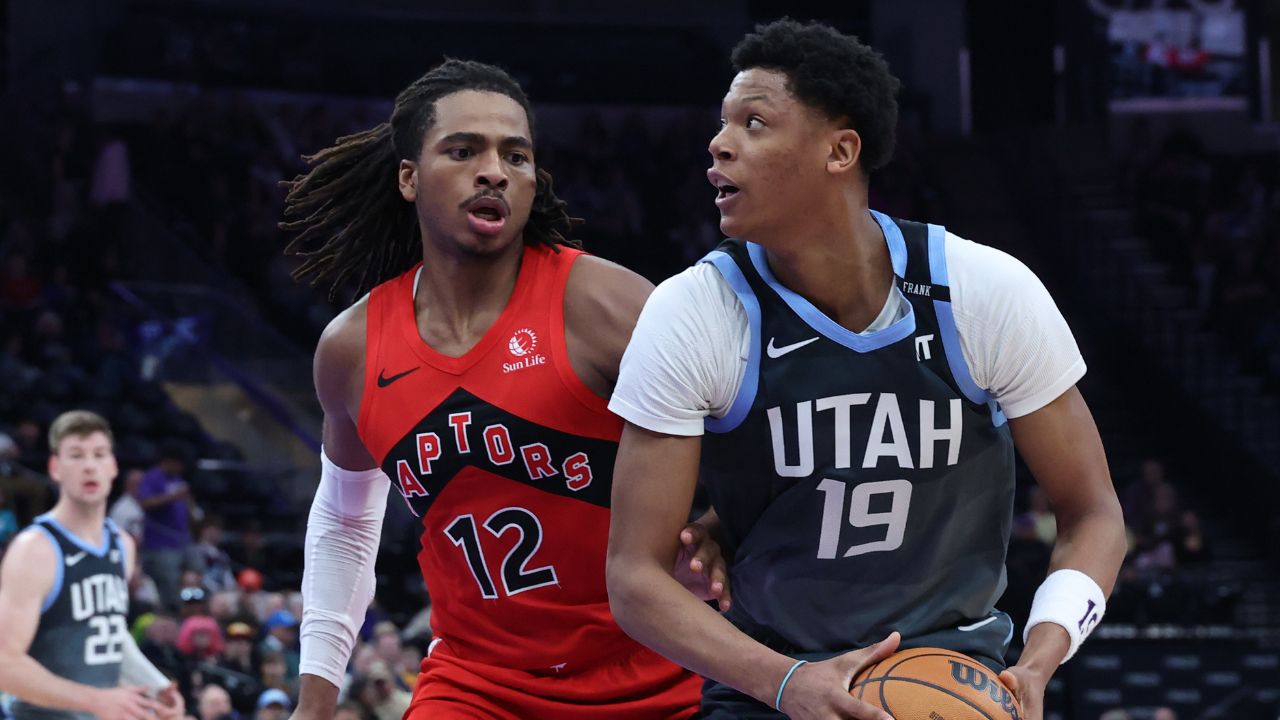
SALT LAKE CITY — RJ Barrett scored 27 points, Sandro Mamukelashvili added 23 and the Toronto Raptors defeated the Utah Jazz 143-127 on Monday night.
Ja’Kobe Walter had 21 points and Scottie Barnes finished with 20 points, 10 assists and seven rebounds as the Raptors (40-31) stopped a two-game skid. They remained a half-game ahead of Atlanta for fifth place in the Eastern Conference — the top six teams are assured a playoff berth without needing to qualify via the play-in tournament.
Utah rookie Ace Bailey had 37 points and Brice Sensabaugh scored 24 off the bench for the Jazz (21-51), who have lost six of seven and are eliminated from playoff contention.
Toronto outscored Utah 49-30 in the third quarter to open a 29-point cushion. Led by Walter and Barrett, the Raptors shot 54% from 3-point range (20 of 37) and 61% from the field overall.
Advertisement
Walter went 6 for 8 on 3-pointers and 7 of 10 from the floor. Barrett was 10 for 15 from the field, including 4 of 5 on 3s. He added six assists without committing a turnover in 25 minutes.
Jamal Shead had 15 assists for the Raptors to go with his seven points. Jamison Battle scored 17 off the bench, and Gradey Dick had 13.
Markelle Fultz, the top pick in the 2017 draft, played 16 minutes off the bench for Toronto in his first NBA game this season. He had two points on 1-of-5 shooting with five assists and three turnovers.
The 27-year-old Fultz signed a 10-day contract with the Raptors, the team announced earlier in the day. He had been playing for their G League affiliate.
Advertisement
Raptors: Wrap up a five-game trip Wednesday night against the Los Angeles Clippers.
Jazz: Finish a four-game homestand Wednesday night versus the Washington Wizards.
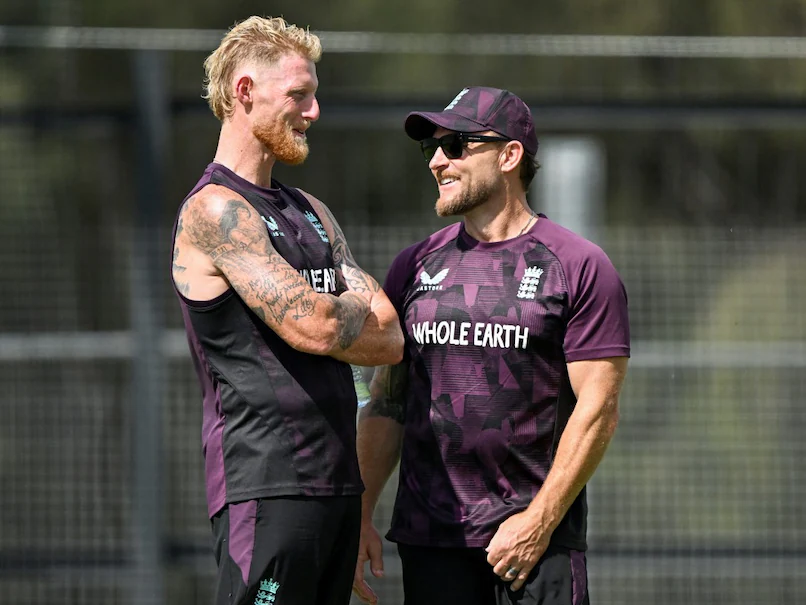
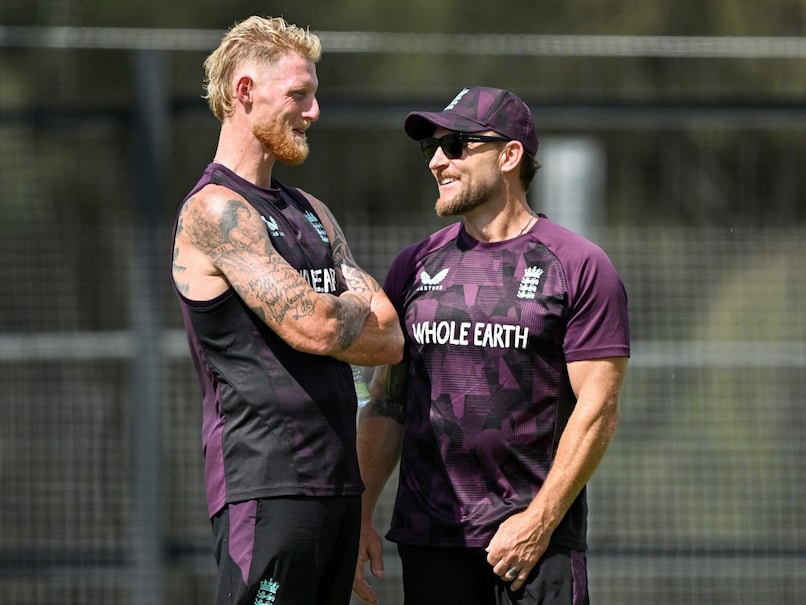
England Test captain Ben Stokes described the past three months of his career as the “hardest period” of his leadership journey, as head coach Brendon McCullum and he retained their roles in the longest format, avoiding the sack despite woeful results over the past year. The England and Wales Cricket Board (ECB) confirmed that Stokes, McCullum and managing director Rob Key would continue in their roles, giving the trio a lifeline. However, Australian greats such as Adam Gilchrist and Mark Waugh believe the decision was not as straightforward as it appeared.
“It’s only 14 or 15 months until that Ashes return series starts, so you probably think, ‘well, it might be a bit too short a term to put a whole broom through and start a fresh approach with someone else’,” Gilchrist said on Fox Cricket, reacting to the ECB announcement.
“So maybe that’s worked in their favour, and the fact that the recently completed T20 World Cup was on, of course, and they got through and ended up having a pretty successful tournament in that regard also helped,” he added.
Advertisement
The legendary wicketkeeper-batter recalled comments made by England all-rounder Liam Livingstone about the lack of communication within the camp, highlighting the need to address growing issues in the squad.
“Look, they’ve got to change something,” he said. “The more we learnt about the ill-discipline that was filtering throughout that group, where it didn’t seem to allow them to play their best cricket – whether that’s an accurate assessment, that’s the observation, because we didn’t know much through the summer – but all we saw and heard about was ‘We’re all good. We’re happy. The tent is happy.’
“But already there are some little fractures appearing from other people’s comments that weren’t so comfortable, the likes of Liam Livingstone and so on. But they’ve survived. It’s up to them now whether they think they need to change the approach.”
Mark Waugh, sharing his opinion on the ECB’s decision, feels that McCullum and Stokes will have realised they need to fix the mistakes made over the past year, as another reprieve may not be forthcoming.
Advertisement
“It was probably a 50-50 call,” he said. “A lot of people probably thought England needed a new direction, but they have shown faith in Brendon McCullum and Ben Stokes who, since taking over, initially did a pretty good job playing games and winning with a very positive attitude. But in the real tests against the top teams they have fallen short.
“But there is no doubt they have to change their ways. Brendon McCullum and Ben Stokes are not stupid. They will realise the mistakes they made on the tour in Australia. They are going to have a chance to turn that around.”
Waugh is keen to see if Stokes and McCullum have learned from their mistakes.
“The basics of playing cricket and playing to win are really good, but you need more than one game plan, especially against strong teams. You are probably going to lose games you should win if you are just going to play one way,” Waugh said.
Advertisement
“I’m sure they will have learnt their lessons, and if they haven’t, they are going to get the same results over the next 12 months and lose more than they win. The proof is going to be in the pudding. Let’s see if they learn from their mistakes.”
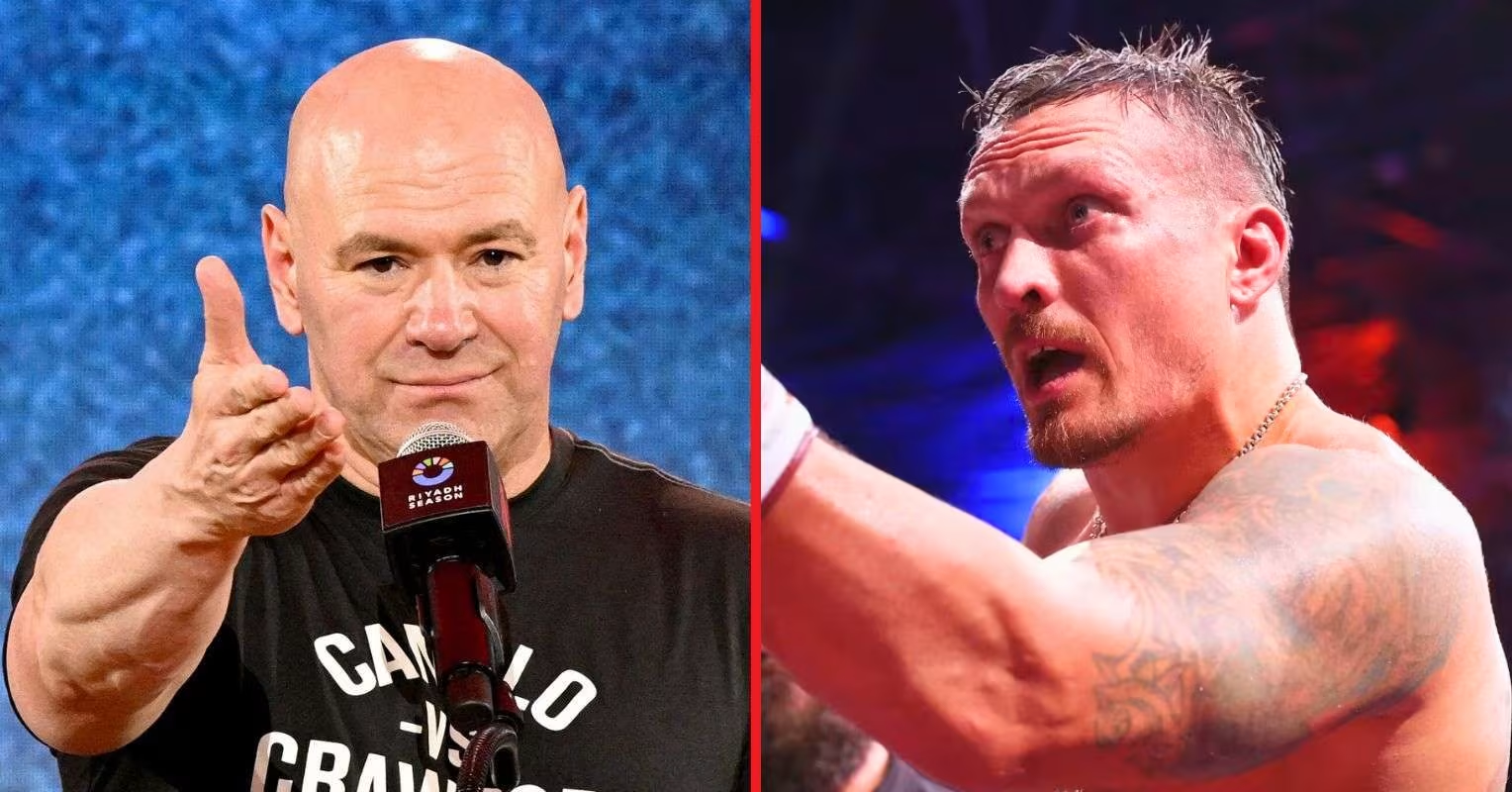
Oleksandr Usyk has revealed a three-fight plan before his retirement from the sport, but Zuffa Boxing CEO Dana White has admitted that he wishes to intervene and stage a clash between the Ukrainian and one of his undefeated champions.
Usyk remains unbeaten after 24 professional contests, despite an arduous run of fights that have seen him become an undisputed champion at both cruiserweight and heavyweight, cementing himself as a modern pound-for-pound standout.
Yet, whilst not mentioned on Usyk’s hit-list, Dana White has thrown Jai Opetaia’s name into the mix, admitting that he would like to see how the reigning Zuffa cruiserweight champion would fare against the dominant heavyweight ruler, in a clip captured by Seconds Out.
“I want to see the best fighters in the world fight the best fighters in the world. I would like to see Jai Opetaia fight Usyk.”
At present, a fight between the pair seems unlikely, though Opetaia may indeed make a move to heavyweight sooner rather than later given he has now been officially stripped of his IBF cruiserweight belt after weeks of back and forth.
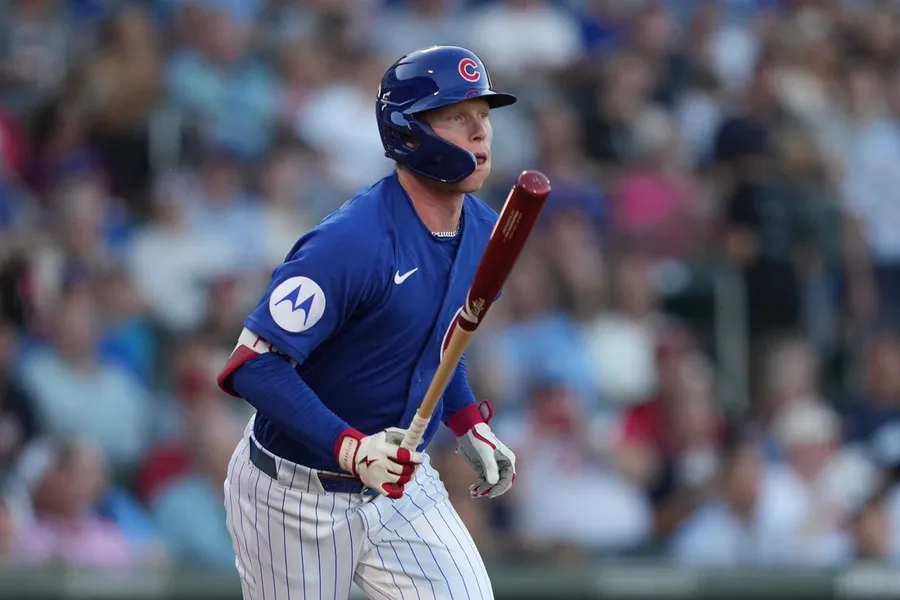
Mar 20, 2026; Mesa, Arizona, USA; Chicago Cubs center fielder Pete Crow-Armstrong (4) hits against the Cincinnati Reds in the first inning at Sloan Park. Mandatory Credit: Rick Scuteri-Imagn Images
Pete Crow-Armstrong reportedly is receiving a present ahead of his 24th birthday on Wednesday.
The center fielder and the Chicago Cubs are completing a long-term contract extension, multiple media outlets reported Monday night. The financial terms and length of the deal weren’t reported.
Crow-Armstrong is coming off a season in which earned his first All-Star selection, won a Gold Glove and finished ninth in National League MVP voting.
In his third major league season, Crow-Armstrong got off to a great start in 2025, hitting .265/.302/.544 with 25 homers and 71 RBIs in 95 games before the All-Star break. He tailed off badly in the second half, though, batting .216/.262/.372 with six homers and 24 RBIs in 62 games.
Advertisement
He finished at .247/.287/.481 with 31 homers and 95 RBIs. Crow-Armstrong also hit 37 doubles and stole 35 bases, becoming the first Cubs with 30-plus doubles, homers and steals in the same season.
Through 293 major league games, Crow-Armstrong owns a .240/.285/.437 batting line with 50 doubles, 10 triples, 41 homers, 143 RBIs and 64 steals.
Selected by the Mets in the first round (No. 19 overall) of the 2020 draft, Crow-Armstrong was traded to the Cubs in the July 2021 deal that sent infielder Javier Baez and right-hander Trevor Williams to New York.
The Cubs open the season on Thursday against the visiting Washington Nationals.















![BITCOIN: 24 HOURS LEFT!!!! [I WENT LONG]](https://wordupnews.com/wp-content/uploads/2026/03/1774346399_maxresdefault-80x80.jpg)





































You must be logged in to post a comment Login