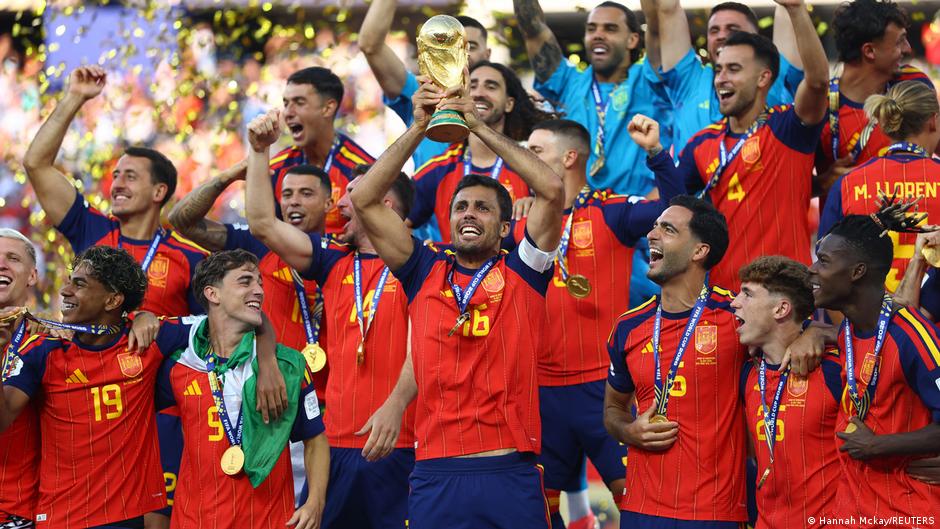
Patience proved the critical virtue for Spain. They had to wait for a kickoff delayed by — among other things — a Tom Cruise speech. They had to wait twice as long as usual at half time. And they had to wait for 106 minutes of play and their 20th shot before Ferran Torres lashed home the goal that would win them a second men’s World Cup.
“I’m very moved. Looking back and thinking about them, we’ve won everything, absolutely everything, with this generation of players,” said Spain coach Luis de la Fuente. “The match should have been decided much earlier … but this is a World Cup final and you have to dig deep even against ten men, and we’re prepared for anything.”
Spain’s captain and player of the tournament, Rodri, lifted the trophy. But not before Donald Trump made his presence known. The US president was booed when he entered the pitch with FIFA president, Gianni Infantino and appeared keen to stay for the trophy lift, just as he had in the Club World Cup final last year. Rodri appeared to subtly attempt to usher Trump off the stage before Infantino jogged over to join Trump on the sidelines of the celebrations.
Donald Trump and Gianni Infantino were booed by the crowd as they entered the pitchImage: Lee Smith/REUTERS
Messi on the margins
For much of Sunday’s final, that moment had felt purely a matter of time, as the European champions thoroughly outclassed their South American counterparts.
Just as they did in their impressive semifinal display against France, Spain dominated the ball early and their teenage superstar, Lamine Yamal, came close to opening the scoring in the fifth minute. Seconds later, at the other end of the pitch and the age scale, Lionel Messi was beaten to a through ball by Spanish keeper Unai Simon. It was as close as Messi, 39, got to a significant impact on the game, which may well be his last at a World Cup.
Advertisement
“They were better, to be honest,” Messi said postmatch. “We lost the game, and we accept that. That doesn’t mean that we will forget everything we’ve done so far, so I’d like to thank my people, my players and the country.”
As the first half wore on in the New York New Jersey stadium, Spain dominated the ball but Argentina held firm, with a smart Emi Martinez save from Spanish striker, Mikel Oyarzabal, as close as either side came before the elongated interval.
Half-time show keeps players waiting
For the first time in World Cup history, a Superbowl style half time show was on the cards. Performers including Madonna, Justin Bieber and BTS took to the pitch with the break extended — contrary to both football convention and FIFA laws — to almost double the standard 15 minutes.
Ferran Torres, on as a substitute, scored the only goal of the gameImage: David Ramos/Getty Images/AFP
It wasn’t enough to change the pattern of the game. Spain continued to pass, Argentina continued to scrap, hassle and rely on Martinez to keep Spanish shots at bay.
A red card for midfielder Enzo Fernandez in injury time made Argentina’s task even tougher as the final headed into extra time, as it now has in five of the last six finals. Argentina tired but somehow clung on, with Spain repeatedly wasteful.
Advertisement
Spain keep composure
Surely the South Americans, who had failed to take a single shot in the entire game, couldn’t somehow win this?
But Spain have already proved they won’t panic, with late winners in two of their knockout matches. Indeed, the final bore some resemblance to their tournament opener — a 0-0 draw with Cape Verde. After that, Spain slipped somewhat under the radar for a time, with a lack of cutting edge thought to count them out.
Argentina did not have a shot until deep in to extra time, after falling behindImage: Lee Smith/REUTERS
But as the tournament progressed, Luis de la Fuente’s team have delivered a masterclass in control while sharpening their attacking weapons to win a first World Cup since 2010. Spain’s women are also reigning world champions, winning the tournament in 2023.
“I think that in the end, the goal belonged to 47 million people, not to me or the 26 players here,” said the goalscorer, Torres. “I believe that today destiny was written, it was meant for us to win, far from our fans, but we tried to make them feel as close as possible.”
Advertisement
World Cup overshadowed by Iran war, Balogun controversy
But politics has also proved impossible to ignore.
The barring of Somali referee Omar Artan from entering the US added to the sense this was not a World Cup for the whole world. Iran’s treatment, being forced to fly in and out of games and given less preparation time as a result, was a reminder of the conflict between the US and Iran.
But, ultimately, the tournament was decided in the same way it always has been. And, on Sunday in New Jersey it was settled, once again, in favor of Spain.
The basketball world was buzzing Wednesday morning after the Miami Heat inadvertently published a video hinting at the potential return of LeBron James.
James has yet to announce what team he’ll play for in his 24th NBA season.
On Tuesday night, a live stream titled “LeBron James Introductory Press Conference” and scheduled for July 27 appeared on the Heat’s YouTube channel before being swiftly removed.
The gaffe immediately fueled speculation among fans about whether the 41-year-old superstar is poised to rejoin the franchise with whom he secured two championships.
A team spokesperson told ESPN that the Heat’s social media department was preparing for the possibility of James’ signing and mistakenly uploaded the link to the team’s YouTube page. The Heat did not provide an immediate comment when contacted by Reuters.
The Cleveland Cavaliers, Philadelphia 76ers and the Heat are all reportedly leading contenders for his signature. The intense anticipation has even extended to the betting markets, with BetOnline Sports & Casino accepting wagers on James’ announcement date, with July 24 currently favored, and Miami emerging as the most likely destination.
However, Rich Paul, James’ long-time friend and agent, stated on a podcast episode released earlier this week that his client would not be rushed into a decision.
“We’re not going to be rushed,” Paul said on Game Over with Max Kellerman and Rich Paul on Monday. “It’s his choice to make and when he makes the choice, he’ll make it.”
Advertisement
James said on July 16, “I won’t hold you guys up too much longer.”
“It’s not just about the team,” he continued. “There’s so many other factors that I’m factoring in right now, on what best fits me as a player, what best fits me as a person and what best fits my happiness, and also my family as well.”
“LeBron James is one of the greatest athletes in history,” the Los Angeles Lakers said on social media. “We will always be thankful for his eight years with the Lakers – including the title he led us to in 2020 under the toughest imaginable circumstances and the countless records he broke in purple and gold.”
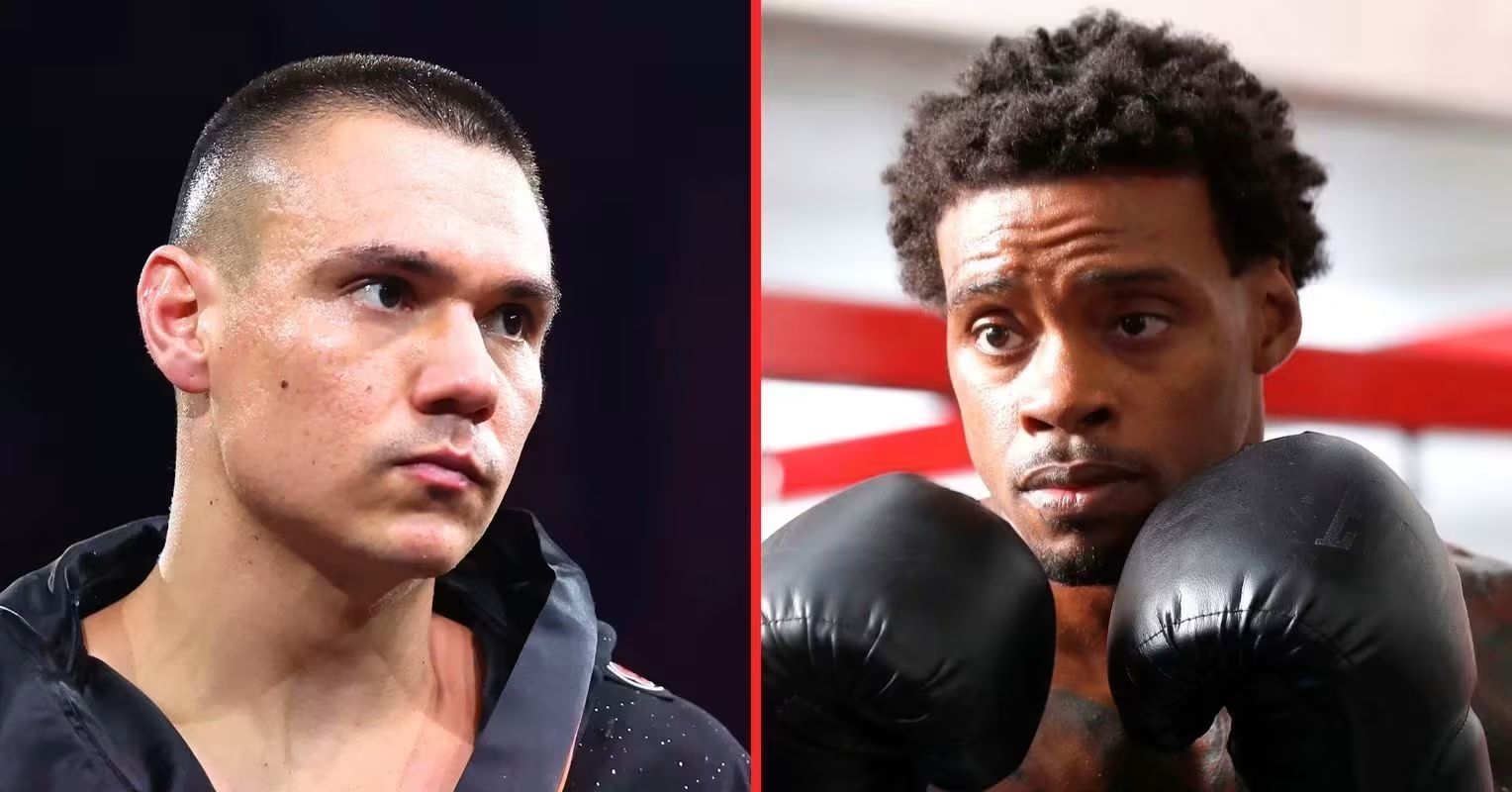
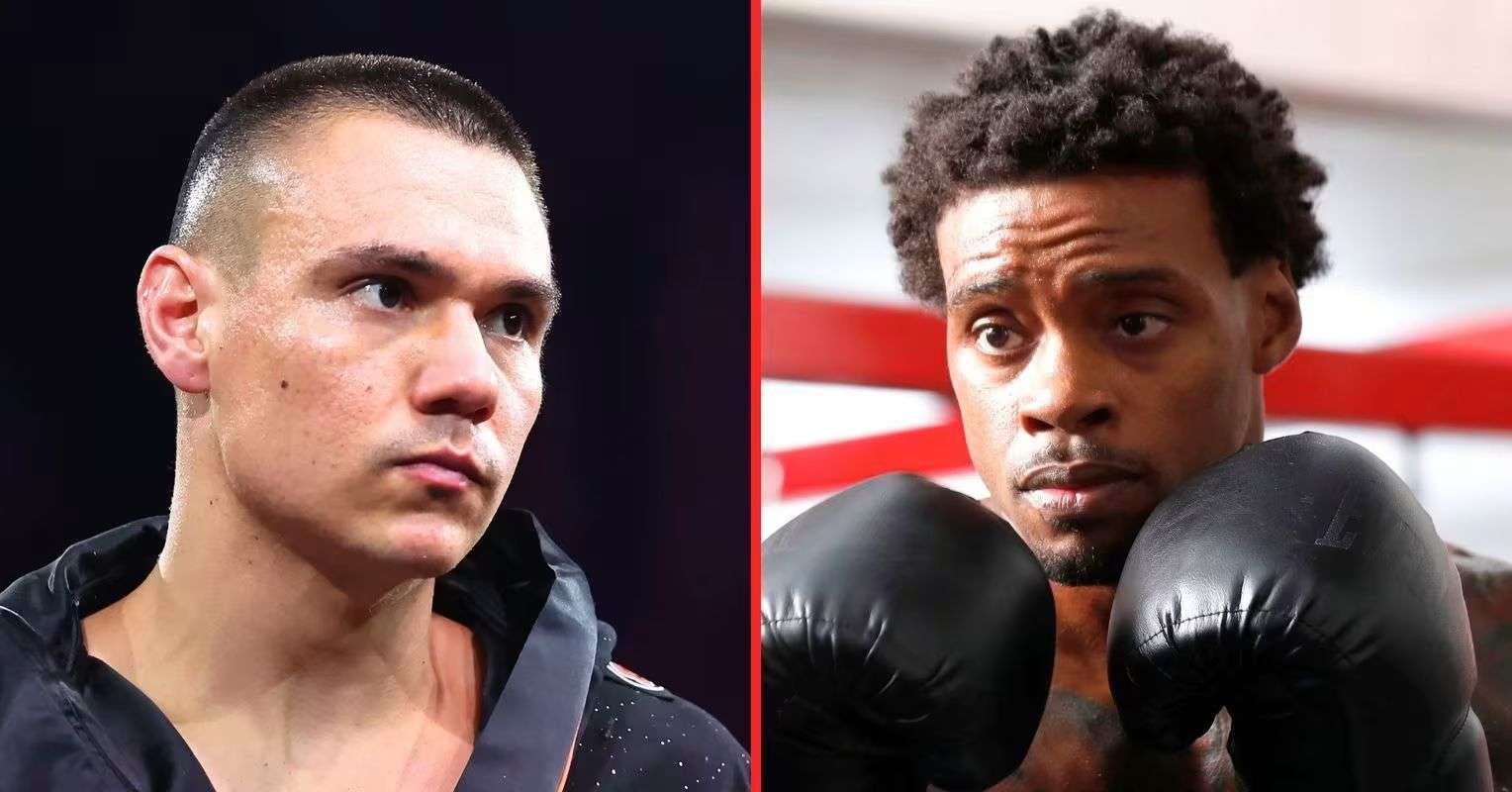
Shawn Porter has assessed whether his former opponent, Errol Spence Jr, is entering a stylistically-favourable showdown against Tim Tszyu.
The two former world champions will collide at Sydney’s Afterpay Arena this Saturday, headlining arguably the biggest event in Australian boxing history.
Originally, it was decided that they would lock horns at a catchweight of 158lbs, only for Spence to request an additional 2lbs following his three years of inactivity.
Back then, many felt Spence had outgrown the 147lb division, yet few would have expected him to jump straight up to 160lbs.
Tszyu, meanwhile, is a natural super-welterweight, having previously defeated Brian Mendoza to claim the WBO strap at 154lbs.
Since that title-winning triumph in 2023, though, the 31-year-old has suffered two defeats against Sebastian Fundora and one particularly brutal stoppage loss to Bakhram Murtazaliev.
Advertisement
But while it seems that both fighters have a point to prove and are evenly matched, Porter has suggested on his podcast that Spence could take advantage of Tszyu’s lack of movement.
“This fight, stylistically, is better for [Spence] than it is for Tim Tszyu. It’s as simple as that.
“Tim, for me, is too flat-footed. When you’re flat-footed, that takes away from your hand speed.
“He likes to punch in combinations but, along with [doing that], he’s always kept his head on [centreline].”
Porter gave a strong account of himself when he fought Spence in 2019, only for ‘The Truth’ to win by split decision after scoring an 11th-round knockdown.
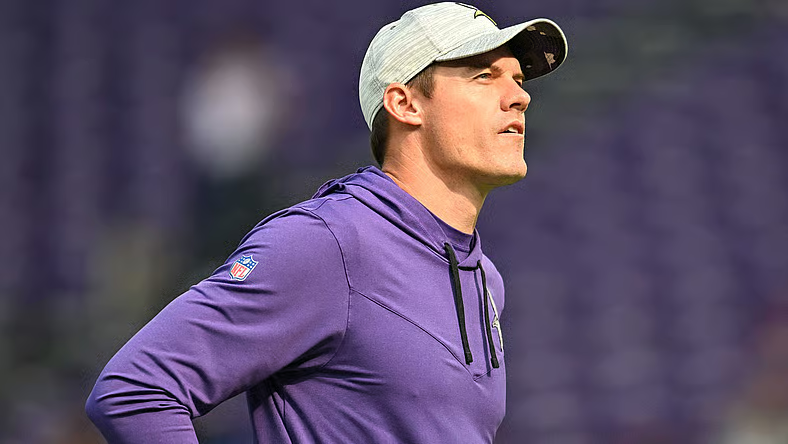
Sep 25, 2022; Minneapolis, Minnesota, USA; Minnesota Vikings head coach Kevin O’Connell before the game against the Detroit Lions at U.S. Bank Stadium. Mandatory Credit: Jeffrey Becker-USA TODAY Sports
Yesterday, Vikings Territory offered a piece detailing the trio of defenders who have been put on notice. Think players who are fighting for their job and/or roster spot in a unique way due to offseason adds.
Turning the attention toward the offense leads to a predictable focus, so dancing around the issue makes next to no sense.
Indeed, the Vikings are throwing some chin music at J.J. McCarthy. Doing so is not in service of replacing him since Minnesota’s leadership has given up. Rather, the plan involves introducing a player into the mix who is capable of replacing McCarthy: Kyler Murray. That distinction — capable rather than inevitable — is what it’s all about.
Advertisement
The Vikings & The QB Chin Music
Spending some time on NFL Next Gen Stats can help to clarify what sort of season Mr. McCarthy had in 2025. In particular, the visuals charting the completions he made from week-to-week really drive the point home: McCarthy does better of passing toward the outside of the field.
Opening up the middle of the field would therefore appear to be a way for the kid to improve.
In an ideal world, an NFL passer will be capable of touching just about every blade of grass. Josh Allen can throw a ball that is 50 yards downfield and 5 yards downfield. Allen can throw to the outside and the middle. Essentially, the Bills’ QB1 forces a defense to protect the field vertically, horizontally, and everywhere in between.
Advertisement
That’s a very important detail. Think of a basketball player who can’t hit a layup with his left hand. The defender can work toward forcing the shooter toward that inefficient option. Similarly, defenses knew about McCarthy’s limitations when facing the Vikings.
Jan 4, 2026; Minneapolis, Minnesota, USA; Minnesota Vikings quarterback J.J. McCarthy (9) talks to an official prior to the game against the Green Bay Packers at U.S. Bank Stadium. Mandatory Credit: Matt Blewett-Imagn Images
Something that would really help McCarthy is being able to threaten the middle of the field. After all, that Justin Jefferson guy happens to be alright at targeting the middle somewhere around 20 yards down the field.
If you need a visual, check out the route charts on Next Gen Stats for Jefferson in 2024 when Sam Darnold was still in town. Plenty of completions took place along the outside. So, too, were there a pile that were in the middle of the field. Note: that’s the point. Attacking everywhere makes it difficult for a defense to overload a particular area.
The Vikings cannot have another season where the starter struggles to feature Mr. Jefferson.
Obviously, the other detail to watch with McCarthy is increased accuracy overall (likely due to greater comfort in the offense alongside better mechanics). The kid saw a terrible 57.6% of his passes completed in 2025. Do note, though, that his receivers sometimes struggled to secure the football.
Advertisement
Likewise, seeing the offensive line take a step forward as the running game becomes potent would be a nice boost.
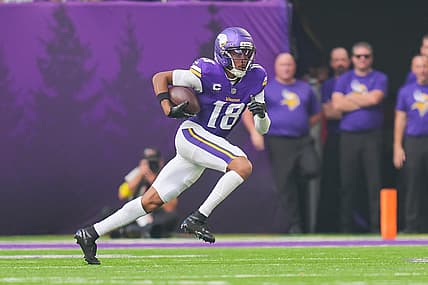
Minnesota Vikings wide receiver Justin Jefferson (18) turns upfield after making a reception against the Cincinnati Bengals, Sep. 21, 2025, during the first half at U.S. Bank Stadium in Minneapolis. Jefferson accelerated into open space following the catch as Minnesota’s offense leaned on its star playmaker in an early-season home matchup against Cincinnati. Mandatory Credit: Brad Rempel-Imagn Images.
What’s really pouring gasoline onto the fire is the presence of Kyler Murray.
In Murray, the Vikings have somebody who is more than capable of being an NFL starter. What remains to be seen is if Murray will be the best option for the Vikings. See the distinction?
What’s up for debate is not whether the former Cardinal is capable of being a team’s QB1. The Vikings believe that’s the case, leading to the decision to sign him. Rather, what’s actually debatable is whether Murray will give the Vikings a better chance of winning in 2026.
McCarthy’s task involves proving that he remains the franchise passer worthy of being chosen at No. 10 overall even as the QB room boasts a capable placement.
Advertisement
J.J. McCarthy, 23, is entering his third season in the NFL. Nobody in Minnesota is facing more pressure.
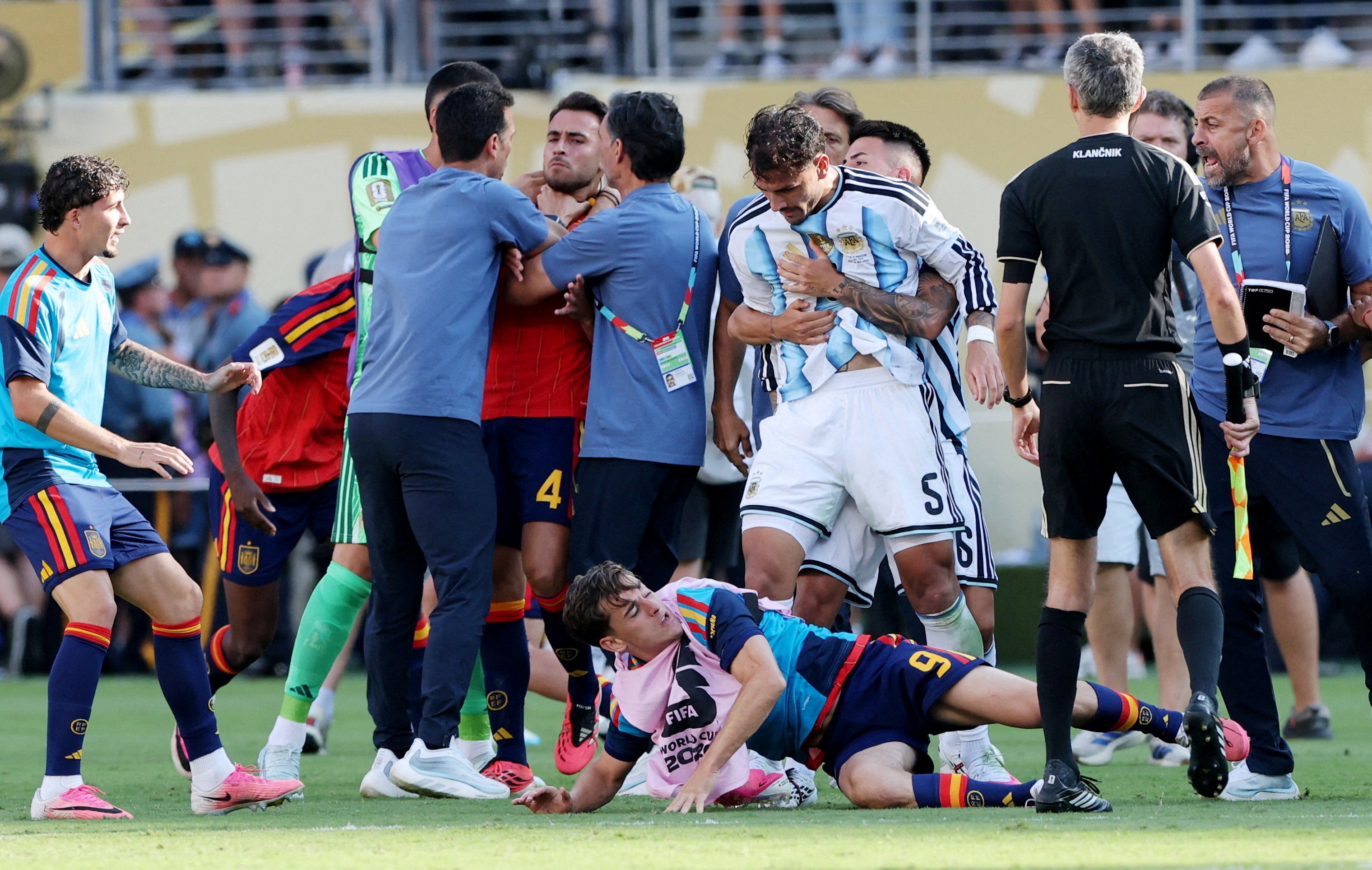
Paredes, along with team-mate Nahuel Molina and Argentina coach Roberto Ayala, were involved in the fracas seconds after the final whistle blew on Spain’s 1-0 victory in New Jersey, which saw Ferran Torres snatch an extra-time winner.
Fifa has confirmed that no red card was shown to Paredes on the field, but on Monday evening Fifa announced that its disciplinary committee had appointed a disciplinary and ethics prosecutor to investigate possible breaches of the Fifa disciplinary code during the incident.
Gavi told El Partidazo de COPE: “I don’t think (Paredes) should be suspended. I understand it’s not a good image for children, but I think there’s also that side to football, which is a bit more physical, more aggressive.
“The most logical thing would have been to send him off during the match, and that’s it. In the end, I think it’s all football, and it has to be that way.”
Advertisement
Paredes grabbed Eric Garcia by the throat before hurling Gavi to the ground to the ground by his bib.
Molina appeared to spark the chaotic melee by striking Spain captain Rodri as he ran across to celebrate with his Spain team-mates, while Ayala appeared to punch Dani Olmo in the face.
It was initially reported by TV broadcasters showing the final that Paredes had been dismissed for his part in the brawl, but Fifa has since indicated this was not the case.
A chaotic post-match brawl broke out after the World Cup final (Reuters)
Argentina had Enzo Fernandez sent off in second-half injury time, with the second yellow card shown for a wild challenge on Pau Cubarsi.
Ayala said his altercation with Olmo was “more of a push than a punch” but nevertheless pledged to apologise to Olmo for his conduct.
Advertisement
He told Capital Radio in Valencia: “When the match ended, I saw a scuffle in the middle of the pitch, and I went over to stop it from escalating, because that’s not who we are.
“I take responsibility for what I did. My intention was simply to go and separate them, nothing more.
“It was more of a push than anything else; it wasn’t a punch. It was a reaction to something that was said, but if I see Olmo, I’ll apologise to him in person.”
Ayala said there had been “a certain animosity” from some quarters towards the Argentina team in general at the World Cup, and added: “They didn’t want our team to do well. We play for our people. In my position, I can’t allow feelings to change my actions. I’m sorry.”
Sierra Leone champions Bo Rangers have pulled out of the 2026/27 CAF Champions League because of financial difficulties.
The club confirmed on Tuesday that it will not take part in Africa’s biggest club competition, despite qualifying by winning the Sierra Leone Premier League title.
Bo Rangers said the cost of competing in the tournament is too high and that the club cannot meet the financial demands.
Advertisement
The decision means Sierra Leone is currently without a confirmed representative in this season’s CAF Champions League. The Sierra Leone Football Association and the Confederation of African Football (CAF) could now decide whether another club will replace Bo Rangers.
CAF recently announced the list of clubs for the preliminary rounds of the competition, with matches due to begin in early September.
Bo Rangers’ withdrawal highlights the financial challenges facing many African clubs. The costs of travel, accommodation, logistics and player welfare often make it difficult for clubs from smaller football nations to compete on the continental stage.
Advertisement
The club’s decision will disappoint supporters who had hoped to see their team compete against Africa’s top clubs after another successful league campaign.
Attention will now turn to the Sierra Leone Football Association and CAF as they decide whether another club will take Sierra Leone’s place in the competition.
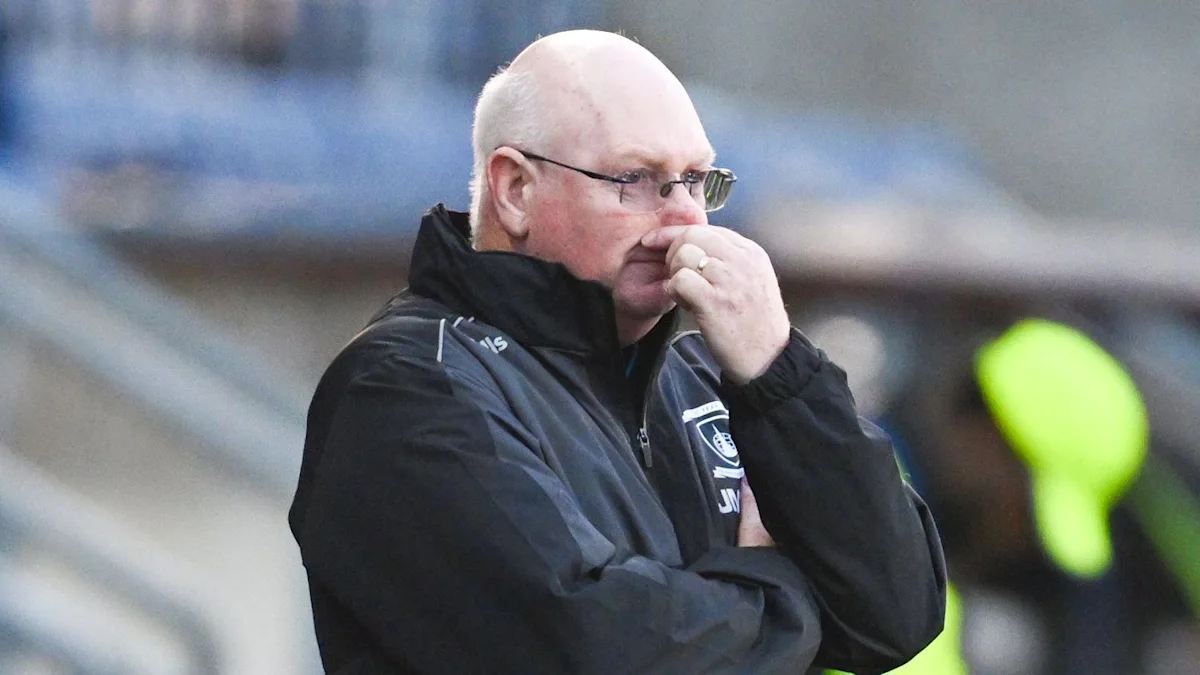
A disappointed John McGlynn challenged his Falkirk side to show more hunger and bravery after a draw at lower-league Alloa all but ended their hopes of League Cup progression.
The 1-1 draw was followed by Alloa winning the bonus point in the subsequent penalty shootout.
Advertisement
Winning the group is now beyond the Premiership side, with even a victory in their final game against Stranraer on Saturday unlikely to be enough to secure a best runners-up spot.
Advertisement
The Falkirk boss admitted it is a time of “transition” at the club, but he remains hopeful that things will start looking up for his squad.
“It wasn’t the result we were looking for. We needed to get three points to have any chance of qualifying,” said McGlynn.
“Our be-all and end-all was to try to qualify. To do that, we needed the points. It wasn’t really the performance we anticipated.
“It wasn’t a great performance by any stretch of the imagination. All the stats will suggest we probably should have won, given what we had, but we weren’t clinical in front of goal and we weren’t convincing enough with the quality of balls into the box.
Advertisement
Advertisement
“We got some quality balls in, but then we’ve got to be a bit hungrier and a bit braver to go and put our heads on things.
“It’s a massive disappointment. We are in transition. There’s no magic wand. It’s going to take a bit of time.
“It’s the biggest turnover in players we’ve had, and we’ve got players coming in who are still trying to understand the way we play. It’s not quite clicking yet as well as any of us would like, including the fans.
Advertisement
“It was a good turnout of fans. I thank them for coming and apologise for our performance. It’s not what we’re used to and not what we expect.
“This is going to take a little more time than any of us would like. We’re disappointed and frustrated, but we’re going to stick together and see it through.”
When it kicks off in Morocco on July 26, the Women’s African Cup of Nations (WAFCON) promises to provide great goals, games and memories as 16 teams compete for the continental title. While the focus will be on the stars on the pitch, there may also be some attention on the fact that very few of the head coaches are female.
Cameroon‘s appointment of Valentine Nguel just weeks before the tournament, brought the number of WAFCON nations with female coaches to four – along with Zambia, Kenya, and South Africa. Still, the vast majority are men. Other teams have appointed female assistants in order to comply with a rule passed by FIFA earlier this year, which requires women’s teams to have at least one female coach on the bench.
Africa may be moving slowly in the right direction with two head coaches of 12 at the 2025 WAFCON (16.7%) to four of 16 (25%) in 2026, but there is still a long way to go.
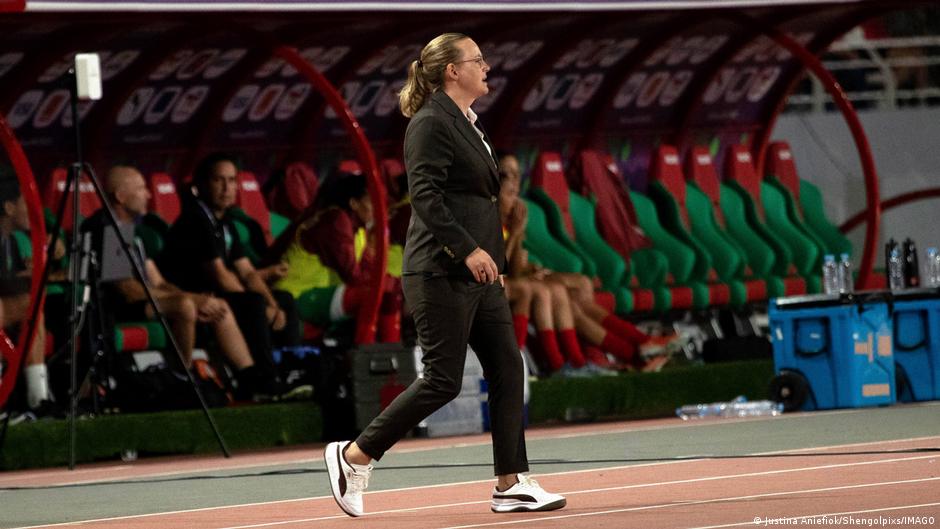
Desiree Ellis has been named Africa’s women’s coach of the year four times.Image: Nour Aknajja/Sports Inc/empics/picture alliance
South Africa leads the way. Desiree Ellis is one of the world’s most successful female coaches and led South Africa to the 2022 title. The four-time African Women’s coach of the year would like more countries to follow the example set by hers.
Helping female coaches
“Our federation took a stand long ago that all female teams will be coached by females,” Ellis told DW.
Advertisement
“That needs to happen and federations need to be brave and appoint female coaches. They need to not just appoint them but give them support, otherwise they are not going to succeed.”
South Africa is one of 14 members of the Council of Southern Africa Football Associations (COSAFA). Even before the FIFA regulation announced in March, this regional organization already had a rule in place making it mandatory for women to form part of the coaching teams.
“This is to force federations to provide more opportunities for female coaches, and we can see that in South Africa, it’s yielded good dividends,” Ellis said.
Jackline Juma says female coaches in Africa are not given the same support as their male counterparts getImage: Talanta FC
Jackline Juma is head coach of Kenya’s U-20 women’s team and would like to see something similar set up all over the continent.
“We don’t have many female coaches in charge of African female teams… It’s because they still don’t trust women, don’t give them chances, the support is not as much as for male coaches,” Juma told DW.
Advertisement
She believes that such attitudes mean help is needed.
“At least, get restrictions when it comes to club licensing so that for female football teams, priority should be given to female coaches as head coaches so this would give us a good number of female coaches rising up.”
Juma suggests that the first assistant coach should also be female with men allowed to fill out the coaching staff after that.
Advertisement
Setting pathways
More jobs coupled with role models like Ellis can inspire a new generation of female coaches and Vicky Huyton, who founded the Female Coaching Network in 2014, told DW that while just 20% of female national teams have female coaches, they account for 90% of major championships.
Inspiring young girls is, however, just the beginning of what can be a long and difficult journey to the upper reaches of the sport. While there are some countries that have made strides, some federations still have much to do in this field to enable coaches to reach their full potential.
“I am contacted quite often by amazing female coaches in Africa –various countries, Uganda, Kenya, Nigeria.” Huyton told DW.
“Often they say ‘I have a passion, I have a want but I have nowhere to go.’”
Huyton would like to see a clear pathway in place for all young coaches.
Advertisement
“They don’t know how to take that route and that’s not necessarily the coach’s fault, that’s the federation or governing body who aren’t reaching out to these women and saying ‘if you want to be national team coach, this is what you have to do.’ I honestly think that in some sports even the governing bodies don’t know how to get them there.”
Huyton admits that all around the world there is a long way still to go but that there is a fundamental lesson that Africa can learn from Europe.
“From a level-one grassroots coach volunteering once a week, what does that pathway look like to go all the way to a national team coach?” she asked.
“It’s really important to understand what the journey looks like. People think that women don’t want to coach…it isn’t true.”
Advertisement
Sarina Wiegman has coached both the Netherlands and England to Women’s Euros titlesImage: Priscila Bütler/SPP/IMAGO
Reasons for optimism
The lack of representation at the top level is not confined to Africa. Men are a common sight on the benches of women’s games all over the world, including Europe. At the Women’s Euro 2025, just seven of the 16 teams had female coaches, an increase from past tournaments but still fewer than half.
England’s national team may be European champions and led by a woman, but female coaches are still a minority in the country’s Women’s Super League, regarded by most as the strongest domestic competition in the world.
In Africa, progress is being made and while it is slower than many would like in terms of women rising to senior positions, there are reasons to be optimistic, according to Ellis.
“Now, you have Lamia [Boumehdi] who has just won CAF (Confederation of African Football) coach of the year, being appointed as U20 coach of Morocco,” Ellis said.
“You have Adelaide [Koudougnon] qualifying Ivory Coast for the first time to the U17 tournament, you have Carol [Kanyemba] of Zambia going to back-to-back World Cups with the U17s, you have Mildred [Cheche] going to the U17 World Cup with Kenya. There are a lot of future coaches coming up.”
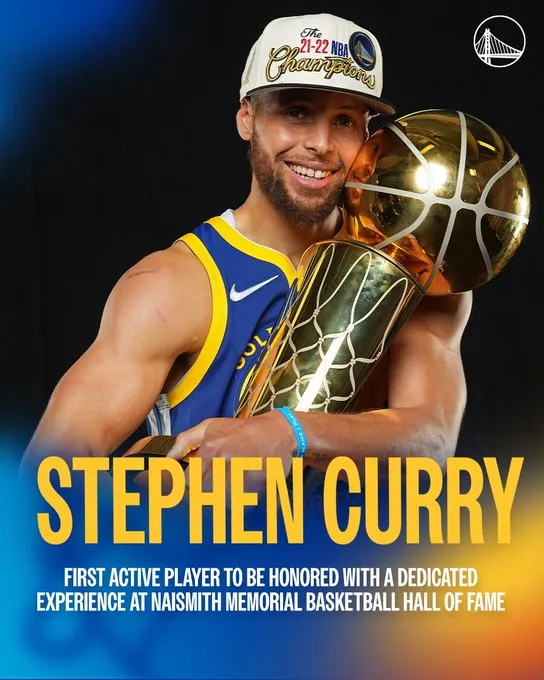
Stephen Curry becomes First active NBA Player With Hall of Fame Exhibit
Golden State Warriors star Stephen Curry is set to make NBA history after becoming the first active player to receive a dedicated exhibit at the Naismith Memorial Basketball Hall of Fame.
The exhibit will officially open on Friday to recognise Curry’s impact on basketball while he is still an active player.
The Warriors announced the milestone on social media, describing it as another historic achievement for the four-time NBA champion.
Advertisement
“He changed the game for good. And now, he makes history yet again.”
Curry’s influence on the game extends beyond his individual accolades. He is widely regarded as the greatest shooter in NBA history; the 37-year-old has also transformed the way basketball is played, inspiring teams at every level to embrace the three-point shot.
The two-time NBA MVP has won four NBA championships with the Warriors, earned an NBA Finals MVP award and became the league’s all-time leader in three-pointers made.
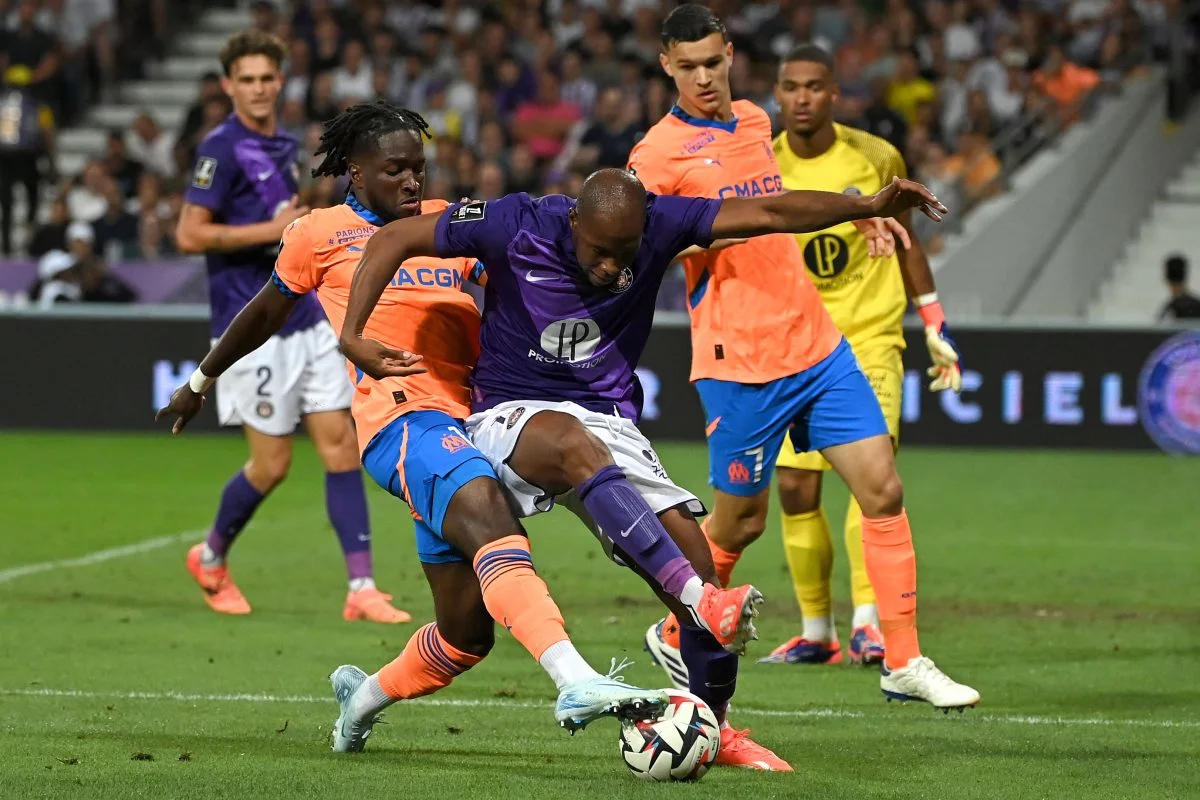
A free agent since leaving Toulouse FC, the French full-back is reportedly seen internally as a real opportunity in the transfer market. With considerable top-flight experience under his belt, the player who came through the ranks at ESTAC Troyes is coming off the back of two full seasons in which he made a total of 63 appearances (three goals, seven assists) for the Violets.
Advertisement
This profile has caught the eye of Marseille, where he would immediately be seen as a key figure in the dressing room, whilst several Italian clubs have recently informed the player’s entourage of their desire to lure him across the Pyrenees.
Advertisement
It now remains to be seen which path Sidibé will choose, as he could return to European competition in the south of France, with Marseille having secured their place in the Europa League group stage at the end of the 2025-26 season.
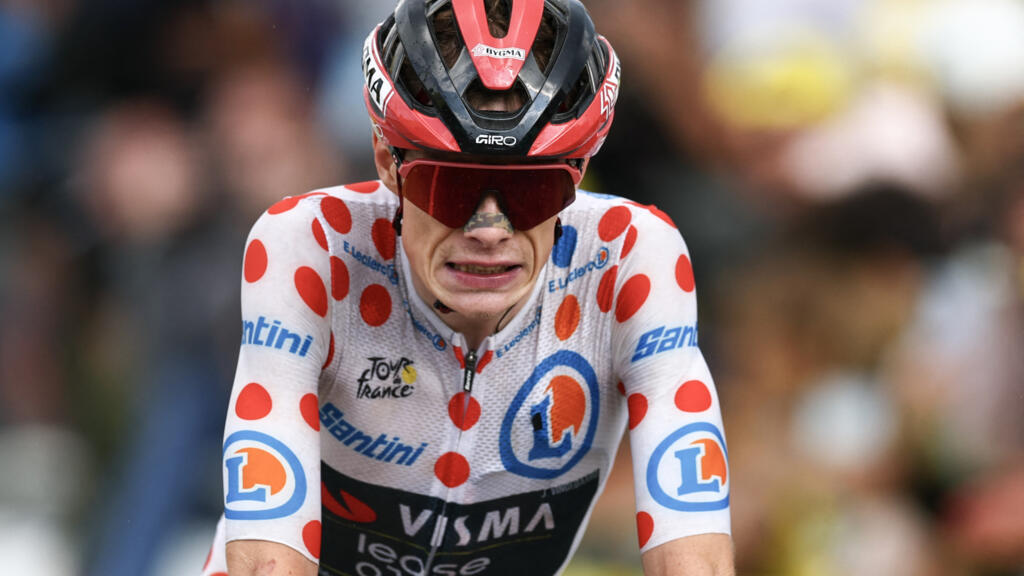
Jonas Vingegaard, the 29-year-old Dane, who was sitting second overall in the 2026 Tour de France, abandoned the race on Sunday after a heavy crash about 20 kilometres from the finish of the 15th stage at the Plateau de Solaison.
Vingegaard went down in a roundabout, taking down several of his Visma-Lease a Bike teammates and Mexican rider Isaac del Toro, who was able to continue.
The winner of the Tour in 2022 and 2023 climbed into the ambulance with his right arm in a sling, writhing in pain.
Yellow jersey wearer Tadej Pogacar managed to avoid the crash.
Advertisement
Vingegaard was visibly in pain following the crash, which caused another four riders to also fall.
He was then helped into a medical vehicle with his arm in a sling. Hours later, his team announced that Vingegaard will undergo surgery on a fractured collarbone following his crash.
“Jonas sustained a fractured collarbone and multiple abrasions. Due to the severity of the collarbone fracture, surgical intervention has been recommended and will be performed in the coming days,” his Visma-Lease a Bike team said in a brief statement.
Quitting the race
It was the first time that Vingegaard had been unable to finish a Grand Tour.
Advertisement
In his five previous participations at the Tour, he won twice and finished second in the other three.
Vingegaard was bidding to become just the ninth man to win the Giro d’Italia and Tour de France in the same year, two years after his chief rival Pogacar achieved the same feat.
His rivals in the battle for the yellow jersey slowed their pace waiting to see if he would rejoin their group before their teams informed them that he had quit the race and they could push on.
That incident briefly impeded their chase of the seven breakaway leaders but they reached the final 11km-long climb to the finish around two-and-a-half minutes behind Swiss rider Mauro Schmid, who had stolen a march on his break companions.
Advertisement
Sunday’s stage was 183.9km from Champagnole in the Jura to Plateau de Solaison in the Alps.
Race leader and reigning champion Pogacar’s team-mate Isaac Del Toro, who was seventh overall, was one of the other fallers, although he was able to set off again soon afterwards to rejoin the peloton.
Vingegaard’s American team-mate Sepp Kuss was another to tumble and he took a lot longer to get going again.
When he did, he was a long way behind the group of leaders.
Advertisement
Vingegaard’s crash came just hours after he and Pogacar were amongst a number of riders to have been woken up at their hotels in the night by anti-doping controllers.
Vingegaard was woken up at 2:00 am, while Pogacar was disturbed three hours later.




















































You must be logged in to post a comment Login