For many Indian athletes, the Commonwealth Games has been more than just another multi-sport event. It has often delivered breakthrough performances that have transformed promising competitors into household names.
When Krishna Poonia completed India’s clean sweep in the women’s discus throw at the Delhi 2010 Games, she became one of the defining faces of Indian athletics.
Twelve years later, in Birmingham, Eldhose Paul scripted history by becoming the first Indian man to win Commonwealth gold in the triple jump, while Avinash Sable and Murali Sreeshankar elevated their status with silver medals that confirmed they belonged among the world’s elite.
The Games have played a similar role beyond athletics. Weightlifters, boxers and wrestlers have often used the Commonwealth stage to announce themselves before progressing to Asian, world and Olympic success.
That is what makes Glasgow 2026 particularly intriguing. While India’s campaign will still revolve around proven champions, another group of athletes will arrive in Scotland hoping that a strong fortnight can change the course of their careers.
Here are the athletes who could leave Glasgow with far bigger reputations than when they arrived.
Animesh Kujur: The footballer-turned-sprinter chasing history
At just 23, Animesh Kujur has already achieved something few believed possible for an Indian sprinter. Born in Chhattisgarh’s Jashpur district, Kujur initially pursued football before switching to athletics, a decision that has transformed him into India’s fastest-ever 200m runner.
His breakthrough came in 2025, when he clocked 20.32 seconds, setting a national record and winning bronze at the Asian Athletics Championships — the country’s first medal in the event since 2015. He also became the first Indian male sprinter to qualify for the World Athletics Championships in the modern qualifying era.
Those performances secured his place in India’s Commonwealth Games squad after he comfortably met the AFI qualification standards during the domestic season. Glasgow, however, presents an entirely different challenge.
The men’s 200m will feature elite sprinters from Jamaica, England, South Africa, and Trinidad and Tobago, many of whom have already broken the 20-second barrier. While Kujur does not enter as a medal favourite, reaching the final would represent one of the finest performances by an Indian sprinter at the Commonwealth Games. More importantly, it would confirm that Indian sprinting has finally begun closing the gap on the world’s best.
Gurindervir Singh: India’s fastest man takes on the Commonwealth’s quickest
Indian athletics has spent decades searching for a genuine 100m sprinter capable of challenging Asia’s best. In 25-year-old Gurindervir Singh, it may finally have found one.
The Punjab-born Navy athlete enjoyed a remarkable resurgence in 2026, lowering the national record to 10.09 seconds and becoming the first Indian to consistently threaten the 10-second barrier. His performances also established national records in the 60m and the 4x100m relay, highlighting his growing consistency rather than a one-off breakthrough.
Qualifying for Glasgow was never in doubt once Gurindervir produced his national-record performance during the Athletics Federation of India qualification window. Yet, the Commonwealth Games represent the biggest examination of his career. The blue-riband event traditionally belongs to Caribbean sprinting powerhouses, with Jamaica and Trinidad and Tobago expected to field multiple sub-10-second runners. England and South Africa also possess athletes with significantly greater international experience.
For Gurindervir, therefore, success will not necessarily be measured by medals. A place in the semi-finals — or even the final — would underline the progress Indian sprinting has made and provide invaluable confidence ahead of the Asian Games and Los Angeles 2028.
Gulveer Singh: The athlete redefining Indian distance running
If one athlete symbolises the changing face of Indian athletics, it is 28-year-old Gulveer Singh.
Distance running has traditionally been India’s weakest discipline at the Commonwealth Games, but the Army runner has rewritten that narrative over the past two seasons. In 2025, he became the first Indian to run under 13 minutes in the 5,000m, clocking 12:59.77, before breaking the national 10,000m record with 27:00.22.
Earlier this year, he also became the country’s first sub-four-minute miler and completed a historic 5,000m-10,000m double at the Asian Athletics Championships. Those achievements comfortably secured his place in India’s Glasgow squad.
The challenge awaiting him in Scotland is formidable. Uganda’s Jacob Kiplimo, the world half-marathon record-holder, remains the overwhelming favourite should he compete, while Australia’s Ky Robinson and a strong Kenyan contingent are expected to make both distance races among the highest-quality events of the Games.
On paper, Gulveer still trails the leading Africans, but championship races are often decided by tactics rather than pace. Having repeatedly shown the ability to stay with the lead pack before unleashing a strong finish, Gulveer has every chance of fighting for a podium finish.
A medal would not simply be another addition to India’s tally — it would rank among the greatest achievements by an Indian male distance runner on the Commonwealth stage.
Praveen Chithravel: Carrying India’s triple jump legacy
India’s remarkable rise in the men’s triple jump has been one of the country’s biggest athletics success stories over the last Olympic cycle, and 25-year-old Praveen Chithravel is now leading that charge.
The Tamil Nadu athlete announced himself in 2023, when he leapt 17.37m, equalling the national record, before matching it again at the 2025 Federation Cup and proving that his breakthrough was no fluke. His consistency has made him one of Asia’s leading triple jumpers and a regular challenger on the international circuit.
Praveen qualified for Glasgow after comfortably surpassing the Athletics Federation of India’s qualification mark during the domestic season, opening 2026 with 17.08m, the ninth-best jump in the world this year.
Unlike many Indian field athletes, he has already gained valuable championship experience, finishing fourth at Birmingham 2022 before adding bronze at the 2023 Asian Games and silver medals at both the 2025 Asian Championships and the FISU World University Games.
His biggest hurdle in Glasgow will come from Jamaica. World indoor champion Jaydon Hibbert, whose personal best exceeds 17.80m, enters as the favourite, while compatriot Jordan Scott has consistently crossed 17.30m on the Diamond League circuit. Yet, Praveen’s personal best is already better than the gold-medal-winning jump at Birmingham 2022 and sits just six centimetres short of the Commonwealth Games record. If he reproduces one of his trademark 17-metre jumps, India’s recent dominance in the event could continue.
Tejas Shirse: India’s hurdles revolution has a new face
For decades, the men’s 110m hurdles remained an event in which India struggled to make an impact internationally. The 24-year-old Tejas Shirse is beginning to change that narrative.
The Maharashtra hurdler enjoyed a breakthrough 2026 season by breaking the long-standing national record and becoming the first Indian to consistently challenge the 13.50-second barrier. His rapid improvement earned him qualification for Glasgow after he met the AFI’s prescribed standard during the national qualification period, confirming his emergence as India’s leading sprint hurdler.
Shirse’s journey has been built on steady progression rather than overnight success. A multiple-time national champion, he has gradually narrowed the gap with Asia’s elite through improved technique and faster starts, making him one of India’s most exciting track prospects. Glasgow will also offer him his first taste of a major multi-sport championship, where racing under pressure often proves as challenging as the opposition itself.
The Commonwealth field will include experienced hurdlers from Jamaica, England and South Africa, several of whom have consistently run below 13.30 seconds. While Shirse’s personal best still leaves him with work to do before he can challenge for medals, reaching the final would represent another landmark for Indian hurdling and reinforce the progress the event has made over the past few years.
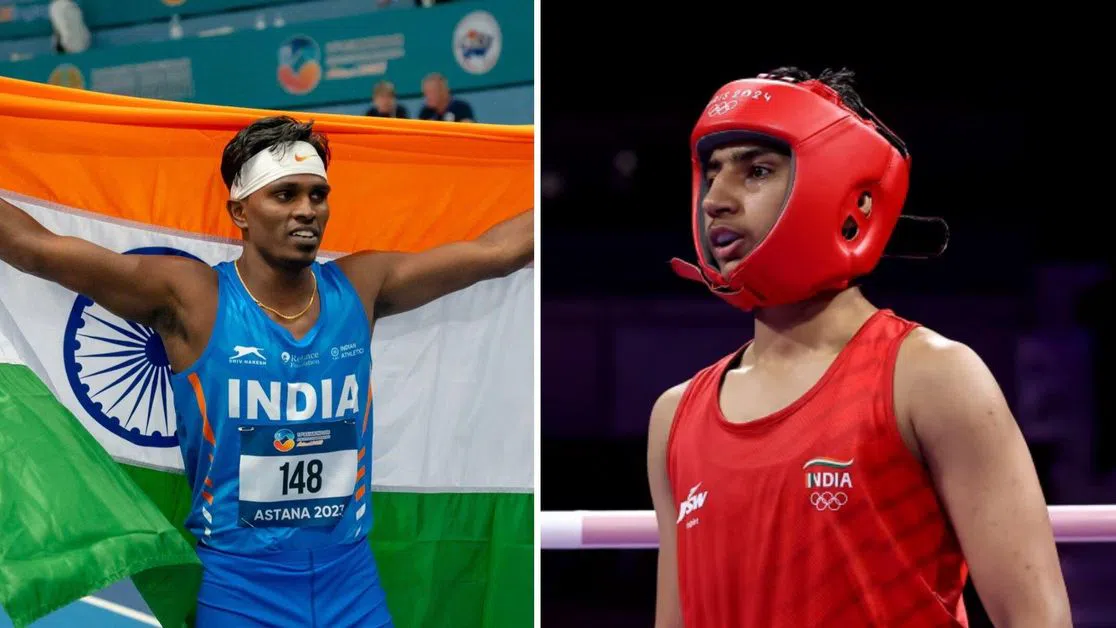
Sachin Siwach: Boxing’s next big hope
Few Indian boxers have generated as much excitement early in their careers as Sachin Siwach. The 24-year-old Haryana boxer first grabbed attention by winning the 2021 AIBA Youth World Championship before successfully making the transition to the senior circuit. His aggressive counter-attacking style and composure under pressure have made him one of India’s brightest prospects in the lightweight division.
Siwach secured his place in Glasgow after impressing at the national selection trials and maintaining consistent performances on the international circuit. With several experienced Indian boxers moving into different weight categories or nearing the latter stages of their careers, he has quickly established himself as one of the country’s biggest medal hopes among the new generation.
The Commonwealth boxing competition promises to be fiercely contested, particularly with traditional powerhouses such as England, Northern Ireland and Australia expected to field experienced international medallists. Unlike athletics, however, boxing tournaments often produce surprises, and Siwach’s fearless style makes him a dangerous opponent over three rounds.
A podium finish would not only justify the faith the selectors have placed in him but also establish him as one of India’s leading contenders heading into the 2027 World Championships and the Los Angeles Olympic cycle.
Preeti Pawar: Ready to lead India’s next generation of women boxers
At just 21, Preeti Pawar has already shown that she possesses the temperament required to succeed on the biggest stages. The youngest athlete in this group announced herself by winning bronze at the 2022 Asian Games, where she defeated several established international opponents to emerge as one of India’s most exciting female boxing prospects.
Since then, the Delhi boxer has continued to mature technically while improving her movement and defensive skills. Those performances earned her a place in India’s Commonwealth Games squad after a series of impressive domestic and international results.
Glasgow will provide Pawar with her biggest test yet. Women’s boxing at the Commonwealth Games traditionally features strong contingents from England, Northern Ireland, Australia and host nation Scotland, with several Olympic and World Championship medallists expected to contest the lighter weight divisions. Pawar may lack their experience, but she has repeatedly shown an ability to thrive under pressure, making her one of India’s strongest hopes for a podium finish.
Beyond medals, Glasgow represents an opportunity to establish herself as the heir to India’s rich tradition in women’s boxing, following champions such as Mary Kom, Nikhat Zareen and Lovlina Borgohain. A successful campaign would firmly place her among the country’s leading medal hopes for the next Olympic cycle.
Why the spotlight will shine on young stars more than ever in Glasgow
Glasgow presents a rare opportunity because the Commonwealth Games programme has undergone its biggest overhaul in decades. Wrestling, badminton, table tennis, hockey and cricket — which together accounted for nearly half of India’s medals in Birmingham — have all been removed from the programme, leaving athletics, boxing and weightlifting to shoulder a much larger share of the country’s medal ambitions.
Having earned their places through national records, Asian Championship medals and performances that met the Athletics Federation of India’s demanding qualification standards, these debutants now have the chance to emerge as the defining faces of India’s campaign.
If they can translate their domestic and continental success onto the Commonwealth stage, Glasgow could be remembered as the Games where India’s next sporting stars truly arrived.
























































You must be logged in to post a comment Login