Connect with us
DAPA Banner
DAPA Coin
DAPA
COIN PAYMENT ASSET
PRIVACY · BLOCKDAG · HOMOMORPHIC ENCRYPTION · RUST
ElGamal Encrypted MINE DAPA
🚫 GENESIS SOLD OUT
DAPAPAY COMING

Sports

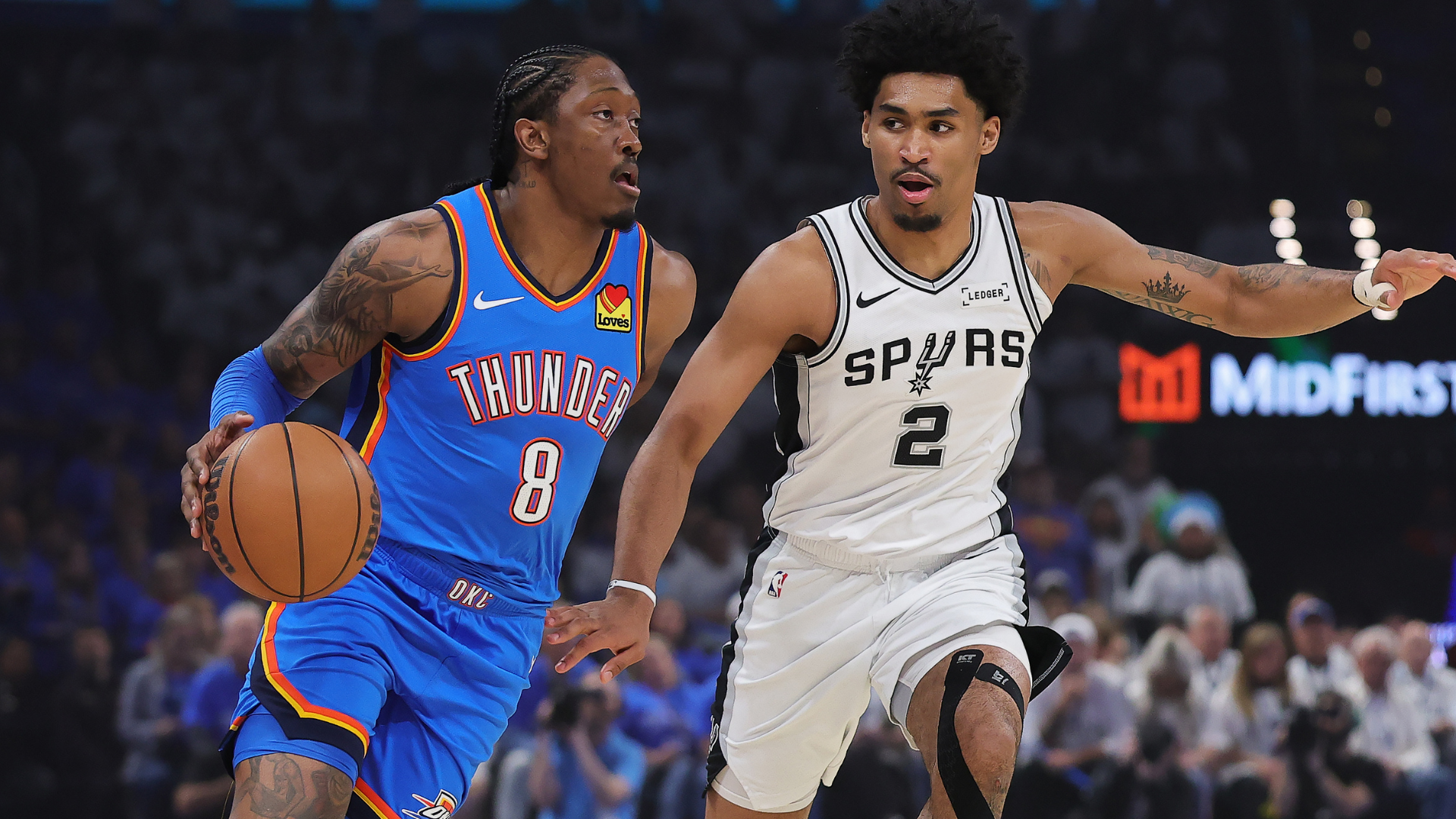
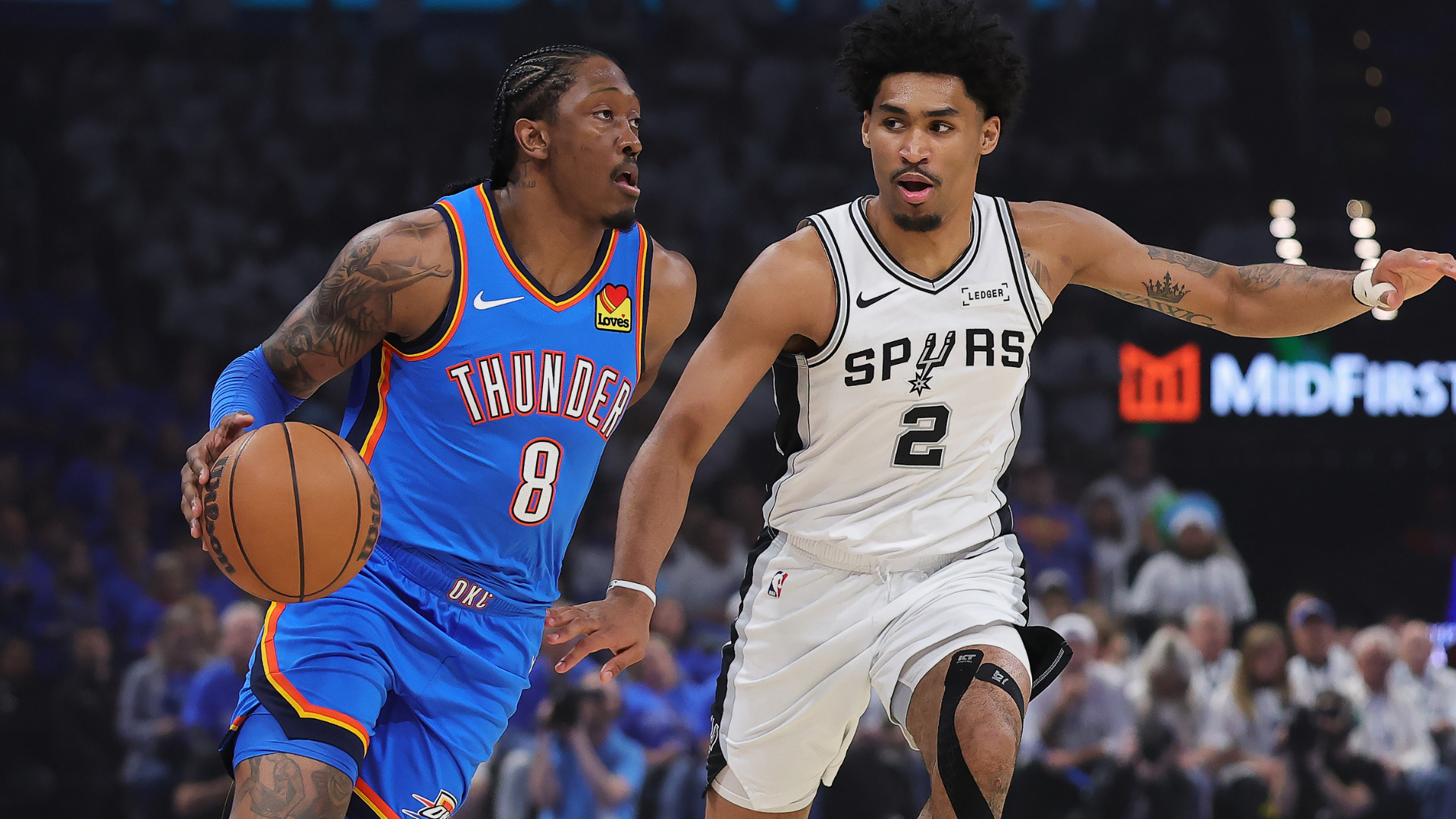
Thunder vs. Spurs is turning into a war of attrition, which favors OKC … and the East

Published

on

The ideal of NBA roster-building rarely actually aligns with the reality of an 82-game grind in the regular season and a four-round sprint in the playoffs. Teams pour their resources into gathering two or three stars. They pay a handful of top-of-the-market role players. And then, one or two pieces are pulled out of the Jenga tower, and the whole structure collapses. The Los Angeles Lakers might have been able to to give the Oklahoma City Thunder a real series with Luka Dončić. The Minnesota Timberwolves couldn’t stress the San Antonio Spurs with Anthony Edwards hobbled and Donte DiVincenzo out.

The Spurs and the Thunder — thanks largely to the mountains of draft picks they’ve accumulated and the cheap rookie deals some stars are playing on — have been able to injury-proof their rosters as effectively as any team ever has. San Antonio’s run to the NBA Cup final came with Victor Wembanyama coming off the bench. The Thunder just won 64 games with only two players suiting up for 70 or more games. 

These teams are built with the redundancies the modern NBA demands. Both have had the means to invest in another superstar if they’ve wanted to, and both have turned down the chance, knowing that the physical demands of the pace-and-space NBA necessitate a degree of depth their all-in counterparts can’t match. At this stage of the playoffs, teams are playing every other night. Muscle injuries seem more common than ever, and the exhausting effects of playing basketball with the degree of physicality that these teams reach compounds over time.

San Antonio and Oklahoma City played a double-overtime classic in Game 1 of the Western Conference Finals. Spurs point guard De’Aaron Fox was already out with an ankle sprain. In Game 2, the Thunder lost Jalen Williams to a hamstring strain after just seven minutes. He’d played 37 minutes in Game 1 after missing the previous six Thunder playoff games with another hamstring strain. San Antonio, meanwhile, lost its second point guard, Dylan Harper, with yet another hamstring injury.

Advertisement

We don’t yet know the severity of either injury, nor can we be sure how much the Spurs will get out of Fox in this series, but through two games, Thunder-Spurs has been every bit the masterpiece we expected, and the physical toll of playing seven games at this level of intensity is only going to get higher. Whether there are more injuries or not, playing basketball at this level is exhausting. This series is turning into a war of attrition.

That’s a war either team would win comfortably against pretty much any other opponent. Against one another, they cancel one another out. It starts to come down to context.

Injury impact

San Antonio might be the only team in the NBA that the Thunder truly need Williams to beat. This is a half-court series for the Spurs, but a transition series for the Thunder. Three of Oklahoma City’s 10 worst half-court offensive games in terms of points per play came against San Antonio in the regular season because Wembanyama neutralizes so much of Shai Gilgeous-Alexander‘s rim pressure. The name of the game for them is live-ball turnovers, and Williams, as one of the best transition scorers in the NBA, is their key to turning those turnovers into points.

His absence defensively is just as significant. Oklahoma City’s plan for Game 1 revolved around putting smaller defenders on Wembanyama so their bigger ones, most notably Chet Holmgren, could hang closer to the basket. Of course, this plan largely failed. Williams guarded Wembanyama for 16.6 partial possessions, according to NBA.com tracking data, and the Spurs scored 25 points in those possessions with Wembanyama making all five of his shot attempts. The Thunder won Game 2 with Isaiah Hartenstein taking a much more active role in guarding Wembanyama, but Williams still would have factored in meaningfully as a perimeter defender to throw at San Antonio’s guards.

Advertisement

That is an area in which the Thunder have more redundancy than perhaps any team in NBA history. Even Alex Caruso and Lu Dort can take possessions against Wembanyama. Ajay Mitchell can take on some of Williams’ half-court offensive burden as a secondary creator. His loss will be felt, but the Thunder played without him for most of the season. They know how to do it. They have pivots within this matchup if they need them.

San Antonio has far fewer available answers for the ball-handling it has lost. San Antonio’s regular rotation features only three high-level ball-handlers in Fox, Harper and Stephon Castle. Two of them are now hurt. The third is overburdened. Castle has to guard Gilgeous-Alexander. Asking him to do that and be the primary offensive initiator is simply too tall an order. Through two games in this series, Castle has an NBA record 20 turnovers.

The Spurs sensed the issue in Game 2. Third-string point guard Jordan McLaughlin, who had played 24 playoff minutes before Game 2 and played less than 300 minutes in the regular season, got seven minutes of run on Wednesday. He made two big 3-pointers and those minutes still went badly. McLaughlin is only 5-feet-11. He gave Gilgeous-Alexander an easy target to hunt on an otherwise stout Spurs defense. 

The Spurs responded with several consecutive possessions in a matchup zone that Oklahoma City solved instantly by sending Caruso to the middle of it. The first possession generated an easy lob to Holmgren. Wembanyama lunged out to contest a potential Caruso floater on the second, which opened an easy pass to Mitchell in the dunker’s spot. A few possessions later, Mitchell got and missed an open corner 3, and that ended San Antonio’s ill-fated zone experiment. The Spurs lost McLaughlin’s minutes by 10 points in a game that was decided by nine.

Advertisement

Getting Fox back would go a long way on this front. If nothing else, it helps keep McLaughlin off the floor, and Fox is both a low-turnover player and an experienced All-Star point guard who is suited to controlling tempo against an ultra-aggressive defense like Oklahoma City’s. But if he’s compromised physically, well, we don’t know how helpful he can really be.

How this benefits the Knicks and Cavs

The Spurs and Thunder were built to win under these conditions, but these injuries undeniably chip away at their superpower. Which one of them stands to benefit more from the other’s misfortune within this series is debatable, but the real winner here is playing in a different series on the other side of the country.

Whoever wins the Eastern Conference Finals is going to be an underdog against whoever escapes the West. There’s a sentiment out there that the Thunder and Spurs are playing the true NBA Finals as we speak, and the numbers support that. They were the NBA’s two best teams by both record and Cleaning the Glass net rating (which filters out garbage time) this season. Entering the series, as Carson Brebar noted, the Spurs had gone 34-3 in their last 37 games in which Wembanyama played at least 20 minutes while the Thunder had gone 28-1 in the last 29 games Gilgeous-Alexander played. At full strength, these are the two best teams in the NBA.

But the best team doesn’t always win the championship. You win it by beating the teams in front of you, and if you’re the New York Knicks or Cleveland Cavaliers right now, you’re probably enjoying watching these two heavyweights beat each other up to this degree. Both the Knicks and Cavaliers entered the Eastern Conference Finals with their full rosters available. The Knicks were without OG Anunoby in the last two games of the second round, but the Knicks had a nine-day break after their sweep of the 76ers, allowing him to play 34 minutes in New York’s Game 1 comeback over Cleveland.

Advertisement

If there’s a path to an Eastern Conference NBA champion, it probably starts with the Thunder and Spurs rendering one another mortal through a seven-game bloodbath. Oklahoma City and San Antonio are as deep as contenders get, but every team has a limit, and two games into the Western Conference Finals, they might be approaching theirs.

Source link

Advertisement
Continue Reading
Click to comment

You must be logged in to post a comment Login

Leave a Reply

Sports

Dodgers will reportedly visit White House on July 23 to celebrate World Series title

Published

on

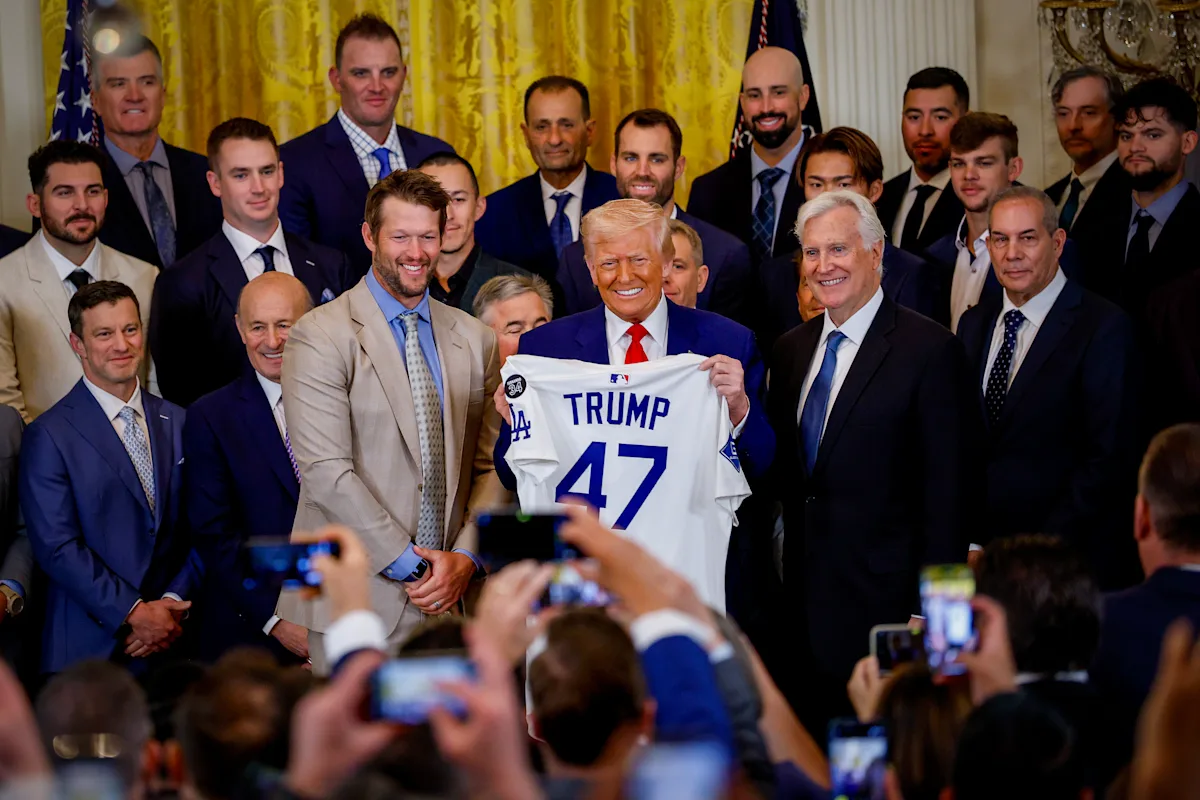
The Los Angeles Dodgers will head to the White House to celebrate their second-straight World Series title on July 23, according to the California Post.

The Dodgers will travel from Philadelphia to Washington D.C. on the off-day of their nine-game East Coast road trip where they will play the Phillies, New York Yankees and New York Mets.

Advertisement

“President Trump is excited to welcome the Los Angeles Dodgers BACK to the White House to celebrate their World Series championship!,” said White House assistant press secretary Taylor Rogers in a statement.

Advertisement

President Donald Trump posted an invitation to the Dodgers on social media shortly after their dramatic win in Game 7:

“Congratulations to the L.A. Dodgers, a game won by incredible CHAMPIONS!!! A lesser group of men would never have been able to win that game, or game 6, for that matter. So many stars made it all happen. Also, congratulations to ownership. What a great job they have done. SEE YOU ALL AT THE WHITE HOUSE!!!”

It was reported in February that the team was expected to make the trip at some point during the 2026 MLB season despite calls to cancel it in light of the Trump administration’s immigration policies.

While there was a backlash to attending the Trump White House last year, the team still put on a united front and had no notable holdouts despite past comments and actions, such as Dodgers manager Dave Roberts saying he would have skipped a visit in 2019 and Mookie Betts not attending with the Boston Red Sox after 2018.

Advertisement

Advertisement

Dodgers president Stan Kasten claimed “all” the players wanted to go in 2025, though at least one player wasn’t too enthusiastic. Kiké Hernández, a Puerto Rican fan favorite who has criticized Trump in the past, described it as “kind of a lose-lose situation for me” in comments to radio reporter Dave Vassegh.

Roberts told the Los Angeles Times in February that going to the White House to celebrate the World Series is a part of tradition.

“I was raised — by a man who served our country for 30 years — to respect the highest office in our country. For me, it doesn’t matter who is in the office, I’m going to go to the White House. I’ve never tried to be political. For me, I am going to continue to try to do what tradition says and not try to make political statements, because I am not a politician.”

World Series champions have typically made their White House visit when in town to play the Nationals. The schedule did not allow the Dodgers to make the trip when they played Washington in early April.

Source link

Advertisement
Continue Reading

Sports

Geovany Quenda Joins Chelsea on Eight-Year Deal

Published

on

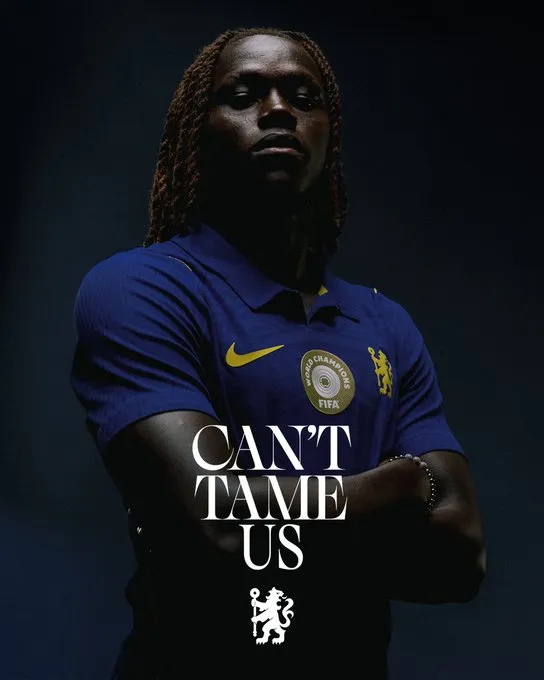
Chelsea have officially announced the signing of Portuguese winger Geovany Quenda from Sporting CP, with the 19-year-old signing an eight-year contract.

Quenda arrives at Stamford Bridge after spending the 2025/26 season on loan at Sporting, following Chelsea’s agreement to sign one of Portugal’s brightest young talents.

The Blues confirmed the transfer on social media with the message:

  • Maria Sharapova says Retirement was Years in the MakingMaria Sharapova says Retirement was Years in the Making

Advertisement

“He’s here.” 

Chelsea reportedly paid around £40 million for Quenda as part of a double deal that also brought midfielder Dário Essugo to west London from Sporting.

Speaking after completing the move, Quenda expressed his excitement about joining the club.

Advertisement

“I’m excited to work with my teammates and give everything for this club. I can’t wait to get started and help Chelsea achieve great things.”

The teenager made history at Sporting by becoming the club’s youngest-ever league goalscorer and quickly earned a reputation as one of Portugal’s most exciting young wingers because of his pace, creativity and style of play.

Quenda now begins the next chapter of his career at Chelsea, where he will hope to continue his development and make an immediate impact as the club builds for the future.

Advertisement

Source link

Advertisement
Continue Reading

Sports

Axar Patel makes big confession ahead of his 100th T20I: ‘I never imagined this’ | Cricket News

Published

on

Axar Patel makes big confession ahead of his 100th T20I: 'I never imagined this'
India’s Axar Patel (ANI Photo)

India all-rounder Axar Patel is set to achieve another major milestone when he takes the field in the fourth T20I against England, becoming the 31st Indian cricketer to play 100 T20 Internationals. The landmark comes just two matches after Axar claimed his 100th T20I wicket, underlining his consistent impact as one of India’s most reliable white-ball all-rounders over the past decade.Reflecting on his journey from making his T20I debut in 2015 to reaching the 100-match milestone, Axar admitted he never imagined representing India so many times.“When I played my first T20I, I never imagined I would play 100 matches. This England tour has been very special for me because I completed my 100 T20I wickets in the second match, and now I will play my 100th T20I in the fourth game. It’s a very special moment, and I am really enjoying it,” Axar said in a video shared by BCCI.The left-arm spin-bowling all-rounder also credited his teammates, coaches, and family for helping him reach the landmark.“It feels really good. Whenever you achieve a milestone, it’s never just about you. My teammates, coaches, and family have all played a role in this journey.”Axar also recalled the emotions of making his India debut and how representing the country remains every cricketer’s ultimate dream.“When you make your debut, it’s a completely different feeling. At that time, you don’t know how much you’ll achieve in your career. Now, I am about to play my 100th match, and it’s a feeling that can’t really be expressed. Even playing one match for India is a dream come true.”

Axar Patel’s T20I career stats

Since his debut in 2015, Axar has featured in 99 T20Is, scoring 746 runs at an average of 17.34 while taking 101 wickets at an impressive average of 21.86, with best figures of 3/9. He has also taken 38 catches, making valuable contributions in all three departments.The 31-year-old has been an integral member of India’s white-ball setup and played a key role in the team’s triumphs at the ICC Men’s T20 World Cup 2024 and ICC Men’s T20 World Cup 2026, cementing his reputation as one of the country’s premier T20 all-rounders.

Source link

Continue Reading

Sports

Nonconference Records in Last 10 Yrs for Programs in West

Published

on


  By SuperWest Sports Staff


Nonconference games can make or break a team’s season.

Preseason victories can propel a team into Playoff consideration; defeats can hold it back.

The table below shows the nonconference win percentages and win-loss records for the region’s top programs over the last 10 seasons.

Advertisement

Breakdown of Records Against Nonconference Foes (2016-2025)
Win % Team Record
83.3% Oregon 30-6
76.5% Utah 26-8
75.0% Washington 27-9
70.6% Cal 24-10
66.3% BYU 61-31
65.9% Air Force 29-15
64.0% WSU 32-18
63.3% Colorado 19-11
63.0% San Diego State 29-17
61.4% Fresno State 27-17
58.1% Wyoming 25-18
57.6% ASU 19-14
57.1% Arizona 16-12
55.9% USC 19-15
54.2% Hawai’i 26-22
53.3% Boise State 24-21
51.3% New Mexico 20-19
50.0% UNLV 20-20
50.0% Stanford 16-16
50.0% UCLA 15-15
43.2% Utah State 19-25
42.9% Nevada 18-24
40.0% Oregon State 18-27
36.6% San Jose State 15-26
31.7% UTEP 13-28
31.3% New Mexico State 20-44
30.0% Colorado State 12-28

Source link

Continue Reading

Sports

Brooks Koepka reveals best part of PGA Tour return (and worst)

Published

on

Source link

Advertisement
Continue Reading

Sports

Switzerland end 72-year wait, set quarterfinal date with Argentina | FIFA World Cup 2026

Published

on


For 120 minutes in Vancouver, Switzerland and Colombia played as if defeat frightened them more than victory tempted them. Then came the penalties, and with them the kind of theatre the match had spent two hours refusing to offer.


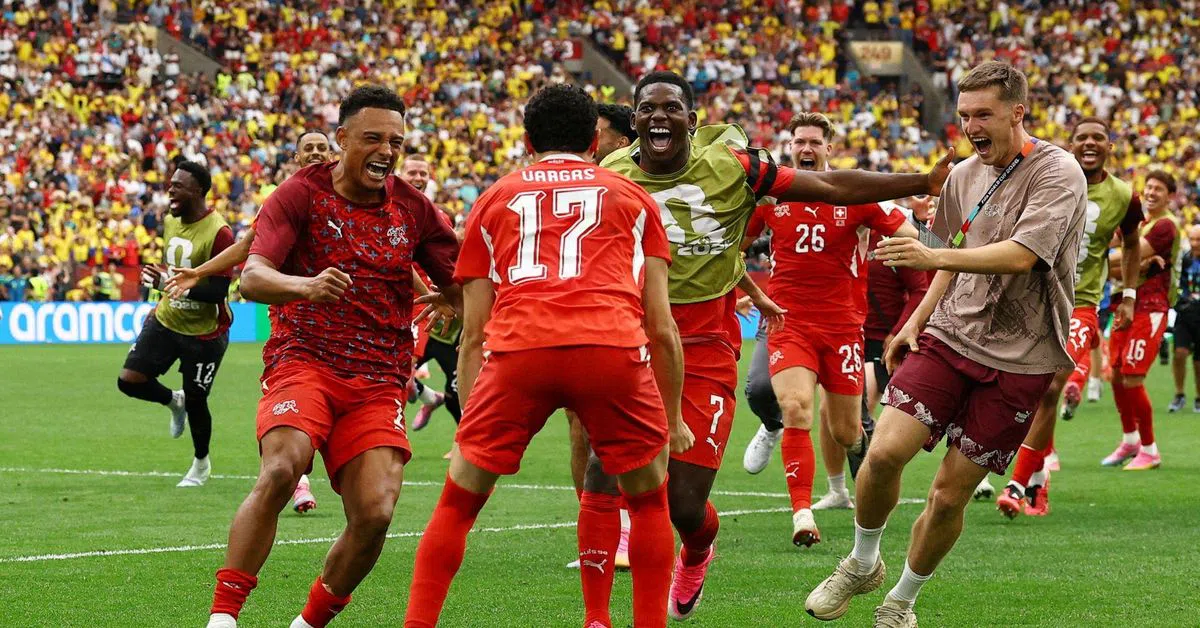
Ruben Vargas stroked the decisive kick into the bottom corner as Switzerland beat Colombia 4-3 in a shootout after a goalless draw early Wednesday morning, Indian time, reaching their first World Cup quarter-final since 1954. Gregor Kobel was the Swiss hero, saving Cucho Hernandez’s penalty after Davinson Sanchez had already struck the crossbar for Colombia.


Advertisement


Switzerland will now face holders Argentina in Kansas City, a meeting few would call easy but one they have earned through organisation, nerve and a refusal to let another Round of 16 end in familiar pain.


“It is very difficult for me to realise what we achieved today,” Vargas said. “For 120 minutes we gave it all on the pitch. We faced a strong opponent, but now we made history.”


Advertisement


Colombia, who had hoped to reach only their second World Cup quarter-final after 2014, were left with another penalty wound. They also lost a shootout in the last 16 in 2018, against England.


A match trapped by its own stakes


Advertisement


This was the final Round of 16 tie and, on quality of drama before penalties, probably the most cautious knockout match of the tournament. Two excellent defensive units cancelled each other out. The combined expected goals figure across 90 minutes was just 0.7, a reflection of how little space either side allowed and how rarely either goalkeeper was seriously exposed.


Colombia entered the match with one of the tournament’s strongest defensive records, having conceded only once in their previous games. Switzerland, too, were compact and disciplined, even after suffering a major pre-match setback when Johan Manzambi was ruled out with a knee injury sustained in training.


Advertisement


The 20-year-old attacker had been Switzerland’s breakout player of the tournament, contributing three goals and two assists. Without him, the Swiss lacked the spark to unsettle Colombia regularly.


Colombia, backed by a sea of yellow at BC Place, had the better early chance. In the 21st minute, Gustavo Puerta curled an effort from around 18 yards towards the far corner, forcing Kobel into a sharp diving save to his left. Switzerland responded through Fabian Rieder from a tight angle, but Camilo Vargas held firm.


Advertisement


After that, the match settled into a long stretch of tension rather than invention.


Kobel, crossbar and Colombian agony


Advertisement


If the 90 minutes were controlled by caution, the final moments of regulation and extra time at least hinted at what might have been.


Dan Ndoye almost won it for Switzerland in the 91st minute, making a clever run before dragging a low shot across goal and just wide of the far post.


Advertisement


In extra time, Colombia centre-back Jhon Lucumi came even closer. He rose unmarked to meet a corner and crashed his header against the crossbar. For a moment, the stadium seemed ready to erupt. Instead, the ball stayed out, and the match returned to its anxious rhythm.


There was also one penalty appeal for Colombia when Jaminton Campaz went down after contact with Miro Muheim in the first period of extra time. The pro-Colombia crowd demanded a spot kick, but referee Ivan Barton saw it as a collision rather than a foul. There was contact, but not enough to make it a clear error or a decisive intervention.


Advertisement


The match moved, almost inevitably, to penalties.


How the shootout turned


Advertisement


Juan Fernando Quintero and Granit Xhaka converted the opening penalties. Then Sanchez stepped up for Colombia, with Kobel offering him the right side of the goal. Sanchez took the route but hit the crossbar. The ball bounced down near the line but did not cross it.


Zeki Amdouni then scored from a short run-up to put Switzerland ahead. Campaz kept Colombia alive with a low effort that squirmed under Kobel.


Advertisement


Manuel Akanji had a chance to strengthen the Swiss position but fired over the bar. At that point, the shootout had found its balance again.


Then Kobel made the save that decided the night. Hernandez went to his right. Kobel went the same way and pushed the ball away brilliantly.


Advertisement


Cedric Itten scored down the middle. Luis Diaz answered for Colombia to make it 3-3. That left Vargas with the fifth Swiss kick and the chance to carry his country past a barrier that had stood for generations.


He sent Camilo Vargas the wrong way and finished low. The Swiss bench poured forward. A team that had made consistency its identity finally added progress to it.


Advertisement


Switzerland finally break the Round of 16 wall


Switzerland have become one of international football’s most reliable tournament qualifiers. This was their sixth successive World Cup. But reliability had also become a cage.


Advertisement


They had fallen in the Round of 16 in 2006, 2014, 2018 and 2022. They had also suffered penalty pain at Euro 2024, losing 5-3 to England in the quarter-finals. This win did more than move them into the last eight. It removed the burden of a repeated ending.


It is Switzerland’s fourth World Cup quarter-final in history and their first since 1954, when they hosted the tournament. For a side often praised for being organised, professional and difficult to beat, this was a night when they became something more: historic.


Advertisement


Their defensive structure gives them a chance against Argentina. Lionel Messi and company have scored freely in the knockouts, but they also came dangerously close to exiting against Cape Verde and Egypt. Switzerland will not overwhelm Argentina with flair, but they can frustrate, compress space and wait for moments through Breel Embolo and, if fit, Manzambi.


They will be hard to beat. At this stage, that is no small thing.


Advertisement


Colombia’s yellow wave ends in silence


Colombia’s football at this tournament was not always perfect, and this match was not one of their better attacking displays. But their supporters were among the defining sights and sounds of the World Cup.


Advertisement


BC Place felt more like Barranquilla than Vancouver. Colombian fans vastly outnumbered Swiss supporters, turning the stadium into a yellow wall. They had followed their team across all three co-host countries — Mexico, Canada and the United States — through changing time zones, climates, altitude and humidity.


Head coach Nestor Lorenzo had acknowledged the difficulty before the game, saying Colombia had been exposed to nearly every kind of condition the tournament could offer. Their supporters accepted the same challenge with colour and noise.


Advertisement


The previous night, fans had filled the streets outside the team hotel, singing and waiting for the players. Luis Diaz appeared on a balcony, punched the air and sent them into another wave of excitement.


That devotion made the shootout defeat even more painful.


Advertisement


Was this James Rodriguez’s farewell?


The loudest emotional moment before the shootout came in the 66th minute, when James Rodriguez was substituted. Thousands of Colombian fans stood and applauded.


Advertisement


Rodriguez turns 35 later this week, and every major tournament appearance now carries the possibility of being his last. He made his senior debut in 2011 and has become arguably Colombia’s greatest player, leading the country’s all-time appearance list. This was his 132nd cap.


There were still flashes in Vancouver: a turn away from pressure, a precise forward pass, the old ability to see the next move before others. But those moments faded as the minutes accumulated. His legs looked tired, and his influence waned.


Advertisement


Rodriguez is currently without a club after leaving Minnesota United in May, only three months after joining them. It is possible that this was his final World Cup appearance. If so, Colombia’s supporters seemed to understand the weight of the moment before the rest of the night had even reached its heartbreak.


A defensive duel, not a failure of ambition alone


Advertisement


It would be easy to call this match poor. It was certainly not open, fluid or rich in chances. But that is only half the explanation.


Both sides defended well. Switzerland closed lanes and prevented Colombia’s creative players from receiving comfortably between the lines. Colombia’s back line, one of the best at the tournament, denied Switzerland the space they needed, particularly in Manzambi’s absence.


Advertisement


The result was a game in which risk felt too expensive. Neither side wanted to be the one to make the mistake. That produced a cautious 120 minutes, but it also made the shootout feel even more severe. After so much control, the match was decided by nerve.


Switzerland had more of it.


Advertisement


Argentina await


The quarter-final against Argentina in Kansas City will ask a different set of questions. Argentina will bring Messi, emotional momentum and the confidence of surviving two chaotic knockout matches. Switzerland will bring shape, discipline and the knowledge that they have already crossed a psychological threshold.


Advertisement


They may not have lit up the Round of 16, but they survived it. For a team haunted by this stage for nearly two decades, that matters.


Colombia leave with regret, admiration from their supporters and another penalty scar. Switzerland leave with history.


Advertisement


The last Round of 16 match completed the quarter-final line-up. It did not offer goals. It offered endurance, pressure and, finally, one calm touch from Ruben Vargas that sent a nation where it had not been for 72 years.

Source link

Continue Reading

Sports

The Vikings Have 5 Red Flags in 2026

Published

on

Advertisement

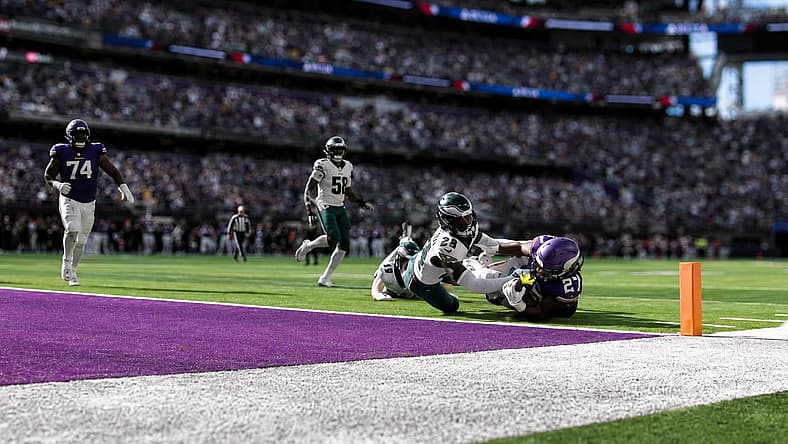
Jordan Mason scores a touchdown against the Eagles at U.S. Bank Stadium.
Vikings running back Jordan Mason fights through contact near the goal line at U.S. Bank Stadium as Minnesota finishes a touchdown against Philadelphia in a home matchup. On Oct. 19, 2025, Mason powered into the end zone against the Eagles, giving the Vikings a physical scoring moment from the team’s official game footage. Mandatory Credit: YouTube.

The NFL regular season is now less than nine weeks away, and when the Minnesota Vikings get there, they’re supposed to finish 8-9 or 9-8, according to sportsbooks. It’s the same forecast that followed the franchise in the summer of 2024 before Minnesota chipped off 14 wins. With such a mediocre projection, the club must have some red flags, right?

Indeed, and we are here to lift up the main ones. The red flags are ranked in ascending order (No. 1 = biggest red flag).

Vikings’ Biggest Concern Still Starts at QB

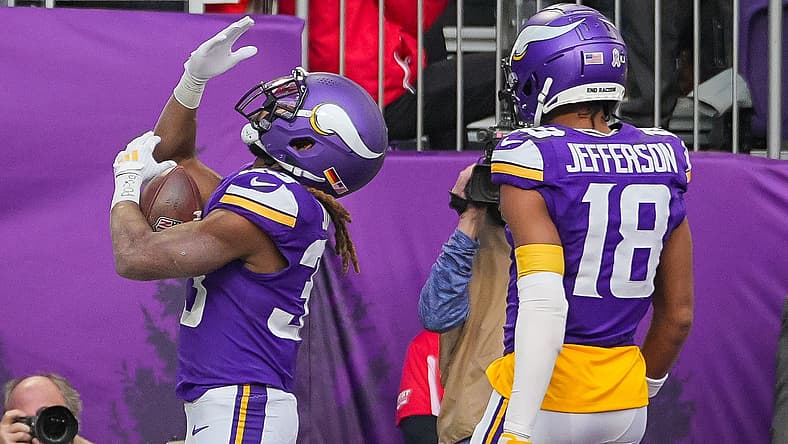
Aaron Jones celebrates a touchdown with Justin Jefferson against the Cardinals. Vikings red flags 2026
Minnesota Vikings running back Aaron Jones celebrates with Justin Jefferson at U.S. Bank Stadium after scoring in the fourth quarter against the Arizona Cardinals. On Dec. 1, 2024, Jones marked the touchdown beside Minnesota’s star wide receiver as the Vikings pushed through another late-game sequence in front of their home crowd. Mandatory Credit: Brad Rempel-Imagn Images.

Bonus: No Game-Changing RB

VikingsTerritory mentions the rushing offense — and has done so for four years — so much that it always feels like the sun rising.

Minnesota ranked 19th in 2025 per rushing playcall percentage. The best teams — ones that win Super Bowls — run the football at a more balanced clip. Then, every summer, the Vikings coaches outwardly profess that they’re going to run the rock more and only effectuate that mission a teensy bit.

Advertisement

The underlying problem? The team doesn’t have a young, game-changing running back. That was Dalvin Cook nine years ago, and he’s long gone. Rookie Demond Claiborne could fill this role, but 6th-Round tailbacks usually end up as RB3s or out of the league.

Minnesota’s main running backs are Aaron Jones and Jordan Mason. The duo is not overly dynamic.

5. iOL Depth

These are the Vikings’ interior offensive line starters:
Donovan Jackson (LG), Blake Brandel (C), and Will Fries (RG).

Advertisement

These are the Vikings’ interior offensive line main backups:
Joe Huber (LG), Michael Jurgens (C), and Henry Byrd (RG).

Minnesota is one iOL injury away from serious heartburn.

4. Win-Now Head Coach v. Brand New GM

Most coaches don’t enter Year No. 5 with franchises sans a playoff win. But Kevin O’Connell will.

The Vikings are in the middle of their third-longest playoff win drought in franchise history, and while no one is vociferously screaming about O’Connell on the hot seat, doesn’t he have to, you know, win a postseason game sooner rather than later?

Advertisement

Meanwhile, Minnesota fired Kwesi Adofo-Mensah in January and hired new general manager Nolan Teasley about five weeks ago. Teasley probably doesn’t think, “Oh, dear God, this team must win now.” He’s likely — hopefully — preparing the franchise for the long term.

If O’Connell needs a player via trade before the deadline in November, for example, will Teasley be willing to pull the trigger on a draft pick? There’s some self-imposed friction here — a head coach who must win versus a general manager who just walked through security.

3. Ruthless NFC Competition

As recently as three years ago, the NFC North always had a team to beat up. They just did. It was usually the Detroit Lions, sometimes intermixed with a mediocre-to-poor Chicago Bears team. The Vikings have also been mediocre every other year since 2012.

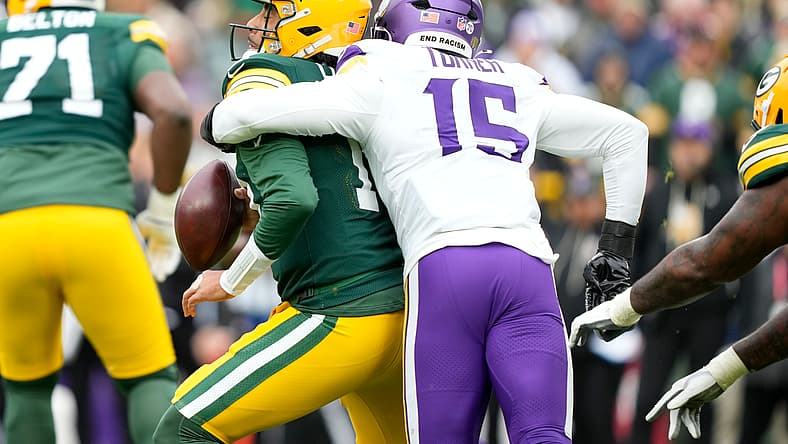
Dallas Turner sacks Jordan Love during a Vikings-Packers game at Lambeau Field. Vikings red flags 2026
Green Bay Packers quarterback Jordan Love is brought down by Minnesota Vikings linebacker Dallas Turner at Lambeau Field during a division matchup in Green Bay. On Nov. 23, 2025, Turner finished the sack in the first half, giving Brian Flores’ defense a key pressure moment against Love and the Packers’ offense. Mandatory Credit: Kayla Wolf-Imagn Images.

The days of one pushover team in the NFC North are gone. Oddsmakers project every team to win at least eight games. Every NFC North matchup features, at least, a Wildcard playoff level of difficulty.

Even if Minnesota is good, 10-7 or so may be the ceiling inside a vicious division.

Advertisement

2. OLB Depth

The Eagles acquired Jonathan Greenard via trade in April, and the Vikings went from showcasing the OLB room as its deepest unit to a roster question mark. Instead of Greenard, Andrew Van Ginkel, and Dallas Turner — “too much of a good thing” — it’s Van Ginkel, Turner, and possibly Bo Richter, Jake Golday, and Tyrion Ingram-Dawkins. There is genuine uncertainty at OLB3, something Vikings fans have not experienced in years.

Of course, this problem is easily fixable: Teasley could sign Von Miller, Jadeveon Clowney, or Leonard Floyd after breakfast today. He has $13 million in cap space.

But until he does that, Vikings football is one injury away from displaying Dallas Turner and Bo Richter as the main OLBs on the field on any given Sunday.

1. QB Uncertainty

It is terrific to have quarterback depth like Kyler Murray, J.J. McCarthy, Carson Wentz, and Max Brosmer. Sure. If one quarterback gets hurt, Minnesota has options, unlike 2023 and 2025 when it had to scramble and hope for the best.

Advertisement
Kyler Murray throws a pass during Vikings minicamp in Eagan. Vikings red flags 2026
Minnesota Vikings quarterback Kyler Murray throws during minicamp at TCO Performance Center in Eagan as he works through summer reps inside Kevin O’Connell’s offense. In June 2026, the veteran passer continued learning the system after signing in March, preparing for a high-profile quarterback competition within Minnesota’s reshaped QB room before training camp arrived. Mandatory Credit: YouTube.

Here’s the one problem with having no declared QB1 by July: no other NFC North team is in that position. The Bears have Caleb Williams. The Lions had Jared Goff. The Packers have Jordan Love. Minnesota is the only NFC North squad with a huge quarterback mystery.

Generally speaking, it’s better to be in the other boat.


avatar
Dustin Baker is a novelist and political scientist. His second novel, The Invaders , is out now. So is … More about Dustin Baker

Source link

Advertisement
Continue Reading

Sports

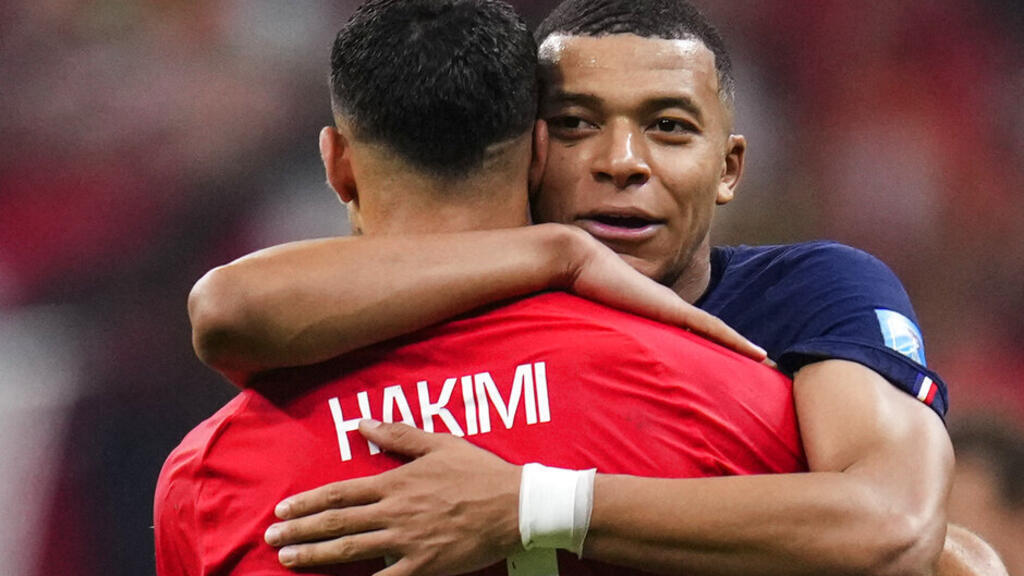
‘Epic rematch’ expected as Les Bleus face down The Atlas Lions

Published

on

Source link

Continue Reading

Sports

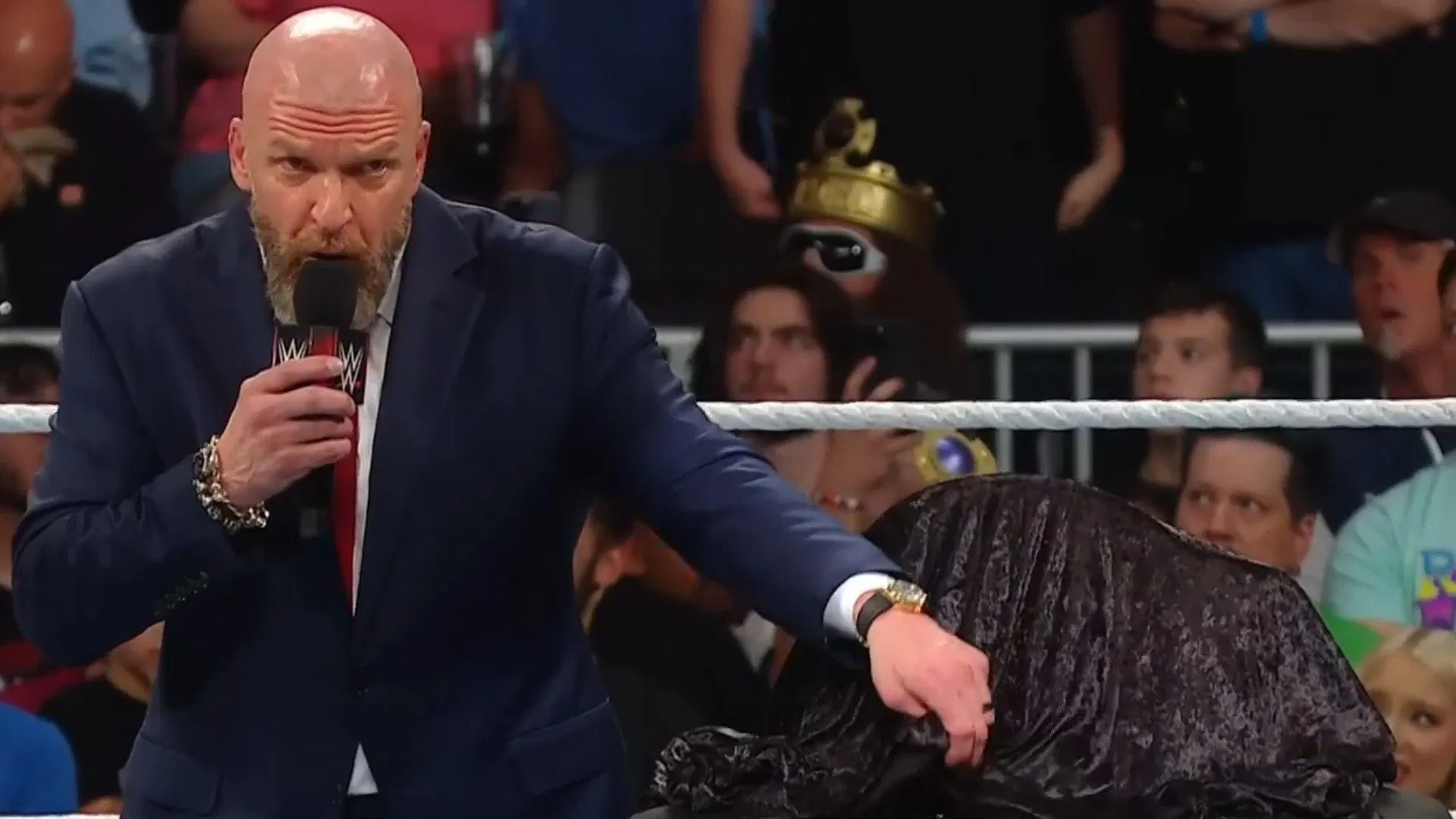
WWE launches brand new title belt as merchandise at $2,000

Published

on

WWE is full of merchandise. With every possible chance, they ought to make some sort of merchandise from it and get their money’s worth. Now, a new addition has been made to their titles: a once-a-year-seen title replica has officially begun its sale. However, as of now, only the Men’s title is for sale.

The Stamford-based promotion is selling full-size replicas of its Crown Jewel Championship title belt through the WWE Shop for $1,999.99. The design is exactly like the original, with gold-plated accents and emerald-green gems in its enormous size. The title was introduced in 2024, specifically for the Crown Jewel PLE held annually. It began in Riyadh, and last year it went to Perth, Australia.

In 2024, Cody Rhodes and, last year, Seth Rollins won the very titles. The actual championship, however, no longer remains with the winners, as it is kept on permanent display at the WWE Experience attraction in Riyadh, Saudi Arabia, and is brought back for the next iteration. It can now be seen frequently with replicas for those who buy the premium collectible.

Advertisement

WWE Crown Jewel in 2025 took place in Perth

Crown Jewel 2025 took place on October 11, 2025, at the RAC Arena in Perth, Australia, delivering a historic five-match card. The show opened with Australia’s Bronson Reed defeating Roman Reigns in an Australian Street Fight. For the Women’s Crown Jewel Championship, RAW’s Women’s World Champion Stephanie Vaquer defeated SmackDown’s WWE Women’s Champion Tiffany Stratton.

Seen as one of John Cena’s best matches in 2025, he battled AJ Styles in a barn-burner with massive callbacks to the moves of wrestling legends. Cena captured a victory, making their singles matches in their five-match rivalry 3-2. In the penultimate match, Australian Anomaly Rhea Ripley, with her partner Iyo Sky, won the Women’s Tag Team Championship from The Kabuki Warriors.

The main event then was for the Men’s Crown Jewel Championship, where RAW’s World Heavyweight Champion Seth Rollins defeated SmackDown’s Undisputed Champion Cody Rhodes. In the end, both the Crown Jewel titleholders were in the ring celebrating their triumphs, capping off one of 2025’s best PLEs.