The International Olympic Committee said on Thursday it was re-introducing testing for gender to determine eligibility to compete in the female category, preventing transgender women from competing. The screening will mean Olympic women’s sports from the 2028 Los Angeles Games will be limited to biological females, which would also rule out those with differences in sexual development (DSD). FRANCE 24’s Selina Sykes reports.
BOTTOM LINE: New Orleans hits the road against Toronto looking to break its four-game road skid.
The Raptors have gone 19-16 at home. Toronto is 7-4 in one-possession games.
The Pelicans are 9-27 on the road. New Orleans ranks third in the Western Conference with 16.6 fast break points per game led by Trey Murphy III averaging 3.3.
The Raptors average 113.9 points per game, 5.4 fewer points than the 119.3 the Pelicans give up. The Pelicans are shooting 46.6% from the field, 0.1% lower than the 46.7% the Raptors’ opponents have shot this season.
Advertisement
The teams meet for the second time this season. The Pelicans won 122-111 in the last matchup on March 12.
Advertisement
TOP PERFORMERS: Scottie Barnes is averaging 18.5 points, 7.8 rebounds, 5.5 assists and 1.5 blocks for the Raptors. Ja’Kobe Walter is averaging 2.2 made 3-pointers over the last 10 games.
Derik Queen is scoring 11.3 points per game and averaging 6.8 rebounds for the Pelicans. Zion Williamson is averaging 20.3 points and 5.2 rebounds over the last 10 games.
Advertisement
LAST 10 GAMES: Raptors: 5-5, averaging 116.2 points, 40.1 rebounds, 30.0 assists, 9.2 steals and 5.1 blocks per game while shooting 49.7% from the field. Their opponents have averaged 114.6 points per game.
Pelicans: 5-5, averaging 116.9 points, 43.6 rebounds, 26.2 assists, 9.3 steals and 5.7 blocks per game while shooting 48.5% from the field. Their opponents have averaged 113.4 points.
Advertisement
INJURIES: Raptors: Immanuel Quickley: out (foot).
Advertisement
Pelicans: Trey Murphy III: day to day (ankle), Bryce McGowens: day to day (toe).
___
The Associated Press created this story using technology provided by Data Skrive and data from Sportradar.
Jan 28, 2020; Dallas, Texas, USA; Arizona Cardinals quarterback Kyler Murray during the second quarter of the game between the Dallas Mavericks and Phoenix Suns at American Airlines Center. Mandatory Credit: Kevin Jairaj-Imagn Images
Two-time Pro Bowler Kyler Murray is a Minnesota Viking after months of fans wondering if the Arizona Cardinals would let him walk for free. They did. And while the whole Vikings enterprise can benefit from Murray’s arrival, one man in particular should be rejuvenated — to the point of doing cartwheels: Justin Jefferson.
Minnesota’s QB fix may also calm its biggest contract question.
It also helps that Jefferson can reasonably ask for a contract extension next offseason. Murray will help him return to his 2020-2024 form.
Advertisement
Murray Will Strengthen the Vikings’ Case with Justin Jefferson
There’s a better chance of Jefferson staying in Minnesota for the long haul with Murray in the house.
Minnesota Vikings wide receiver Justin Jefferson (18) moves through game action against the Cincinnati Bengals, with the moment taking place on Sep 21, 2025 at U.S. Bank Stadium in Minneapolis, as Jefferson works through coverage and tracks the ball during a regular season matchup in front of the home crowd. Mandatory Credit: Jeffrey Becker-Imagn Images.
Murray’s Arrival Should Stymie Any Budding Disgruntlement from Jefferson
Jefferson turns 27 this summer, a gentle reminder that even elite receivers have a finite prime, however gracefully they age. At 27, Jefferson is a lethal weapon, but the version of him at 30, while still formidable, won’t be identical; it’s just reality.
This should have been central to Minnesota’s quarterback decisions this offseason. It probably was. The Vikings aren’t just managing a typical roster timeline; they possess a top-five player, a future Hall of Famer, a championship-caliber weapon in his prime. A player of that caliber demands strategic urgency, meaning quarterback planning cannot be approached casually.
Advertisement
That’s why the Murray acquisition was so critical. Had Minnesota failed to secure him and settled for another unstable quarterback situation, they would have risked wasting Jefferson’s peak years, making a trade request not only conceivable but entirely justifiable.
December 2025 already raised concerns, with too much focus on whether Jefferson could even reach 1,000 yards, rather than on his potential impact in a deep playoff run. A repeat of that scenario in 2026 would mean squandering the prime of the Vikings’ most gifted player.
The Murray move offers significant promise, providing Jefferson with a quarterback plan that aligns with the urgency of his timeline. Had they not, well, it might’ve pissed off the otherwise happy-go-lucky Jefferson.
The Quiet 2025 Campaign
Advertisement
In 2025, Jefferson tallied 84 catches for 1,048 yards and 2 touchdowns. For an ordinary receiver, he could print that stat line and frame it on his wall. For Jefferson, that’s pedestrian. Nearly all Vikings quarterbacks had trouble utilizing Jefferson last season, and J.J. McCarthy, oddly, had a rough time targeting him, making him the first Vikings quarterback in six years with the problem.
At the peak of Jefferson’s powers — 2022, when he won the NFL’s Offensive Player of the Year award — he accounted for 128 receptions, 1,809 yards, and 8 touchdowns. With Murray in the saddle, dreams of those impressive numbers are possible once again.
Jefferson’s Contract
Jefferson’s contract includes a checkpoint after the 2026 season, which becomes relevant when considering a potential trade if he becomes so frustrated that he wants a change of scenery.
Advertisement
Trading him this offseason would have been unthinkable. A pre-June 1 trade would have saddled the Vikings with a $46.6 million dead cap hit while simultaneously losing their best player — a catastrophic move. Furthermore, Jefferson has not indicated any intention to leave, making the scenario entirely hypothetical.
However, 2027 presents a more viable opportunity for reassessment. If Minnesota fails to reach the playoffs again in 2026 and its quarterback situation remains unresolved, a post-June 1 trade the following offseason would incur a significantly lower dead money charge of approximately $13.5 million. It’s a much more manageable figure, especially considering Jefferson’s guaranteed money extends through 2026.
Arizona Cardinals quarterback Kyler Murray (1) goes through pregame warmups ahead of a matchup with the Houston Texans, with the scene unfolding on Oct. 24, 2021 in Glendale, Arizona, as Murray loosens up and prepares for action while running drills prior to kickoff at home. Mandatory Credit: Michael Chow-Imagn Images.
Therefore, the contract structure allows for future re-evaluation. That may not be necessary with Murray throwing Jefferson the ball. Jefferson could be so content with Murray as QB1 that the only financial matter next offseason is when the extension hits.
No Fear of Trade Fate — like Randy Moss 20 Years Ago?
On that note, the endgame is to keep Jefferson in Minnesota until his retirement. Twenty years ago, Vikings fans powerlessly watched as the franchise traded Moss to the Oakland Raiders while turning the compensation package into true pocket lint. Squat. Nobody wants to watch that movie again; it was worthy of a Razzie.
Advertisement
Minnesota Vikings wide receiver Justin Jefferson sits courtside during a WNBA playoff game between the Minnesota Lynx and Connecticut Sun, with the appearance occurring on Oct 1, 2024 at Target Center in Minneapolis, as Jefferson watches the semifinal action while supporting the local team from a front-row seat. Mandatory Credit: Matt Krohn-Imagn Images.
Steady quarterback play would enable Jefferson to remain where his feet are planted. The contrary is another season of middling or miserable quarterback output. For example, if Minnesota has signed free-agent passer Jimmy Garoppolo as an insurance plan, committed to McCarthy as the QB1, and then let the chips fall, there’s a decent chance that the 2026 campaign would emulate 2025 for Jefferson’s purposes.
Jefferson wants to contend for a Super Bowl, not reach 1,000 yards in Week 18.
Murray in town has the potential to satisfy Jefferson, a wideout smack dab in the middle of his prime.
What’s your favorite horror movie? “Halloween”? “The Ring”? “Invasion of the Body Snatchers”?
Mine is a little-known arthouse classic called “The Hardest Golf Course in the World?” The 15-minute short never appeared in theaters nor has it received a Rotten Tomatoes rating; it went straight to the DP World Tour’s YouTube page where it has drawn a meager audience — about 15,000 viewers — likely because most golfers don’t have the stomach for it.
Among the terrors in this fright flick: England’s Matthew Jordan putting up a slope only for the ball to . . . take a 90-degree turn and roll back toward him (“Makes you look silly,” a commentator says); Andreas Halvorsen of Norway chunking a greenside bunker shot . . . into the rough. And Troy Merritt playing left-handed off a cart path from where he . . . chips his ball into a bush. Those are just the PG-13 scenes; the NC-17 clips aren’t suitable for this site.
This gruesome medley of shots, among many other lowlights, all occurred at the 2025 Hero Indian Open at Delhi Land & Finance Country Club, more commonly known as [cue dissonant violin chords] . . . DLF.
Advertisement
There’s a fairway out there somewhere.
getty images
DLF, which has played host to the Indian Open since 2017, is a sharp-fanged beast that feeds on uncommitted swings and uncertain reads. The original parkland design, by Arnold Palmer, debuted in 1999 complete with 15,000 newly planted trees and 195 floodlights, which allowed for golf under the stars on all 18 holes. By 2015, though, the course had a new look and more fearsome feel, thanks to a Gary Player redo that included nine new holes and a retooling of nine of Palmer’s holes. The Player course, which stretches north of 7,600 yards, has two lakes, craggy rock formations, fairways choked by trees and bushes and bunkers that resemble the Great Pit of Carkoon. And then you get to the greens, which are about as easy to handle as the banks on a Nascar track. As one course review site noted of DLF, “The average handicap golfer will need to bring a sense of humour and an arsenal of golf balls.”
The pros, too. The DP World Tour is back at DLF this week for the latest playing of the Indian Open, and, after a first round in which 14 players failed to break 80, familiar refrains (shrieks?) could be heard emanating from the press center.
“Might be the hardest course this year,” said German pro Freddy Schott, who had to take two drops Thursday, both of which led to bogeys. “Your game has to be so good overall, there’s not a thing which can leak.”
Advertisement
And that was your first-round leader talking! Schott erased his leaky swings with a stunning eight birdies to take the solo lead at six under.
“It’s a course that you need to be patient,” added Eugenio Chacarra after a nifty five-under 67. “I just think it’s a real golf course. You hit every club in the bag, you can’t really have a weakness — you need to hit it good from the tee, you need to have a good approach, the landing areas are small. You need to putt good, the greens are firm and fast and it’s hard to read them.”
A real golf course.
The pros on the other end of the ’board weren’t as chatty, but their cards spoke volumes. Shubhan Jaglan of India shot a back-nine 49 that included a double, two triples and a quad. Amardeep Malik, also of India, made four triples and signed for an 89.
Advertisement
Thursday was not Amardeep Malik’s day at DLF.
getty images
Akshay Bhatia, who won the Arnold Palmer Invitational earlier this month, hit his opening tee shot, on the par-4 10th, out of bounds and made a double. Five holes later, on the par-4 15th, Bhatia accidentally played the wrong ball with his second shot, leading to a two-shot penalty and a triple-bogey 8. Bhatia bounced back with a front-nine 33 but still finished with a welcome-to-DLF 77. “Glad I didn’t shoot 80,” he said with a nervous laugh.
In 2025, three of DLF’s holes ranked among the 10 toughest holes on the DP World Tour: the 414-yard par-4 14th, which had a scoring average of 4.54; the 535-yard par-4 (yes, par-4!) 17th (4.51); and the 446-yard par-4 6th (4.44). Of the 17th, the droll English pro, Eddie Pepperel, tweeted in 2018, “The great thing about the 17th hole in India is that it has 15,000 rocks and 15 fans. Most great 17th holes have 15 rocks, and 15,000 fans.”
In the first round Thursday, 14 was playing harderstill, to a stroke average of 4.93. Twenty-five players made double or worse.
Advertisement
You might be asking yourself, What was Gary Player’s end game here? In an era when playability and user-friendliness have become fashionable, what was the motivation for building such a shin-kicking test? On Thursday afternoon, I dropped Player’s office a line to see if he might talk me through his design strategy. Player was traveling, but one of his representatives did send me a written response from the Black Knight on his “key design philosophies” at DLF.
“Our design intent was to create a captivating and memorable golf course that would achieve world-class standards,” Player wrote. “While the course presents a meaningful challenge, it has been exceptionally well-received by the golfing community.”
He went on: “The course features an immense amount of variety and strategic interest, highlighted by iconic revetted bunkers, a dramatic rock quarry, a large lake, compelling contouring, and breathtaking vistas. What makes the achievement even more remarkable is that the entire landscape began as flat ground. To transform that blank canvas into 18 holes of championship golf is truly extraordinary. The experience is intentionally thought-provoking, offering a wide range of shot values that challenge players to think strategically throughout the round. Every hole offers something unique, continually engaging the player’s attention from the first tee to the final green.”
Oh, they’ll get your attention alright. They might keep you up at night, too.
Advertisement
Two years ago, the DP World Tour social team asked a handful of pros what an 18-handicapper might shoot at DLF. The question drew wry smiles, if not outright laughter, from most of the players — and chilling answers.
“I think I can easily see 80 for myself,” said Niklas Norgaard Moller of Denmark. “I think we’re close to 150, maybe 160. Such a difficult course.”
An Eagles love story has taken off in the City of Brotherly Love.
Susie Celek, the ex-wife of Super Bowl champion Brent Celek, took to social media this week to reveal her relationship with former Eagles player Hollis Thomas.
Susie shared a video of her and Thomas during various outings, highlighting moments of affection.
Advertisement
She captioned it, “Life trends show I’m not big on commitment, but I’m stuck on you, big man.” Lionel Richie’s “Stuck on You” was attached to the post.
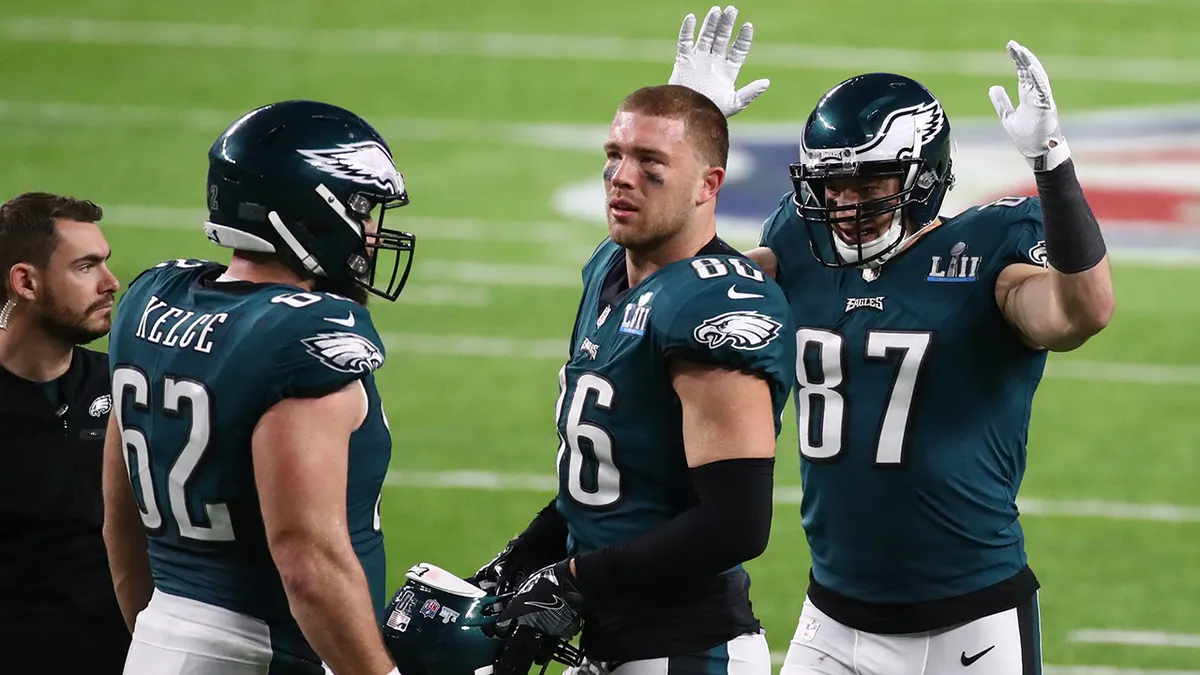
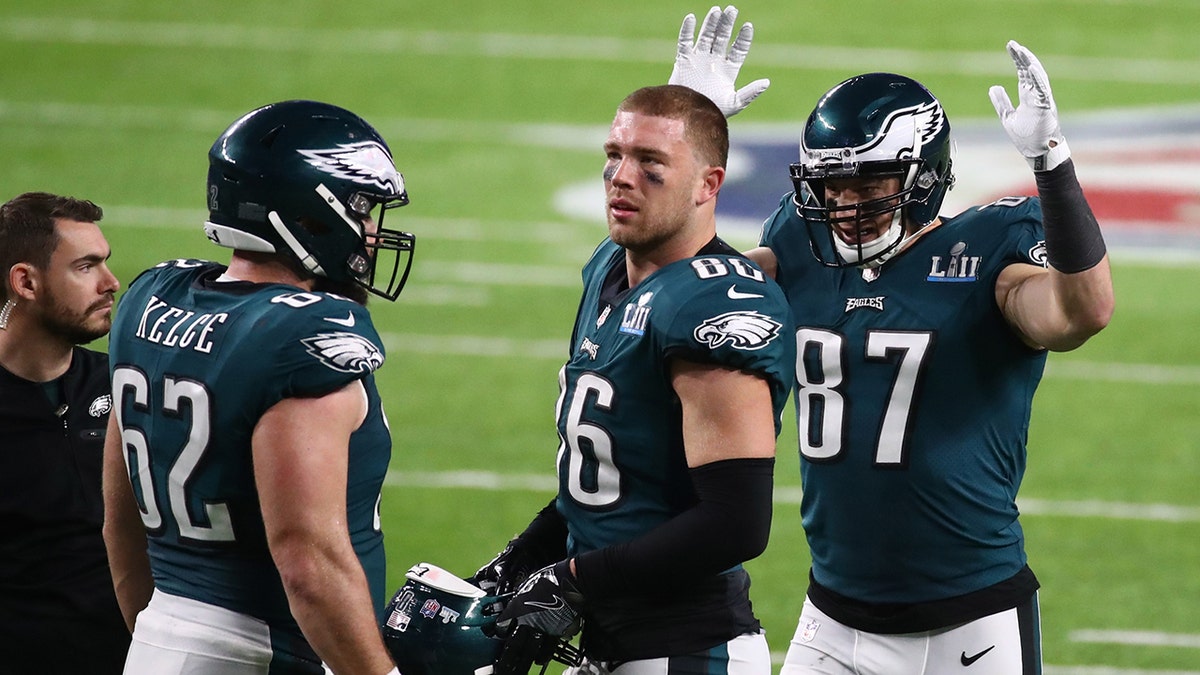
Jason Kelce (62), Brent Celek (87) and Zach Ertz (86) of the Philadelphia Eagles celebrate Ertz’s touchdown against the New England Patriots during the fourth quarter in the Super Bowl at U.S. Bank Stadium Feb. 4, 2018, in Minneapolis. (Gregory Shamus/Getty Images)
The timing of the start of Susie’s relationship with Thomas and the end of her marriage to Celek is unclear.
Celek spent his entire NFL career with the Eagles, helping the franchise win its first Super Bowl title in 2017. He retired after the 2017 season. The tight end missed only one game in his 11-year career.
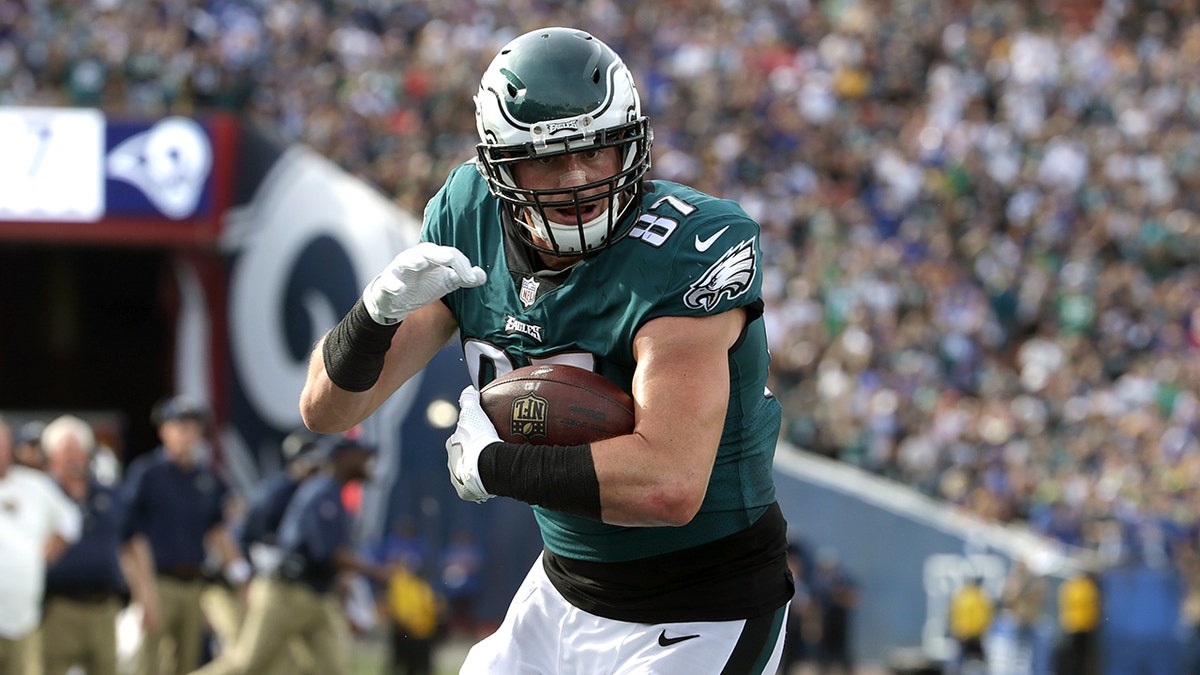
Brent Celek of the Philadelphia Eagles scores a touchdown during the first quarter of a game against the Los Angeles Rams at the Los Angeles Memorial Coliseum Dec. 10, 2017, in Los Angeles. (Gross/Getty Images)
He finished his career with just under 5,000 receiving yards and 31 touchdowns. Thomas signed with the Eagles in 1996 and left after the 2005 season, two years before Celek joined the franchise.
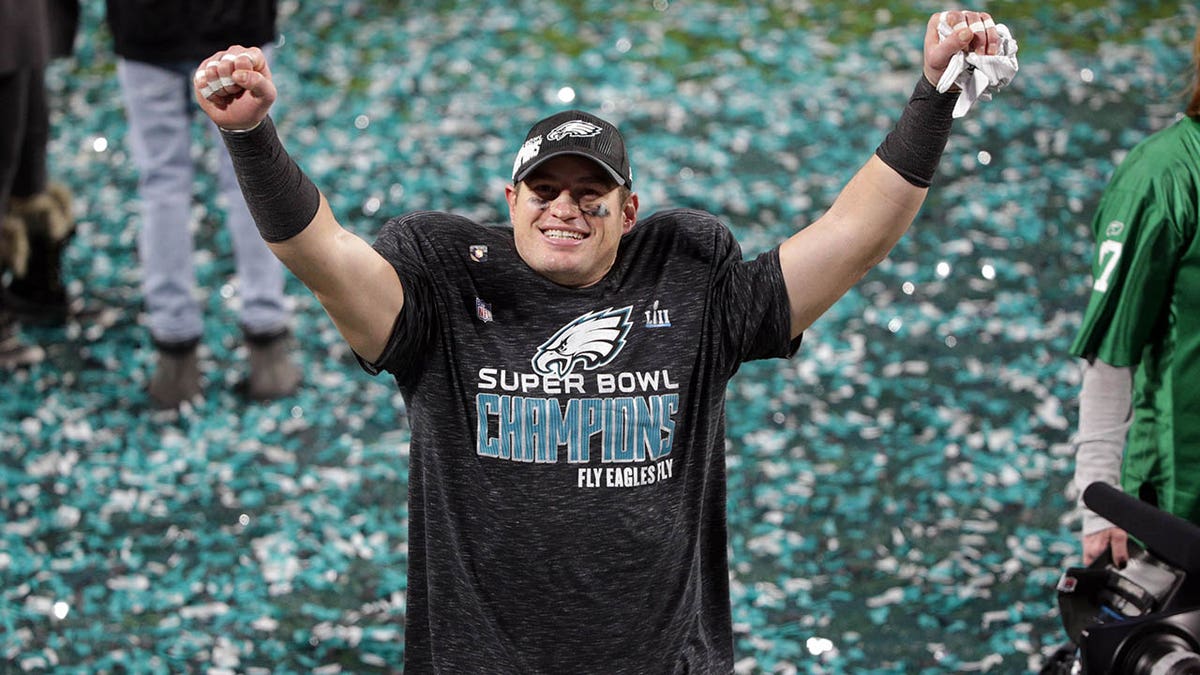
Philadelphia Eagles tight end Brent Celek celebrates after defeating the New England Patriots in the Super Bowl at U.S. Bank Stadium Feb, 4, 2018, in Minneapolis.(Brad Rempel/USA Today Sports)
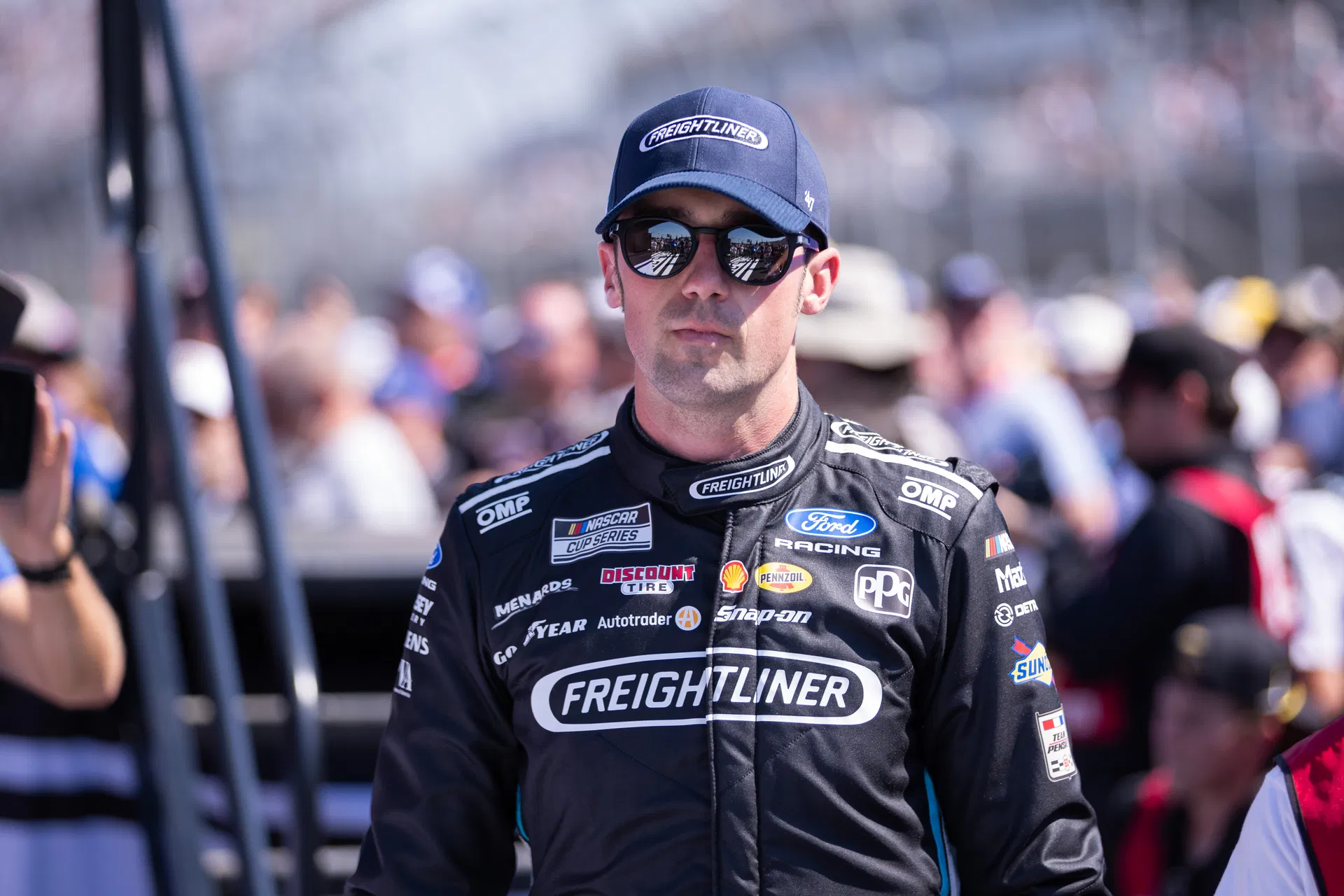
Team Penske’s Austin Cindric explained how NASCAR’s horsepower bump will produce extreme tire falloff at Martinsville Speedway. He expects drivers to step off the throttle to preserve rubber.
NASCAR’s 750-horsepower package at Darlington led to 16 lead changes among eight drivers. Many drivers praised the package for its passing ability, but maintained that the front-end nose wash was still a predominant struggle. Joey Logano, in particular, wanted more tire falloff for better racing.
Thanks for the submission!
Advertisement
The onus is now upon Goodyear to deliver the right balance between degradation and durability. The last time Goodyear brought softer sets was at Bristol, where tire wear and corded sets produced a chaotic race.
Advertisement
Cindric believes in a similar occurrence at Martinsville this year.
“We’ve trended over the last few years of going to tires that definitely wear out more and more at Martinsville,” he said via X/SiriusXM,”On top of that, now we’re adding adding the power and you know, there were times last year Martinsville where you start to get a full throttle as the right rear and the right front tires fall off, so I definitely think it’s going to make an impact, probably more so than maybe anywhere else.”
“We’re doing two u-turns and coming from a stop in comparison to most the places we go. So from what I did on the sim today and everything else, I think it’s definitely going to make an impact and you’re definitely going to have to be pretty nice to those tires,” Cindric added.
Austin Cindric finished among the top-5 at Darlington, making it his maiden top-10 of the season as well. His teammate Ryan Blaney finished among the podium places and took home 42 points.
Dale Earnhardt Jr. shares verdict on NASCAR’s horsepower package at Darlington
Dale Earnhardt Jr. dropped an honest take on NASCAR’s 750-horsepower package at the recently concluded Goodyear 400 at Darlington Raceway. The Cup Series veteran believes NASCAR can ‘move forward’ with the change.
He also noted that removing downforce from underneath the car and stripping away the diffuser aided the racing product. On the latest episode of Dalr Jr. Download, Earnhardt said,
Advertisement
“It didn’t do anything bad. It didn’t produce anything extraordinary. I think it’s Darlington….Goodyear’s done some great work on the tire. We had guys that were able to pass, able to make moves.”
The 293-lap event saw Tyler Reddick win his fourth trophy in six races, a feat last achieved by Bill Elliott in 1992. The 23XI Racing driver had to overcome a multitude of issues and managed to beat a dominant Brad Keselowski by more than five seconds.
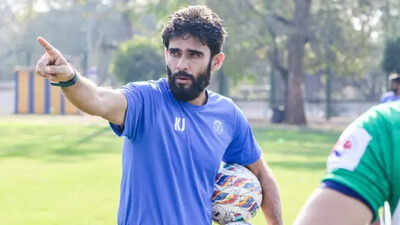
KOCHI: The Indian men’s football team faced fresh embarrassment on Thursday, this time even before they could take the field. National head coach Khalid Jamil and the team were denied entry to Kochi’s Jawaharlal Nehru International Stadium, the venue for India’s Asian Cup qualifier against Hong Kong on March 31. Jamil had reached the stadium to inspect the pitch and attend a scheduled press conference, but officials of the Greater Cochin Development Authority (GCDA) refused him entry.Go Beyond The Boundary with our YouTube channel. SUBSCRIBE NOW!GCDA security staff also stopped the Indian team from training at the stadium. The team had to later train at Kerala Blasters’ training ground in Trippunithura, 10 kilometres away from the stadium. GCDA staff said they were acting on instructions from the secretary and chairman not to allow anyone into the stadium complex until the full rent and security deposit was paid by the Kerala Football Association (KFA), the host association for India’s Asian Cup Qualifier with Hong Kong here on March 31.
Watch
Football returns to Delhi! SC Delhi gear up for first ISL home game
KFA president Navas Meeran said, “The Asian Cup qualifier will go ahead as planned. What happened on Thursday was a minor technical problem and it will be sorted out soon,” he said.The GCDA is seeking a security deposit of Rs 25 lakh and a match rent of Rs 3 lakh. The KFA agreed to pay, but the GCDA demanded the full amount on Thursday itself, before allowing the scheduled press conference and practice session to proceed. Although the KFA asked for more time, the GCDA refused.Meanwhile, coach Jamil arrived at the stadium for the press conference and ground inspection, but after waiting for a long time at the KFA office amid the dispute, he was left with no option but to leave. Security personnel also stopped journalists from entering for the press conference, saying they had orders from higher authorities not to allow anyone in. The main gate was later locked.
Heimir Hallgrimsson was left feeling only pain as the Republic of Ireland’s World Cup dream was shattered in a heart-breaking penalty shoot-out.
Ireland saw a 2-0 lead evaporate on a dramatic night at Prague’s Fortuna Arena as the Czech Republic fought their way to extra time and after a 2-2 draw, edged through 4-3 on penalties to set up a winner-takes-all clash with Denmark on Tuesday evening.
For head coach Hallgrimsson and his players, who were bidding for a first trip to the finals since 2002, it proved an agonising conclusion to a campaign which had blossomed late in the day.
Asked to sum up his emotions, the Icelander said: “One word, just pain. I feel pain, I feel pride for the performance of the players. They gave it all. I feel gratitude towards the supporters who showed up and supported us the whole game, even after the loss.
“I feel pride being a part of that group, but personally – and I know the players will feel pain now, only pain, I would say.”
Advertisement
Twenty-three minutes into a pulsating contest, Ireland led 2-0 through Troy Parrott’s penalty and an own goal from keeper Matej Kovar and looked to have one foot in Tuesday’s final.
Patrik Schick’s spot-kick reduced the deficit almost immediately, but Hallgrimsson’s side were within four minutes of victory when Czech skipper Ladislav Krejci – currently playing his club football in the Premier League with Wolves – headed his side level to force extra time and ultimately penalties.
Caoimhin Kelleher saved Mojmir Chytil’s attempt to hand Finn Azaz the chance to make it 4-2, but Kovar saved his and Alan Browne’s attempts to set up Jan Kliment to complete the comeback.
For Hallgrimsson, who signed a contract extension last week, the back-to-back victories over Armenia, Portugal and Hungary which booked their trip to Prague will provide a source of optimism for what lies ahead.
Advertisement
He said: “First of all, we take that with us, that we can play teams higher than us in the FIFA ranking, punch above our weight whether it’s Portugal, Hungary or here, and compete with these teams.
“We came here with three wins in a row – it’s a long time since that happened for this national team, so I think there’s growth in the squad, I think it’s maturing.
“These have been the biggest games most of these players have played, so that’s encouraging, to know that we are growing.”
Hallgrimsson and his players headed home without Derby striker Sammie Szmodics, who was carried off on a stretcher after being knocked unconscious within minutes of his introduction, but is expected to fly back to Ireland on Friday.
Advertisement
Czech boss Miroslav Koubek was delighted with the outcome of his first game in charge, but admitted there was room for improvement.
He said: “I said it would be a war and it was a war.
“It was a battle indeed, but we proved that we have the right mindset.
“Obviously it was not without mistakes. It was a very raw match. It was an epic battle.”
Back in the 1980s, the aforementioned quartet were all involved in epic fights with one another, with boxing fans regularly debating who they deem to be the best of the four legends.
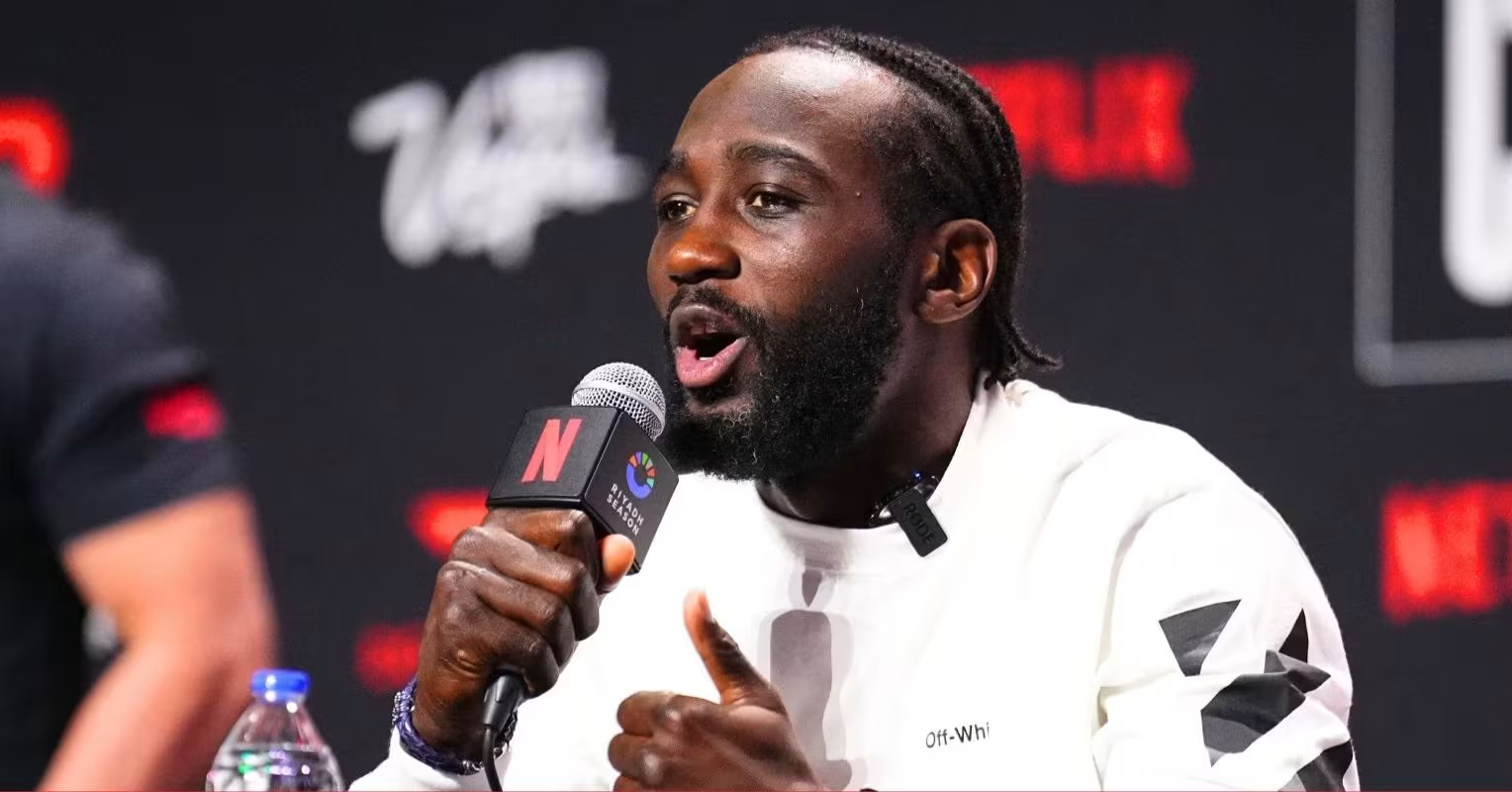
Just over 30 years later, Crawford became a legend in his own right, claiming world titles in multiple divisions before retiring from the sport back in December following his victory over Canelo Alvarez.
Advertisement
Having now begun to settle into life after boxing, Crawford has been reflecting on his own career whilst speaking to The Ring, and was asked how he believes he shaped up compared to each of Leonard, Hagler, Hearns and Duran.
“To be honest, I had a little bit of all of them. I wouldn’t say I only had one of their styles because I do so much in the ring.
“Like Marvin Hagler, I’m a southpaw. Like Sugar Ray Leonard, I can box on my toes. Like Roberto Duran, I can roll with the punches, catch, shoot, and throw from underneath. With Tommy Hearns, I can fight from the outside with a good, sharp jab.
I’m all of that in one. … [I would fight] any of them – just pick one of them.”
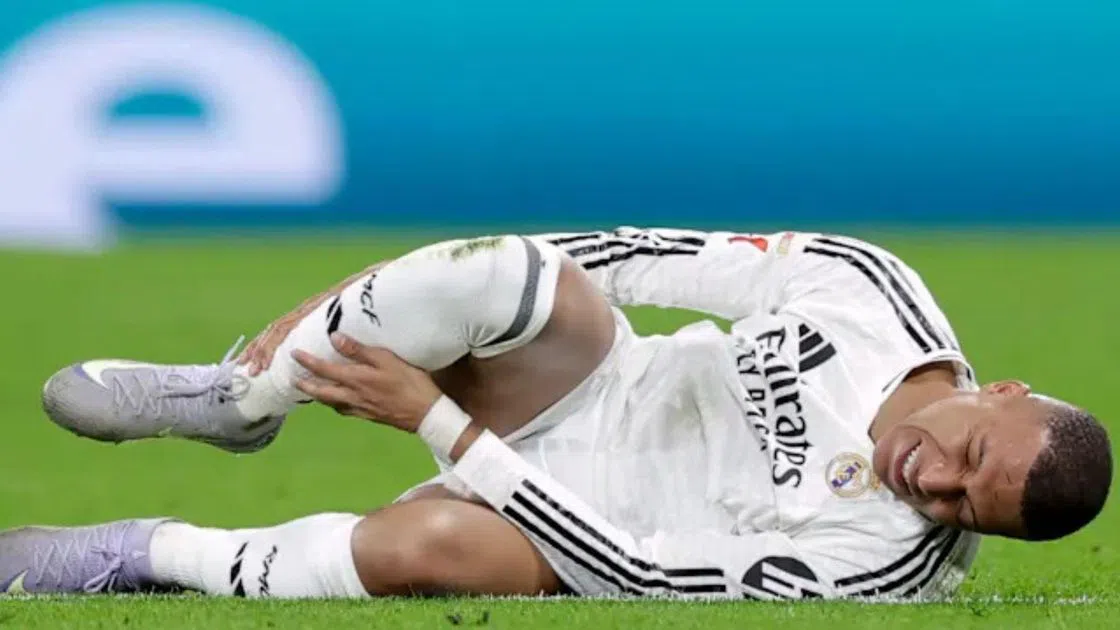
Kylian Mbappe’s recent knee injury at Real Madrid has taken a concerning turn, with a medical error allowing the French forward to continue playing despite an undiagnosed ligament issue.
The problem began after a knock during Madrid’s La Liga defeat to Celta Vigo last December, but an initial MRI scan was mistakenly conducted on his right knee instead of the injured left one.
Advertisement
With no damage detected, Mbappe remained in action and went on to feature in multiple matches, even as he experienced discomfort, before a later scan finally revealed the true extent of the injury.
Wrong scan delays accurate diagnosis
Advertisement
The issue dates back to December when Mbappe first experienced discomfort following a La Liga defeat to Celta Vigo. Club medical staff conducted an MRI scan, but it was mistakenly performed on his uninjured right knee. As a result, no problem was detected initially, and Mbappe remained available for selection.
According to a media report from The New York Times, Mbappe continued playing despite showing signs of inflammation in his left knee, which had not yet been properly assessed.
Injury confirmed after fresh examination
A subsequent scan on the correct knee later revealed a partial tear in the posterior ligament. Real Madrid officially communicated the injury on December 31, describing it broadly as a knee sprain while opting for a conservative recovery approach.
Advertisement
Despite the underlying issue, Mbappe went on to play three matches after the initial incorrect scan and featured regularly in the following weeks.
Continued involvement despite discomfort
Even after the diagnosis, Mbappe remained involved in several fixtures. He played through a packed schedule, managing appearances across domestic and European competitions while his condition was closely monitored by the coaching staff.
Advertisement
There were indications that his fitness fluctuated, with some days pain-free and others more problematic. However, the absence of knee instability allowed the medical team to clear him for matches when symptoms were manageable.
Managed workload under new coaching setup
Under new head coach Alvaro Arbeloa, Mbappe’s training intensity was reduced, and his minutes were carefully controlled. The forward missed a short stretch of games in early March and also travelled for further evaluation and treatment.
Real Madrid maintained their stance on a conservative recovery plan, with no surgical intervention deemed necessary.
Gradual return
Mbappehas since made a gradual return to action, coming off the bench in recent matches, including key fixtures in the Champions League and La Liga.
Advertisement
He has now joined the France national team for upcoming international friendlies, with his fitness continuing to be monitored closely as he works towards a full recovery.








;)
;)








































You must be logged in to post a comment Login