Sports
What defines an adaptive golfer? Criteria come to light at U.S. Adaptive Open


This content was first published in Golf Journal, a quarterly print publication exclusively for USGA Members. To be among the first to receive Golf Journal and to learn how you can ensure a strong future for the game, become a USGA Member today.
***
Golf is not a game that tests players based on what they’ve lost, or how they got here; it only asks what they can do in the moment. It measures adaptability, execution and resolve without regard for background or circumstance.
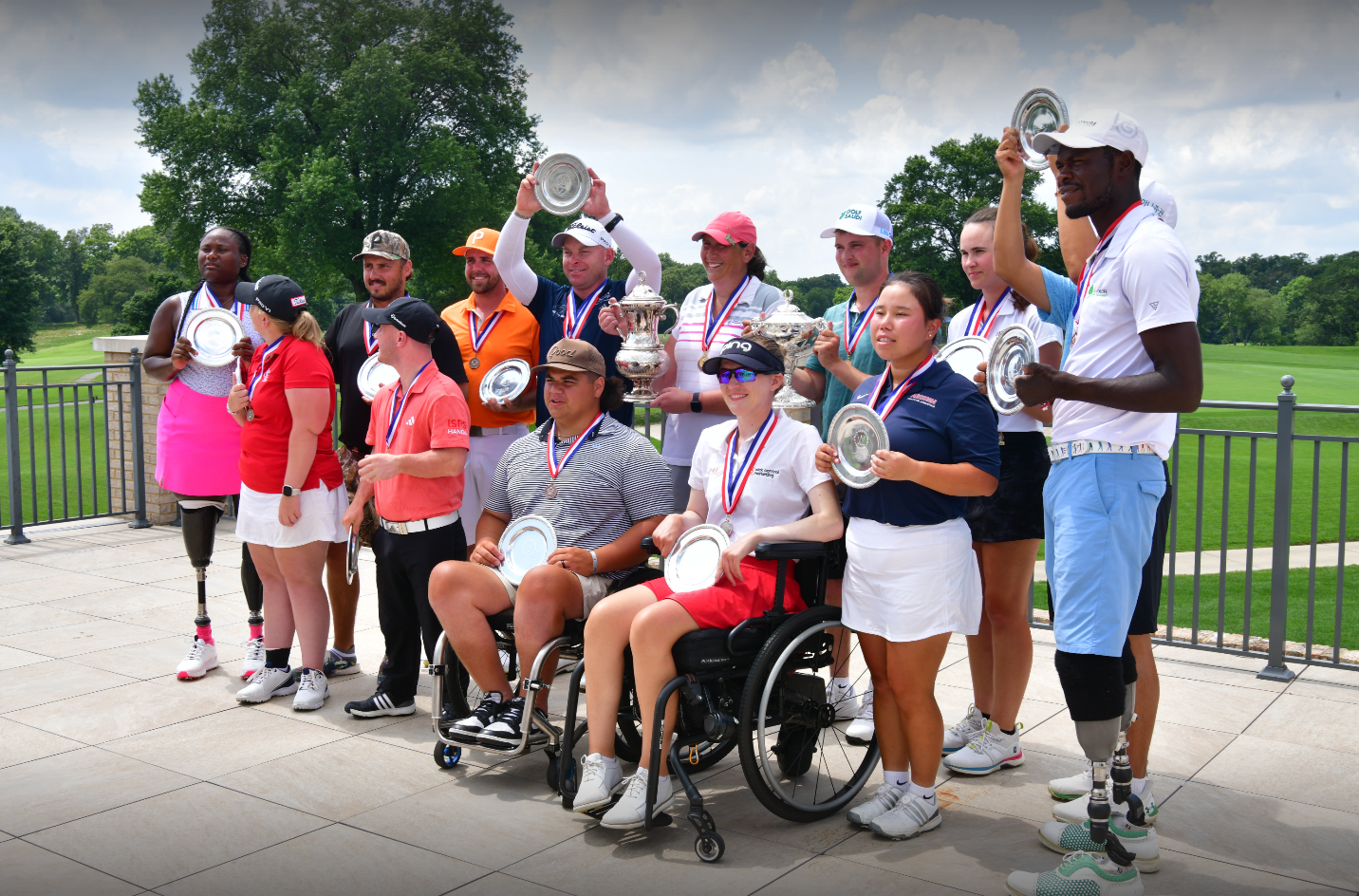
At the U.S. Adaptive Open Championship — which this year is being held at Woodmont Country Club in Rockville, Md., from July 6-8 — that standard is reinforced through a competitive structure that groups players among their peers, with outcomes earned through performance.
Each year, the USGA accepts hundreds of applications for the championship from around the world. In 2024, the association introduced qualifying events in the U.S., allowing players an additional pathway to the championship. Eligibility is confirmed by medical assessors who assign a WR4GD Pass — the criteria and standards of which are closely aligned with those of the International Paralympic Committee.
The USGA uses eight distinct impairment categories to determine the field of 96 professionals and amateurs, then collaborates with medical assessors from the Shirley Ryan AbilityLab to ensure appropriate placement of tees and hole locations. The categories in which prizes are awarded (along with an overall men’s and women’s champion) are as follows:
Coordination Impairment: Players have one or more movement disorders that affect the central nervous system’s structure and function.
Intellectual Impairment: Players have a restriction of general mental functions. Requires a WR4GD Pass and Virtus II1 eligibility.
Lower Limb Impairment: Players have impairments affecting the leg, hip and/or spine.
Multiple Limb Amputee: Includes players with limb deficiency in more than one limb.
Seated Players: Players who make every stroke from a seated position because that is the only way they can play based on their impairment.
Short Stature: Players have reduced height due to congenitally or developmentally reduced length of the bones of the upper and lower limbs (and may also have reduced trunk length).
Upper Limb Impairment: Players have impairments affecting the arm, shoulder and/or spine.
Vision Impairment: Players have reduced or no visual function even when using the best possible refractive or optical correction.
These impairment categories are designed to create equity at the U.S. Adaptive Open. The championship, now in its fifth year, brings players together to compete among their peers and strives to ensure meaningful competition in which results are determined by performance, not circumstance.
You must be logged in to post a comment Login