
Business
Betting Firms See $500M Funding Surge


Months ago, half a billion dollars flowed into crypto betting startups through new investment rounds.
Behind these platforms: blockchain fused with online gambling mechanics draws serious interest. User counts climb, transaction speeds improve – founders point to real shifts underway.
Venture Capital Moves Toward Digital Betting
Half a billion dollars flowed into cryptocurrency gambling startups lately, and platforms such as 1xbet Ireland have also expanded their casino online presence by exploring faster digital payment options. Of that sum, three big investors made up close to sixty percent, showing how strongly the casino online sector continues to attract capital.
Each agreement typically involved about twenty-five million dollars, twenty times over. These backers show interest mainly in services using blockchains to handle wagers. Out in the open, every bet lands on shared records. Real-time checking lets people follow payments as they happen.
One reason these platforms gain ground? Fees take a steep drop compared to old methods. While standard networks pull out 3 percent each time, digital currency moves it under Quick movement catches interest too. Withdrawals on certain sites wrap up in under ten minutes. Meanwhile, standard methods can stretch into a forty-eight-hour wait.
What’s Fueling the Rise in Tech Investments
When picking crypto betting sites, investors look at straightforward signs of how well they perform. Evidence points to a close link between financial backing and day-to-day reliability. What pushes success includes:
- Every bet shows up clear as day on public blockchains. Transparency built right into the ledger keeps it that way.
- Smart contracts automate payouts within seconds.
- Funds for digital protection now take up one-fifth of running expenses.
- Most wagers come through smartphone applications. Around seven out of ten are placed that way.
- Processing systems handle one million bets per hour.
Expanding markets and growing user base
Fresh sign-ups at crypto gambling platforms have grown two times over. More than three million people log in each month on big sites now. Bets using cryptocurrency topped two billion dollars lately. Adults under thirty like paying with digital money more often. Moving funds in and out feels easier thanks to wallet apps. More than fifteen digital currencies work across platforms, offering room to move.
Sports and gaming events pull attention from marketers, drawing steady interest. Engagement jumps thirty percent where live wagering runs active. Odds shifting by the second keep players involved more deeply. Even with fast expansion, income strategies stay level and measured. Betting odds are designed so the operator earns a steady profit. Over time, randomness favors the business side of the game.
Staying Safe While Playing Games That Change Quickly
Most sites include features meant for safer play. Wins are never guaranteed, just possible. A built-in advantage stays with the house constantly. Putting boundaries on funds spent is one way players manage risk. Fun should stay fun, nothing more. After a while, alerts pop up to let players know they have been playing long stretches.
Talking with support staff can help clarify better ways to handle gaming routines. Looking at straightforward logs helps people see exactly where money goes. Setting boundaries keeps accounts from tipping into risky zones. Start smart by deciding limits ahead of time. When spending does not spiral, fun holds steady.
Financial Trends and Sector Clues
Growth keeps building in online betting areas. Crypto sites are expected to rise by more than ten percent. Money flowing into startups shows belief in future gains. Big investors watch potential buys with sharp attention. The scene might shift if deals go through.
Now comes the time when working together pushes products faster. Because numbers talk, choices follow what data shows. Watching how users act helps shape better predictions. Getting it right more often keeps things running smoother. When big moments happen, steady money flows help hold everything in place.
Behind the scenes, backers are watching steady growth in users and backbone strength. Companies using crypto for wagers aren’t startups anymore – they’re wide open, full throttle. Fresh ideas mix steadily with careful control of dangers here. As growth moves forward, clear rules and honest actions stay at the center by design.


Shares of Sky Quarry Inc. (NASDAQ: SKYQ) exploded more than 94% in early trading Thursday, climbing from a previous close near $2.53 to $4.93 as investors reacted to a fresh company statement highlighting the strategic importance of its Nevada refinery amid surging Brent crude prices above $110 per barrel and shrinking West Coast refining capacity.

The dramatic move came shortly after the open on April 2, 2026, with shares briefly trading as high as $5.60 in pre-market activity before settling around the $4.93 level. Trading volume surged well above recent averages as the small-cap energy and waste-recycling company captured attention in a market already jittery over Middle East tensions and energy supply risks.
Sky Quarry, an integrated energy solutions provider focused on recycling waste asphalt shingles and operating a 5,000-barrel-per-day refinery in Nevada, issued an update emphasizing how its Foreland Refinery gains value as traditional refining capacity on the West Coast declines. The company noted that the planned offline event at the Benicia refinery in California, combined with other regional shutdowns removing roughly 290,000 barrels per day of capacity, positions its Nevada facility as a critical local supplier for diesel, paving asphalt and other petroleum products.
“Sky Quarry’s Nevada refinery is uniquely positioned to serve constrained western fuel markets,” the company stated in the release. Recent system upgrades have improved reliability, uptime and throughput, enhancing its ability to process sustainable feedstocks and support Nevada industries amid shifting supply dynamics.
The stock’s sharp rise follows a turbulent period for the micro-cap issuer. In March 2026, Sky Quarry implemented a 1-for-8 reverse stock split to regain compliance with Nasdaq’s $1.00 minimum bid price rule after receiving a delisting notice. The split became effective March 15, and the company confirmed on March 30 that it had regained compliance after maintaining the required bid price for 10 consecutive days. A subsequent clarification on the new CUSIP number helped stabilize trading.
Sky Quarry operates as both an oil production and refining company while pursuing environmental remediation through proprietary technology that recycles waste asphalt shingles into usable oil and construction materials. Its business model aims to reduce landfill waste, lower emissions and create a closed-loop system for asphalt-related materials. The company also holds bitumen leases in Utah’s PR Spring region.
Analysts and market observers noted that the surge appears driven primarily by momentum trading and heightened visibility from the oil price spike rather than fundamental changes in the company’s financial position. Sky Quarry remains a small operation with limited production scale compared to major energy firms, and it has reported ongoing challenges with profitability and cash flow.
The company’s Q4 2025 earnings, released March 31, provided limited new catalysts, but the timing of the refinery update coinciding with Brent crude topping $110 — fueled by geopolitical developments in the Iran conflict — created a favorable narrative for speculative energy plays. West Coast refinery closures have tightened regional supply, potentially benefiting smaller, strategically located facilities like Sky Quarry’s Foreland Refinery.
Investors have shown renewed interest in micro-cap energy and recycling names amid volatility in traditional oil markets. However, shares of SKYQ have experienced extreme swings in recent months, trading in a 52-week range that reflects both the reverse split adjustment and earlier speculative enthusiasm.
Company officials have highlighted ongoing operational improvements at the refinery, including upgrades completed earlier in 2026 that boosted capacity and efficiency. Sky Quarry has also explored partnerships for power generation assets and waste-to-energy initiatives in Utah, though progress on broader national expansion remains in early stages.
The stock’s volatility underscores the risks associated with small-cap energy companies. Sky Quarry has a limited operating history, modest employee base and faces typical challenges of scaling refining and recycling operations in a competitive industry. Past announcements regarding board changes, financing arrangements and strategic reviews have contributed to price fluctuations.
Market participants cautioned that the 94% intraday gain could prove short-lived without sustained positive news or improved fundamentals. Many micro-cap stocks experiencing triple-digit percentage moves on low absolute share prices often see rapid profit-taking.
Sky Quarry has pursued a multi-pronged strategy that includes traditional oil refining, asphalt shingle recycling and potential real-world asset tokenization initiatives explored in partnership with other firms. While these efforts align with broader sustainability trends, execution risks remain high for a company with a market capitalization still in the low tens of millions even after the surge.
Broader market context added fuel to the move. With oil prices elevated due to supply concerns tied to the Middle East situation, even small players in the energy value chain attracted speculative interest. However, analysts emphasized that Sky Quarry’s actual production volumes and financial metrics do not yet position it as a major beneficiary of sustained high oil prices.
The company’s leadership has focused on operational excellence, recently completing high-impact system upgrades at the Foreland Refinery. These efforts aim to increase reliability and prepare the facility for potential demand growth as larger regional refineries face closures or reduced output.
For retail investors drawn to the dramatic percentage gain, trading experts recommended caution. Low-float stocks like SKYQ can experience exaggerated moves on modest buying volume, but reversals can be equally sharp. The stock has a history of significant intraday and multi-day swings.
As of midday trading on April 2, the surge had pushed Sky Quarry well above recent trading ranges, though it remained far below peaks seen earlier in its post-split adjusted history. The company continues to trade on the Nasdaq Capital Market after successfully addressing the delisting threat.
Sky Quarry did not immediately respond to requests for additional comment on the stock movement or refinery operations. Its most recent public filings and press releases continue to stress a long-term vision of sustainable energy solutions through waste recycling and localized refining.
Investors monitoring the name should watch for any follow-up disclosures regarding production volumes, partnership announcements or further refinery performance metrics. In the near term, the combination of high oil prices and the company’s strategic positioning in a supply-constrained region appears to have driven renewed market interest.
The episode serves as a reminder of how quickly micro-cap energy stocks can react to broader commodity trends and company-specific narratives, even as underlying business fundamentals evolve more gradually.

Form DEF 14A Franklin Street Properties Corp For: 2 April
Netflix has already canceled or ended several original series in the first three months of 2026, continuing its pattern of swift decisions on underperforming titles while allowing some long-running hits to conclude with planned final seasons.

As of early April 2026, at least seven Netflix shows have been officially axed after one or two seasons, according to multiple reports from industry trackers and entertainment news outlets. Additional high-profile series are set to end with their upcoming seasons, giving fans closure rather than abrupt cancellation.
The streaming giant’s approach reflects ongoing pressure to manage costs, viewer engagement metrics and content library efficiency in a competitive landscape. While Netflix has renewed many popular titles, low viewership or creative fatigue have led to quick cuts for newer projects.
Here is the current list of confirmed Netflix cancellations and endings in 2026 so far, based on announcements through late March:
The Abandons — Canceled after one season. The Kurt Sutter-created Western drama starring Lena Headey and Gillian Anderson as rival matriarchs in 1850s Washington failed to gain sustained momentum despite its star power. It joined the growing list of Netflix Westerns that struggled to find broad audiences.
The Vince Staples Show — Canceled after two seasons. The critically acclaimed comedy starring rapper-actor Vince Staples as a heightened version of himself navigating fame and everyday life in his hometown drew praise for its unique voice but ultimately saw insufficient viewership to justify continuation.
Terminator Zero — Canceled after one season. The anime series set in the Terminator universe, created by Mattson Tomlin, failed to attract enough viewers despite its connection to the iconic franchise. The decision disappointed fans of the animated format but aligned with Netflix’s data-driven approach to sci-fi projects.
Alice in Borderland — Canceled after three seasons. The Japanese survival thriller based on the manga, which followed players in deadly games in an empty Tokyo, built a passionate international fan base. However, Netflix chose not to continue beyond the third season, even as some viewers campaigned for more.
Pop The Balloon LIVE — Canceled. The live interactive game show concept did not translate into sustained engagement, becoming one of the quicker cuts among 2026’s new programming.
Miss Governor — Canceled. The political comedy series failed to resonate with audiences and was quietly removed from renewal consideration early in the year.
Class — Canceled. The teen drama struggled to stand out in Netflix’s crowded young-adult category and was axed after its initial run.
Beyond outright cancellations, several notable series are ending with planned final seasons in 2026, allowing creators to provide closure:
- Outer Banks will conclude with its fifth season, wrapping up the Pogues’ treasure-hunting adventures.
- Avatar: The Last Airbender live-action adaptation ends after its upcoming third season.
- Queer Eye airs its 10th and final season, marking the end of the Fab Five’s makeover journeys.
- The Empress period drama about Empress Elisabeth will finish with its third season.
- The Witcher concludes with its fifth and final season.
Other titles rumored or reported as not returning include additional limited or anthology-style projects, though Netflix has not issued formal cancellation statements for every entry. The company often allows shows to end quietly if viewership data does not support further investment.
Netflix’s cancellation pace in early 2026 mirrors previous years, when dozens of series were cut to prioritize high-engagement content. In 2025, the streamer axed at least 30 titles, including reality competitions and scripted dramas that failed to break through algorithms or maintain audience retention.
Industry analysts note that Netflix’s decisions increasingly rely on completion rates, hours viewed and cost-per-view metrics rather than traditional ratings. High production costs for ambitious projects like Westerns or sci-fi adaptations make them particularly vulnerable if they do not deliver immediate global appeal.
Fans have reacted with mixed emotions on social media. Some express frustration over canceled favorites like “The Vince Staples Show,” which earned strong critical scores despite modest viewership. Others accept the reality of streaming economics, where only a fraction of new releases achieve breakout success.
The cancellations free up budget for potential renewals of stronger performers. Netflix has already renewed several hits for 2026 and beyond, including “Emily in Paris,” “The Lincoln Lawyer” and “Black Mirror,” signaling continued investment in proven franchises and anthology formats.
For subscribers, the news serves as a reminder to binge-watch new or returning series promptly, as Netflix rarely provides long advance notice on cancellations. The platform has occasionally revived fan-favorite shows due to public outcry or unexpected data surges, but such reversals remain rare.
Looking ahead, more decisions are expected throughout 2026 as additional seasons premiere and viewership numbers are analyzed. Netflix typically provides updates on renewals and cancellations in batches rather than one-by-one announcements.
The streamer’s content strategy continues to evolve toward a mix of big-budget event series, international hits and cost-effective unscripted programming. While cancellations disappoint dedicated viewers, they allow Netflix to refresh its library and test new ideas in a saturated entertainment market.
As April 2026 begins, the list of axed shows stands at roughly seven confirmed cancellations, with several more series wrapping up planned final seasons. Fans of affected titles are encouraged to rewatch available episodes while they remain on the platform.
Netflix has not commented publicly on the overall cancellation tally for the year but maintains that data-driven choices help deliver the most engaging content to its global audience of over 280 million subscribers.
The early 2026 cuts underscore the competitive pressure facing all streamers, where even critically liked shows can fall short if they fail to generate sufficient sustained viewing hours.
For now, the focus shifts to upcoming releases and potential surprise renewals as Netflix balances creative risks with financial discipline in its quest to remain the dominant force in streaming entertainment.

Form S-3 Taoweave Inc For: 2 April
Form 144 Annovis Bio For: 2 April


I’m an equity analyst and founder of Goulart’s Restaurant Stocks, a research firm focused on the U.S. restaurant industry — from quick-service and fast casual to fine dining and niche concepts. I lead all thematic research and valuation efforts, applying advanced financial modeling, sector-specific KPIs, and strategic insights to uncover hidden value across public equities. In addition to restaurants, I cover consumer discretionary, food & beverage, casinos & gaming, and IPOs, with a particular focus on micro and small caps that are often overlooked by mainstream analysts. My research has been featured on Seeking Alpha, Yahoo Finance, Mises Institute, Investing.com and other plataforms. My background combines hands-on experience in finance and business management with academic foundations. I hold an MBA in Controllership and Accounting Forensics, a Bachelor’s in Business Administration. I’ve also pursued specialized training in valuation, financial modeling, and restaurant operations (I had a brief experience as an undergraduate as a franchise partner for a regional ice cream shop).
Analyst’s Disclosure: I/we have no stock, option or similar derivative position in any of the companies mentioned, and no plans to initiate any such positions within the next 72 hours. I wrote this article myself, and it expresses my own opinions. I am not receiving compensation for it (other than from Seeking Alpha). I have no business relationship with any company whose stock is mentioned in this article.
Seeking Alpha’s Disclosure: Past performance is no guarantee of future results. No recommendation or advice is being given as to whether any investment is suitable for a particular investor. Any views or opinions expressed above may not reflect those of Seeking Alpha as a whole. Seeking Alpha is not a licensed securities dealer, broker or US investment adviser or investment bank. Our analysts are third party authors that include both professional investors and individual investors who may not be licensed or certified by any institute or regulatory body.
Business
(VIDEO) Kirk Cousins Agrees to Contract with Raiders as Veteran Mentor for Rookie QB, Agent Confirms
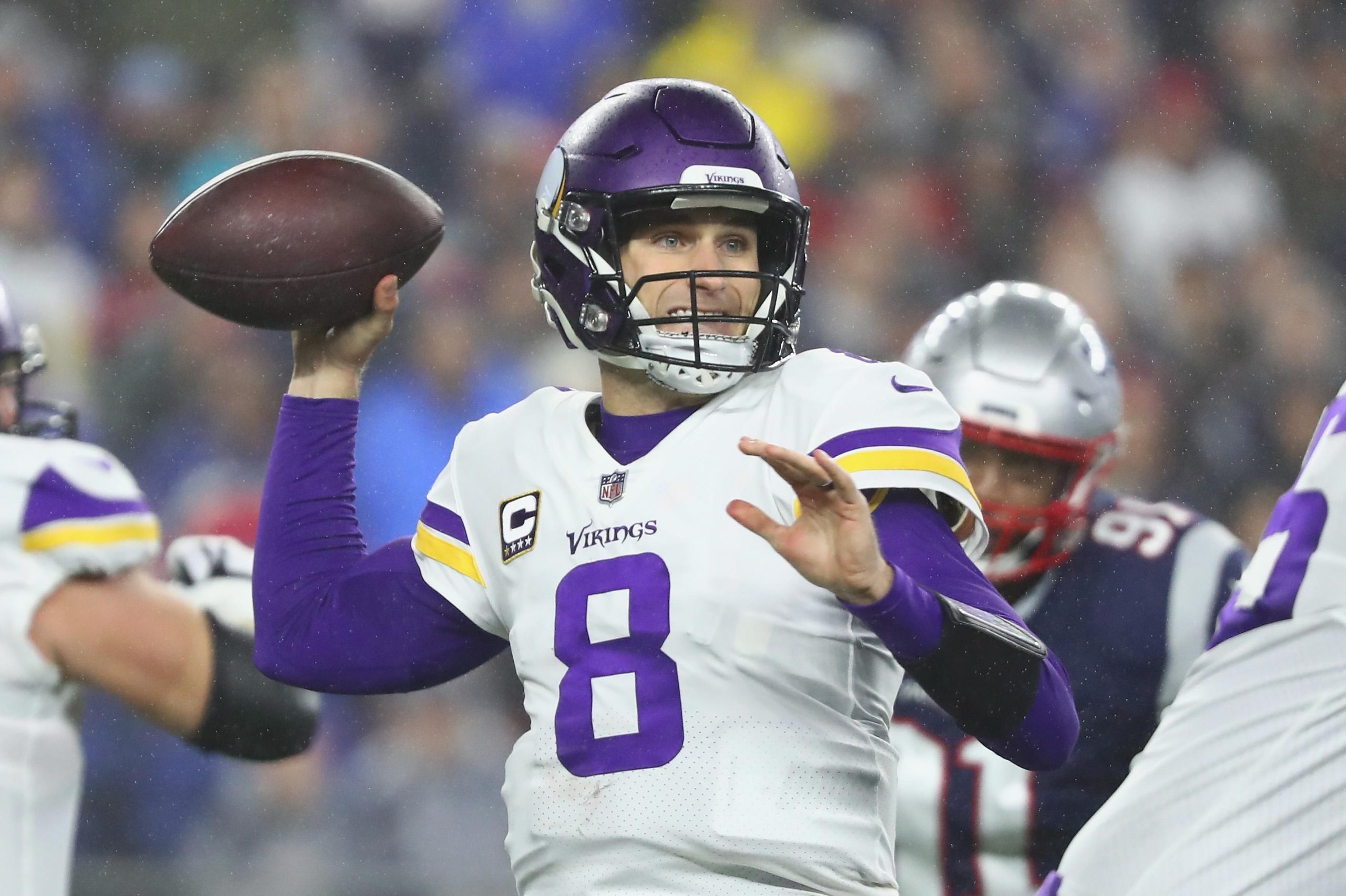
Kirk Cousins has agreed to a contract with the Las Vegas Raiders, his agent announced Thursday, bringing the veteran quarterback to a rebuilding franchise in need of stability at the position ahead of the 2026 NFL season.

Agent Mike McCartney confirmed the deal on social media, ending weeks of speculation that linked the 38-year-old Cousins to multiple teams as one of the top remaining free-agent quarterbacks. Terms of the agreement were not immediately disclosed, but projections had Cousins potentially signing a one-year deal worth around $10 million.
The move reunites Cousins with new Raiders head coach Klint Kubiak, who worked closely with him as an offensive assistant and coordinator during Cousins’ time with the Minnesota Vikings from 2019-21. It also positions Cousins as a bridge quarterback and mentor for Fernando Mendoza, the rookie widely expected to be the Raiders’ quarterback of the future after the team holds the No. 1 overall pick in the upcoming NFL Draft.
Cousins, a four-time Pro Bowl selection, spent the past two seasons with the Atlanta Falcons after signing a landmark four-year, $180 million contract in 2024 — the richest total-value free-agent deal in NFL history at the time. He was released by Atlanta earlier this offseason with a post-June 1 designation, freeing him to explore the market while the Falcons moved forward with other options at quarterback.
In Atlanta, Cousins showed flashes of his veteran prowess, particularly late in the 2025 season when the Falcons went 4-0 in his final four starts. Overall, he posted solid but unspectacular numbers in a limited role, dealing with the aftermath of earlier injuries including a torn Achilles that had sidelined him previously. His career totals include more than 40,000 passing yards and approaching 300 touchdown passes, with a passer rating near 97.0 that underscores his consistency as a high-volume thrower.
For the Raiders, who finished with one of the league’s worst records in 2025, the addition of Cousins addresses an immediate need at quarterback. The team traded away Geno Smith earlier in free agency and has been searching for a veteran presence to stabilize the offense while developing Mendoza, a highly touted prospect often compared stylistically to Cousins himself for his pocket presence and decision-making.
Former NFL general manager Mike Tannenbaum recently advocated for exactly this scenario on ESPN’s SportsCenter, calling Cousins the “ideal bridge quarterback” for Mendoza. “I would sign Kirk Cousins,” Tannenbaum said. “Bring Mendoza along slowly.” The Raiders’ new coaching staff, led by Kubiak, is installing a scheme that emphasizes rhythm passing and play-action — elements that align well with Cousins’ strengths from his Vikings days.
Raiders general manager Tom Telesco and coach Kubiak have emphasized building through the draft while adding smart veteran complements. Cousins fits that mold: experienced enough to start early in the season if needed, yet willing to transition into a mentorship role as Mendoza adapts to NFL speed and the pro playbook. Kubiak’s familiarity with Cousins could accelerate that process, as the two already share a rapport from their overlapping time in Minnesota.
The signing comes amid growing competition for Cousins’ services. At the recent NFL Annual League Meeting, Los Angeles Rams coach Sean McVay and Green Bay Packers general manager Brian Gutekunst both acknowledged discussions about bringing in Cousins as a backup option. The Pittsburgh Steelers and Arizona Cardinals have also been linked to the veteran amid uncertainty at their own quarterback positions, with some executives viewing him as a potential starter if injuries arise or plans shift.
Cousins had been patient in free agency, reportedly holding out for opportunities that offered a realistic chance to compete for playing time rather than accepting a pure backup role on a contender. The Raiders’ situation — a young roster with defensive talent led by standout edge rusher Maxx Crosby and a need to accelerate offensive development — apparently checked those boxes.
“I think the Raiders would make a lot of sense,” CBS Sports analyst John Breech wrote earlier in the process, noting the Kubiak connection and the mentoring dynamic. Other reports suggested Cousins could start the first several games of 2026 while Mendoza learns under center and absorbs Kubiak’s system, potentially handing over the reins by midseason or October.
Financially, the deal is expected to be team-friendly for Las Vegas, which is managing cap space carefully after years of aggressive spending under previous regimes. Spotrac projections pegged a one-year, $10.7 million pact as a likely landing spot for Cousins, whose career earnings already top $320 million. The structure could include incentives tied to starts or team performance, common for veteran bridge deals.
Cousins’ journey has been one of steady improvement and resilience. Drafted in the fourth round by the Washington Commanders (then Redskins) in 2012, he evolved from a backup to a reliable starter, leading the Vikings to multiple playoff appearances after signing there in 2018. His 2024 move to Atlanta was seen as a chance to chase a Super Bowl with a more loaded roster, but injuries and team transitions limited the outcome.
Now, at 38, Cousins insists he still has plenty left in the tank. He publicly stated his intention to play in 2026 shortly after his release, and the Raiders signing validates that belief. For Las Vegas fans, long frustrated by quarterback instability — a position that’s seen more than a dozen starters since the team’s relocation — Cousins offers a known commodity with leadership qualities.
The Raiders’ offense ranked near the bottom of the league in several categories last season, particularly in passing efficiency and red-zone execution. Adding Cousins, along with recent wide receiver signings including a reunion with former Vikings teammate Jalen Nailor, could provide an immediate boost. Kubiak’s offense, which helped elevate players in Minnesota, should allow Cousins to operate in rhythm while protecting a young offensive line still gelling.
Mendoza, projected as a polished passer with good arm talent and football IQ, stands to benefit immensely from observing Cousins up close. NFL history is filled with successful rookie transitions aided by veteran mentors — think Patrick Mahomes behind Alex Smith or Josh Allen learning from veterans in Buffalo. Cousins’ reputation as a film junkie and prepared professional makes him an excellent teacher.
Not everyone is convinced the fit is perfect. Some analysts note Cousins’ age and the physical demands of starting in the AFC West, where defenses like those of the Kansas City Chiefs and Denver Broncos remain stout. Others point out that rookies at quarterback often take the reins faster than expected, potentially shortening Cousins’ window as a starter.
Still, the consensus around the league is that Las Vegas struck a pragmatic deal. “Cousins can stabilize the position,” one league source familiar with the discussions told The Athletic earlier in the process. With the draft approaching and training camp on the horizon, the Raiders now have clarity at a critical spot.
Cousins is expected to join the team in the coming days to begin learning the playbook and building chemistry with teammates. The Raiders open the 2026 regular season in September, likely with high expectations for defensive improvement and incremental offensive growth.
For Cousins, the signing caps a turbulent offseason that began with his release from Atlanta and included interest from several suitors. For the Raiders, it signals a commitment to blending youth and experience as they aim to climb out of the cellar in a competitive conference.
As one of the more accomplished quarterbacks available in free agency, Cousins’ decision to join Las Vegas could have ripple effects across the league, particularly for teams like the Steelers if Aaron Rodgers opts out of 2026 or the Rams seeking depth.
The NFL world will watch closely to see how quickly Mendoza develops and whether Cousins can deliver one more productive chapter in a career defined by quiet competence and durability. At minimum, the Raiders have added a proven leader who knows how to win games and prepare the next generation.

Form DEF 14A NUWELLIS For: 2 April
Business
Iridium Communications Stock Surges 11% on Q1 Earnings Call Announcement Amid Satellite Growth Momentum

Shares of Iridium Communications Inc. jumped more than 10% in early trading Thursday after the satellite services provider announced the release date for its first-quarter 2026 financial results, signaling investor optimism about the company’s expanding role in global connectivity and positioning, navigation and timing technologies.

Iridium (NASDAQ: IRDM) shares climbed as high as $31.64, up $3.12 or 10.94%, by mid-morning on the Nasdaq. The stock had closed Wednesday at $28.52. Volume surged well above average as traders reacted to the news that the company will release Q1 results and host a conference call on April 23.
The announcement comes as Iridium positions itself for potential acceleration in non-terrestrial network services, including direct-to-device connectivity and complementary PNT solutions, even as it navigates a year of moderated revenue growth following a solid 2025 performance.
Iridium, operator of the world’s only truly global satellite constellation with 66 low-Earth orbit satellites plus spares, provides voice, data and IoT services that reach every inch of the planet, including poles, oceans and remote land areas where terrestrial networks fail. Its services are critical for maritime, aviation, government, emergency response and industrial IoT applications.
In February, the company reported full-year 2025 results showing total revenue of approximately $871.7 million, up about 5% from the prior year, driven largely by demand for IoT solutions and deeper integration of its technology into mission-critical applications. Service revenue, which accounts for the bulk of recurring income, rose steadily, while equipment sales fluctuated.
For 2026, Iridium guided for total service revenue growth of flat to 2%, with operational EBITDA expected between $480 million and $490 million. The outlook incorporates a roughly $17 million headwind from shifting incentive compensation entirely to cash rather than a mix of cash and equity. Without that accounting change, OEBITDA would have been projected in the $497 million to $507 million range.
CEO Matt Desch highlighted the resiliency of Iridium’s business model in the earnings release. “Revenue growth of 5% in 2025 was driven by ongoing demand for IoT and a deeper integration of Iridium technology into mission-critical applications. Our expanding roster of business partners and new services continue to demonstrate the resiliency of our growth opportunities and underscore Iridium’s unique role in the satellite industry,” he said.
The company ended 2025 with about 2.54 million billable subscribers, up from the prior year. Government service revenue, anchored by the seven-year Enhanced Mobile Satellite Services contract with the U.S. Space Force worth $738.5 million, grew modestly due to contractual rate increases.
Investors appear to be betting on several emerging catalysts that could drive upside beyond the conservative 2026 guidance. Iridium has made significant progress on its NTN Direct service, which enables direct satellite connectivity to standard smartphones and other consumer devices without specialized hardware. Successful on-air testing of two-way messaging was announced earlier in the year, putting the company on track for commercial launch later in 2026.
Partnerships with major players such as Vodafone IoT for NTN NB-IoT connectivity and Qualcomm for integration into tactical radios underscore Iridium’s push into the direct-to-device ecosystem. These developments come as mobile operators and device makers increasingly explore hybrid terrestrial-satellite solutions to close coverage gaps.
Iridium is also advancing in complementary PNT services, which provide backup or enhanced positioning when GPS signals are jammed, spoofed or unavailable. The company secured a contract with the U.S. Department of Transportation for PNT deployment and testing, and it continues to integrate capabilities from its 2023 acquisition of Satelles.
Government contracts remain a cornerstone. In December 2025, Iridium won a five-year indefinite delivery/indefinite quantity contract worth up to $85.8 million from the U.S. Space Force for system infrastructure transformation and hybridization. In January 2026, it was awarded a spot on the Missile Defense Agency’s SHIELD IDIQ contract with a potential ceiling of $151 billion, opening doors for rapid delivery of innovative capabilities to the warfighter.
Analysts have mixed but generally constructive views. Consensus rating hovers around “Hold,” with an average price target near $25 to $29, though some forecasts see higher potential amid growth in new technologies. Argus raised its target to $29 in early April. Morgan Stanley maintained an equal-weight rating but lifted its target to $26 earlier in the year. Institutional ownership remains strong, with firms like Citigroup increasing stakes significantly in recent quarters.
The stock’s recent volatility reflects broader satellite sector dynamics. Iridium has traded in a 52-week range from about $15.65 to $33.34. Thursday’s surge pushed it toward the higher end, building on momentum from earlier positive developments, including successful NTN tests that sent shares up double digits in January.
Iridium’s business model emphasizes high margins and strong cash generation. Operational EBITDA for 2025 reached $495.3 million. The company has maintained a quarterly dividend of $0.15 per share, returning capital to shareholders while funding growth initiatives.
Challenges include moderating IoT growth momentum in some segments and increasing competition from low-Earth orbit constellations like SpaceX’s Starlink, which focuses more on broadband. Iridium differentiates itself through its pole-to-pole coverage, proven reliability for voice and narrowband data, and focus on specialized, high-value applications rather than mass-market broadband.
Desch and the management team have emphasized building an ecosystem of partners to accelerate adoption of new services. Presentations at industry events such as SATELLITE 2026 highlighted opportunities in hybrid networks and government programs.
With Q1 2026 earnings approaching on April 23, investors will look for updates on subscriber trends, progress toward NTN Direct commercialization, PNT contributions and any color on engineering and support revenue, which the company expects to increase in 2026.
Longer-term, Iridium has signaled confidence in generating $1.5 billion to $1.8 billion in free cash flow through 2030, supported by its constellation’s longevity — the current satellites have substantial remaining life — and disciplined capital allocation. Net leverage stood at 3.4 times OEBITDA at year-end 2025, with a target of 3.0 times or below by the end of 2026 and below 2.0 times by decade’s end.
The company continues to pay down debt while investing in network enhancements. Its constellation provides unmatched redundancy and global reach, making it indispensable for users in aviation, maritime shipping, mining, oil and gas, and humanitarian operations.
Thursday’s stock reaction suggests the market is pricing in potential positive surprises in the upcoming quarter or excitement around the direct-to-device timeline. Some observers noted that previous earnings-related announcements have preceded meaningful price moves.
For a company founded on the vision of ubiquitous mobile satellite communications, Iridium finds itself at an inflection point. As terrestrial 5G and future 6G networks expand, satellite integration via standards like 3GPP NTN becomes more feasible. Iridium’s first-mover progress in testing and partnerships could yield meaningful new revenue streams in the latter half of this decade.
Still, execution risks remain. Commercializing direct-to-device services requires carrier adoption, device compatibility and regulatory approvals across markets. PNT growth may prove lumpy depending on government program timing. The flat-to-low-single-digit service revenue guidance for 2026 reflects a cautious near-term view amid those dynamics.
Wall Street will scrutinize management commentary on April 23 for any upward revisions or accelerated timelines on new initiatives. In the meantime, Iridium’s steady cash flow, government backlog and technological edge provide a buffer in a competitive satellite landscape.
Shares of other satellite operators showed mixed performance Thursday, with the broader market reacting to macroeconomic data and sector-specific news.
Iridium employs approximately 600 people and is headquartered in McLean, Virginia, with operational centers supporting its global network.
As one of the few pure-play satellite communications companies with a fully operational LEO constellation, Iridium continues to attract attention from investors seeking exposure to the growing space economy and resilient connectivity plays.
Whether the current rally sustains will depend on upcoming results and tangible progress on 2026 catalysts. For now, the market appears to be rewarding the company’s consistent execution and forward-looking investments in next-generation services.

FOX Business’ Gerri Willis reports on homeowners ramping up renovations with $522 billion projected for 2026 and highlights the most popular projects on ‘Varney & Co.’
A shift in the U.S. housing market may finally be opening the door for first-time homebuyers as improving affordability and rising inventory create new opportunities across several key regions.
Jacksonville, Florida, leads the list as the top market for first-time buyers this year, followed by Birmingham, Alabama; San Antonio, Texas; Atlanta, Georgia; and Houston, Texas.
Each of these cities is benefiting from a more favorable balance of home prices, available inventory and buyer competition, according to a new Zillow analysis.
Zillow’s rankings are based on several key factors, including rent burden, the share of affordable listings, inventory relative to renters and the concentration of buyers in their prime homebuying years.
The top 10 markets for first-time buyers in 2026 are:
Jacksonville, Florida

Jacksonville, Fla., at dusk (iStock / iStock)
Jacksonville ranks first, with rent consuming 23.1% of income. Nearly 47.8% of listings are considered affordable, supported by relatively strong inventory at 5.9 homes per 100 renters.
INSIDE AMERICA’S MOST GUARDED ENCLAVE: A RARE LOOK AT FLORIDA’S ‘NO BUDGET’ BILLIONAIRE BUNKER
Birmingham, Alabama
Birmingham stands out for affordability, with more than 55.6% of homes within reach and 6.2 listings available per 100 renters.
San Antonio, Texas
With a lower rent burden of 20.2% and 47.4% of listings deemed affordable, San Antonio offers a balanced entry point for buyers.
Atlanta, Georgia
About 45.2% of listings are affordable in Atlanta, where moderate competition is paired with steady inventory levels.
PENN PROFESSOR SAYS ZILLOW ‘SYSTEMATICALLY DECEIVES CONSUMERS’ ABOUT AGENT CONNECTIONS
Houston, Texas

Skyscrapers in downtown Houston, Texas (iStock / iStock)
Houston’s affordability rate sits around 40.2%, supported by a large population of buyers in their prime homebuying years.
St. Louis, Missouri
Affordability is a key strength in St. Louis, where 67.7% of listings fall within reach for first-time buyers.
Detroit, Michigan
Nearly 64.8% of homes in Detroit are affordable, combined with relatively manageable competition.
MARK ZUCKERBERG AND GOOGLE’S BRIN CLOSE ON MASSIVE MIAMI ESTATES WORTH OVER $220M COMBINED
Raleigh, North Carolina
Raleigh benefits from a low rent burden of 18.4%, with about 48% of listings remaining affordable.
Baltimore, Maryland

Baltimore skyline (Edwin Remsberg/VWPics/Universal Images Group via Getty Images / Getty Images)
Approximately 61.8% of homes are affordable in Baltimore, though inventory is tighter at three listings per 100 renters.
Louisville, Kentucky
Louisville rounds out the top ten, with 54.1% of listings considered affordable and a steady supply of homes.
GET FOX BUSINESS ON THE GO BY CLICKING HERE
Mortgage rates are still elevated, and housing inventory sits about 20% below pre-pandemic levels. Still, conditions have improved from a year ago, with more homes available and modest gains in affordability, according to Zillow.
“First-time buyers are finally seeing some light at the end of the tunnel,” Orphe Divounguy, senior economist at Zillow, said in a statement.
“Affordability is still a challenge, but rising incomes, stabilizing prices and improving inventory are creating real opportunities in parts of the country.”

Sky Quarry SKYQ Stock Surges 94% on Oil Price Spike and Nevada Refinery Value

Roman Reigns breaks character to share heartfelt message for young fan

Sony’s gaming division just bought an AI startup that turns photos into 3D volumes

Smart energy pays enters the US market, targeting scalable financial infrastructure

Why Israel is blocking foreign journalists from entering

Bitcoin: We’re Entering The Most Dangerous Phase

Low CIBIL Score Par Phone Finance Milega? | Konsa Financier Approve Karta Hai #armanbakshi #shorts

XRP PRICE GLITCHES ARE SO SPECIFIC? – WHEN YOU GET XRP RICH DO THIS – CRASH BEFORE THE PHOENIX RISES

XRP WE HAVE THE DATE!!! (WE ARE SO CLOSE.)
-

 NewsBeat6 days ago
The Story hosts event on Durham’s historic registers
-

 Sports6 days ago
Sweet Sixteen Game Thread: Tide vs Michigan
-

 NewsBeat8 hours ago
Steven Gerrard disagrees with Gary Neville over ‘shock’ Chelsea and Arsenal claim | Football
-
Entertainment3 days ago
Fans slam 'heartbreaking' Barbie Dream Fest convention debacle with 'cardboard cutout' experience
-
 Entertainment5 days ago
Lana Del Rey Celebrates Her Husband’s 51st Birthday In New Post
-
Crypto World3 days ago
Dems press CFTC, ethics board on prediction-market insider trades
-

 Crypto World1 day ago
Gold Price Prediction: Worst Month in 17 Years fo Save Haven Rock
-

 Tech4 days ago
The Pixel 10a doesn’t have a camera bump, and it’s great
-

 Sports2 days ago
Tallest college basketball player ever, standing at 7-foot-9, entering transfer portal
-

 Tech3 days ago
EE TV is using AI to help you find something to watch
-

 Fashion5 days ago
Amazon Sundays: Soft Spring Layers
-

 Business24 hours ago
Login and Checkout Issues Spark Merchant Frustration
-

 Business3 hours ago
No Jackpot Winner and $194 Million Prize Rolls Over
-

 Tech3 days ago
Apple will hide your email address from apps and websites, but not cops
-

 Politics3 days ago
Should Trump Be Scared Strait?
-

 Crypto World3 days ago
U.S. rule change may open trillions in 401(k) funds to crypto
-

 Tech3 days ago
How to back up your iPhone & iPad to your Mac before something goes wrong
-

 Tech3 days ago
Flipsnack and the shift toward motion-first business content with living visuals
-

 Tech5 days ago
Elon Musk’s last co-founder reportedly leaves xAI
-

 Tech4 days ago
Avatar Legends: The Fighting Game comes out in July and it looks pretty slick
You must be logged in to post a comment Login