PACIFIC PALISADES, Calif. — Xander Schauffele’s putt was just two feet, seven inches.
Which made missing it all the more painful.
Schauffele looked like he made a reasonably good stroke, but his par try at Riviera’s par-3 16th dove right at the hole, caught the edge and careened out the other side. The crowd groaned, a universal reaction to watching a missed shortie, only made worse given Schauffele’s position in contention at one of the most prestigious events on the PGA Tour schedule.
It was hardly an isolated incident. At No. 17 just a few minutes later, Schauffele’s playing partner Rory McIlroy had a four-footer for birdie and missed it. And at No. 18, tournament leader Jacob Bridgeman flagged his approach to six feet and missed that, too.
Advertisement
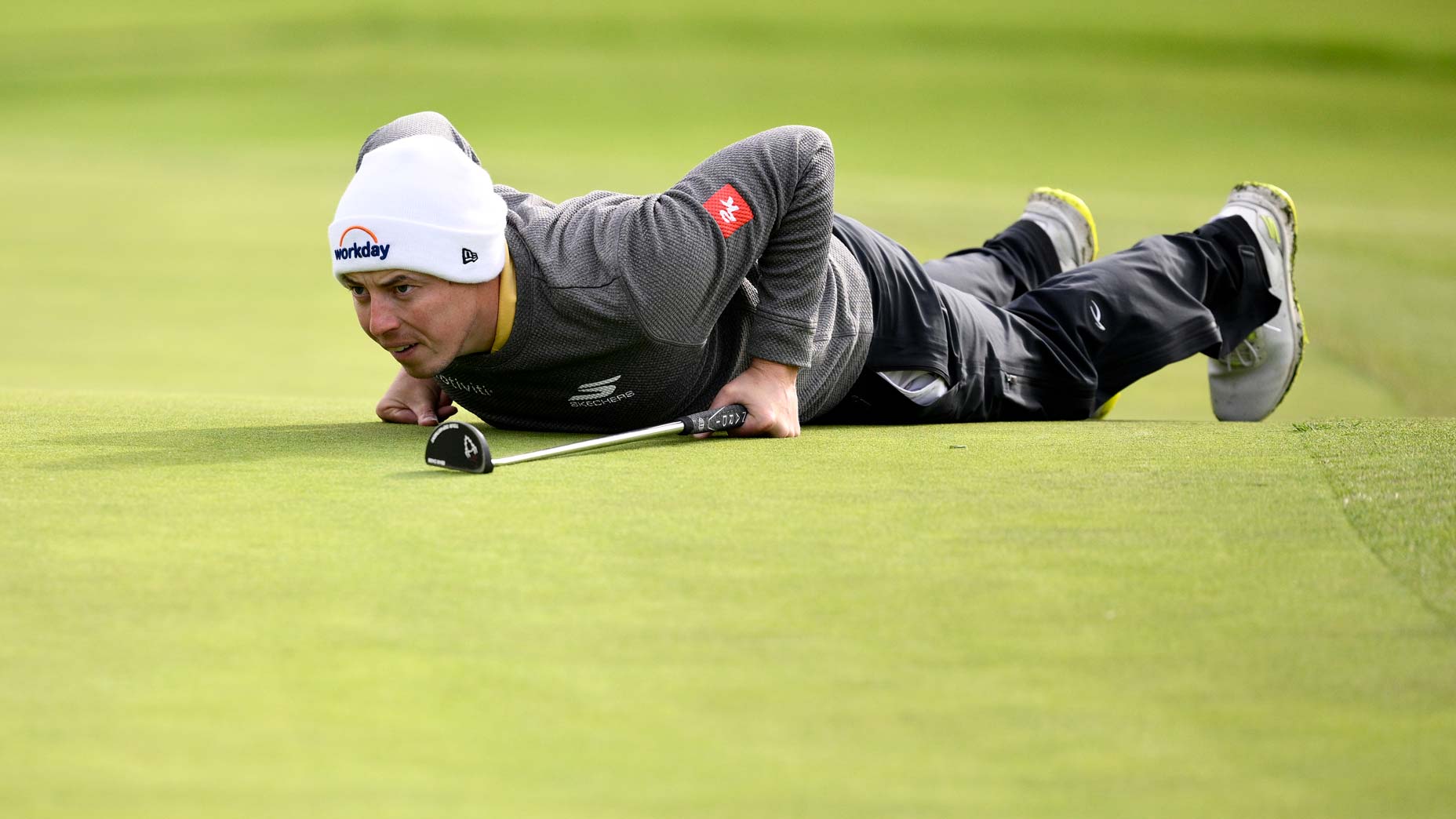
Pros miss short putts all the time, of course. But if it feels like pros miss them more often here, that’s because they do.
Ron Klos broke down some of the data here; over the last five years, pros three-putt more regularly and make fewer putts from every distance at Riviera. The Tour average from four to eight feet is 69.2 percent; here it drops to 65.6. From outside 25 feet Tour pros three-putt at an average of 8.9 percent; at Riviera that spikes over 11 percent.
For Riviera, this week’s scores are unusually low. Bridgeman’s three-round total of 19 under par is unthinkable. But the same conditions that have given players plenty of birdie tries — soft, soggy, speedy greens that have allowed approach shots to hit and stick, even from the rough — have made putting that much tougher.
In all, the putting challenges come from a combination of factors. Riviera, like Pebble Beach and Torrey Pines, has pure poa annua greens, which tend to get bumpier in the afternoon (a “waffle-iron effect”) despite their immaculate conditioning. That’s another factor; Riviera’s greens are running fast, which means it’s tough to take break out of the equation and leads to players putting defensively. And because of this week’s rain, imperfections are magnified, spike marks are easier to leave and the surfaces get less predictable.
Advertisement
To sum up: These are very soft, ridiculously fast, unpredictable poa annua greens with an unusual amount of subtle two-way breaks. Plenty of putts still go in — these guys are good! — but plenty don’t.
But don’t take my word for it. Here’s what some of this week’s contenders have said:
Schauffele, after his second round:
“Pebble was almost good prep for here being even sort of wetter and spongier [faster], this is a lot scarier. But in terms of like committing to putts that look dodgy, it was good preparation.”
Advertisement
Scottie Scheffler, to CBS, after his third round:
“The greens here have so much pitch, and as the day goes on, the greens continue to hold speed and they stay fast and they continue to get bumpier and bumpier just with the nature of poa annua … the greens are getting softer and they’re fast, which I think is a really good challenge. It’s kind of underrated how hard that is.
“And especially when you add a little bit of breeze, it can be really challenging to hole putts. So I think you’ll see guys get a lot of looks, but you’ve still got to manage your way around.”
Rory McIlroy, after his third round:
Advertisement
“Yeah, the greens got really fast there at the end of the day. Then you just couldn’t leave it dead. You’re grinding over three-footers and all of a sudden you get one that you think you can have a bit of a run at and if you hit it a little bit too hard [motioning] I just found the greens really, really difficult today.”
More McIlroy:
“They’re hard because you don’t want to hit [putts] too hard obviously, and then the softer you hit them, the more break they’re going to take early.
“There’s a lot of double breakers here, so my putt on 16 today was a great example. I had to hit it really soft. It was left to right early but the last half of the putt was right to left, but it went so far right early because I hit it so soft, it never had a chance to come back. It’s, yeah, it’s tough.”
Advertisement
Jacob Bridgeman, tournament leader (and statistical putting leader):
“In the past I’ve really struggled on poa. For whatever reason, I didn’t like it, didn’t really know what to do. I think I’ve accepted now that some of them are going to bump out. Like mine on the last hole, I hit a good putt, it just bumped left and it didn’t go in. I think in the past I would get kind of frustrated with that and that would kind of inch over into my stroke and play.
“I had to make an adjustment mid round. At the beginning I got off to a nice start, had a bunch of short putts and didn’t really have any 15-footers where the speed matters, and then kind of in the middle of my round I hit a few way too hard and told my caddie, I’ve got to hit those a little softer, they’re not taking a break. After that I feel like I hit a lot of good putts.”



You must be logged in to post a comment Login