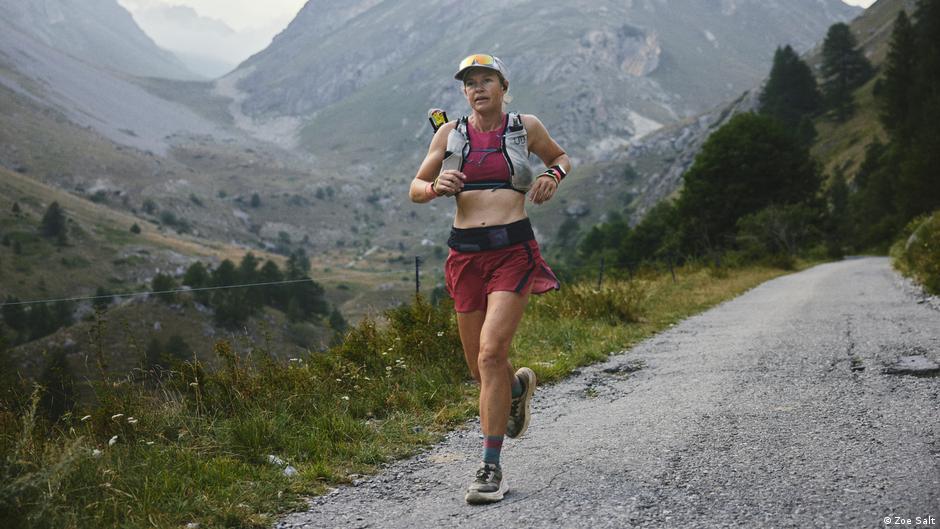
New Zealand runner Sophie Wood, who competes under her maiden name, Sophie Grant, recently accomplished something truly remarkable.
Running for 29 days across the Alps, from Trieste to Monaco, Woods covered around 2,000 kilometers (1,243 miles) while climbing a total of more than 100,000 meters (328,083 feet) – on an average of three to four hours of sleep per night.
This made her the fastest person ever to complete the Via Alpina. The 42-year-old ultra-runner finished the route more than seven days faster than the fastest man ever to do so.
“It gives me goosebumps thinking about it, to take the overall record is amazing,” Woods told DW.
Advertisement
“I was there for the adventure. I didn’t really want to be running for longer than a month, that was enough.”
The longer the distance, the smaller the gender gap
Woods is not the only woman to have broken a men’s record in endurance sports in recent years.
In 2026, Rachel Entrekin won the Cocodona 250, a race covering roughly 400 kilometers in the United States, setting a new overall course record.
A year earlier, Tara Dower ran the Long Trail in Vermont. a distance of about 440 kilometers, in 3 days, 18 hours, and 29 minutes, beating the previous men’s record by 2 hours and 40 minutes.
In 2019, Germany‘s Fiona Kolbinger became the first woman to win the Transcontinental Race. Cycling nearly 4,000 kilometers across Europe, she finished just under eight hours ahead of the second-placed male rider. That same year, Jasmin Paris became the first woman to win the 430-kilometer Spine Race in Great Britain, shattering the previous course record by more than 12 hours.
Advertisement
A comprehensive analysis by RunRepeat and the International Association of Ultrarunners examined over five million results from more than 15,000 ultramarathons. The findings showed that the longer the distance, the closer women came, on average, to matching men’s times.
In 2019, Fiona Kolbinger became the first woman to win the Transcontinental RaceImage: Mateusz Birecki/IMAGO
In the events analyzed, on average, the men were still 11.1% faster. At the 100-mile mark, the gap narrowed to just 0.25%. At distances exceeding 195 miles, the women were on average 0.6% faster.
‘We’re good at solving problems’
So why are women able to keep pace—or better—when the physical demands increase?
Certain physiological factors may play a role. On average, women possess a higher proportion of fatigue-resistant Type I muscle fibers and rely relatively more on fat as an energy source during endurance activities.
The advantages men typically enjoy—such as greater muscle mass and higher maximal oxygen uptake—may be less decisive in ultra-long events than in shorter races.
Advertisement
“Probably we are better at burning fat, and therefore it makes us able to go longer,” Woods said – before pointing to other possible factors.
“I think we’re good at putting our egos aside. And I think we’re good at solving problems.”
Competing in an ultramarathon is about much more than who can run the fastest. There are key decisions to be made about sleep, nutrition and physical pain. That’s where her team comes in.
“I just put my life in their hands,” she said.
“You kind of control everything you can and then you just throw it into chaos and see what comes out in the wash.”
Advertisement
As little as 90 minutes of sleep, 7,000 calories a day
The extreme physical strain was evident in her sleeping patterns – towards the end, she was sleeping as little as 90 minutes a night. When she simply couldn’t go any further, she would lie down right next to the trail.
“You just curl up on the side in a little mossy glen and hope that no one thinks you’ve died,” she said.
“The sleep deprivation was one of the hardest parts of the whole thing.”
Advertisement
Her alarm would often go off again as early as three in the morning.
Sophie Woods broke both the women’s and men’s records on the Via AlpinaImage: Ulrich Wagner/IMAGO
At the same time, maintaining her physical energy was a huge problem, with her team estimating that she was consuming between 6,000 and 7,000 calories a day – through sports drinks, soft drinks, as burritos, falafel wraps, sandwiches, pasta, and McDonald’s food. She ate much of this while on the move.
In the Dolomites, heat and pain added to the challenge.
“I bawled my eyes out in the Dolomites,” she said.
“I was really hot. I was really sore. I was really swollen. I was shuffling along and I was just like: I don’t know if I can do this.”
Advertisement
Despite it all, she carried on.
Women long neglected in sports research
Despite setting the record, Woods wonders what she and other women could achieve if their bodies were studied as thoroughly as men’s.
“As a woman, you need to be very careful when you read these studies to actually see who they are studying, because often it will be 10 male cyclists,” Woods said.
“We have just been left behind in all of the research for decades,” she said.
Advertisement
“As women, we are fighting for crumbs in the sporting world. We are fighting for more coverage, we are fighting for more research, we are fighting for more sponsorship.”
The fact that several individual men’s records have been broken by women doesn’t mean that women are inherently better endurance athletes than men. Men still hold many records and are, on average, significantly faster over shorter distances.
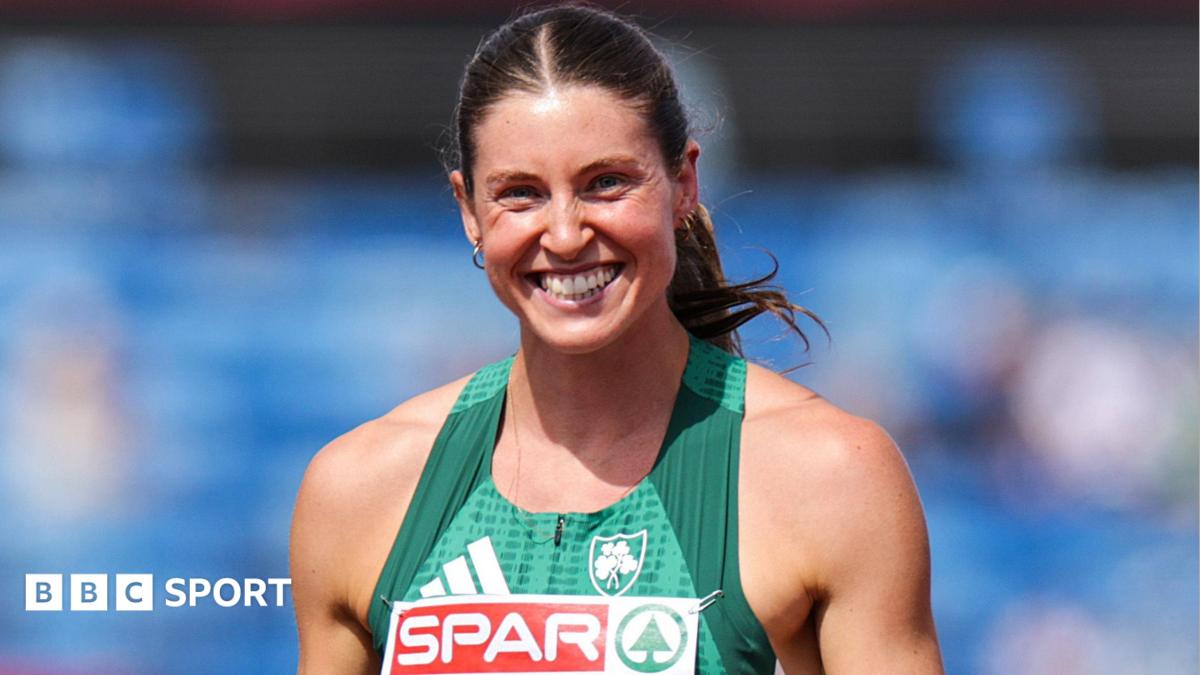
Ireland’s Kate O’Connor sits in second place after two events of the women’s heptathlon at the European Athletics Championships in Birmingham.
The Newry-born 25-year-old claimed gold at the Commonwealth Games and made a good start to her bid for further success on Friday, one point off Poland’s Adrianna Sulek-Schubert who leads with way with 2135 after the morning session.
Germany’s Sophie Weissenberg sits in third on 2074, while Switzerland’s Annik Kalin is a further 20 points back.
O’Connor recorded a personal best in the 100m hurdles, finishing fourth in heat two with a time of 13:30 to come in 11th overall.
Advertisement
The race was won by Lithuania’s Beatrice Juskeviciute with a season best 13:09, ahead of Italy’s Sveva Gerevini and Weissenberg.
In the high jump, O’Connor again produced a personal best of 1.86m which was matched by Sulek-Schubert.
The heptathlon resumes on Friday evening with the shot put at 19:35 BST with the 200m to follow at 20:55.
Andrew Coscoran secured his place in the final of the men’s 1500m, finishing fourth in his heat with a time of 3:41.86, while a disappointed Cathal Doyle lodged an appeal after falling in his heat, yet finished the race.
Advertisement
Both Ireland’s men’s and women’s 4x400m relay teams missed out on a place in their respective finals with the men just one second off the national record.
The World Test Championship is back, and India are on the road once again! They haven’t had to travel far, though, since Sri Lanka are the hosts of a two-Test series across Galle and Colombo. The first Test will start on Saturday, August 14 at the picturesque Galle International Stadium.
Both teams won’t be at full strength. The home side will be without star batters Pathum Nissanka and Kusal Mendis, while India will miss the services of Jasprit Bumrah and Sai Sudharsan. Nevertheless, an interesting series filled with talented names beckons.
Sri Lanka haven’t won a home Test against India in a while. In fact, it’s been quite a few years since the two-time World Test Championship finalists even toured the island nation. It’ll be interesting to see how the two teams fare.
Advertisement
India’s updated squad for the Test series against Sri Lanka:Shubman Gill (c), KL Rahul (vc), Yashasvi Jaiswal, Rishabh Pant (wk), Sarfaraz Khan, Dhruv Jurel (wk), Ravindra Jadeja, Kuldeep Yadav, Manav Suthar, Mohammed Siraj, Prasidh Krishna, Gurnoor Brar, Devdutt Padikkal, Saransh Jain, Auqib Nabi.
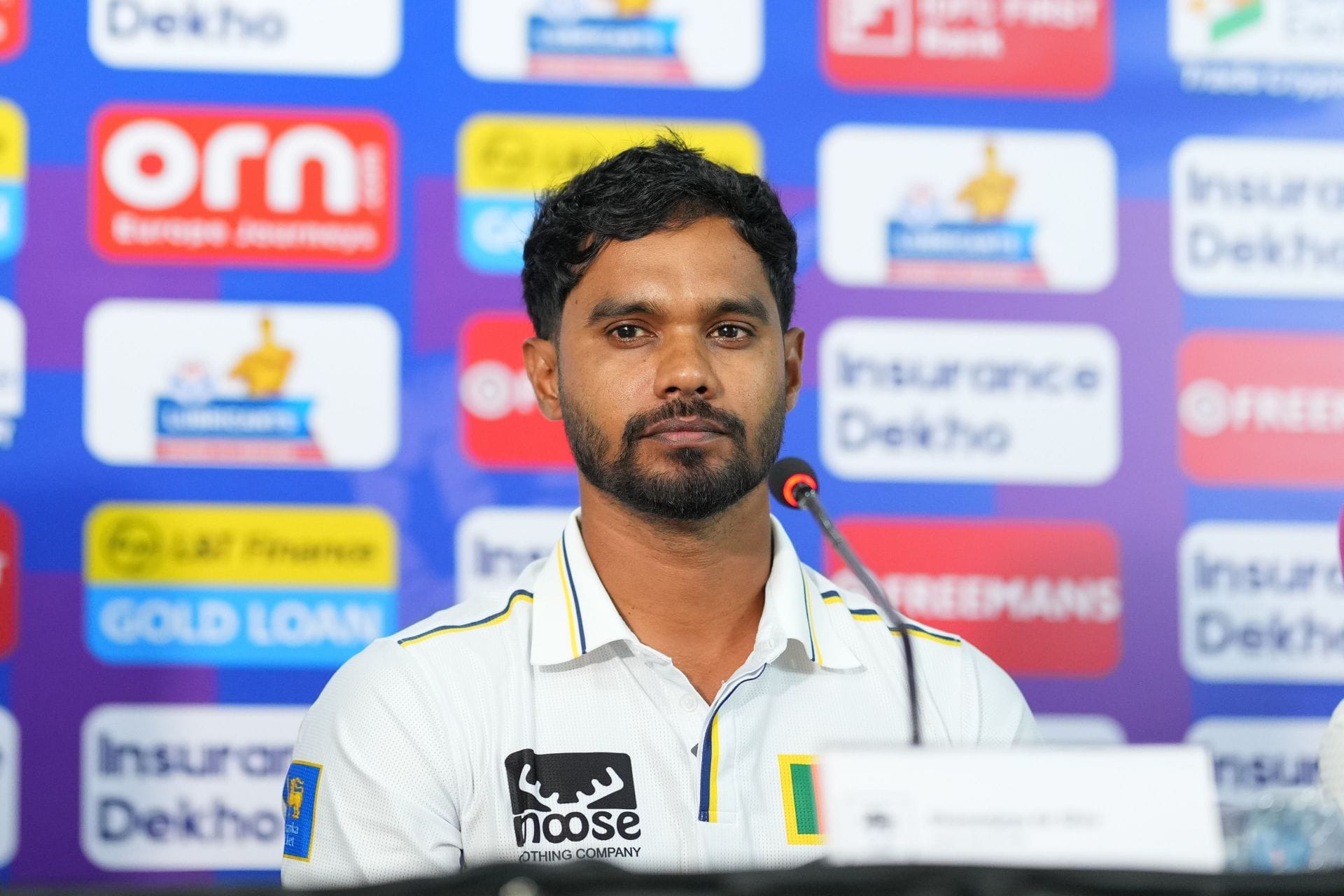
Sri Lanka’s squad for the Test series against India:Dhananjaya de Silva (c), Lahiru Udara, Nishan Madushka, Kamindu Mendis, Dinesh Chandimal, Pasindu Sooriyabandara, Sonal Dinusha, Niroshan Dickwella, Ramesh Mendis, Prabath Jayasuriya, Keshara Nuwantha, Milan Rathnayake, Asitha Fernando, Lahiru Kumara, Vishwa Fernando, Dilshan Madushanka.
SL vs IND 2026: Conditions in Galle a relative unknown as India start favorites
Sri Lanka v India Test Series Previews – Source: Getty
The Galle International Stadium used to produce turners, but its nature has been unpredictable in recent times. It has become more batting-friendly in recent years, while a bit of rain is also on the forecast for the first Test.
Taking those factors out of the equation, it’s still easy to say that India are the favorites for this contest. The challenge posed by Prabath Jayasuriya and Ramesh Mendis is a notable one on a turner, but their numbers haven’t been particularly impressive on flatter surfaces. Moreover, the Sri Lankan pacers don’t have a great record in home conditions.
Advertisement
India’s batting unit has a few weaknesses, but their bowling makes up for it. The returning Ravindra Jadeja adds balance, while Manav Suthar and Kuldeep Yadav are incredibly threatening bowlers. The pace attack has performed well, too.
Sri Lanka have had some plucky displays in the longest format in recent times, but India can be expected to come out on top in the opening game of the series.
Prediction: India to win the 1st Test vs Sri Lanka.
Nigerian clubs taking part in the 2026/27 CAF inter-club competitions have been given August 15 as the deadline to submit their squad lists for the first preliminary round.
The deadline applies to all clubs competing in the CAF Champions League and Confederation Cup, including Nigeria’s representatives Rangers International, Rivers United, Shooting Stars and El-Kanemi Warriors.
Rangers and Rivers United will represent Nigeria in the CAF Champions League, while Shooting Stars and El-Kanemi Warriors will campaign in the Confederation Cup.
Advertisement
The clubs are expected to register all eligible players and submit their squad lists to the Confederation of African Football (CAF) before the deadline.
Failure to meet the deadline could affect the clubs’ participation in the opening round of Africa’s two major club competitions.
The roster for PWHL Detroit‘s inaugural season is taking shape before the historic first regular-season game in late November.
General manager Manon Rheaume announced Friday morning the signing of Olympic goaltender star Andrea Brändli to a three-year contract and Port Huron defender Casey Borgiel to a one-year contract.
Advertisement
Brändli and Borgiel are the first of the team’s six-player draft class to sign and brings Detroit’s roster to 18 players under contract with two goaltenders, seven defenders and nine forwards.
Advertisement
Andrea Brandli of Team Switzerland celebrates winning the bronze medal after the team’s 2-1 overtime victory in the Women’s Bronze Medal match against Sweden on Day 13 of the Milano Cortina 2026 Winter Olympic games at Milano Santagiulia Ice Hockey Arena in Milan, Italy.
Brändli, 29, is a three-time Olympian who backstopped Switzerland to a bronze medal victory in February and was named best goaltender and a tournament All-Star with a 1.94 goals-against average and a .953 save percentage.
“Andrea comes with a really good pedigree and her success at the Olympics,” Rheaume told The Detroit News. “We’re really fortunate to have a second goalie signed (Alice Philbert) that’s also participated in the Olympics for France. It’s very exciting to have that scenario.
Advertisement
“I look at the Islanders when you have both goalies together (Ilya Sorokin and Semyon Varlamov) and you can go with either one in the playoffs. You never know what’s going to happen. Minnesota also shares their goaltending (Filip Gustavsson and Jesper Wallstedt) the last few years.”
Advertisement
Borgiel, 22, joins her hometown team following two seasons as the top scoring defender at Colgate University, most recently tallying four goals and 21 points in 36 games during the 2025-26 campaign.
She’s a product of Detroit’s Little Caesars program, winning back-to-back national titles in 2021 and 2022.
Detroit PWHL General Manager Manon Rheaume hugs Casey Borgiel of Colgate University as Borgiel is selected by PWHL Detroit as the #22 overall draft during the 2026 PWHL Draft on Wednesday, June 17, 2026 at the Fox Theatre in Detroit.
“I actually saw her skate before Little Caesars,” Rheaume said. “She played with my son and I think she was the only girl on our team. She kept up with everyone and she played physical against those boys.
Advertisement
Advertisement
“When she made the transition to the girls game, she continued to play the same way. She didn’t change her physicality. She’s just a solid defender who moves the puck well and brings stability to our blueline.”
Brändli is one of nine on the team who competed in Milano Cortina counting Americans Cayla Barnes, Hannah Bilka, Britta Curl-Salemme and Hilary Knight, Canada’s Daryl Watts, France’s Philbert, Germany’s Nina Jobst-Smith, and Japan’s Akane Shiga.
“Akane (Shiga) is a very skilled player who sees the play well,” Rheaume said. “She put 10 pounds of muscle on in the last few years and did very well in Europe. We like her hockey IQ and feel she can be helpful.”
Borgiel is one of four Michigan-area players on the roster joining Mellissa Channell-Watkins (Plymouth) and forwards Shiann Darkangelo (Brighton) and Taylor Girard (Macomb).
Advertisement
Advertisement
The PWHL schedule hasn’t been released yet for the 12 teams, including Detroit and three other expansion teams.
Last year, the schedule was released Oct. 1 with play beginning in late November. This year, the women’s world championships will be held in Denmark from Nov. 6-16. The season is expected to start shortly after the worlds.
Dec 14, 2025; Arlington, Texas, USA; A fan of the Minnesota Vikings before a game against the Dallas Cowboys at AT&T Stadium. Mandatory Credit: Kevin Jairaj-Imagn Images.
The young fella got scooped up in the 5th Round of the 2025 NFL Draft, a lofty spot for a fullback without a single college carry. Kevin O’Connell has been telling anyone within earshot that he feels good about where the run game is heading. At this stage, Coach O’Connell saying that this year will be different for the run game has become an annual tradition, but the insertion of an upside rookie FB may spark a new turn.
Advertisement
Vikings Rookie Max Bredeson as a Puzzle Piece
On the Vikings’ website, the depth chart begins with an explanatory note: “Minnesota opted to list 12 positions on offense to account for the use of three receivers in 11 personnel (a running back and tight end) or the use of a fullback in 21 personnel (a running back, fullback and a tight end with two receivers).”
For a long time, the Vikings have favored 11 personnel. The football lingo refers to using a trio of receivers alongside a single tight end and single running back (the other players are assumed as five offensive linemen alongside a single quarterback). Pretty standard stuff for the modern NFL that’s all about passing.
Jan 1, 2024; Pasadena, CA, USA; Michigan Wolverines quarterback J.J. McCarthy (9) and tight end Max Bredeson (44) during the first half against the Alabama Crimson Tide in the 2024 Rose Bowl college football playoff semifinal game at Rose Bowl. Mandatory Credit: Jayne Kamin-Oncea-USA TODAY Sports
But then there’s the carve out: the Vikings explicitly create a subcategory for Mr. Bredeson rather than see him lumped into the running backs more broadly. Doing so addresses the nuance between fullbacks and running backs while shoehorning the young thumper into the starting lineup.
#Vikings FB Max Bredeson said today that his game offers “versatility and violence.”
Great combo.
Advertisement
Earlier in the day, OC Wes Phillips described Bredeson’s ability as a receiver as being “adequate” (lol).
Consider where the nine-person draft class gets listed:
Advertisement
DT Caleb Banks: Second String
LB Jake Golday: Second String
DT Domonique Orange: Second String
OT Caleb Tiernan: Second String
S Jakobe Thomas: Third String
FB Max Bredeson: First String
CB Chuck Demmings: Third String
RB Demond Claiborne: Fourth String
C Gavin Gerhardt: Third String
Over and over again, the Vikings seek to insulate the young fellas even as it’s easy to see where things are trending. Putting Demmings behind Dwight McGlothern appears to be very unlikely at this stage. McGlothern’s virtue, though, is that he has been in town for a little while whereas Demmings is brand new. Making the young fella earn it is a touch old school but still smart.
It’s just a video of a rugged dude walloping a bag, but Max Bredeson is going to surprise people with how many snaps he earns.
He’s somebody who can make a difference without touching the ball. That’s the key. Look for him to earn a nice workload. https://t.co/rgsx2AI3EH
At the beginning of August, Alec Lewis (The Athletic) sent along a specific thought about the young fullback: “Another non-QB Vikings thing from today: Max Bredeson was very much in the offensive mix. A pretty telling and impressive thing for a rookie FB to be as a part of it as he was this early given complexity of the system.”
Jan 6, 2024; Houston, TX, USA; Michigan Wolverines tight end Max Bredeson (44) looks on during a practice session before the College Football Playoff national championship game against the Washington Huskies at NRG Stadium. Mandatory Credit: Kirby Lee-USA TODAY Sports – Credit: USA TODAY Sports via Reuters Connect
Last year, Bredeson played as a tight end a good portion of the time. He is, nevertheless, a fullback in Minnesota. Look for the Vikings to shuffle him around to gain an edge when there needs to be some added ruggedness. His versatility is going to get put to good use.
Max Bredeson is listed as being 6’2″ and weighing 252 pounds. He is 23.
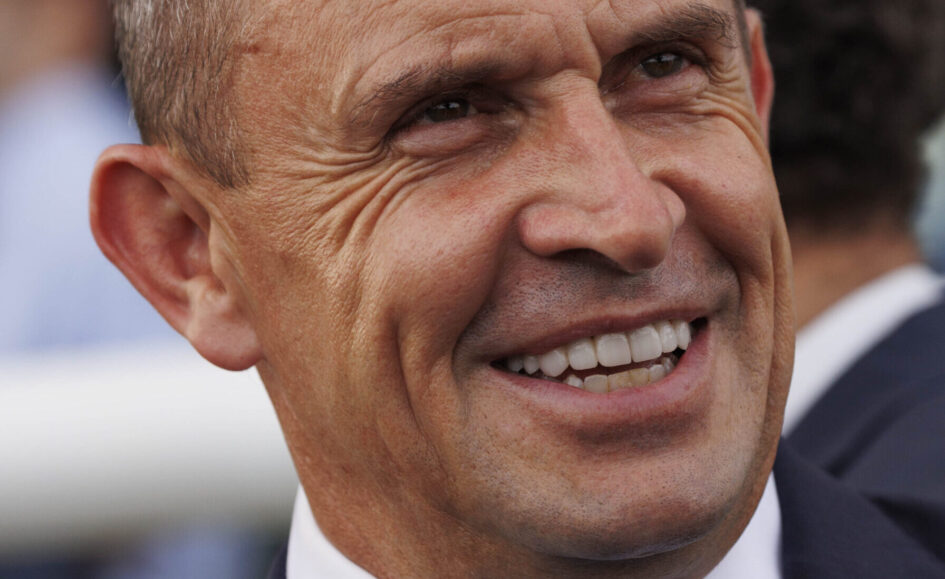
Chris Waller’s ambition to claim an early victory in Sydney’s three-year-old features may fall to Central Europe, with his other two contenders for The Rosebud facing uncertainty about their participation.
Hidrix, carrying the topweight, is reportedly being saved for the San Domenico Stakes (1100m) in two weeks after drawing barrier 17. Separately, the Perth-based filly Striking Alibi might be redirected to the Silver Shadow Stakes (1200m) next week, having drawn gate 12.
“We were probably only going to run (Hidrix) if he drew perfectly, just because of the weight,” said Waller’s assistant trainer, Charlie Duckworth.
“Striking Alibi has been really sharp in all of her work since coming to us. She has been pretty pushbutton in terms of she has settled in well and done everything right.
Advertisement
“Just the draw might mean she could wait and go against the fillies next week instead.”
There are no such reservations about commencing Central Europe’s three-year-old season, with the colt drawing barrier seven.
The Frankel colt has shown promise in his two previous starts, both at Group level, including a narrow second to stablemate Campione D’Italia, who went on to win the ATC Sires’ Produce Stakes, in the Skyline Stakes (1200m) in February.
While the stable expects him to perform better over longer distances than the 1100m of The Rosebud, the confidence of star jockey James McDonald has swayed them to target the Listed sprint instead of a lesser race on the program.
Advertisement
“We had him nominated in the 1300 as well but James was confident off his trials and trackwork that 1100 was fine. He’s been sharper than he was last time in, so that’s a positive,” Duckworth commented.
“He’s a beautiful colt, incredibly well bred. We’ll learn a bit more on Saturday.”
If Central Europe performs well in his initial races, he is being targeted for the Golden Rose, for which he is currently sharing the fourth line of betting at $11.
Four horses have been withdrawn from The Rosebud field: Tornado Valley, Outspan, Oh Yes She Did, and Scintillation. All are anticipated to race in stakes events at Caulfield.
Advertisement
Central Europe is on a clear path towards the Golden Rose if he performs well in The Rosebud, with current odds of $11. You can compare the latest racing odds at online bookmakers.
LSU coach Lane Kiffin said Thursday that he is standing by his initial stance on allowing cornerback D.J. Pickett to wear the No. 5 jersey previously worn by 2023 Heisman Trophy winner Jayden Daniels — even in the face of objections and legal threats from the former Tigers quarterback.
“I commented a week ago on that,” Kiffin said after practice in Baton Rouge. “That’s the comment that I had and we’re moving forward.”
LSU’s official online store has removed replica Daniels jerseys from the menu of those for sale, which include the No. 9 of 2019 Heisman Trophy winner Joe Burrow and the No. 3 of former star receiver Odell Beckham Jr.
Meanwhile, Pickett showed no interest in relinquishing the No. 5 when he spoke with reporters after Thursday’s practice.
Advertisement
“I’ve been wearing the number my whole life, since I was 4 years old,” Pickett said. “That was the number I was promised. I wish Jayden the best. Good player — he did real good here.”
Daniels, drafted second overall by the Washington Commanders in 2024, said in a social media post on Thursday that the matter would not affect his preparation for the NFL season.
“I have been locked in on training camp and that has been my No. 1 focus,” Daniels said in the post. “I have a lot of gratitude for my time at LSU and I’m proud of what my teammates and I accomplished there.
“Obviously there are issues to get worked out” with LSU, Daniels continued. “My hope is that it will get done privately. … I realize the business of football is unique and I trust that this can all be resolved.”
Advertisement
Daniels’ statement came in the wake of reports about a letter in which his Miami-based attorney, Adam Kenner, demanded that LSU no longer use his client’s name, image or likeness to promote the university or its athletic programs.
Pickett wore a No. 3 jersey as a freshman last year but was wearing No. 5 when August camp opened last week. The six-foot-five cornerback is a former five-star recruit who had three interceptions in 2025.
Kiffin said last week that Pickett was promised the opportunity to wear No. 5 when he signed with LSU in December 2024, when Brian Kelly was coaching the Tigers. Kelly was fired in October 2025, and Kiffin was hired at the end of the regular season.
“When a kid’s promised something to come to a school, he should wear it,” Kiffin said during an Aug. 5 media session. “So at that point, I don’t think it’s really my decision. We should honour what he was told.”
Advertisement
Pickett is the first player to wear No. 5 since Daniels left LSU. Under LSU policy, the only number football players cannot wear is No. 20, worn by the late Billy Cannon, who was the Tigers’ first Heisman winner in 1959.
Top LSU officials, including athletic director Verge Ausberry, have declined to comment on the matter.
A number of images of Daniels that are on display at LSU would be considered in the public domain, and not subject to any contractual agreements between the university and the quarterback. But LSU has in the past featured Daniels in promotional videos shown in Tiger Stadium and elsewhere, and it remains to be seen whether LSU might edit some of those out should the dispute become protracted.
Cincinnati Bengals quarterback Joe Burrow — who won the 2019 Heisman Trophy and led LSU to a national title — declined to comment on the specifics of Daniels’ situation after Thursday night’s pre-season game against the Detroit Lions. But he said he’s had conversations about his No. 9 not being issued to another player.
Advertisement
“They told me that they wouldn’t use it again, but you never know what happens,” he said.
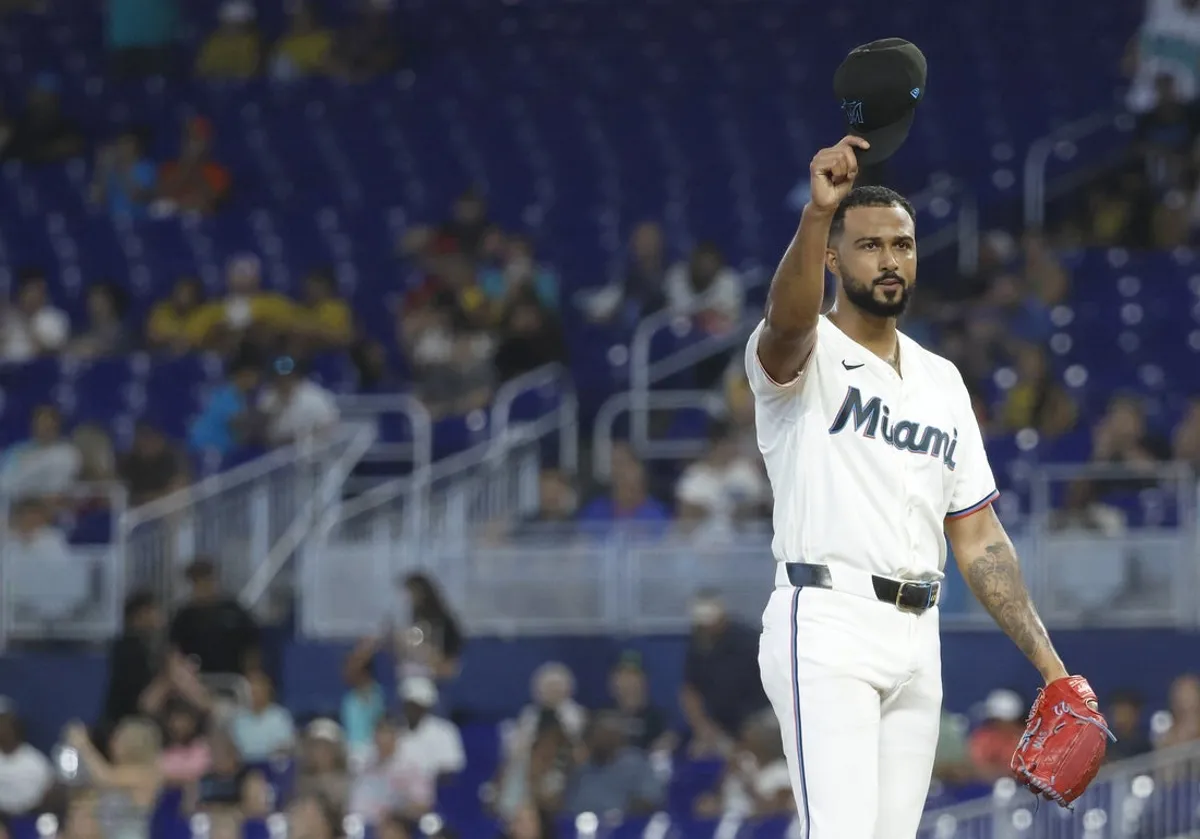
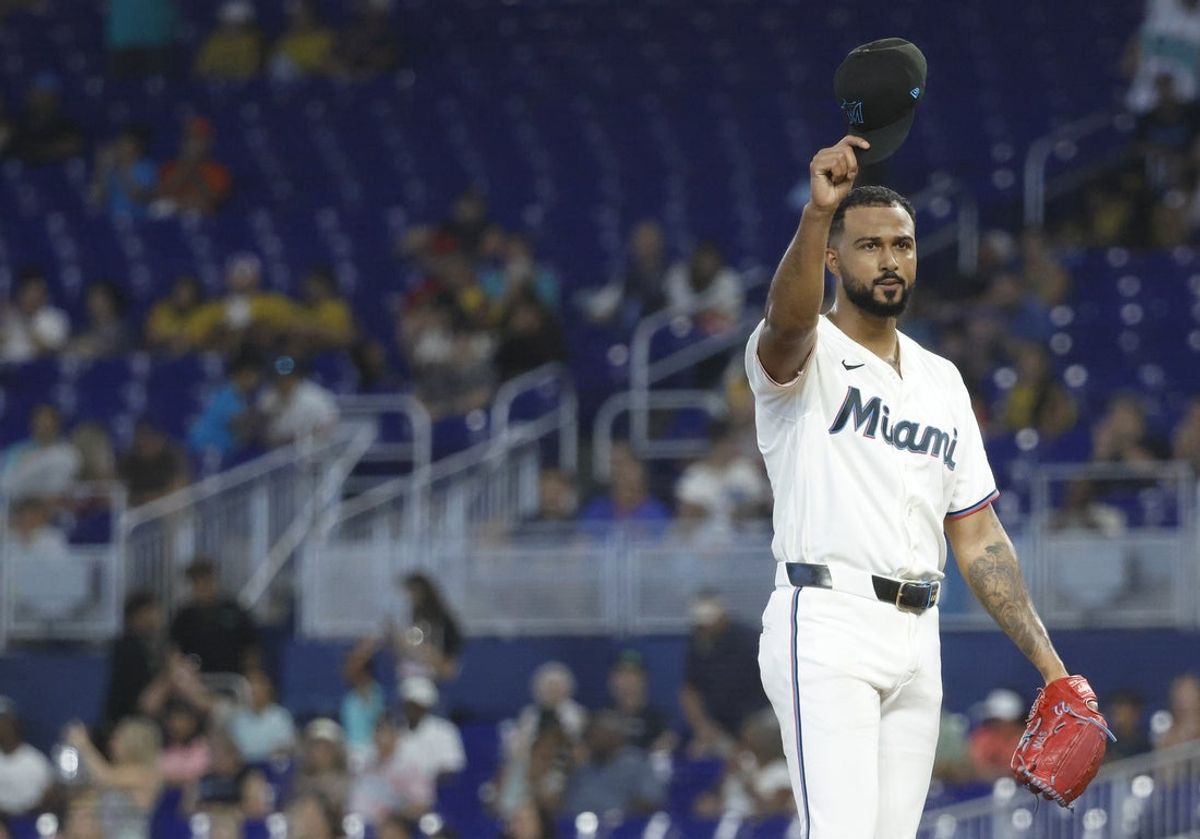
Aug 8, 2026; Miami, Florida, USA; Miami Marlins starting pitcher Sandy Alcantara (22) tips his cap as he acknowledges the crowd after setting the record for Marlins most innings pitched against the Los Angeles Angels during the third inning at loanDepot Park. Mandatory Credit: Rhona Wise-Imagn Images
Sandy Alcantara will try to extend his latest scoreless streak for the Miami Marlins on Friday evening when he takes the mound against the host Cincinnati Reds in the opener of a three-game series.
Alcantara (13-6, 3.52 ERA) has not allowed a run in his past three outings covering 20 innings, marking his second scoreless streak of at least 20 innings this season.
The right-hander is the first MLB pitcher with multiple scoreless streaks of at least 20 innings in the same season since Nathan Eovaldi of the Texas Rangers in 2023.
Alcantara is coming off seven shutout innings in a 7-0 win against the Los Angeles Angels last Saturday in a game in which he allowed three hits, struck out eight and walked one.
“Sandy’s made his name and his mark in this league with what he did (against the Angels), and that’s going deep into games and doing it incredibly efficiently,” Marlins manager Clayton McCullough said of the 2022 National League Cy Young Award winner.
Advertisement
During his last outing, Alcantara, 30, passed Ricky Nolasco as the franchise’s all-time leader in innings (1,230 2/3).
“Innings pitched, strikeout, quality starts, I don’t know how many more records they have,” Alcantara said jokingly after the game. “I’m very happy about the opportunity that this organization gives me, to play the game out there with my teammates and amazing coaches that I’ve had for the past couple years.”
Alcantara is just 2-5 with a 3.72 ERA in 10 career appearances (eight starts) vs. the Reds. He last faced them on April 7 and was two outs away from a complete-game shutout but left after surrendering a double and a walk. The bullpen let him down, and Miami lost 6-3 in 10 innings.
Alcantara also will try to re-stabilize a Miami team that’s coming off a 13-1 loss to the visiting Pittsburgh Pirates on Thursday afternoon, halting its four-game winning streak.
Advertisement
“Moving forward, stacking series wins is going to be very important,” McCullough said. “Unfortunately, (Thursday) was a clunker. They beat us up good, but I think heading on the road now for a big six games in Cincinnati and Philadelphia, to win the series here was still important.”
The Reds are returning home after holding on to beat the Chicago White Sox 9-8 on Thursday afternoon in the decisive contest of their three-game series.
Cincinnati, which led 9-5 after seven innings on Thursday, was swept at the Washington Nationals last weekend to start a six-game road trip.
Advertisement
“Both teams’ pitching staffs had some troubles, but we got the game in,” Reds manager Terry Francona said of Thursday’s win. “What I care about is we won. We can go home and see if we can dodge some more rain.”
Right-hander Chase Burns (13-2, 2.61 ERA) is scheduled to start for the Reds in the series opener on Friday.
Burns is coming off a rare loss after winning his previous 12 decisions. He surrendered five runs and six hits in 5 1/3 innings of an 8-2 loss to the Nationals last Saturday.
The score was 2-2 heading into the bottom of the sixth, but the Nationals greeted Burns with three hits in a row to spark the four-run inning.
Advertisement
“The hope was to have a nice, good inning, get him through six, tie game, go to our bullpen, and it just ended up being a long inning and he couldn’t get through it,” Francona said. “I got uncomfortable. That’s my biggest concern with him right now, at the end of his outing, trying to reach back for more when he’s near 100 (pitches).”
Burns has not faced Miami in his two-year MLB career.
Prime Ice Constructs in Genshin Impact are a brand-new feature introduced in the 7.0 Snezhnaya update. Among the various things they can do, one use case is leaving signs with messages in the open world. Moreover, they also appear in other players’ worlds. Luckily, there is a way you can remove them entirely if you do not want to see them.
This article explains how to remove co-op Prime Ice Constructs in Genshin Impact.
How to delete Prime Ice Constructs in Genshin Impact
While co-op Prime Ice Constructs in Genshin Impact 7.0 are a useful feature that can be used to pass certain useful information to others, at times certain players may also use them to troll you. If you are someone like me who finds these unnecessary blocks of text annoying, you will want to delete them from your map.
Advertisement
You can either choose to delete a single Prime Ice Construct at a time or mass delete several of them at once if you are looking to remove them entirely. Here’s how that can be accomplished:
Select a Construct from the main map (Image via Sportskeeda Gaming || HoYoverse)
Open the main map.
Turn on the Manage Prime Ice Construct button at the bottom of the screen.
Click on any Construct you want to delete.
In the menu that opens up on the right-hand side, click on the Remove button to delete the Prime Ice Construct.
Alternatively, tap on the Trash icon on top of the Navigate button to mass delete several Constructs at once.
Decide which ones to delete (Image via Sportskeeda Gaming || HoYoverse)
This will bring up a red ribbon at the bottom asking how many Constructs to delete. Tap on the Select quantity button to make a selection based on their type.
Choose between removing all Prime Ice Constructs or only the ones built by others.
Press the Delete button in the bottom right corner to permanently remove them.
Do note that this does not prevent more co-op Prime Ice Constructs from appearing.
How to prevent co-op Prime Ice Constructs from appearing in Genshin Impact
Once you have rid yourself of all Prime Ice Constructs created by other players, your next objective is to stop them completely. Here’s how to do that:
Advertisement
Open the Prime Ice Construct menu (Image via Sportskeeda Gaming || HoYoverse)
After obtaining the Eye of Graeae, click on the Prime Ice Constructs button to begin placing one.
Tap on the Construct Details button found on the right-hand side.
Open the Settings dialog box from the top-right corner.
Toggle off this option (Image via Sportskeeda Gaming || HoYoverse)
Toggle off the option to receive Prime Ice Constructs from others.
That’s all there is to removing those pesky co-op Constructs in Snezhnaya.
Also check out our other GI articles:
Why did you not like this content?
Advertisement
Was this article helpful?
Thank You for feedback
Are you stuck on today’s Wordle? Our Wordle Solver will help you find the answer.
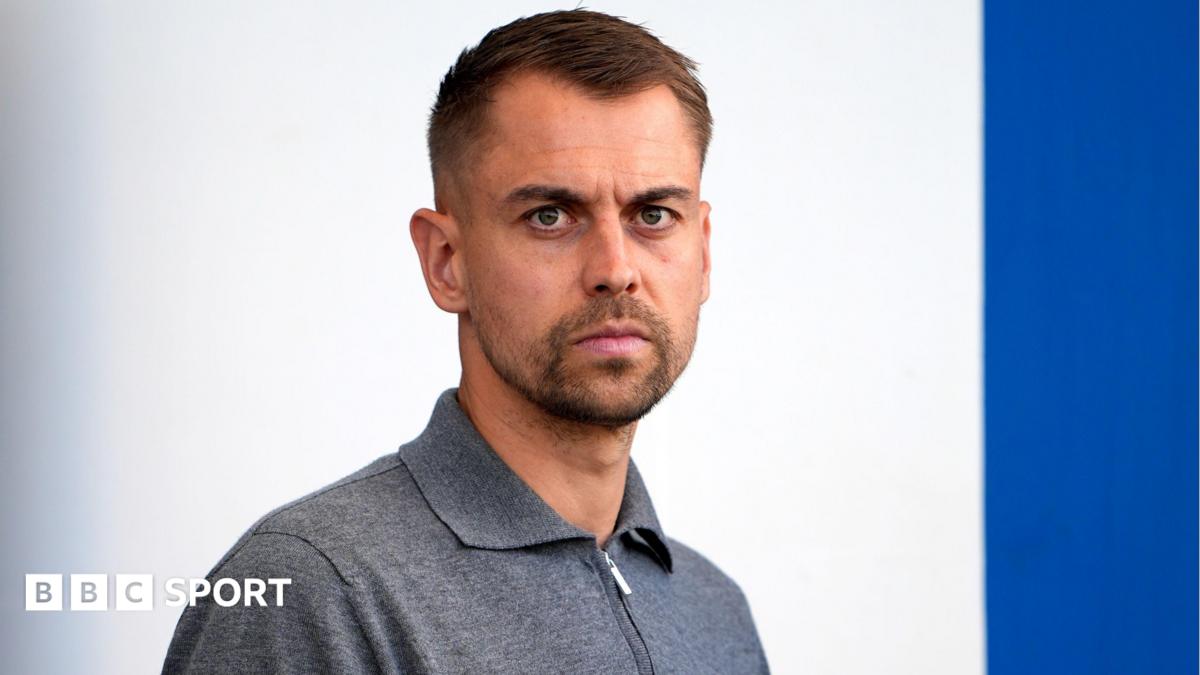
Eckert is only contracted at St Mary’s until the end of the current season, and a significant sanction could force the club to look elsewhere for a new head coach.
Spors has held his position since 2025 and played a key role in handing Eckert the permanent job as head coach in December last year.
Advertisement
“It all depends on what the outcome is as there are so many uncertainties of how this could look like,” Spors said.
“There is nothing too concrete at the moment, we’re really focused on the here and now and if there is something that we have to deal with then we will deal with it.
“In the back of my mind and in the office we do speak about different scenarios to be prepared for but I still hope for a positive outcome.”
Southampton were preparing for a number of possibilities on their pre-season tour.
Advertisement
During one friendly Eckert watched the game from the stands, and later told the club’s media: “Let’s hope we don’t need it,” when asked about managing the game away from the technical area.
If Eckert were to be banned by the FA, there is no guarantee this would only prevent him from being on the touchline.
“At the moment I’m honestly very positive looking into the next weeks and we have some ideas in mind,” Spors added.
“There was some discussions earlier about how Tonda watched one of the pre-season games from above [in the stands] and we have to think into different scenarios like this.”























































You must be logged in to post a comment Login