Have Formula 1’s new rules this year damaged its status as the ultimate challenge for a racing driver?
Listen to the sport’s top drivers, and it would be easy to get that impression.
“Not Formula 1,” says Max Verstappen of the need to manage energy in the new cars. “Ridiculously complex,” says Lewis Hamilton. “The chef could drive the car at that speed,” says Fernando Alonso. “Not the purest form of driving,” says Lando Norris.
Advertisement
Advertisement
When the sport’s four active world champions make comments like that, it would be foolish not to listen.
But before jumping to a conclusion that F1 has been ruined by what amounts to the biggest rule change in the sport’s history, it’s important to establish a frame of reference.
What, in essence, is the job of a racing driver? It is to get a car around a race track in the shortest possible time.
In its purest form, this means braking as late as possible for a corner, driving around it at the highest achievable speed, exiting it as fast as one can and reaching the highest speed on the straight before doing the same again, lap after lap.
Advertisement
Advertisement
But that’s not what a racing driver does all the time. It can’t be. The way they drive on a qualifying lap, for example, is not the same as over a 200-mile grand prix distance.
Tyres and fuel need to be managed, there might be problems with the car to take into account, and so on. That’s still getting the car around the track as fast as possible, but it’s doing so within the constraints presented at the time. Flat out in motorsport is only sometimes.
So when Verstappen, Alonso and co talk about the degree of energy management required with this year’s new hybrid engines, are they saying that they are no longer ever driving on the limit of grip in the corners?
Advertisement
At last week’s pre-season test in Bahrain, I asked that question to all of the above drivers, as well as Mercedes’ George Russell and Kimi Antonelli, and Haas’ Oliver Bearman. They all said they were still on the limit of the grip the vast majority of the time, that skill still mattered, that a faster driver would still beat a slower one.
Advertisement
The new cars have less downforce than last year, so they have less grip, but the drivers are still on the limit of that grip in the corners.
Bearman said: “Some corners on this track, which were last year limitations or places that you have to be aware of, are not really corners any more, they’re more power-limited. Like Turn 12 and Turn Seven.
Advertisement
“So you do change the way that you approach those corners. And where last year Turn 12 you were 40km/h faster this year, it’s not really a corner any more. And that is a bit strange.
“But for the rest, you’re still pushing to the limit even if the limit is a bit lower at the moment. But it’s not feeling out of this world. Once we get used to the differences in some corners, you just adapt your driving style. And then it feels like normal.”
Advertisement
The balance of going flat-out and ‘harvesting’
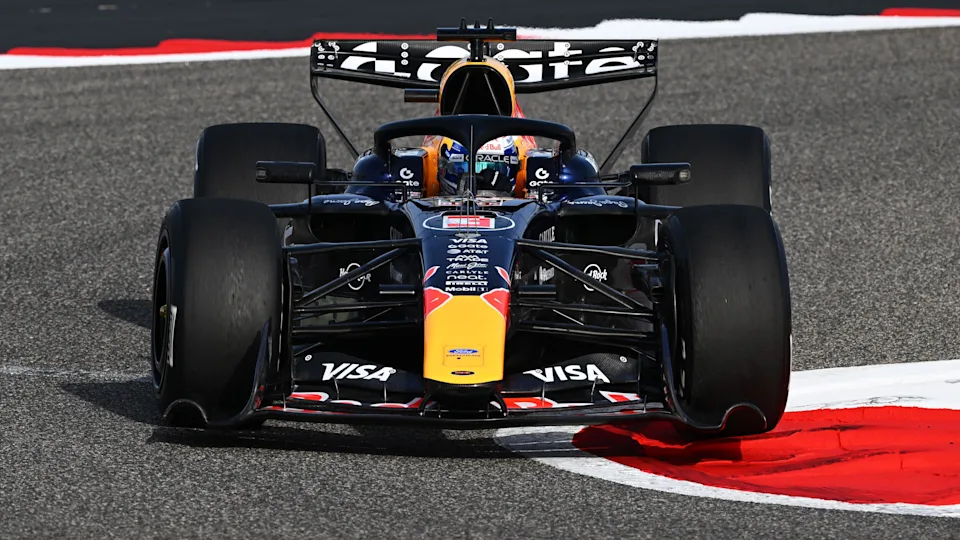
Max Verstappen in his Red Bull during pre-season testing in Bahrain, where the slower corners allow drivers to recover energy more easily than faster circuits [Getty Images]
McLaren team principal Andrea Stella has an intimate knowledge of what it takes to be a top driver, having worked as a race engineer with Michael Schumacher, Kimi Raikkonen and Alonso. He is also interested in this topic for the good of the sport.
Advertisement
He says: “What we’ve seen in Bahrain definitely confirms that it’s the ultimate challenge.
“Probably this is because Bahrain is a harvest-rich circuit, so you drive in a very normal way. And if anything with these regulations the cars slide quite a lot more and the role of the driver if anything is even more involved in extracting the most out of the car.
Advertisement
“Barcelona was a slightly different situation because, being a relatively harvest-poor circuit, there were some special manoeuvres that needed to be made, like not being flat-out in high-speed (corners) in order to balance the level of harvesting and produce the fastest lap time. That meant that in Barcelona not necessarily you could be at the fastest speed in high-speed corners.”
Advertisement
Stella’s remarks refer to the drivers’ need to perform what McLaren’s Oscar Piastri has described as “counter-intuitive” driving techniques.
The combination of a near 50-50 split between the internal combustion engine (ICE) and electrical components, three times the amount of electrical power compared with last year’s engines and a battery about the same size means the new engines are energy starved.
With the battery emptying itself within about 11 seconds of full power, it is emptying and being recharged constantly around a lap. The engineers have to work out how best to deploy whatever energy they can recover through a lap for the optimum performance.
Advertisement
Advertisement
This has led to unnatural techniques, such as not accelerating at full speed out of a corner before starting a qualifying lap until some way down the straight, choosing not to deploy energy for maximum speed in some high-speed corners, even not deploying on the straight at the end of a qualifying lap because the energy was better used exiting a corner elsewhere on the lap.
Other energy-recovery tasks include:
Lift and coast, a feature for many years, where drivers lift off for a short time before applying the brakes for a corner
Using a lower gear than would be optimum for performance in corners so the turbo can be kept spooling fast to recharge the battery
‘Super clip’, where the electric motor is run against the engine at full speed on the straights to recovery energy
But how much of a difference is this really making?
BBC Sport has seen a telemetry data overlay of a quick lap from Bahrain with last year’s cars compared with one from this year.
Advertisement
There are differences. The slow corners are now taken slightly faster, the quick ones slightly slower. Acceleration is initially much faster, but so is the rate at which it tails off later on the straights. The lap time is a couple of seconds slower overall – as is always intended in the case of an F1 rules reset. But fundamentally, the traces look very similar.
Advertisement
And on track? Well, they still look like F1 cars, is the bottom line. It takes a very well trained eye to notice the differences.
Why overtaking is expected to be difficult
Melbourne’s Albert Park, which stages the season-opening Australian Grand Prix from 6-8 March, is an energy-starved circuit because of its long straights and fewer braking zones [EPA]
Nevertheless, there is an ongoing debate in F1 as to whether the new cars have moved the sport too far away from the purity of the driving challenge, and some think changes could be made to reduce the levels of energy management.
Advertisement
At the moment, the rate of energy recovery with the ‘super clip’ – frankly, jargon that would be better kept away from public consumption because of the potential for confusion – can be a maximum of 250kw.
Advertisement
But the engines are capable of recovering energy at 350kw, and do so when a driver has lifted off the throttle. So why not let them do that when flat out?
Another proposal is to reduce the output of the electrical part of the engine, currently limited to 350kw (470bhp), to about 300kw (402bhp) or even 250kw (335bhp). The idea being to cut overall power but allow it to be applied for longer, to make driving feel more natural.
Advertisement
Going even further, some would wish to increase the amount of fuel the engine is allowed to use, and rebalance the ratio between the ICE and electrical, perhaps to 65:35 or 70:30.
The opposing view is that these last two would require wholesale changes to the engine design and other aspects of the car such as gear ratios. Opponents also argue it would not have the effect required.
Advertisement
A related problem is the new ‘overtake’ button. This replaces the drag reduction system (DRS) overtaking aid, which no longer exists because both front and rear wings open on the straights, part of a series of tweaks made as a consequence of the new engine formula.
Advertisement
‘Overtake’ mode provides the drivers with electrical energy for longer. It does not create more power or, as DRS used to, more speed. As a result, overtaking is expected to be difficult.
Herein lies another argument for reducing the electrical output to 300kw – then, the remaining 50kw could be used for overtake mode.
An added complication is that the circuits all require different levels of energy management.
Advertisement
Advertisement
In Bahrain, the above techniques were not really needed because there are a lot of braking phases into slow corners to recover energy in the standard way.
But Albert Park, which hosts the season-opening Australian Grand Prix on 8 March, is an energy-starved circuit, and lift and coast and super clip are expected to be needed extensively, even in qualifying.
Melbourne joins Saudi Arabia, Austria, Silverstone, Monza, Azerbaijan and Las Vegas among the worst circuits for energy – tracks with long straights but not much facility to recover in braking zones.
The teams are in ongoing discussions about whether to take action, and if so, what form it should take, with governing body the FIA and F1.
Advertisement
Advertisement
Stella says: “Definitely there could still be cases in which the driver needs to approach driving in what is not a common way – (where) we just drive as flat as possible, brake as late as possible, go as fast as possible in every corner.
“When it comes to improving the balance between the regulations in their current format, and some other driving challenges, there is time to fix this.
“For instance, there is a way of changing the way in which we deploy the electrical engine such that this requirement to do these special manoeuvres is reduced.
Advertisement
“So there are things that can be done in the future, but I think we should monitor a little bit more in some other circuits (before deciding what to do).”
United Football League games will look noticeably different once the 2026 season kicks off.
The spring football league announced several rule revisions for its upcoming season, including a new twist on field goals. Any team that makes a field goal of at least 60 yards will receive four points instead of the traditional three.
“We want to create an exciting game. We want good flow. We want big plays. We want to promote scoring,” UFL head of officiating Dean Blandino told USA Today Sports.
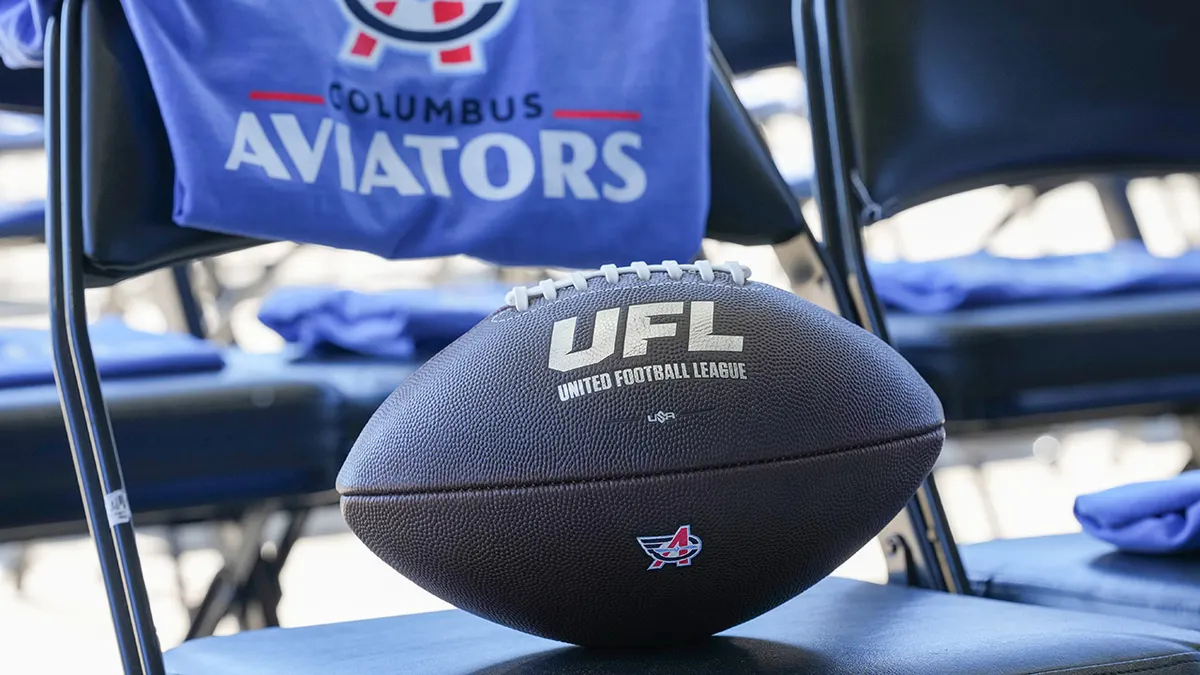
A Columbus Aviators UFL football before an introductory press conference at Historic Crew Stadium Oct. 9, 2025, in Columbus, Ohio.(Jason Mowry/UFL/Getty Images)
Other notable changes center around punting restrictions. Teams will be barred from punting “anywhere inside the 50-yard line,” the UFL said, except after the two-minute warning in either half.
The past couple of seasons in the NFL saw an uptick in field goal tries from beyond the 60-yard mark. Dallas Cowboys kicker Brandon Aubrey, who played spring football in the USFL from 2022-23, connected on a 64-yard field goal last season.
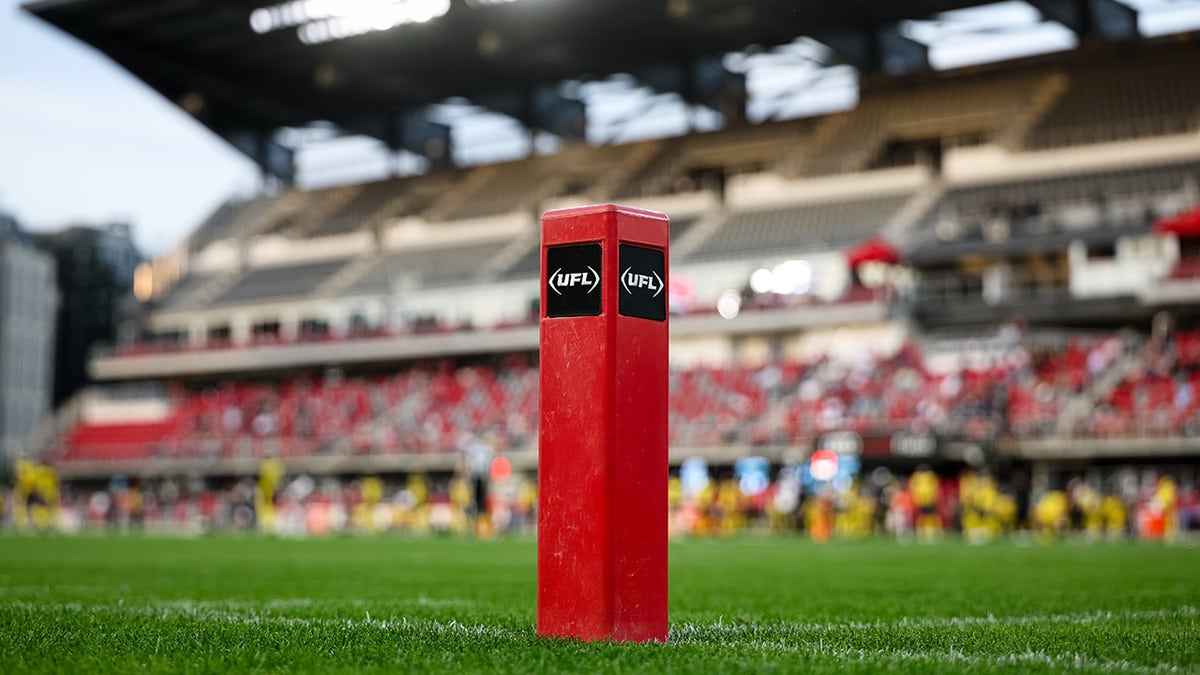
The UFL logo on an end zone pylon during the second half of the UFL game between the DC Defenders and the San Antonio Brahmas at Audi Field April 20, 2025, in Washington, D.C. (Scott Taetsch/UFL/Getty Images)
“Kicking a 65-yard field goal is a lot harder than one from 35,” Blandino added, according to ESPN. “Why should they count the same? So, it promotes excitement. Those are really, really exciting plays, whether it’s an end to half or end of game, and it’s also going to change the strategy of the game as well.”
Advertisement
Other changes in the rules overhaul included a ban of the tush push. The short-yardage play was nearly banned by NFL team owners in 2025.
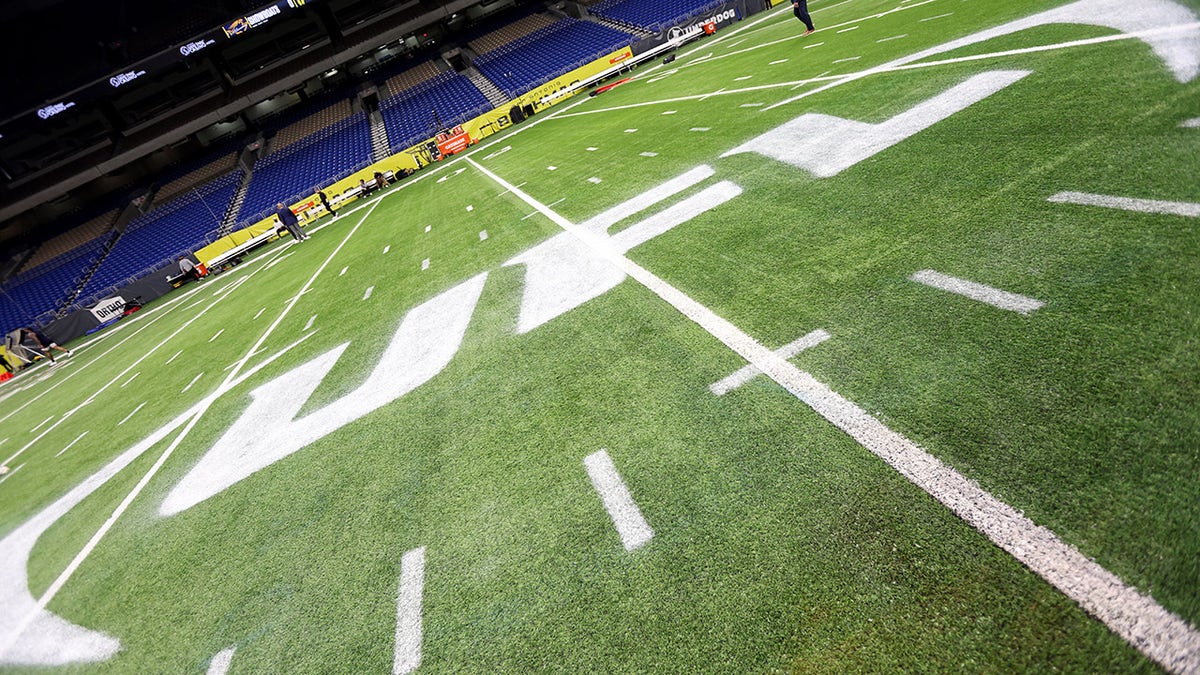
The UFL logo on the field before a game between the Memphis Showboats and the San Antonio Brahmas at Alamodome May 16, 2025, in San Antonio, Texas.(Tim Heitman/UFL/Getty Images)
Kickers will begin kicking off the ball from the 30-yard line during the 2026 season.
Theranos founder Elizabeth Holmes recently complained that her federal prison camp did not allow her and her fellow inmates to watch President Donald Trump’s State of the Union address. Holmes is currently incarcerated at Federal Prison Camp Bryan in Texas after being convicted of three counts of wire fraud and one count of conspiracy to commit wire fraud in 2022.
On February 25, 2026, Elizabeth Holmes took to her X account to complain about not being allowed to watch Trump’s State of the Union address, which was held the previous day. She further alleged that the system was “broken” as the federal prison camp allowed inmates to “stay up past count” to watch the BET Awards, adding:
“My federal prison camp let inmates stay up past count for the BET Music Awards. Last night they wouldn’t let us watch the State of the Union. The Bureau of Prisons would rather we be entertained than educated. The system is broken.”
In a follow-up post, she added that she had learned her camp leadership was unaware of the State of the Union address, writing:
“Update: I’ve now learned that Bryan Prison camp leadership was not aware there was a State of the Union address last night. They have committed to ensuring we can watch future presidential addresses, debates, and other major political events going forward.”
Update: I’ve now learned that Bryan Prison camp leadership was not aware there was a State of the Union address last night. They have committed to ensuring we can watch future presidential addresses, debates, and other major political events going forward.I’m grateful for the quick response. Access to civic life shouldn’t end at a prison fence, and now it won’t. Hopefully this will extend to the other 121 federal prisons in this country. 🇺🇸🦅🦅
Advertisement
Elizabeth Holmes is scheduled for release on April 3, 2032
Elizabeth Holmes reportedly dropped out of Stanford University at the age of 19 to focus on developing health care technology and founded Theranos, a blood-testing start-up, in 2003. Her company was funded by the likes of Robert Murdoch, and Holmes became the United States’ youngest self-made billionaire in 2014.
Her company specialized in creating a device, called the Edison, that was believed to conduct conventional laboratory and blood tests with just a finger prick and a few drops of blood. It reportedly offered more than 240 tests ranging from cholesterol to cancer.
However, an exposé by The Wall Street Journal, dated October 16, 2015, cast doubt on the company’s claims. This report instigated a federal probe into Holmes and an indictment that charged Holmes and Theranos executive Ramesh “Sunny” Balwani of misleading and defrauding investors and patients.
Elizabeth Holmes’ trial began in 2022, and she began her sentence in 2023. At the time of her sentencing, U.S. Attorney Stephanie M. Hinds said:
Advertisement
“When fraud is perpetrated on those providing the necessary capital, it staunches investment and can cripple an industry. For almost a decade, Elizabeth Holmes fabricated and spread elaborate falsehoods to draw in a legion of capital investors, both big and small, and her deceit caused the loss of hundreds of millions of dollars. Her sentence reflects the audacity of her massive fraud and the staggering damage she caused.”
SAN JOSE, Calif. (AP) — Jury finds Elizabeth Holmes guilty on 4 counts of fraud and conspiracy at her former blood-testing startup Theranos.
Holmes was a new first-time mom before her trial began in 2022, and she gave birth to her second child in 2023, months before she was scheduled to begin her sentencing. She began her sentence on May 30, 2023, and is scheduled to be released on April 3, 2032.
According to a People Magazine interview in February 2025, Elizabeth Holmes maintains her innocence, adding:
“Then it was about forgiving myself for my own part. [And] I refused to plead guilty to crimes I did not commit. Theranos failed. But failure is not fraud.”
Elizabeth Holmes reportedly works as a reentry clerk in prison, earning 31 cents an hour. She also works as a law clerk and teaches French to fellow inmates.
Bosses in Resident Evil Requiem are one of the most exciting parts of the story, offering you a test of skill and patience. The title offers an array of bosses across different segments of the story, keeping the gameplay engaging and making sure you stay on your toes.
Here are all bosses in Resident Evil Requiem in story order.
Note: Major spoilers ahead. Proceed with caution.
Guide to all bosses in Resident Evil Requiem in story order
Final encounter with the Nemesis under Ark (Image via Sportskeeda Gaming || Capcom)
Resident Evil Requiem offers you an array of bosses that you fight through your journey, starting with the escape from Rhodes Hill Chronic Care Centre to the showdown in Ark. Both Grace and Leon face these enemies head-on, providing unique challenges based on playstyle:
Advertisement
Character you play as
Monster
Location
Tips
Grace
Chunk
East Wing of Rhodes Hill Chronic Care Centre
Requires 3 Hemolytic Injectors to take down. Rewards you with a unique Charm
Grace
The Girl
Beginning of Rhodes Hill Chronic Care Centre and final segments
She is afraid of light. Recommended to use torches or Molotov cocktails to scare her. Shots with the Requiem will stun her
Leon
Chunk
Second half of Rhodes Hill Chronic Care Centre
Use Shotgun shots and the Requiem to kill it. Rewards you with two grenades
Leon
Titan Spinner
Beginning of Raccoon City Arc
Use shotguns and the Requiem to stun it. Get up on the upper platform and throw gas tanks at it
Leon
Tyrant-T 501
After leaving RPD and on the way to the Orphanage
Use repeated shotgun attacks to stun it. Once stunned, use the hatchet and follow with shots from the Requiem. Drop a grenade or two if you have it
Leon
Plant 43
On the way to the Ark, below the subway
Shoot the buds to weaken them. Keep shooting the buds and escape the first branch when stunned. Next, keep shooting the buds of the main plant. Once you see a set of gas tanks below it, fire a bullet to create an explosion and defeat it
Leon
Victor/Nemesis
Finale in the Ark
Keep attacking the red buds on the body and weakening it. It is recommended to use a shotgun to destroy them instantly. Do not use grenades or throwables. Focus on removing the buds and then deal the final blow with your hatchet
These are all the major boss encounters you will have in RE Requiem. Apart from these bosses, you will come across powerful zombies and enemies that will require a combination of tactics and strategy. Dive into the world of Grace and Leon to uncover decades-long secrets and skeletons from the past.
The beautiful game of football has enchanted fans for generations and is the most bet on UK sport.
But which betting sites do the best job of providing a complete experience for betting on the UK’s favourite sport?
Almost all football betting sites have an extensive range of markets and offer competitive odds across the board.
We’ve looked at the fine details on all the best football betting sites and ranked the top 10 based on the quality of their product, including a review of their standout features.
Advertisement
Best Football Betting Sites UK
Ranking
Football betting site
Standout feature
Advertisement
Rating
Welcome offer
#1
Bet365
In-play betting
Advertisement
★ ★ ★ ★ ★
Bet £10 get £30 in free bets
#2
BOYLE Sports
Accumulators
★ ★ ★ ★ ★
Bet £10 on mobile get £40 free bets
Advertisement
#3
Betway
Free bets
★ ★ ★ ★ ★
£30 matched bet if first acca loses
#4
Advertisement
Betfred
Betting app
★ ★ ★ ★ ☆
Bet £10 get £50 free bets
Advertisement
#5
LiveScore Bet
Free to play games
★ ★ ★ ★ ☆
Bet £10 get £30 free bets
Advertisement
#6
BetVictor
Specials
★ ★ ★ ★ ☆
Advertisement
N/A
#7
NetBet
Bet builders
★ ★ ★ ★ ☆
Advertisement
Bet £10 get £20 free bets
#8
Virgin Bet
Price boosts
Advertisement
★ ★ ★ ★ ☆
Bet £10 get £30 in free bets
#9
Unibet
Advertisement
Live streaming
★ ★ ★ ★ ☆
Bet £10 get £30 free bets
#10
Advertisement
talkSPORT BET
Premier League betting
★ ★ ★ ☆ ☆
Get up to £40 in football free bets
Advertisement
Top 10 Football Betting Sites: Ranked and Reviewed
1. Bet365
Rating: ★ ★ ★ ★ ★
Standout feature: In-play betting
Advertisement
Bet365 are the standout football betting site in the business due to the quality of its all-around package.
No operator can match its extensive football betting markets and value for odds across the board.
As the official betting partner of the Champions League, you’ll find a range of special offers and the best Champions League odds on the market.
There is also an impressive range of promotions, including enhanced odds and acca boosts.
Advertisement
Bet365 provides arguably the beset in-play betting platforms online, including live streaming and a lag-free betting experience. (The Independent)
New customers can claim a flexible welcome offer, accepting £5 deposits to unlock £15 in free bets or £10 deposits to secure £30 in free bets.
Specials features including live streaming, bet builders and impressive free to play games such as Scores 6 that offers a host of prizes.
Bet365 distinguishes itself among live betting sites by giving bettors access to a huge number of unique markets and very competitive odds along with live streams of games from Europe’s biggest leagues.
Advertisement
There’s no noticeable lag on odds being updated or a bets being processed on either the desktop site or app; vital traits when betting in-play.
2. BOYLE Sports
Rating: ★ ★ ★ ★ ★
Standout feature: Accumulators
Advertisement
Football punters loves an accumulator bet on football, and that’s why BOYLE Sports is ranked so highly on our list.
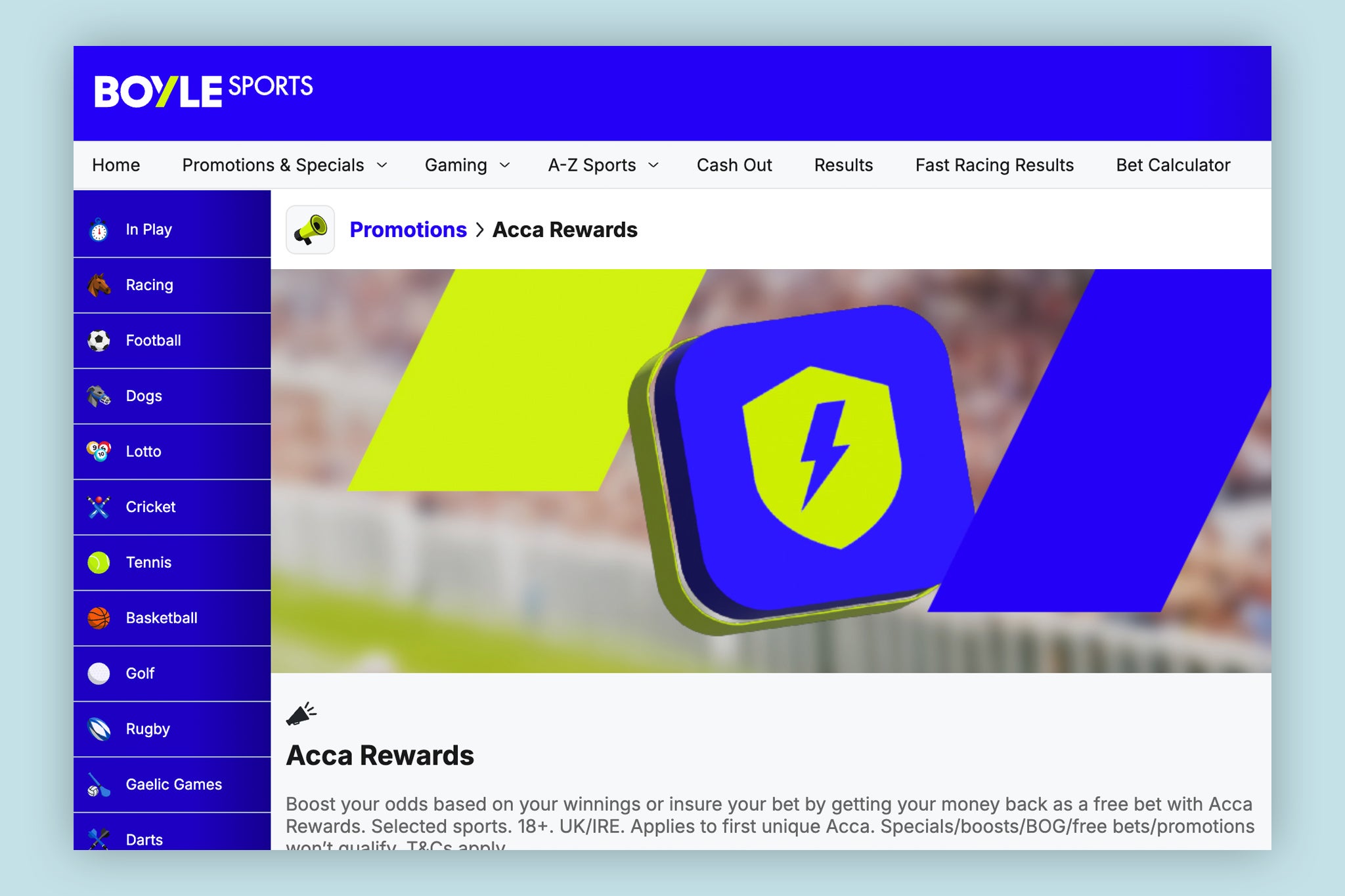
BOYLE Sports have become the top pick among accumulator betting sites courtesy of their Acca Rewards and Acca Loyalty promotions.
With Acca Loyalty, customers are awarded a £5 free acca every time they place five £5 accumulators. Meanwhile, Acca Rewards allows you to either boost or insure your acca bet, so long as it has three or more legs.
Advertisement
BOYLE Sports Acca Rewards is one of the best accumulator promotions on the market (The Independent)
There’s plenty more to enjoy using BOYLE Sports. The BOYLE Sports sign-up offer provides a solid quantity of free bets, while there several outstanding promotions including price boosts, early payouts and specials.
3. Betway
Rating: ★ ★ ★ ★ ★
Standout feature: Free bets
Advertisement
Betway is impressive as a football betting site and is known to hand out no deposit free bets to regular customers, usually to use as bet builders on big Premier League games or major sporting events.
Their football product is straightforward to use, and there are ample markets and competitive odds for all competitions and leagues, including Europa League odds all the way to the final.
Betway stands out as having one of the best free bet clubs. This loyalty programme gives punters the chance to claim a free football bet each week after staking £25 on trebles, accumulators or bet builders between Saturday and Friday.
Customers then unlock £10 in free bets in two £5 denominations to use on any football market.
Advertisement
4. Betfred
Rating: ★ ★ ★ ★ ☆
Standout feature: Betting app
Betfred’s football betting site is impressive, both in terms of odds and range of matches/markets along with a fine array of promotions, including free bets, bet boosts and acca boosts.
Advertisement
New customers can claim £50 in free bets by signing up for Betfred, all of which can be wagered on football after signing up and placing a £10 bet online.
Betfred also has an excellent football betting app, offering speed and a top user interface. You’ll find no discernible lag on the app and an easy-to-navigate layout.
5. LiveScore Bet
Rating: ★ ★ ★ ★ ☆
Advertisement
Standout feature: Free to play games
Although one of the new betting sites on the block, LiveScore Bet still matches the best football betting sites around with its complete product.
There are ample football betting markets to choose from and the odds stack up against the best in the business.
You’re never short of a promotion whether its price boosts, acca boosts, loyalty free bets or straightforward bet and get promotions.
Advertisement
One of the best aspects of LiveScore Bet is its free to play game Squads.
Squads is one of the best free to play games offering free bets for LiveScore Bet customers online. (LiveScoreBet)
This promotion allocates customers a five-a-side squad of active Premier League players, who can earn free bets or cash up to £50 if they score on match day.
In our view, it’s one of the most entertaining and innovative features out there.
Advertisement
However, after months of testing, we’ve never received any more than a £1 cash reward, so don’t expect too much from this free promo.
6. BetVictor
Rating: ★ ★ ★ ★ ☆
Standout feature: Football Specials
Advertisement
BetVictor are one of the most trusted football betting sites around. It’s name commands respect and bettors know they’re getting a reliable product with extensive betting markets, competitive football odds and a great array of promotions.
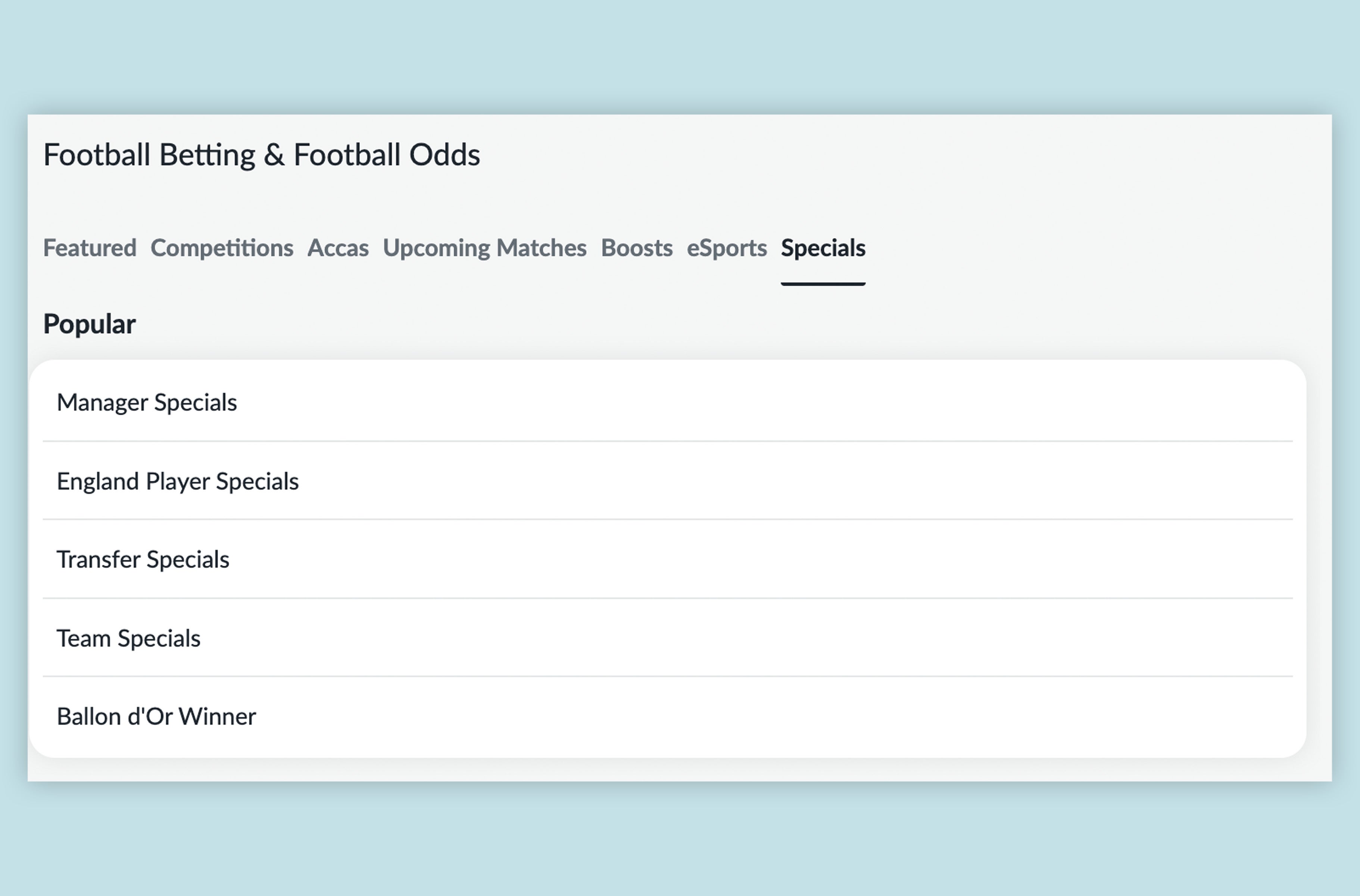
We like their outright specials that you’ll struggle to find elsewhere, including extensive manager markets, transfer odds and trophy multiples that’ll appeal to bettors looking for alternatives to betting.
BetVictor always has a host of special odds available for betting on next manager, transfer and team markets. (BetVictor)
Their Lucky Dip feature is fairly new and has caught the eye by offering outlandish odds on popular selections.
Advertisement
There’s also a Loyalty Club with up to £25 in free bets on offer each week. Existing customers can opt in to the Loyalty Club and make five bets of at least £5 throughout the week to qualify for the bonus.
7. NetBet
Rating: ★ ★ ★ ★ ☆
Standout feature: Bet builders
Advertisement
NetBet are not one of the major betting brands associated with betting on football, but its overall product is very impressive. Their sportsbook is simple and effective, and has built a niche around its bet builder feature that is one of the best.
Bet builders have become increasingly popular on football betting sites and NetBet have embraced the concept.
Bet builders are available on a variety of sports, with bettors able to combine up to six legs from a single event. Users can also expect regular promotions in conjunction with bet builders to unlock free bets and more.
The NetBet sign-up offer credits new customers with £20 in free bets paid out in four £5 installments on a bet builder, acca, horse racing and UFC free bets.
Advertisement
Punters can also earn free bet builder tokens via NetBet’s Wheel of Fortune promotion.
8. Virgin Bet
Rating: ★ ★ ★ ★ ☆
Standout feature: Price boosts
Advertisement
Virgin Bet are one of the rising stars among UK football betting sites, especially when it comes to price boosts.
The bookmaker comes out swinging with a variety of odds boosts across the Premier League, Champions League and Europa League among others, punters are never short of options with offers accessible on the front page of the site.
Virgin Bet routinely offer boosts for acca and bet builders, while users will find football bet boosts with great value prices across single, double, treble and accas across the weekly.
Virgin Bet also have a strong welcome offer for new customers, where users can scored £30 in free bets after signing up and betting £10 on the sportsbook.
Advertisement
9. Unibet
Rating: ★ ★ ★ ★ ☆
Standout feature: Live streaming
New Unibet customers who sign up can secure a bet £10 get £30 free bets to use on their football betting site.
Advertisement
Unibet’s football product is uncomplicated and allows users to bet with ease. There are ample markets and competitive odds, with solid features too.
Unibet TV is where the action happens with over 40,000 live streams each year, many of which are football matches.
Unibet streams games from across the globe on their platform, including all the major European leagues such as LaLiga and the Bundesliga featuring Real Madrid, Barcelona and Bayern Munich.
Most matches come with commentary so it’s just like watching a game on your television, only you have the option to use Unibet’s in-play betting service at the same time.
Advertisement
10. talkSPORT BET
Rating: ★ ★ ★ ☆ ☆
Standout feature: Premier League markets
Although one of the newer betting sites around, talkSPORT BET still offers a solid betting product.
Advertisement
There are a few bells and whistles, but it mainly focuses on providing a straightforward betting experience on the Premier League.
Premier League betting sites concentrate on English football’s top flight and few do that better than talkSPORT BET.
They regularly run Premier League-specific promotions, while punters can qualify for their Footie Rewards scheme, offering up to £10 in free bets each week, by betting on the EPL.
There’s also a free-to-play game called Footie 4 Play with up to £2,500 up for grabs for correctly predicting four Premier League scorelines.
Advertisement
Best Football Betting Sites UK: How We Rate
Here are some of the key elements we look for when updating our rankings and reviews of football betting sites:
Regulation
All the best football betting sites on our list are regulated and licensed by the UK Gambling Commission (UKGC).
Advertisement
Gambling responsibly
Safe betting sites which follow responsible gambling practices and offer responsible gambling tools are given preference.
Customer experience
We look into the customer experience on football betting sites across various platforms, judging football betting sites for their layout, usability, loading speed and customer service.
Advertisement
Payment options
Football punters require a diverse range of payment options beyond debit cards and those bookies that feature on the list of Apple Pay betting sites among others, are given preference.
Promotions
A valuable sign up offer is one thing but we want to see football betting sites that take care of existing customers with free bets, price boost, money back promotions and free to play games.
Advertisement
Upcoming Football Matches
Live Football Matches On TV (February 26 – March 1)
Date
Game
Advertisement
Time
Competition
Channel
Thursday 26th February
Advertisement
Stuttgart vs Celtic
5.45pm
Europa League
TNT Sports 2
Advertisement
Thursday 26th February
Crystal Palace vs Zrinjski Mostar
8pm
Conference League
Advertisement
TNT Sports 3
Thursday 26th February
Nottingham Forest vs Fenerbahce
8pm
Advertisement
Europa League
TNT Sports 1
Friday 27th February
Augsburg vs FC Koln
Advertisement
7.30pm
Bundesliga
BBC iPlayer
Friday 27th February
Advertisement
Harrogate Town vs Cheltenham Town
7.45pm
League Two
Sky Sports +
Advertisement
Friday 27th February
Bristol City vs Watford
8pm
Championship
Advertisement
Sky Sports Football
Friday 27th February
Wolves vs Aston Villa
8pm
Advertisement
Premier League
Sky Sports Main Event
Saturday 28th February
Leicester City vs Norwich
Advertisement
12.30pm
Championship
Sky Sports Main Event
Saturday 28th February
Advertisement
Bournemouth vs Sunderland
12.30pm
Premier League
TNT Sports 1
Advertisement
Saturday 28th February
Borussia Dortmund vs Bayern Munich
5.30pm
Bundesliga
Advertisement
Sky Sports Football
Saturday 28th February
Leeds United vs Manchester City
5.30pm
Advertisement
Premier League
Sky Sports Main Event
Saturday 28th February
Inter Milan vs Genoa
Advertisement
7.45pm
Serie A
TNT Sports 1
Sunday 1st March
Advertisement
Rangers vs Celtic
12pm
Scottish Premiership
Sky Sports Main Event
Advertisement
Sunday 1st March
Brighton vs Nottingham Forest
2pm
Premier League
Advertisement
Sky Sports +
Sunday 1st March
Fulham vs Tottenham
2pm
Advertisement
Premier League
Sky Sports Premier League
Sunday 1st March
Manchester United vs Crystal Palace
Advertisement
2pm
Premier League
Sky Sports Main Event
Sunday 1st March
Advertisement
Arsenal vs Chelsea
4.30pm
Premier League
Sky Sports Main Event
Advertisement
Sunday 1st March
Roma vs Juventus
7.45pm
Serie A
Advertisement
TNT Sports 2
Football Odds
Check out our detailed list of football odds pages below from all the major leagues and competitions from Europe and across the world.
Responsible Gambling on Football Betting Sites
Advertisement
The most important thing to remember is to gamble responsibly. When betting on football, treat it as entertainment and always assume you’ll lose.
Only bet what you can afford to lose and don’t get too carried away by free bet or casino offers.
Make sure you use the responsible betting tools offered by gambling sites such as deposit limits, reality checks, loss limits, time outs and self-exclusion.
Advertisement
If you have gambling-related concerns, seek independent help. There are several UK charities and institutions that offer support, advice and information:
We may earn commission from some of the links in this article, but we never allow this to influence our content. This revenue helps to fund journalism across The Independent.
Minnesota Vikings head coach Kevin O’Connell speaks to media members during a joint training camp session with the New England Patriots at the TCO Performance Center on August 13, 2025, in Eagan, Minnesota. The joint practice featured competitive drills and game preparation between the two teams. Mandatory Credit: YouTube.
The Minnesota Vikings flopped worse than could have been expected during the first year with J.J. McCarthy under center. When he wasn’t again hurt, he was largely bad, resulting in a 9-8 record and missing the playoffs.
Kwesi Adofo-Mensah is gone. Kevin O’Connell has to get the roster right, and Rob Brzezinski won’t have a true general manager working alongside him until after the NFL Draft. It is assumed that Minnesota will have a new starting quarterback by that point. McCarthy will need to earn the job, and the Vikings aren’t in a position to draft his competition.
Why Willis and Jones Don’t Match Minnesota’s Cost-Benefit Window
Between roster cuts, free agency, and trades, any number of candidates can be considered for Minnesota. There are two who should not be on the radar, though, and both for the same reason: compensation.
Advertisement
Sep 22, 2024; Nashville, Tennessee, USA; Green Bay Packers quarterback Malik Willis (2) under center against the Tennessee Titans during the first half at Nissan Stadium. Mandatory Credit: Steve Roberts-Imagn Images.
Mac Jones and Malik Willis present a similar set of circumstances. Both have found heightened profiles after a change of scenery. Both are backups that teams now have renewed interest in. Both will also cost a lot.
Willis is a free agent, and reports suggest he is absolutely going to secure the bag. That’s a significant gamble for a guy who has shown flashes while still operating in the shadow of Jordan Love. He’s certainly better than the circumstances in Tennessee allowed him to be. $30 million per season on a multi-year deal is a massive contract, however.
#Packers free agent QB Malik Willis is in demand, as expected, and interested teams I’ve spoken to at the Combine in Indianapolis believe him getting at least $30M per year is a foregone conclusion. pic.twitter.com/FzB8GaaNPw
It took Sam Darnold winning 14 games with the Vikings to get that sort of money. Willis’ projection is based on 11 games in Green Bay, over two seasons, in which he threw a whopping 89 passes. It makes sense that the Jets would be interested, since they are always quick to make poor decisions.
Advertisement
Jones won’t cost significant dollars, but handing the 49ers a second-round pick after an 11-game sample in San Francisco is crazy. Jones is on his third team in five years, and still carried just a 13/6 TD/INT across eight starts last season.
Dec 15, 2024; Jacksonville, Florida, USA; Jacksonville Jaguars quarterback Mac Jones (10) and New York Jets quarterback Aaron Rodgers (8) after the game at EverBank Stadium. Mandatory Credit: Morgan Tencza-Imagn Images
It’s possible he’s not the middling option that he proved to be in New England or Jacksonville, but even at his best with the Patriots, the ceiling was probably already shown. For a team like the Vikings, needing to get younger and more sustainable, trading massive draft capital for him is a reach.
The Vikings need to address a bunch of roster problems this offseason. They’ll have to sort out their ugly cap situation, and the quarterback room would be best off crowded with options. These are two that should be struck off the board, though.
Ted Schwerzler is a Minneapolis based blogger that covers the Minnesota Twins and Vikings. Sharing thoughts constantly on Twitter, … More about Ted Schwerzler
Cristiano Ronaldo of Al Nassr (Photo by Yasser Bakhsh/Getty Images)
Cristiano Ronaldo has acquired a minority stake in Spanish second-tier side UD Almería, according to a statement released on Thursday by Brunswick Group, the consulting firm representing the Portuguese superstar.The firm confirmed that Ronaldo has purchased a 25 per cent share in the club, which is currently owned by Saudi Arabian investors.
Jay Shah: Kapil Dev deserves more credit for 1983 World Cup triumph
The 41-year-old forward has been based in Saudi Arabia since late 2022, when he joined Al-Nassr. His latest move signals an ambition to extend his involvement in football beyond his playing career.“It has been a long-time ambition of mine to contribute to football, beyond the pitch. UD Almería is a Spanish club with strong foundations and clear potential for growth,” Ronaldo said in the statement.According to Brunswick Group, the five-time Ballon d’Or winner completed the investment through his CR7 Sports Investments subsidiary.Almería has been under Saudi ownership for more than six years. In the summer of 2025, Mohamed Al-Khereiji took over as owner and president after purchasing the club from Turki Al Alsheikh.“We are very pleased that Cristiano has chosen our club to invest in,” Al-Khereiji said.“He knows the Spanish leagues very well and he understands the potential of what we are building here both in terms of the team and the academy.”The financial terms of the deal were not made public. Almería did not immediately respond to an email from the Associated Press seeking further clarification.Currently, Almería sit third in Spain’s second division. The club last competed in the top flight during the 2023–24 season.
ANAHEIM — It can’t get much worse for Edmonton Oilers general manager Stan Bowman.
His big free agent signing, Andrew Mangiapane, has been on the block for three months and will require a sweetener to be moved. Trent Frederic, signed by Bowman to an eight-year contract last summer, has three points all season long.
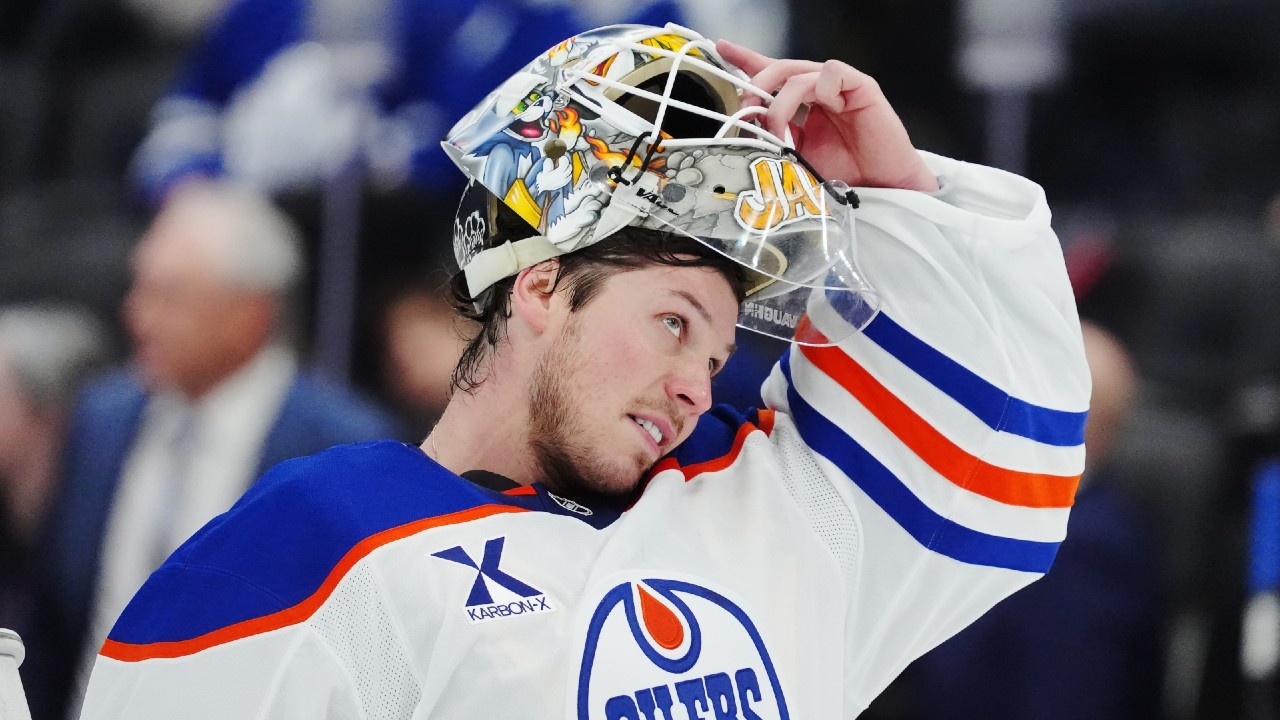
And now the Tristan Jarry deal is looking like the biggest disaster of the general manager’s season.
Jarry lost his team a game Wednesday in Anaheim with an atrocious performance in a 6-5 regulation loss to the Ducks, costing the Oilers two points in a key divisional battle.
Advertisement
Head coach Kris Knoblauch pulled Jarry after he’d allowed three goals in the opening 6:39 of the third period, wasting a 4-2 second intermission lead and leading to a wasteful 6-5 loss.
“Obviously, I wasn’t happy with the goaltending,” Knoblauch said after the game. “The goals that we gave up, especially in the third period. I didn’t like those.”
There were other mistakes there, but you need better goaltending,” Knoblauch said plainly. “Tonight wasn’t one of (Jarrry’s) best games.”
Here’s a stat we stumbled across:
Advertisement
The Oliers have won the expected goals battle in 19 of their past 20 games, and 28 of their past 33. Their record in those two stretches is 9-9-2, and 17-13-3.
So the analytics say they’re creating more scoring chances almost every night than their opponent, but the opponent is scoring more goals nearly half the time. That can be summed up to a poor defensive posture that allows Grade AAA chances, or it could mean the other team has the better goalie on most nights.
It was clearly the latter Wednesday in Anaheim, and truth be told, Lukas Dostal was only average in Anaheim’s net. He was coming back from the Olympics, while Jarry was fresh as a daisy — and still got sorely outplayed.
“If I make an extra save here or there, the game could be different. So I think just being better from that and just keep working,” said Jarry, offering his solution. “If I can maybe find one of those through a screen, or maybe I’m able to handle a rebound here or there… Maybe the puck doesn’t go in the middle, and I’m able to handle that a little bit better.”
Advertisement
With the score 2-0 Edmonton, defenceman Ian Moore — a career two-goal scorer — blasted one over Jarry’s shoulder that simply can’t go in. Then at 1:30 of Period 3, with his team ahead 4-2, Jarry booted a rebound right into the slot.
There, Evan Bouchard lost his check and Leo Carlsson scored on the rebound. Moments later, a soft floater by Olen Zellweger eluded Jarry from distance. Then a Beckett Senecke snapshot went through Jarry, after the Oilers had staked him to yet another lead, and his night was done.
“I thought we had a good start,” Jarry said. “I thought we had some traction. I thought we played pretty well. We were going to the net, and we were doing a lot of good things. We just end up on the wrong side.”
A Darnell Nurse cough-up with just over a minute to play sealed Edmonton’s fate, as Anaheim took their first lead of the game with just 1:14 to play.
Advertisement
You could roll out the old trope that this was simply some loose hockey being played by some tired Olympians and a bunch of guys coming off the beach in the Bahamas. But that wasn’t what happened here.
Edmonton was decent. Pretty good at times.
They earned their goals, for the most part. Matt Savoie (1-2-3) was excellent. So was Jack Roslovic and Mattias Ekholm — it wasn’t just the big boys carrying the mail.
But every time the Oilers built a lead, got a goal away from burying Anaheim, Jarry gave the Ducks life. In a game that could have been 3-0 or 5-1, it was always close, because the goalie simply did not give his team a chance to pull away.
Advertisement
It’s a problem now, the goaltending. And those close to this team are getting fed up with it.
OIL SPILLS — Mattias Janmark played just 2:30 and was not seen after the first period.
Oct 8, 2023; Minneapolis, Minnesota, USA; Minnesota Vikings quarterback Kirk Cousins (8) drops back to pass against the Kansas City Chiefs in the first quarter at U.S. Bank Stadium. Mandatory Credit: Brad Rempel-USA TODAY Sports.
With the news breaking on Monday that the Falcons are going to release Kirk Cousins at the start of free agency on March 11, the speculation intensified on Cousins’ next NFL destination.
How realistic is it to expect the 37-year-old Cousins to return to the Vikings, where he was a six-year starter and had three of his four Pro Bowl seasons?
Cousins’ Price and Timeline Will Decide Whether a Reunion Even Makes Sense
The Vikings reinforced at the Combine this week that although they still believe in J.J. McCarthy’s potential to be their franchise quarterback, they are “exploring all possibilities and casting a wide net,” according to Executive V.P of Football Operations Rob Brzezinski.
Advertisement
I think the Cousins option makes sense and seems more likely than their other top options which could include signing Daniel Jones, Aaron Rodgers, Russell Wilson, Marcus Mariota, Joe Flacco, Jimmy Garoppolo or Malik Willis among other candidates in free agency or trading for Mac Jones, Anthony Richardson or Derek Carr (and perhaps Kyler Murray or Tua Tagovailoa could hit the open market if they’re released by the Cardinals and Dolphins, respectively).
Nov 16, 2025; Atlanta, Georgia, USA; Atlanta Falcons quarterback Kirk Cousins (18) is pressured to throw in the fourth quarter against the Carolina Panthers at Mercedes-Benz Stadium. Mandatory Credit: Brett Davis-Imagn Images
Cousins is coming off a strong finish to the 2025 season for Atlanta, in which he won his last four starts and was 5-3 as the starter over the season. He threw seven TD passes with only two interceptions in those final four games.
His uneven play in 2024 for the Falcons (when he was benched for Michael Penix) was due in large part to a mid-season injury to his throwing shoulder and elbow, and he was also coming off the torn Achilles sustained in Week 8 of 2023 while still with the Vikings.
I’m a bit surprised his former Vikings OC Kevin Stefanski—now the Falcons’ new head coach—did not want to keep Cousins as the starter while Penix works his way back from a mid-season torn ACL (and Penix had plenty of other injuries in his college career).
Advertisement
Stefanski and Cousins worked together in 2019 when Cousins made the Pro Bowl and the Vikings last won a playoff game (in New Orleans with a fine performance from Cousins, who led the winning overtime drive).
Cousins will cost Atlanta $35 million in dead money against the salary cap, whether they take the full hit this year or spread it over two years using a post-June 1 release designation. It seems like a mistake not keep him with his affordable $27.5 million base salary for 2026.
Cousins is a smart QB who knows the Vikings’ offense well, having worked with Kevin O’Connell for two seasons. Included was the 13-win season in 2022 when he threw for 4,547 yards and 29 TDs (92.5 passer rating). He was off to a strong start in 2023 with a 103.8 passer rating and 18 TDs (only five picks) before the Achilles injury.
Dec 16, 2024; Paradise, Nevada, USA; Atlanta Falcons quarterback Kirk Cousins (18) throws the ball against Las Vegas Raiders linebacker Robert Spillane (41) in the second half at Allegiant Stadium. Mandatory Credit: Kirby Lee-Imagn Images.
The learning curve would be a non-factor, and the main receiving targets from Cousins’ last year in Minnesota are still here—Justin Jefferson, Jordan Addison, and, most likely, T.J. Hockenson. Cousins was the QB who delivered the ball to Jefferson in his Offensive Player of the Year season in 2022, when he led the league with 128 catches and 1,809 yards (plus eight TDs) compared to last season, when Jefferson dipped to 84 receptions, 1,048 yards, and only two TDs while working with McCarthy, Carson Wentz, and Max Brosmer.
Cousins was also very happy living in Minnesota and preferred to stay with the Vikings before the split, which was motivated by the Vikings’ desire to have a young QB on a cap-friendly rookie contract, which is the case with McCarthy. It would be a fairly easy transition for Cousins, his wife, Julie, and their two young sons, who could return to the school they previously attended.
Advertisement
It’s clear Cousins wants to be a starter and believes he deserves it. Would he want to go to Pittsburgh if Rodgers leaves the Steelers and has to compete again with a first-round rookie, as he did with Penix in Atlanta?
Cleveland is a possibility, but the Browns are a quarterback graveyard lately. Las Vegas will almost surely be drafting Fernando Mendoza first overall. The Jets—ugh. Arizona and Miami are possible destinations if they dump their starters. In all those cases, Cousins would have to learn a new offense.
Cousins has always been astute in maximizing his contracts, including the $100 million in guaranteed money from his two years in Atlanta. Perhaps it’s time for him to take a relative bargain of a one-year deal as Jones did in Indianapolis and Rodgers did in Pittsburgh, with both QBs making $14 million plus incentives.
Perhaps a one-year, $20 million deal plus big incentives tied to wins and playoff success could get it done with Cousins and the Vikings should have the cap room to do such a deal after they restructure several contracts (starting with Justin Jefferson’s) and release several players, such as too often injured center Ryan Kelly.
Advertisement
J.J. McCarthy and Ryan Kelly move through warmups at U.S. Bank Stadium as Minnesota prepares for Houston, with the session unfolding on Aug. 9, 2025 during early preseason work in Minneapolis. The quarterback-center pairing rotates through stretching and snapping routines while coaches monitor timing and communication, offering a clear look at developing chemistry ahead of the team’s first exhibition game of the summer. Mandatory Credit: Jeffrey Becker-Imagn Images.
And then have an open competition between McCarthy and Cousins, who has been the No. 2 QB in Washington early in his career and in Atlanta when Penix stepped in. I think O’Connell would trust Cousins to be supportive of McCarthy if he doesn’t beat him out. And it’s obvious that McCarthy can get hurt, which would open the door for Cousins if he didn’t win the starting job.
Rodgers is somewhat intriguing after he expressed interest in signing with the Vikings last season and has a good relationship with O’Connell. He’s not the MVP player he was in Green Bay, but he did win 10 games last season with a respectable 94.8 passer rating. But Cousins is five years younger and knows the Vikings’ offense, whereas Rodgers would have to learn a new system and may be content to stay with the Steelers after they hired his former Packers coach, Mike McCarthy.
It’s pretty clear Daniel Jones will stay in Indy after a fine season before his Achilles injury (8-5 record, 100.2 passer rating).
I like Mac Jones as a 27-year-old with a $2 million contract for 2026 who kept the 49ers in the playoff hunt (5-3, 97.4 passer rating) last season when Brock Purdy was injured. The Vikings have a similar system to the 49ers, which helped Sam Darnold when he came from San Francisco to the Vikings in 2024.
But Jones is under contract for one more year, so why would the 49ers trade him when he’s a top-quality backup to Purdy, who has been injury-prone unless a team gives the Niners at least a third-round pick (and it may take more since the 49ers may get a third-round compensatory pick if Jones leaves in 2027 free agency with a sizable deal).
Advertisement
The Vikings need to keep their draft picks and build up the young talent on the team after a shaky recent draft history. So I wouldn’t recommend trading a fairly high pick for a quarterback who may wind up as the backup, especially when there will be solid free-agent options to sign.
In considering all the possibilities, I circle back to Cousins as making the most sense for the Vikings as a quality veteran QB to compete with McCarthy and be a much better No. 2 than Wentz or Brosmer were last season if McCarthy wins the job.
What matters most at the Combine for teams?
I spent many late February/early March weeks at the NFL Combine in Indianapolis during my Vikings and Titans years, and during my time at my agent firm, IFA.
Advertisement
It was a long week, but a very important event on the pre-draft and pre-free agency calendar.
Fans focus on the workouts of top college players (many of whom don’t work out as they wait for their March Pro Day at their college).
NFL teams certainly pay attention to the workouts, but in reality, it’s fourth on the priority list for team execs at the Combine. The three things that are significantly more important are the physicals, the interviews, and the contract discussions with agents who also come to Indy.
The physicals are the first chance for team doctors and athletic trainers to examine players and check their recoveries if they were injured last season. The colleges do not paint a true picture of players’ health, so the physicals at the Combine and, in many cases, the re-checks in April on player visits to team facilities are critical in the evaluation process.
Advertisement
Interviews with the players at the Combine allow the GM, coaches, and scouts to get to know players, ask them questions about their family and personal lives, and their football careers, and have them diagram plays and coverages to get a feel for their football smarts. These interviews can make a difference when teams have players graded the same and have to make a choice.
Mar 1, 2023; Indianapolis, IN, USA; Minnesota Vikings coach Kevin O’Connell speaks to the press at the NFL Combine at Lucas Oil Stadium. Mandatory Credit: Trevor Ruszkowski-USA TODAY Sports
I have trained many of my agent firm’s rookies on interview techniques before the Combine, and I always impress upon them how important it is to make a good impression.
Then there are numerous meetings between team execs and agents of their players to discuss contract restructures or extensions. There are also discussions with agents on contract parameters for potential free agents, which the Vikings are surely having this week as they seek a veteran QB, a new starting center, and help at other positions such as corner and safety.
These discussions are technically tampering since they’re not taking place before the “legal tampering period” begins on March 11. But that is too late to start negotiating, and every team is doing so while keeping these conversations quiet and out of the media.
So you can tune in to the “underwear Olympics,” as the Combine has been called, but know the endless workouts on NFL Network are not a top priority for NFL GMs and other team execs in Indianapolis this week.
Advertisement
Jeff Diamond is a former Vikings GM, former Tennessee Titans President and was selected NFL Executive of the Year … More about Jeff Diamond
Three rounds into the 2026 Six Nations and the numbers are already shaping the storylines: France look the most clinical, Scotland the most efficient, England are living off territory, Ireland are still chasing precision, while Wales and Italy have quietly put up some fascinating underlying metrics.
Below are 50 stats from the opening three rounds that show what’s working, what’s wobbling, and what might decide the championship run-in.
France: the benchmark (and the risk)
Total metres gained: France lead the tournament with 1,972m.
First-phase tries: France have scored 9, the most in the championship.
22m efficiency: France convert 40.9% of 22m entries into tries.
Chip kicks: France lead with 11.
Box kicks: France have used 40, second only to Wales.
50/22 success: France are one of only two teams with a successful 50/22.
Lineout errors: France have a perfect record with 0.
Maul-to-try: France are one of only two teams to convert a maul into a try.
Early momentum: France have scored 3 tries inside the opening 10 minutes.
Turnovers conceded: France have conceded a tournament-high 59.
France look the most dangerous side in the competition — but that turnover count is the one number that can keep others in touching distance.
Ireland: pressure without polish
Scrum offences: Ireland have conceded the most with 12.
Lineout errors: Ireland lead the tournament with 3.
Tackle success: Ireland sit at 75.00%.
Turnovers conceded: Ireland have conceded 43.
Rucks won in opposition 22: Ireland have recorded 30.
50/22 success: Ireland are one of the two teams to execute one successfully.
Restart retention: Ireland have retained 1 restart kick.
Early momentum: Ireland have scored 2 tries inside the opening 10 minutes.
The underlying pressure is there for Ireland, but set-piece errors and scrum discipline are leaving points on the pitch.
Scotland: efficiency, accuracy, composure
Tackle success: Scotland lead the tournament at 85.22%.
Turnovers conceded: Scotland have conceded 32.
Maul-to-try: Scotland are one of only two teams to convert a maul into a try.
Restart retention: Scotland lead with 2 retained restart kicks.
Chip kicks: Scotland have attempted 5.
Rucks won in opposition 22: Scotland have recorded 12.
Early momentum: Scotland have scored 2 tries inside the opening 10 minutes.
Scotland aren’t topping every “power” category, but their efficiency stats are screaming “hard to beat”.
England: territory kings, ball security worries
Territorial kicking metres: England lead with 2,893m kicked.
Box kicks: England have used 26.
Tackle success: England sit at 79.06%.
Turnovers conceded: England have conceded 56.
Chip kicks: England have attempted 6.
Rucks won in opposition 22: England have recorded 14.
Early momentum: England have scored 2 tries inside the opening 10 minutes.
England are controlling where games are played — but that turnover figure is the red flag.
Wales: high work-rate, strong retention, blunt edge
Box kicks: Wales lead the tournament with 43.
Turnovers conceded: Wales are the best in the championship with just 26.
Rucks won in opposition 22: Wales lead with 33.
Tackle success: Wales sit at 76.37%.
Turnover profile: Wales have conceded 33 fewer turnovers than France (26 vs 59).
Territory approach: Wales are the most committed to contestable-kick pressure (box-kick volume No.1).
Red-zone presence: Wales have spent plenty of time in the 22 (rucks won No.1) but haven’t matched France’s conversion rate.
Ball security: Wales’ retention is better than every other nation after three rounds.
Wales’ numbers suggest a side that can build pressure and keep the ball — the missing piece is turning that work into tries.
Italy: competitive in spells, still chasing cutting edge
22m efficiency: Italy convert just 16.7% of 22m entries into tries.
Tackle success: Italy sit at 78.86%.
Turnovers conceded: Italy have conceded 52.
Chip kicks: Italy have attempted 3 (lowest in the tournament table shown).
Rucks won in opposition 22: Italy have recorded 13.
Early momentum: Italy have scored 1 try inside the opening 10 minutes.
Italy’s defence is not miles off, but their 22m conversion number explains why strong periods aren’t becoming scoreboard pressure.
Set-piece & discipline: the hidden swing factors
Scrum discipline: Ireland have conceded the most scrum offences (12), while England and Wales are the most disciplined (5 each).
Maul strategy: England have attempted the most mauls (24), but only France and Scotland have converted a maul into a try.
Lineout accuracy: Ireland lead lineout offences (3), while France have made 0 lineout errors.
Defensive danger-zone penalties: Wales have conceded the most in defence (23), closely followed by England (22).
What the numbers really mean after three rounds
France have the most clinical attack, Scotland have the cleanest efficiency profile, England are living off territory, and Ireland’s underlying pressure is being undermined by set-piece and discipline issues.
But don’t ignore Wales and Italy. Wales are leading the tournament for red-zone rucks and ball retention — those are foundations you can build on quickly if the attack clicks. Italy’s conversion rate tells you exactly why they’re not turning competitiveness into wins.
Two rounds remain. If one side improves a single lever — France reducing turnovers, Ireland cleaning up scrum/lineout, or Wales sharpening 22m conversion — the table can still shift fast.
Real Madrid have launched an investigation after a supporter allegedly performed a Nazi salute before the club’s Champions League win against Benfica on Wednesday.
Prior to the kick-off at the Bernabeu, a fan appeared to make the fascist gesture as the television cameras panned around the 83,000-seater stadium.
The fan was identified by security staff moments later and ejected from the ground.
Real beat Portuguese side Benfica 2-1 in the second leg of their knockout round play-off tie to progress 3-1 on aggregate to the last 16 of the Champions League.
Advertisement
In a statement, the Spanish club said they have asked its disciplinary committee “to initiate an immediate expulsion procedure” for the fan.
“Real Madrid condemns this type of gesture and expression that incites violence and hatred in sports and society,” it added.