Tech & AI
300+ Employees Fight $1.3 Million Boston Dynamics ICE Deal Over Robot Dogs

The Boston Dynamics ICE deal has opened a rare public rift inside one of the world’s best-known robotics companies. More than 300 employees signed a petition urging executives to stop the sale of modified Spot robot dogs to US Immigration and Customs Enforcement. Leadership has said it is standing by the contract.
What the Boston Dynamics ICE deal covers
According to reporting by Ars Technica, the Department of Homeland Security awarded $1.3 million to Radeco, a Connecticut company, to supply ICE with four modified Spot quadrupeds. Radeco markets its version as “Cerberus.” It adds military-grade equipment aimed at detecting dangerous substances.
The contract describes the robots as tools to “detect radiation, toxic gas leaks and explosive threats in urban environments or disaster zones.” An oxygen sensor is meant to confirm that air is breathable in confined spaces such as tunnels. The robots also carry a 30x zoom camera, 360-degree cameras and infrared thermal imaging. An optional robotic arm lets them open doors and handle objects. The contract says they can run “repeatable autonomous missions with minimal human intervention.”
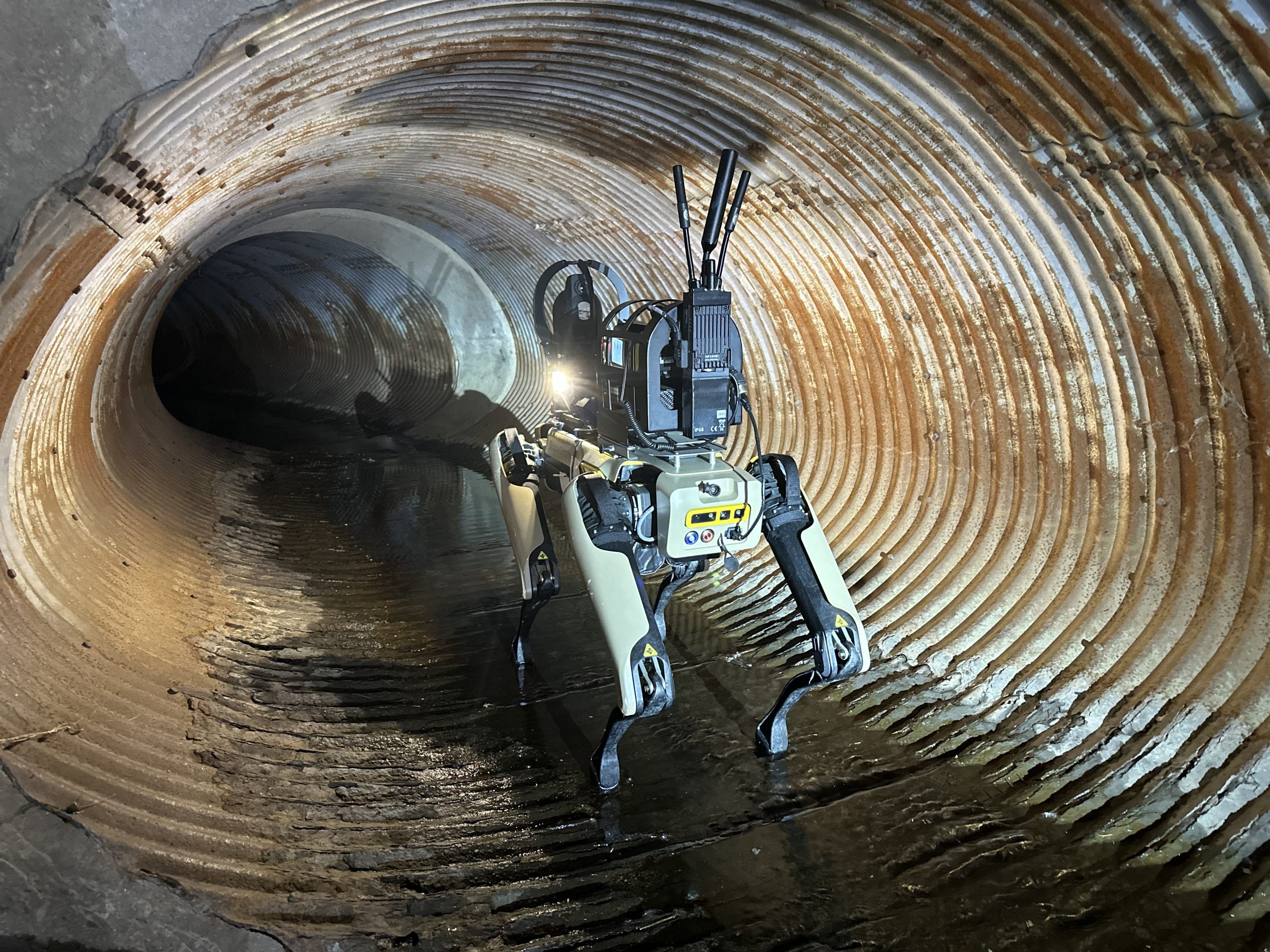

ICE justified the purchase as support for Homeland Security Task Forces. Their stated targets are cross-border tunnels and the smuggling and trafficking networks run by cartels, foreign gangs and transnational criminal organizations.
Why employees say the risk is too great
The petition went to company executives and was shared with The Boston Globe and WBUR. It has more than 300 signatures, and half of the signers are anonymous. That is roughly a fifth of a workforce of about 1,400. Signers wrote that friends and family had asked them “in disbelief and horror” whether the news was true. They also warned that “the risk for Boston Dynamics is simply too great to continue with this deal.”
Much of the objection centers on what Homeland Security Investigations, the ICE unit expected to use the robots, actually does. The company stresses its focus on transnational criminal organizations. But the Brennan Center for Justice has documented the unit’s involvement in deportations and workplace raids during Trump’s first term. The Immigration Policy Tracking Project reports that thousands of its agents were again diverted to immigration enforcement after a 2025 executive order redefined its mission.
The petition points to a September 4, 2025 raid at the Hyundai Motor Group Metaplant America facility in Georgia, where 475 workers, mostly South Korean, were detained. Hyundai has owned Boston Dynamics since June 2021. “We cannot be proud of working at Boston Dynamics,” the petition says, “when that work is being used by a government agency that brutalizes civilians, including some of our own colleagues at Hyundai.”
The company’s response
Boston Dynamics is not backing down. A spokesperson told Ars Technica that “Spot robots are tools that help keep people out of harm’s way,” adding that “regardless of any political implications or personal feelings about the organizations involved, if our robot can help keep people safe, we believe it should.” Executives have also said the robots would not be weaponized.
That assurance addresses one worry but not the others. The contract’s own language stresses surveillance, inspection and autonomous operation rather than force. Workers appear concerned less about the robots as armed machines than about what they enable for an agency whose immigration work has reached their own parent company’s facilities.
The timeline in the available reporting is also muddled. It lists the contract award as September 25 but says the petition reached executives in early September. The excerpt does not explain how that sequence fits together.
A wider test for robotics makers
The dispute reflects a long-running tension in robotics. Manufacturers sell general-purpose machines that can be modified and resold by third parties. Here the buyer is not even Boston Dynamics’ direct customer but an intermediary, Radeco, that adapted the hardware. Once a robot is sold into that chain, the company’s practical control over how it is used shrinks. A pledge against weaponization is one of the few limits it can plausibly promise.
For now, the Boston Dynamics ICE deal stands, and the petition shows how much internal pushback a government sale can generate at a company that builds its brand on friendly, almost playful machines. Whether employee pressure changes anything may depend on whether the signers’ numbers grow, or on how Hyundai, the parent company, responds.
Explore more on this topic with Vexel Search.
You must be logged in to post a comment Login