Whether your Duo just landed on your doorstep or you’re still weighing that $1,999 price, here’s what you need to know before unfolding it.
Apps Aren’t Optimized—Yet
Photograph: Julian Chokkattu
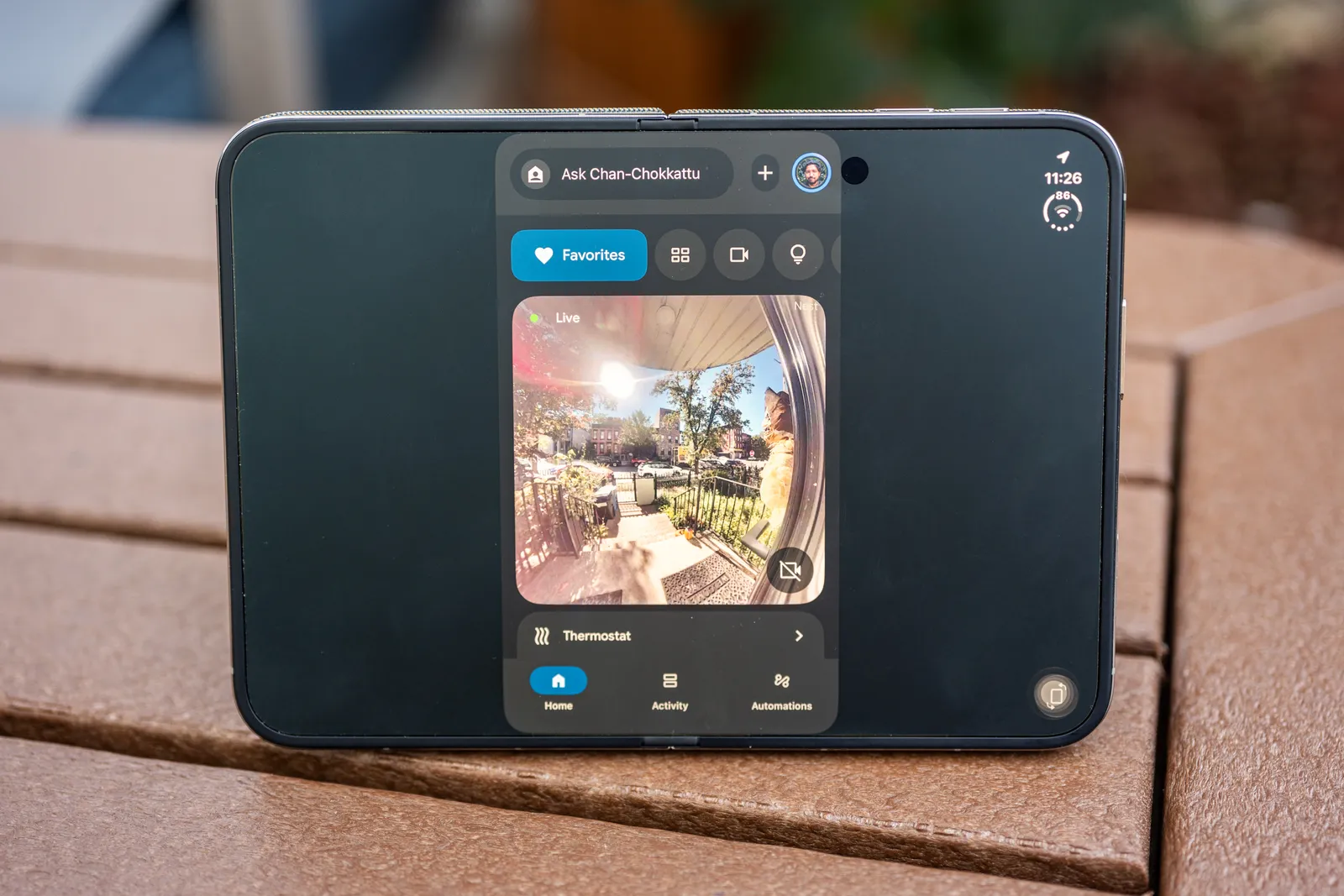
The iPhone Duo is a new shape and size for Apple, so many of your apps likely aren’t optimized to show up properly on the unique 5.4-inch outer screen or the 7.6-inch inner display. Apple also changed how navigational elements appear on the Duo, aligning them on the right rail instead of centering them on the bottom like every other iPhone.
Apple apps, redesigned for the Duo, look great. Many third-party apps look like the Google Home app in the picture above: a strip down the middle with thick, black bars on the sides. Several major app developers have already optimized their apps for iOS 27.1—Slack, Instagram, DoorDash, and WhatsApp, for example—but I’ve noticed that even some optimized apps like Instagram can still have broken user-interface elements. It will take time for every app in your library to work perfectly across these new screens.
Advertisement
It might be a good thing that the Duo is back-ordered for several weeks. By the time you snag yours, app developers will likely have caught up to the new device, and you might enjoy a richer folding experience.
Say Goodbye to Face ID
Photograph: Julian Chokkattu
Nearly a decade ago, Apple introduced Face ID as the future of the iPhone, eventually replacing the fingerprint-based Touch ID. So it might be confusing to hear that Apple’s first folding phone doesn’t have Face ID at all and instead relies on the older biometric authentication method. (Likely because Face ID tech takes up too much space in the thin iPhone Duo.) Touch ID never disappeared—Apple has used it on the iPhone SE and still features it on iPads and MacBooks—but this is the first time it has returned on a flagship iPhone.
iPhone Duo preorders are showing up at customers’ doorsteps ad in Apple Stores as Apple’s first foldable rolls out worldwide.
Two of the first customers at Apple Jing’an in Shanghai, and their dogs – image credit: Apple
Apple opened preorders for the iPhone Duo on October 16 ahead of its October 23 release date. It didn’t take long for release dates to slip and eventually stabilize in mid-January. Deliveries typically begin in Australia and New Zealand, then Asia, Europe, and North America. Apple Stores generally open at 8:00 AM local time to cater to launch-day enthusiasts. Continue Reading on AppleInsider | Discuss on our Forums
The Metric Is Not the Mission is a ten-part examination of how Big Tech moved from building and expanding the open internet to increasingly shaping it around its own metrics, incentives and assumptions. Across the series, the argument follows the evolution of the platform economy—from the optimism of the early internet to the growing tensions around power, prediction, geopolitics, accountability and the future of digital life.
The series was published in two parts each week over five weeks, with each installment building on the one before it. The series is now concluded. The complete essay will be brought together in a single PDF edition, providing the full argument in one place, published shortly.
Part X: After the Platform Age The final part brings the argument together. The question is no longer simply what comes after Big Tech, but whether the future of the internet can be built around a different distribution of power, one in which technological scale is matched by accountability.
There is a revealing moment in almost every period of historical transition when people begin asking the wrong question. What comes after Big Tech? Will artificial intelligence displace social media? Will decentralized technologies restore the openness of the early web? Will new regulatory frameworks fragment today’s digital giants? Will smaller online communities replace planetary platforms?
These are important questions, but they all assume that the future consists primarily of finding a new set of dominant actors. History encourages a different perspective. Periods of profound transformation are seldom defined simply by who inherits power. They are defined by changes in the architecture through which power is organized.
Advertisement
That is why the coming reckoning should not be understood primarily as a prediction that today’s largest technology companies will collapse. Some may become even larger. They will continue investing in artificial intelligence, biotechnology, robotics, and other technologies that will shape the next generation of innovation. The more important question is whether the terms of their power are beginning to change.
For much of the platform era, users were treated primarily as consumers. Governments treated the companies primarily as markets requiring regulation. The companies themselves treated social harms largely as problems of product design, trust and safety, or compliance.
The emerging challenge is different. It asks whether users are also rights-holders. Whether platforms are also institutions with duties that cannot be reduced to terms of service. Whether corporate responsibility can be determined solely by what a legislature has explicitly required. And whether an industry that has become central to social, economic, and political life can continue insisting that responsibility ends wherever existing regulation currently stops.
These questions may ultimately prove more consequential than another attempt to identify the next dominant technology. Because the future of the internet is not simply a question of which company wins. It is a question of whether the people who depend upon digital systems have meaningful power over the institutions that shape their lives. This is where the original architecture of the internet remains relevant.
Advertisement
The internet’s greatest achievement was not that it prevented concentrations of power. It did not. Nor was it that it eliminated conflict, inequality, or abuse. It did none of those things. Its achievement was that no single institution was supposed to become synonymous with the network itself.
That principle now needs to be recovered in a different form. Not by imagining that the internet can return to an earlier age or by romanticizing decentralization. And, certainly, not by assuming that technological innovation alone will correct the problems technological power has created.
The next internet will require something more difficult: institutions capable of correcting one another. That includes legislators, regulators, and competition authorities. It includes courts. It includes civil society and independent researchers. And, most importantly, it includes users themselves. The point is not to weaken technology for the sake of weakening technology. The point is to ensure that technological power remains answerable to the societies in which it operates. That is the distinction that matters. The alternative to Big Tech is not necessarily small tech. The alternative to concentrated power is not the absence of power. It is accountability.
Perhaps that is the real reckoning now approaching. Not the collapse of the platforms, not their sudden repentance or, the moment when their founders rediscover the idealism of the early internet. The reckoning will come when the companies discover that scale is no longer sufficient to define the terms of responsibility.
Advertisement
Child safety may be where that process becomes impossible to ignore. It should not end there. If the emerging principle is that powerful technology companies can be held responsible when their products create foreseeable and preventable harms, then that principle must eventually extend to the wider question of what users are owed. Not only safety – but agency. Not only protection – but dignity. Not only compliance with the law as it currently exists – but accountability proportionate to the power these companies exercise over the conditions of modern life. That is not an argument against innovation. It is an argument against the increasingly implausible belief that innovation exempts powerful institutions from responsibility.
For a generation, Big Tech invited us to believe that the future of the internet could be contained within a handful of platforms. Those platforms transformed communication, knowledge and human connection in ways that deserve recognition as some of the most consequential technological achievements of modern times. But achievement is not immunity. The internet was never Facebook; it was never Google; it was never Amazon; it was never Instagram, TikTok, or X. Those companies shaped an era. Some will continue to shape the next one. But the internet has always been larger than its most powerful inhabitants.
The next chapter may be defined by something even more important than technological change: the reassertion of the principle that those who use the internet are not merely the raw material from which platforms create value. They are the people to whom those platforms must ultimately answer. That is the reckoning. And this time, Big Tech may not be able to lobby its way around it.
Konstantinos Komaitis, PhD, is a veteran of developing and analyzing Internet policy to ensure an open and global Internet.
An 85-inch television used to sound enormous. RayNeo apparently looked at that and decided we were thinking too small.
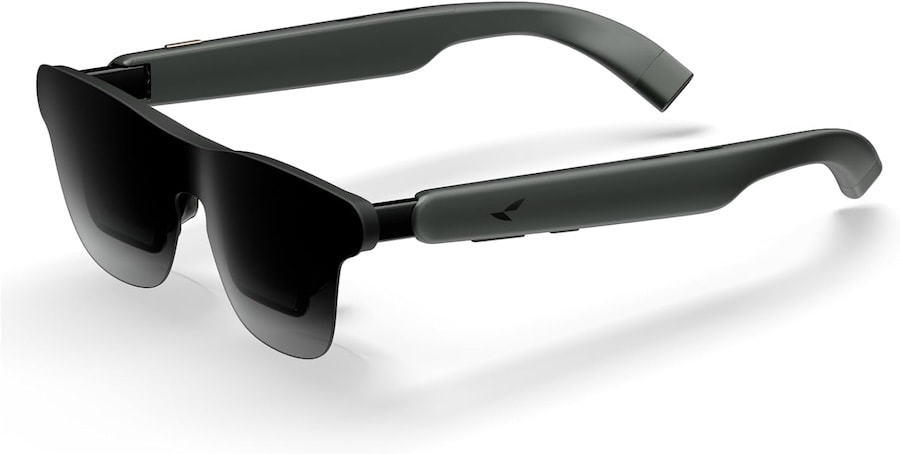
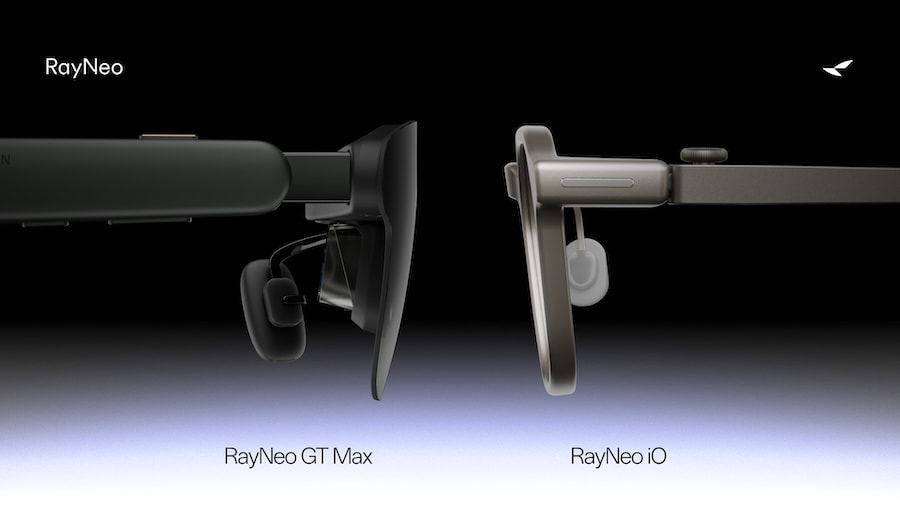
The new RayNeo GT Max AR glasses use dual Micro-OLED displays to create a virtual screen measuring up to 307 inches, with a 59-degree field of view, 120Hz support, native 3DoF spatial tracking and a four-speaker audio system tuned with Bang & Olufsen. There is also Dolby Vision, although with an important qualification: RayNeo says native Dolby Vision playback requires the GT or GT Max to be paired with its new Pocket TV Pro streaming device.
That makes the GT Max considerably more interesting for eCoustics readers than another pair of smart glasses designed primarily to photograph lunch and ask an AI assistant where you parked the car. This one wants to be a television — a very large television that happens to sit directly in front of your face.
Who Is RayNeo?
RayNeo was incubated by TCL Electronics and already offers multiple generations of AR and AI eyewear. Counterpoint Research says RayNeo held a 41% share of the Birdbath/Flat-Prism AR glasses segment in Q1 2026, ahead of VITURE and XREAL.
Advertisement
That category is also moving quickly. Counterpoint reports that global AR-glasses shipments increased 136% year over year during Q1 2026, even as traditional VR headset shipments declined 17%. Consumers appear increasingly interested in lighter, more specialized eyewear rather than heavier headsets built around fully immersive virtual reality.
RayNeo’s GT Series leans directly into that shift by concentrating on movies, streaming and gaming rather than trying to become an all-day spatial computer. That narrower focus may actually make the product easier for consumers to understand.
RayNeo GT Max: The Hardware
The GT Max uses RayNeo’s Peacock Optical Engine 3.0 Max with dual 0.6-inch Micro-OLED displays delivering 1080p resolution per eye. RayNeo provides three virtual-screen sizes — 227, 267 and 307 inches — and claims brightness up to 1,200 nits.
The glasses weigh 78 grams, putting them in a very different physical category from something like Apple Vision Pro. RayNeo will also offer the GT Max in three interpupillary-distance sizes: Small for users below 64mm, Medium for 64 to 67mm and Large for those above 67mm. Custom prescription-lens inserts will also be supported.
Advertisement
Those details matter because comfort and optical alignment are not small issues with display glasses. A product that looks spectacular for ten minutes but becomes uncomfortable during a two-hour movie is not much of a home theater replacement.
Keeping the Picture Where You Want It
A dedicated Zone 360 3DoF processor handles head tracking. Three-degree-of-freedom tracking follows rotational movement — pitch, yaw and roll — and RayNeo provides three viewing modes depending on how and where the glasses are being used.
Pinned Mode keeps the image fixed in one location, while Follow Mode allows the display to move naturally with your head. Steady Mode is intended specifically for moving environments such as trains and airplanes, where constant motion can make a virtual display far less enjoyable.
Advertisement. Scroll to continue reading.
Advertisement
That last mode could prove more useful than some of the giant-screen marketing. Anyone who has tried to watch a movie on a laptop during turbulence knows that a huge virtual image becomes considerably less impressive if it appears to be attempting an emergency landing of its own.
Bang & Olufsen Handles the Audio
Both GT models use a quad-speaker system co-tuned with Bang & Olufsen, along with head-tracked spatial audio. RayNeo also includes a directional Whisper Mode designed to reduce how much sound reaches people sitting nearby.
How convincing any of that sounds will require an actual review. Open-ear speakers built into glasses are not going to replace a good pair of headphones when isolation, bass extension and maximum dynamic range matter, but integrated audio makes considerable sense for casual movie watching, gaming or streaming when wearing headphones is inconvenient.
The B&O involvement also suggests RayNeo understands that the audio cannot simply be treated as an accessory to the display. If you are going to sell the idea of a private movie theater, the soundtrack has to do more than politely emerge from two tiny speakers near your temples.
Advertisement
Dolby Vision and Pocket TV Pro
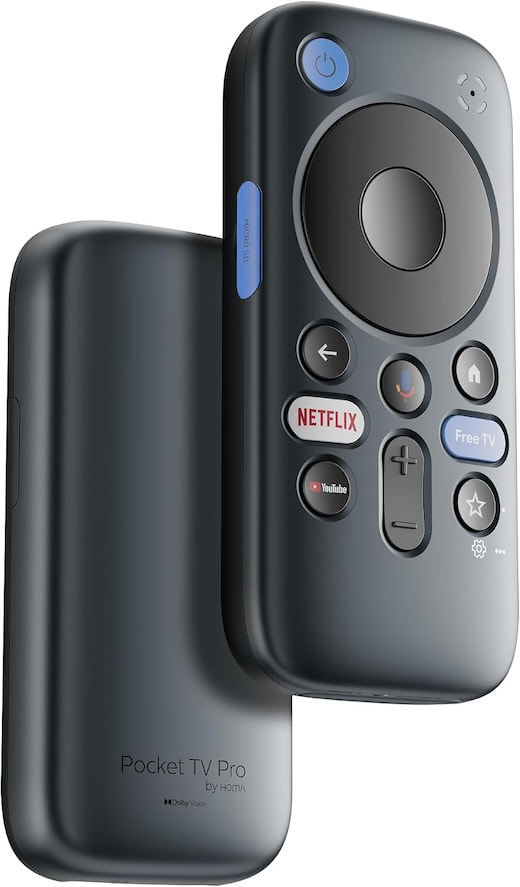
The Pocket TV Pro is a portable Google TV streaming device designed specifically for the RayNeo ecosystem. It uses an Amlogic S905X5M-J processor with 3GB of RAM, 64GB of storage and expansion support up to 2TB, while its 6,500mAh battery is rated for up to 5.5 hours of continuous streaming.
More importantly, this is the device RayNeo requires for native Dolby Vision playback through the GT and GT Max. The Pocket TV Pro also supports RayNeo’s real-time AI conversion of SDR content to HDR through its Vision 4000 display processor.
So if Dolby Vision is one of the primary reasons you are considering the glasses, the Pocket TV Pro is not merely an optional accessory. It is part of the specific playback chain required to get that feature, and RayNeo has not yet announced final U.S. pricing for the streamer.
We recently looked at Apple’s effort to give Vision Pro a stronger reason to exist through live 8K immersive baseball. Vision Pro remains extraordinary technology, but it starts at $3,699 and asks consumers to buy into Apple’s much broader concept of spatial computing. Its appeal lies in creating immersive experiences that conventional televisions cannot reproduce.
At the other end of the market, Ray-Ban Meta emphasizes cameras, AI, communication, music and everyday wear rather than immersive video. Counterpoint says Meta held nearly 84% of the global display-less smart-glasses segment in Q1 2026, which demonstrates how much traction that lighter, everyday-wear approach has already gained.
Advertisement
RayNeo is pursuing a third path. The GT Max does not need to replace your laptop, photograph everything you see or become an AI assistant living beside your temple. Its primary job is considerably simpler: give you a very large private display that fits into a travel bag.
There may be something refreshingly sensible about that. Not every piece of wearable technology needs to reinvent computing, social interaction and human consciousness before lunch.
Who Is This For?
The most obvious customer is a frequent traveler. A 78-gram pair of glasses capable of creating a cinema-sized image has obvious appeal on an airplane, train or in a hotel room where carrying a television generally creates problems with the overhead compartment.
Advertisement
Advertisement. Scroll to continue reading.
The GT Max also makes sense for portable gaming, particularly for people using handheld PCs or other compatible video sources who want something substantially larger than a seven or eight-inch display. There is another potential audience among people living in apartments, dorm rooms or other small spaces where installing a large television or projector is impractical.
Streaming is another obvious application. Paired with Pocket TV Pro, the system effectively becomes a wearable Google TV display, which could make it useful in situations where a conventional screen is either unavailable or undesirable.
What the GT Max does not replace is the social aspect of a television or home theater. Your spouse, kids or friends cannot share the same image unless everyone owns their own pair of glasses, and nobody is passing popcorn around a single headset. Large televisions and projection still win rather decisively when more than one person wants to watch.
Visual-First (0 Speakers / Bone Conduction + 4-Mic)
Quad-Speakers (Co-Tuned by B&O)
Quad-Speakers (Co-Tuned by B&O)
Tracking & Controls
Smart Crown Dial & Head Gestures
Zone 360 Native 3DoF Chip
Zone 360 Native 3DoF Chip
The Bottom Line
Apple wants Vision Pro to become a new computing platform, while Meta wants smart glasses to become something people wear all day. RayNeo is making a much narrower pitch with the GT Max: what if you just want a huge private screen?
That may be the product’s biggest advantage. There are still important questions about comfort, optical sharpness, sound leakage and how convincing the image feels after two hours of use, but the application is easy to understand and does not require consumers to buy into a completely new computing ecosystem.
Apple will put you inside Yankee Stadium for $3,699. RayNeo would rather put the movie theater in front of your eyes and let you finish the flight. For a lot of consumers, that might be the easier sales pitch.
Price & Availability
The RayNeo GT and GT Max are available as of September 4, 2026 for $329 or $429 at Amazon, respectively.
Pandemic relief money paid for a big expansion of high-impact tutoring in schools. That money is gone, and districts now face a hard question: how to keep a tool proven to help students. Some districts have already cut back. Others have found ways to keep tutoring in place, but the school day is not getting any longer, and every change to a program has a cost.
Is Tutoring Quietly Getting Weaker?
David Blazar, associate professor of education policy at the University of Maryland College of Education, studied tutoring programs in all 24 of Maryland’s school districts. He tells Ira Apfel that the more likely outcome is not canceled tutoring but weakened tutoring, with bigger groups and fewer sessions that stop helping students as much. He explains which features matter most, why Maryland districts described finding tutors as a major obstacle, and what his national look at tutoring found about how much students actually get.
How Do Schools Make Room for Tutoring?
Advertisement
Devon Wible, vice president of teaching and learning at Catapult Learning, which provides tutoring programs to schools, says conversations with districts have shifted from how fast tutoring can start to how it fits with classroom instruction. She walks through one third grader’;s day, explains why the tutor and the classroom teacher need to work from the same information, and shares the one move she would counsel teachers and principals to make this year.
Listen to the episode.
Links Mentioned in This Episode
This Week with EdSurge is a weekly podcast from EdSurge. Subscribe to the EdSurge newsletters for more news and analysis on education and technology.
For many F&B businesses, technology is often associated with digital ordering systems, delivery platforms, or point-of-sale software.
But for Yong Yi Sung, the next major shift is less about putting restaurants online and more about using technology to fundamentally change how they operate.
Sung is the co-founder and CEO of Grain, a Singapore F&B company that has been around for more than a decade. The business started out as an online restaurant and catering business, and has since grown into a business serving both individual and corporate customers.
Advertisement
Now, Sung is looking at how artificial intelligence (AI) can help make the day-to-day running of an F&B business easier—from cutting down repetitive work to saving employees time.
Looking at F&B challenges through a different lens
F&B is a demanding industry. Margins can be thin, manpower is a challenge, and keeping operations running smoothly becomes challenging as a business grows.
Having spent more than a decade running Grain, Sung and his team are familiar with these challenges.
But from the beginning, the company has taken a somewhat different approach to solving them.
Advertisement
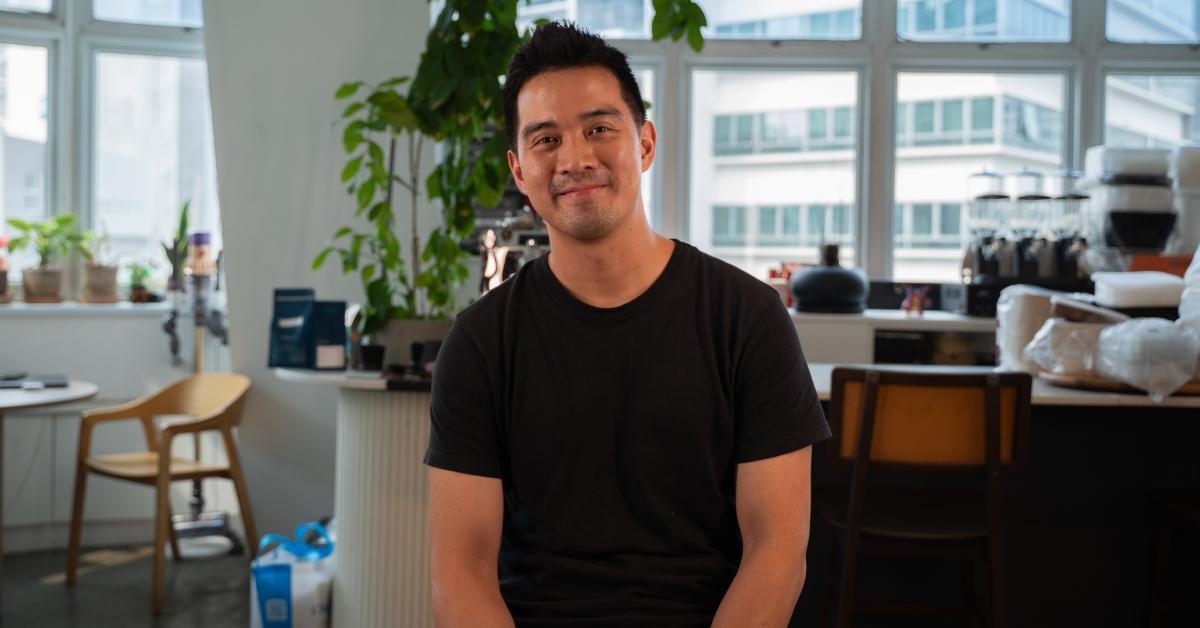
Grain co-founder and CEO, Yong Yi Sung./ Image Credit: Vulcan Post
Grain’s founders themselves came from management consulting backgrounds rather than traditional F&B, which meant they entered the industry with a problem-solving mindset. They were less tied to the usual ways of doing things and more willing to ask whether there was a better way to solve a particular problem.
That approach also meant building many of Grain’s capabilities themselves. In its early days, the company developed its own logistics and technology to support its online restaurant and delivery business.
Over time, this became part of the company’s culture: when the team encountered a problem, they would look for ways to solve it, experiment with different approaches and learn along the way.
It was this same mindset that helped Grain embrace AI.
Making AI experimentation part of the routine
When AI first gained traction, the team was quick to explore its potential, and adoption soon gathered pace.
Advertisement
Grain took a two-way approach to AI adoption. Leaders set the direction for change, while employees were encouraged to explore using AI.
Image Credit: Vulcan Post
Through weekly learning sessions, team members could explore how AI tools can help improve their day-to-day work and share what they had learnt with the rest of the team. This created a cycle of experimentation: someone would discover a new use case, test it out, and then passed useful applications on to their colleagues.
One example came from Grain’s stewarding team, which handles the essential work of managing the company’s dishes and equipment.
A significant problem the company faced was predicting how much dirty ware is coming back. This, in turn, affected how much manpower was needed for each shift and which equipment required attention.
Grain’s end-to-end stewarding system./ Image Credit: Vulcan Post
With the help of AI, Grain’s stewarding team built a system that forecasts ware volumes and manpower needs, while also tracking maintenance and routine tasks.
The system now saves the team 15 to 20 hours each week, reduces missed tasks and repeat defects by 20%, and cuts issue resolution time by 50%.
Advertisement
AI doesn’t always have to solve a big problem
But not every use of AI at Grain involves building a new system or tackling a major operational problem.
Some of the changes are much smaller—and might not seem significant on their own. An employee might use AI to summarise information, organise data, draft something more quickly, or take a repetitive task off their plate.
Grain’s AI Autopilot responds to customers faster, automates work and helps the team close more deals./ Image Credit: GrainGrain’s Tasting dashboard uses AI to synthesise feedback and help improve menus./ Image Credit: GrainGrain utilises an AI-powered delivery and day-to-day operations tracker./ Image Credit: Grain
Individually, these may only save a few minutes here and there. But across a team, and repeated day after day, those minutes can add up.
For Sung, that is ultimately what AI adoption is about: not using AI for the sake of it, but constantly asking whether there is a better, faster or simpler way to do something.
This approach has also been supported by the technology foundations Grain built over the years. Through government support, Grain was able to strengthen its technology capabilities and build up its tech team from a few people to a team of 10.
Advertisement
Today, AI has become part of Grain’s day-to-day operations, with around 200 employees actively using or building AI-powered tools. More than 100 new tools and workflows have also been rolled out, with many more being created and used by employees at an individual level.
Taking the first step doesn’t have to be difficult
Image Credit: Grain
Looking back on his AI adoption journey, Sung emphasises that businesses do not need to make a large investment or have a team of technical experts to start using AI.
For small businesses especially, he believes the first step is simply being willing to learn and experiment. The tools are increasingly accessible, and many can be tested without significant upfront investment.
In Grain’s case, the technology may have changed over the years, but the approach has remained the same: find a problem, try something new, learn from it, and keep improving.
The key, says Sung, is not to wait until AI is perfect before getting started. The earlier businesses begin experimenting, the sooner they can understand what works for them—and where AI can genuinely make a difference.
Advertisement
For businesses that are unsure where to begin, there are also avenues available to help them take that first step.
Enterprise Singapore provides support and resources for businesses looking to build their digital capabilities and explore new technologies, giving small businesses a starting point for their own AI journey.
Federal civilian agency IT systems in the US were ordered to halt using DeepSeek on Monday over security concerns.
DeepSeek has raised around $15bn (100bn yuan) in one of China’s largest-ever private fundraising rounds, Bloomberg first reported early this morning (22 October).
Contemporary Amperex Technology and Tencent were among the biggest investors in the latest round, which comes as DeepSeek readies itself for a highly anticipated public listing.
Advertisement
The raise, albeit significantly lower compared to what its US contemporaries OpenAI and Anthropic wield, represents the Chinese AI juggernaut’s appetite to compete on a global scale.
The company burst onto the scene just last year with its model R1, a surprise hit whose cost-effectiveness and performance sent Silicon Valley leaders into a flurry.
DeepSeek was valued at about $71bn before this latest round, according to Financial Times reporting from September. At the end of May, it announced the closing of its first round which raised about $7bn at a post-money valuation of $52bn.
A second round was initially reported to be halted after comments associated with founder and CEO Liang Wenfeng talking to investors about the US-China AI rivalry went viral. According to Bloomberg, the Hangzhou-based company doubled its initial financing target for its latest raise.
According to Reuters, the DHS cited security concerns as a major consideration, stating that “multiple threat vectors” could potentially “result in the transfer of sensitive data to [China] if used by US government employees or vendors”.
Responding to the situation, Chinese Foreign Ministry spokesperson Mao Ning said that China “will resolutely safeguard the legitimate rights and interests” companies in the country. “China consistently opposes the overstretching of the concept of national security.”
Don’t miss out on the knowledge you need to succeed. Sign up for the Daily Brief, Silicon Republic’s digest of need-to-know sci-tech news.
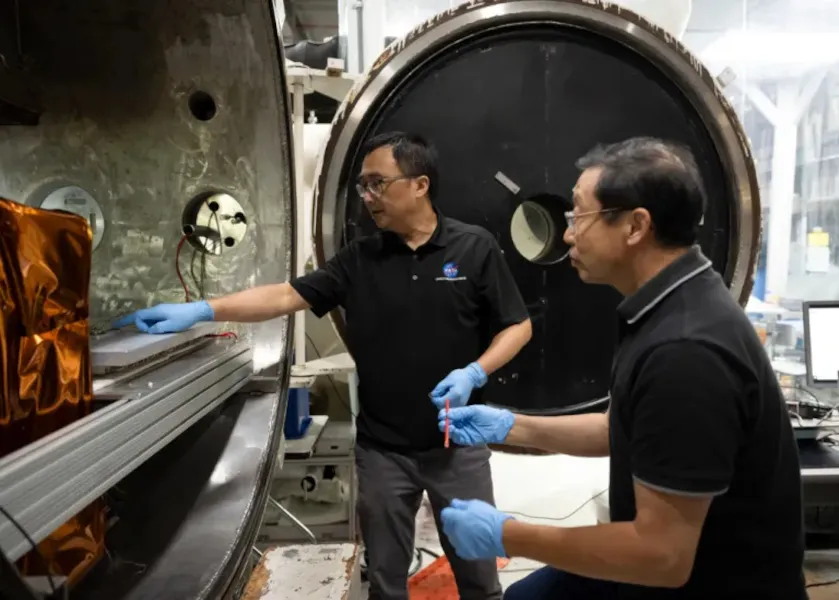
One of the major limits of mass-produced batteries is the electrolyte. From lead-acid to lithium ion, there’s some temperature where the electrolyte will freeze and cause all sorts of problems, from cracked casings to various non-favorable chemical changes in the battery itself. But if there’ a solid electrolyte available, many of the downsides of charging and discharging batteries in extreme cold disappear. These batteries developed by NASA, for example, can survive some wild temperature swings.
The electrolytes used for these batteries are either a ceramic or polymer electrolyte, both of which are solid. In testing, the batteries could meaningfully operate at temperatures of -60° C and up to 80° C on the high end. Further, the solid electrolyte helps protect them even outside of these temperature ranges. Bringing the battery temperature down to -170° C was not enough to damage the battery at all, and using a small heater to bring the temperature back up to its operating range showed no capacity losses or other issues.
These batteries are eventually intended for use in some of the coldest places outside of Earth still accessible to humans (in theory) such as the south pole of the Moon where the temperatures regularly get that cold and stay cold for long periods, especially in permanently-shadowed craters or places on the Moon we might want to put some telescopes eventually. There are other terrestrial situations where these batteries might be useful as well, since they don’t need as much thermal management as other battery types.
Cummings Aerospace fired two 3D-printed Hellhound S3 jet drones from a buggy-mounted launcher, a first for the weapon
One operator sent both drones on separate autonomous missions using a single handheld fire control system
The new launcher holds up to eight drones, and Cummings plans to fire it next from unmanned ground and naval vehicles
A small American defense firm has just shown what mass-produced, 3D-printed air power could look like in the field, and it fits on the back of a utility vehicle.
Cummings Aerospace has fired two of its 3D-printed Hellhound S3 jet-powered drones from a launcher mounted on a Polaris buggy, with a single operator using one handheld controller to send both drones off on separate autonomous missions.
The company says the test met all its objectives and marks several firsts for the turbojet weapon.
Latest Videos FromTechRadar
Advertisement
Moving drones from a bagpack to a buggy?
The demonstration took place on August 25, 2026, at the Pendleton UAS Range in Oregon, where a firm engineer fired the two Hellhounds one after the other. Both carried inert payloads and flew different preplanned routes at different speeds; the results were announced on October 12 2026.
Until now, the Hellhound had flown only in its man-portable form in more than a dozen flight tests. This was the first time it had been fired from a vehicle, the first use of a new launcher that can hold up to eight drones, the first ripple-fire of the S3, and the first time a single operator controlled more than one Hellhound at once.
Before launch, the operator programmed each drone’s waypoints, altitudes, and flight path into the handheld fire control system. Once airborne, the drones flew those routes on their own while streaming data back, so the operator could watch both flights live and redirect or abort either mission.
The play here is about doing more with fewer people: CEO Sheila Cummings put it, instead of manually flying a single drone to a target, one soldier using one fire control system can simultaneously put multiple Hellhounds on multiple targets.
Sign up to the TechRadar Pro newsletter to get all the top news, opinion, features and guidance your business needs to succeed!
The Hellhound S3 is roughly the size of a baseball bat and weighs about 13 pounds. Its turbojet engine lets it fly more than 60 km (37 miles) at speeds up to 618 km/h (384 mph), putting it in a different class from the propeller-driven quadcopters and loitering munitions that have come to define the war in Ukraine.
Advertisement
It is also much easier to build, leveraging 3D-printed and commercial off-the-shelf components that allow for easy modifications, repairs, and mass production if needed. Cummings Aerospace frames the Hellhound as a multi-mission weapon rather than a single-trick munition. It can work as a loitering munition, a precision-guided munition, a one-way attack drone, or a counter-drone interceptor.
Operators can swap between four mission modules, covering armor-piercing, blast-fragmentation, electronic warfare, and decoy roles, in under two minutes without tools.
That counter-drone angle is arguably the most important here because the threat it is built to answer keeps getting smarter and cheaper; A recent report on a NATO-backed drone AI that picked its own target and struck it, and the US Army showing off its in-house “Dragoons” drone fitted with 3D-printed bombs are merely the tip of the iceberg. Cheap, printable airframes are becoming the common currency of modern conflict, on both the giving and receiving ends.
Much of the appeal of the Hellhound S3 as a viable counter lies in its manufacturing process. The Hellhound is built largely with commercially available 3D printers in-house, which is central to Cummings’ goal of producing at least 100 S3 airframes a month and her stated interest in licensing the design to US and international partners for distributed production.
In an era where drone tariffs and supply chains have become a strategic concern, a weapon you can print close to the front is as much a logistics argument as a battlefield one, and one can assume that the Hellhound S3 is but the first of many that will eventually make it to the modern battlefield in different shapes, sizes, and capabilities.
Roughly 60pc of the reductions will come from within support functions, impacting developers and other professionals.
Bank and financial services company Barclays has announced it expects to cut 5,000 jobs, representing around 5pc of the bank’s total headcount. The layoffs are part of Barclay’s wider plan to cut costs using artificial intelligence.
Reportedly, around 60pc of the reductions are coming from within Barclay’s support functions, with developers among those expected to be impacted. Of the 5,000 roles being eliminated, 1,000 were already cut in the first half of the year, with the remainder to go by the end of the year.
“The changes that we’re making in the third and fourth quarters of this year are sizable,” Barclays’ chief financial officer Anna Cross told analysts in a call according to Bloomberg. “They relate both to the simplification of the organisation and to some of the impacts that we’re starting to see from AI.”
Advertisement
Barclays is nearing the culmination of a three-year strategy designed to improve performance, ramp up its technology and significantly cut costs.
So far this year, the institution has spent around £600m as part of a wider plan to reduce future costs. Barclays has stated that it has a further £300m or so worth of savings planned for the final three months of the year.
Barclays Investment bank had a mixed third quarter in which revenue from fixed income and currency trading fell by nearly 20pc year-on-year to £1.01bn – less than what was expected by analysts. It was a better quarter in relation to equities revenue, which jumped 47pc.
It is a challenging landscape for jobseekers and professionals currently as there have been several high-profile job cuts announced so far in October, including, 1,000 people from eBay, 400 from EA and 1,000 employees from Netflix.
Advertisement
Don’t miss out on the knowledge you need to succeed. Sign up for the Daily Brief, Silicon Republic’s digest of need-to-know sci-tech news.
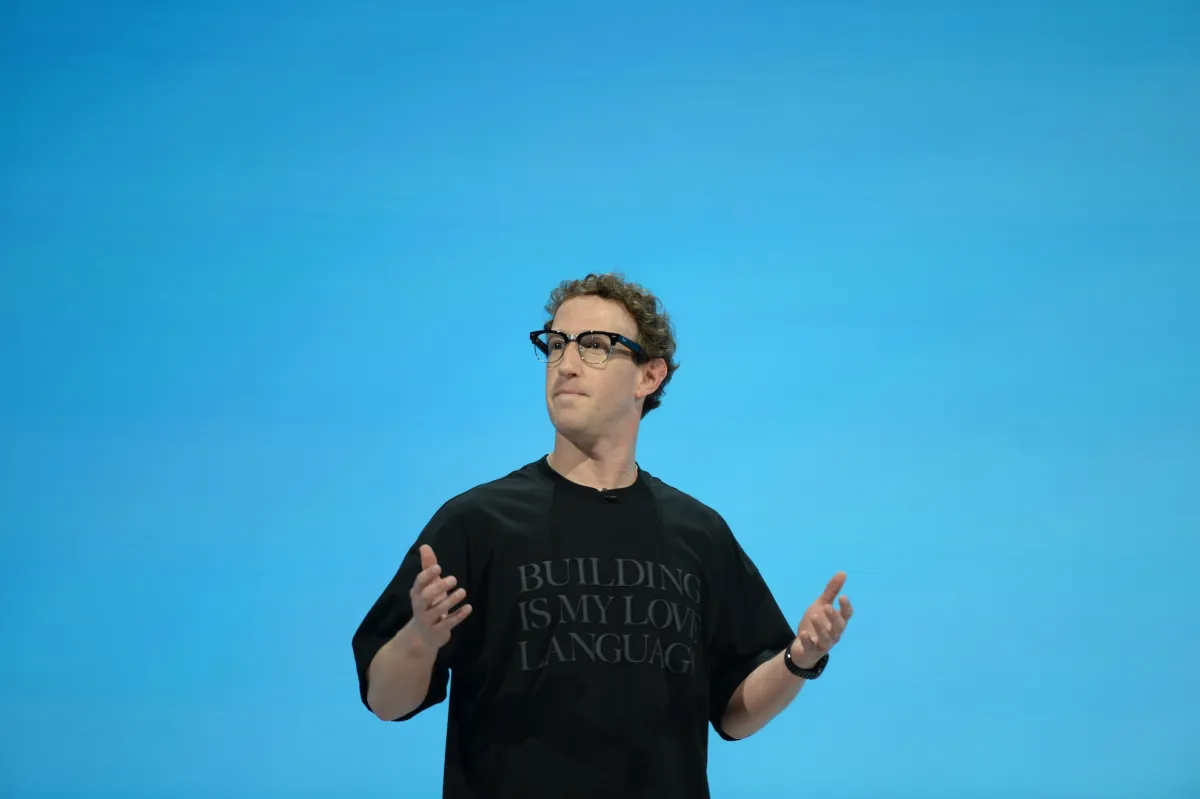
During Meta’s earnings call on Wednesday, the company revealed its board had approved a new class of non-voting stock, called Class C common stock. The shares give the holder an ownership stake but no vote on company decisions. This class takes effect in January. Meta says it will use the stock for capital raising, employee pay, and acquisitions — including its expensive push into AI — while maintaining the current voting structure that favors its founder and CEO, Mark Zuckerberg, who controls around 60% of the vote.
Now, however, the New York Times has reported there’s another reason for the new class: helping Zuckerberg pay for California’s proposed “billionaire tax,” if voters approve it. Because the new shares carry no votes, he could sell some of them to cover the tax without giving up voting control.
Proposition 40, which was drafted by Berkeley tax law professors and is being sponsored by California’s largest healthcare union (SEIU United Healthcare Workers West), would level a one-time 5% wealth tax on the net worth of several hundred California billionaires who primarily live in the state. Backers say the policy could generate as much as $100 billion over five years, the bulk of which would be used to pay for the state’s healthcare needs, with the rest for food assistance and education.
The Times also reports that Zuckerberg pressed Meta’s board to come up with a plan to protect him from the tax. According to the paper, he told board members in September that if they couldn’t reach an agreement, he’d list his Palo Alto property for sale, potentially kicking off a media firestorm. Not long afterward, the stock plan materialized, the newspaper writes.
Advertisement
The Times reporting is partially based on a recent SEC filing made by Meta, which documents the concern surrounding Proposition 40 and how it informed discussions that led to the new stock class.
The filing says that as far back as July, Zuckerberg was discussing the billionaire tax with board members. The topic came up again in additional meetings and communications throughout that month and August.
The filing also describes how the plan would work. Meta is creating a new class of non-voting shares, called Class C, and will give shareholders one of them for every Class A or Class B share they own. The company calls this a one-time stock dividend and says it should work out to a two-for-one stock split. The dividend “will not change the voting power of any shareholder,” Meta says.
That is where Prop 40 comes in. The filing says the dividend “will allow Mr. Zuckerberg to immediately sell or transfer up to 20% of the shares of Class C common stock that he receives in the Dividend, representing 10% of his overall economic stake in the Company, for any reason, including so that he may pay his potential tax liability under California Proposition 40, if enacted into law, without affecting his majority voting control.” Because the dividend is one-for-one, half of his post-dividend shares will be Class C, so the 20% cap equals 10% of his total economic stake.
Advertisement
When reached for comment by TechCrunch, Meta referred us to a quote included in its recent earnings press release that reiterates that part of the motivation for the creation of the stock was to keep Zuckerberg onboard: “The Special Committee affirmed its belief that it was important for Mr. Zuckerberg to continue to lead the Company from California, including because it was crucial that Mr. Zuckerberg remains in close coordination with the Company’s management and in close proximity to Meta Superintelligence Labs.”
It’s been estimated that Zuckerberg would have to pay as much as $11 billion as part of the tax.
Prop 40 has notably riled many of Silicon Valley’s most prominent businesspeople. Google co-founder Sergey Brin has aggressively campaigned against the measure, even spending a small fortune in an effort to defeat it. Other business leaders and critics of the proposal have criticized it online, with many claiming that it amounts to economic suicide for California, driving a capital flight from the state. However, as Meta’s new policy would appear to show, the state’s mega-companies and the people who run them have creative ways of dealing with the tax, should it materialize.
“Looks like billionaires will stay and figure out a way to pay the tax,” Democratic U.S. Representative Ro Khanna, a vocal proponent of the tax, wrote on X, after news of Meta’s strategy spread online. “If we pass Prop 40, poor California kids can have healthcare,” he added.
Advertisement
When you purchase through links in our articles, we may earn a small commission. This doesn’t affect our editorial independence.















































You must be logged in to post a comment Login