Tech & AI
The AI Memory Crunch Is Coming for Your Old Gadgets Too

Seven years is a long time in consumer electronics. It’s long enough for a device to go from cutting-edge to nostalgic, long enough for its chipset to look almost quaint next to newer silicon. What it usually isn’t long enough for is a price increase. Yet that’s exactly what just happened to Nvidia’s Shield TV Pro, a streaming box that first launched in 2019 and has now jumped from $199.99 to $299.99. The culprit, according to Nvidia itself, isn’t some flashy new feature or supply shortage tied to a natural disaster. It’s artificial intelligence, and more specifically, the soaring AI memory prices that are rippling through nearly every device with a chip inside it.
Nvidia didn’t dance around the explanation. “Starting October 2, SHIELD Pro will be priced at $299. The cost of components, including memory, has increased substantially across the industry,” a company spokesperson confirmed. That’s a remarkably blunt admission for hardware running a Tegra X1+ processor that dates back years, long before the generative AI boom reshaped global chip demand. The device hasn’t gotten faster or gained new capabilities. It’s simply become more expensive to build, because the memory chips inside it are now competing for fabrication capacity with the data centers powering the AI revolution.
Why AI Memory Prices Are Reshaping the Gadget Market
To understand why a seven-year-old streaming box costs more today than it did last year, you have to look upstream, toward the massive data centers training and running large language models. Those facilities require enormous quantities of high-bandwidth memory and storage, and the companies building them, including Nvidia, have been buying up manufacturing capacity at a scale the memory industry has never seen. That demand doesn’t exist in a vacuum. Every gigabyte of DRAM or flash storage funneled toward an AI server is a gigabyte not available for a smartphone, a laptop, or, yes, a humble set-top box.
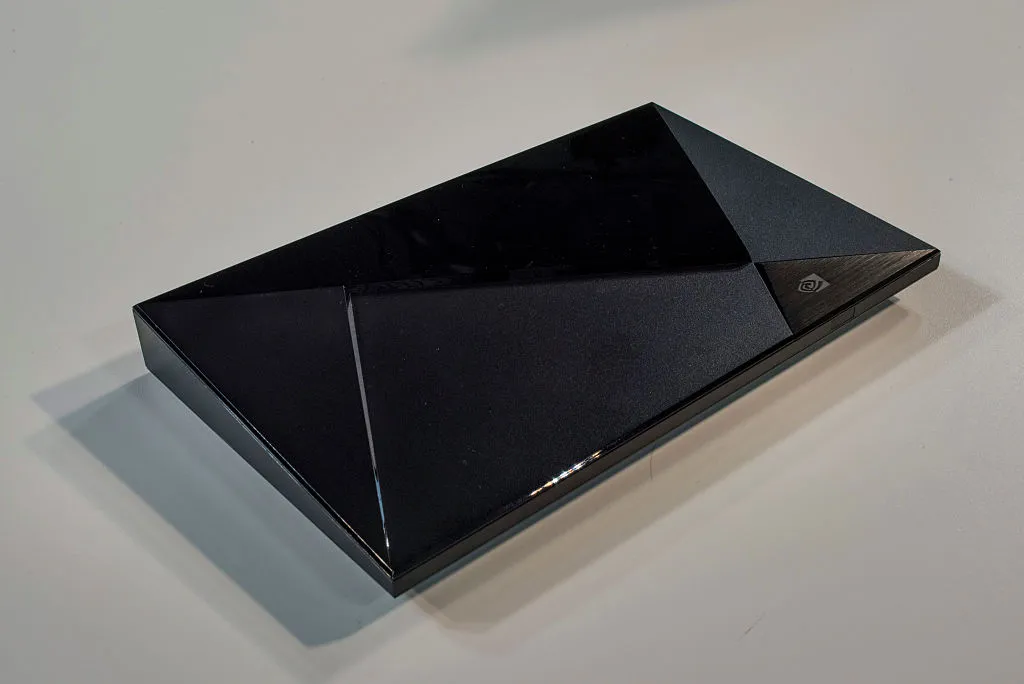

The result is a market where AI memory prices have climbed sharply across the board, squeezing manufacturers who never intended to compete with hyperscale data centers for parts. Nvidia, somewhat ironically, sits on both sides of this equation. It is simultaneously one of the companies most responsible for driving AI-related memory demand through its market-dominating GPUs and accelerators, and now a victim of the price pressure that demand has created for its own consumer products.
The Shield TV Pro isn’t an isolated case, either. Game console makers have been absorbing and passing along similar cost increases. Sony’s PS5 Pro, for instance, has risen from $699.99 at its 2024 launch to $899.99 today. Nintendo and Microsoft have made comparable adjustments to their current-generation hardware. Across the industry, anything built around memory or storage chips is increasingly vulnerable to the same upward pressure, regardless of how old or established the device might be.
A Passion Project Meets Hard Economics
Nvidia has described the Shield line as something of a passion project internally, a product kept alive less for its profit margins and more for the loyalty of a niche but devoted fan base. The company has confirmed it still actively manufactures the device and sells every unit it produces, meaning there’s no backlog of cheaper, pre-AI-boom components to draw from. Each new Shield built today draws on the same strained supply chain affecting flagship phones and PCs.
That explains why stock of the Shield TV Pro had grown increasingly scarce in recent months. It likely became uneconomical to keep producing units at the old price as component costs crept upward. Bumping the price to $300 makes manufacturing viable again, even if it also makes the device a much harder sell. For casual users who just want to stream Netflix or Disney+, a $300 set-top box is a tough proposition when cheaper streamers do the job for a fraction of the cost. The Shield’s appeal has always rested on niche strengths: broad codec support, Plex server capability, and AI-assisted upscaling that remains unusually capable for its age. Those features still matter to enthusiasts, but they’re a harder sell at triple the price of a basic streaming stick.
What makes this story notable isn’t really the Shield TV itself, though. It’s what the price hike signals about the broader trajectory of consumer electronics. As long as AI memory prices continue climbing to feed data center expansion, manufacturers across categories, from streaming boxes to game consoles to laptops, will likely keep passing those costs on to shoppers. Devices that have nothing to do with artificial intelligence are being swept up in its economic wake simply because they share the same fundamental building blocks.
For consumers, the lesson is an uncomfortable one: even mature, years-old products are no longer immune to price increases driven by forces entirely outside their own design or performance. The AI boom has rewritten the economics of memory and storage so thoroughly that even a legacy streaming box, built on half-decade-old technology, can’t escape its gravitational pull. If anything, the Shield TV Pro’s $100 jump may just be an early, relatively minor example of a pattern that’s likely to keep repeating across tech shelves for the foreseeable future.
You must be logged in to post a comment Login