Tech & AI
Amazon Ditches NDAs and Pledges $1B, But Data Center Backlash Keeps Growing

Amazon is trying to buy back trust. Facing a nationwide data center backlash that has stalled projects worth billions of dollars, the e-commerce and cloud giant announced this month that it will stop using nondisclosure agreements with government agencies and will donate more than $1 billion over five years to communities living near its server farms. The response from critics: not nearly enough.
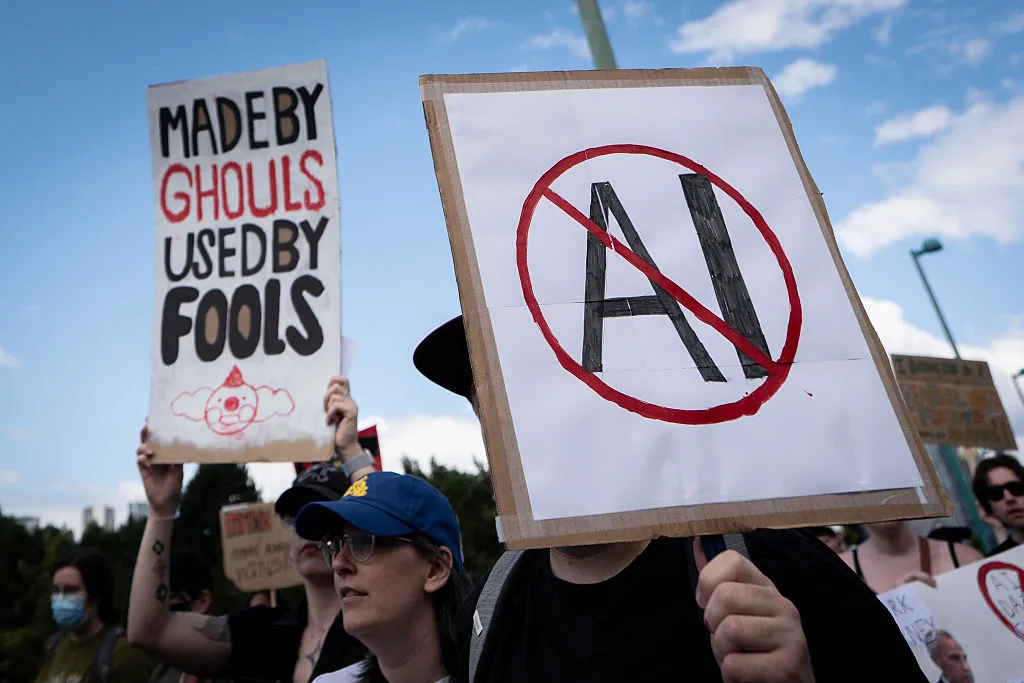
The announcement, laid out by Amazon Web Services CEO Matt Garman in a company blog post and press release, marks one of the clearest acknowledgments yet from a major tech company that the public is losing patience with the AI-driven data center boom. Across the country, more than 100 moratoriums on new data center construction are reportedly under consideration, driven by complaints about secretive permitting processes, spiking electricity bills, strained water supplies, and diesel generator pollution.
What’s Fueling the Data Center Backlash
The anger has been building for months. Environmental activist Erin Brockovich recently said the number one complaint she hears about data centers is a lack of transparency, describing a familiar pattern: projects announced only after permits are already secured, developers who go silent, and local officials who sign NDAs before their own neighbors learn a massive facility is coming to town. New York has already imposed a one-year moratorium on permits for large data centers, and similar measures are being debated in statehouses nationwide.

Garman tried to push back on what he called four myths fueling the data center backlash: that these facilities guzzle too much water, drive up electricity costs, spew excessive pollution, and offer nothing to the communities that host them. He cited an Amazon-commissioned report claiming direct data center water consumption makes up just 0.5% of industrial water use in the U.S., far less than golf courses or almond farming. He also argued that backup generators at data centers sit idle 99.9% of the time, running roughly 10 hours a year.
Independent experts and advocacy groups have challenged those framings. Scientists have noted there are no federal or state requirements forcing tech companies to report water and energy usage, making it difficult to verify numbers that come straight from the companies themselves. And an independent grid watchdog recently found that data centers were the main driver behind a 76% year-over-year electricity price spike on America’s largest power grid, undercutting Amazon’s suggestion that rising rates stem mostly from aging infrastructure rather than surging demand.
Critics Say Amazon’s Pollution Claims Don’t Add Up
Nowhere has the pushback been sharper than over pollution. Stand.Earth, a global nonprofit that has fought data center expansion in affected communities, told Ars Technica that Amazon’s generator claims are misleading, citing cases where its facilities ran on diesel backup power for days at a stretch rather than mere hours. The group also pointed to a planned Amazon data center in Pecos, Texas, permitted to emit 33 million tons of carbon dioxide annually — more than any other power plant in the United States — which went unmentioned in Amazon’s community commitments.
“For all the claims Amazon makes about investing in carbon-free energy, it conveniently leaves out that it is constructing the single-largest source of climate emissions in the United States,” Stand.Earth said, noting the facility would consume as much energy as 1.9 million homes.
Amazon has separately pledged to become “water positive” by 2030 and says 75% of its projects have already hit that mark. But Stand.Earth argues that figure ignores the much larger water footprint tied to generating the electricity that powers data centers, as well as unresolved questions about potential contamination from newer cooling technologies.
Is $1 Billion Enough to Change the Conversation?
Perhaps the most pointed criticism concerns scale. Amazon’s $1 billion pledge, spread across five years, is roughly the same amount the company says it already contributed to data center communities over the past three years — meaning the new commitment may not represent much of an increase at all. Stand.Earth called it “a drop in the bucket” next to the $220 billion Amazon is expected to pour into data center infrastructure in 2026 alone, calling the gesture “a flailing attempt at damage control for the harm its data center build-out has already caused.”
Garman has framed the stakes in geopolitical terms, warning that moratoriums risk handing China an advantage in the AI race and suggesting that foreign actors may be stoking opposition to American data centers — language that echoes rhetoric from the Trump administration about disinformation campaigns undermining U.S. tech dominance.
Not everything about Amazon’s announcement was dismissed outright. Even Stand.Earth acknowledged that scrapping NDAs is a genuinely positive step that should make future projects more transparent to the communities that will live alongside them. But transparency alone doesn’t resolve the deeper dispute over whether data centers are good neighbors or costly burdens.
That tension gets at something bigger than any single policy fix. Anthropic CEO Dario Amodei recently described the broader AI backlash as fundamentally a “crisis of trust,” in which the public assumes governments and corporations are perpetually scheming against their interests. Writer Jasmine Sun made a similar observation, noting that when data center opponents are shown corporate rebuttals, their reflexive response is simply: “I don’t believe them.”
That skepticism may be the real obstacle facing Amazon and its rivals. No matter how many statistics companies publish about water usage or idle generators, the data center backlash appears rooted less in any single disputed fact and more in a broader sense that communities are being asked to shoulder the costs of the AI boom while tech giants reap the profits. Until that perception shifts, pledges of transparency and charitable billions may do little to quiet the opposition building in statehouses and city councils across the country.
You must be logged in to post a comment Login