Tech & AI
Bank of England Chief Says Testing, Not Rules, Should Come First in AI Safety Push

The governor of the Bank of England has waded into the global debate over how to keep artificial intelligence in check, arguing that slapping regulations on the fast-moving technology now would be premature — and that rigorous testing to expose weaknesses should come first.
Andrew Bailey made the case in his first-ever Substack post, a notable choice of platform for one of Britain’s most senior financial officials. He described the risks posed by AI as “real and increasingly significant,” but stopped short of calling for the technology to be slowed or restricted. “The benefits are immense,” he wrote, insisting that development should continue even as safeguards are built around it.
His central argument is one of sequencing. Rather than reaching for formal rules, Bailey wants systems in place that can probe AI models for vulnerabilities, establish clear boundaries for how they operate, and allow for intervention when something goes wrong. Only once that groundwork is laid, he suggested, should a more formal regulatory framework be considered. “Regulation is not, in my view, the right place to start,” he wrote.
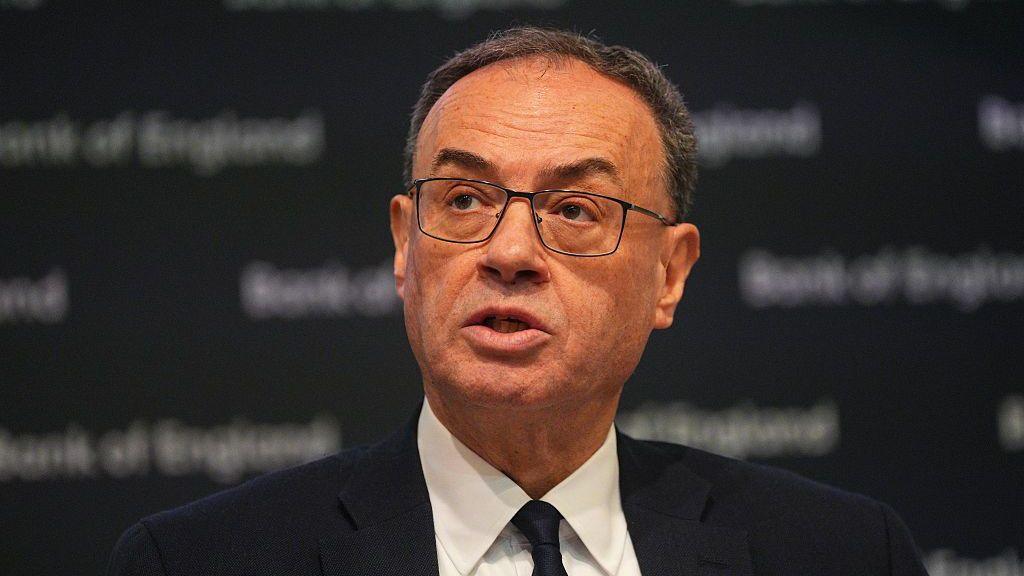

Bailey pointed to Britain’s AI Security Institute as an example of the “important work” already underway to stress-test systems, but he was candid about the limits of that effort so far. “The pace of progress must accelerate,” he said, while cautioning that regulators and developers alike “should proceed with a degree of humility.”
He also offered a reframing of what many might consider bad news: when AI models fail tests or behave unpredictably, that shouldn’t be read as proof the safety process is broken. “That is not evidence that testing has failed,” Bailey wrote, “rather it is evidence of why testing is necessary.”
The governor reserved particular concern for so-called frontier AI — the most advanced, self-learning systems capable of improving themselves with minimal human input. Without effective mechanisms to step in, he warned, such systems risk becoming “a closed loop in which the model progressively governs itself,” a scenario that would leave human oversight struggling to keep pace with machine autonomy.
Bailey’s intervention lands amid a noticeably louder chorus of concern from within the AI industry itself. In recent weeks, executives at leading AI developers including OpenAI and Anthropic have called for a more deliberate pace of development and pushed for internationally coordinated risk assessments. OpenAI recently pulled back the planned release of one of its newest models, citing safety concerns — a rare instance of a major lab voluntarily hitting pause on its own technology.
That caution, however, is far from universal. President Donald Trump has openly rejected calls to slow down, framing AI development as a race the United States cannot afford to lose to China. “Whoever wins AI, wins,” he has said. Even so, after meeting this week with executives from OpenAI, Anthropic, Nvidia, SpaceX, Meta and Google, Trump announced that the companies had signed what he called a “morally binding” agreement intended to offer a measure of protection against AI’s risks. Under that arrangement, each company remains responsible for policing the safety of its own technology — a self-regulatory approach that critics say lacks teeth compared with binding government rules.
That tension — between voluntary industry commitments and formal government oversight, between racing ahead and pausing to check for danger — sits at the heart of Bailey’s argument. His preference for testing over top-down rules puts him closer to the industry’s own preferred approach than to advocates of immediate, binding AI law. Yet by acknowledging the risks as “real and increasingly significant” and calling for faster progress on safeguards, he is also signalling that the current pace of precaution may not be enough.
Whether testing regimes like the UK’s AI Security Institute can move quickly enough to keep up with the technology they are meant to police remains an open question — one that Bailey himself seems to concede requires humility, urgency, and, eventually, a formal set of rules to match.
You must be logged in to post a comment Login