Tech & AI
Beyond the Hype Cycle: This Week’s Quietly Important Tech Stories Have Nothing to Do With Chatbots

Scroll through any technology section this week and you’ll find the usual parade of AI headlines — new chatbot updates, fresh benchmark claims, another round of debate over whether machines are getting smarter or just louder. But some of the most consequential technology stories of the moment are happening quietly, in physics labs and materials-science workshops, far from the generative-AI spotlight. A handful of recent research findings, highlighted in a roundup from Ars Technica, offer a useful reminder that the technological foundations shaping our future aren’t only built in server farms.
Take quantum entanglement, the phenomenon Albert Einstein famously dismissed as “spooky action at a distance.” It sounds like pure theoretical physics, but it is also the literal engineering substrate underneath the next generation of computing and sensing technology. Quantum computers, which promise to eventually tackle problems far beyond the reach of classical machines — including, ironically, some of the computational bottlenecks that limit today’s AI systems — rely on entangled particles behaving in ways that defy ordinary intuition about cause and effect.

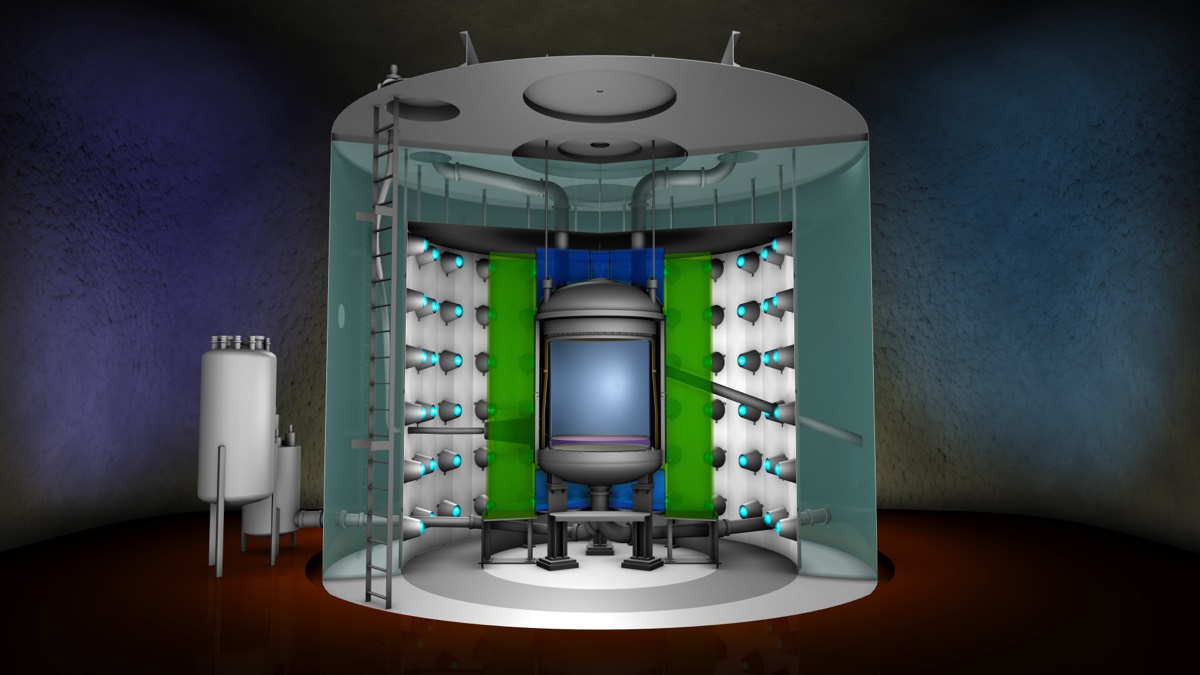
Physicists working with the Large Hadron Collider’s ATLAS experiment have now pushed that frontier further, reporting entanglement between pairs of Z bosons — short-lived particles produced when a Higgs boson decays. By reconstructing the angles at which the resulting electrons and muons were emitted, researchers inferred the spin states of the original bosons and found correlations consistent with entanglement. It’s described as the highest-energy example of the phenomenon observed to date, extending earlier 2023 findings involving entangled top quark pairs at the same collider.

Why should anyone outside particle physics care? Because every demonstration that entanglement survives in increasingly extreme, high-energy environments expands scientists’ understanding of how fragile or robust quantum states can be — knowledge that feeds directly into efforts to build more stable quantum processors and ultra-sensitive instruments. The LHC, originally built to hunt for exotic particles, is increasingly being treated as an unlikely laboratory for quantum information science, a field with obvious long-term implications for computing power, cryptography, and secure communications.
Meanwhile, a separate line of research is tackling a very different kind of engineering problem: how to build things in a place with no hardware store. Researchers at the Hong Kong University of Science and Technology have developed a way to turn Martian soil into a durable, concrete-like building material by combining crushed rock with gelatin and a specially engineered yeast coated in sticky proteins. The yeast helps bind the mixture as it hardens under conditions mimicking the Red Planet’s extreme cold and low pressure — essentially a freeze-drying process, according to the research team. The result, published in the journal Chem Circularity, is pitched as a viable construction material for future Martian habitats, built largely from what’s already on-site rather than materials hauled across tens of millions of miles of space.
It’s a small-scale innovation with large-scale implications. Any serious plan for human settlement beyond Earth runs into the same brutal math: launching mass into space is extraordinarily expensive, and that includes bricks, steel, and concrete. A living, self-hardening building material grown partly from biological processes rather than shipped from Earth represents the kind of unglamorous, materials-science breakthrough that space agencies and private companies alike will need if long-duration Mars missions are ever to move from PowerPoint slides to poured foundations.
None of this is artificial intelligence in the sense most readers have come to expect from technology coverage — there’s no large language model or neural network driving these results. But it’s worth pausing on that gap. The world’s technological progress doesn’t move only through AI benchmarks and chip announcements; it also advances through particle colliders probing the weirdness of quantum mechanics and materials scientists quietly solving the unglamorous logistics of living on another planet. Readers hunting for this week’s AI breakthroughs specifically may find the pickings thinner than usual — the research highlighted here simply doesn’t touch on machine learning or AI systems in any substantive way, and it would be misleading to force that connection where the evidence doesn’t support it.
What these stories do offer is a broader lesson about how technological change actually happens: unevenly, across disciplines, often in places far removed from the headlines. The entanglement experiments at CERN and the yeast-based Martian concrete may never make it into a product keynote, but they represent exactly the kind of foundational research that eventually underwrites the flashier technologies that do.
- Research roundup: 6 cool science stories we almost missed (Ars Technica)
You must be logged in to post a comment Login