Tech & AI
How Far Can A Laser Pointer Go? Here’s How Beam Distance Is Measured

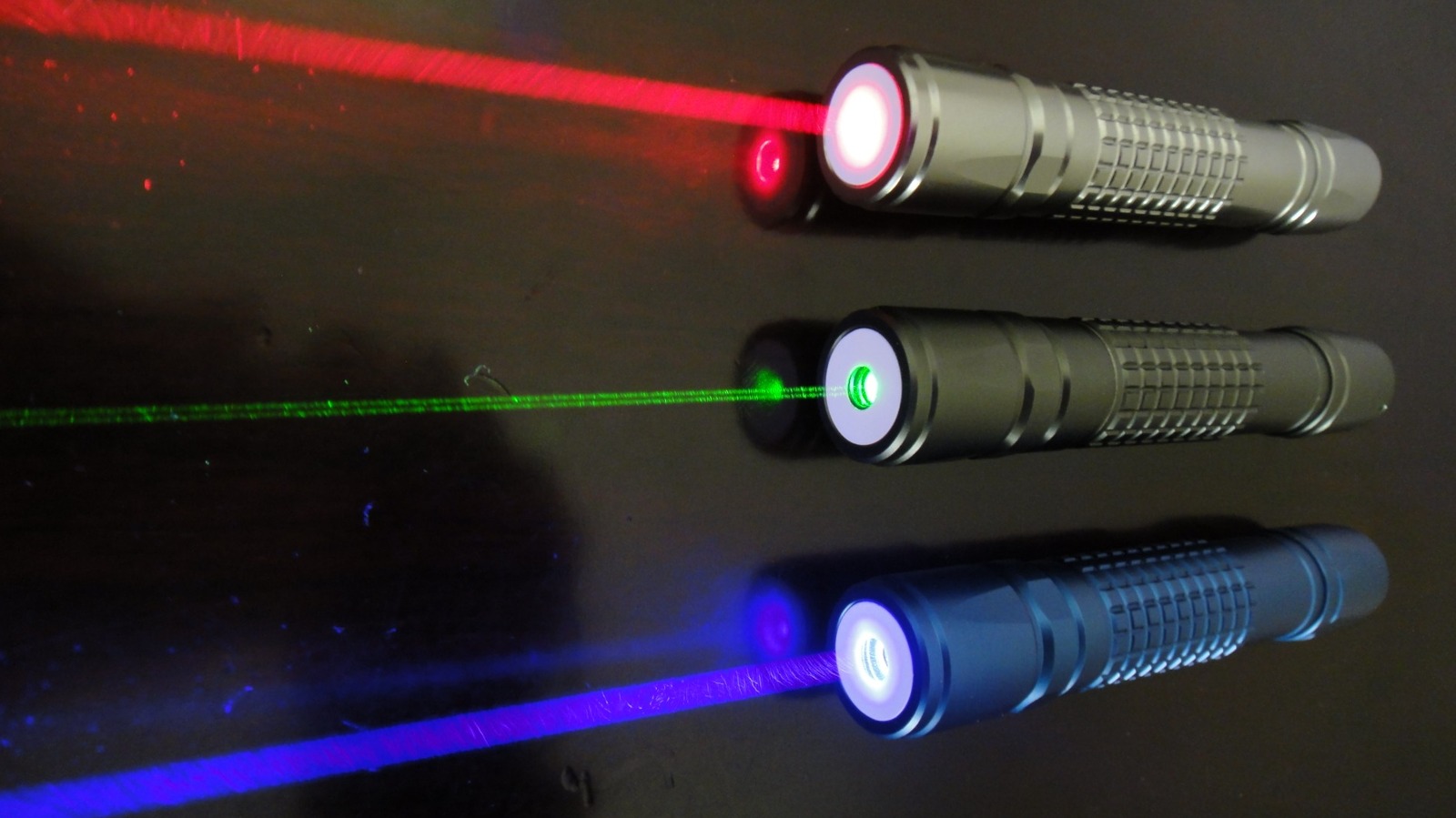

The term lasers is actually an acronym that stands for Light Amplification by Stimulated Emission of Radiation. The use of lasers has certainly grown since the technology arose in the 1960s, with lasers now commonly found in everything from consumer electronics like Blu-ray players and cat toys to military weapons. Lasers have different power capabilities, apertures, and wavelengths. In a vacuum, a laser pointer’s beam is technically infinite, regardless of its power. However, its aperture and wavelength will influence its divergence, which is the measurement of how fast a beam expands over distance.
For example, a 0.005 W laser pointer would produce a light spot measuring 8 miles in diameter on the Moon’s surface, assuming there was no interference from clouds. Meanwhile, a 500,000 W military laser would produce a 1.5-mile diameter light spot in this setting. While it might seem that the military laser, which is 100 million times more powerful than the laser pointer, should expand across a larger diameter, the reason the less-powerful laser spreads across a larger diameter is because it has a much smaller aperture. Military and more powerful lasers are generally designed with larger apertures to concentrate light and create a more focused beam.
Outside of hypothetical scenarios, a laser’s distance traveled depends on atmospheric conditions and interference. An average laser pointer might be able to extend to around one mile with little atmospheric influence, though that distance could be expanded significantly to over six miles, depending on which type of device it is. The fact that lasers can travel such far distances is why it is a felony to point them at airplanes, as it can incapacitate pilots.
Lasers can also pose a threat at certain distances
Because laser pointers can be hazardous, research into the technology has found that there is a certain distance at which they should be operated to stay safe. The lowest-power lasers that use less than 1 mW of energy have the potential to injure a person’s eyes at between 23 and 46 feet. They remain visible and potentially dangerous as far as 9,759 feet, when planes enter the conversation. While they can’t burn a person’s skin, they’re powerful enough to warrant warning stickers.
Higher-power lasers are significantly more dangerous. For example, a 5 W green laser can harm a person’s eyes up to 820 feet away. It can burn the skin at 54.3 feet and can potentially start a fire as far away as 36.2 feet. Because the human eye is more sensitive to green light, a green laser pointer is more dangerous further away than a red laser pointer, and some types of strong green lasers can also damage certain kinds of cameras.
It might seem counterintuitive that a more powerful laser becomes harmful at a greater distance. However, that is because divergence affects a laser’s distance in that a small divergence ensures a more powerful beam at a greater distance, while a larger one does the opposite; essentially, the tighter the beam, the more dangerous it is the further it travels. Power is the most important aspect of a laser pointer’s beam when determining potential hazards. Increasing the power increases the danger, though the affected distance is proportional to the square root of the total power increase.
You must be logged in to post a comment Login